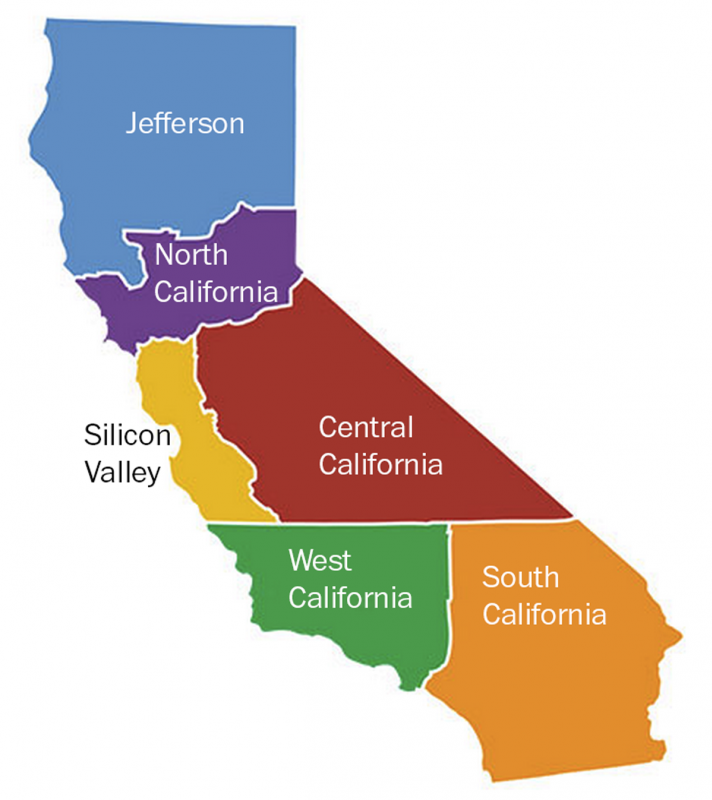
This is a difficult subject to delve into because it’s tied to so many other issues—past and present—each with its own legitimate “bottom line.” Many people are simply incapable of compartmentalizing each sub-issue for critical review… after which all of the parts need to be put back together for a final conclusion. The only overwhelming “bottom line” that I can think of is that if we look at our particular local gentrification from 1990 to 2030, literally millions of local residents will have been forced to relocate out of necessity. Some have been referring to this as the issue of “the right to replace.”
We’re not talking about someone taking over a neighborhood or even a city, but of an area of at least 2,000 square miles as the epicenter of a particularly ruthless gentrification. This isn’t “urban renewal,” as it very dramatically affects a large diverse area and every citizen in it. Even the despotic robber barons of history at least allowed their subjects a place to dwell. The newly formed economic-establishment simply want local residents out... period! A portion of the highest socio-economic classes of the old order have even issued complaints for various reasons. We’re living amid a massive social and economic upheaval; and also political, as we witness even San Francisco politicians welcoming the extreme replacement and change over their own long-time constituency.
Like any well-organized colonization, this region has even been renamed… “Silicon Valley”… after what had long been merely a nickname for the technology industry in the South Bay. HBO even produces a series called ‘Silicon Valley’, which I am not familiar with, but what appears to be about IT hipsters; Fabian capitalists in sandals, urban cowboys conquering a new frontier. So, what does that make us? Indians? For every action (mass migration), there’s an opposite re-action (replacement). In many ways, this harsh fact is how humans have interacted for thousands of years; but at least then the aggressors were open about their intentions… such as ‘The Indian Removal Act’. With us, there is neither a name for our ouster or even much complaint from us; just a slow moving push out the door.
 The first that I ever really pondered this subject was in the late 90s, when a company which I was working for was closing down the location due to a buyout. One couple, in their late forties, had worked there as well. He worked in the warehouse, while she worked in the office. On the final day, as I spoke to the very down-to-earth couple in the parking lot on that warm late summer evening, they told me that they were moving to Georgia where he had family. San Mateo County had gotten too expensive, and the surrounding area was going the same way. They left, and in some small way, we became metaphorically poorer as a result. I can recall back in the 70s and 80s when the South Bay was booming. New residents migrated in from many places. It was an exciting time then. The growth seemed large, but was not overwhelming. It didn’t hurt the agricultural industry, which has much room to fan out. The new residents were a positive influence.
The only real plus for the locals is if they happen to own a real estate. In the town of Burlingame, for example, a small two-bedroom home is now worth about 200 times what it probably was worth in the 50s… where a barber or a warehouseman could purchase it on one-income. This home equity serves as our only symbolic severance pay for our collective eviction. According to HUD, you should not pay any more than 30% of your net income on rent; which would mean that in order to pay even the bare minimum rent anywhere in San Mateo County and maintain that 30%, a person would need to net about $5,700 a month. Even if a local wished to stay anyway because they can afford it, do you really want to live in a rootless place where you’re the dinosaur? Where are YOU from?
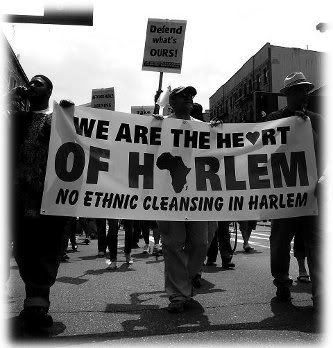
I say this also for people in New York City or any place where a local population has been given their subtle “walking papers” by out-of-towners who want them out… starting yesterday. There’s no comparison between someone simply moving to a new location, and a person with one particular skill set who believes that everything in the world… belongs to them. You can’t resist the whole country when word has gotten out that your backyard is “the place to be!” Nobody can. Of course, they wouldn’t like it if it happened where they're from. It’s like abortion; it’s okay as long as it’s not YOU. I’m not a fan of Spike Lee, but he’s correct about gentrification, such as in regards to a place like Harlem… which is a new hipster paradise. Of course, an entire component to all of this—which is best looked upon as a separate issue—is that many now doing the complaining, sprang from people who got where they are through large-scale demographic change aka “replacement.” Still, that’s a separate issue, and doesn’t make them wrong.
 Some individuals of great wealth who have relocated here, then have become “zero-growth” advocates and “open-space" proponents the moment they get here! Before we pat them on the back “at least for that,” many of them are the types who buy up land along the coast or in the many unspoiled areas of the Santa Cruz Mountains, and then block off access to the general public. In other words, under normal conditions, those locations would have largely remained public property in the first place. Still, the great majority are pro-urban sprawl via gentrification. The South Bay will then go into a mode of “ever-expansion outward!”; such as with the Los Angeles Basin. The only reason that the Bay Area has so many open spaces is through the work of a lot of good people over the decades. That is about to change.
Many newcomers of this new-guard will make their buck and then go back “home” again… having forever changed our world. This whole “happening” is the biggest joke… because its foundation rests upon an open secret: They need us out. There’s no way around that fact. Even local retired homeowners, who normally would have remained here, are now given this very lucrative option of selling high and buying low somewhere else. Although this is a great opportunity for them, it further dismantles local roots by breaking down its organic pillars.
What can one say when even upper middle class neighborhoods are being gentrified? San Mateo County was one of the wealthiest counties in the whole country before 1990! Some years ago, a South Bay student who had been away to college, came home to discover the tremendous changes which had taken place in just several years. He produced a documentary about it, of which the name escapes me. However, somehow this all seems so contrived; beyond the typical “change and progress” line that is always fed to society. It’s a feeding frenzy… on our watch. I know of what was once a very beautiful open-space area, amid a nice tree-filled South Bay neighborhood, with wonderful views of the Santa Cruz Mountains. Nothing over three stories high. In the course of about five years, all of it was gone except the official park itself. Skyscrapers now block out the view of the mountains, the once open area along the creek is lost amid a new concrete jungle, and when walking through you always have that feeling of "being watched" with thousands of windows peering down at you. Contrived over-development can sometimes be a downright backward and primitive thing to do. This development is entirely out-of-scale in relation to the surrounding area. Total ruination.
 Strangely, local police often favor the newcomers; usually by picking on automobiles which aren’t consistent with the new-guard, and asking “what are you doing down here?”… and followed by “why can’t you do those things up there?”… even if you’re three miles away in the next town over where you live, and you grew up in the area anyway. This is based on the experiences of many individuals, including myself. I was pulled over for no reason on one occasion, and they asked to search my car. Usually they don’t bother asking, so I agreed. This particular officer opened my trunk where I had tools and debris from building a fence for someone. I observed the officer with amusement as he was looking very closely at simple tools, such as a wrench, as though he were examining ancient artifacts. WOW!! If that isn’t a perfect metaphor for what’s been happening, I don’t know what is! Just for the record, as we should acknowledge, police departments vary vastly from city to city. The police are simply a reflection of their superiors. I learned this when a few years ago I went into a building on a local community college campus where there was a police training academy. As I walked in dressed in a coat and tie from a job interview I just had… the cadets walking in the hallway immediately lined up against the walls and saluted me. That… kind’ve says it all.
There are numerous once-major cultural groupings long predating World War II, whom contributed greatly to the local area, which have been massively pushed aside for at least thirty years even before this super-gentrification period. Cisalpines/Italians, Japanese, Irish, Scottish, Croatians, Slovenians, Russians/Ukrainians, Maltese, Portuguese, Germans, Oklahoma-north Texas migratory descendants, etc. This often difficult-to-define umbrella-grouping contributed more overall to local history, culture, free market, self-determinism, and in terms of spirituality--much more-so than those who followed; yet they’re never discussed, spoken of, or referred to in any way in public affairs. They exist only in the abstract: “North Beach” or “Japanese Gardens.” It’s just a perception that there are “Italians in North Beach.” If you don’t officially exist, then any concerns which you may have probably aren’t likely to exist either.
I know so many of you feel the same way, because you’ve told me so time and time again. I’m just defining the entire scope of what you have collectively told me. There are endless examples of where the rootless have defeated local cultures over the years. These socio-economic interests are just the latest in a long line. There was an equally disturbing socio-political migration that was endured for such a long time. Again, these examples are not the same as someone merely moving to a new location. What I’m referring to are people who come in for practically the expressed purpose of taking over, and they need and fully expect us to get out of the way for them. There are many huge corporations which have entire departments dedicated to “finding housing” for incoming employees; including purchasing real estate. Although it sounds almost innocent, this places further stress on the limited opportunities on real estate and housing for locals. They need us out, plain and simple. They know this, we know this, and they know that we know this.
6-10-15 ADDITION:
I wanted to add this thoughtful article from the American Sociological Association, entitled 'Understanding Super-Gentrification in San Francisco' (John Stover - University of San Francisco - April 2014). Actually, I didn't get the term "super-gentrification," from this piece, but maybe I heard of it somewhere.
.