Saturday, June 7, 2008

Italian American Education Bill


[From the Sacramento Italian Cultural Society March/April 2008 newsletter]:

Did you know Italian Americans are not mentioned in the history books? That’s right; the history books used in California schools from the kindergarten through the University level do not mention us. Not even a footnote. Yet, the other large European groups are covered and many of the smaller non-European groups receive extensive coverage. This is not fair to Italian Americans. Italian Americans have earned a place in American history. Italian Americans are the fourth largest European group in America and the sixth largest ethnic group - some 25 million strong, yet the other three larger European groups – the Germans, Irish and English are included in the history lesson given to California students. Italian Americans are not – not even a footnote that they were ever here or played a role in the development of America. Many other groups from Asia, Africa and Mexico, as well as Native Americans receive extensive coverage in the instruction received by California students.

It’s time to end the historic exclusion of Italian Americans from the school curriculum and from the educational experience of California students. A recent study of California textbooks by a team of University scholars revealed that of all the major cultural groups in America, only the Italians were left out of the textbooks used in California schools. This is a shame! And it is not an accurate portrayal of history. The role and contributions of Italian Americans to the creation and development of America have been enormous. Yet, the persistent discrimination Italian Americans suffer continues in the official history of the country. This represents second class citizenship and treatment from our educational institutions. In order to correct this injustice, a new legislative initiative – Assembly Bill 1863 - has been introduced in California by Assembly
Member Anthony Portantino of Pasadena. This modest Bill would provide that the role and contributions of Italian Americans be added to those of the groups already included in the school curriculum. For Italian Americans, this is a matter of social justice – a matter of equal treatment and equal history.

The Portantino Bill is co-authored by several other Italian American Legislators including George Plescia of San Diego, Kathleen Galgiani of Stockton and Don Perata of Oakland. The Bill is sponsored by the California Italian American Task Force, a State Commission created by the Legislature and appointed by the Governor to address the concerns of Italian Americans in California. The Italian American Education Bill is the number one educational policy initiative of the Task Force. Italian Americans are not well served by the current school curriculum which excludes them from American history. This legislative initiative is our hope to end the generations of exclusion and provide society with more accurate images of who and what we are and how Italian Americans contributed to American society. For further information about the Bill or the Task Force contact by e-mail Bill Cerruti at: Italy1@surewest.net or tel: 916/482-5900.

**************************************************

"Italians not in the history books." This isn't what I know to be sane. Some could argue that this is the result of "ethnic interest group lobbying" or the new anti-Europeanism, except that other European heritage groups are not included in this situation. Lets face it, we've been in the process of being pushed out by sheer numbers for about fifty years now. Maybe longer.

Thursday, June 5, 2008

Northern Italians in the Gold Rush


This history of the Gold Rush was basically about immigrants from the Genoa area. I had used this one on an earlier website a few years ago, and I recall there was more of a writeup on Olivia "Grandma" Rolleri with an image. I don't recall if I saved that or not. Many of the locations here have been made into landmarks, so we will have to compile a list at some point.

**************************************************

The Italian Legacy in the Mother Lode

Introduction

Nearly 200 members of the Sacramento Italian Cultural Society and the Folsom Historical Society attended the opening reception for the exhibit "Nostra Storia" on January 28, 2000. This is a unique story about that wave of people from Italy, primarily from the area around Genoa in the region of Liguria, who settled in the foothills of the Mother Lode region of Northern California in the Mid-19th century. This is the first time that an exhibit has been created to tell the story of these enterprising people who contributed so much to the economic and cultural fabric of California. The history of the Italian Americans is often relegated to the margins of American and California history despite the fact that the Italians are the 5th largest ancestry group in America with more than 25 million Americans claiming to be of Italian decent. Some two million California's are of Italian decent, In fact, for much of California's history, the Italians have been the largest immigrant group in the State

This exhibit is part of the determination by us, this generation of Italians, to see that our story is told and included in the history of the nation so we to can snare in that history. It is well known that from the 1880's to the 1940's, the Italians were among the largest of the immigrant groups to settle in America. But less is known about the earlier wave of Italians from northern Italy who established their economic and cultural communities across the United States. It was in California that their communities and enterprises flourished the most. We have all benefited from their legacy. From our access to banking services to the food we eat, we are all indebted to these pioneers for the inheritance they have left us.

This story, like so many others about the Italians, would not have been told without the financial and intellectual resources devoted to this project by a committed Italian American institution in our community such as the Italian Cultural Society of Sacramento. It takes a large financial investment to put such an exhibit and a well organized team of Italian American scholars and activists that can make such a project a reality. This project, like so many others sponsored by the Society, is a reflection of the need for Italian American institutions like the Society to maintain our Italian community and speak for us when no one else well. That is why we work so hard at marshaling the resources of our community to support these goals.

This exhibit is our way of saying thank you to those who preceded us but it is also a way of showing out pride in our contributions to American life. This exhibit is also our way of connecting our past to our future as a community, a people. Without a knowledge of our past we have no memory upon which to build our future and the Italian American movement in the United States is about creating a future for us as we have helped create the past. Without a vibrant Italian American community we can no longer make such a contribution to American society.

This exhibit which will become a traveling exhibit, will join the Italian American World War II exhibit "Una Storia Segreta" and other exhibits being developed about the Italians in California agriculture, in the coastal fishing communities and in the urban centers and other regions of California. None of these exhibits has a home. One of the priority public policy goals of the statewide Italian American community is to establish a California Italian American Museum to house these and other exhibits under development. One of the primary goals of the "Italians in the Mother Lode project" is to establish a regional Italian American Museum in the Mother Lode where our story can be collected and displayed. The support and leadership of the Italian American community is vital to the success of these projects.

Arrival and Settlement


The story of the American West would be incomplete without telling the story of the Italian settlement of the west. This is especially true of California and the settlement of the Gold Country counties of the" Mother Lode" of Northern California. The Italians were one of the earliest and most important groups of people to settling the California foothills of the Sierra Nevada referred to as the "Mother Lode".The Italians settlement in the Mother Lode began with the Gold Rush. From the 1850s through the 1880s, Italian immigrants from Northern Italy, primarily from the area around Genoa in the region of Liguria, settled in large numbers in the Mother Lode counties of California's Gold Country.

The Italians came early in the states history. Lured by the promise of gold and land, the early Italian pioneers of California came to stay. Here they could use the traditional skills of their cultural heritage to develop the land and the region. The Italian immigrants established themselves in the mining, cattle ranching, lumbering, construction and stone masonry, fruit and vegetable market gardening, orchard, grocery, olive oil, railroading, mercantile, banking, restaurant, hotel and boardinghouse, and the vineyard and the wine industries of the California Gold Country. Their descendents still carry on the traditions brought to early California by the people from Italy. Seven Sisters Arriving From Genoa 1853Their heaviest settlement was in the southern Mother Lode and by 1870, 25 percent of the Italian population of California lived in the three foothill counties of Amador, Calaveras and Tuolumme. They were soon one of the largest immigrant groups in the Mother Lode. Most came from the same region of Italy and represented the distinctive chain migration of the Italians from the area around Genoa, especially from the province of Chiavari. Later waves of Italian immigrants from Liguria and other regions of Italy, such as the Venetians from the Veneto region also settled in the Gold Country and carried on the traditions brought by the early Italian pioneers. To this day, the Mother Lodes populated by many Italian Families that have their roots in the Gold Rush.

Gold Rush and Mining

Beginning with the Gold Rush of 1848, Italian miners played an important role in the mining industry of California. Attracted by the discovery gold, the early Italian gold miners left their legacy emblazoned in history on historic places with names like Italian Camp, Italian Diggings, Italian Bar and the Italian Bar Trail in Tuolumne County, the Italian Mine in Nevada City and Italian Bar on the American River in El Dorado County.

Between the 1860s and 1890s, numerous quartz and gravel mines along the mining belts of the Mother Lode were operated by Italian miners such as La Fortuna Mine, the Volponi, the Garabina, the Porto Fino , and the Bella Vista.

During the later deep mining period of the 19th and 20th century, Italian miners were recruited from Italy by the large mines to work the deep veins in both northern southern mines. By the turn of the century, the Italians were among the largest of the European immigrant groups in the mines.

The Italian Garden


Mother Lode residents, isolated from major population centers, were dependent on local market gardeners and ranchers for their foodstuffs. Many Italians, attracted by mining, turned to market gardening and farming to meet the demands of the local population for fruits, vegetables, meat and dairy products, grain and wine. By the 1860s, many Italians in the Mother Lode were operating these agricultural enterprises. By 1880, around 1200 commercial market gardens were being operated in California by an estimated 10,000 people from the region around Genoa, Italy, who dominated the industry. The picture to the left is a Italian Garden at Mokelumne Hill.

The Italian Gardens involved the entire Italian family. Women as well as men worked raising the vegetables. The plowing and cultivating was done with horses while the hoeing and cultivating of small plants was done by hand with a zappa, a short-handled Italian hoe.

Italian Gardens were operated throughout the Mother Lode. Some of the most prominent were the upper and lower "Italian Gardens" at Mokelume Hill. Another, The Italian "Pa-ta-ta" Ranch at Bald Mountain was started in 1862 as a cooperative garden by six young Italian miners. The ranch was referred to as "Little Genoa" because of the large number of Italian families that lived there and their use of the Genovese dialect.

Some of the other well-known Italian Gardens were the Volponi Gardens in Sonora, the Podesta Gardens in Columbia, The Gardella Gardens in Mokelumne Hill, the Sanguinetti Gardens in Vallecito, the Costa Gardens in Calaveritas, the Cavalero Gardens at Sonora and the Palemone Gardens in Tuolumne.

The Italians also played an important role in developing the early Olive Oil industry in the foothills. The Orsi family in Roseville was a major producer of olive oil until the mid 20th century. The rolling hills of the Gold Country, which resemble the Mediterranean hills of Liguria, are dotted with the remnants of the early Italian olive tree orchards and with new orchards reflecting the rebirth of this ancient tradition from Italy.

Stone Masons & Wood Cutters

Italians have worked in the Lumbering industry throughout the forested hills of the Mother Lode since the Gold Rush. They were heavily involved in logging and harvested timber off their ranches which delivered to the mines by horse team. Many of the Italian immigrants were woodcutters and the landscape was covered by the cabins of Italians woodcutters who split wood to make the charcoal used in the mining forges.

The Italian immigrants brought their skill in working with stone from Liguria, a rugged and mountainous land with an estimated 25,000 miles of terraced hillsides.

Crews of Italians skilled in rock work helped build the mountain roads carved out of the canyon walls of the western Sierra's from Nevada City to Yosemite. The old stone terraces on todays Gold Country ranches and along its roadsides are a reminder of this cultural tradition. The picture to the right is a Old Stone Mill, Liguria, Italy.


Ranching, an Italian-American Tradition


For the past 150 years, many Italian families have made their living off of cattle ranching in the Mother Lode foothills at the base of the Sierra Nevada Mountains. The early Italian immigrants became one of the main groups in the ranching industry of the Sierra foothills which are dotted with Italian family ranches to the present day.

Some of the oldest ranches in the Mother Lode were started by the early Italian pioneers, The Fregulia Ranch in Jackson was started in 1852 by Domenico Fregulia

from Genoa and is operated as a cattle ranch today by great-granddaughter Carolyn Fregulia and her three children. Giuseppe Rosasco came from Genoa in 1860 and by 1907, the Rosasco family owned seven ranches in Tuolumne County. To the right is the Old blacksmith shop on the Fregulia Ranch at Jackson, California dating from the 19th century.

The family still operates a 5,000 acre ranch near Sonora. The Cuneo ranch at Calaveritas was started in 1850 by immigrants from Genoa and is still operated by the Cuneo family as is the Sanguinetti Ranch and scores of other Italian family ranches in the region.

Italian Merchants

The history of the Mother Lode is also the history of the many Italian merchants that have operated businesses from the Gold Rush to the present. Some of the earliest merchants in the Gold Country were Italian Immigrants. Among the early Italian pioneers who established general stores were Luigi Costa in 1852 in Calaveritas; Louis Trabucco in 1850 in Hornitos; Joseph Arata in 1854 in Vallecito, Domenico Ghiradelli in 1855 in Hornitos, Agostino Chichizola in 1850 in Jackson; Frank Cuneo in 1857 in San Antonio Camp, Giuseppe Prince in 1857 in Altaville, Nicolas Pendola in 1859 in Angels Camp, John Peirano in 1854 in Angels Camp, Carlo Marre in 1858 in Jackson, Francesco Bruschi in 1854 in Coulterville, Andrew Olcese in 1861 in Mariposa, Enrico Bruno in 1857 in Butte City, Nicolas Quirolo in 1861 in Todds Valley, Bartolomeo Dughi in 1860 in Mountain Ranch and Gerolomo Tiscornia in 1868 in San Andreas. The Costa Store in Calaveritas has been restored by the Cuneo family as has the Chichizola Store at Jackson Gate. The Butte Store, operated by the Ginocchio family until 1926, is a State Historic Landmark.

One of the best examples of Italian architecture in the region is the Giuseppe Murer House in Folsom which was built by an enterprising immigrant who arrived in 1906 from the Veneto region of Italy. The Murer House is now a historic site and museum. The picture to the right is the Chichizola Store at Jackson Gate, Amador County, California.

Boarding Houses & Hotels


In the rural settlements of the foothills, miners and single men often lived in boarding houses owned and operated by fellow Italians. Some of the well-known Italian boarding houses of the past were Calaveras Hotel in Angels Camp; Bisordi's Itala Hotel in Sonora; the Torino Hotel in Nevada City; the Trabucco Hotel in Mt. Bullion; the Colombo Hotel in San Andreas and the Europa Hotel in Sonora.

Bisord's Italia HotelOlivia "Grandma" Rolleri came to Sonora from Genoa in 1860 at age 16. Left with 11 children after her husband died in 1884, she became a prominent businesswoman who established the Calaveras Hotel in 1887 and owned several cattle ranches and mining interests. The Calaveras Hotel contained more than 50 rooms, a butcher shop, saloon and barber shop under one roof. Sunday dinners were famous and people came from across the county for family homestyle dinners and to take home "ravioli," She operated the hotel for 40 years until 1927.

Italian Stone Ovens, a Unique Tradition

One of the cultural traditions brought to the Gold Country by the Italian immigrants was the tradition of baking in stone ovens. Many Italian families used outdoor stone ovens to bake bread, a vital part of Italian culture. Around 100 stone ovens have been identified in Calaveras, Amador and Tuolumne and dot the countryside where the Italians settled. "Victoria's Oven" was moved from the Ratto Ranch to the Calaveras Museum in 1994 where bread is once again baked fresh from this historic oven.

The oven to the left is from the Fregolia ranch.


Family & Community


The Italian immigrants to the Mother Lode established their own cultural communities wherever they settled. They had their own "Little Italy" communities such as at Jackson Gate and at Clinton in Amador County. To this day, Jackson Gate is the site of several Italian family restaurants and Clinton Road, is lined with Italian Ranches.

The Italian pioneers celebrated their pride in their Italian heritage by building "Bocce" courts, holding Columbus Day celebrations, and forming mutual benefit organizations.

There are a number of Italian organizations serving the Italians, in the Mother Lode. The Gold Country Italian American Club in Grass Valley plays bocce at the courts it has built in the local public park and the Italian Benevolent Society in Amador, organized in 1881, holds an annual "Italian Festa" at the " Italian Society Park " at Sutter Hill. The Society is 118, years old and made up of descendents of the early Italian immigrants to the Mother Lode.

Columbus Day Parade 1890Angelo Noce, an Italian immigrant to Clinton in 1858, is credited as the "Father of Columbus Day" in the United States for obtaining recognition of Columbus Day as a legal holiday by thirtyfive states. Native son, Andrew Caminetti, born in Jackson Gate in 1854 of Italian immigrant parents, was the first native-born California elected to the United States Congress.

From Italy to California

The early Italian settlement of the Mother Lode mining counties of northern California was part of the larger settlement of California by Italian people from the region of Liguria.

During the mid-19th century, Italian immigrants from the region of Liguria in Italy settled in the major cities of the United States and established Italian communities in places like New Orleans, Philadelphia, San Francisco, Chicago, Boston, and New York. The arrival of these "Genovesi" in California, beginning in the 1850's, coincided with the early development of the state. As a result, the Italians played a vital role in the creation of California.

It wasn't long before Italian fishermen had established themselves in fishing villages from Eureka to Benicia, Martinez, Pittsburg, San Francisco, Santa Cruz, San Diego and Monterey.

By the 1880's, California had become a leading fishery and its coastal waters were dominated by Italian fishermen and their graceful sailing "felucca's"

Across the state, the Italians also settled the states farmlands and played a prominent role in developing today's fruit, vegetable, and dairy industries. By the 1880's, Italians dominated the fruit and vegetable industry in the great Central Valleys of California. Italian immigrants also left their mark on the California food processing industry. Marco Fontana arrived in the United States in 1859 and along with another Ligurian, Antonio Cerruti, established a chain of canneries under the "Del Monte" label. Most of their workers were Italian and their cannery soon became the largest in the world.

Another enterprising Italian was Domenico Ghiradelli, who traveled through the gold mines in the 1850's, selling chocolates, and hard candies. He settled in San Francisco after the Gold Rush and founded the Ghiradelli chocolate empire, with Italian immigrant labor, at the site of the present Ghiradelli Square.

The California wine industry also owes much to the Italian founders of the industry. Italians have been planting vineyards and making wine in America since the early colonial days when Filippo Mazzei, planted vineyards with Thomas Jefferson. The founding of the Italian Swiss Colony, at Asti in 1881 as a cooperative of Italian immigrants from the wine growing regions of Italy promoted the widespread participation and success of the Italians in the California wine industry and the vineyards of the Napa, and Sonoma valleys.

One of the most inspiring of California's Italians was Amadeo Pietro Giannini who was born 1870 to immigrant Italian parents from Genoa. He started the first statewide system of branch banks in the nation by opening branches of his Bank of Italy, in the Italian neighborhoods, across the state. He later changed the name of his bank to Bank of America which became the largest bank in the world.

More than most people realize, the Italian Americans helped shape the cultural landscape of California and the modern West. The enterprise and success of these Italian pioneers is a unique legacy – one shared by all of us.

The Italian Legacy in the Mother Lode (Sacramento Italian Cultural Society)

Monday, May 19, 2008

The North-South gap in Italy continues to widen


North-South gap getting worse


Istat report shows south falling behind in all sectors

May 23, 2007

ROME (ANSA) - The North-South gap in Italy continues to widen in every social and economic sector and people from the south are once again migrating north, according to the annual report from national statistics bureau Istat.

In 2006, the report said, the number of young people between the ages of 15 and 24 holding jobs in the so-called Mezzogiorno was only one third of what it was in the north. Unemployment in the south was 34.3% of the labor force, compared to 13.4% in the northwest and 11% in the northeast.

Teh report also found that more than 25% of students in the southern regions of Campania, Puglia, Sicily and Sardinia leave school with only a middle-school diploma.

Other evidence of the North-South divide highlighted by the Istat report included that 5% of people living in the south do not have enough to eat and that 70% of poor Italian families live in the south.

The average salary of people living in the south is about 75% of what it is in the north. The gap is even more extreme a regional level, with an average income in Lombardy of 32,000 euros compared to 21,000 euros in Sicily.

In the south 27.5% of families live on a single pension, compared with 21,2% in the north.

Commenting on the Istat report, Premier Romano Prodi said the situation in the south was an "anomalous reality".

"Some of these aspects are structural and place the south more on the southern shore of the Mediterranean and not on the European one," he added.

The data on the North-South gap, the premier said, "sends a clear message about which direction the government must move".

Istat's 2006 report also showed that while Italy's economy did pick up last year, its growth rate remained the slowest in Europe.


ITALIAN POPULATION GROWING OLDER

Last year Italy had the oldest population in Europe and the second oldest in the world, after Japan. There are now 141 people in Italy aged 65 or over for every 100 people aged 15 or less.

One of the key reasons for the aging of the Italian population, Istat explained, is the low birthrate. In 2006 the average Italian woman had 1.35 childrens, Istat figures showed. The birthrate would have been even lower had it not been for immigrant women who, with an average of 2.45 children each, have almost twice as many as Italians. The other main reason for the aging of the population is life expectancy, which in Italy is higher than in almost any other European country. The average for Italian women is now 84 and for men 78.3.

**************************************************

European Regional Press Release


Economic drivers expected to reinforce Europe’s regional divides

July 30, 2007


Europe has a core of rich regions, while poorer regions tend to be on the periphery

The regions of the EU display large wealth disparities between a core of rich regions and poorer peripheral regions. The core of rich regions starts at the river Rhein with the Dutch Randstad and Flanders, and continues to the Ruhr and Alsace into Switzerland. It then extends south through Rhône-Alpes and Provence-Alpes-Côte d’Azur into northern and central Italy; north into the south-east of England; and east into Bayern and most of Austria (see figure 1: GDP per Capita, 2005). There are only a few outliers to this core, with Bremen and Hamburg in northern Germany and the capital regions of the Nordic countries being the most obvious. On the British Isles, eastern Scotland, eastern Wales, Cheshire and south-eastern Ireland also stand out, while in north-eastern Spain (centred on Barcelona) economic growth is in sharp contrast to the rest of the country, with the exception of Madrid. Capital regions in general tend to have markedly higher GDP per capita than the EU27 average.

This core of rich regions, and the few outliers, also shape the divides in prosperity and economic performance within countries. The UK, the Netherlands, Belgium and Italy display a north-south divide, while Germany and Austria have an east-west divide, with the most prosperous regions bordering each other. Switzerland also shows a divide, where the regions bordering Germany and France are the most prosperous. Similarly, Spain shows a north-south divide between the regions in the north-east of the country, including Barcelona, and Madrid, and the rest of the country. France on the other hand displays no clear divides, instead being polycentric (see Table 1: in link for Regional Wealth Divides Across Europe).

Meanwhile the highest concentration of disadvantaged regions is in the New Member states where GDP per capita is generally less than 75% of the average, the cut-off for receiving structural funding, and the Cohesion Fund countries, ie Spain, Greece and Portugal. In these more peripheral regions of Europe growth is centred on the capital regions. This development is beginning to spill over to surrounding regions, although in Poland regions nearer to the German border are also growing faster.


The divides in prosperity and economic performance are unlikely to narrow in the medium term

The more peripheral regions are unlikely to catch up with the rich core of Europe in the medium term. Regions with the fastest GDP per capita growth in the New Member states and the Cohesion Fund countries are experiencing catch-up growth (see figure 2: Real GDP Per Capita Growth, 2005-11). Although this might imply convergence to the EU average GDP per capita levels, the rationalisation and restructuring driving this growth is not a viable means of achieving growth over the longer term.

Growth in the medium term is more likely to take place in the already prosperous regions. This is because these regions also have higher economic potential and they will therefore continue to attract more investment than more peripheral regions further away from centres of economic activity. The already prosperous regions are better placed to take advantage of globalisation and so divergence is more likely to continue with the concentration and agglomeration of economic growth in the existing core of Europe.

This is consistent with studies of historical growth in Europe. Although convergence between countries in Europe may have taken place, there has been increasing divergence between the regions within countries.

Article Link

Saturday, May 17, 2008

Robert Mondavi: Northern California Wine Pioneer

Napa wine pioneer Robert Mondavi dead at 94

Jon Bonné - Chronicle Wine Editor - May 17, 2008

YOUNTVILLE -- Robert Mondavi, the charismatic Napa Valley vintner whose work helped establish California wines as among the world's best, died Friday morning. He was 94.

A spokeswoman for the Robert Mondavi Winery confirmed that Mr. Mondavi "died peacefully" at his Wappo Hill home near Napa Valley's Silverado Trail.

A popular and tireless figure in the wine world, Mr. Mondavi was relentless in his drive to make wines that could compete with the finest in the world. His winery, established in 1966 when Mr. Mondavi was 53, became a symbol not only of California's emergence as a wine powerhouse but of the lifestyle that Mondavi embodied - one that placed wine in context with good food and a culture of hospitality.

"He's left us, but his vision remains," said Warren Winiarski, founder of Stag's Leap Wine Cellars who once worked as Mr. Mondavi's assistant winemaker. "His legacy and ... his vision for what California could do remains with us as guidepost and a source of aspiration."

Although Mr. Mondavi and his family sold their winery to Constellation Brands for $1.03 billion in November 2004, he remained tied to his namesake property, making public appearances as recently as last year. In March 2007 he was inducted as the only living honoree in the inaugural class of the Vintners Hall of Fame.

More businessman than winemaker by trade, Mr. Mondavi found his calling when he broke from his family's Charles Krug winery in 1965 and struck out on his own. With help from a high-profile succession of winemakers, including Miljenko "Mike" Grgich and Zelma Long, as well as his son Tim, Mr. Mondavi soon became synonymous with the best of California wine.

The Mission-style winery facade designed by architect Cliff May that graced his labels became a symbol of the state's bounty.

His winery gained renown for such modern techniques as the use of steel fermentation tanks and small French oak barrels. Mr. Mondavi frequently sponsored technical groups and traveled worldwide in search of new methods.

"What surprised me most about Robert was his very real interest in what others were doing in fine winemaking," said Paul Draper, CEO of Ridge Vineyards.

But Mr. Mondavi primarily made his name as a marketing mastermind, especially after his decision in 1968 to make wine from Sauvignon Blanc, at the time an obscure varietal, in oak barrels. Recognizing the appeal of a fancy name, Mr. Mondavi christened the wine "Fumé Blanc" and watched sales skyrocket.


'A lasting impact'

"It is hard to imagine anyone having more of a lasting impact" on the state's wine industry, Gov. Arnold Schwarzenegger said in a statement Friday.

None of it would have happened without Mr. Mondavi's singular drive to prove that the state's wines - and his in particular - were some of the best in the world. He traveled endlessly, proselytizing to anyone who would listen. He loved to welcome visitors to his Oakville winery, often opening top wines from France's Bordeaux region alongside his own, asking guests to compare the two.

Always demanding, Mr. Mondavi placed a premium on loyalty. Grgich recalls asking for help crushing grapes while struggling to complete his own winery. Mr. Mondavi quickly agreed but noted that he built his Mondavi facility on an even quicker schedule. Grgich's winery was finished in time for harvest.

"He was, while I was working with him, the best friend that I could have," said Grgich, who worked for Mr. Mondavi from 1968 to 1972. "I became a family member, and I remained a family member from then until today."

The enthusiasm rubbed off. Wine lovers soon flocked to Napa's Highway 29 to visit the Robert Mondavi Winery. Mr. Mondavi believed that hospitality was key to selling wine and to his winery's image. He threw lavish public dinners and hired a chef for the winery, becoming one of the first California vintners to portray wine as an accompaniment to food.

Later the winery inaugurated a "Great Chefs" program, hosting Julia Child and Alice Waters, among others. That context was important. As Joseph E. Gallo, CEO of E&J Gallo Winery, put it in a statement, Mr. Mondavi "successfully advocated that moderate wine consumption is a complement to better everyday living."

Mr. Mondavi's winery also inaugurated a long-running concert series, and in 1988 Mr. Mondavi and his second wife, Margrit Biever Mondavi, joined with fellow vintners to plan Copia, the American Center for Wine, Food & the Arts.

Their biggest gift, however, was $35 million to UC Davis in 2001 to fund an institute dedicated to wine and food science as well as a performing arts center.

Robert Gerald Mondavi was born June 12, 1913, in Virginia, Minn., the third child of Cesare and Rosa Mondavi, although for all his life he would celebrate June 18 as his birthday.

His parents had been sharecroppers in Sassoferato, Italy, before they moved to the United States. As Italians, they found it difficult to fit into heavily Scandinavian Minnesota.

In 1923, during Prohibition, the Mondavis moved to Lodi, where Cesare went into the grape business.

A top athlete and high school class president, Mr. Mondavi majored in business at Stanford University but heeded his father's advice to go into wine. After briefly studying enology, Mr. Mondavi moved to St. Helena, following Cesare's counsel that a little-known spot called Napa Valley was producing California's best grapes.

Robert Mondavi married his high school sweetheart, Marjorie Declusin. The couple had three children: Michael, Marcia and Timothy.

Mr. Mondavi worked as a bulk wine broker, but was impressed by the quality of wines from pioneers like Beaulieu and Inglenook. "I always felt that I wanted to do something that would be comparable to what they were doing," Mr. Mondavi recalled in a 1984 interview. So he convinced his father in 1943 to buy the Charles Krug Winery in St. Helena and make better wines.

He became Krug's marketer, while younger brother Peter made the wines. The brothers were destined to clash. Robert was flamboyant and ambitious, Peter quiet and careful. Peter felt Robert could be profligate; Robert felt stifled and criticized his brother's cautious ways.


Legendary falling-out

In an incident that would become legendary, Mr. Mondavi punched his brother in the face over a disagreement about a fur coat Robert had purchased for his wife. He was dismissed from Krug, causing a decades-long family rift.

Years later, Mr. Mondavi received a hefty settlement. The brothers eventually would reconcile, even making wine together for a 2005 charity auction.

Mr. Mondavi always found new ways to expand. His vision of making wine on par with the finest Bordeaux was affirmed when Baron Philippe de Rothschild, proprietor of Chateau Mouton Rothschild, suggested a partnership. By 1979, the two had devised Opus One, the most famous French-American partnership in California. Mr. Mondavi looked even farther afield, to a Tuscan partnership with Italy's Frescobaldi family and one in Chile.

In 1979, with the proceeds of the Krug settlement, Mr. Mondavi bought a facility outside Lodi and developed his cheaper Woodbridge brand. Then in 1993, he and his sons took the winery public. That gave them capital to grow but also prompted pressure for greater profits. Some analysts also felt a focus on low-priced wines hurt Mr. Mondavi's image. Mr. Mondavi stepped down as chairman in 2003. His son Michael replaced him briefly before the winery's board installed Ted Hall, a businessman and vintner.

After the family sold its winery in 2004, Mr. Mondavi's children assumed the mantle. Michael Mondavi founded Folio Fine Wine Partners in Napa, while Mr. Mondavi joined with his son Tim, daughter Marcia and Tim's daughter Carissa to create Continuum, which produces high-end Cabernet Sauvignon.

Mr. Mondavi's extraordinary success was not without its stresses. He divorced Marjorie in 1979 and married Margrit Biever, whom he had met at Charles Krug and then hired to cook and to entertain guests at his own winery. Eventually the two became Napa Valley's omnipresent power couple. Even as Mr. Mondavi's health waned, Margrit Mondavi remained a local fixture, her gold Mercedes a frequent sight on Silverado Trail.

Mr. Mondavi is survived by his wife, Margrit; his sons, Tim and Michael of Napa; his daughter, Marcia Mondavi Borger of New York City; his brother Peter of Napa Valley; and nine grandchildren.

Mr. Mondavi's funeral will be private, a winery spokeswoman said, and the winery is closed today. Starting Monday, winery visitors can write in a remembrance book in the tasting room.


Mondavi milestones

Robert Mondavi Winery: He founded the first major winery to be built in Napa Valley since the repeal of Prohibition in 1933.

First Fumé Blanc: He made the dry wine from Sauvignon Blanc, an obscure varietal grape.

Joint venture: He created Opus One with Baron Philippe de Rothschild of France.

Pioneer IPO: He was one of the first owners to take a winery public.

Philanthropy: He gave millions, notably $35 million to UC Davis for a performing arts complex and a science center.


Life and times of Robert Mondavi


The innovator

1943: Persuades parents, Cesare and Rosa Mondavi, to buy Charles Krug Winery. Robert becomes salesman; brother Peter becomes winemaker.

1965: Leaves Charles Krug Winery after dispute with Peter that erupted into a fistfight. The turbulent falling-out lasted for decades and presaged other family conflicts.

1966: Founds the Robert Mondavi Winery, which becomes the first major winery built in Napa Valley since the repeal of Prohibition in 1933. The winery's Mission-style building is an homage to California history and includes public spaces for education and entertainment. Mondavi champions the winemaking technique of cold fermentation and the use of steel fermentation tanks and small French oak barrels.

1968: Makes a dry wine from Sauvignon Blanc, an obscure varietal, and renames it Fumé Blanc. Sales soar.

1974: Son Michael Mondavi masterminds low-end line to sell wine made from the year's grape glut. Robert Mondavi Red and Robert Mondavi White are bottled in magnums and sold for $2.50.

1979: Buys winemaking cooperative near Lodi, renames it Woodbridge and makes value-priced wines with barrel aging and other winemaking methods generally reserved for premium wines.

1979: Enters into joint venture with Baron Philippe de Rothschild of France to create Opus One.

1993: Takes Mondavi Corp. public in one of the first winery IPOs. Family shareholders retain control of company.

2004: Sells Robert Mondavi Winery to Constellation Brands, along with his other wine brands and partnerships.

2004: Creates Continuum Partners with other family members to produce high-end Cabernet Sauvignon from Oakville.


The philanthropist

1981: With Julia Child, founds the American Institute for Wine and Food, dedicated to promoting the importance of good food and dining together. The institute now has 25 chapters and 4,000 members nationwide.

1988: Gives $20 million to establish Copia, the American Center for Wine, Food & the Arts, which opened on the banks of the Napa River in 2001.

1997: Co-founds The Oxbow School, a visual arts center for high school students.

2001: Gives $35 million to UC Davis for a performing arts center and a wine and food science center.

2002: The Robert and Margrit Mondavi Center for the Performing Arts opens.

2008: The Robert Mondavi Institute for Wine and Food Science is scheduled to open in October.

Article Link at sfgate.com (w/images)

**************************************************

Calif. wine patriarch Robert Mondavi dies at 94

Michelle Locke - Associated Press Writer - May 17, 2008

Berkeley, Calif. (AP) -- Robert Mondavi, the vintner who built his career and helped an iconic Northern California industry blossom by insisting that Napa Valley wines can compete with the best in the world, died in the valley Friday. He was 94.

Mondavi died peacefully at his home in Yountville, Robert Mondavi Winery spokeswoman Mia Malm said.

"It is hard to imagine anyone having more of a lasting impact on California's $20 billion-a-year wine industry than Robert Mondavi," Gov. Arnold Schwarzenegger said in a statement. Mondavi, said the governor, was "a tireless entrepreneur who transformed how the world felt about California wine, and an unforgettable personality to everyone who knew him."

Mondavi was 52 and a winemaking veteran in 1966, when he opened the winery that would help turn the Napa Valley into a world center of the industry. Clashes with a brother that included a fistfight led him to break from the family business to carry out his ambitious plans with borrowed money.

When Mondavi opened his winery, California was still primarily known for cheap jug wines. But he set out to change that, championing use of cold fermentation, stainless steel tanks and French oak barrels, all commonplace in the industry today. He introduced blind tastings in Napa Valley, putting his wines up against French vintages, a bold move.

His confidence was rewarded in 1976 when California wines beat some well-known French vintages in the famous tasting known as the Judgment of Paris.

"He had the single greatest influence in this country with respect to high quality wine and its place at the table," wine critic Robert Parker wrote in a chat room posting on his Web site Friday. He called Mondavi "an exceptional man....a true pioneer...a legendary pathfinder.....and I feel so priviledged to have known him...a sad day...but also one to pay homage to his enormous contributions."

Always convinced that California wines could compete with the European greats, Mondavi engaged in the first French-American wine venture when he formed a limited partnership with the legendary French vintner Baron Philippe de Rothschild to grow and make the ultra-premium Opus One at Oakville. The venture's first vintage was in 1979.

The success of the Mondavi winery allowed him to donate tens of millions of dollars to charity, but a wine glut and intense competition gradually cost his family control of the business. In 2004, the company accepted a buyout worth $1.3 billion from Fairport, N.Y.-based Constellation Brands.

Mondavi was an enthusiastic ambassador for wine — especially California wine — and traveled the world into his 90s promoting the health, cultural and social benefits of its moderate consumption.

"He had an amazing life," said Robert C. Koch, president and CEO of the San Francisco-based Wine Institute. "He was a major driving force and an incredible promoter for California wine and the Napa Valley."

Born in Virginia, Minn., Mondavi got an economics degree from Stanford University in the 1930s and went to work at the Charles Krug Winery, which his Italian-born parents had bought after moving to California from Minnesota.

He married his high school sweetheart, Marjorie Declusin, in 1937, and they had three children, Michael, Marcia and Tim.

For 20 years, the winery was a family business. But Robert clashed frequently with his younger brother, Peter, who had a more conservative approach the business. According to Robert Mondavi's autobiography "Harvests of Joy," matters came to a head with a November 1965 fistfight.

"When it was all over, there were no apologies and no handshake," wrote Robert Mondavi.

In the late 1970s, Mondavi's first marriage ended; in his autobiography he wrote that his single-minded pursuit of the wine business was partly to blame. In 1980, he married a second time, to Margrit Biever, a native of Switzerland who had worked at the Mondavi winery since the late '60s.

By the mid-1990s, Mondavi had turned over operation of the company to his sons. But like their father and uncle before them, Tim and Michael clashed over management styles.

More troubles emerged as a grape glut soured the wine market in 2002 and lower-priced wines in the Mondavi portfolio faced tough competition from cheaper Australian imports and domestic brands like California's Two Buck Chuck.

Also a problem were the millions in charitable donations Mondavi and Margrit had pledged, including helping found Copia, The American Center for Wine, Food and the Arts, in Napa and giving $35 million to the University of California, Davis.

In her 2007 book, "The House of Mondavi: The Rise and Fall of an American Wine Dynasty," author Julia Flynn Siler wrote that declining stock prices later left Mondavi in danger of not being able to cover the millions in gifts he and Margrit had promised.

A corporate restructuring in August 2004 boosted the stock price, but undercut the family's control of the company. By time it was bought out, Michael Mondavi, who disagreed with the board strategy, had already left the company, and Tim Mondavi had loosened ties.

Later there was a bittersweet family moment when Robert and Peter Mondavi, aided by members of the younger generation, made wine together for the first time in 40 years. Using a 50-50 split of grapes from Robert Mondavi and Peter Mondavi family vineyards, the brothers made one barrel of a cabernet blend that sold for $401,000 at the 2005 Napa Valley wine auction.

The auction lot was called "Ancora Una Volta," or "Once Again."

Article Link at sfgate.com (w/images)

*************************

Mondavi's gifts to UC Davis opened a new era

Larry N. Vanderhoef - May 16, 2008

We at UC Davis wish to pay tribute to a magnificent man of compelling vision, Robert Mondavi. Like a university, Robert was always guided by an inherent spirit of discovery and the pursuit of excellence. In fact, he acted and thought as if his winery were a university and he a curious and passionate professor. Mondavi shared his discoveries with everyone. His goal wasn't simply to better the bottom line, but to pioneer the California wine-making techniques that ultimately yielded worldwide recognition. Much has been written about his entrepreneurial spirit. Indeed, we at UC Davis have been honored by our association with Mondavi and our parallel paths of progress and innovation.

In 2001, Mondavi and his wife, Margrit, gave $25 million to help establish the Robert Mondavi Institute for Wine and Food Science, which is scheduled to open in October, and $10 million to help launch the Robert and Margrit Mondavi Center for the Performing Arts, which opened in 2002 and is now a regional performing arts landmark.

Indeed, Mondavi and his family have given much to UC Davis, and not just through his time and financial support, but also through the association of the Mondavi name. His generosity touched so much of the transformational research, stellar teaching and superb programs that this campus offers today.

That's why, in June 2004, UC Davis presented Robert and Margrit Mondavi with the UC Davis Medal, the highest honor bestowed by the university. But what I will treasure most about our friendship with Bob Mondavi was his sense of destiny.

I remember him saying once, "If you wish to succeed, you must listen to yourself, to your own heart, and have the courage to go your own way, to find the right direction." There's no doubt that Mondavi accomplished his mission - to the betterment of the university, the wine industry, agriculture, the state of California - and beyond. And the Mondavis' belief in UC Davis emboldened each of us to reach even higher.

Through his leadership, Mondavi truly opened a new era of opportunity for UC Davis. We are deeply grateful for his inspiration. He believed that our university was worthy of his support. He was convinced that the sciences and the arts were essential companions. He reassured each of us - no matter our calling in life - that we were capable of and responsible for creating a magnificent and enduring legacy.

Today, the Robert and Margrit Mondavi Center for the Performing Arts stands as a sparkling monument to all who embrace the arts. Across the street, the soon-to-be-opened Robert Mondavi Institute for Wine and Food Science is an inspiring testament to Robert's bold aspirations. There is no doubt that Robert's legacy for many cultural and educational institutions has been substantial and enduring. But in the end, we are most grateful for his faith in UC Davis, and for his friendship.

Larry N. Vanderhoef is the chancellor of the University of California, Davis.

Article Link at sfgate.com

**************************************************

Robert Mondavi [from Wikipedia]

Robert Gerald Mondavi (June 18, 1913 – May 16, 2008) was a leading American vineyard operator whose technical improvements and marketing strategies brought worldwide recognition for the wines of the Napa Valley in California. From an early period, Mondavi aggressively promoted labeling wines varietally rather than generically. This is now the standard for New World wines.


Family history

Robert Mondavi's parents emigrated from the Marche region of Italy and settled in the Minnesota city of Hibbing. Robert Gerald Mondavi was born in Virginia, Minnesota. From Minnesota the Mondavi family moved to Lodi, California, where he attended Lodi High School. In Lodi, his Father, Cesare, established a successful fruit packing business under the name C. Mondavi and Sons, packing and shipping grapes to the east coast primarily for home winemaking. Mondavi graduated from Stanford University in 1937 with a degree in economics and business administration. While at Stanford he was a member of the Phi Sigma Kappa fraternity. He joined his Father and brother Peter after the family acquired the Charles Krug Winery from James Moffitt, established in 1861 in the Napa Valley. Mondavi is the first major winery built in Napa Valley in the post-Prohibition era.

After a feud between himself and his younger brother Peter, Mondavi left Krug in 1965 to establish his own winery in Oakville. Part of Mondavi's original vineyard land included the To Kalon (a Greek term meaning the good one) vineyard originally established by Napa Valley pioneer H.W. Crabb in 1868. The winery bearing Mondavi's name produced high quality wine in the California mission style.

In 1966, he founded the Robert Mondavi Winery in the Napa Valley with the goal of producing wines that would rival the finest wines of Europe.

In 1967, the woman who would later be Robert Mondavi's wife, Margrit (Kellenberge) Biever Mondavi, joined the winery. They married in 1980 in Palm Springs, Califonia, almost immediately after his divorce from his first wife, Marjorie Ellen (Declusin) Mondavi.


Wine history


In 1968 he made a dry oak-aged Sauvignon Blanc, an unpopular variety in California at the time, and labelled it "Fumé Blanc." The wine was a success and, in time, Fumé Blanc became accepted as a synonym for Sauvignon Blanc.

Mondavi successfully developed a number of premium wines that earned the respect of connoisseurs and vintners alike. In 1979, he built the Mondavi Woodbridge Winery in Lodi, California developing it into a leader of popular-premium wines. He also entered into a joint venture the Baron Philippe de Rothschild of Château Mouton Rothschild to create Opus One Winery, and since the 1990s has set up joint ventures with local partners in Europe, South America and Australia.

In the Grand European Jury Wine Tasting of 1997, the Robert Mondavi Chardonnay Reserve was ranked number one.


Legacy

Robert Mondavi was selected as the Decanter "Man of the Year" in 1989. His autobiography Harvests of Joy was published in 1998.

In 2003, Mondavi expressed regret and criticized his sons for the business strategy that emphasized the inexpensive Mondavi lines, Coastal and Woodbridge, over the premium wines, allowing the company name to lose its association with fine wine it held in the past. He said, "We've got to get our image back, and that's going to take time."

In the 2004 documentary film Mondovino, the Mondavi family featured prominently, in close application to its theme of globalization. At the time, the Mondavis had recently acquired the Italian "cult wine" Ornellaia winery, Tenuta Dell'Ornellaia.

On December 22, 2004, Constellation Brands acquired the Mondavi winery for nearly US$1.36 billion in cash and assumption of debt.

Due to the contributions of Robert and Margrit Mondavi, the Mondavi Center at UC Davis in Davis, California for performing arts was named after him.

The two are founders and major benefactors behind COPIA: The American Center for Wine, Food and the Arts, which opened November, 2001 in the city of Napa, California. Robert and Margrit are also founding supporters of the restoration of the 19th-century Napa Valley Opera House and the Oxbow School, a new art school in Napa that provides grants and instruction to art students in their junior year of high school. They have contributed to the restoration of the Lincoln Theatre in Yountville, California, and have supported the Cantor Arts Center at Stanford University in Palo Alto, California.

On December 5, 2007, California Governor Arnold Schwarzenegger and First Lady Maria Shriver inducted Mondavi into the California Hall of Fame, located at The California Museum for History, Women and the Arts.


Vintner's Hall of Fame

Robert Mondavi was nominated and inducted in the Vintners Hall of Fame by the Culinary Institute of America. The election was based upon ballots from seventy wine journalists. The decision for their election of Mondavi is for contributions to the wine industry of California during his life-time.

Inductions with Robert Mondavi on March 7, 2007 included Agoston Haraszthy, Andre Tchelistcheff, Georges de Latour, Charles Krug, Gustave Niebaum, Timothy Mondavi, Maynard Amerine and Harold Olmo.

Wikipedia Link with further resources

Robert Mondavi Winery [official site]

Wednesday, May 14, 2008

The History of Giuseppe Murer


Giuseppe Murer was born in Crespano del Grappa, a small town about 40 miles outside of Venice, Italy, on November 15, 1885. At age 12, he was apprenticed to Signor Giuseppe Melchiore as an apprentice in his carpentry and cabinet-maker’s studio. In this studio, Murer mastered cabinet making and finish work.

[Image to the right: Giuseppe Murer, standing next to his cook's wife behind the Folsom Hotel, which he owned and operated; This image is the property of Cindy Baker, president, of the Murer House Foundation]

At the age of 21, Murer immigrated to the United States, arriving at Ellis Island, New York on October 6, 1906 and traveling on to San Francisco to look for work helping to rebuild the city after the 1906 earthquake. Unable to find work, he moved on to Shasta County and eventually arrived in Folsom around 1910. He became a U.S. citizen on September 10, 1910.

Murer worked at various jobs, applying his carpentry and cabinet-making skills. He built the back-bar in the Folsom Hotel which survives to this day. “Joe,” as he became known, eventually bought the Folsom Hotel and went on to design, build and operate other buildings and businesses on Sutter Street including a gas station and garage, the Folsom firehouse (which survives on the north side of the 700 block), and the old Folsom post office at 627 Sutter Street.

Joe acquired the property along Folsom Boulevard in 1921 and by 1925 had expanded his holdings to include four vacant lots and two small wood frame houses which he rented out. In 1925, Joe began building his own home, a simple but well crafted design in the Italianate style of the northern Italy of his youth. Joe was something of a renaissance man, incorporating many modern concepts into his home. The one foot thick, poured concrete walls and tiled roof kept the house comfortable on all but the hottest summer days when he would retreat to the loft room to sleep more comfortably. The house was plumbed for both hot and cold running water even though he did not install a hot water heater until the 1960s. The built-in bureau in the dining room reflects his cabinetry skills and Joe succeeded in having the sewer lines extended to his house for his new indoor plumbing. After completing the house in 1926, Joe built a garage next door to protect his race car.

Giuseppe Murer died in November 1972 at the age of 87. He is buried in St. John’s Catholic Cemetery, just across Folsom Boulevard from his home.

The Murer House will be presented to the public as a living-history museum, capturing the essence, style and charm of the house as it would have appeared in 1926. Both original and representational furnishings, interpretive text and photographs will enhance the visitors’ experience in the house. On-site programs will include Italian language, music and cooking classes, lectures, garden tours and gardening classes, temporary exhibits and a gift shop.

The formal relationship between Folsom and Crespano came together after a visiting Italian researcher, Alessandro Trojani, dropped in on Folsom – and then learned of the life of Giuseppe Murer – when he visited a Folsom History Museum exhibit on the contributions of Italians during the Gold Rush and the Murer House site. You can learn more about Trojani’s research at http://www.vps.it/california/italians-gold-rush/

In August 1999, encouraged by Trojani, a Crespano delegation including Mayor Lorenzo Capovilla and council member Michela Belo traveled to Folsom and the Murer House. They marveled at architectural touches from their hometown in Italy clearly visible in some of the buildings on Folsom’s historic Sutter Street. After tours of Intel, Kikkoman and other prominent businesses, the Crespano contingent was feted at a dinner held in Lanza’s Family Italian Restaurant on Sutter Street where Mayor Capovilla suggested that the two communities seek a long-term relationship. In June 2000, Crespano issued a formal invitation to enter into a sister relationship. Soon after, the Folsom City Council approved a proposed Declaration of Friendship to be signed in Crespano del Grappa at an official ceremony to be held September 29, 2000.

The History of Giuseppe Murer ('Italians in the Gold Rush' project; Alessandro Trojani)

**************************************************

Visit the Murer House, a non-profit organization in Folsom, Calfornia dedicated to protecting Giuseppe Murer's historic house and promoting Italian heritage in Folsom:

Murer House Foundation
1125 Joe Murer Court
Folsom, CA 95630
916-985-7324


Tuesday, May 13, 2008

Social Classes in Italy


Recently someone asked a question at Yahoo Answers regarding the social classes in Italy. There was one interesting response. I don't agree with it entirely, but it gives some idea of what the general perception is around the world. I made two spelling changes, otherwise I didn't change anything.

Can someone tell me about the social classes in Italy?

Of all European countries, Italy is perhaps the hardest to classify. It is a modern, industrialized nation. It is the harbinger of style, its designers leading the way with each season's fashions. But it is also, to an equal degree, a Mediterranean country, with all that that implies. Agricultural land covers much of the country, a lot of it, especially in the south, still owned under almost feudal conditions. In towns and villages all over the country, life grinds to a halt in the middle of the day for a siesta, and is strongly family-oriented, with an emphasis on the traditions and rituals of the Catholic Church which, notwithstanding a growing skepticism among the country's youth, still dominates people's lives here to an immediately obvious degree.

Above all Italy provokes reaction. Its people are volatile, rarely indifferent to anything, and on one and the same day you might encounter the kind of disdain dished out to tourist masses worldwide, and an hour later be treated to embarrassingly generous hospitality. If there is a single national characteristic, it's to embrace life to the full: in the hundreds of local festivals taking place across the country on any given day, to celebrate a saint or the local harvest; in the importance placed on good food; in the obsession with clothes and image; and above all in the daily domestic ritual of the collective evening stroll or passeggiata - a sociable affair celebrated by young and old alike in every town and village across the country.

Italy only became a unified state in 1861 and, as a result, Italians often feel more loyalty to their region than the nation as a whole - something manifest in different cuisines, dialects, landscape and often varying standards of living. There is also, of course, the country's enormous cultural legacy: Tuscany alone has more classified historical monuments than any country in the world; there are considerable remnants of the Roman Empire all over the country, notably of course in Rome itself; and every region retains its own relics of an artistic tradition generally acknowledged to be among the world's richest.

Yet there's no reason to be intimidated by the art and architecture. If you want to lie on a beach, there are any number of places to do it: development has been kept relatively under control, and many resorts are still largely the preserve of Italian tourists. Other parts of the coast, especially in the south of the country, are almost entirely undiscovered. Beaches are for the most part sandy, and doubts about the cleanliness of the water have been confined to the northern part of the Adriatic coast and the Riviera. Mountains, too, run the country's length - from the Alps and Dolomites in the north right along the Apennines, which form the spine of the peninsula - and are an important reference-point for most Italians. Skiing and other winter sports are practiced avidly, and in the five national parks, protected from the national passion for hunting, wildlife of all sorts thrives.

Saturday, May 10, 2008

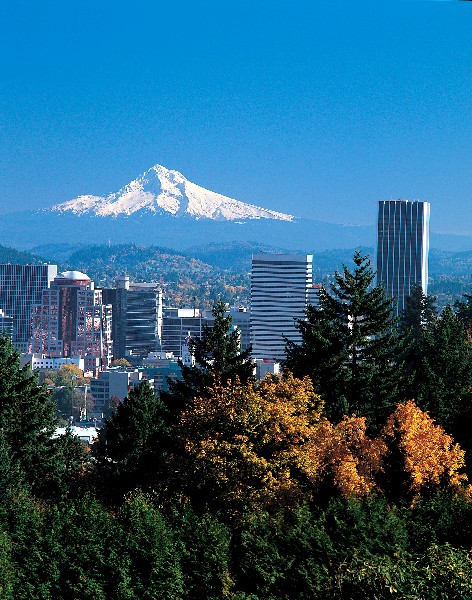
Padanians, Italians in Portland, Oregon


Immigrants from both the northern and southern regions of Italy began migrating to Portland as early as 1890. It was between 1900 and 1910, however, that Portland saw the largest growth in the city’s Italian American population. In 1900, the Italian immigrant population stood at just over 1,000 residents and by 1910, that number had increased to more than 5,000 residents. Italians settled in ethnic neighborhoods, first on the southwest edge of Portland near Marquam’s Gulch and later in the southeast neighborhoods like Ladd’s Addition, Brooklyn, and Parkrose in the northeast of Portland. Italian immigrants worked in a wide array of professions. Many hundreds of Italian immigrants worked in Portland’s extensive railroad yards or served as street graders and built and maintained roads throughout the city. Italian entrepreneurs, like Francesco Arata, shown in this photo from the 1890s, established shops and restaurants in Italian neighborhoods on both the west and east sides of the Willamette River. Almost 1,300 Italians lived and worked on the east side of the Willamette River. They rented land and grew vegetables and berries and some other families operated truck farms that sold produce to individuals and businesses across the city.

[Below right: G. Arata & Company, Wholesale Liquors; 1890]


Social organizations provided important services for Italian immigrants. Saint Michael’s Church, established in 1901 at the corner of southwest Fourth and Mill Streets, stood as a landmark to the Catholic heritage of immigrants. The Italian-American Republican Club was formed in 1916 as a way to provide Italians with the education necessary in applying for citizenship. Sunday socials were frequently held among farmers and their families and bocce bal, was among the favorite games played. The Italian Ranchers and Gardeners Association organized and established the first retail produce market on the west side but frequent flooding forced organizers to move it to the east side in 1906. The new market covered a complete block and growers from Milwaukie, Parkrose, Ladd’s Addition, and the west side Marquam Gulch Italian-American community brought their produce to the market to sell before loading the remainder on trucks to be sold throughout the city.

Written by Sarah Griffith, © Oregon Historical Society, 2002.

The Oregon History Project