It's interesting how Roman provincial or place names have become either the chief name or secondary name for a lot of countries, regions, or cities, such as Britannia. Even regions which were never conquered--such as Germania (German-speaking tribal regions), Lusitania (Portugal), Hibernia (Ireland), or Caledonia (Scotland)--the old Roman name is used today to some capacity or for some type of reference. As far as Italia rather than Romania, historically, names of nations are often quite imperfect. For example, Belgium is properly named for a powerful Celto-Gaulish tribe that lived there, while France is named after the Franks who had conquered that territory. Actually, the cultural link there is much more powerfully tied to ancient Gaulish tribes or later the Romanized Gauls.
Another example of a poor job at naming is "Austria," which is the English-language word for the country of Österreich. Actually, the original "Austria" was the name of a duchy within the Kingdom of Lombards or Langbard, which was where Lombardy, Veneto, Trentino, and Friuli are today. Since Österreich conquered and occupied that land prior to the Risorgimento, and the old Austria-Australia confusion, giving Österreich the nickname "Austria" seems like a dumb idea. Italia, or at least the reference to the old home province of the Roman Empire, should probably have been named Romania. Also, this land was known in the ancient world as Saturnia. At any rate, since the old Roman names are stylish and catchy, they have been a fun way to reference cultures or regions. For example, San Francisco's Caledonia Club is a Scottish cultural club.
Thousands of Italians emigrated to Scotland in the 20th Century, but it seems that 400 years earlier a group of Scots may have settled in a village in the Italian Alps. So local legend has it… And there are plenty of signs to suggest that maybe, just maybe, it's true.
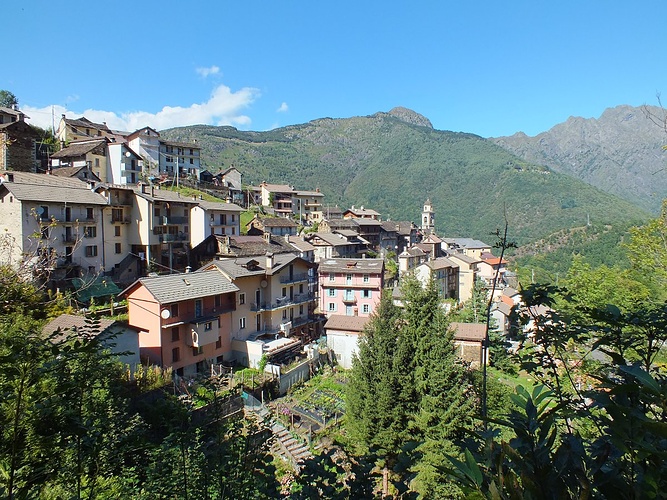
High up in the mountains of northern Italy, just a few kilometres from the Swiss border, the people of the tiny village of Gurro speak a strange dialect, incomprehensible even to the other villages in the same valley.
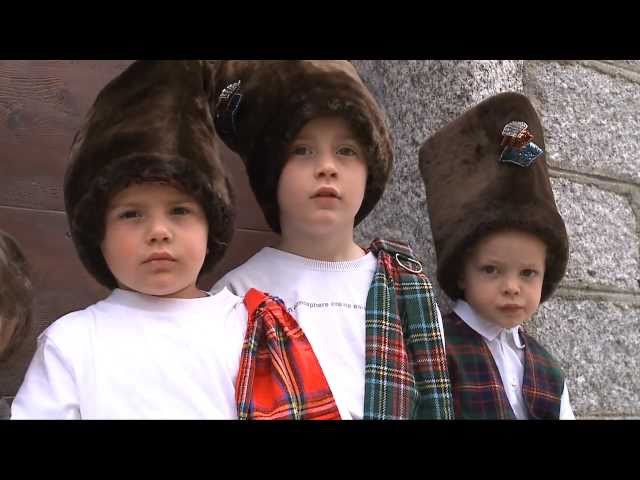
They have peculiar surnames, and the women's traditional costume features a patterned underskirt that looks suspiciously like tartan.
One possible explanation is that their forefathers include a unit of Scottish soldiers - the Garde Ecossaise - who served the French King, Francis I, and were defeated with him at the Battle of Pavia, near Milan, in February 1525.
The story goes that while trying to make their way home the Scots stopped in Gurro, where they got snowed in for the winter. Many locals believe they never left.
"I've heard talk about this story since I was a child," says Alma Dresti, who was born and bred in Gurro.
"I know it's probably at least part legend but I like to believe in it and I do think there could be some truth in it.
"I
like to imagine those strapping young soldiers trying to return home,
stopping here, and liking it so much they stayed even once spring had
come."
Gurro was populated by Scottish soldiers 500 years ago, who left traces of their culture everywhere.
When Italy played Scotland in a Six Nations rugby game on Saturday, the residents of Gurro, a tiny town perched in the hills above Lake Maggiore, were left feeling divided.
“But most of us support Scotand, especially in the rugby, and we were pleased they won,” Adolofo Nicolussi, who works as a volunteer in Gurro's ethnographic museum, tells The Local.
But Scottishness among the town's 221 inhabitants runs deeper than mere sports affiliation.
Kilt-wearing Italians sip espresso at the Scottish Association bar, which doubles-up as a welcome centre for visitors.
Residents also have a strange, incomprehensible dialect and penchant for playing bagpipes full-blast.
Even some of their surnames, including Gibi, Pattriti and Donaldi, are just Italianized forms of Gibbs, Fitzpatrick and MacDonald.
"The parish register is full of them," 75-year-old Nicolussi said.
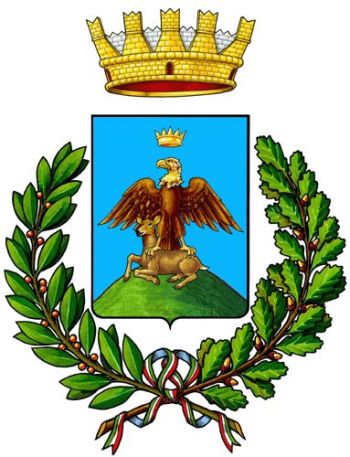
Many languages have adopted the word "clan," which is of Scottish origin, meaning "people of a common heritage." Another word of Scottish origin which would work well as a loan word is "tartan." Just like clan, which refers to the old clans of the Scottish Highlands, tartans are the unique plaid design symbols for each of the clans/territories. A tartan could be used to represent the symbolism for any smaller regional community. The various mountain communities of the Italian Alps, or even the Apennine Mountains, are similar to the concept of the Scottish Highland clans. The Val Camonica has both the Camunian rose and the arms of its biggest city Breno (above) which also serves as symbol of the region. This seems like a type of Tartan, distinct from the surrounding mountain communities (Valtellina, Val Seriana, etc.).
Also, the history of the Scottish Highland resistance to foreign (in past centuries) English Monarchical rule is similar to the long history of Italian Alpine resistance to the Roman State (Tropaeum Alpium), and also to resistance to German rule (Barbarossa; Five Days of Milan). I don't 100% hang my hat on that, as so often in human history... today's freedom fighter is tomorrows oppressor. However, there are some strong similarities at work here. Another word that is related is the Latin/Roman "vexillum," a Roman military standard or banner, especially one of a maniple. The story of the Alpine Piedmontese village of Gurro reminds me of other similar stories, such as the Cimbrian villages of the Veneto Alps, or the Confederados of Sao Paulo Province in Brazil.
************
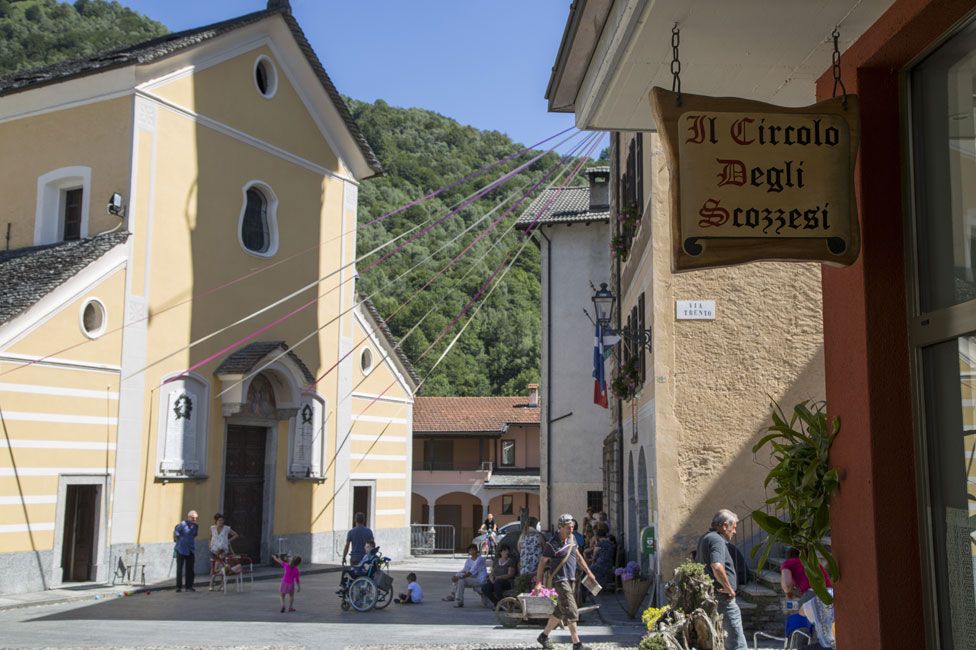
Il Cirrcolo Degli Scozzesi
"Il Cirrcolo Degli Scozzesi" is a local pub, and it means "Circle of Scots."
Image caption from above: Gurro's "Scottish social club" (the bar) is situated opposite the church
The world is falling deeper into it's own vortex of degeneration, true art and values are facing their final extinction. Let us join together under one goal - we must never let the true European beauty die! We only have one life, one home, and we only have one chance to make a change in this world and earn our right to stand side by side with our ancestors. Let the rebirth of our true spirit begin!
Between the Fall of Rome and the dawn of the Renaissance, Europe plunged into a dark night of constant war, splintered sovereignties, marauding pagans, rabid crusaders and devastating plague. That anything of value arose from this chaotic muck - much less the Renaissance - is nothing short of miraculous. The History Channel examines the Dark Ages from the fall of the Roman Empire to the First Crusade.
Between the Fall of Rome and the dawn of the Renaissance, Europe plunged into a dark night of constant war, splintered sovereignties, marauding pagans, rabid crusaders and devastating plague. That anything of value arose from this chaotic muck - much less the Renaissance - is nothing short of miraculous. The History Channel examines the Dark Ages from the fall of the Roman Empire to the First Crusade.
National Anthem of Roman Empire (Instrumental) National Anthems of the World (The Roman Empire didn't have official national flag and anthem) In spite of the purported lack of musical originality on the part of the Romans, they did enjoy music greatly and used it for many activities.
Imperium Romanum (509 a.c - 1453) Aerilmellon Fictitious flag and fictitious anthem (Roll Tide by Hans Zimmer) In Latin, "Imperium Romanum" means "Roman power."
Gladiator (Latin pronunciation: [glaːdiatọɾ]) is a 2000 historical epic film directed by Ridley Scott, starring Russell Crowe, Joaquin Phoenix, Connie Nielsen, Ralf Möller, Oliver Reed, Djimon Hounsou, Derek Jacobi, John Shrapnel and Richard Harris. Crowe portrays the loyal Roman General Maximus Decimus Meridius, who is betrayed when the Emperor's ambitious son, Commodus, murders his father and seizes the throne. Reduced to slavery, Maximus rises through the ranks of the gladiatorial arena to avenge the murder of his family and his Emperor.
Released in the United States on May 5, 2000, Gladiator was a box office success, receiving positive reviews, and was credited with briefly reviving the historical epic. The film was nominated for and won multiple awards, particularly five Academy Awards in the 73rd Academy Awards including Best Picture. Although there have been talks of both a prequel and sequel, as of 2012, no production has begun.
Gladiator is the original soundtrack of the 2000 film of the same name. The original score and songs were composed by Hans Zimmer and Lisa Gerrard and was released in 2000, entitled Gladiator: Music From the Motion Picture. The Lyndhurst Orchestra performing the score was conducted by Gavin Greenaway.
The album won the Golden Globe Award for Best Original Score and was also nominated for the Academy Award and BAFTA Award for Best Score ("Anthony Asquith Award for Film Music").
The Oscar-nominated score was composed by Hans Zimmer and Lisa Gerrard, and conducted by Gavin Greenaway. Lisa Gerrard's vocals are similar to her own work on The Insider score.
Italy's Mystery Mountains explores the fascinating geologic story of Italy, the land known for its fabulous art, fantastic food, opera, the dolce vita, and so much more. What's less known about Italy is the diversity and turbulence of the geology behind all of this abundance: the continuously erupting volcanoes, the violent earthquakes, the clash of mighty tectonic plates, and the rising of the mountains from which Michelangelo sourced his famous marbles.
Italy's Mystery Mountains ties the country's rich artistic culture to its turbulent geologic story, following two international teams of geologists determined to resolve a hotly debated issue: are the Apennines still alive and growing in the north? With the answer to this question the fascinating story of the Italian peninsula will fall into place and geologists may better understand where future earthquakes might strike this highly unstable land. .
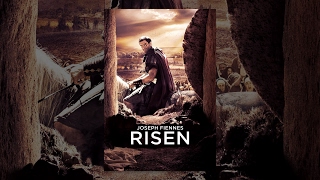
RESURRECTION tells the epic New Testament story of the first forty days after the Resurrection of Jesus Christ through the eyes of an agnostic Roman Centurion charged by Pontius Pilot to investigate rumors of a risen Jewish Messiah and locate the missing deceased body of Jesus of Nazareth in order to subdue an imminent uprising in Jerusalem.
Risen (2016 film) Risen is a 2016 American biblical drama film directed by Kevin Reynolds; it was conceived from a screenplay written by Reynolds and Paul Aiello. The film stars Joseph Fiennes, Tom Felton, Peter Firth, and Cliff Curtis, and details a Roman soldier's search for Jesus' body following his Resurrection. Columbia Pictures released the film to theaters nationwide in the United States on February 19, 2016. ************************* The film begins with the words "Judean Desert AD 33," and a revolt by Judeans against the Roman army. A rather gutty thing to do, as they were poorly armed. In the bigger picture, the Roman provincial prefect Pontius Pilate wanted things to settle down for a coming visit from the Emperor. In a separate early scene, the Crucifixion of "Yeshua" is shown, and the central character Clavius is introduced. He was a high ranking Roman military tribune; likely a fictional character. Roman and Hebrew leadership were portrayed as conspiring together against Yeshua's potential "Messiah" status after his death, and no doubt were doing so when he was alive as far as this movie's depiction.
When guards fell asleep, and the body of Yeshua comes up missing, this coalition goes in panic mode. There is an ambiguous aura around what actually occurred to these two guards, and it remained inconclusive. At one point, Clavius prays to the Roman god Mars in order to garner favor. I don't want to give away too much, although the trailer gives away much of this anyway, but Clavius comes face to face with the "risen" Yeshua and observes supernatural happenings which dramatically transforms his thinking. Later interactions between Yeshua and Clavius are moving.
There are no overzealous attempts by the filmmakers to make Yeshua "bigger than life" or to show him as overly humble or pious, as has been portrayed in past films. In some ways, this added to the character's sincerity, gentle nature, and strength. Yeshua is played by Cliff Curtis, a New Zealander of Maori or part Maori descent... who made a perfectly believable ancient Hebrew... a more accurate Jesus, sort've more Tony Shaloub than Brad Pitt. Clavius is played well by British actor Joseph Fiennes.
Basically, the Hebrews appeared as what we would perceive as like Russian Jews; while the Romans appeared more-or-less accurately as being something of like "Alpine types." There is at least some evidence to suggest that the early Romans were more of a proto-European outfit... rising up against the more Mediterranean Etruscans. Our own Cisalpine culture led the way, in terms of the artistic portrayals of Jesus, centuries later. Needless to say, this movie is very relevant to our culture. While this film doesn't have a particularly expensive or elaborate setting, it likely shows a more accurate Judea of 2,000 years ago. It shows the characters the way they were to have been, without overstating the point. It's an easy watch; rough without displaying too much overt violence.
*************************
Mary Magdalene is played by Maria Botto, an Argentine actress of Cisalpine descent; and whose family is well represented in the Argentine film industry as can be seen on her link.
.
.
. .
. Spoiler alert beyond this point! . . . . .
Close to the end of the film, Clavius--after observing numerous supernatual events--opens up to Yeshua. He finally confesses that he partook in the crucifixion, and Yeshua puts him at ease by reminding Clavius of something he had said perhaps the day prior. He had emphatically said something like "there will be no killing today" while defusing a situation. Of course, under normal circumstances, there would be almost no way or very unlikely that Yeshua would know this since he was not present. Sure it may have been possible that someone told him, although there would be no reason to do so. Regardless, Clavius just knew that he was amid a supernatural person... as he had already observed it first hand. This scene displayed the subtle style of the film. The movie ends with Yeshua saying a few parting words as he walked towards the rising sun, and finally disappears into it. This at least suggests a connection with Horus, Egyptian mythology, and more ancient sun cult stories... and a symbolic tie-in with "the Sun," "the light of the world," or "our risen savior" (every morning). It's possible that this was a more subtle symbol. My guess is that the filmmakers displayed a clear tie-in with Horus. There was also the fish symbolism, which was not nearly as clear or dramatic as the sun symbology. .
I have asked this question within a different recent thread, but since its title is more of a general kind, I thought a new thread dealing specifically with this case might be warranted.
I hope I am not breaking any rules - I would just really like to get an answer to this question - and a title naming the king might improve the chances of some Italian, perhaps, who knows of this noticing the thread.
Some of you may have heard of the story about Umberto I, the king of Italy, and his alleged "double." If you haven't, here's a short account, copied below for convenience:
“In 1900 King Umberto of Italy came face to face with a man who looked just like him. The king and his aide-de-camp Gen. Emilio Ponzio-Vaglia arrived in the town of Monza, a few miles outside Milan. The next day the king was to present the prizes at an athletic meet. The night of their arrival he and his aide went to a small restaurant for dinner. As the owner was taking their order, the king noticed that he and the patron were virtually doubles, in both face and build. He remarked on this, and as the two men talked an extraordinary series of parallels emerged which caused both of them to marvel:
* Both were born on the same day, year, same town, and had the same name.
* They were both married on April 22, 1868.
* Both wives were named Margarita,
* Both had a son named Vittorio.
* They had been decorated for bravery together on two occasions, the first time in 1866, when Umberto had been a private and the king a colonel, and the second time in 1870, when each had been promoted to sergeant and corps commander. With this final revelation the patron returned to his duties, and the king, turning to his aide, said, ‘I intend to make that man a Cavaliere of the Crown of Italy tomorrow. Be sure he comes to the meet.'"
“The following day, true to his word, the king asked for his double only to be told that the man had died that day in a shooting accident. Shocked, the king asked his aide to find out when the funeral was to take place so that he might attend. At that very moment three shots rang out, fired by an assassin. The first of them missed the king, but the second two pierced his heart and killed him instantly.”
Frankly, I find this story more eerie than "fascinating," in the usual titillating sense of the word... Because if it's true, my first thought would be:
The two Umbertos were twin brothers. Twins being a major problem in royal lineages, for obvious reasons, one of the boys was given away immediately after birth, but was also called Umberto, either by chance (by the family who adopted him) - or even on purpose, to secure a credible "spare."
That would explain everything, even the subsequent "coincidences." (Many studies of the lives of identical twins show that their spouses are often very similar in appearance, share the same name etc. Twins often also die on the same day - although in this case even the death could be explained in a more sinister and less coincidental light...) But my question is: WAS it true at all? Does anyone have a reputable source for this story?
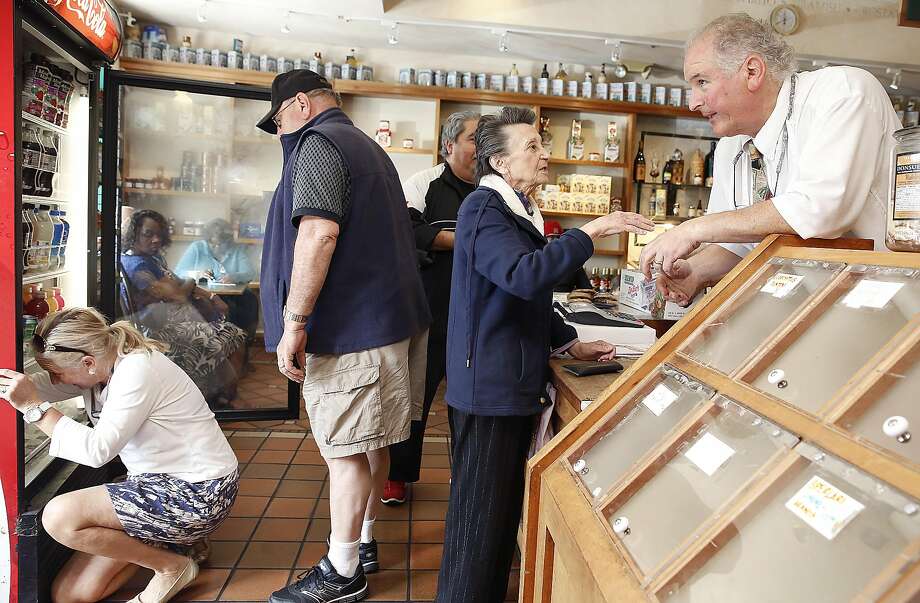
David DeVincenzi (right), son of Genova Deli owner Dominic DeVincenzi,
helps customer Mrs. Gasparro, while his wife, Patti, kneels in front of a
display case to help Joe Scodella (center), a deli customer since 1956.
The vibe inside Genova Delicatessen on Monday afternoon had the feel of a living wake, with old friends gathering one last time to celebrate a loved one soon to pass.
In this case, that loved one took the form of overstuffed Italian sandwiches, homemade meat ravioli and softball-size fried artichokes, all of which longtime customers were loading up on one last time before this immensely popular 90-year-old Oakland institution closes for good on Saturday.
While the announcement was officially made late last week, the closure had been threatened — and for many locals, dreaded — since January. That’s when news leaked that owner Dominic DeVincenzi was considering shutting down his family’s flagship Italian deli due in part to a rent dispute with the property owners of Temescal Plaza, where Genova has been located since 1996. (It’s been in Temescal since 1926.)
According to David DeVincenzi, son of Genova Deli owner Dominic DeVincenzi, the family is continuing to work on finding a new location in Oakland.
“We’re working on a couple of places,” DeVincenzi said. Where that might be exactly, however, DeVincenzi was unwilling to divulge.
The Temescal neighborhood’s reputation has soared in recent years as a foodie destination — home to the likes of Pizzaiolo, Burma Superstar and Bakesale Betty — and as a hot spot for house hunters priced out of San Francisco. But the crowd inside Genova, packed with everyone from families to firefighters, felt very old school.
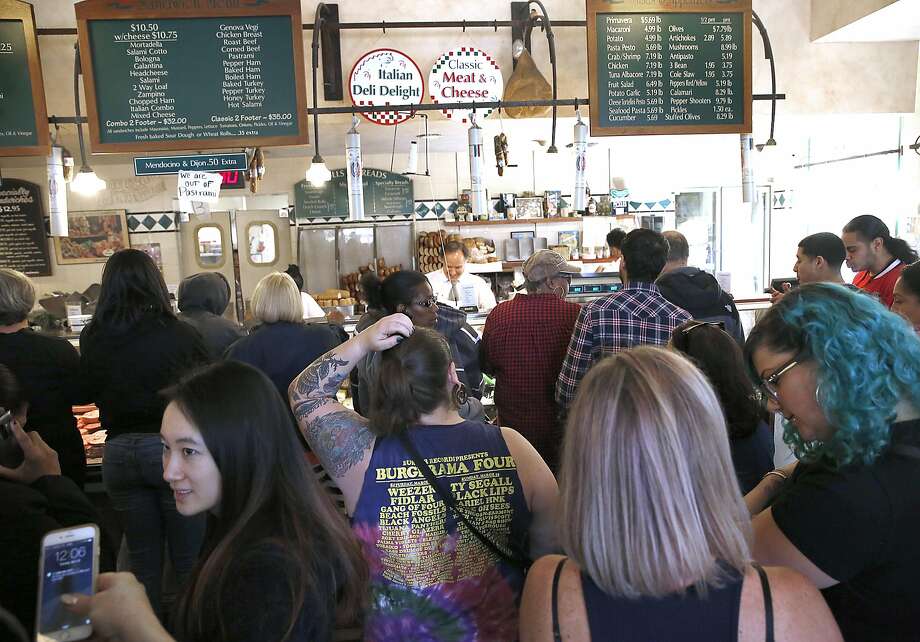
Customers pack Genova Delicatessen for their last orders and to say goodbye before it closes on Saturday after 90 years in Oakland.
Generations of patrons
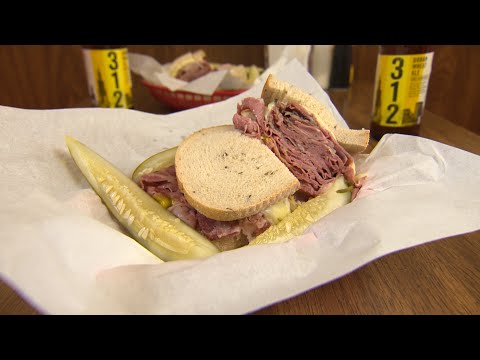
Terry Barnes, 41, grew up around the corner and said he’d been coming to Genova since he was 4 years old, back in the days when it was located in a tiny Victorian on Telegraph Avenue, and lines would stretch out the door and down the block. He was waiting for his number to be called — which even at 3 in the afternoon was taking upward of an hour — to get one final Italian combo sandwich with extra dry salame and marinated cucumbers. “And a cannoli. Gotta have my cannoli,” Barnes added.
“My family, my mother and my grandmother and all my cousins, we all grew up on this,” he said. “My kids grew up on this, my kids’ friends and their cousins all grew up on this. Every girlfriend I ever had, I would take them here, and now I see all of them coming in with their kids. So it’s sad to see this happen because you would think this place would stick around.”
Genova’s factory and Napa store will remain open, and the property’s landlords have said they’re looking to keep the space as a deli. That seemed small consolation for many customers, nearly all of whom it seemed had been coming for decades and knew each other.
Another customer, Emmy Fearn, ordered three sandwiches — an Italian combo, a coppa and a pastrami. One was for her, one was for her husband getting treatment at a nearby hospital, and the third was for her husband’s doctor, who had promptly put in an order upon hearing the deli was closing. Like many, Fearn expressed shock that Genova was actually closing.
“At first I thought that it was just a play to get some leverage with the landlord,” Fearn said. “But now that it’s really happening, I think it’s horrible. I think it’s a terrible loss to the community.”
‘This is a real loss’
Inside, she ran into an old friend, Marge Gibson Haskell, a former Oakland city councilwoman who had worked with Dominic back in the 1980s to ensure that the deli remained in the neighborhood.
“Back then, there was hardly anything else around here, so you had to really hold on to what you had,” said Haskell while waiting for her Italian combo (light on the peppers). “That was really important for this neighborhood and to a large extent made it possible for everything else that came here afterwards. This is what started it all. … I think not keeping this here is a serious mistake.”
“This city has changed a lot over these last few years, some good, some bad,” said Haskell. “But this. This is a real loss.”
Similar sentiments were echoed by many inside Genova, where there was a palpable sense of unease among longtime locals at the speed with which the rapidly gentrifying city was changing and losing its ties to its past. And while it’s unclear to what extent any rent increase played in the store closing — Genova’s owners have cited the general cost of doing business in Oakland and not wanting to pass that on to the consumer as the main factor — there was plenty of blame to go around that something couldn’t be worked out.
“I understand you want to get fair market value and all that, but you can’t expect people to pay so much, especially in the restaurant industry where the margins are so thin,” said Lex Gopnik, loaded up with a big bag stuffed with Italian provisions. Gopnik said he has been coming to Genova since he moved to the East Bay in 1988. Genova has served as a touchstone for him, his wife and three kids, whether it was grabbing takeout to bring to an A’s game or as an easy dinner for a busy family of five.
“It’s indicative of what’s happening here in the East Bay and the Bay Area in general. I think they would have had to charge like $20 for a sandwich. So it’s sad to see them go, but I respect them for taking a stand and saying, ‘No, I don’t want to do that.’”
‘Things change’
Gopnik is more familiar with the industry than most. He’s been looking for space to open a Montreal-style deli in Oakland, but says news like this makes him reconsider whether he has a future in the city in which rising rents threaten the feasibility of the types of small, independently run businesses that make the place so attractive in the first place.
“I just don’t understand that mentality,” he says. “To me it seems so shortsighted.”
Brian McCabe, an Oakland native waiting for one last turkey sandwich on sourdough, took a more pragmatic view.
“I’ve been coming here for years, and it’s a special place,” he said. “It’s been around for so long, and there’s something comforting about that. But things change.”
Ethan Fletcher is a Bay Area freelance writer. Email: food@sfchronicle.com
*************************
Giovanni Beltramo, who opened a wholesale and retail wine and spirits business in Menlo Park in 1882, in his vineyard. Photo courtesy Beltramo family.
It would be worth it to click on the above link just to see the old photos, and there's a short interesting history. When Beltramo's opened, it was the El Camino trail with horses and carriages. The story of Beltramo's, the family originating from Piemonte, is everything our people have been about in northern California. I didn't realize that they were initially in the wine business. It was a truly great store. Why do I miss things most when they're no longer there...
An aerial view of Piedmont RAI http://www.expo.rai.it - Piedmont on the fly. From the Sacra di San Michele at the entrance of Val di Susa, up until the magnificent scenes of the Langhe and Roero countryside, which together with Monferrato have been declared World Heritage sites for their enchanting landscapes of vineyards. And then off to Turin, with the Mole Antonelliana, the architecture of the Savoys and the sumptuous royal residences. Do not miss the royal Palace of Venaria. Piedmont’s rice fields stretching as far as the eye are astonishing, as is the beautiful island of Isola Bella in the center of Lake Maggiore, which enchants us with its mysterious beauty. .
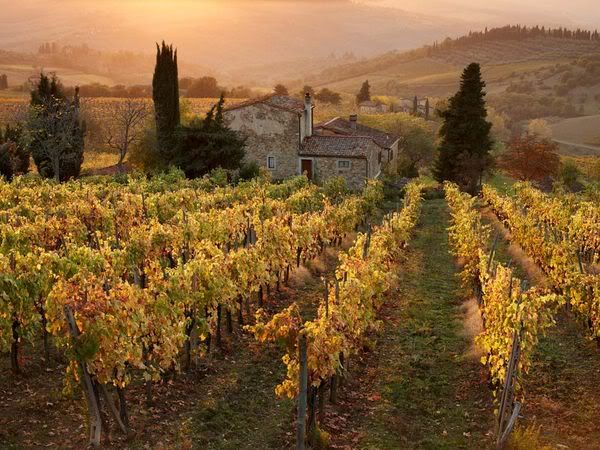
Recently my Mother received a fancy post card ad from LakeCountyWineries.com. It was in regard to their first big event of the year, the Lake County Wine Adventure 2015. It runs for three days (Fri-Sun) from May 15 to 17. The information is on the website. When we think of northern California wine, especially in regards to the history of the Cisalpine people, we think of Napa or Sonoma counties. However, Lake County is part of that history, and is emerging as an important center for the multi-billion dollar California wine industry. Much of northern California looks so much like the "northern nations." Napa can look like Tuscany, Santa Cruz like the Apennine Mountains, Sonoma like Piemonte, and Lake County like the "Lakes region" of Lombardy. The self-determinist Cisalpine people and early northern California was a perfect match. Whenever I drive down 101 in Sonoma County at night, and I see the old farm properties with perhaps just a few lights on... as if a scene from a century ago with a few oil lamps on against a black surrounding landscape.
An ancient name I recall, when I read the book 'History of the Lombards', the old Langobard names. Most often they were typical ancient Germanic names. However, one seems to be more rooted in the Cisalpine culture. According the the website BehindTheName.com, the name "Romilda" is "Italian" and "ancient Germanic." It means "famous battle" from the Germanic elements hrom ("fame") and hild ("battle"). Although once used as both feminine and masculine, naturally it would be feminine today unless altered with an "o" at the end. It's a name which became more well-known due to the Harry Potter character Romilda. The noteworthy nineteenth century opera singer Romilda Pantaleoni was from Udine. .
St. Anthony was a great Saint. He was a follower of St. Francis of
Assisi. Almost as great as St. Francis of Assisi. His words made people
think and follow as example of life. His faith in God was Great. --Bruna B, //youTube user .
'Italian Americans, California Italians' (UCLA YouTube channel) From the video description: This video records the beginning of a conference at UCLA titled "Italian Americans, California Italians." It was the first of its kind, made up of nearly a dozen scholarly presentations and discussions aiming to define "California Italians" within the more generic group of "Italian Americans." This opening, introductory statement to a full room was made by the Chairman of UCLA's Department of Italian, Professor Thomas Harrison.
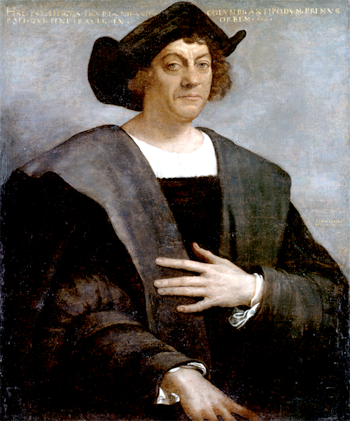
Columbus... born in Genoa
You may be aware that the origin of Columbus has been in some dispute due to a somewhat surprising lack of evidence of his early life in Genoa. However, it does appear that he was of Genoese ancestry. "Yo nacio en Genoba" ("I was born in Genoa")
--Written in Christopher Columbus' Will; February 22, 1498
The small town of La California, along the Tuscan coast, was founded by Leonetto Cipriani. Cipriani--who was Corsican--had spent many years traveling, especially in California and the west coast of the United States. He was influential, and was acquainted with the Count of Cavour, and was something of an ambassador for a unified Italy of which he very much wanted Corsica to be included. He wrote an account of his travels entitled 'California And Overland Diaries of Count Leonetto Cipriani From 1853 through 1871'. He co-founded the city of Belmont, California in San Mateo County.
I love the Santa Cruz Mountains. Any excuse to visit will not disappoint. It even resembles parts of the Cisalpine Alps or the Apennine Mountains. I have not visited this winery. Feel free to send a short or long review (camunlynx@hotmail.com) for posting.
The Bargetto winemaking heritage began with brothers Phillip and John Bargetto who emigrated from Castelnuovo Don Bosco, a small town in the Piedmont region of northern Italy. They brought with them years of winegrowing experience when they established BARGETTO WINERY on the banks of Soquel Creek in California.
Phillip was the first to depart Italy in 1891 at the age of seventeen. In 1909 John joined his brother in San Francisco.The original Bargetto family winery was located in San Francisco from 1910-1917. The name of this winery was South Montebello Vineyard and Wine Company. With Prohibition on the horizon the winery was closed and the brothers moved to Soquel in 1917.
Phillip and John purchased the present site of BARGETTO WINERY in 1918 and began making wine out of an old barn on the property. During Prohibition (1919-1933), the brothers continued to make wine for family and friends, while they continued to sell produce to local customers. They also grew apples at the family ranch in Soquel. When Prohibition ended in 1933, the brothers devoted more time to the wine business. They began a wine wholesale business, while they continued to sell produce wholesale.
Phillip Bargetto passed away in 1936 and John was left the sole owner of the business throughout the 1940s and 1950s. He continued to produce wine and sell wholesale and retail. He was joined by his sons Ralph and Lawrence during these years.
The Next Generation
The Bargetto Family winemaking heritage continued with John’s son Lawrence during the 1960s and 1970s. He introduced modern technology such as stainless steel fermentation, barrel aging, and added new Santa Cruz Mountains varietals such as Pinot Noir and Chardonnay. He also created the CHAUCER’S line of dessert-style wines.
Today
The third generation of Bargettos now direct the operation of the winery. BARGETTO WINERY represents the oldest continuous-operation winery in the Santa Cruz Mountains. Their pioneering spirit continued with the establishment of Bargetto Regan Estate Vineyards, near Corralitos, California in 1992. Here, cool-climate varietals like Chardonnay, Pinot Noir, and Pinot Grigio are carefully nurtured to produce BARGETTO WINERY’s estate wines. In keeping with the family heritage, the winery also incorporates northern Italian varietals from its Estate Vineyard into its flagship LA VITA wine.
Voynich manuscript This work is in the form of a short book, filled with illustrations of plants, geometric shapes, and an unknown text.It appears very deep and scientific, but there has not yet been any way to read its secrets. The book is available for purchase, free in pdf form online, documentaries on YouTube, and lots of general information in a search.. so I won't bother with links. You may want to examine it and attempt to understand it. The best I could come up with is that the characters look a bit like ancient Indo-European Tocharian writing, and the illustrations remind me of Fibonacci patterns. Very strange.
From Wikipedia:
The Voynich manuscript is an illustrated codex hand-written in an unknown writing system. The vellum in the book pages has been carbon-dated to the early 15th century (1404–1438), and may have been composed in Northern Italy during the Italian Renaissance. The manuscript is named after Wilfrid Voynich, a Polish book dealer who purchased it in 1912.
The pages of the codex are vellum. Some of the pages are missing, but about 240 remain. The text is written from left to right, and most of the pages have illustrations or diagrams.
The Voynich manuscript has been studied by many professional and amateur cryptographers, including American and British codebreakers from both World War I and World War II. No one has yet succeeded in deciphering the text, and it has become a famous case in the history of cryptography. The mystery of the meaning and origin of the manuscript has excited the popular imagination, making the manuscript the subject of novels and speculation. None of the many hypotheses proposed over the last hundred years has yet been independently verified.
The Voynich manuscript was donated by Hans P. Kraus[6] to Yale University's Beinecke Rare Book and Manuscript Library in 1969, where it is catalogued under call number MS 408. A digitized high-resolution copy is also accessible freely at its website. .
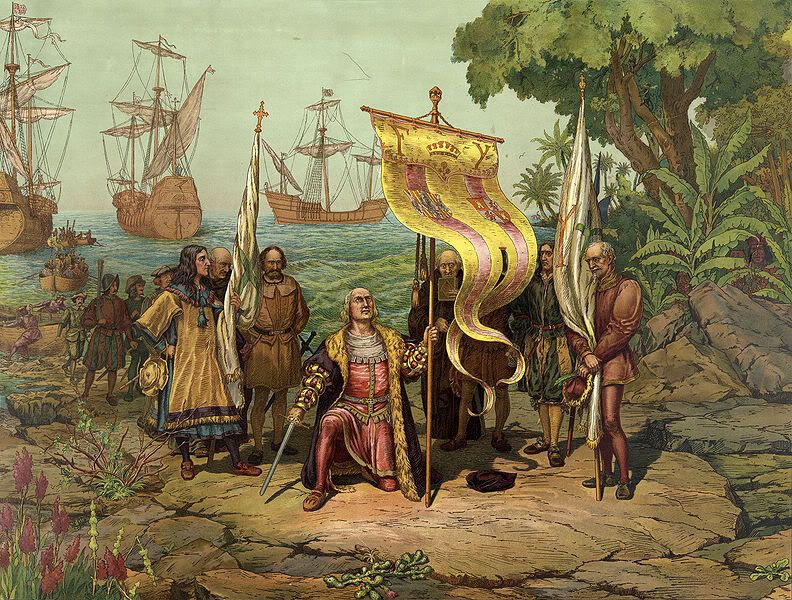
After viewing many Columbus Day protests, I found it amusing that elsewhere like New York City, the parade goes on seemingly without a hitch. About a minute into this video, you will see the name of an organization called the Columbus Citizens Foundation. The foundation is in full support of anything Columbus, but is based on "Italian heritage" not specifically "Columbus." In other words, from what I can gather, they avoid any "intellectualizing" about all the facets of the Columbus issue (just as the opposing side does), and merely hangs their hat on the "Italian-American" heritage concept. There's an old saying that I think is mostly true: "Every nation was born in blood." Christopher Columbus was one of many explorers in the New World, starting with Leif Erikson. Erikson was even praised by President Obama... a sometimes-anti-imperialist. Erikson certainly would have set up a permanent colony along the eastern Canadian coast, but it was too far out of the way at that time. Beyond Leif Erikson, all of these early explorers did their part to set up the Americas for colonization.
Columbus, to some "the new Hitler"
Personally, I believe that it was actually "Spanish, Portuguese, English, French, and Dutch Imperialism," not "EUROPEAN IMPERIALISM." Again, how many nations participated? There were perhaps fifty European nations in 1492! If someone doesn't like something that China did, they can't blame Tibet, even if they may look similar! If something bad happens in Algeria, you can't blame Pakistan, even if they may look similar! Even the overwhelming colonization of later times right up to the 60s, was the United Kingdom, France, Portugal, and Holland; with the rest being small and sporadic. Even Soviet expansion into Asia, early on, was in huge very depopulated regions.
There's nothing that "the West" did in the New World that Islam did not equal or surpass for 1,500 years on three continents. What did the Berbers, an Indo-European-like people in northwest Africa, endure that the Amerindians didn't endure? They were either driven from their lands or forced to convert to a foreign religion and culture. Islamic colonization took down many peoples and cultures in this manner; just as the Catholic Church did... but some people prefer to ignore all of the facts and just blame Columbus. There was imperialism and slavery all over the world long before Columbus.
Sometimes Mexico is included among the victims of American Imperialism. Really? That's really selling Mexico short, as it adhered to all of the same imperialism, slave trading, and religious supremacy. There aren't too many people in Mexico who don't speak a European language, have a European name, or practice a European-centered religion. Somehow it just seems a little late in the game for Mexican Columbus protesters to suddenly "become Indians" after all the bloody conflicts with Amerindians in Mexico and the Southwest over the centuries. Those protesters want us to "Go back to Europe," when some of their own ancestors were among the very worst Spanish imperialists, slave owners, and Catholic supremacists.
The Cherokees put hundreds of thousands of innocent Africans in chains
If someone wants to blame Columbus, then they must have the entire plate! They cannot ignore the establishment, expansion, and mere existence of the United States, the role of the Vatican in American colonialism (Latin America), the fact that 19 out of 20 captured Africans were sold into slavery in Latin America, and much more. How about the African Chieftains and their henchmen who captured people by literally the millions to sell along the West African coast? Maybe it's time to find out who really owned all those slave ships? Also, there were many Arab slavers working along the West African coast. How many people know that the Cherokee Nation was up to their necks in the slave trade? I think that the Columbus protesters, of all races, should be careful of what they ask for. Where does it end? There have been hundreds of cases such as demands that a grammar school change its name from "George Washington," or for Andrew Jackson's name to be removed from the $20 bill... because they were "racists." Well, are we going to rehash all the history of all other nations too... the vast majority of which were "born in blood"..? What about the Cherokee Nation... are they going to give an apology for their large role in the slave trade? I don't think there were any Latvians, Hungarians, or Greeks bidding on captured Africans... but there sure were Cherokees bidding. Why is that such a secret? How many people realize that many Irish people were sold into slavery in the Americas?
Christopher Columbus Ship The Santa Maria May Have Been Found Bill Chappell - NPR - May 13, 2014 It's been missing for more than 500 years. But now there are reports that the Santa Maria, the largest ship among the trio that made Christopher Columbus' first expedition to North America, may be found. Undersea explorer Barry Clifford says he thinks he has found the ship in waters off of Haiti's coast.
"All the geographical, underwater topography and archaeological evidence strongly suggests that this wreck is Columbus' famous flagship, the Santa Maria," Clifford tells Britain's . "The Haitian government has been extremely helpful — and we now need to continue working with them to carry out a detailed archaeological excavation of the wreck."
Clifford is a well-known wreck hunter, having found the pirate ship and former slave vessel , which sank off the coast of Cape Cod in 1717. That discovery led to a project with .
The Santa Maria sank after hitting reefs off the Haitian coast around Christmas of 1492, months after arriving from Spain. It is believed that Columbus ordered some of the ship's timbers stripped from the wreck in order to build a fort on land near the shore.
According to The Independent, Clifford closed in on the Santa Maria's possible location by combining two separate historical sources. After archaeologists announced new details suggesting the location of Columbus' fort in Haiti in 2003, Clifford used information in the explorer's diary to narrow down a possible location for the Santa Maria's sinking.
It turned out that Clifford's team had already located a wreck in that spot, in 2003. Now they're working to prove its identity as the ship that sailed from Spain along with two smaller ships, the Pinta and the Niña. But verifying the wreck's identity will be harder now than it would have been in 2003, when Clifford took photos of the site that included a cannon like what the Santa Maria would have carried. When they returned recently, "all the key visible diagnostic objects including the cannon had been looted by illicit raiders," The Independent's archaeology correspondent, David Keys, reports.
Professor Charles Beeker, who directs the Indiana University's Office of Underwater Science and who has visited the wreck with Clifford, tells Keys that there's "some very compelling evidence" that the wreck is the Santa Maria. But he adds that a full excavation must be carried out to be sure.
The Santa Maria was a carrack, a craft that was "the definitive beast of burden of the Age of Exploration," according to the site . "Magellan, for example, had an all-carrack fleet with which he set to circumnavigate the globe in 1519."
One of the ship's advantages was that it was roomy enough for plenty of provisions — a capacity that could also be used to bring treasure back to an expedition's sponsor.
Clifford tells The Independent he'd like the ship to stay in Haiti:
"Ideally, if excavations go well and depending on the state of preservation of any buried timber, it may ultimately be possible to lift any surviving remains of the vessel, fully conserve them and then put them on permanent public exhibition in a museum in Haiti.
"I believe that, treated in this way, the wreck has the potential to play a major role in helping to further develop Haiti's tourism industry in the future." .
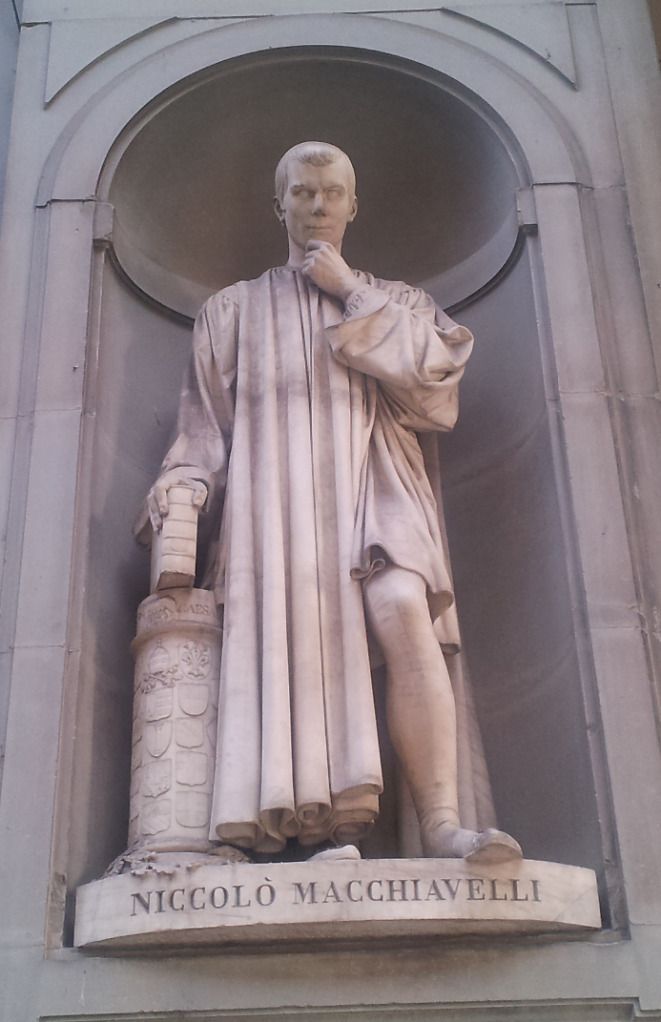
Niccolò di Bernardo dei Machiavelli: 3 May 1469 – 21 June 1527) was an Italian historian, politician, diplomat, philosopher, humanist, and writer based in Florence during the Renaissance. He was for many years an official in the Florentine Republic, with responsibilities in diplomatic and military affairs. He was a founder of modern political science, and more specifically political ethics.
He also wrote comedies, carnival songs, and poetry. His personal correspondence is renowned in the Italian language. He was Secretary to the Second Chancery of the Republic of Florence from 1498 to 1512, when the Medici were out of power. He wrote his masterpiece, The Prince, after the Medici had recovered power and he no longer held a position of responsibility in Florence.
"Machiavellianism" is a widely used negative term to characterize unscrupulous politicians of the sort Machiavelli described in The Prince. The book itself gained enormous notoriety and wide readership because the author seemed to be endorsing behavior often deemed as evil and immoral.
Personally, I think the philosophy of Georg Hegel and Adam Weishaupt have had an infinitely worse affect on the world than Machiavelli, because their methods have become systemic and long-term. .
Francis of Assisi (film) [Wikipedia] Francis of Assisi is a 1961 DeLuxe CinemaScope film directed by Michael Curtiz, based on the novel The Joyful Beggar by Louis de Wohl. It was shot entirely in Italy. The film was not a box-office success. It starred Bradford Dillman in one of his few sympathetic leading film roles (he usually played a villainous character onscreen, despite having originated the role of Jamie in the original stage version of Eugene O'Neill's Long Day's Journey into Night in 1956).
Two years after the release of Francis of Assisi, Dolores Hart, the 24-year-old actress who plays a nun in the film, became a real-life Roman Catholic nun at the Benedictine Abbey of Regina Laudis in Bethlehem, Connecticut.
Plot
Francis Bernadone (Bradford Dillman) is the son of a wealthy cloth merchant in Assisi, who gives up all his worldly goods to dedicate himself to God. Clare (Dolores Hart) is a young aristocratic woman who, according to the film, is so taken with St. Francis that she leaves her family and becomes a nun. By this time (1212 A.D.), St. Francis has a well-established reputation for his vows of poverty. The movie goes on to note miracles (such as the appearance of the stigmata on Francis's hands and feet) and other aspects of his life, up to and including his death on October 3, 1226.
I saw where this was on on the Turner Classic Movies network, and found it on YouTube. I watched it today. If you're a Cisalpine, you should see it. Even with religion aside, it's part of our history. .
After the Romans conquered the Gallo-Alpine tribes, the slow process of linguistic Romanization of the languages began. Ancient family and village names were either translated or an Italian suffix was added on to the end (ini, oni, ucci, etti, etc.). In this way, a translated Sicilian name could be the same as a translated Piedmontese name. Still, after the fall of Rome, language shifted back to the natives languages and dialects. What we had in 1860 were the hybrid languages of Roman-Latin and the various Cisalpine dialects. Had cultural and linguistic Romanization not taken place, the Italian peninsula would be just like the Balkans today in terms of constituting entirely different languages and cultures.
If you look at the "linguistic map of Italy," and then look at the nations of 1860 (or any map between the fall of Rome and the Risorgimento, or even the regions today), it always closely matches! There is always the "northern nations," the "Roman state," and the "southern nations." All separated by different languages with local dialects. As Americans, we have a hard time comprehending the way Europe was socio-geographically over the centuries. I could move to Montana, a thousand miles away, tomorrow and instantly become a Montanan. That's what we're used to. I could move From the Bay Area to Maine, and probably fit in better than I do here, even though I have no knowledge of the state. That would be like going from Ireland to Belarus. The cultural-geographical scale, up until very recently, was entirely different.
Within many Italian provinces, there exists even different native dialects (ex. Brescia). Sometimes there are even two different language families, and in parts of the Tri-Veneto area there are three different deep-rooted languages spoken (Italian, Venetian, and Ladin), and it was once four when the German-Cimbrian language was alive. [I would consider the South Tyrol to be a different dynamic since it was wrongly acquired after World War II.] Gallo-Italic languages (Wikipedia)
The Gallo-Italian or Gallo-Italic languages constitute the majority of northern Italian languages. Among them are are Piedmontese, Lombard, Emiliano-Romagnolo and Ligurian, although there is some doubt about the position of the latter due to its retention of final /o/.
The Gallo-Italian languages have characteristics both of the Gallo-Romance languages to the northwest (including French and Occitan) and the Italo-Romance languages to the south (including standard Italian). Examples of the former are the loss of all final vowels other than -a; the occurrence of lenition; the development of original /kt/ to /jt/ (and often later to /tʃ/); and the development of front-rounded vowels (e.g. the change of /u/ to /y/). Examples of the latter are the use of vowel changes to indicate plurals, in place of /s/; the widespread occurrence of metaphony of stressed vowels, triggered by original final /i/; and the development in some areas of /tʃ/ instead of /ts/ as the result of palatalization of original /k/ before e and i. As a result, there is some debate over the proper grouping of the Gallo-Italian languages. Most commonly, they are grouped with the Gallo-Romance languages, but some Italian linguists prefer to group them with the Italo-Romance languages.
Geographic distribution
Traditionally spoken in Northern Italy, Southern Switzerland, San Marino and Monaco, most Gallo-Italian languages have given way in everyday use to Standardized Italian. The vast majority of current speakers are bilingual with Italian. These languages are still spoken by immigrants in countries with Italian immigrant communities. Ligurian is formalised in Monaco as Monegasque.
The Venetian language is usually considered to belong to a different dialect community, while some publications place it among the Gallo-Italian languages. .
Mead (pron.: /ˈmiːd/; archaic and dialectal "medd"; from Old English "meodu" Ukrainian: Мед or Russian: Медовуха or Lithuanian: Midus), also called honey wine, is an alcoholic beverage that is produced by brewing a solution of honey and water. It may also be produced by brewing a solution of water and honey with grain mash, which is strained after fermentation. Depending on local traditions and specific recipes, it may be flavored with spices, fruit, or hops (which produce a bitter, beer-like flavor). The alcoholic content of mead may range from about 8% ABV to 18%. It may be still, carbonated or naturally sparkling, and it may be dry, semi-sweet or sweet.
Mead is known from many sources of ancient history throughout Europe, Africa and Asia, although archaeological evidence of it is ambiguous. Its origins are lost in prehistory. "It can be regarded as the ancestor of all fermented drinks," Maguelonne Toussaint-Samat has speculated, "antedating the cultivation of the soil."
Claude Lévi-Strauss makes a case for the invention of mead as a marker of the passage "from nature to culture." Mead has played an important role in the beliefs and mythology of some peoples. One such example is the Mead of Poetry, a mead of Norse mythology crafted from the blood of the wise being Kvasir which turns the drinker into a poet or scholar.
History
The earliest archaeological evidence for the production of mead dates to around 2000 BC. Pottery vessels containing a mixture of mead, rice and other fruits along with organic compounds of fermentation were found in Northern China. In Europe, it is first attested in residual samples found in the characteristic ceramics of the Bell Beaker Culture (ca. 2800 – 1800 BC).
The earliest surviving description of mead is in the hymns of the Rigveda, one of the sacred books of the historical Vedic religion and (later) Hinduism dated around 1700–1100 BC. During the Golden Age of Ancient Greece, mead was said to be the preferred drink. Aristotle (384–322 BC) discussed mead in his Meteorologica and elsewhere, while Pliny the Elder (AD 23–79) called mead militites in his Naturalis Historia and differentiated wine sweetened with honey or "honey-wine" from mead. The Spanish-Roman naturalist Columella gave a recipe for mead in De re rustica, about AD 60.
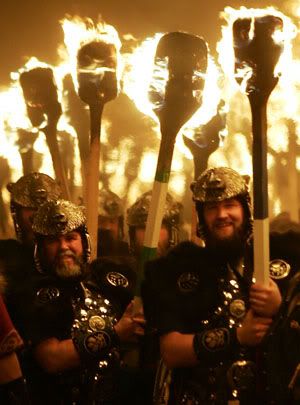
Take rainwater kept for several years, and mix a sextarius of this water with a pound of honey. For a weaker mead, mix a sextarius of water with nine ounces of honey. The whole is exposed to the sun for 40 days, and then left on a shelf near the fire. If you have no rain water, then boil spring water.Around AD 550, the Brythonic-speaking bard Taliesin wrote the Kanu y med or "Song of Mead." The legendary drinking, feasting and boasting of warriors in the mead hall is echoed in the mead hall Dyn Eidyn (modern day Edinburgh), and in the epic poem Y Gododdin, both dated around AD 700. In the Old English epic poem Beowulf, the Danish warriors drank mead. Later, taxation and regulations governing the ingredients of alcoholic beverages led to commercial mead becoming a more obscure beverage until recently. Some monasteries kept up the old traditions of mead-making as a by-product of beekeeping, especially in areas where grapes could not be grown, a well-known example being at Lindisfarne, where mead continues to be made to this day, albeit not in the monastery itself.
Etymology
The English word mead derives from the Old English meodu, from Proto-Germanic meduz, from Proto-Indo-European *médʰu (honey, fermented honey drink). Slavic med / miod , which means both "honey" and "mead", (Czech, Slovak, Serbian, Bosnian, Bulgarian, Croatian: med vs. medovina, Polish 'miód' pronounce [mju:t] - honey, mead) and Baltic medus "honey"/midus "mead", also derive from the same Proto-Indo-European root (cf. Welsh medd, Old Irish mid and Sanskrit madhu).
Festivals
Mazer Cup International Mead Competition and Tasting Event -- Sponsored by Gotmead.com, this event is held every year in March in Boulder, Colorado. It is the largest mead event in the world, with over 300 home meads and over 200 commercial meads in competition. There is a Friday tasting event with the gold medal winning commercial meads from the previous year, plus feature meads from around the world.
Real Ale Festival in Chicago, Illinois, includes categories for mead as well as cider and perry.
Woodbridge International Mead Festival - Sponsored by local residents, it claims to be the only mead festival east of the Mississippi. While few types of mead are available, all are home-brewed and go through a rigorous judging process.
In literature
Mead is featured in many Germanic myths and folktales such as Beowulf, as well as in other popular works that draw on these myths. Notable examples include books by Tolkien, George R. R. Martin and Neil Gaiman. It is often featured in books using a historical Germanic setting and in writings about the Viking era. Mead is mentioned many times in Neil Gaiman's 2001 novel, American Gods; it is referred to as the drink of the gods. Also, in the books of the Inheritance Cycle by Christopher Paolini, it is often drunk by Eragon Shadeslayer at feasts in honor of him. Mead is also referenced in The Kingkiller Chronicle novel series by Patrick Rothfuss. The protagonist Kvothe is known to drink metheglin. The non-existent "Greysdale Mead" is also drunk, although it is merely water.
[See above link for distribution, varieties, and local variants; see also Mead of poetry] .