Monday, September 19, 2011

The problems with definition in our folk-family: Part 1

GUILT BY PERCEIVED ASSOCIATION
Last evening, I was viewing the Comedy Central roast of Charlie Sheen. It's what I would consider an acceptable swim in the waters of modern America's "trash culture." Certainly a roast is no place for thin skin; and the "thin-skin issue" is one of debate. My general definition of acceptable disagreement is when someone says something that is either entirely out of proportion, or is simply not true. It's somewhat rare that a stereotype simply IS NOT TRUE, but it does happen.

One of the roasters was Anthony Jeselnik. His surname, although sort've Polish-sounding, might be of Prussian/Silesian (north German) origin. His appearance and demeanor were somewhat of what some would occasionally perceive as a negative German stereotype: tall, lean, muscular, strong blue eyes, a touch of seriousness or self-importance, short brown/blonde hair not quite short enough to call a crew cut; all of which mixed with the playful "chop-busting" attack-mode of the roast, only added to this concept. Of course, sometimes a comedian cultivates a certain persona for their act, and this could be misinterpreted. Later, Amy Schumer, who seemed to be a German-American, playfully poked fun at Jeselnik, saying that he looked like "Hitler Youth," and he responded with a Roman salute. All in good fun, no one or nothing got a break, etc., etc. However, it occurred to me that, although funny, the lines of a politic and the general character of a "folk-group" were certainly blurred.
For whatever it's worth, there were as could be expected, certain jokes of Charlie Sheen's real name of "Carlos Estevez"; and while funny, if really looked at, were based on the fact that he had a grandfather from Spain. He was even called "a Mexican." Too thin skinned? Well, if one was of literal Spanish heritage, would endless false-perceptions and misidentifications with people of a different racial and/or ethnic background always be such a laughing matter? I mean it's almost to the point, in some areas, where a people are denied an identity as a people. In a world where these false-perceptions didn't exist, and someone lets say made fun of me for "being a Fascist" or "being a Anarchist," or even if they disliked me personally and stated it in a more negative way; well, at least it would be based on some fact, as opposed to "organized crime," which would be entirely based on falsehood. I suppose, since I'm a "white person," then "my people were slave owners." I mean, it can just get wilder and wilder. There's a lot of this type of thing around. I remember a certain fast-food restaurant that I frequented at one time. Working there was a very young women with a Spanish accent. Much more of a authentic Spanish accent. She was beautiful, maybe 5'4", somewhat slight of build, somewhat long dark hair, basic brown eyes, a straight nose, ivory skin, with a certain energy and charm, like a Barcelonian! What I'm driving at is that if someone considered her a "non-white" based on her accent, that would be almost.... evil. I would venture to guess that she was probably from the cone of South America. I recall a young woman that I took a college course with who was from Argentina. She might not have even been a Spaniard, but maybe German or French, with blonde hair and blue eyes, but she had the thickest accent of anyone of any language that I ever met I think. Yet, despite that, she was part of our Western family of people.

Although German-Americans are very rarely discriminated against, specifically, there exists at least subtle prejudice against them. I recall working for a company which was owned by two Jewish guys who were very easy to get along with. However, I remember a young guy, the same age as myself at that time, who was hired out've a temp agency. He was a hard worker, and a positive addition to the company. He said that he was a rugby player, although I never got to know him very well. He, I suppose, had a very distinct "north German look"; somewhat tall, lean, muscular, short light blonde hair, and just generally a very north German face (distinctly not Anglo or Scandinavian), although he said that he was "German-Irish." The point is that he was "let go" for no apparent reason. I know, the sword cuts both ways, we all have our problems in life, subtle unfair treatment, blah, blah, blah. I honestly believe that he "looked too German" for them. They did have a guy with a very German-sounding name in a high position, a tall blonde fellow, but he somehow didn't exemplify that stereotype.

"German heritage" pays a certain price today for the past existence of "National Socialism"; while, for example, "Italian heritage" today pays no price whatsoever for "Fascism." Fascism, in its original form, was not invented by Southern Italians, it was invented by some our Cisalpine people. Mussolini was an Emilian. Also, "Jewish heritage" only very marginally pays a price for Communism, which was the invention, originally, of "some Jewish people," although they seemed to have been atheists. Communism murdered, very literally, tens times as many people as National Socialism. Okay, I don't want to got off too much on all that now, but the "subtle prejudice" against "us"---the Cisalpines---in America, is the same basic idea at what might be aimed at Germans. That being: we are tied to a negative concept of organized crime. However, unlike the Germans, who largely (at that time in Germany) went along with National Socialism, we have ABSOLUTELY NOTHING to do whatsoever with organized crime as it has existed in communities of Southern Italians, Irish, Jews, Russians, or Albanians in the European world.

Black market activity exists in all societies. Always has, always will, but what I am referring to is gangland on a massive scale; and which could never possibly be merely chalked up to "a few bad guys." The fact that these crime figures represent only a very small percentage of those communities doesn't quite always erase the PR damage. There is a subtle overlap between the negative and the positive. So, as with the negative political milieus, there exists this overlap. If anything, some of the bad politics could be somewhat of a blight on our heritage (Fascism, Communism, Anarchism). These negatives, as always, overlap some positive areas... I'm aware of that. It should also be noted that there were regions of Europe where the poverty was more extreme than what existed in Southern Italy, Ireland, Albania, etc. Poverty was as bad, or worse, in Andalucia or Greece, than it was in Sicily or Ireland; yet, there has never been any gangland problem on those places, and many other areas of Europe or elsewhere.

.

Tuesday, August 30, 2011

The Ghost of Cortina d'Ampezzo


The Ghost of Cortina d'Ampezzo

Cortina d'Ampezzo
http://en.wikipedia.org/wiki/Cortina_D%27Ampezzo

Cortina d'Ampezzo (Ladin: Anpëz, German: Hayden) is a town and comune in the southern (Dolomitic) Alps and the province of Belluno, Veneto, northern Italy. Located in the heart of the Dolomites in an alpine valley, it is a popular winter sport resort known for its ski-ranges, scenery, accommodations, shops and après-ski scene. After the scheduled 1944 Olympics had been cancelled because of WWII, it hosted the 1956 Winter Olympics as well as various world cup events and motion pictures. Much of 1963 classic The Pink Panther, the progenitor of the series, was filmed in Cortina. One of the memorable James Bond stunt sequences in 1981's For Your Eyes Only, gunners on spike-wheeled motorcycles chasing Roger Moore on skis, was filmed on its slopes, as were several scenes in the film Cliffhanger.

Celebrity Ghost Stories DVD available September 20, 2011
http://www.amazon.com/Biography-Celebrity-Ghost-Stories-9dvd/dp/B0054YCDQ6/ref=sr_1_2?s=movies-tv&ie=UTF8&qid=1313519644&sr=1-2

.

Sunday, August 21, 2011

The Ladin People: Part 1


Who are the Ladini people who live in the Dolomites?

from DreamOfItaly channel on YouTube

Kathy McCabe of DreamofItaly.com talks to Karen Pizzolini about the Ladini or Ladins of the Dolomites, an ethnic minority who have their own culture and language and have lived in these valleys for thousands of years. Recorded on September 13, 2009 using a Flip Video camcorder.

.

Tuesday, July 26, 2011

Queen Gambara: Part 1

Queen Gambara was, as we have covered before, the Winnili Queen who led (with her two sons) the faction which left Scandinavia some sixteen or seventeen hundred years ago due to overpopulation (more attributed to limited resources at that time). I thought that I would attempt to put information about Gambara over time, as it's hard to dig up information on her, and she was an important figure who ultimately gave the command to migrate away from Scandinavia, which of course dramatically affected history and eventually led to the rise of the Langbard Cisalpine Kingdom. She never saw Langbard, but was a founder of it before the fact.

We can put more of a biography later, as it becomes available, but I wanted to just place here a couple of examples of her legacy in terms of surnames and place names. This is remarkable, because she was long gone when the Langobards invaded the Cisalpine territory, which was then under Byzantine Roman control. It should be noted that the female first name of "Gambara" was likely common among Langobard women, which could have contributed to these names as well. However, the legend of the Winnili queen was very much part of the folklore of the Langobards.

"Gàmbara" is a town and comune in the province of Brescia. Brescia is located in Lombardy, which was the hub of the Langobard government. It's not surprising that a location in Lombardy was probably named after Queen Gambara.

The surname Gambara is present today around the region of Lombardy and Emilia. For some reason, offshoots, such as "Gambarini" or "Gambaro," are much more common, and present throughout the north. For centuries, one particular "Gambara family" sat on the Brescian Council, which was the oligarchy who ruled the province. Perhaps that might explain why other families in the region did not take the surname of Gambara.

I have felt a strong connection to Queen Gambara. I almost look to her as one of the Norse gods and goddesses. She was known as a "wise woman" who was trusted by many. They must have held great trust in her after she gave the command to "Go Forth" as the legend has it, and migrate south into the unknown.

.

Sunday, July 10, 2011

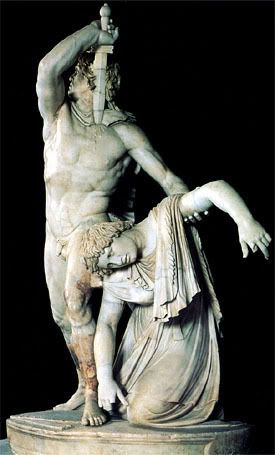
The Death of Gaulish: Part 3


Language and Identity in the Roman Empire

[from Ancient Web]

The most detailed records we have of ancient Europeans come to us from early Greek historians who describe the various tribes and peoples that lived at the periphery of their known world. A common thread that runs though these narratives is a a distinct sense of otherness, for the peoples being described that were not of Hellenic or Greek stock. These “Barbarians”, a term coined by the later Romans because of the beards they wore, were bereft of any value and systematic forms of civilizations that existed in the Greek world. They were alien to them, useful perhaps as slaves or hired mercenaries, but not a part of the “polis”, the citizen city state that differentiated the perceived noble races form those who still maintained the attributes of the archaic and uncivilized past.

The Romans thoroughly adopted this belief system, and used it as a moral objective to justify their conquest of first the Latin tribes. In the 2nd century BCE , when they quickly expanded from the Italian peninsula , they encountered those same Indo-European peoples as the Greeks had a few centuries earlier. The concept of Roman versus Barbarian become adopted in the social consciousness of every a citizen of the emerging Roman Empire. It was done for political reasons, but also because it had been formulated as a strategic survival myth of origin their earliest tribal history when the Romans were just a confederacy of hill tribes fighting for survival among the various established cultures of Italy. These native inhabitants of the Italian peninsula were part of the earliest migrations to italy, and were predominately made up of Etruscan, Oscan, Samnian, and Umbrian speaking peoples. The Etruscans first controlled the early Latin tribes but were then overthrown by the Romans when they rebelled against their tyrannical kings. Although much of this early history is steeped in legend, one thing is for certain – when the Romans finally overcame their Etruscan overlords, they wanted to establish an identity that was uniquely their own. Those who were seen as not sharing the egalitarian principles of the Romans, and the citizen state republic they had founded, were meant to be conquered and subjugated.

In the first century BCE, the Italian mainland having already been unified under a single banner, the Romans encountered the Celtic tribes of the Po river valley. These Celtic people were the ancestral enemies of the Italians, and started meeting with resistance from Romans as they began encroaching on the northern fringes of Italy. The area south of the Alps was a fertile plain that for centuries had been settled by the Celtic descendants of the first La Tene cultures to inhabit central Europe. These people were not only fundamentally different the the Italic tribes, but were also being pushed upon the Italian borders from the pressure of Germanic tribes moving west. These tribes in turn were being pressured to migrate due to the existence of Slavic tribes that were leaving the steppes of Asia. All these people shared several things in common, in that they represented an earlier warrior centric society that was much different then the "civitas" that the Romans had exemplified. To the Romans, they were all simply "Barbieri", the apotheosis to civilized clean shaven roman centurion. As the Romans conquered and expanded their Empire, they brutally suppressed many of these ancestral cultures of Europe and it is though the Roman conquerors that we have the most detailed narratives of Gauls, Celts, Britains, Germans, Slavs and many other groups of people they conquered. All these depictions have a fundamental flaw that obscures our visibility into the distant reality of theses ancient lives. And although the Roman historians speak of them as heroic warriors worthy of confrontation, they consistently reject them as uncivilized and undeserving of the culture the Romans could share with them.

Later, the Romans carved out provinces out of their lands, and ordered these based on what they perceived to be the cultural and linguistic groupings of these people. These provinces were somewhat artificial as the languages and regional differences of the tribes within each cultural area was tremendous,There was also not a clear distinct division between tribes that formulated the border zones of one cultural sphere to another. In the province of Hispania for example, the hinterland between the Celtic late comers, and the original Iberian inhabitants, was populated by hybrid Celti-Iberian tribes that possessed qualities of both these peoples. In the province of Gaul, the Celts were in fact part of a larger cultural entity primarily based on a the notion that they shared the same Brythonic Celtic language. But pockets of pre-Celtic people still existed in the peripheries, some disappearing from the record completely, while others existing to this day like the Vacones (Basques) and Rheatian speaking peoples of Switzerland. On the borders of the empire things were even more transient with Celto-Germanic tribes mixing with Germanic or Slavic speaking peoples. The Belgae, inhabiting roughly the same region as their namesake today, were actually various tribes with varying degrees of Celtic and Germanic influences. In the 1st century CE as the Romans began conquering lands further east they encountered various mountain tribes and nomadic tribes of the Pannonian plains, whom they simply grouped as Dacians despite the ethno-linguistic differences in their region. Over time the Romanization of these regions created a new ethnic commonality. In a sense, the Romans helped create new and more homogenous groups of people based on provincial boundaries they created. Even Greece itself did not achieve political unity until the Romans declared her a possession. Their conquest hastened the dissolution of the regional dialects of Ionic or Doric peoples, but helped preserve the development of a Greek nation state based on a common language.

But who were these people through their own eyes? Where they the blue painted Celts that had sacked Rome, only to be driven back north to their cold northern forests? Where they the Germanic barbarians that later invaded the crumbling empire destroying all that remained of civilization? Or were they the ancestors of the people that inhabit those regions today?


**************************************************

This article is very illuminating. For one thing, it shows how the Romans were usurpers in the central peninsula. The Etruscans and Umbrians were extremely advanced, and I believe did not need the Romans and/or an imperial superpower to influence the less technologically advanced regions. If Etruria was like the United States, then the Romans were like today's Globalists.

The first part of the third paragraph (italicized in red) absolutely hits the nail right on the head as far as the Cisalpine Gauls were concerned, and how they were perceived by the central Italic tribes in a historical, cultural, and ethnic context. "These Celtic people were the ancestral enemies of the Italians...." Okay, the wording of that is in an ancient context, but it still accurately sums up the situation which existed.

The Roman's carved out borders which changed even the identity of various peoples. It's interesting to note that Greece, like the southern Italian peninsula, was made up of different cultures with different languages and customs; and only later under the Roman provincial administration, did they become unified. Of course, they were probably pretty similar to start with and had a common history.

Lastly, and this is extremely interesting, there were pre-Celtic tribes existing in Gaul itself. Perhaps very ancient Alpine tribes, just like existed in Cisalpine Gaul. Also in Hispania, with Alpine tribes like the Vacones (Basques) living side-by-side with Celtiberian tribes. I don't believe that these tribes were of Mediterranean stock, but were the descendants of some of the very first Europeans.

.

Saturday, July 9, 2011

The Death of Gaulish: Part 2

Gaulish language (Wikipedia)

The Gaulish (also Gallic) language is an extinct Celtic language that was spoken by the Gauls, a people who inhabited the region known as Gaul (Cisalpine and Transalpine) from the Iron Age through the Roman period. It was historically spoken through what are now mainly France, northern Italy, Switzerland, eastern Belgium, Luxembourg and western Germany before being supplanted by Vulgar Latin and various Germanic languages from around the 4th century onwards. Gaulish is paraphyletically grouped with Celtiberian as Continental Celtic. Lepontic is considered to be either a dialect of or a language closely related to Gaulish. Galatian is the form of Gaulish spoken in in Asia Minor after 281 BC.

Gaulish is a P-Celtic language, though some inscriptions (e.g. the Coligny Calendar) potentially show Q-Celtic characteristics (however, this is a matter of debate among Celticists). Gaulish has a very close relationship to Insular Celtic (Goidelic and Brythonic), and many forms are identical in the two. Epigraphical remains have been uncovered across all of what used to be Roman Gaul, which covered modern France, as well as parts of Switzerland, Italy, Germany, and Belgium.

History

The earliest Continental Celtic inscriptions, dating to as early as the 6th century BC, are in Lepontic, found in Cisalpine Gaul and were written in a form of the Old Italic alphabet. Inscriptions in the Greek alphabet from the 3rd century BC have been found in the area near the mouths of the Rhône, while later inscriptions dating to Roman Gaul are mostly in the Latin alphabet. According to Julius Caesar, the Gauls (Galli in Latin; Caesar tells us that they called themselves Celtae in their own tongue) were one of three groups who inhabited Gaul, the other two being the Aquitani and the Belgae.

According to his treatise On the Detection and Overthrow of the So-Called Gnosis, Saint Irenaeus of Lyon still needed to preach in Gaulish in his diocese during the last quarter of the 2nd century AD. Saint Jerome (ca. 340-425) remarks in a commentary on St. Paul's Epistle to the Galatians that the Treveri spoke almost the same language as the Galatians. Gregory of Tours wrote in the 6th century that a sanctuary in the Auvergne was "called Vasso Galate in the Gallic tongue", which has been taken to mean that Gaulish was still spoken in the region in his time. However, his remark primarily refers to the linguistic origin of the place name, not necessarily to the survival of the language.

Inscriptions are often difficult to interpret and reveal only fragments of continuous language.

Today, the French language contains approximately 150 (if we exclude the dialectal and the derived words) up to 180 words known to be of Gaulish origin, most of which concern pastoral activity, that is the largest stock of Celtic words in a Romance language, that could contain all together a stock of about 400 words.

**************************************************

It goes without saying that few people identify the defeat of the Gauls at the hands of the Romans with the initial conquest of Cisalpine Gaul. This defeat was not the usual political defeat, but the absolute defeat of an entire culture, language, and spirituality. The Romans were also good at historical revisionism to suit their political ends. It shouldn't be forgotten that the Etruscans also opposed the Romans, even allying themselves with the Cisalpine Gallic tribes.

.

Thursday, July 7, 2011

The Death of Gaulish: Part 1


'The Death of Gaulish' - Dr. Nicholas Ostler - Chairman, Foundation for Endangered Languages

The Romans gave Europe a lot, but what did they take away?

The Gauls had a rich and complex culture - including their own belief-system, religion, art and language.

But not three or four centuries after the Julius Caesar's army defeated them, the language was completely lost to Latin and with it soon went all trace of their culture and beliefs. Today we are left only with a few inexplicable artifacts from a people we no longer have any connection to.

Dr Nicholas Ostler here explains this single example of language hegemony across the Roman Empire, pointing out the great loss of culture and identity that came with it: "When people give up their language, they inevitably give up their culture too."

The application of this historical example to the present day should speak for itself.

This is a part of Dr Nick Ostler's 'Why should we protect endangered languages?'

The full talk can be downloaded, along with any of the other four lectures from the conference on Rare and Endangered languages, from the Gresham College website:
http://www.gresham.ac.uk/lectures-and-events/symposium-rare-and-endangered-languages

Gresham College has been giving free public lectures since 1597. This tradition continues today with all of our five or so public lectures a week being made available for free download from our website.
http://www.gresham.ac.uk


**************************************************


Gaulish was the pre-Roman language of a large European land mass, which included Gaul, much of we today call Germany, and Cisalpine Gaul. Click here to hear an example of what the Gaulish language probably sounded like. It's also important to remember that Celtic-related languages were spoken from Ireland to Spain to the Black Sea and Turkey. There is one YouTuber who has gathered a lot of evidence which apparently shows many similarities in words between Irish Gaelic and Albanian. Maybe we can look at that another time, but we do know that there was a common origin of Gaulish.

Much of the replaced culture centered around the Cernic spiritual tradition, of which we know very little. It seemed to be a very complex religion based around the earth, the seasons, nature, constellations, elements, etc. It took many years for someone to complete their training. Much of it was Druidic, and mostly male-oriented, but in many areas it was very female-oriented. From everything that I have looked at so far, the Cernic tradition was the more female-oriented one. It's still very unclear to me... the connection between the Druidic and the Cernic.

One thing could be said for certain. The Romans dramatically changed things forever. Once I was listening to a folk song, sung in the Lombard language of Lombardy. It sounded almost like French to me. More French than Italian (Tuscan). One reason may be that the French language derived from the linguistic switch from Gaulish to Latin, which also occurred in Lombardy, Piedmont, and perhaps elsewhere.

.