Showing posts with label World War II. Show all posts

Thursday, December 31, 2020

Dragon's Teeth of Vallo Alpino


                            'The Alpine Wall - Italy'


A line of abandoned, alien-like fortresses dot the mountains of North Italy

                                               [AtlasObscura.com]

Similar to the Maginot line of France, the Alpine Wall was built as a defense for Italy in preparation for World War II. There was concern that the natural defense of North Italy’s mountainous terrain was not enough as tensions rose with its neighbors along the top of the “boot”—France, Switzerland, Austria and the former Yugoslavia.

The mountains were enhanced with lookout posts and fortifications all along the passes, stretching over 1,100 miles. The Alpine Wall fortifications varied between three designs: large mountainside forts, rallying points and bunkers, and point-defense fortifications. Many of these can still be seen today.


con't (see images)....


************ 


I saw this subject featured a few days ago on a 2018 episode of 'Mysteries of the Abandoned' (Science Channel) entitled 'Doomsday at Dragon's Teeth'. This elaborate defense system was constructed in 1931, and reflects how Mussolini did not trust Hitler at that point.


************


 Video: The dragon teeth of Pian dei Morti


In the Val Venosta valley, between the borders of Italy and Austria, a weir system was built during WWII, the heart of which was a tank barrier. We will take a closer look at this barrier, as well as the various bunkers which lie 550 meters above Resia. On the way there we enjoy a pleasant, circular hike and inspect the source of the river Adige, the biggest river in South Tyrol.


************


Vallo alpino in Alto Adige


Sbarramento Pian dei Morti


************


Alpenwall - Vallo Alpino - Kreuzbergpass - Mussolinis Festungslinie - Teil 1

Willi seiner

Mussolinis Festungslinie

Der Alpenwall in Südtirol ist der Abschnitt des Vallo Alpino (deutsch Alpenwall), der in den Jahren von 1938 bis 1942


************


Alpenwall in Südtirol


.

Thursday, May 14, 2015

'Unbroken' (2014) - movie review


'Unbroken' (film)

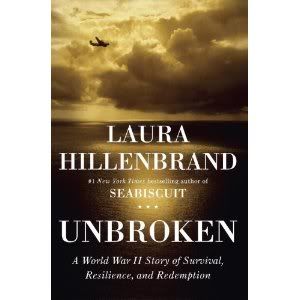
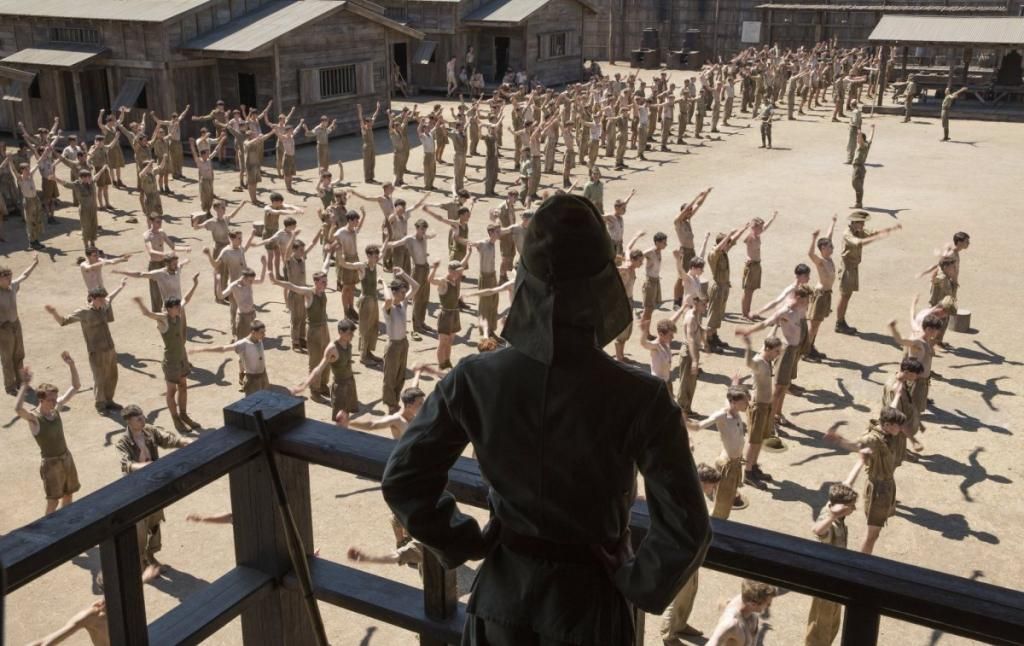
Unbroken is a 2014 American biographical war drama film, produced and directed by Angelina Jolie, and based on the 2010 non-fiction book by Laura Hillenbrand, Unbroken: A World War II Story of Survival, Resilience, and Redemption. The film revolves around the life of USA Olympian and athlete Louis "Louie" Zamperini, portrayed by Jack O'Connell. Zamperini survived in a raft for 47 days after his bomber was downed in World War II, then was sent to a series of prisoner of war camps.

The film begins with a WWII U.S. Army Air Corps fighter plane engaged in combat over the Pacific. The extreme danger of this engagement is quickly and strongly portrayed, with enemy bullets seemingly able to pierce through any portion of the plane at any time, and with dangerously close flybys. Louis Zamperini is a member of this air crew. Then the movies shifts back to Louis' childhood, which would be the less complicated manner to begin reviewing this film; in chronological order, which it does eventually follow midway though.

His parents were immigrants from Verona, in the Veneto region; having settled in a small town in eastern New York state. Growing up during the Great Depression, life was not easy for anyone, and less so for immigrants apparently. His parents were shown as having achieved great respect in the town, but young American-born Louis was always getting into trouble. Encouraged by his brother, he finally finds some focus when he starts to run track in high school. He begins to make a name for himself as one of the best middle distance runners in the country.

Not much of his 1936 Olympic experience in Germany was portrayed. It did show his come-from-behind eighth place showing in the 5000 meters, where he finished with a phenomenal fifty-six second final lap in a twelve and a half lap race. His physical peak probably would have been in the 1940 Olympics, which was cancelled. A couple of years later, before going off to war, he set a national collegiate mile record in the 1600 meters. He set that record despite being severely spiked by other runners during the race. Personally, I think that those fouls were every bit at insane as Mike Tyson biting Evander Holyfield's ear.


Spoiler alert beyond this point...

.

.

.

.

During a rescue mission in 1943 by the air crew, the plane had to be crash landed in the water due to engine problems. Only three men survived, including Louis Zamperini. They were afloat in a life raft for forty seven days! Since you cannot drink the salt water, being stranded in a life raft in the middle of the Pacific is practically a death sentence. At one point, the men were awakened by a shark fin nudging against the raft, which must have been terrifying enough in itself. They later had to beat back sharks with their fists. After catching and eating a raw sea gull, they got sick and threw up. Eventually, in a prey-to-predator scene depicting pure evolutionary struggle, they pulled in and killed a small shark. Rain water further helped sustain them.

After failing to attract an American aircraft with a flare, they got another chance; only this time it turned out to be a Japanese aircraft that proceeded to fire upon the raft. Louis jumped into the water with the sharks. Somehow nobody was hit. Eventually they ran into a Japanese navy vessel, but their struggle was really just beginning. The Japanese military engaged in policies such as beheading prisoners. They somehow survived brutal interrogation before being sent to a detention camp.

After falsely being reported as having been killed in action, the Japanese allowed Louis to send a radio message to his family. This act of seemingly good will was actually only a ploy to later get him to deliver an anti-American message over the radio. He had a choice of either delivering the false message with a chance of living and eating well until the end of the war, or refusing and being sent back to the detention camp with further beatings. He still refused.

The camp commander was Sergeant Mutsuhiro Watanabe, a sadistic torturous psychopath who had it in for Louis. Watanabe always carried a wooden stick/club, which he used at his every whim. Louis was probably targeted due to his Olympic status, which made him a man whom they wanted to break down in front of the other Allied prisoners. I'm not going to describe all of the physical and psychological torture depicted, some of which would sound almost unbelievable in their brutality. However, in a possible psyop, at one point Watanabe was to have been moving on to a different position due to a promotion. He said to Louis: "Aren't you going to congratulate me?," with no response.

Shortly after, due to emergencies stemming from Japan losing the war, the prisoners were relocated to a work camp. The new commander of this work camp was none-other-than Sergeant Watanabe. This wasn't just hard labor, but they worked prisoners to death. It was apparent policy that if Japan lost the war, all prisoners would be executed, which even took away their hope. This mining camp was dark and desolate, and the poorly fed prisoners were all filthy from the work. Pure misery. Finally, all of the prisoners were ordered into the water of the lake or ocean, fully expecting to finally be executed. Instead, the war was declared over.

The movie ends with his return and some actual photographs and details from his life. Later he is shown at age 81--at the 1998 Nagano, Japan Winter Olympics festivities--carrying the Olympic torch and running well. Sergeant Watanabe went into hiding and was never prosecuted. The film was a financial success, but received mixed reviews. I think that many critics fail to understand that not every movie is made for the intended purpose of them to be "woo'd." It wasn't 'The Shawshank Redemption', but it is a true story. As a movie, it could be called a survival story, depicting one mans plight more than any kind of political message.

.

Thursday, January 29, 2015

Louis Zamperini - American-Cisalpine of Veronese ancestry: Part 2


"The most important thing in my Christian life was to know that I not only forgave them, verbally, but to see them face-to-face and tell them that I forgave them."

That was more than 60 years ago -- and our story would end there, were it not for the book "Unbroken."

He became a celebrity all over again. Readers clamored to see him, to hear him, to applaud his life.

Reid asked, "When you finished reading that book, what did you think?"

"It put me back in prison," he replied, "and I had to stop and look out the window and make sure I wasn't back in prison."

Did he ever imagine it would be a bestseller? "Well, she's a great writer," Zamperini said.

"She" is author Laura Hillenbrand. Her last book was the bestseller "Seabiscuit." "Unbroken" took her seven years to research and write. But in all that time, you may be surprised to learn that the author and the subject of her story never met, not even once.

Hillenbrand never met him because at the time she was suffering from a chronic illness that made it difficult for her to leave her home in Washington, D.C. So, as Zamperini did, we spoke with her by telephone.
She said of her ailment, "Patients often go into times when they are literally unable to get out of bed for weeks or months or years. And it was something that helped me identify with Louie, because his story is largely about suffering."

Hillenbrand says she thinks NOT meeting Zamperini actually made her book better: "Because when he was telling me his stories, I wasn't looking at a 90-year-old man. I was thinking about a 17-year-old runner, or a 26-year-old guy out on a life raft. And I was able to visualize it."

But while Hillenbrand came to know nearly everything about Zamperini, he knew almost nothing about her.

"When the papers printed her story, I couldn't believe it," he said. "The only thing I could do, and I felt was proper, I sent her one of my Purple Hearts. And I said, 'You deserve this more than I do.'"

Reid asked, "Why did you feel she deserved it more?"

"Well, she's been suffering for 30 years. I suffered for a couple of years."

Turns out the 47-year-old author and the aging veteran share much more than the past:

"Laura has said that when times get really tough for her, she calls you," said Reid.

"We talk to each other on the phone. People said, 'Oh, yeah. Louie's my inspiration.' Well, I might say that she's my inspiration."

When we talked, Zamperini said he hoped one day to meet Hillenbrand, and that he had a message: "Well, I don't think we'll tell each other very much, except 'I love you.'"
Not long after, that hope became a reality. While in Washington in 2012, he paid a visit to her home.

Hillenbrand said, "He told me, as we were hugging each other and saying goodbye, he said that the book was the crescendo of his life. And he believes he's lived this long so he could see it written and read. And that was the loveliest thing he's ever said to me."

As for Louis Zamperini, he had something to share with all his newfound admirers.

"You forgave your Japanese enemies," said Reid. "Do you think Americans forgive enough?"

"No, I think it's the hardest thing in life, is [to] forgive," he said. "Hate is self-destructive. If you hate somebody, you're not hurting the person you hate. You're hurting yourself. And that's a healing. Actually, it's a real healing, forgiveness."


.

Wednesday, January 28, 2015

Louis Zamperini - American-Cisalpine of Veronese ancestry: Part 1


Remembering the "Unbroken" spirit of Louis Zamperini

CBS News - July 6, 2014

A FINAL SALUTE now to Louis Zamperini, an American hero in both war and peace who died this past week at the age of 97. The suffering he endured during World War II was matched only by the remarkable forgiveness he later extended to his former tormentors.

Chip Reid's visit with him two years ago is this Independence Day weekend's Cover Story:

"The house is full of antiques," said Louis Zamperini. "Including me!"

Zamperini's home is too small to hold memories of a life so large. There are the trophies honoring his athletic accomplishments, including the five torches he carried at five different Olympic Games

And then there are the souvenirs from the prison camps where he spent two years of his life, including a bamboo fork, and an old belt buckle he still has.


"I'm surprised the Japanese didn't take it away from me, 'cause they were short of brass," he said.But Zamperini's story was pretty much ancient history -- an elderly man waving in a parade -- until a bestselling book, "Unbroken," reminded the world of his harrowing tale.

His first fame came when he was just a teenager. In 1936, he made the U.S. Olympic team; at 19, he was the youngest qualifier in the 5,000 meters.


He didn't win, but Louis Zamperini became a household name -- a sports hero.

A few years later, the nation was at war, and Zamperini was a bombardier in the Army Air Corps. In May 1943, his B-24 crashed into the Pacific.

"Our number one engine, the rpm stopped," he recalled. "This plane was barely flying with four motors, and with two gone, it just dropped like a rock. And so we hit the water nose down. I felt like someone hit me on the forehead with a sledgehammer. The plane was completely blown apart."

As documented in a 1998 CBS News story from correspondent Bob Simon, Zamperini spotted a life raft floating rapidly away from the burning water. He swam to it. He spent 47 days in the inflatable raft.

"I never prayed before," Zamperini said. "When you're on a raft, you pray like in a foxhole."

He fought off sharks, and battled the sea.

Things went from bad to worse. Zamperini was near death when he was captured by the Japanese and taken to a place known as "Execution Island," where every known prisoner had been put to death.

"They took great joy in telling us we were going to be executed," he said. "They'd always go through the motions [slitting throat]"


It got even worse. His fame back home led to hours of torture and beatings
at the hands of a sadistic guard nicknamed The Bird. "I couldn't bear to look at his eyes. I just couldn't do it. To me, they were that sadistic," he said.When he wasn't being beaten, he was starved, like most of the Americans held by the Japanese. But somehow, he survived.

Louis Zamperini returned home a hero. There were TV appearances, including "This Is Your Life." His life appeared to return to normal.

But the war years, while gone, were anything but forgotten. Haunted by nightmares, he turned to alcohol.

Then, in a last-ditch effort to save his marriage, and perhaps his life, Zamperini joined his wife Cynthia at a prayer service led by a young Billy Graham. Graham's sermon touched on the power of forgiveness.

"That was the first night in two-years-and-a half that I didn't have a nightmare, and I haven't had one since," recalled Zamperini. He said forgiveness "was the complete healing factor in my life."

Which is why Zamperini decided to commit himself to a lifetime of forgiveness.

And that meant he had to go back to Japan, to see the prison guards who'd tried so hard to destroy him. 


.

Wednesday, October 5, 2011

The Mussolini/Fascist issue

Our folk have been historically known for political extremism. Fascism, Communism, Anarchism, etc. These concerns have been successful because they are correct on a handful of issues. I usually don't like the term "extremism," because anyone can use the word to belittle anyone they wish; even while supporting types of extremism themselves. However, Fascism was basically a dictatorship in which the state oversaw and largely controlled industry. It is the opposite, or "opposame," of Fabianism in which transnational financial and economic concerns largely control, or at least have undo influence upon, the governmental apparatus of nations; sort've like "International Socialism."

Benito Mussolini was of Emilian descent, which means that he was a member of our folk. However, he was an "Italian nationalist" who cared very little about common people. For example, he, in an apparent attempt to show off his power to the National Socialists, got his country involved in wars of which they were ill-prepared for. This was done in the name of a modern type of "Roman Imperialism." Although the Italian Fascists had limited success, conquering Libya and Ethiopia, the plan was brutal and disastrous even for their own country and people.

The plan was for neo-Rome to conquer the Balkans, North Africa, and other places; and set up a Roman-style imperialist system. In the Balkans, they actually tried to change people's family surnames. For example, a family with the name "Bradovich" would be forced to take a name like "Columbo," even though they didn't not speak Italian at all. They wanted to colonize most of the Mediterranean region with people from Italy, and it was mostly people from the north who colonized North Africa. Italians in general would have some type of high racial status in these colonies. For example, I recall reading once that in colonial Libya, where was a law, with a penalty of eight years in prison, for "touching a white woman." Of course, I don't believe that they should have been in Libya at all. It was almost like Mussolini was showing off for Hitler. At least that's the impression that I always had. Small populations of Jews and Black Africans in Libya were more-or-less forced to go away, and the common Libyans were to be given some type of status as long as they went along with the Fascist dictatorship.

[Left: Libyan resistors being taken to a concentration camp; on the left of the image, two Libyan colonial soldiers, traitors to their people; unfortunately, treason is part of the human character]

Ethnic and linguistic differences, within the Italian peninsula, were even more repressed then before. The Italian Fascists force-migrated people from Southern Italy into the ethnic-German South Tyrol. Also, they were trying to force the Tyroleans to speak standard Italian and change their names. Mussolini, though his own statements, believed that the Langobards were everywhere in the peninsula and that it somehow meant that every Italian was an Aryan-Italian. No regionalism. All were to take the identity of Fascist Lombardo-Romans. From any type of Padanian/Cisalpine folkish way of thinking, Mussolini was a traitor to his own people.

Like the Communists and Fabianists, theirs was a dark world view. Although they defeated the Italian Communists, the results were just as bad as what may have occurred otherwise. Both denied our people freedom, or even a self-identity, as does the Fabianist EU Plutocracy today. We need to finally break away from this right-left Hegelian dialectic, and make our own way. I call this paradigm "the grinder." Throw in a legitimate issue or concern, and out it comes, stripped of all truth or worth. Neatly packaged under a false right or left label; to be put back up on the shelf with all of the other dead issues that the Fabianist power structure doesn't want to trouble itself with.

The fact that we are forced to the right, is a direct consequence of the rise of Fabian Socialist Plutocracy and it's Monopoly Capitalist and Social Marxist minions who today have almost the entire globe in a political straitjacket. I can't see how anyone of our concern could really consider Mussolini or the Fascists as any type of political ideal or icon. The Romans destroyed the Etruscans and Gauls, and the process keeps being recycled over and over again. Remember that bully in the sixth grade? He just absolutely would not stop... until someone literally, physically STOPPED him. We are all still subject to the "law of the jungle."

A very important point to remember. "All wars" were not fought over nationalism or religion; "All wars" were started by bankers, industrialists, and dictators who merely USED nationalism or religion as effective propaganda tools.

[10-25-12 ADDITION

Reader/Contributor Etrusco-Umbro-Gallic pointed out the following:

Speaking of the Rumagnols, you erred once in calling Mussolini an Emilian. He was a Forlivese Rumagnol. Rumagnols are a different folk, culturally and genetically. There are perhaps analogous to Bresans, being more masculine, robust and better built, while Emilians are more like Western Lombards.]

.