Showing posts with label ancient Rome. Show all posts

Wednesday, March 29, 2023

Why Isn't Italy Named Romania After The Romans?


Why Isn't Italy Named Romania After The Romans?

Name Explain

341K subscribers

1,146,264 views  - January 19, 2018

con't....


************


Roman provinces and place names

It's interesting how Roman provincial or place names have become either the chief name or secondary name for a lot of countries, regions, or cities, such as Britannia. Even regions which were never conquered--such as Germania (German-speaking tribal regions), Lusitania (Portugal), Hibernia (Ireland), or Caledonia (Scotland)--the old Roman name is used today to some capacity or for some type of reference. As far as Italia rather than Romania, historically, names of nations are often quite imperfect. For example, Belgium is properly named for a powerful Celto-Gaulish tribe that lived there, while France is named after the Franks who had conquered that territory. Actually, the cultural link there is much more powerfully tied to ancient Gaulish tribes or later the Romanized Gauls.

Another example of a poor job at naming is "Austria," which is the English-language word for the country of Österreich. Actually, the original "Austria" was the name of a duchy within the Kingdom of Lombards or Langbard, which was where Lombardy, Veneto, Trentino, and Friuli are today. Since Österreich conquered and occupied that land prior to the Risorgimento, and the old Austria-Australia confusion, giving Österreich the nickname "Austria" seems like a dumb idea. Italia, or at least the reference to the old home province of the Roman Empire, should probably have been named Romania. Also, this land was known in the ancient world as Saturnia. At any rate, since the old Roman names are stylish and catchy, they have been a fun way to reference cultures or regions. For example, San Francisco's Caledonia Club is a Scottish cultural club.


************


When Did the Romans Become Italians? (Short Animated Documentary)


.

Monday, May 25, 2020


What Did Ancient Rome Look Like? (Cinematic Animation)

2006,182 - November 4, 2019

New Historia

What Did Ancient Rome Really Look Like? Watch this Ancient Rome reconstruction featuring realistic 3D animation to find out. Subscribe: https://www.youtube.com/channel/UCVFwI1kt71b-1xKq1_g-Gyg?sub_confirmation=1

Ancient Greece Cinematic Video: https://youtu.be/3YrJxz6xsAk
Ancient Egypt Cinematic Video: https://youtu.be/omajagaozk0


In this cinematic animation video, we explore some of the major Landmarks, architecture, art buildings and landscapes of ancient Egypt! See exactly how ancient Rome looked. We also take a look at daily life and what the people of Ancient Egypt got up to

For more Ancient Egypt documentaries and videos, be sure to subscribe using the link above.

The best viewing experience is definitely with headphones and the highest quality enabled.

This was captured from AC Origins. A big thanks to Ubisoft for creating such a tremendous video game.

What Did Ancient Rome Look Like? (Cinematic Animation)


************


What Did Ancient Greece Look Like? (Cinematic Animation)

What Did Ancient Egypt Look Like? (Cinematic Animation)

Types of Gladiators | Ancient Rome Documentary Animated | The Colosseum Arena
 
.

Wednesday, June 12, 2019

Legionarii - 'Rebirth'


Legionarii - Rebirth (Official video)

ILegionarii

Official Legionarii homepage: http://legionariieurope.wordpress.com

The world is falling deeper into it's own vortex of degeneration, true art and values are facing their final extinction. Let us join together under one goal - we must never let the true European beauty die! We only have one life, one home, and we only have one chance to make a change in this world and earn our right to stand side by side with our ancestors. Let the rebirth of our true spirit begin!


************

Legionarii - We Are The Wolves

.

Tuesday, August 1, 2017

Ancient Rome: Anthem and symbolic musical perceptions


National Anthem of Roman Empire (Instrumental)

National Anthems of the World

(The Roman Empire didn't have official national flag and anthem)

In spite of the purported lack of musical originality on the part of the Romans, they did enjoy music greatly and used it for many activities.


Imperium Romanum (509 a.c - 1453)

Aerilmellon

Fictitious flag and fictitious anthem (Roll Tide by Hans Zimmer)

In Latin, "Imperium Romanum" means "Roman power."


Gladiator Soundtrack: "The Might of Rome"

A. M. Goudarzi

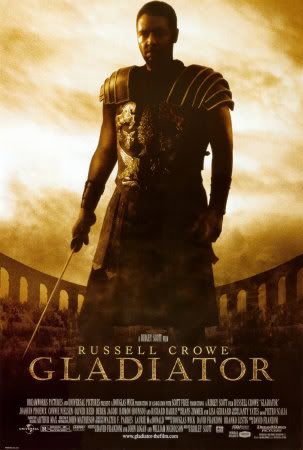
Gladiator (Latin pronunciation: [glaːdiatọɾ]) is a 2000 historical epic film directed by Ridley Scott, starring Russell Crowe, Joaquin Phoenix, Connie Nielsen, Ralf Möller, Oliver Reed, Djimon Hounsou, Derek Jacobi, John Shrapnel and Richard Harris. Crowe portrays the loyal Roman General Maximus Decimus Meridius, who is betrayed when the Emperor's ambitious son, Commodus, murders his father and seizes the throne. Reduced to slavery, Maximus rises through the ranks of the gladiatorial arena to avenge the murder of his family and his Emperor.

Released in the United States on May 5, 2000, Gladiator was a box office success, receiving positive reviews, and was credited with briefly reviving the historical epic. The film was nominated for and won multiple awards, particularly five Academy Awards in the 73rd Academy Awards including Best Picture. Although there have been talks of both a prequel and sequel, as of 2012, no production has begun.

Gladiator is the original soundtrack of the 2000 film of the same name. The original score and songs were composed by Hans Zimmer and Lisa Gerrard and was released in 2000, entitled Gladiator: Music From the Motion Picture. The Lyndhurst Orchestra performing the score was conducted by Gavin Greenaway.

The album won the Golden Globe Award for Best Original Score and was also nominated for the Academy Award and BAFTA Award for Best Score ("Anthony Asquith Award for Film Music").

The Oscar-nominated score was composed by Hans Zimmer and Lisa Gerrard, and conducted by Gavin Greenaway. Lisa Gerrard's vocals are similar to her own work on The Insider score.


.

Saturday, July 8, 2017

Opening battle scence from 'Gladiator' - A devastating fighting force


Gladiator- Opening Scene.avi

Michael M


*************************


I think this scene gives some glimpse of how effective the Roman army could be. There was the equivalent of howitzers and air strikes. Also, when we think of both thrusting and hacking swords, arrows, oil-fire bomb projectiles, and those big arrows that are fired from a cranked up mechanism... I mean, I'd rather just take a bullet! Lastly, the sheer bravery of all ancient warriors to engage in this type of wicked combat.

.

Sunday, February 28, 2016

Computer simulation of ancient Rome 320 CE


Ancient Rome (higher resolution)
 

Smarthistory. art, history, conversation.
 

A project between Khan Academy and Rome Reborn - with Dr. Bernard Frischer
 

Speakers: Dr. Bernard Frischer and Dr. Steven Zucker

.

Saturday, November 30, 2013

'Gladiator' movie review

'Gladiator' (2000 film) [Wikipedia]

Gladiator is a 2000 British–American epic historical drama film directed by Ridley Scott, starring Russell Crowe, Joaquin Phoenix, Connie Nielsen, Ralf Möller, Oliver Reed (in his final film role), Djimon Hounsou, Derek Jacobi, John Shrapnel, and Richard Harris. Crowe portrays the fictional character, loyal Roman general Maximus Decimus Meridius, who is betrayed when the emperor's ambitious son, Commodus, murders his father and seizes the throne. Reduced to slavery, Maximus rises through the ranks of the gladiatorial arena to avenge the murder of his family and his emperor.

Released in the United States on May 5, 2000, Gladiator was a box office success, receiving positive reviews, and was credited with rekindling interest in the historical epic. The film was nominated for and won multiple awards, notably five Academy Awards in the 73rd Academy Awards including Best Picture and Best Actor for Crowe.

This is a movie that has been reviewed so many times that I think that I will go a little further along the lines of looking at it from a Cisalpine perspective. Just from the get-go, this was a great movie. Great plot, great flow, great scenes, great performances, and great cinematography. Along with 'Braveheart', this was probably the greatest movie of it's type in the last three decades or more. Of particular interest was the computer-generated imagery.. in this, the digital era of film making.

Unlike 'Braveheart', which presented itself from the opposite perspective of the larger domineering military superpower, 'Gladiator' firmly took the stance that "glorious Rome" had a right to forcefully promote it's benevolent "idea" upon other cultures. Maximus described Rome as "the light" in a cruel dark world; while Senator Falco said in reference to the resisting Germanic tribes: "A people should know when they're conquered." The film seems to have been loosely based upon Julius Caesar and the Roman conquest of Gaul, as well as the Battle of the Teutoburg Forest. Only--in this case--with the Romans winning in Germania.

Set in 180 AD, the protagonist--Maximus--is referred to throughout the film as "the Spaniard." This would mean that he was a Romanized Celtiberian from the Roman province of Hispaniola (Spain), who rose through the military ranks to become a general. In the first scene, the Roman-German battle, the fearsome Roman weapons of war were put on display. Large fireballs were launched from huge catapults, hitting the battlefield like a modern air bombing. Large arrows were cranked up and fired from steel-plated cannons with devastating results. This army would frighten most modern armies in the world.

Leading up to the battle, General Maximus gave one of the great quotes from the movie. This movie was full of them.

[addressing his troops] Maximus: Fratres!
[cavalry addresses Maximus]

Maximus: Three weeks from now, I will be harvesting my crops. Imagine where you will be, and it will be so. Hold the line! Stay with me! If you find yourself alone, riding in the green fields with the sun on your face, do not be troubled. For you are in Elysium, and you're already dead!
[cavalry laughs]

Maximus: Brothers, what we do in life echoes in eternity.

The last line could just stand on it's own as a quote. I thought the earlier part was interesting in that "Elysium" would have apparently been the Roman equivalent of the Odinic "Valhalla." Also, the motivational speech was the 'Gladiator' equivalent to the speech in 'Braveheart'. The one difference being that the Romans were powerful and self-confident; while the Scots in 'Braveheart' needed to gather themselves to fight a larger powerful army... therefore, the more emotional speech.

Another quote which I thought was interesting was a line that Marcus Aurelius said to his daughter Lucilla: "If only you had been born a man, what a Caesar you would have made." It was an indirect reference to his son Commodus not being a viable choice as a successor; and really, for me at least, more of a reflection on the strong and noble character of Lucilla. That's the type of woman that you would want to govern!

In case you didn't know, the acronym "SPQR" is the Roman equivalent of "USA." Senātus Populusque Rōmānus ("The Senate and People of Rome").

Watching the movie, you can't help but notice the similarity between the "bloodsport" of the Roman Colosseum and the very rough modern sporting contests (soccer, rugby, American football, hockey, boxing, UFC, etc.). The first fight scene in the Colosseum reminded me of a football game! The deadly collisions were like big football hits. Even when a sword was tossed up to Maximus on a horse, it was like a quarterback pitching the football to a halfback.

In an earlier bloodsport scene, Maximus--after defeating his opponents in a life-and-death struggle--throws his sword into the columned box where the dignitaries sat (sort've like a press box?), and yelled out with outstretched arms "Are you not entertained! ...... Are you not entertained!!" in what seemed to be a mocking gesture.

Late in yesterday's 49ers-Seahawks game, a 49er defensive back named Eric Wright was kneed in the head and had to leave the game. Since it was a big game, he later returned, and ended up intercepting a pass to secure a victory. He returned from injury to "win" and "entertain" for the crowd. The Maximus line would have been very apt.

I should add that the digital imagery of what the Colosseum really looked like was very interesting, as-well-as much of the background scenery. This is one of those movies that a film buff would have a field day researching and collecting. I can't really do it justice. The acting performances were particularly good.

.

Thursday, October 25, 2012

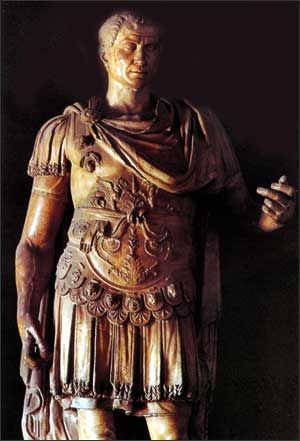
Spot where Julius Caesar was stabbed discovered

Spot where Julius Caesar was stabbed discovered [see image]
 
Concrete structure believed to mark location of Roman ruler's killing


By Stephanie Pappas - Senior writer - MSNBC - October 11, 2012

Archaeologists believe they have found the first physical evidence of the spot where Julius Caesar died, according to a new Spanish National Research Council report.

Caesar, the head of the Roman Republic, was stabbed to death by a group of rival Roman senators on March 15, 44 B.C., the Ides of March. The assassination is well-covered in classical texts, but until now, researchers had no archaeological evidence of the place where it happened.

Now, archaeologists have unearthed a concrete structure nearly 10 feet wide and 6.5 feet tall that may have been erected by Augustus, Julius Caesar's successor, to condemn the assassination. The structure is at the base of the Curia, or Theater, of Pompey, the spot where classical writers reported the stabbing took place.

"We always knew that Julius Caesar was killed in the Curia of Pompey on March 15th 44 B.C. because the classical texts pass on so, but so far no material evidence of this fact, so often depicted in historicist painting and cinema, had been recovered," Antonio Monterroso, a researcher at the Spanish National Research Council, said in a statement.

Classical texts also say that years after the assassination, the Curia was closed and turned into a memorial chapel for Caesar. The researchers are studying this building along with another monument in the same complex, the Portico of the Hundred Columns, or Hecatostylon; they are looking for links between the archaeology of the assassination and what has been portrayed in art.

"It is very attractive, in a civic and citizen sense, that thousands of people today take the bus and the tram right next to the place where Julius Caesar was stabbed 2,056 years ago," Monterroso said.


.