
Showing posts with label Gauls. Show all posts
Showing posts with label Gauls. Show all posts
Sunday, February 7, 2016
Brennus: Warlord of the Cisalpine Gauls - Part II
Brennus, Enemy of Rome (1963) - Color / 87 mins
Vulture Graffix
An English dubbed, Austrian print of Brennus Enemy of Rome (AKA: Brenno der herr des schreckens, AKA: Brenno il nemico di Roma, AKA: Battle of the Valiant). The film was made in 1963 about the sack of Rome in 387 BC. It was written by Adriano Bolzoni, Arpad DeRiso and Nino Scolaro and was directed by Giacomo Gentilomo. It stars Gordon Mitchell, Ursula Davis, Massimo Serato and Tony Kendall.
The story takes various elements from Livy's history of the Gauls' attack on Rome, plus Plutarch's biography of Camillus, and cleverly remixes them to fashion a ripping yarn. The banishment of the Roman general Camillus, the controversy over the spoils of Veii, the involvement of the Fabius brothers, the flight of the Vestal virgins from Rome, the barbarian who tugs the beard of a Roman elder, the honking of the sacred geese, and even Brennus's scornful "Woe to the vanquished!" as he heaps his sword onto the scales, are all from the historical record.... and all give tale to a fictional re imagining of the sack of Rome in 387 B.C. by Brennus, leading an army of Gauls.
You can visit our facebook page for further movie mayhem;
https://www.facebook.com/VultureArt
**************************************************
Random fact: "Brennus" in Latin became Brenno in Italian. The city of Breno in northern Brescia possibly may have been named after Brennus, who would have been a hero in the Gaulish Alps. Ironically, the Gaulish sacking of early Rome directly led to the Roman invasion of the Alps centuries later.
.


Thursday, February 14, 2013
The Gauls and Langobards drank mead: Part 2
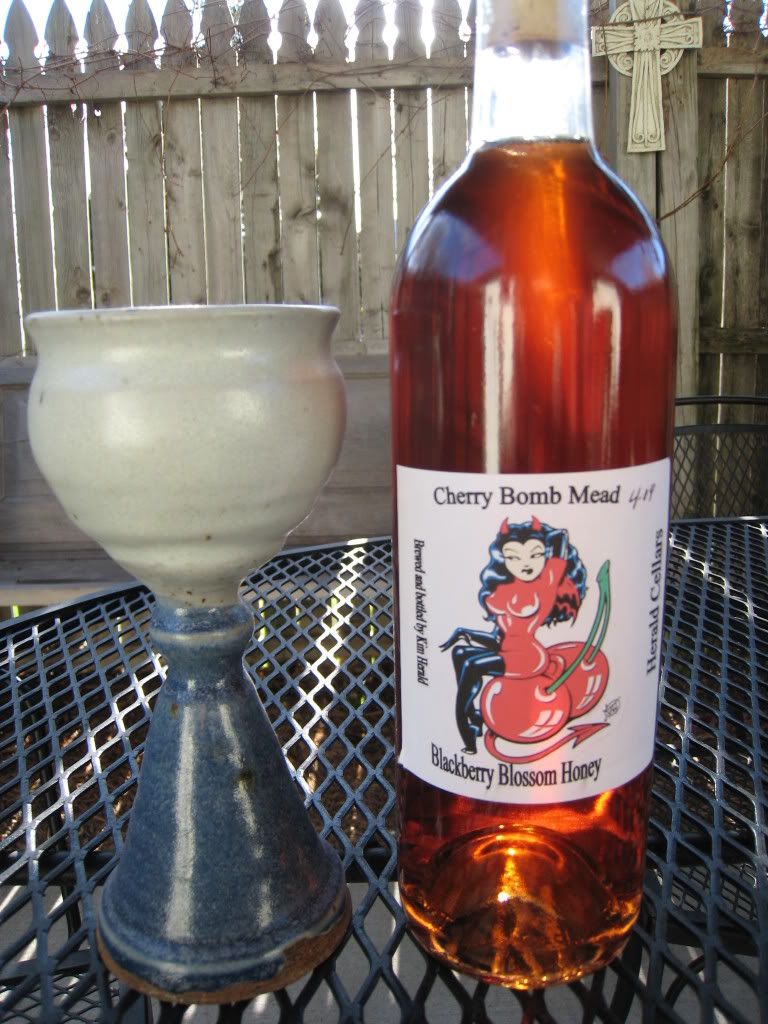
The website GotMead.com was designed to help promote the market and culture of mead... also known as "honey wine." Just searching around on the subject, I can see some of the local meaderies from the SF Chronicle article above are mentioned often. If you're close to a Bev and More, then finding a good honey wine shouldn't be any problem.
The Viking heritage website ScandinavianAggression.com features a section about Viking-themed meads and meaderies. The following is from that main page...
Viking Brews and Booze
When it comes to drinking, no one can top the Vikings. No one. Which is why it is only appropriate that some modern day beverages are dedicated solely to Viking glory. In one of my more samaritan moods, I decided to compile a list of those drinks here, which is broken down into the following categories:
Barley Brews
Honey Brews
Distilled Options
Fruity Booze
Viking Booze Burial Mound
And a few short notes on the listings:
—First, everything is broken down by type of beverage as indicated in the submenu above (and also in the menu on the right-hand column), then alphabetically by title of brewery/distillery/etc. as indicated.
—Second, most of these beverages are, by some sick joke of the norns, rather hard to find, and I have not yet succeeded at apprehending most of them myself at the local booze stores. Fy fan!
—Third, I hope to keep this list as complete as possible. If you know of any appropriate beverages not listed here, please let me know! My email is on the FÅQ page. I can also be reached on facebook and myspace.
Happy browsing and drinking. Skål!
Heraldry
*************************
Somewhere about 1300 A.D., the Italian voyager Marco Polo (1254-1324) returned from the Spice Islands with sugar cane. This inexpensive source of sugar became dominant and honey went underground - well almost. The tradition of mead was sustained in the monasteries of Europe. The need for ceremonial candles made of beeswax necessitated managed bee colonies and surplus honey was used to make mead, which was enjoyed by the monks in their more secular moments. [from medovina.com]
.
Thursday, September 29, 2011
Brennus of the 4th century BC
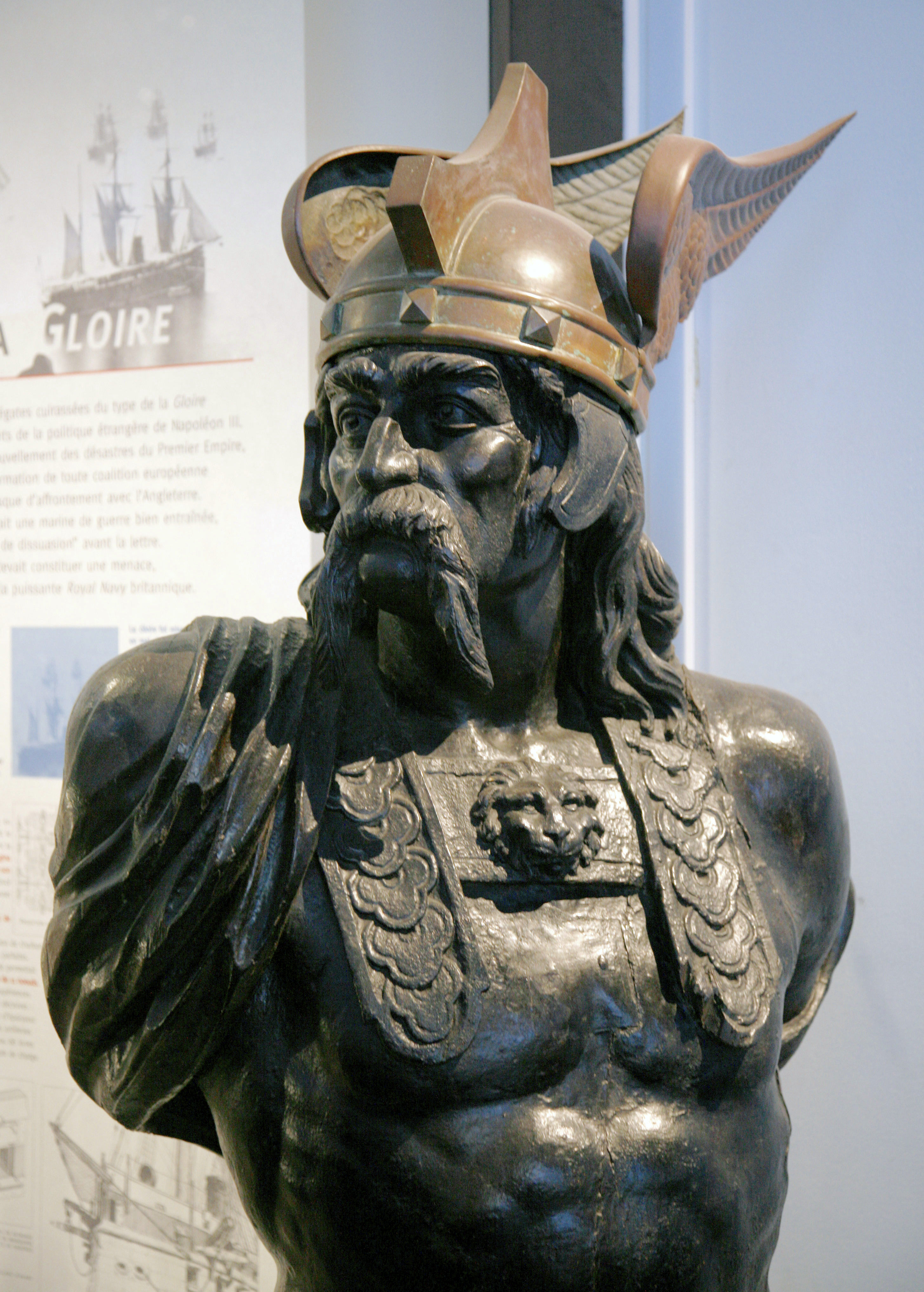
Brennus (or Brennos) was a chieftain of the Senones, a Gallic tribe originating from the modern areas of France known as Seine-et-Marne, Loiret, and Yonne, but which had expanded to occupy northern Italy.
More important historically was a branch of the above (called Senones, by Polybius), who about 400 B.C. made their way over the Alps and, having driven out the Umbrians, settled on the east coast of Italy from Ariminum to Ancona, in the so-called ager Gallicus, and founded the town of Sena Gallica (Sinigaglia), which became their capital.
In 391 they invaded Etruria and besieged Clusium. The Clusines appealed to Rome, whose intervention, accompanied by a violation of the law of nations, led to war, the defeat of the Romans at the Allia (18 July 390) and the capture of Rome. In 387 BC he led an army of Cisalpine Gauls in their attack on Rome. It has been theorized that Brennus is actually a title rather than a name. This is because "Brennus" also appears as the name of a Gallic leader 100 years later. It is also possible that Brennus refers to a god, his name taken by the leader before battle in order to invoke the god's favor and powers.
In the Battle of the Allia, Brennus defeated the Romans, and entered the city itself. The Senones captured the entire city of Rome except for the Capitoline Hill, which was successfully held against them. However, seeing their city devastated, the Romans attempted to buy their salvation from Brennus. The Romans agreed to pay one thousand pounds weight of gold. According to Livy, during a dispute over the weights used to measure the gold (the Gauls had brought their own, heavier-than-standard) Brennus threw his sword onto the scales and uttered the famous words "Vae victis!", which translates to "Woe to the vanquished!"
The argument about the weights had so delayed matters that the exiled dictator Marcus Furius Camillus had extra time to muster an army, return to Rome and expel the Gauls, saving both the city and the treasury. Following initial combat through Rome's streets, the Gauls were first ejected from the city, then utterly annihilated in a regular engagement eight miles outside of town on the road to Gabbi. Camillus was hailed by his troops as another Romulus, father of his country 'Pater Patriae' and second founder of Rome.
Some historical accounts say that the Senones besieging the Capitoline Hill were afflicted with an illness and thus were in a weakened state when they took the ransom for Rome. This is plausible as dysentery and other sanitation issues have incapacitated and killed large numbers of combat soldiers up until and including modern times.
It has been theorized that Brennus was working in concert with Dionysius of Syracuse, who sought to control all of Sicily. Rome had strong allegiances with Messana, a small city state in north east Sicily, which Dionysius wanted to control. With Rome's army pinned down by Brennus' efforts Dionysius led a campaign which ultimately failed. Brennus may have been paid twice to sack Rome.
However, the more accepted history (usually citing Livy and Plutarch) finds that Senones marched to Rome to exact retribution for three Roman ambassadors breaking the law of nations (oath of neutrality) in hostilities outside of Clusium. According to this history, the Senones marched to Rome, ignoring the surrounding countryside; once there, they sacked the city for 7 months, and then withdrew. For more information, see the Battle of Allia.
A famous depiction is the academic painting Le Brenn et sa part de butin (1893) by Paul Jamin that shows Brennus viewing his share of spoils (predominantly naked captive women) after the looting of Rome.
In popular culture
Brennus was played by Gordon Mitchell in the 1963 film 'Brennus, Enemy of Rome'.
Tuesday, September 27, 2011
Matrimonio Etrusco Celtico
Etruscan-Celtic Marriage
Reconstruction of a marriage between a Celtic nobleman and an Etruscan princess, in ancient Etruria or Cisalpine Gaul.
.
Wednesday, November 4, 2009
How did the Cisalpine Romanized Gauls receive the Langobards?
 In 568, when the Langobards crushed the Byzantine army and became the rulers of the cisalpine region, how did the populace accept the Langobards? According to false perception, they were barbarians who oppressed the "Roman" citizenry of the region. First of all, the populace was not any more ethnically "Roman" than any of the other former Roman provinces in Europe. Like in France, they were basically Romanized Gauls, at least in most of this new conquered territory.
In the forward to the book 'The Lombard Laws' (Katherine Fisher; 1973), on pages XV to XVI, Edward Peters states the following:
"In military and political terms, at least, the Lombards encountered little of that resistance that the Romans had used so successfully against the Visigoths and Ostrogoths. Nor did the Lombards encounter that deeper-rooted social resistance that and organized provincial population, no matter how remote from imperial support, might have offered.
"The devastations of the Gothic wars and the heavy hand of the imperial restoration debilitated even the social fabric of Italy, leaving little in the way of a senatorial or curial class that might have led a resistance movement. With the reduction in imperial taxes that accompanied the Lombard occupation, moreover, even such resistance as might have been generated lost at least the cause of fiscal oppression, and many wealthy Romans fled toward, not away from, the new rulers of northern Italy. Life under the Lombards may well have been preferable to life under the imperial bureaucracy; it was certainly less expensive. Not only were the Lombards fortunate in having little serious military and social resistance, but they encountered little institutional or cultural resistance as well."
It continues on, but that gave the gist of it. Again, by "Romans," Peters is referring to the general population of Romanized Gauls. While other conquered Roman territories were given the respect of having the usage of their ethnic or national label after the Roman era was over, the mere existence of the modern state of Italy was enough to compel historians us use "Roman" here. The main point, however, is that they were not "oppressed" under the Langobards. In fact, it appears that they were actually happy with the change! Germanic and Celtic people were not strangers, historically speaking.
Subscribe to:
Posts (Atom)