
Showing posts with label Gaulish. Show all posts
Showing posts with label Gaulish. Show all posts
Sunday, February 7, 2016
Brennus: Warlord of the Cisalpine Gauls - Part II
Brennus, Enemy of Rome (1963) - Color / 87 mins
Vulture Graffix
An English dubbed, Austrian print of Brennus Enemy of Rome (AKA: Brenno der herr des schreckens, AKA: Brenno il nemico di Roma, AKA: Battle of the Valiant). The film was made in 1963 about the sack of Rome in 387 BC. It was written by Adriano Bolzoni, Arpad DeRiso and Nino Scolaro and was directed by Giacomo Gentilomo. It stars Gordon Mitchell, Ursula Davis, Massimo Serato and Tony Kendall.
The story takes various elements from Livy's history of the Gauls' attack on Rome, plus Plutarch's biography of Camillus, and cleverly remixes them to fashion a ripping yarn. The banishment of the Roman general Camillus, the controversy over the spoils of Veii, the involvement of the Fabius brothers, the flight of the Vestal virgins from Rome, the barbarian who tugs the beard of a Roman elder, the honking of the sacred geese, and even Brennus's scornful "Woe to the vanquished!" as he heaps his sword onto the scales, are all from the historical record.... and all give tale to a fictional re imagining of the sack of Rome in 387 B.C. by Brennus, leading an army of Gauls.
You can visit our facebook page for further movie mayhem;
https://www.facebook.com/VultureArt
**************************************************
Random fact: "Brennus" in Latin became Brenno in Italian. The city of Breno in northern Brescia possibly may have been named after Brennus, who would have been a hero in the Gaulish Alps. Ironically, the Gaulish sacking of early Rome directly led to the Roman invasion of the Alps centuries later.
.


Saturday, February 6, 2016
Brennus: Warlord of the Cisalpine Gauls - Part I
Barbarians - The Primitive Celts
docufans1
So you think you know everything about the Romans? They gave us sophisticated road systems, chariots and the modern-day calendar. And of course they had to contend with barbarian hordes who continually threatened the peace, safety and prosperity of their Empire. Didn't they? Terry Jones' Barbarians takes a completely fresh approach to Roman history. Not only does it offer us the chance to see the Romans from a non-Roman perspective, it also reveals that most of the people written off by the Romans as uncivilized, savage and barbaric were in fact organized, motivated and intelligent groups of people, with no intentions of overthrowing Rome and plundering its Empire.
**************************************************
Random fact: Contrary to long held popular perception, the Vikings did not wear horned helmets. However, the Gauls did.
.
Wednesday, February 13, 2013
The Gauls and Langobards drank mead: Part 1

Mead (pron.: /ˈmiːd/; archaic and dialectal "medd"; from Old English "meodu" Ukrainian: Мед or Russian: Медовуха or Lithuanian: Midus), also called honey wine, is an alcoholic beverage that is produced by brewing a solution of honey and water. It may also be produced by brewing a solution of water and honey with grain mash, which is strained after fermentation. Depending on local traditions and specific recipes, it may be flavored with spices, fruit, or hops (which produce a bitter, beer-like flavor). The alcoholic content of mead may range from about 8% ABV to 18%. It may be still, carbonated or naturally sparkling, and it may be dry, semi-sweet or sweet.
Mead is known from many sources of ancient history throughout Europe, Africa and Asia, although archaeological evidence of it is ambiguous. Its origins are lost in prehistory. "It can be regarded as the ancestor of all fermented drinks," Maguelonne Toussaint-Samat has speculated, "antedating the cultivation of the soil."
Claude Lévi-Strauss makes a case for the invention of mead as a marker of the passage "from nature to culture." Mead has played an important role in the beliefs and mythology of some peoples. One such example is the Mead of Poetry, a mead of Norse mythology crafted from the blood of the wise being Kvasir which turns the drinker into a poet or scholar.
History
The earliest archaeological evidence for the production of mead dates to around 2000 BC. Pottery vessels containing a mixture of mead, rice and other fruits along with organic compounds of fermentation were found in Northern China. In Europe, it is first attested in residual samples found in the characteristic ceramics of the Bell Beaker Culture (ca. 2800 – 1800 BC).
The earliest surviving description of mead is in the hymns of the Rigveda, one of the sacred books of the historical Vedic religion and (later) Hinduism dated around 1700–1100 BC. During the Golden Age of Ancient Greece, mead was said to be the preferred drink. Aristotle (384–322 BC) discussed mead in his Meteorologica and elsewhere, while Pliny the Elder (AD 23–79) called mead militites in his Naturalis Historia and differentiated wine sweetened with honey or "honey-wine" from mead. The Spanish-Roman naturalist Columella gave a recipe for mead in De re rustica, about AD 60.
Take rainwater kept for several years, and mix a sextarius of this water with a pound of honey. For a weaker mead, mix a sextarius of water with nine ounces of honey. The whole is exposed to the sun for 40 days, and then left on a shelf near the fire. If you have no rain water, then boil spring water.
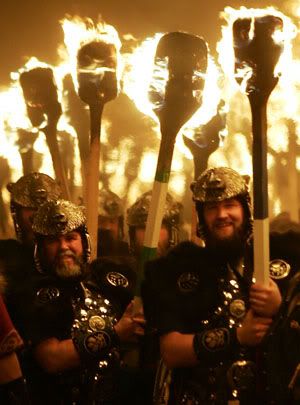 Around AD 550, the Brythonic-speaking bard Taliesin wrote the Kanu y med or "Song of Mead." The legendary drinking, feasting and boasting of warriors in the mead hall is echoed in the mead hall Dyn Eidyn (modern day Edinburgh), and in the epic poem Y Gododdin, both dated around AD 700. In the Old English epic poem Beowulf, the Danish warriors drank mead. Later, taxation and regulations governing the ingredients of alcoholic beverages led to commercial mead becoming a more obscure beverage until recently. Some monasteries kept up the old traditions of mead-making as a by-product of beekeeping, especially in areas where grapes could not be grown, a well-known example being at Lindisfarne, where mead continues to be made to this day, albeit not in the monastery itself.
Etymology
The English word mead derives from the Old English meodu, from Proto-Germanic meduz, from Proto-Indo-European *médʰu (honey, fermented honey drink). Slavic med / miod , which means both "honey" and "mead", (Czech, Slovak, Serbian, Bosnian, Bulgarian, Croatian: med vs. medovina, Polish 'miód' pronounce [mju:t] - honey, mead) and Baltic medus "honey"/midus "mead", also derive from the same Proto-Indo-European root (cf. Welsh medd, Old Irish mid and Sanskrit madhu).
Festivals
Mazer Cup International Mead Competition and Tasting Event -- Sponsored by Gotmead.com, this event is held every year in March in Boulder, Colorado. It is the largest mead event in the world, with over 300 home meads and over 200 commercial meads in competition. There is a Friday tasting event with the gold medal winning commercial meads from the previous year, plus feature meads from around the world.
Real Ale Festival in Chicago, Illinois, includes categories for mead as well as cider and perry.
Woodbridge International Mead Festival - Sponsored by local residents, it claims to be the only mead festival east of the Mississippi. While few types of mead are available, all are home-brewed and go through a rigorous judging process.
In literature
Mead is featured in many Germanic myths and folktales such as Beowulf, as well as in other popular works that draw on these myths. Notable examples include books by Tolkien, George R. R. Martin and Neil Gaiman. It is often featured in books using a historical Germanic setting and in writings about the Viking era. Mead is mentioned many times in Neil Gaiman's 2001 novel, American Gods; it is referred to as the drink of the gods. Also, in the books of the Inheritance Cycle by Christopher Paolini, it is often drunk by Eragon Shadeslayer at feasts in honor of him. Mead is also referenced in The Kingkiller Chronicle novel series by Patrick Rothfuss. The protagonist Kvothe is known to drink metheglin. The non-existent "Greysdale Mead" is also drunk, although it is merely water.
[See above link for distribution, varieties, and local variants; see also Mead of poetry]
.
Thursday, December 6, 2012
The Raven witch and the Autumnal equinox
I missed this seasonally, but this video just sort've came together for me. However, we are still in the Fall. To change the subject, I suppose that I'm not the only one who has fallen in love with certain software programs which slowly become obsolete... and the newer versions of Windows force them out.... aaaand, the newer versions are awful. I loved Corel Photo Paint 8, but it's just no longer compatible, and the newer versions are really, really bad. They're ridiculously confusing and positively limited. There's a big difference between that, and merely getting used to the newer versions of Word, which really just take some time getting used to. I used to really love the older WordPerfect office, more than Word, but I guess it's just a matter of going with what it pragmatic and available.
The Raven witch and the Autumnal equinox
Equinox
http://en.wikipedia.org/wiki/Autumnal_equinox
An equinox occurs twice a year (around 20 March and 22 September), when the tilt of the Earth's axis is inclined neither away from nor towards the Sun, the center of the Sun being in the same plane as the Earth's equator. The term equinox can also be used in a broader sense, meaning the date when such a passage happens. The name "equinox" is derived from the Latin aequus (equal) and nox (night), because around the equinox, night and day are about equal length.
Wheel of the Year
http://en.wikipedia.org/wiki/Wheel_of_the_Year
Autumnal equinox
The holiday of the autumnal equinox, Harvest Home, Mabon, the Feast of the Ingathering, Meán Fómhair or Alban Elfed (in Neo-Druidic traditions), is a Pagan ritual of thanksgiving for the fruits of the earth and a recognition of the need to share them to secure the blessings of the Goddess and the God during the coming winter months. The name Mabon was coined by Aidan Kelly around 1970 as a reference to Mabon ap Modron, a character from Welsh mythology.[27] Among the sabbats, it is the second of the three Pagan harvest festivals, preceded by Lammas / Lughnasadh and followed by Samhain.
[Music: 'Dream Weaver by Michelle Mays; 'Celtic Requiem Chant' by Elliot Simons]
.
Thursday, September 29, 2011
Brennus of the 4th century BC
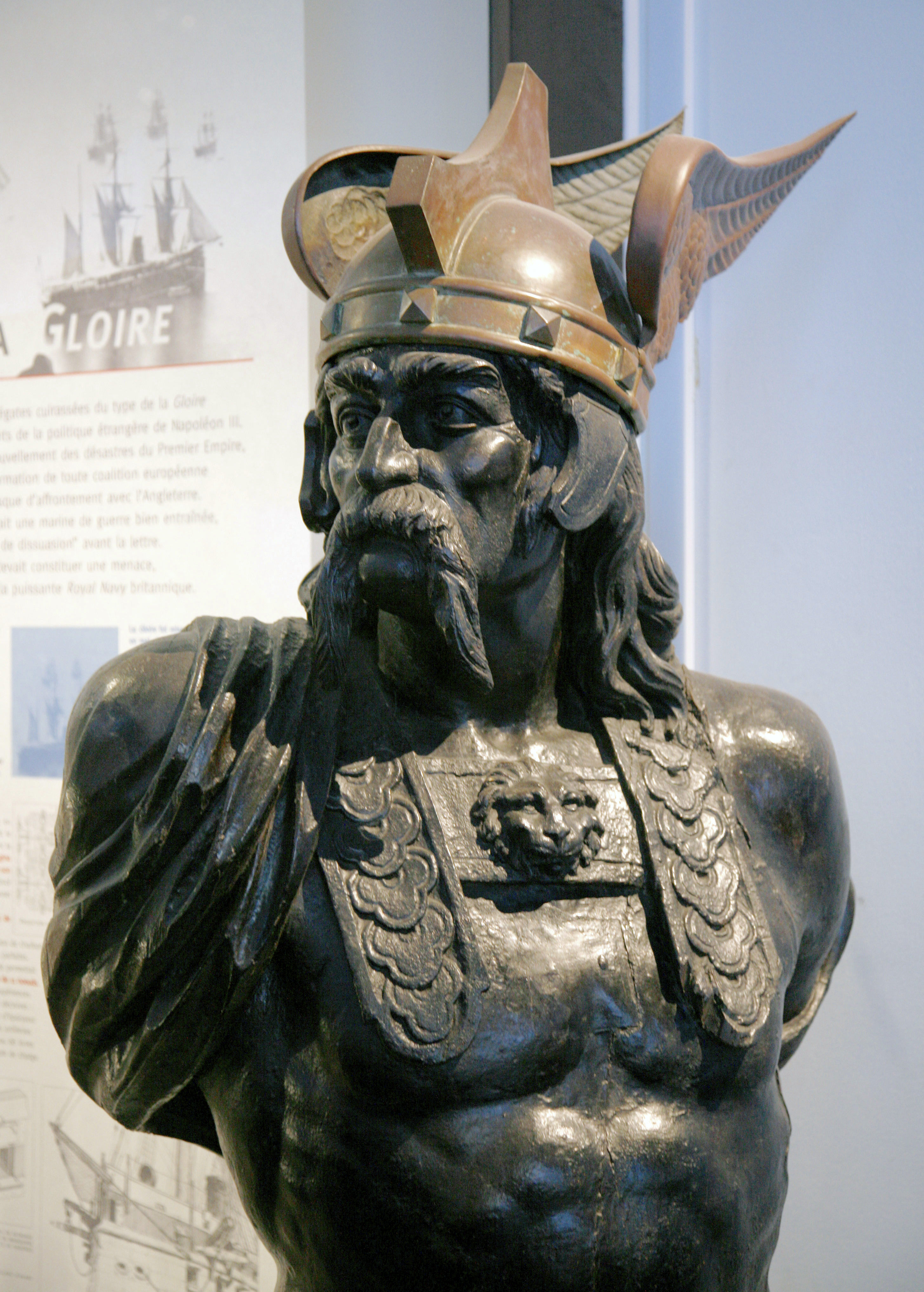
Brennus (or Brennos) was a chieftain of the Senones, a Gallic tribe originating from the modern areas of France known as Seine-et-Marne, Loiret, and Yonne, but which had expanded to occupy northern Italy.
More important historically was a branch of the above (called Senones, by Polybius), who about 400 B.C. made their way over the Alps and, having driven out the Umbrians, settled on the east coast of Italy from Ariminum to Ancona, in the so-called ager Gallicus, and founded the town of Sena Gallica (Sinigaglia), which became their capital.
In 391 they invaded Etruria and besieged Clusium. The Clusines appealed to Rome, whose intervention, accompanied by a violation of the law of nations, led to war, the defeat of the Romans at the Allia (18 July 390) and the capture of Rome. In 387 BC he led an army of Cisalpine Gauls in their attack on Rome. It has been theorized that Brennus is actually a title rather than a name. This is because "Brennus" also appears as the name of a Gallic leader 100 years later. It is also possible that Brennus refers to a god, his name taken by the leader before battle in order to invoke the god's favor and powers.
In the Battle of the Allia, Brennus defeated the Romans, and entered the city itself. The Senones captured the entire city of Rome except for the Capitoline Hill, which was successfully held against them. However, seeing their city devastated, the Romans attempted to buy their salvation from Brennus. The Romans agreed to pay one thousand pounds weight of gold. According to Livy, during a dispute over the weights used to measure the gold (the Gauls had brought their own, heavier-than-standard) Brennus threw his sword onto the scales and uttered the famous words "Vae victis!", which translates to "Woe to the vanquished!"
The argument about the weights had so delayed matters that the exiled dictator Marcus Furius Camillus had extra time to muster an army, return to Rome and expel the Gauls, saving both the city and the treasury. Following initial combat through Rome's streets, the Gauls were first ejected from the city, then utterly annihilated in a regular engagement eight miles outside of town on the road to Gabbi. Camillus was hailed by his troops as another Romulus, father of his country 'Pater Patriae' and second founder of Rome.
Some historical accounts say that the Senones besieging the Capitoline Hill were afflicted with an illness and thus were in a weakened state when they took the ransom for Rome. This is plausible as dysentery and other sanitation issues have incapacitated and killed large numbers of combat soldiers up until and including modern times.
It has been theorized that Brennus was working in concert with Dionysius of Syracuse, who sought to control all of Sicily. Rome had strong allegiances with Messana, a small city state in north east Sicily, which Dionysius wanted to control. With Rome's army pinned down by Brennus' efforts Dionysius led a campaign which ultimately failed. Brennus may have been paid twice to sack Rome.
However, the more accepted history (usually citing Livy and Plutarch) finds that Senones marched to Rome to exact retribution for three Roman ambassadors breaking the law of nations (oath of neutrality) in hostilities outside of Clusium. According to this history, the Senones marched to Rome, ignoring the surrounding countryside; once there, they sacked the city for 7 months, and then withdrew. For more information, see the Battle of Allia.
A famous depiction is the academic painting Le Brenn et sa part de butin (1893) by Paul Jamin that shows Brennus viewing his share of spoils (predominantly naked captive women) after the looting of Rome.
In popular culture
Brennus was played by Gordon Mitchell in the 1963 film 'Brennus, Enemy of Rome'.
Saturday, September 25, 2010
Cernic Rite
The Cernic tradition was an ancient religion native to mainly ancient Gaul, Alpine Germany, and Cisalpine Gaul; and which also seemed to exist in Iberia, some parts of Scandinavia, and perhaps elsewhere.
CERNUNNOS
http://en.wikipedia.org/wiki/Cernunnos
Cernunnos (also Cernenus and Cern) is a Celtic god whose representations were widespread in the ancient Celtic lands of western Europe. Cernunnos is associated with horned male animals, especially stags and the ram-horned snake; this and other attributes associate him with produce and fertility.
Everything known about this deity comes from two inscriptions from France and one from Germany.
Evidence
A rock carving of Cernunnos in the National park of Naquane, Italy.[4]
Cernunnos was proposed to have been identified as the illustration on the Snake-witch picture stone, which shows a possibly horned figure holding snakes in his/her hands, from Gotland, Sweden.[citation needed]
Archaeological sources such as inscriptions and depictions from Gaul and Northern Italy (Gallia Cisalpina) have been used to define Cernunnos.
[Music: 'Lacrimae Lugus' by Crystalmoors
"Celtic/Pagan Black Metal band from Cantabria, Spain" (YouTube user BlackDeath)
http://www.myspace.com/crystalmoors
http://www.fotolog.com/crystalmoors ]
Monday, July 19, 2010
Gallia Cisalpina VI: Gaulish Bread Harvest
 Gallia Cisalpina VI: Gaulish Bread Harvest (click here for link; YouTube did not allow our video to be imbedded due to the fact that the footage is copyrighted)
Lammas is a Neo-Pagan holiday, often called Lughnasadh, celebrating the first harvest and the reaping of grain. It is a cross-quarter holiday halfway between the Summer Solstice (Litha) and the Autumnal Equinox (Mabon). In the northern hemisphere, Lammas takes place around August 1 with the Sun near the midpoint of Leo in the tropical zodiac, while in the southern hemisphere Lammas is celebrated around February 1 with the Sun near the midpoint of Aquarius. On the Wheel of the Year, it is opposite Imbolc, which is celebrated on February 2nd in the northern hemisphere, and late July / early August in the southern hemisphere.
Lammas
http://en.wikipedia.org/wiki/Lammas
Lughnasadh
http://en.wikipedia.org/wiki/Lughnasadh
Harvest Festival
http://en.wikipedia.org/wiki/Harvest_festival
Celtic calendar
http://en.wikipedia.org/wiki/Celtic_calendar
Wheel of the Year
http://en.wikipedia.org/wiki/Wheel_of_the_year
*The footage shown is from the 2006 American remake of 'The Wicker Man' :
Wikipedia
http://en.wikipedia.org/wiki/The_Wicker_Man_(2006_film)
Internet Movie Database
http://www.imdb.com/title/tt0450345/
Amazon.com
http://www.amazon.com/Wicker-Man-Widescreen-Unrated-Rated/dp/B000JYW5DW/ref=sr_1_2?ie=UTF8&s=dvd&qid=1279558795&sr=1-2
[Music: Unknown]
Subscribe to:
Posts (Atom)