Showing posts with label Wicca. Show all posts

Sunday, October 25, 2009

Cernism: Finally giving a proper name to an old tradition

If you're familiar with this blog, then you are familiar with Cernunnos. The worship of the antlered male god of the forest, and the goddess, which was part of Western European culture for probably tens of thousands of years. This practice was part of Cisalpine Gaul more than anywhere else. It was widespread in Gaul, and even into Scandinavia. We don't need to rehash how certain religions have turned "infidels," "heathens," "witches," etc., into dirty words.

As with modern Druidry, it was revived by Freemasons in Britain, and given a universalist spin. The Wiccan Revival in the twentieth century took the worship of Cernunnos and other similar local traditons, and mixed it with other ancient spiritual traditions from the Levant, the Middle East, India, and all over the world, and formed "universalist Wicca." In more recent decades, Wicca has been touted, or at least implied, as the "leftist alternative" to "right-wing Christianity." Perhaps more importantly, as a consequence, the REAL tradition was lost.

Odinism is based on the worship of the chief god in Norse mythology: Odin. Therefore, let me ask, why couldn't the chief god of "Celto-European Witchcraft" (for lack of a better name) -- called Cernunnos, Cernenus, or Cern -- be given a proper traditional name as well? Why couldn't we call this tradition, if even just for reference, "CERNISM?" The main Odinist organization in the world is the Odinic Rite, so why not a "Cernic Rite?" As there are Odinists, why not "Cernists?"

Lets back up for a moment. In modern Greek tradition, all over the world, although they are Greek Orthodox in faith, they honor their folkish-pagan past. They seem to recognize it properly as a history! Why can't we do the same? Instead, we allow people to drag our ancient folk-culture through the mud without apology. No, the worship of Cern was not "Feminist," which makes females into males. It is true that Christianity did destroy Cernism, with disempowering women as part of the strategy of that day. It is also worth mentioning that certain political agendas have used ancient Greek and Roman gods and goddesses for their own purposes in recent decades.
Lets stop using "witchcraft" or "Wicca," and use CERNISM or the CERNIC TRADITION in this Celtic awakening. Lastly, it should be mentioned that the culture of Cisalpine Gaul was "Celto-Ligurian" rather than Celtic. The Alpine tribes were also a big part of the culture.


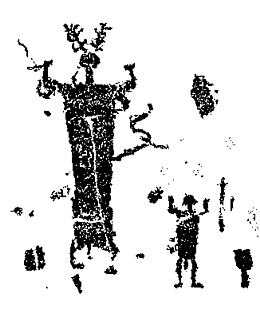
11-02-09 ADDITION: Someone left a comment and added a link for an image of an ancient drawing of Cernunnos from Val Camonica. There are many drawings like this, from over a span of thousands of years. Sometimes Cernunnos was depicted with an bow.

Monday, July 6, 2009

Gallia Cisalpina III: Celto-Ligurian Culture


Gallia Cisalpina III: Celto-Ligurian Culture

All of the tribes of Cisalpine Gaul are sometimes referred to as part of the "Celto-Ligurian" culture. Although some may be "Celto-Venetic" or other regional variations.


LIGURES

The Ligures (singular Ligus or Ligur; English: Ligurians, Greek: Λίγυες) were an ancient people who gave their name to Liguria, which once stretched from Northern Italy into southern Gaul. According to Plutarch they called themselves Ambrones which means ¨people of the water¨. The Ligures inhabited what now corresponds to Liguria, northern Tuscany, Austria (Noricum), Piedmont, part of Emilia-Romagna, part of Lombardy, and parts of southeastern France.

Classical references and toponomastics suggest that the Ligurian sphere once extended further into central Italy (Taurisci): according to Hesiod's Catalogues (early 6th century BC) they were one of the three main "barbarian" peoples ruling over the Western border of the known world (the others being Aethiopians and Scythians). Avienus, in a translation of a voyage account probably from Marseille (4th century BC) speaks of the Ligurian hegemony extending up to the North Sea, before they were pushed back by the Celts. Ligurian toponyms have been found in Sicily, the Rhône valley, Corsica and Sardinia.

It is not known for certain whether they were a pre-Indo-European people akin to Iberians; a separate Indo-European branch with Italic and Celtic affinities; or even a branch of the Celts or Italics. Kinship between the Ligures and Lepontii has also been proposed. Another theory traces their origin to Betica (modern Andalusia) and southern Lusitania (modern Algarve and Alentejo).

The Ligures were assimilated by the Romans, and before that by the Gauls, producing a Celto-Ligurian culture.

Wednesday, July 1, 2009

Gallia Cisalpina II: Pagan Celtic Nation


Gallia Cisalpina II: Pagan Celtic Nation

In memory of the earth-based and gender-equal pagan culture of the Celto-Ligurian tribes in the southern Alpine and Po river valley region called Gallia Cisalpina (Cisalpine Gaul; "Gaul south of the Alps") by the Romans who eventually destroyed their world, took their land, and subjugated them under the Roman Empire.

Monday, June 15, 2009

Gallia Cisalpina: A Celtic Nation


Gallia Cisalpina: A Celtic Nation

Our second video


CISALPINE GAUL

Cisalpine Gaul (Latin: Gallia Cisalpina, meaning "Gaul on this side of the Alps") was the Roman name for a geographical area (later a province of the Roman Republic), in the territory of modern-day northern Italy (including Emilia-Romagna, Friuli-Venezia Giulia, Liguria, Lombardy, Piedmont, Trentino-Alto Adige/Südtirol and Veneto), inhabited by the Celts.


TROPHY OF AUGUSTUS

The Trophy of the Alps or Trophy of Augustus was built by the Roman emperor Augustus to celebrate his definitive victory over the ancient Celto-Ligurian tribes who populated the region and who had harassed merchants along Roman roads. Its remains may be seen in the Commune of La Turbie (Alpes-Maritimes), on the Grande Corniche, 6 km from Monaco.

Monday, June 1, 2009

The PAL and the Religious Construct

To me, this is a non-issue. However, just for the record, the PAL recognizes, within reason and practicality, any faith which is historically linked to the former nations of Northern Italy. This would include Catholic, Waldensian Protestant, Etruscan paganism, Celtic Druidism and Witchcraft, Germanic paganism (Odinism, Asatru, Wotanism), Atheism, Agnostic, etc. They all represent our history going back literally tens of thousands of years. The Padanian-American League is a folk-based association, not a religious or political construct.

The religious construct is rarely a folk-based one, unless it has elements of ancestor worship, like Shintoism and others. One exception is the Greek Orthodox Church, which is basically Greek-only. Apparently it's a sub-branch of Orthodox Christianity, therefore Orthodox Eastern Europeans may attend a Greek Orthodox Church.

Comunità Odinista (Odinist Community) is an Odinist group specifically for those of Northern Italian descent, which traces it's Odinist roots back to the Langobards. The group is active in Northern Italy and Argentina. The PAL has had contact with "CO America" in Argentina. We can cover more about this group later.

The idea of Padanian-based faiths has crossed my mind, but it would be somewhat divisive at the end of the day. For example, Cattolica Padana (Padanian Catholic), Wotanismo Langobarda (Lombard Wotanism), Disciplina Etrusca (Etruscan Discipline), Wicca Camuna (Camunian Wicca) or Druidismo Celtica (Celtic Druidism), Cristianesimo Valdese (Waldensian Christian), Rito Ambrosiano or Rito Milanese (Ambrosian [Catholic] Rite or Milanese [Catholic] Rite), etc., etc. All of these religious constructs, which were regionalized by historically Northern Italian peoples at one time or another, would be best left up to the individual in the modern world. As far as studies and ceremonies, that is different, and it should be encouraged.

If nothing else, we should honor our history and heritage, even if we may disagree with particular events and movements. For example, the Crusades. I know that there are those would would see the Crusades as a glorious movement, and those who do not. I don't think that we can ignore the fact that most of our folk are Catholic. Have been for centuries. Therefore, it remains, by default, at the top of the list, where it will remain. However, any practitioner of any historically factual religion or faith from any of the former nations of Northern Italy, Catholic, Atheist, or Pagan alike, should be equally welcome in the PAL. In other words, those theologies, traditions, and trains of thought will be the ones which will guide us.

[Retraction: We will no longer use the term "Wicca" in reference to specifically
our own links to the Cernic tradition, and will use the term 'Witchcraft" only in reference as it may pertain to how people may perceive certain traditions. This does not mean that some dialog will not take place to rectify disagreements in certain areas.]