Showing posts with label Heathenism. Show all posts

Monday, July 6, 2009

Gallia Cisalpina III: Celto-Ligurian Culture


Gallia Cisalpina III: Celto-Ligurian Culture

All of the tribes of Cisalpine Gaul are sometimes referred to as part of the "Celto-Ligurian" culture. Although some may be "Celto-Venetic" or other regional variations.


LIGURES

The Ligures (singular Ligus or Ligur; English: Ligurians, Greek: Λίγυες) were an ancient people who gave their name to Liguria, which once stretched from Northern Italy into southern Gaul. According to Plutarch they called themselves Ambrones which means ¨people of the water¨. The Ligures inhabited what now corresponds to Liguria, northern Tuscany, Austria (Noricum), Piedmont, part of Emilia-Romagna, part of Lombardy, and parts of southeastern France.

Classical references and toponomastics suggest that the Ligurian sphere once extended further into central Italy (Taurisci): according to Hesiod's Catalogues (early 6th century BC) they were one of the three main "barbarian" peoples ruling over the Western border of the known world (the others being Aethiopians and Scythians). Avienus, in a translation of a voyage account probably from Marseille (4th century BC) speaks of the Ligurian hegemony extending up to the North Sea, before they were pushed back by the Celts. Ligurian toponyms have been found in Sicily, the Rhône valley, Corsica and Sardinia.

It is not known for certain whether they were a pre-Indo-European people akin to Iberians; a separate Indo-European branch with Italic and Celtic affinities; or even a branch of the Celts or Italics. Kinship between the Ligures and Lepontii has also been proposed. Another theory traces their origin to Betica (modern Andalusia) and southern Lusitania (modern Algarve and Alentejo).

The Ligures were assimilated by the Romans, and before that by the Gauls, producing a Celto-Ligurian culture.

Wednesday, July 1, 2009

Gallia Cisalpina II: Pagan Celtic Nation


Gallia Cisalpina II: Pagan Celtic Nation

In memory of the earth-based and gender-equal pagan culture of the Celto-Ligurian tribes in the southern Alpine and Po river valley region called Gallia Cisalpina (Cisalpine Gaul; "Gaul south of the Alps") by the Romans who eventually destroyed their world, took their land, and subjugated them under the Roman Empire.

Monday, June 15, 2009

Gallia Cisalpina: A Celtic Nation


Gallia Cisalpina: A Celtic Nation

Our second video


CISALPINE GAUL

Cisalpine Gaul (Latin: Gallia Cisalpina, meaning "Gaul on this side of the Alps") was the Roman name for a geographical area (later a province of the Roman Republic), in the territory of modern-day northern Italy (including Emilia-Romagna, Friuli-Venezia Giulia, Liguria, Lombardy, Piedmont, Trentino-Alto Adige/Südtirol and Veneto), inhabited by the Celts.


TROPHY OF AUGUSTUS

The Trophy of the Alps or Trophy of Augustus was built by the Roman emperor Augustus to celebrate his definitive victory over the ancient Celto-Ligurian tribes who populated the region and who had harassed merchants along Roman roads. Its remains may be seen in the Commune of La Turbie (Alpes-Maritimes), on the Grande Corniche, 6 km from Monaco.

Friday, May 8, 2009

Wotan, Mead, the Irminsul, the Nine Noble Virtues, and other pagan loose ends

There are a few more areas to cover, which I will tie into one entry. I am a believer that a person can view so-called "paganism" as: 1) a religion, 2) a history, 3) a look into the spirituality and soul of a people, and 4) as a set of principles to be adhered to (if they wish). One need not actually "join" a religious and/or spiritual tradition, in order to adhere to it. To make it's values and principles a part of their own conscience.

For example, the 'Nine Noble Virtues'.

Odinic Rite:
1. Courage
2. Truth
3. Honour
4. Fidelity
5. Discipline
6. Hospitality
7. Self Reliance
8. Industriousness
9. Perseverance


Asatru Folk Assembly:

1. Strength is better than weakness
2. Courage is better than cowardice
3. Joy is better than guilt
4. Honour is better than dishonour
5. Freedom is better than slavery
6. Kinship is better than alienation
7. Realism is better than dogmatism
8. Vigor is better than lifelessness
9. Ancestry is better than universalism

Like the 'Ten Commandments' in Christianity, these principles and many other, much deeper, aspects of Odinism (or Asatru) can be admired and studied. I am aware that the Nine Noble Virtues are guidelines and not "thou shalt nots," and they have no concept of "hell," etc., but my real point is that we can look into any faith and adopt some principles from them. I recently viewed an episode on the History Channel program 'Warriors' with Terry Schappert. It was about the Zulu tribe, and they had a special ceremonial tradition after a battle, in which a warrior is purified in order to go back into society. I thought it was in interesting spiritual concept.

The "Viking Era" was a very small part of the history of what we call Odinism or Asatru. Actually, our ancient Lombard ancestors called what was basically the chief god, usually called Odin, the god of war, as Wotan or Wodan. They were Wotanists or Wodanists, and I mean this was many, many centuries ago. The 'Nine Noble Virtues' was taken from one of the Norse Sagas I believe, and the first one, from the Odinic Rite, was the original.


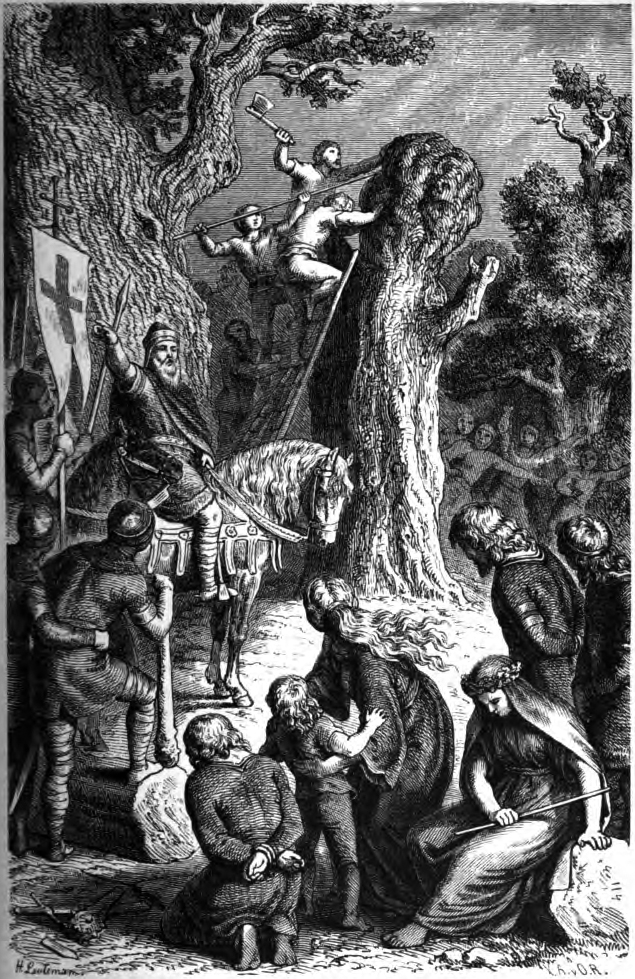
I would also like to at least mention the "Irminsul" (see image to the right), which was a large carved wooden pillar, which was a very important part of this spirituality. I don't think that it was intrinsically worshipped, but may have been a manner to get in touch with all of the gods. Perhaps someone could clue us in there. It appears that the old Germanic tribes often just used a carved tree trunk for this purpose as well. When the Romans, and later powers, finally mobilized themselves to spread Christianity, lets face it, they often did it via force. The following painting was composed by German painter Heinrich Leutemann in 1882, and was entitled 'The destruction of Irminsul through Charlemagne'. It depicts Wotanists literally being forced to accept Christianity as their Irminsul is demolished.


Did you know that names from the days of the week, which we use every day, are from Norse/Germanic spirituality or gods?

Sunday -- "Sun's Day"
Monday -- "Moon's Day"
Tuesday -- "Tiu's Day"
Wednesday -- "Wodan's Day"
Thursday -- "Thor's Day"
Friday -- "Freya's Day"
Saturday -- "Saturn's Day"

Wodan, Wotan, or Woden, may have originally come from the worship of the Greek god Mercury. It's hard sometimes to substantiate some of these things due to various cultures wanting to maintain the purity or originality of their history. I suppose that if this was true, that it was probably due to influence from the Romans, or possibly the Etruscans. I don't really know.

Mead (from description at Wikipedia): "Mead is a typically alcoholic beverage, made from honey and water via fermentation with yeast. Its alcoholic content may range from that of a mild ale to that of a strong wine. It may be still, carbonated, or sparkling. It may be dry, semi-sweet, or sweet.

"Depending on local traditions and specific recipes, it may be brewed with spices, fruits, or grain mash. It may be produced by fermentation of honey with grain mash; mead may also, like beer, be flavored with hops to produce a bitter, beer-like flavor."

What is amazing is that Mead is so hard to find! It was such a part of our ancestors lives, yet it's difficult to find in the market. I don't think that it would be very difficult to make. It can be purchased online pretty easily. Try Yahoo Shopping. Check the Wikipedia link, as there is much more than we have time to research and cover right now. YouTube has videos on how to make Mead as well.

There is an interesting FAQ, from the Wisconsin Vinland Association, called 'An FAQ: Asatru, Wicca, and paganism', which is quite interesting. However, it's pretty apparent that they are a "Universalist" group, meaning that they have a belief that the traditions of their ancestors belong to all other cultures of the earth just as much as it belongs to them. It's probably a split down the middle as far as pagans of European traditions, between those who are Universalist or Folkish. Folkish means that one's heritage is inherently "theirs," and not belonging to every other culture in the world.

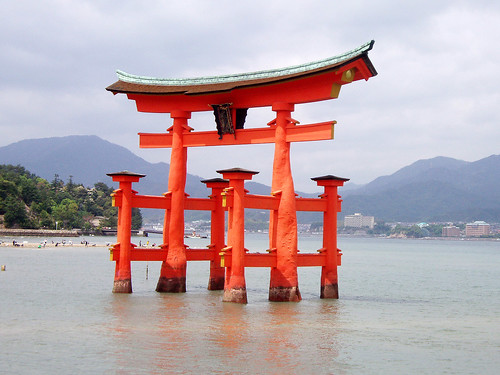
I believe that a European descended person should feel free to study, for example, Shintoism. They may study it, admire it, and even adhere to it; but they can never become a Shintoist because they're not Japanese. It would be extremely disrespectful and dishonorable to try to do this. In the same way, a Japanese person could study and admire Asatru, without trying to co-opt it. Many White Americans flock to Hawaii and force themselves on the native Hawaiian religion, which has caused some of the local Hawaiians to get pretty angry. Again, study, admire, and even adhere to anything, but I believe that it's important for every human being on earth to realize that not everything in the world belongs to YOU. The image above: a Shinto Shrine. Again, don't be afraid to go to YouTube and look up all of these subjects. Many people have downloaded some amazing videos.

I know, this entry has bounced all over the place. I would like to end with an article from the Odinic Rite, entitled 'Images of the Wolf in the Northern Psyche'. It's in PDF, and they don't want it reproduced anywhere without permission, so I will not post the text. It is about the wolf in ancient northern culture and folklore. Actually, much of this folklore survived up to a point in history later than we realize, in some instances. Many ancient Lombard names had a "wulf" ending to them, which comes directly from the reverence of the wolf. I should also mention that this article was written by Heimgest, the director of the Odinic Rite, and I will end this entry with links to four videos of a very interesting interview of him which was conducted.

Interview With a Gothi - Part 1

Interview With a Gothi - Part 2

Interview With a Gothi - Part 3

Interview With a Gothi - Part 4

Friday, October 17, 2008

More Categories and Endeavors


As stated earlier, we're moving the vast majority of text to this blog. The reason is that it's difficult and time consuming to update web pages, in comparison to just allowing the information and ideas to flow along in a blog. We've now moved another six ideas (for development) here from the main website. I just wanted to enter them, and give a quick description.

Our Patron Saint: This was designated to be Mother Cabrini, the first officially recognized American Saint. She was of Lombardian descent, and seemed to be a logical patron saint. I don't know if this is still a good idea or not, as we have many heros and icons.

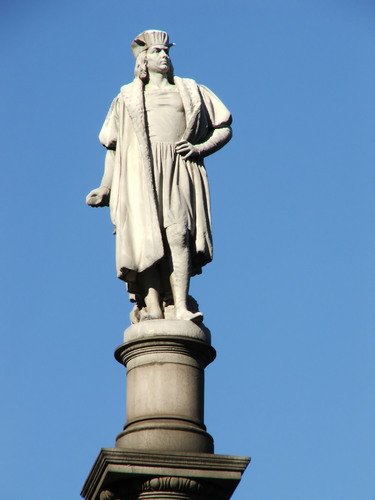
Padanian-American Memorial: In New York City's "Columbus Circle," there is a very impressive statue of Christopher Columbus, which would seem to eliminate the possible need to eventually construct a monument. Again, I don't know now if this is still a good idea. Do we even really need "a memorial?" A cultural center would seem to fill that void. However, sometimes there is a need to have a "special place."

Famous Padanian-Americans: We had attempted to make a list, and this is something that we still need to do. For a relatively small population in America, there are a stunning number of very important individuals. Columbus, Cabot, Verrazzano, Vespucci, Mazzei, Busti, Giannini, Fermi, Cabrini, Beltrami, Vigo, etc., etc. That's just off the top of my head in twenty seconds! Remember the scene from 'The Godfather' were the senate is questioning Michael Corleone? One senator, being the quintessential politician, upon leaving, gives his little speech on "Italian-Americans," and goes on to name many of the great Northern Italians in American history. There's a hidden message in there somewhere, I know it!

Padanian-American Singles: A couple of individuals have suggested this, and it is a very good idea. We just want to merge this as a fuction of the Roundtable that we will form, rather than as just a half-hearted effort on a webpage. This definitely will be accomplished.

Padanian-American Historical Icon: This was another attempt to prop up our own historical figures. Queen Theodelinda was the undisputed queen and ruler of the Lombard Kingdom, and she brought Roman Catholicism to the Lombards, similar to St. Patrick. She could also represent the pagan traditions of the past, in some capacity. In conclusion, for now at least, the appearance of the Lombard queen (Northern Italy) on our logo, and Filippo Mazzei (USA) for our "heritage day," is sufficient.

This brings up a larger complex internal and external issue of Christianity vs. Heathenism. I have come to the conclusion that the Greek communities have this correct. In religion they are Greek Orthodox, but their past pagan icons are always part of their identity. In other words, the issue is ONLY an issue if someone wants to make it an problem. It should be no problem for us. So in conclusion, for us, it shouldn't be "Christianity vs. Heathenism," but "Christianity/Catholicism AND Pagan Identity (Christianity and Heathenism). You can love historical icons, or nature, or whatever, without worshipping it (unless you want to). I think we should follow the "Greek model" on this.

Padanian Females Photo Album: This was a good idea, but I don't want to maintain it, as it is time consuming. There are thousands of images of beautiful women of Tuscan, Lombard, etc., descent. Steve Sailer studies and writes about race, genetic, sociological, and anthropological issues, and when confronted with the question of "who has the most beautiful women?", he had the following to say:

"For European beauty, I'd vote for Northern Italian women."