Showing posts with label Tuscany. Show all posts

Wednesday, November 23, 2022

Five Ways to Celebrate Fibonacci Day on November 23

Fibonacci garden

Fibonacci Day resources on Bing.com

Fibonacci (Leonardo Bonacci, Leonardo of Pisa) has been covered here, and the Fibonacci sequence. If you go to the Fibonacci sequence page and examine those calculations; his ability as a mathematician was stunning. Another in a long list of Tuscans who advanced human knowledge in a dramatic way.


'Five Ways to Celebrate Fibonacci Day on November 23'

November 23 is celebrated as Fibonacci day because when the date is written in the mm/dd format (11/23), the digits in the date form a Fibonacci sequence: 1,1,2,3.

Heather Sheridan - AllTogether.swe.org - November 2, 2021


November 23 is celebrated as Fibonacci day because when the date is written in the mm/dd format (11/23), the digits in the date form a Fibonacci sequence: 1,1,2,3. The Fibonacci sequence begins like this:

1, 1, 2, 3, 5, 8, 13, 21, 34, 55, 89, 144…

The sequence follows a fairly simple pattern: every two numbers, when added together, equal the following number.

While this seems simple, once you begin to see the sequence in things such as the pattern of a pine cone or the petals on a daisy, it starts to seem downright incredible!

Computer data storage and processing uses this number sequence today. The sequence is also useful in the trading of stocks and architecture. Another unexpected place we find the sequence is in nature, for example in hurricanes and DNA patterns. The Fibonacci sequence can be referred to as “nature’s secret code” or “nature’s universal rule.” Here are a few ways to celebrate Fibonacci Day:

1) Plan a Fibonacci feast.

The Fibonacci sequence occurs very frequently in common fruits and vegetables and when prepared together, these foods make for a fun meal! Prepare things like artichokes, pineapple, Romanesco and pomegranate to see how the sequence occurs in nature.

2) Take a Fibonacci-inspired nature walk.


Depending on where you live, you may be able to easily discover Fibonacci sequence in flowers, trees, and much more. Take a nature walk and inspect things like pinecones, ferns, daisies, sunflowers, and snails, since all of these things are made up of Fibonacci numbers.

con't....

.

Wednesday, May 22, 2019

Lake Antorno featured now in Windows 10 Spotlight


Lake Antorno

Lago d'Antorno is located in the Dolomites; the province of Belluno in the Veneto.


*************************


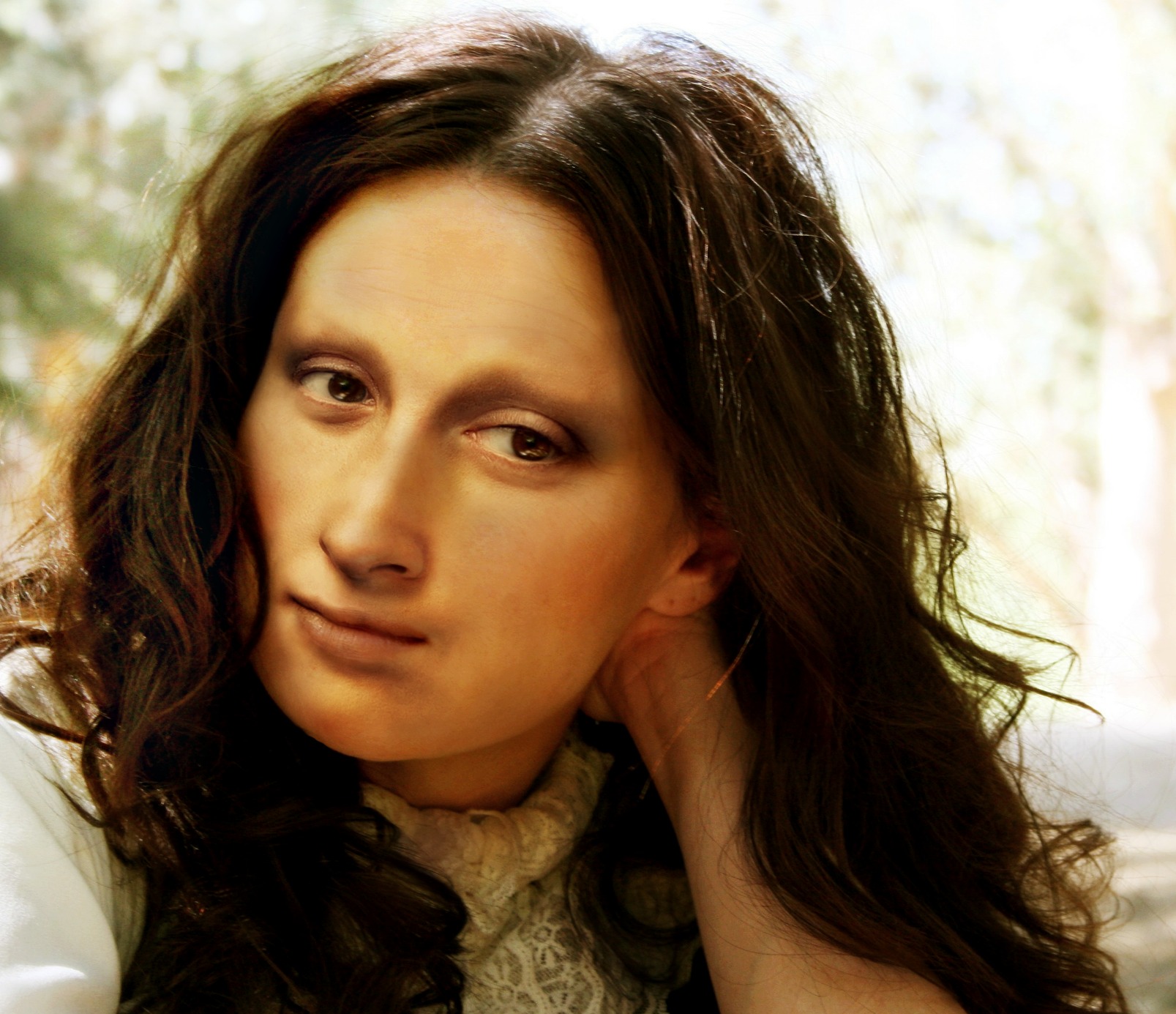
Revisioning drawing of Lisa del Giocondo

Lisa del Giocondo

Lisa del Giocondo (née Gherardini; June 15, 1479 – July 15, 1542) was an Italian noblewoman and member of the Gherardini family of Florence and Tuscany. Her name was given to the Mona Lisa, her portrait commissioned by her husband and painted by Leonardo da Vinci during the Italian Renaissance.

Little is known about Lisa's life. Born in Florence and married in her teens to a cloth and silk merchant who later became a local official, she was a mother to five children and led what is thought to have been a comfortable and ordinary middle-class life. Lisa outlived her husband, who was considerably her senior.

Centuries after Lisa's death, the Mona Lisa became the world's most famous painting and took on a life separate from Lisa, the woman. Speculation by scholars and hobbyists made the work of art a globally recognized icon and an object of commercialization. In 2005, Lisa was definitively identified as the model for the Mona Lisa.


************


'Dark family history behind Mona Lisa's sad smile revealed in new book'

'Leonardo da Vinci never finished the Mona Lisa because he injured his arm while fainting, experts say'


*************************


Roman coins from Breathitt County, Kentucky

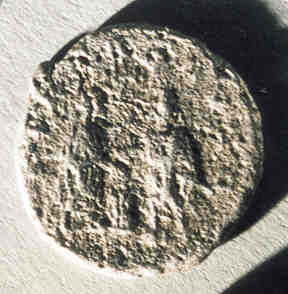
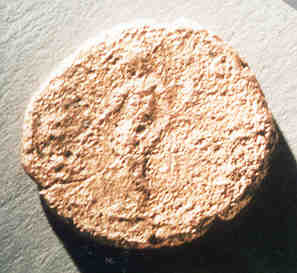
The above three coins were found in a cave shelter in Breathitt County, Kentucky, by Mr. Michael Wayne Griffith of the same county. Mr. Griffith has found another 9 or so similar coins, but the three depicted are the best preserved of the group.

A few years ago the three depicted were examined hands-on by Norman Totten, Professor of History, now Emeritus, at Bentley College. Totten identified the two thinner coins (the top two above) as antoniniani, a type of bronze Roman coin minted between 238 and 305 A.D. The obverses (left photos) depict an unidentifiable emperor wearing the distinctive "solar crown" of the period. The reverse of the top one, in the right photo, depicts two figures standing facing what apparently is a central altar, while that of the middle one depicts a female standing figure facing left with a cornucopia in her right hand.

These would originally have had a silver surface, long since gone. The third coin is thicker, and depicts a bust facing right, wearing a laureate wreath rather than a crown. The reverse, according to Totten, is perhaps a figure of a centaur walking to the right and looking back. Its flan (the metal disk from which coin is made) seems to be of a North African (Egyptian) or Middle Eastern type. This coin probably dates to a similar period to that of the two antoniniani (singular antoninianus). While Totten is confident that the coins are genuine, he warns that such coins are easy to obtain from coin dealers.

In 1963, a small hoard of Roman coins from the same approximate period, and in a much better state of preservation, was found during bridge construction on the north bank of the Ohio River, at the Falls of the Ohio, opposite Louisville, Kentucky.

Breathitt Co., population 16,100 in 2000, is on the upper Kentucky River, in the southeastern portion of the state. The county seat is Jackson, pop. 2,490. Two of the larger towns are named Quicksand and Lost Creek, but the 2000 U.S. Census couldn't find either. The nearest metropolis is Hazard (which may or may not be the inspiration for the "Dukes of Hazzard" TV series), pop. 4,806, and one county to the south.

Mr. Griffith is difficult to contact, but is known to Mr. David Feldman, President of Feldman Lumber Co. in Lancaster, Ky.

The author wishes to thank Prof. Norman Totten, Dr. John Payne, of Berea, Ky., and Mr. David Feldman of Lancaster, Ky., for their invaluable assistance. 


************


Roman Head from Calixtlahuaca, Mexico

Roman coins from the Falls of the Ohio River, Indiana

Roman shipwreck near Rio de Janeiro, Brazil


*************************


Gianfranco Rosi vs Duane Thomas 03-01-1988

Boxing Syko

WBC World Super Welterweight Title Fight

Venue: Palazzo Dello Sport, Genoa, Liguria, Italy


************


Gianfranco Rosi

Gianfranco Rosi (born 5 August 1957) retired Italian boxer who was a two-time world champion in the light-middleweight division.


Professional career

Rosi turned pro in 1979 and won the WBC light-middleweight title in 1987 by decisioning Lupe Aquino. He lost the belt in 1988 when he was dominated by Donald Curry. Rosi was down once in 2nd, 4th and 8th and down twice in 7th, failing to answer the bell starting the 10th round.

In 1989 he won the IBF light-middleweight title by outpointing the undefeated Darrin Van Horn. He went on to successfully defend the title an impressive 11 times. In 1994 he had a technical draw against Vincent Pettway, and in the rematch later that year Pettway KO'd Rosi, ending his long reign.

In 1995 he took on WBO light-middleweight title holder Verno Phillips and won a decision, but Rosi failed a drug test and Phillips was reinstated as champion. The result of the bout was changed to a No Contest. In 1997 he lost a rematch to Phillips and retired.

In 2003 he came out of retirement, and finally retired in 2006 at the age of 49 with a pro record of 62 wins (18 KOs), 6 losses, and 1 draw.


Amateur career

Rosi had a record of 94 wins - 2 losses - 4 draws Highlights:

1976 Italian Light-Welterweight Champion

1977 Italian Welterweight Champion


************


Born in Assisi in the province of Perugia (Umbria), Gianfranco Rosi took a 32-1 record into a European Welterweight Championship bout in 1984 with future world welterweight champion Lloyd Honeyghan from the UK. Rosi lost his first big bout, but won his next nine--including winning the European Junior Middleweight title and defending it twice--and took a 41-2 record into a bout with world champion Luge Aquino of Mexico, a much more dangerous opponent than Honeyghan. Rosi won a unanimous decision to take the belt.

There were so many outstanding boxers worldwide in the 80s, especially between 147 and 160 pounds. Next he defended the belt against another very hard punching boxer, former champion Duane Thomas of Detroit, winning by knockout. Although he lost in his next defense against former welterweight champion Donald Curry, he eventually won the world title back and defended it eleven times before losing.


*************************


The Discovery and Restoration of Leonardo da Vinci's Long-Lost Painting "Salvator Mundi" | Robb Report

Robb Report

Leonardo da Vinci is one of history's greatest artists and thinkers. Only about 15 of his paintings are known to exist and one was thought to be lost forever. Leonard painted that masterpiece, called "Salvator Mundi" (Savior of the World) around 1500. It was owned by no less than three kings and, in 1763, it disappeared. This video tells the story of that incredible painting, how it was rediscovered in 2005, and what happened when it went to auction at Christie's in November 2017.

READ MORE: http://bit.ly/LostDaVinci


Secret Histories of Rare Treasures spotlights the stories behind items that amaze historians, elude collectors, and intrigue audiences. Through original and never-before-seen footage, in-depth archival research, and expert interviews, Robb Report brings these awe-inspiring narratives to life. Developed in coordination with Robb Report’s editors and produced by the brand’s in-house custom-content and video agency Robb Report Studio, the editorial series explores the hidden lives of extremely rare and amazingly valuable items often found in the pages of Robb Report.

Subscribe to Robb Report: https://bit.ly/2rx0Icw


CONNECT WITH ROBB REPORT

Web: http://robbreport.com
Facebook: https://www.facebook.com/robbreport
Twitter: https://www.facebook.com/robbreport
Instagram: https://www.instagram.com/robbreport
Pinterest: https://www.pinterest.com/robbreport


.


*************************


[This portion was originally from the CCNA blog - entitled 'Disciplina Etrusca' by Voltumna - May 31, 2015]

This band named itself after the supreme god of the Etruscan pantheon, "Voltumna" (also called "Veltha"), which I just covered a bit on the other blog ('Etruscan women, mythology, and the god Veltha'). Black Metal music is a lot like the old Heavy Metal music in that some of it is truly good, while most you would probably have to really like the genre to appreciate. This particular song wouldn't be my first choice to promote, but I love the theme! The 'Disciplina Etrusca' was the text of ancient Etruscan polytheism, which was made up of the three "books of fate."

Beyond the larger Black Metal genre, are the sub-genres of "Celtic Black Metal," "Viking Black Metal," etc., etc. One thing this music offers is a clear link to folk-identity, in this case "Etruscan Black Metal." The band's lyrical theme is defined as "Etruscan Paganism, Mythology, Modern Decay"; and it's genre as Black/Death Metal. This additionally suggests a type of Gothic element to it. Dark symbolism can be beautiful, and could be an outlet for people, primarily younger people, who feel alienated by society.

This song is brand new; just released today in fact. The band is from Viterbo, Latium, and has been around since 2009. Viterbo was one of the city-states of the Etruscan civilization. In a Western society which makes a special point to squash identity (individual and collective), I think it's great that people can turn to their ancestors for inspiration and strength. It's not just Black Folk Metal, but there are many other genres which are folk-oriented in this manner. I mean something a little beyond a band merely playing folk music from a certain culture. There's often a rebel-aspect to it. 


If you don't like Black Metal, maybe seek out some of the other types of music within this concept. There's one band from Sardinia called Atrium Animae which is under a genre called "Atmospheric Neoclassical Darkwave," which is hauntingly beautiful.. and is based on what appears to be a Medieval Catholic style. There is Irish Black Metal, Odinic music of many sounds, Slavic, you name it. You might find something you like within one of these folk-spiritual-identity sub-genres.


I like music of just about every texture and harmony, but I don't like "sad music." There are enough things in this life to be sad or depressed about; especially when we lose people. Something inspirational is great, especially when there's that blood-folk connection with a spiritual tie-in. Black Metal is almost like fighting music. Perhaps we need some of that in our lives, because often life is a war. Evolutionary struggle.

Voltumna official website

Voltumna YouTube channel

Metal-Archives.com band profile

Voltumna facebook (official; in Italian mostly)

Voltumna facebook (in English)

.

Saturday, April 27, 2019

What did Leonardo da Vinci's "Last Supper" really look like?


What did Leonardo da Vinci's "Last Supper" really look like? | DW Documentary
 

Published on Apr 18, 2019

384,688 views

DW Documentary

Leonardo's famous painting "The Last Supper" hides a secret: only 20 percent of the original work is still visible.

In the style of a thriller, the documentary attempts to reconstruct what it originally looked like. Leonardo da Vinci was the epitome of the Renaissance Man. May 2019 marks the 500th anniversary of his death. The artist created world-famous works such as the fresco "The Last Supper" - perhaps the most famous. It is still in its original setting, on the wall of the dining room of the former Dominican convent of Santa Maria delle Grazie in Milan.

The painting, which is 4.60 meters high and 8.80 meters wide, has been undergoing restoration for the last 19 years. But the restorers now know that only 20 percent of the original is visible today. So what did something that is the focus of so many legends originally look like? Our investigation also takes us to the small Belgian abbey of Tongerlo, where a mysterious copy of da Vinci's work has been discovered. It is a painting on canvas that could have been commissioned from da Vinci’s workshop by the French King Louis XII. It has perhaps brought the researchers a step closer to the truth.

.

Wednesday, November 21, 2018


BIOGRAPHY OF GIACOMO PUCCINI - FULL AudioBook | Greatest AudioBooks

Greatest AudioBooks

This biography of Puccini was written while the composer was at the height of his career. Besides the usual biographical information, the author summarizes and discusses Puccini's works to this point, including Le Villi, Edgar, Manon Lescaut, La Boheme, Tosca, and Madama Butterfly (which was in production at the time of this writing). - Summary by Ciufi Galeazzi


************


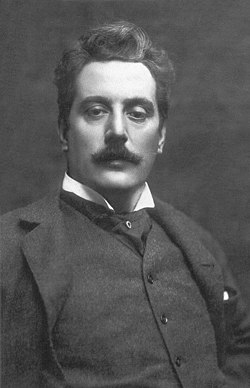
Giacomo Puccini

Giacomo Antonio Domenico Michele Secondo Maria Puccini; 22 December 1858 – 29 November 1924) was an Italian opera composer who has been called "the greatest composer of Italian opera after Verdi."

Puccini's early work was rooted in traditional late-19th-century romantic Italian opera. Later, he successfully developed his work in the realistic verismo style, of which he became one of the leading exponents.

Puccini's most renowned works are La bohème (1896), Tosca (1900), Madama Butterfly (1904), and Turandot (1924), all of which are among the important operas played as standards.


.

Saturday, March 17, 2018

Flag and anthem of the Grand Duchy of Tuscany (1840-1860)


Flag and anthem of the Grand Duchy of Tuscany (1840-1860)

TheFlagAndAnthemGuy

ITALIAN: Granducato di Toscana

ANTHEM: "La Leopolda"

Flag from wikipedia: "Flag of the Grand Duchy of Tuscany (1840)" by Flanker. Licensed under CC BY-SA 3.0 via Commons

made using Flag 3D screensaver, available here:
http://www.3planesoft.com/holidays-screensavers/flag-3d-screensaver/

- CONTACTS:
FACEBOOK https://www.facebook.com/TheFlagAnthemGuy-1385863208300909/
TWITTER https://twitter.com/Flag_Anthem
DEVIANTART https://theflagandanthemguy.deviantart.com/


.

Monday, December 19, 2016

Sunday, October 16, 2016


Giovanni Berdondini - Chianti Sound (OFFICIAL VIDEO)

Audioglobedistro

Chianti Sound – Giovanni Berdondini original piano song.
Composed, performed and produced by Giovanni Berdondini
Realized with the support of: project 100band within GiovaniSì - Regione Toscana

Piano recorded, mixed & mastered by Mirco Mencacci & Andrea Ciacchini at SAM Recording Studio

Video filmed by The Factory PRD
Video director: Stefano Poggioni
Dop: Claudia Cataldi
Drone operator: Lorenzo Hervatin
Makup artist: Audrey Biarnais
Hairstyle: Andrea Prischi
Assistant video: Elena Poggioni, Simone Petracchi
Pianos provided by Checcacci
Special thanks to: Castello di Poppiano Guicciardini

Subscribe to my channel:  

https://www.youtube.com/channel/UCqh-URUwZtkMD31nixD1VAw
 

Follow me on Facebook: https://www.facebook.com/giovanniberdondiniofficial/

www.audioglobe.it

Become our fan on www.facebook.com/Audioglobe
 

Follow us on Twitter @audioglobe1

Subscribe to Audioglobe's YouTube Channel
https://www.youtube.com/user/Audioglobedistro


*************************

It had always been amazing to me the similarities between Tuscany and the wine country of northern California, coupled with the long cultural link.

.


Friday, March 4, 2016

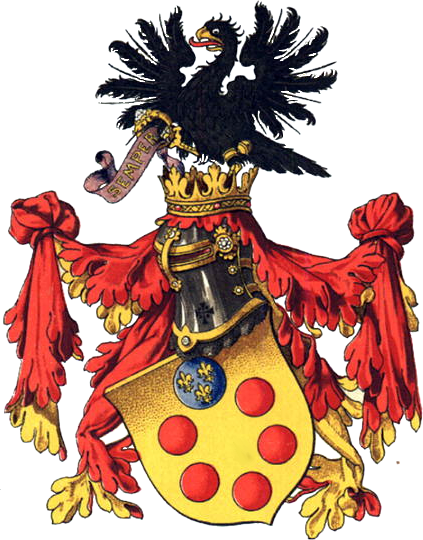
The Medici - Secrets of the most Powerful Family in the World


The Medici - Secrets of the most Powerful Family in the World (Full Documentary)

Marcia Torres

The Medici - Secrets of the most Powerful Family in the World (Full Documentary) Secrets of Rothschild Family Fortune: The Medici were among the most powerful families in the world. Beginning in the fourteenth century, they built a fortune bankrolling popes and kings. Through their wealth and their political abilities, they went from being one of many patrician clans in Florence to the city's hereditary rulers. They married into the royal houses of Austria and France, and two of their number were made pope. Scholars and lovers of art, the Medici were patrons of Leonardo, Raphael, Botticelli, Galileo, Michelangelo, and Cellini. And under their rule, Florence became the intellectual hub of the Western world. Many of the leading Medici were buried in the Chapel of San Lorenzo in Florence, which long enjoyed the family's patronage. 

In 2004, we obtained Superintendent Antonio Paolucci's permission to examine 47 of the Medici interred there, including Cosimo. The multiyear project is a unique opportunity to study the health of the Medici (a rare look at a single family over a long period) and might settle allegations of murder to be found in legends about the dynasty. The House of Medici (/ˈmɛdɨtʃi/ med-i-chee; Italian pronunciation: [de ˈmɛːditʃi]) was a banking family, political dynasty and later royal house that first began to gather prominence under Cosimo de' Medici in the Republic of Florence during the late 14th century. The family originated in the Mugello region of the Tuscan countryside, gradually rising until they were able to fund the Medici Bank. 

The bank was the largest in Europe during the 15th century, seeing the Medici gain political power in Florence — though officially they remained citizens rather than monarchs. The Medici produced four Popes of the Catholic Church—Pope Leo X (1513–1521), Pope Clement VII (1523–1534), Pope Pius IV (1559–1565), and Pope Leo XI (1605);[1] two regent queens of France—Catherine de' Medici (1547–1559) and Marie de' Medici (1600–1610); and, in 1531, the family became hereditary Dukes of Florence. In 1569, the duchy was elevated to a grand duchy after territorial expansion. They ruled the Grand Duchy of Tuscany from its inception until 1737, with the death of Gian Gastone de' Medici. The grand duchy witnessed degrees of economic growth under the earlier grand dukes, but by the time of Cosimo İ de' Medici, Tuscany was fiscally bankrupt. Their wealth and influence initially derived from the textile trade guided by the guild of the Arte della Lana. 

Like other signore families, they dominated their city's government, they were able to bring Florence under their family's power, and they created an environment where art and humanism could flourish. They along with other families of Italy, such as the Visconti and Sforza of Milan, the Este of Ferrara, and the Gonzaga of Mantua, fostered and inspired the birth of the Italian Renaissance. The Medici Bank was one of the most prosperous and most respected institutions in Europe. There are some estimates that the Medici family were the wealthiest family in Europe for a period of time. From this base, they acquired political power initially in Florence and later in wider Italy and Europe. A notable contribution to the profession of accounting was the improvement of the general ledger system through the development of the double-entry bookkeeping system for tracking credits and debits. The Medici family were among the earliest businesses to use the system.

.

Tuesday, February 16, 2016

Food from Tuscany


Food from Tuscany
 

RAI

Tuscany. Home of high quality products appreciated throughout the world: its olive oil, its Chianti wine. And then its Fiorentina T-bone steak from Chianina cattle, one of the most ancient and prized breeds in the world.


See more video at http://www.expo.rai.it/youritaly


.


Wednesday, July 22, 2015

Mona Lisa "Twin" from the same studio

In January 2012 Museo del Prado in Madrid announced that it had discovered and almost fully restored a copy of the painting by a pupil of Leonardo, very possibly painted alongside the master. The copy gives a better indication of what the portrait looked like at the time, as the varnish on the original has become cracked and yellowed with age.

'The Mona Lisa's Twin Painting Discovered'

Speculations about Mona Lisa

.

Saturday, June 13, 2015

Confessions of a bookmark junkie 1

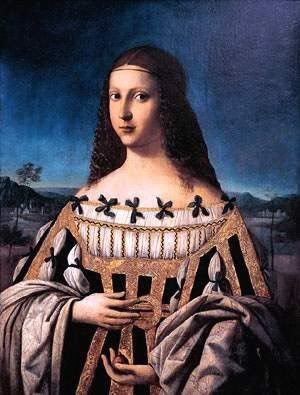
Lucrezia Borgia
For longer than I care to say, like probably a lot of people, I've gone bookmark crazy. It's like on those late evenings, you're feeling tired but still conscious enough to follow some areas of interest. You then just go bookmarking with the intention of "getting back to it later"... which you don't because the subjects are so muddled. Well, maybe it's still possible. I wanted to begin a process of catching up with a series of ideas that will not follow any consistent pattern. Sometimes there should probably be much more to say about them; sometimes not. I may get back to a few of them; maybe not.


Lucrezia Borgia

Lucrezia Borgia (18 April 1480 – 24 June 1519) was the daughter of Pope Alexander VI and Vannozza dei Cattanei. Her brothers included Cesare Borgia, Giovanni Borgia, and Gioffre Borgia.

Lucrezia's family politics became subject matter for The Prince where well implemented ruthlessness represents a practical component of Machiavellian politics.

Her family had arranged several marriages for her which advanced their own political position including Giovanni Sforza (Lord of Pesaro), Alfonso of Aragon (Duke of Bisceglie), and Alfonso I d'Este (Duke of Ferrara).

Tradition has it that Alfonso of Aragon was an illegitimate son of the King of Naples and that her brother Cesare may have had him murdered after his political value waned.

Lucrezia was cast as a femme fatale, a role she has been portrayed as in many artworks, novels, and films.


Not being someone easily taken in by "royalty," which is so often dysgenic, I have nevertheless been intrigued by Lucrezia's image in art. She must have been very beautiful. Somewhat docile, grand in style, prominent hazel eyes, long thick blondish hair. Of course her being young and beautiful, the daughter of a Pope, as well as a member of the House of Borgia... all adds much intrigue to her life. There is a play, an opera, five movies, and a portrayal in three television series; including 'The Borgias' on Showtime. If anyone wants to review 'The Borgias', send an e-mail to camunlynx@live.com. I can recall reading a comic book when I was very young... one of those old mystery comics. Some young woman was possessed by "the spirit of Lucrezia Borgia," took on an evil appearance, and poisoned her boyfriend... something along those lines. Apparently most historians don't believe her to have been a murderer, but it all adds to the legend.


Appearance

She is described as having heavy blonde hair which fell past her knees; a beautiful complexion; hazel eyes which changed color; a full, high bosom; and a natural grace which made her appear to "walk on air." These physical attributes were highly appreciated in Italy during that period. Another description said that "her mouth is rather large, the teeth brilliantly white, her neck is slender and fair, and the bust is admirably proportioned".

One painting, Portrait of a Youth by Dosso Dossi at the National Gallery of Victoria, was identified as a portrait of Lucrezia in November 2008. This painting may be the only surviving formal portrait of Lucrezia Borgia; however, doubts have been cast on that claim.[10] Several other paintings, such as Veneto's fanciful portrait, have also been said to depict her, but none have been accepted by scholars at present.


Rossi Firearms USA

Rossi Firearms was founded in 1889 by Amadeo Rossi, a Venetian immigrant to Brazil. Frequently, Cisalpines could be described more as "pioneers" more than immigrants... a term which subtly suggests mediocrity. Wherever Cisalpine people go, everything rises up around them. Rossi USA is based in Miami Lakes, Florida.


ROSSI HISTORY AND BACKGROUND INFORMATION

The Rossi revolution of firearm design and manufacture started with the founding of the company in 1889 by Amadeo Rossi.  Over the last 115 years, that tradition has grown along with the company and the Rossi Family.  The Rossi name represents a piece of firearm history and a tradition of excellence.

Over the years, Rossi firearms has led the way in design and engineering.  At the same time, it has always been important to produce an affordable product without sacrificing any quality or accuracy.

In December of 1997 BrazTech International L.C. was created as the exclusive importer of Rossi firearms in North America.

Previously, Rossi firearms were distributed by Interarms of Alexandria, Virginia. Rossi manufactures its classic rifles in a plant in San Leopoldo, Brazil and will continue operations there, selling many firearms outside the United States and North America.

At the same time, Forjas Taurus, S.A. purchased the rights and the equipment to manufacture Rossi handguns.  Taurus manufactures three models of .38 Special revolvers and four models of .357 Magnum revolvers under contract with Rossi.  Revolvers sold by BrazTech with the Rossi name are manufactured in a brand new facility owned by Taurus in SaoLeopoldo, Brazil.  Much of the tooling and many of the machines were acquired from Rossi during negotiations between the companies.

Today's Rossi is still run by the same family and they put the same dedication and innovation into every firearm.  At Rossi, it is more than just building guns...it is a family's history and tradition.


Caffe Trieste

Caffè Trieste is an internationally known chain of four Italian-themed coffeehouses plus one retail store in the San Francisco and Monterey Bay Areas California.

Caffè Trieste was opened in 1956 by Giovanni Giotta (aka "Papa Gianni"), who in 1951 had emigrated to the United States from the small fishing town of Rovigno D'Istria, Italy (now part of Croatia). Missing the espresso houses of Trieste, Italy, Giotta opened his own cafe. Caffè Trieste is said to be the first espresso house on the West Coast.


I remember there used to be families with origins from Trieste in San Francisco.. North Beach.. not very long ago either. It's interesting that the city has also long had Croation and Slovenian communities, two of the cultures which had off-and-on struggled for Trieste over the centuries. San Francisco has about as much continuity as Disneyland now. Recently I heard a lecture where the speaker made mention of the strange behavior of rootless Americans, and he was American.. moving every five years... as he said "living like Gypsies." I think we could at least say that a city shouldn't be as unsettled as an airport. I have been to Caffe Trieste, and it was relaxed enough to play a game of unhurried chess on one of their tables. 


Forst Beer

Although I have never tried it, Forst seems interesting to me just because it's from the culturally-linguistically German South Tyrol region. Partly because as the Cisalpines are more the wine makers; the Transalpines have been more the beer makers, and Forst being founded in 1857. You can order it online at a good price.. except that it will cost about fifty bucks for shipping.

Forst is an Italian brewing company, based in Forst, a frazione (municipal subdivision) of Algund, South Tyrol. The brewery was founded in 1857 by the two entrepreneurs Johann Wallnöfer and Franz Tappeiner from Merano. Later in 1863, the company passed to the entrepreneur Josef Fuchs, who enlarged the plant in Forst.

Forst.it (English) 

Forst Beer Garden (English)

Birra Forst (YouTube)

It can be funny how beer labels come and go. For example, Pabst Blue Ribbon was very popular in the 50s.. all over the country. In California, Primo Beer from Hawaii was rather popular in the 70s, but is difficult to even find now. Still, it can be interesting to try to get your hands on a regionally scarce beer.


National Alpine Association

Years ago, I became aware of this organization by name. There were branches all over the world (Argentina, Australia, South Africa, etc.). In fact, there was a listing in San Francisco. When I inquired about it, I received a postcard in Italian, with some reference to Cesare Battisti. I had thought it might be an association for people of Alpine Italian ancestry; although it seemed odd that a group in San Francisco would send something in Italian when local Italian immigration largely fizzled out in the 30s. 

Actually it appears that it's tied to the Alpini Italian special forces, which recruits out of the mountain regions, mostly the Alps. Contrary to the common perception, they're a very proud military tradition going back to World War I. During the Battle of Stalingrad, they distinguished themselves in the brutal Battle of Nikolayevka. A book about this battle was published, which was entitled 'Sacrifice on the Steppe' (Hamilton; 2011). I think I will save that for another posting. The Alpini traditionally wear those particular Alpine mountain hats that you may have seen before (see above image). Apparently, the Associazione Nazionale Alpini is an association made up of veterans of the Alpini Corps.


Miscellaneous Links

Gaulish Deities - A rundown of the deities of Gaulish polytheism, of which Cisalpine Gaul was a part. Cernunnos was to the Gauls, what Odin was to the Norse.

Walking tours in Northern Italy Good travel site for the northern regions.

Torani coffee and beverage flavoring - Excellent flavoring for coffee. 

Italians in the United Kingdom - Cisalpine migration to northern California, the Great Lakes region, Buenos Aires, Melbourne, or Johannesburg are what I call "GOOD migrations"; while I'm much less enthusiastic about migration to or from other European Nations. However, we should know about any of our people anywhere in the world.

Trentino-Alto Adige/Südtirol wine - Unique and different highland wines.

Italians in France - Our people in the past definitely had an impact on France. Of course, this would go back to Roman times. On a side note, contrary to common perceptions, the South of France was much more impacted long ago by Greek influence than the Cisalpine region. There was a "Magna Graecia" of France at one time.

The Lost Colony of the Templars: Verrazano's Secret Mission to America - The Vatican, the Freemasonic leadership, and other powerful forces definitely knew that the "New World" was here long before 1492.

Historical Reenactment - Taurini Celtic tribe meets Roman Legion at Turin - Interesting photographs of long ago intra-Cisalpine cultural conflict.

St. Bernardino of Siena - St. Bernadino, a Catholic Saint and a Tuscan, is the namesake of the city and large county of San Bernadino, California; as well as the San Bernadino Mountains.

Amerigo: The Man Who Gave His Name to America - The name "America" was named after the Tuscan explorer Amerigo Vespucci. On a side note, to people in north and south America, the name "America" refers to the USA. However to Europeans, the name "America" refers to the entire "New World." I have always thought of North America and South America as two separate continents, with the only common reference as "the Americas".. and the Panama Canal sort've officially separated them anyway. Also, the USA actually uses "America" within it's name, so it's logical to refer only to its citizens as "Americans."

The Pyrgi Tablets Three beautiful golden tablets from BCE; two written in Etruscan, and one in Phoenician.

Savoy - Cisalpine roots? The Savoy region was very much part of the Cisalpine cultural world in 1860. There has long been a separatist movement there. I really don't know as to whether or not they had been speakers of Piedmontese. Perhaps someone can help us out here?

Veronese Easter - Veronese vs. occupying Nepoleonic army - Little-known revolt, similar to the Sicilian Vespers.

Mysteries written in blood - Roman remnants in China - From a Chinese news source, so there must be something to it; because they always promote Chinese historical uniformity.

Antonio Pigafetta explorer - Little-known Venetian explorer who sailed with Magellan.

Ostrogothic Ravenna - The city was the capitol of the Ostrogothic Kingdom. Although this period was short, it might be interesting to look up on the Gothic architecture there.

Matteo Colombo Photography - Colorful sunrise over the Dolomites - Beautiful photography of the Dolomite Mountains.

Top Ten Jesus Movies - Easter came and went so fast, but during Easter many movies from over the years about Jesus were telecast. Some of them you probably remember, and were memorable.

Edward Ross: The Italians - Here are some north-south issues that I had wanted to comment on. Perhaps it's best to just stay with simple issues and data.

Padanian Etruria - Etruscan civilization in Lombardy - The term "Padane" is not new, and there are many centuries old references to it. Also, there were Etruscans in the Alpine stretches; as there were Gauls in Tuscany. Gallo-Etruscan heritage is one that is as legitimate as other ancient cultures which produced modern European nations, such as Britain, France, Germany, etc. There is no real geographical Celt/Gaul-Etruscan/Roman divide in modern times.
 
.

Sunday, May 24, 2015

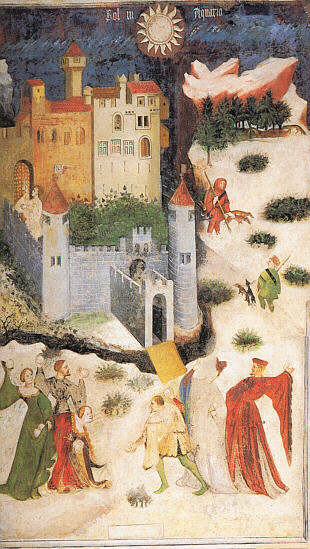
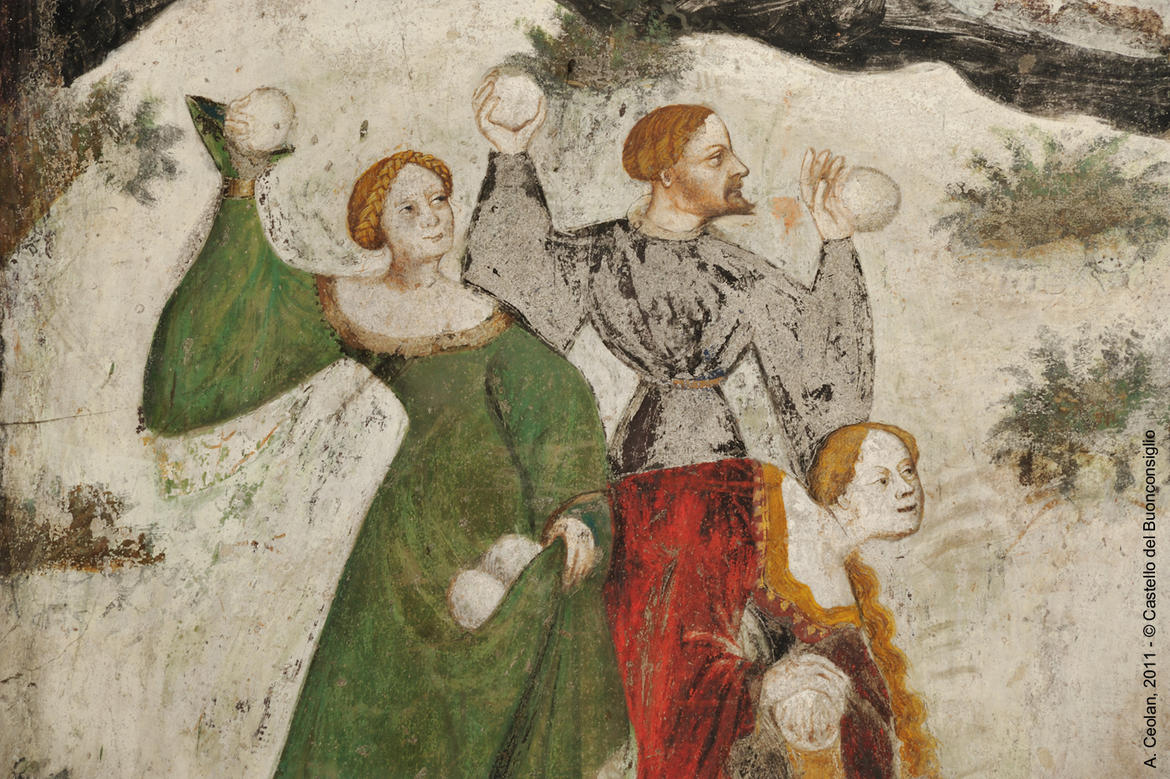
Buonconsiglio Castle in Trento


The Buonconsiglio Castle could be a lot of other castles in the Cisalpine region. It stands out a little due to it's history, size, and artistry. If you click on the above image, right-click, click view image, and click to get the full size; you can see the faces and fine detail on the upper columns. Many centuries old structures further stand out within the picturesque and colorful mountain areas, such as the Trento province.


The castle, which was constructed in the 13th century, was an important state administrative headquarters for the next five hundred years. Invading groups, such as the Austrians, occupied it as a military base.


Decorated by the aristocracy over the centuries, the castle also houses many frescoes and art pieces.


Appearing much as it must have in the 1200s, the castle sits majestically against the Alps at twilight.


**************************************************


The castles of Tuscany

The website CastelliToscani.com has an index of all the major castles in the region.

.

Thursday, February 12, 2015

A short drive through part of the Apennines


Alessandro Grilli YouTube channel

I personally found the above video to be very simple and relaxing, but another nice more travel oriented short video about the north Apennine cultural region is entitled Two Days In The Apennines (Ash Clark).

.

Tuesday, February 10, 2015

'The Lord's Prayer' by Bocelli


BEST Andrea Bocelli Song EVER! - (HQ Sound) - The Lord's Prayer (better than time to say goodbye)

This is the BEST Andrea Bocelli song EVER. Listen as he joins the Mormon Tabernacle Choir in Salt Lake City, Utah for an unforgettable rendition of "The Lord's Prayer."

YouTube channel elderlu

.

Monday, February 2, 2015

'Italian Americans, California Italians' and a few random notes


'Italian Americans, California Italians' (UCLA YouTube channel)

From the video description:

This video records the beginning of a conference at UCLA titled "Italian Americans, California Italians." It was the first of its kind, made up of nearly a dozen scholarly presentations and discussions aiming to define "California Italians" within the more generic group of "Italian Americans." This opening, introductory statement to a full room was made by the Chairman of UCLA's Department of Italian, Professor Thomas Harrison.


Columbus... born in Genoa

You may be aware that the origin of Columbus has been in some dispute due to a somewhat surprising lack of evidence of his early life in Genoa. However, it does appear that he was of Genoese ancestry.

"Yo nacio en Genoba" ("I was born in Genoa")
 

--Written in Christopher Columbus' Will; February 22, 1498


"La California"

The small town of La California, along the Tuscan coast, was founded by Leonetto Cipriani. Cipriani--who was Corsican--had spent many years traveling, especially in California and the west coast of the United States. He was influential, and was acquainted with the Count of Cavour, and was something of an ambassador for a unified Italy of which he very much wanted Corsica to be included. He wrote an account of his travels entitled 'California And Overland Diaries of Count Leonetto Cipriani From 1853 through 1871'. He co-founded the city of Belmont, California in San Mateo County.


Bargetto Winery (Santa Cruz Mountains)

I love the Santa Cruz Mountains. Any excuse to visit will not disappoint. It even resembles parts of the Cisalpine Alps or the Apennine Mountains. I have not visited this winery. Feel free to send a short or long review (camunlynx@hotmail.com) for posting.


Our History (from Bargetto.com website)

The Bargetto winemaking heritage began with brothers Phillip and John Bargetto who emigrated from Castelnuovo Don Bosco, a small town in the Piedmont region of northern Italy. They brought with them years of winegrowing experience when they established BARGETTO WINERY on the banks of Soquel Creek in California.

Phillip was the first to depart Italy in 1891 at the age of seventeen. In 1909 John joined his brother in San Francisco.
The original Bargetto family winery was located in San Francisco from 1910-1917. The name of this winery was South Montebello Vineyard and Wine Company. With Prohibition on the horizon the winery was closed and the brothers moved to Soquel in 1917.

Phillip and John purchased the present site of BARGETTO WINERY in 1918 and began making wine out of an old barn on the property. During Prohibition (1919-1933), the brothers continued to make wine for family and friends, while they continued to sell produce to local customers. They also grew apples at the family ranch in Soquel. When Prohibition ended in 1933, the brothers devoted more time to the wine business. They began a wine wholesale business, while they continued to sell produce wholesale.

Phillip Bargetto passed away in 1936 and John was left the sole owner of the business throughout the 1940s and 1950s. He continued to produce wine and sell wholesale and retail. He was joined by his sons Ralph and Lawrence during these years.


The Next Generation

The Bargetto Family winemaking heritage continued with John’s son Lawrence during the 1960s and 1970s. He introduced modern technology such as stainless steel fermentation, barrel aging, and added new Santa Cruz Mountains varietals such as Pinot Noir and Chardonnay. He also created the CHAUCER’S line of dessert-style wines.


Today

The third generation of Bargettos now direct the operation of the winery. BARGETTO WINERY represents the oldest continuous-operation winery in the Santa Cruz Mountains. Their pioneering spirit continued with the establishment of Bargetto Regan Estate Vineyards, near Corralitos, California in 1992. Here, cool-climate varietals like Chardonnay, Pinot Noir, and Pinot Grigio are carefully nurtured to produce BARGETTO WINERY’s estate wines. In keeping with the family heritage, the winery also incorporates northern Italian varietals from its Estate Vineyard into its flagship LA VITA wine.


Voynich manuscript
  
This work is in the form of a short book, filled with illustrations of plants, geometric shapes, and an unknown text. It appears very deep and scientific, but there has not yet been any way to read its secrets. The book is available for purchase, free in pdf form online, documentaries on YouTube, and lots of general information in a search.. so I won't bother with links. You may want to examine it and attempt to understand it. The best I could come up with is that the characters look a bit like ancient Indo-European Tocharian writing, and the illustrations remind me of Fibonacci patterns. Very strange.

From Wikipedia:

The Voynich manuscript is an illustrated codex hand-written in an unknown writing system. The vellum in the book pages has been carbon-dated to the early 15th century (1404–1438), and may have been composed in Northern Italy during the Italian Renaissance. The manuscript is named after Wilfrid Voynich, a Polish book dealer who purchased it in 1912.

The pages of the codex are vellum. Some of the pages are missing, but about 240 remain. The text is written from left to right, and most of the pages have illustrations or diagrams.

The Voynich manuscript has been studied by many professional and amateur cryptographers, including American and British codebreakers from both World War I and World War II. No one has yet succeeded in deciphering the text, and it has become a famous case in the history of cryptography. The mystery of the meaning and origin of the manuscript has excited the popular imagination, making the manuscript the subject of novels and speculation. None of the many hypotheses proposed over the last hundred years has yet been independently verified.

The Voynich manuscript was donated by Hans P. Kraus[6] to Yale University's Beinecke Rare Book and Manuscript Library in 1969, where it is catalogued under call number MS 408. A digitized high-resolution copy is also accessible freely at its website.


.

Tuesday, January 27, 2015

Monday, August 4, 2014


"The greatest danger for most of us is not that our aim is too high and we miss it, but that it is too low and we reach it."

--Michelangelo

.

Tuesday, June 10, 2014

‘Neverlake’ (2013) – movie review


‘Neverlake’ is a 2013 Italian movie, apparently made for an English-speaking audience. I ordered it via pay-per-view due to its theme, which I found interesting:

On a trip home to visit her father, Jenny is thrown into a world of mystery, horror and legend when she is called upon by 3000 year old spirits of the Neverlake to help return their lost artifacts and save the lives of missing children.

Actually, the film description for the PPV described “Etruscan spirits.” There is surprisingly little information online about his film, outside of a few reviews… of which I haven’t read, as I usually like to try to relay my interpretation firsthand. I wasn’t able to find out which lake it was filmed at, as the lake reminded me of pictures I have seen of Lake Nemi in Tuscany… a location of many legends and folklore. I think most of the filming was around Arezzo in eastern Tuscany. Lake Nemi is in the west, but this lake was mysterious-looking in any case… looking beautifully gloomy and surrounded by heavy woods.

Some background to the story was a little bit unclear. The main protagonist was Jenny.. a sixteen year old girl, of apparently Tuscan birth and heritage, who had been sent to live with an aunt in England at a young age, and was currently going to school in New York City. The movie begins with Jenny on the last leg of her trip to spent the Summer with her father in Arezzo, which is evidently in a rural hilly part of Tuscany, dotted with ancient villages.


This is a difficult movie to review because it was a steady advance of strange experiences, but perhaps none of them standing out in particular. Basically, in one form or another, ancient Etruscan spirits of “the Lake of Idols” seem to be sending her clues regarding.. something. Throughout the film, Jenny’s poetry relay some subtle messages.


Just the theme of Etruscan mythology, combined with the gloomy environment, set an interesting mood. Jenny’s father, apparently a doctor and amateur archeologist, was working on a project regarding ancient Etruscan artifacts. On his wall was a painting of Etruscans engaging in a ritual by that particular lake.. of which they believed had supernatural healing properties. He told Jenny that the painting was just an interpretation by the artist of how they may have held rituals on the lake. I don’t know if there really is such a painting of this theme, or if another painting was used to fit the story. The mysterious terrain of the the land, along with the father and his wife’s unusual actions, results in one strongly getting the impression that there are some secrets being kept. Jenny is told that her mother had passed away.

Soon Jenny meets children from a nearby home for orphaned children suffering from various ailments. This home/facility was fairly large and very old, constructed of stone walls and tiled roofs. It sat alone amidst the natural landscape. Jenny befriends them and reads them stories.. for example, writings of Shakespeare. They begin to trust her, and allow her into their world.

Jenny’s father had removed 2,600 to 3,000 year old statues from the lake, which ties into the main plot. Jenny begins to have supernatural experiences, including strange dreams about the lake. I don’t think I would be giving away too much by saying that the “Souls of the Lake” were unhappy with the removal of their statues (figurines). He had been working on his “project” for twenty years.


Etruscan temple
I think part of the theme of this film—for me at least—was a folk-pagan concept of reconnecting with one’s ancestors… with a distinction between a true “folk connection,” and one of mere usury. One curious element in the film was one particular character who appeared perhaps dangerous initially, and another who appeared positive initially… well, it turned out to be quite different…

Although this movie moved along with a slow advance—although I found it to be very relaxing and an escape—the ending ties together a large number of loose ends. The film goes from mystery, to horror, to tearjerker at the end. Many things don’t make sense until the dramatic ending scenes. I wouldn’t say that this movie was an absolute “thriller.” It was suspenseful, an escape into the spiritual, and delving into the sensitive theme of child abuse. I guess one could say that it was a common theme of “good vs. evil”… with the adults being the “evil” force… and with the children receiving help from ancestral spirits when they asked for it.
.