Showing posts with label Benandanti. Show all posts

Saturday, August 14, 2010

The Twilight Saga and the Benandanti: Part 6

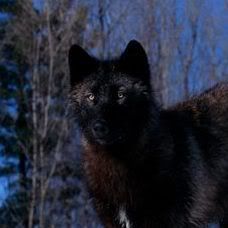
The Bendandanti werewolves

One of the strangest incidences involving werewolves was that of "Benandanti" (a term roughly translated into 'good walkers,' 'those who go well' or 'good-doers') in northern Italy. In this case the werewolves were men who left their bodies and assumed the shape of wolves. After becoming wolves they descended to the underworld to battle witches.

This case was tried in 1692 in Jurgenburg, Livonia, situated in an area east of the Baltic Sea, steeped in werewolf folklore. It involved an 80-year-old man named Thiess.
Thiess confessed to being a werewolf, saying his nose had been broken by a man named Skeistan, a witch who was dead at the time he had struck Thiess. According to Thiess' testimony Skeistan and other witches was preventing the crops of the area from growing. Their purpose for doing this was so they could carry the grain into hell. To help the crop to continue to grow Thiess with a band of other werewolves descended into hell to fight the witches to recover the grain.

The warring of the werewolves and the witches occurred on three nights of the year: Saint Lucia, Pentecost and Saint John (the seasonal changes). If the werewolves were slow in their descent the witches would bar the gates of hell, and the crops, livestock, and even the fish catch would suffer. As weapons the werewolves carried iron bars while the witches used broom handles. Skeistan broke Theiss' nose with a broom handle wrapped in a horse's tail.

The judges were astounded by such testimony, for they had naturally supposed the werewolves were agents of the Devil. But now they were hearing the werewolves were fighting the Devil. When asked what became of the souls of the werewolves, Thiess said they went to heaven. He insisted werewolves were the "hounds of Gods" who helped mankind by preventing the Devil from carrying off the abundance of the earth. If it were not for them all would suffer. He said there were werewolves in Germany and Russia also fighting witches in their own hells.

Thiess was determined in his confession, denying he had ever signed a pact with the Devil. He refused to see the parish priest who was sent for to chastise him, saying that he was a better man than any priest. He claimed he was neither the first nor the last man to become a werewolf in order to fight witches.
Finally the judges, probably out of desperation, sentenced Thiess to ten lashes for acts of idolatry and superstitious beliefs. A.G.H.

In the Friuli region of Italy, Slavic, Germanic, and Italian traditions combined to form the Benandanti cult. Many Benandanti were followers of Diana.


Carlo Ginzburg, in 'Night Battles' wrote:

'The present research now establishes...the positive existence at a relatively late date (from c. 1570) of a fertility cult whose participants, the Benandanti, represented themsleves as defenders of harvests and the fertility of fields...This belief is tied to a larger complex of traditions (connected, in turn, with the myth of nocturnal gatherings over which female deities...presided)...In the span of a century, as we shall see, the Benandanti were transformed into witches and their nocturnal gatherings, intended to induce fertility, became the devil's sabbat, with the resulting storms and destruction.'

Four times a year, on holidays associated with the planting and harvesting of crops, the Benandanti were called to Gatherings. It was at these Gatherings that the major battles with 'Malandanti '(loosely translates to 'evil-doers) or 'Strigoni' were fought. The Benandanti fought with fennel stalks, the Malandanti with sorghum. It was believed that on certain particular nights the soul of the Benandanti gets out of the body to participate in meetings with other Benandanti .

But perhaps the most interesting aspect of the Benandanti was the method by which they were chosen. One did not decide to be Benandanti, the calling was forced on certain people as an accident of birth. Women and men born with a 'caul' (inner fetal membrane still covering the body, especially the head) were believed to have mysterious healing powers and the ability to see witches. Cauls were sometimes saved by these Benandanti and worn about their necks as amulets.

Much like the shamen of other cultures, the Benandanti testified they left their bodies at night, (what we call astral projection) sometimes shape shifting into animal form , sometimes riding animals or household tools. While 'out' they performed work which, we now know from modern research, was typical of shamans around the world. They healed and protected people of the village, they kept the paths of the dead from this world to the next secure, and they fought to protect the village from 'Malandanti'.

The 'doers of good' retained their anti-witchcraft stance until around the year 1610. Shortly afterward, they came under persecution by the Inquisition, and were identified as witches. They maintained that they were an army for Christ in the war against evil. As a result the local beliefs underwent a profound transformation, and by 1640 the Benandanti themselves were acknowledging that they were in fact 'witches'.

[from monstrous.com]

.

Friday, August 13, 2010

The Twilight Saga and the Benandanti: Part 5


Night Battles: How the Benandanti Fought Witches During the Sabbath

Daniil Leiderman - deliriumsrealm.com - September 10, 2007

We have learned to dismiss the Inquisition, to view its cases, its hundreds of years of history as a self-fulfilling prophesy gone terribly wrong. People driven by faith or greed or a bit of both, sought witches and found them. Scores and scores of women and men were imprisoned, tortured and in some cases killed, apparently for their own good. History has rejected the Inquisition's legacy, it values and self-validations.

We dismiss the Inquisition's trials and evidence and are quite right to do so-confession obtained under torture is hardly dependable. And yet it is certain that not every case began and ended with torture, and at times even the inquisitors were at odds about a certain potential heretic. Such is the case of the benandanti of the Friuli (north-eastern) region of Italy. Anthropologist Carlo Ginzberg's book Night Battles: Witchcraft & Agrarian Cults in the Sixteenth & Seventeenth Centuries presents the benandanti through the inquisitor's records and trial data, just as the inquisitors met them.

Who are the Benandanti?

The benandanti were of peasant stock, poor and largely illiterate, they spoke almost exclusively the friuli dialect, and at times had trouble communicating with their judges. However several statements reappear throughout the entire length of Ginzberg's study. All benandanti insist they were chosen by being born with a caul.

Superstition ascribed an unusual destiny for children born with a caul, a piece of the amniotic sac on their head. This was true throughout Europe and even the Middle East, however the specifics of the superstition; whether it was a good or bad omen, tended to vary from region to region. For several defendants in Ginzberg's study, the caul was a lifetime protective talisman worn in a pouch around the neck. It was the caul that identified a potential benandante to his or her recruiters.

After the age of approximately twenty each benandanti said another benandanti came to them during the night and led them out, riding cocks or goats beyond the village and into the woods. On the way the benandanti would drink wine from their neighbor's casks, invisible and flying. All benandanti insisted their bodies were left behind on their journeys.

Battles Between Benandanti and Witches

In the woods the spirits of the benandanti would meet the witches in the throes of their Sabbath. The witches would dance, fornicate and defile Christian images. Sometimes the devil lead them, at times a warlock, the witches would serve either. The benandanti would wait, lead by a captain (several separate trials record benandanti from different villages describing the same leader), or a glowing angel, and then they would meet the witches in battle and beat them with flannel stalks.

If the witches won, evil triumphed - crops withered, children and animals died. If the benandanti won, good triumphed for a season - fields were fertile, storms rare, children healthy. Such rites happened four times a year, once before every season.

Each benandanti insisted to his inquisitor that they served Jesus Christ and the Church. One can see the trouble such statements would have given the inquisitor.

The Church's Reactions to Benandanti

The benandanti are by definition acting beyond the Church yet claim to be for the Church, they witness the Devil's Sabbath but do not partake, they know the witches in their region by sight but do not reveal them-they act beyond the paradigm. As such the inquisitors did not immediately reach for the rack and the fire.

Initially the benandanti were released, and the same was true of the next batch of benandanti arrested later in the 16th century. Each new generation of inquisitor seemed to inevitably run up against the benandanti, interrogate, try and give up, handing out, at best, a sentence of mild heresy punishable by paying penance and temporary banishment from the town or region. However, the attention the cult received lead to its decline. The public became aware of the benandanti's claim of their supposed power over the spells of witches.

According to their testimony the benandanti can cajole and threaten witches into reversing their spells or hexes, particularly the ones that cause disease to children. Inevitably some unethical people, who may or may not have been benandanti began to charge the parents of sick children for the lifting of the witches' curse on their child. On the one hand this made the benandanti seem opportunistic and devaluated their "goodness" in the eyes of the populace leading to a more direct association between them and the witches they claimed to oppose. Furthermore, the benandanti's "cure" would more often that not involve the denunciation of the "culprit" usually a family member, as the witch causing the trouble.

At times the benandante would name a couple, or even a dozen of local women as witches, and ascribe to them the most vile of acts. The local inquisitors would be forced to investigate if only to stop a lynch mob. Clearly such provocations made the benandanti seem like fanatics bent on disrupting the social order to both the populace and the church hierarchy.

In the end the problem of how to condemn the benandanti as heretics became academic. Changing popular beliefs tainted by two centuries of prosecution, and inquisitors more willing to use torture produced a crop of benandanti whose beliefs had clearly eroded. These benandanti might recall some part of the night battles, but no longer insisted on their separation from the witches, instead admitting under pressure to also cavorting with Satan and spitting on the cross.

Ginzberg traces the decline of the benandanti's beliefs into the 17th century where the cult appears to disappear altogether after several leaders are convicted of misleading the populace and thievery rather than religious reasons. However, the benandanti are not interesting because they challenged the understanding of the inquisitor, but because they challenge ours just as much.

Explanations for the Benandanti's Abilities

Any rational person would be at a loss to explain the sense of community the benandanti convey-for instance benandanti in different villages describe the same meeting place, or even name their leader-and the fact that this community claims to meet in spirit only, given that the Inquisition's own investigation all but rules out actual cult gatherings.

Ginzberg puts forward several theories-epilepsy, hallucinogens, and others, but it is obvious to him and to us that they are insufficient. Indeed who has heard of epileptics who suffer a fit only on certain days of the year, at midnight, with accompanying visions? Or hallucinogens that change your consciousness so as you experience a particular ritual event again and again, to the complete exclusion of your actual sight and hearing? Moreover, even the most outlandish drug cannot account for multiple benandanti who have never met in person claiming that their captain is red-headed, or being able to name the witches in other villages in the region.

One story reveals the gap between the benandanti and our own limits of understanding tells of a benandante woman accused of practicing necromancy. When the inquisitors asks her if it is true that on a certain date she taught a certain local woman how to see the spirits of the dead, the accused tearfully replies that she did not teach the local woman anything, but that the woman came to her looking for help, because she saw ghosts but wanted to stop seeing them. The accused witch told the local woman that she had no choice in the matter, since these things were up to God, and she should simply learn to live with it, as the accused had. We see here the earnest conviction of a peasant woman, who for lack of education, or for fear of the church tells what she believes to be the truth.

Indeed when the benandanti lie, it is fairly obvious-after giving detailed descriptions of the gathering at one interrogation, the accused would suddenly claim to have forgotten, or never heard of the benandanti at the next, one accused simply agreed with anything said by the inquisitors including contradictory statements-he was released when this was noticed. In the necromancer's case the inquisitors decided the woman wasn't a witch, but was guilty of mild heresy and banished her for three years. We would have put both her and the local woman that asked for her help in the mental hospital for schizophrenia. It is arguable which is the better "cure".

But therein lies the significance of Ginzberg's work-we cannot simply discount the rather simple confessions of these people, there is a tradition and a stable set of images, but they are at odds with all rational explanations. Furthermore Ginzberg sites a number of similar European cults, whose believers run the gamut from nearly identical to the benandante, to werewolves that battle the hounds of Satan, and even stranger groups.

Indeed, faced with so many cults we find ourselves in the position of the inquisitors, doing our best to conform these people to our paradigm, to our reason, and find them slipping away into the irrational night.

About the Author

Daniil Leiderman is completing his studies in the fields of art history and comparative literature at New York University. He is a Russian emigre and a practicing pagan.

Reference

Carlo Ginzburg's "Night Battles: Witchcraft & Agrarian Cults in the Sixteenth & Seventeenth Centuries", Penguin Books 1985

.

Saturday, July 3, 2010

The Twilight Saga and the Benandanti: Part 4

To tie up a few loose ends here. It's interesting that the Twilight Saga takes place in the state of Washinton, as that state resembles the natural landscape of Germany and the countries to it's east like Rumania, and the greater Alpine region. This is interesting because that is largely where this folklore has it's origins. I wonder of that was intended?

Someone who I know to be very wise, told me one time that if someone with ancestral origins in a particular type of environment feels nothing when they find themselves in a similar natural environment (ex. Alpine region and the Pacific Northwest)... I forget his exact words but the gist of it was that he would be baffled by that, and I agree. This would apply to any individual.


'Waking the Moon' (from Wikipedia)

Waking The Moon is a 1994 novel by Elizabeth Hand. It was the winner of the James Tiptree, Jr. Award and The 1996 Mythopoeic Award for Adult Literature. It is set mainly in The University of Archangel and St. John The Divine, a fictional University inspired by The Catholic University of America, mentioned in a few of Hand's novels. About 100 pages were cut from the US edition.

Plot summary

Sweeney Cassidy starts out as a freshman at University, where she meets the mysterious Angelica and falls in love with the strange and beautiful Oliver. She gets tangled up in sinister, supernatural events involving the awakening of an ancient, malevolent goddess. According to the afterword for the short story The Bacchae, found in the collection Last Summer At Mars Hill, it is another trope on ancient Greek myth that prefigures Waking the Moon. They both involve murderous cults of women. Elizabeth Hand has said that she wanted to show that ancient goddess cultures were not all as peaceful and idyllic as we tend to think.


*************************

This subject ties into what I would call the final period, the Middle Ages, of the stamping out of the pagan traditions of Europe through the various "witch hunts." A lot of people don't tie in the words "infidel" with "heathen," which are one and the same. Even today, every person fits that description in someone's eyes, whether they like it or not.

.

Friday, July 2, 2010

The Twilight Saga and the Benandanti: Part 3

The second Carlo Ginzburg book on this subject was entitled 'Ecstasies: Deciphering the Witches' Sabbath'. This book seems to delve into the greater issue of "European witchcraft," which is a catch-all term not always accurate.


Ecstasies: Deciphering the Witches' Sabbath (Ginzburg; 1991)


Library Journal (book review)

Emerging from testimonies during witchcraft trials in Europe between the 14th and 17th centuries are consistent descriptions of the Witches' Sabbath: night flying, ritual cannibalism, etc. Most scholars dismiss these descriptions as torture-induced gibberish. Ginzburg (history, Univ. of California at Los Angeles) proves that these descriptions are bastardized accounts of ecstatic experiences practiced by a shamanic culture. In addition, he links the persecution of the witches with that of other social outcasts (lepers, Jews, and Muslims). Europeans thought that these groups conspired against society, which led to their wholesale slaughter. Very interesting and very convincing. For collections serving upper-level undergraduates and graduate students. --Gail Wood, Montgomery College. Library, Germantown, MD


Shamanism In Europe (review by Amazon.com user Zekeriyah)

Yes, Ginzburg actually contends that the so-called "witches" of old Europe were in fact remanents of the old Shamanic cultures of Europe, and he does make an excellent arguement for it. I will admit, I do agree with him on some points. Shamanism is a universal phenomena, and yet (with the notable exception of the Lapps in Scandinavia and a few scattered myths and legends like Orpheus and Odin) Shamanism seems to have all but been absent in Europe, and this has always puzzled me. Certainly, had Shamanism been widespread in Europe, it probably would have survived well into the Christian era, just as it has in other parts of the world. As such, Ginzburg may be right on the money about the witch hunts and such. Regardless of your thoughts on the subject, this remains an excellent book. And if you like it, he has another book, entitled "Night Battles" about a community of Shaman in northern Italy.


A Post-modern analysis of the Witchcraze of the Middle Ages (review by Amazon.com user Tribe)

Ginzburg is one of the first historians who has come forward with a convincing theory that there may well have been pagan sects during the Middle Ages that were the focus of persecutions and regionalized hunts and crazes. This is a fascinating analysis of the legendary Witchs' Sabbath and its mythical foundations, as well as a convincing theory of what led localities to persecute those suspected of being witches.


Missing Link (review by Amazon.com user Aziliz)

It is easy to be acquainted with the mainstream Greek, Roman, Norse and Egyptian mythologies that are so easily acquired from any mythology shelf in library or bookstore but the mainstream doesn't talk about the deities and their mythologies discussed in Carlo Ginzburg's books although his research shows they were obviously widely worshipped just didn't make it into the 'official' pantheons of Rome.

It is also easy to pick up a book on modern paganism/shamanism or on pagan/shamanic religions of exotic cultures--far harder to find anything on European shamanic roots.

Research in many books also too often divorce the mythology from religion; rituals, customs and practices from their adherents and their geographical locations; and don't quote their original sources. Carlo Ginzburg puts this all together and the depth and breadth of the research in this book is fabulous.

The book is a feast for anyone interested in mythology, folklore, old religions, the history of witchcraft, werewolves, history of shamanism or medieval history.

.

Thursday, July 1, 2010

The Twilight Saga and the Benandanti: Part 2

It should be pointed out that the Benandanti were not part of Stregheria, which is largely of Etruscan/Tuscan origin. Carlo Ginzburg seems to have been the only author to really dig into the history of this group. In 'The Night Battles' and 'Ecstasies', he traced a complex path from certain European witch persecutions to the Benandanti to a wide variety of practices which he describes as evidence of a substrate of shamanic cults in Europe.

'The Night Battles: Witchcraft and Agrarian Cults in the Sixteenth and Seventeenth Centuries' (Ginzburg; 1983)

Ian Myles Slater: on Popular Belief and Official Doctrine (book review)

"Whether or not Carlo Ginzburg actually discovered evidence of shamanism in sixteenth-century Italy, in this or later books, is in part a matter of how one defines shamanism. What he undeniably found, in the seemingly unpromising records of the Inquisition, was evidence of beliefs so remote from those of official European culture as to be flatly unintelligible to the churchmen who first encountered them. Eventually, the Church courts managed to impose something resembling officially acceptable doctrines on the local population, but the process took generations, as Ginzburg is able to show from trial records.

Briefly, Ginzburg found that, in the Friuli district, there was a widespread belief that certain men and women were marked at birth as defenders against witches and demons, these being regarded mainly as the enemies of the people, their livestock, and their crops. The chosen defenders, the "Benandanti," or "good walkers," ventured forth in their dreams to do battle with the forces of evil. Those born with the mark of the Benandanti regarded themselves as good Christians, the allies of the Church. To those outside the local culture, this position was clearly nonsense; unauthorized and unsanctified supernatural power could only be Satanic in origin, and those who claimed to exercise it were, at best, dangerously deluded. In the end, if the court records are to be trusted, they persuaded even the Benandanti themselves that this was the case. At least, the "absurd" and "outrageous" testimony of self-described Benandanti fades from the records, to be replaced with conventional witch-beliefs endorsed by the Holy Office.

The official tendency, Catholic and Protestant, to lump local witch-doctors together with the witches they claimed to counter had long been recognized by historians. Ginzburg, however, discovered, and offered to surprised historians (in the original Italian edition of 1966), a stratum of belief that, when first recorded, seems to have been entirely outside the mainstream of medieval European culture. There is scattered evidence for similar concepts in other parts of Europe, and abundant evidence from other continents, but the connections and age of the beliefs in and about the Benandanti remain subjects for controversy. The demonstration that diverse local beliefs had been rendered uniform by the judicial process, and by intensive indoctrination of the "lower classes," however, remains a landmark.

As described in the "Preface to the English Edition," the Italian version rather quickly received favorable -- and some unfavorable or uncomprehending -- notice from historians of European witchcraft. It was interpreted, or perhaps misunderstoond, by Mircea Eliade, the influential figure in "History of Religions" at the University of Chicago, one of the great authorities on shamanism (and much else). Although sections had been published in English earlier, the whole book became available in English in 1983, in the present translation, from Routledge & Kegan Paul in Britain, and Johns Hopkins University Press in the U.S. I first read it a few years later, and eventually acquired a copy of a Penguin Books re-issue of 1986. (All the English-language editions seem to differ only in cover art, besides the name of the publisher.) I have re-read it from time to time over the years. Although historical views of European witch-beliefs and popular culture have both been in flux, this book remains among the most fascinating in its crowded field."


Ground-breaking work (book review by kaioatey)

"As anthropologists fanned around the world they brought back detailed accounts of shamanic practices of indigenous peoples from Africa, Asia, Siberia & Native America - but not from Europe. European shamanism (including druidism) is thought to have been largely stamped out due to the combined efforts of Enlightenement and the Holy Inquisition. The book opens up the question of the many similarities between Germanic, Latin, Slavic agricultural cults and their relationship to the Dionysian rituals as well as the issue of universality of core beliefs that underly indigenous practices around the world.

The book also pioneers a new understanding of Europeans and their history - one that focuses on the peasant and his relationship with the land (and the Church). The aristocratic elite that controlled the politics and religion of mediaeval Italian city states was just a tiny fraction of the population; Ginzburg therefore opens up a new (and should i say delicious) can of worms.

This book represents a huge step forward in our understanding of European shamanism. Ginzburg burrows deep into the 16th century Inquisition archives from the Friuli region of Northern Italy (where Latin, Slavic and Germanic traditions come together). He returns with a fascinating discovery of an ancient fertility cult, whose participants (the benandanti) represented themselves as defenders of harvest and fertility of the fields. A benandante was someone who four times a year during the Ember days left the body and went "invisibly in spirit" to fight the witches and the devil - "we fight over all the fruits of the earth and for those things won by the benandanti that year there is abundance", said a peasant while questioned by the Inquisition. The benandanti were united by a common element of having been born with the caul (i.e., wrapped in the placenta, which was thought to be an object endowed with magical powers). The departure of the spirit from the body, which was left lifeless, was understood as an actual separation, an event fraught with perils, almost like death. The soul was considered very real and tangible. "We crossed over water like smoke and following combat, everyone returned home as smoke...". The soul was always associated with a spirit animal (usually hare, but also pig, rooster, mouse etc.). This was a world of spells, incantations, evil eye, herbal potions, spirits and communication with the dead.

Ginzburg shows that these beliefs in 16th century peasants were all-pervasive and deeply connected with Earth and its cycles. The Ember Days (i.e., Christmas) festivities had survived from ancient agricultural cults and symbolized the changes of seasons, the passage from the old to the new time of year and a promise of planting, harvest, reaping and autumn vintage. Ginzburg paints a interesting picture of Italian Inquisition - that of a huge centralized organization which was inefficient, swamped with bureaucratic legalisms and in most cases not that interested in prosecuting "ignorant peasants" . The book also champions a rather controversial thesis according to which the Church managed to steer the perception of the benandanti cult from representing fertility rites to that of witchcraft and the devil, almost as if the Church created the very devil that it abhorred. Interesting parallels with modern times, I should say."

Wednesday, June 30, 2010

The Twilight Saga and the Benandanti: Part 1

Today is the long-anticipated release date for the third installment of the "Twilight Saga" movies, based on the novels of the same name. I don't think that I need to put any links, since the media blitz has probably made the name recognizable to almost everyone already.

The particulars of this saga reminds me of "the Benandanti," a pagan society from the Middle Ages Fruili region. The Benandanti, although a big part of Fruilian folklore, were not a myth. They were a genuine agrarian and fertility pagan religion, who were persecuted out of existence by the church.

Since this movie series is so popular, it seems appropriate to look at some of the folklore from our culture which it is partly based on. Naturally it would fall under the larger category of "European forklore" or "European witchcraft." Perhaps it may stimulate further study into this history.


Benandanti (from Wikipedia)

The Benandanti ("Good Walkers") were an agrarian fertility cult in the Friuli district of Northern Italy in the 16th and 17th centuries. Between 1575 and 1675, the Benandanti were tried as heretics or witches under the Roman Inquisition, and their beliefs assimilated to Satanism. The Benandanti claimed to travel out of their bodies while asleep to struggle against evil witches (streghe) in order to ensure good crops for the season to come. Under pressure by the Inquisition, these nocturnal spirit travels (which often included sleep paralysis) were assimilated to the diabolised stereotype of the witches' Sabbath, leading to the extinction of the Benandanti cult. According to historian Carlo Ginzburg, the Friuli has probably known the same history as the region of Modena: "a slow and progressive transformation, under the unconscious pressure of Inquisitors, of the popular beliefs which finally crystallized themselves in the preexisting model of the diabolic Sabbath."


Members

The Benandanti, who included both males and females, were individuals who believed that they ensured the protection of their community and its crops. They believed themselves to have been marked from birth to join the ranks of the Benandanti, by being born with a caul (the amniotic sac) covering their face. The Benandanti reported leaving their bodies in the shape of mice, cats, rabbits, or butterflies. The men mostly reported flying into the clouds battling against witches to secure fertility for their community; the women more often reported attending great feasts.


Functions

On Thursdays during the Ember days, periods of fasting for the Catholic Church, the Benandanti claimed their spirits would leave their bodies at night in the form of small animals. The spirits of the men would go to the fields to fight evil witches (malandanti). The Benandanti men fought with fennel stalks, while the witches were armed with sorghum stalks (sorghum was used for witches' brooms, and the "brooms' sorghum" was one of the most current type of sorghum). If the men prevailed, the harvest would be plentiful.

The female Benandanti performed other sacred tasks. When they left their bodies they traveled to a great feast, where they danced, ate and drank with a procession of spirits, animals and faeries, and learned who amongst the villagers would die in the next year. In one account, this feast was presided over by a woman, "the abbess", who sat in splendour on the edge of a well. Carlo Ginzburg has compared these spirit assemblies with others reported by similar groups elsewhere in Italy and Sicily, which were also presided over by a goddess-figure who taught magic and divination.


Related traditions

The themes associated with the Benandanti (leaving the body in spirit, possibly in the form of an animal; fighting for the fertility of the land; banqueting with a queen or goddess; drinking from and soiling wine casks in cellars) are found repeated in other testimonies: from the armiers of the Pyrenees, from the followers of Signora Oriente in 14th century Milan and the followers of Richella and 'the wise Sibillia' in 15th century Northern Italy, and much further afield, from Livonian werewolves, Dalmatian kresniki, Hungarian táltos, Romanian căluşari and Ossetian burkudzauta.

Historian Carlo Ginzburg posits a relationship between the Benandanti cult and the shamanism of the Baltic and Slavic cultures, a result of diffusion from a central Eurasian origin, possibly 6,000 years ago. This explains, according to him, the similarities between the Benandanti cult in the Friuli and a distant case in Livonia concerning a benevolent werewolf.

Indeed, in 1692 in Jurgenburg, Livonia, an area near the Baltic Sea, an old man named Theiss was tried for being a werewolf; his defense was that his spirit (and that of others) transformed into werewolves in order to fight demons and prevent them from stealing grain from the village. Historian Carlo Ginzburg has shown that his arguments, and his denial of belonging to a Satanic cult, corresponded to those used by the Benandanti. On 10 October 1692, Theiss was sentenced to ten whip strikes on charges of superstition and idolatry.


Treatment by the church


Between 1575 and 1675 the Benandanti were tried as heretics under the Roman Inquisition. The Inquisitors were perplexed by their stories, and struggled to reconcile them with the witches' Sabbath stereotype. Accused Benandanti tried to draw sharp distinctions between their actions and the actions of the malevolent witches, claiming that they fought "for the faith of Christ," and that only the Benandanti could save the people from the evils that the witches inflicted upon the villagers and their crops. One Inquisition account stated that

"On the one hand, they declared that they were opposed to witches and warlocks, and their evil designs and that they healed the victims of injurious deeds of witches, on the other, like their presumed adversaries, they attended mysterious nocturnal reunions (about which they could not utter a word under pain of being beaten) riding hares, cats, and other animals."

The Benandanti denied using the same practices as witches as well as going to Sabbath. They claimed that they did not use flying ointments, as did witches.

To avoid persecution, the Benandanti even began to accuse other villagers of witchcraft. This proved futile and only served to destroy their reputation in the village.

In the late 16th century, however, the Inquisitors were less concerned with witchcraft, and more concerned with heresy. The actions of the Benandanti were, according to the church, idolatrous, and therefore heretical. Slowly but surely, they were grouped with those targeted by the Inquisition; their opposition to witches notwithstanding, the Benandanti were made to "realize" after serious persuasive work that they themselves were indeed witches. By the 17th century they had almost completely died out. None of the trials ended in execution, however.


Sources

* Carlo Ginzburg. The Night Battles: Witchcraft and Agrarian Cults in the Sixteenth and Seventeenth Centuries. Translated by Anne and John Tedeschi. Baltimore: Johns Hopkins University Press, 1983 (original edition Giulio Einaudi, 1966).

* Carlo Ginzburg. Ecstasies: Deciphering the witches' sabbath. Transl. Raymond Rosenthal. Chicago: University of Chicago Press, 2004.


Benandanti in popular culture

* The Benandanti are a major force in Elizabeth Hand's urban fantasy Waking the Moon.

* "The Amazing Benandanti" was the name of a sideshow escape artist.

* A concept very similar to the Benandanti, and based upon them, appears in Guy Gavriel Kay's historic fantasy Tigana.

* Hector Plasm is a comic book character published occasionally through Image Comics who is a modern portrayal of a benandanti.

* The Benandanti are a secret society of individuals in the old World of Darkness, part of the Wraith: The Oblivion game line, who cross the wall between the lands of the living and the dead while in trances.

* There is a similar 'Hound of God' character in Neil Gaiman's fantasy novel The Graveyard Book.

* The Benandanti are also featured in a haunted attraction in Mesa, Arizona, called Shadowlands.

* The Nightwalkers chapter of the 5th Edition Ars Magica supplement "Hedge Magic Revised Edition" details the benedanti and related traditions as playable magic traditions.

.