Showing posts with label invention. Show all posts

Wednesday, October 24, 2012

A couple of infamous rifles

I thought I would combine two rather infamous rifles into one entry. If nothing else, they both have a long and interesting history: The Carcano bolt-action rifles and carbines; and the Martini-Henry breech-loading single-shot lever-actuated rifle. Rather then copy a lot of tedious text, filled with gun jargon, I will just give a short summary of each. This is one of those subjects which tie into a lot of other subjects. Perhaps we can look at that vast history more in-depth some other time.


Carcano

This rifle--actually it was a series--is best known as the rifle which some believe was used to assassinate President Kennedy. It's regarded as being of relatively poor quality; but was attractive due to it's affordability. Incredibly, it was the official rifle for the Italian army from 1891 to 1981. To a gun enthusiast, it was "a piece of junk," but that's somewhat of an exaggeration I think. It was viable; a killer.


Wikipedia: Carcano is the frequently used name for a series of Italian bolt-action military rifles and carbines. Introduced in 1891, this rifle was chambered for the rimless 6.5×52mm Mannlicher-Carcano Cartuccia Modello 1895 cartridge. It was developed by the chief technician Salvatore Carcano at the Turin Army Arsenal in 1890 and called the Model 91 (M91). Successively replacing the previous Vetterli-Vitali rifles and carbines in 10.35×47mmR, it was produced from 1892 to 1945. The M91 was used in both rifle and carbine form by most Italian troops during the First World War and by Italian and some German forces during Second World War. The rifle was also used during the Winter War by Finland, and again by regular and irregular forces in Syria, Libya, Tunisia, and Algeria during various postwar conflicts in those countries.

The Type I Carcano rifle was produced by Italy for the Japanese Empire prior to World War II. After the invasion of China, all Arisaka production was required for use of the Imperial Army, so the Imperial Navy contracted with Italy for this weapon in 1937. The Type I is based on the Type 38 rifle and utilizes a Carcano action, but retains the Arisaka/Mauser type 5-round box magazine. The Type I was utilized primarily by Japanese Imperial Naval Forces and was chambered for the Japanese 6.5×50mm Arisaka cartridge. Approximately 60,000 Type I rifles were produced by Italian arsenals for Japan.


Wars fought with Carcano rifles:

Mahdist War,
First Italo-Ethiopian War,
Boxer Rebellion,
Italo-Turkish War,
World War I,
Second Italo-Abyssinian War,
Winter War,
World War II,
Libyan civil war


Users of Carcano rifles:

Albania
Bulgaria Kingdom of Bulgaria
Empire of Japan
Finland
Italy
Italy Kingdom of Italy (1861-1946)
Italian Social Republic
Nazi Germany
Libya National Liberation Army (Libya)


Martini-Henry

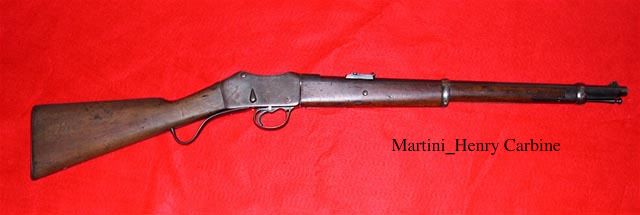
The Martini-Henry rifle is best known for it's use by the British Empire for several decades during their imperial wars. It was a heavy-duty, single-shot rifle, effective at long range, with a bayonet. In other words, truly a "hand-held cannon." Think 'Mutiny on the Bounty' for more of a historical perspective. The Martini-Henry mechanism was invented by American Henry O. Peabody in Boston in 1862, and later perfected by Swiss Friedrich von Martini in 1871, after being "combined with the polygonal barrel rifling designed by Scotsman Alexander Henry." Martini-Henrys have floated around the world long afterwards; and are still being used in some corners of the world over 120 years after the last one was produced.
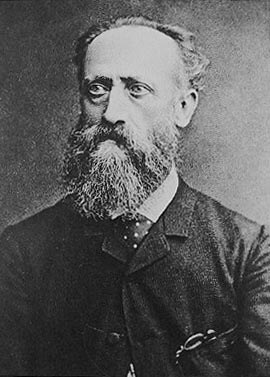

Wikipedia: The Martini-Henry was a breech-loading single-shot lever-actuated rifle adopted by the British Army, combining the dropping-block action first developed by Henry O. Peabody (in his Peabody rifle) and improved by the Swiss designer Friedrich von Martini, whose work in bringing the cocking and striker mechanism all within the receiver greatly improved the operation of the rifle, which new iteration was combined with the polygonal barrel rifling designed by Scotsman Alexander Henry. It first entered service in 1871, eventually replacing the Snider-Enfield, a muzzle-loader conversion to the cartridge system. Martini-Henry variants were used throughout the British Empire for 30 years. Though the Snider was the first breechloader firing a metallic cartridge in regular British service, the Martini was designed from the outset as a breechloader and was both faster firing and had a longer range.

There are four classes of the Martini-Henry rifle: Mark I (released in June 1871), Mark II, Mark III, and Mark IV. There was also an 1877 carbine version with variations that included a Garrison Artillery Carbine, an Artillery Carbine (Mark I, Mark II, and Mark III), and smaller versions designed as training rifles for military cadets. The Mark IV Martini-Henry rifle ended production in the year 1889, but remained in service throughout the British Empire until the end of the First World War. It was seen in use by some Afghan tribesmen as late as the Soviet invasion. Early in 2010 and 2011, United States Marines recovered at least three from various Taliban weapons caches in Marjah. In April 2011, another Martini-Henry rifle was found near Orgun in Paktika Province by United States Army's 101st Airborne Division (Air Assault).

The Martini-Henry was copied on a large scale by North-West Frontier Province gunsmiths. Their weapons were of a poorer quality than those made by Royal Small Arms Factory, Enfield, but accurate down to the proof markings. The chief manufacturers were the Adam Khel Afridi, who lived around the Khyber Pass. The British called such weapons, "Pass made rifles."


Wars fought with Martini-Henry rifles:

British colonial wars
Second Anglo-Afghan War
Anglo-Zulu War
First Boer War


Users of Martini-Henry rifles:

United Kingdom & Colonies

.

Thursday, October 6, 2011

Federico Faggin


Intel YouTube Channel - September 27, 2011

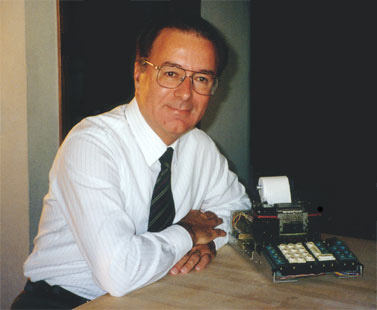
Federico Faggin visited Intel headquarters in late summer of 2011 to share memories from 40 years ago, when teamed up with Ted Hoff and Stan Mazur to create Intel's 4004 chip, which became the world's first single chip microprocessor.

Faggin talks about the day in January 1971, when he first tested the chip and it worked flawlessly. That was the day the microprocessor was born, he says, and today it is at the heart of the Internet revolution. He says the microprocessor has become the tiny speck of intelligence that converges communication, computing and control capabilities, connecting all of our devices from computers to small smartphones.

He has his eye on quantum computing as the next frontier of computing because of potential is beyond what capable with today's mechanical microprocessors. Yet he believes computing will never rival the complexity and capabilities on human intelligence.


Born in Vicenza, Federico Faggin received a Laurea Degree in physics, summa cum laude, at the University of Padua, Italy. At age 19, after his graduation from technical high school A. Rossi (Vicenza), he took a job at Olivetti, in Italy, where he co-designed and led the implementation of a small computer. After obtaining his university degree he worked at SGS Fairchild in Italy, where he developed SGS's first MOS process technology and designed its first integrated circuits. In 1968 he moved to Palo Alto and worked at Fairchild Semiconductor, where he created the MOS Silicon Gate technology with self-aligned gate, the basis of all modern CMOS computer chips. At Fairchild he produced the world's first commercial integrated circuit using Silicon Gate Technology with self aligned MOS transistors: the Fairchild 3708.

In 1970 he joined Intel where Marcian (Ted) Hoff, with Stanley Mazor and Intel's customer Masatoshi Shima, had formulated a new architecture for a family of Busicom calculators in 1969. Federico Faggin was hired as project leader to implement such architecture, which had been idling for many months. He created a new methodology for random logic chip design using silicon gate technology, and several design innovations that made it possible to fit the microprocessor in one chip. He developed the chip and logic design together with the layout of all the chips of the 4004 family (MCS-4). He built the tester to prove that the 4004 could be used for applications different from calculators, and successfully transferred the first microprocessor to production (1970–1971). During the project development he was assisted only by Masatoshi Shima, who had come from Japan to check on the progress and stayed-on to help, and a couple of technicians. Faggin also convinced Bob Noyce to negotiate the exclusivity clause, in order to open the marketing of the 4004 which originally was a custom design for Busicom.

The design methodology created by Faggin was utilized for the implementation of all Intel’s early microprocessors and later also for Zilog's Z80. The 8008 development was originally assigned to Hal Feeney in March 1970 but was suspended until the 4004 was completed. It was resumed in January 1971 and Hal Feeney did the detailed design under Faggin’s direction and following his new methodology. Faggin developed the architectures and led the development of the 8080 and the 4040 microprocessors. When Faggin left Intel at the end of 1974 to found Zilog with Ralph Ungermann, he was department manager for MOS Research and Development with almost 80 engineers reporting to him and more than a dozen products under development.

Zilog was the first company entirely dedicated to microprocessors while Intel was principally dedicated to memories. At Zilog, Faggin conceived the architecture of the Z80 microprocessor and helped Shima, who had joined the new company, in its design. He was Zilog's President and CEO until the end of 1980. In 1982, he co-founded Cygnet Technologies, Inc., maker of the Cygnet CoSystem personal telecommunications device, and was President and CEO of the company until 1986. In 1986 he co-founded and was CEO of Synaptics a company which produces the most widely used touchpad in the industry. He is presently CEO of Foveon Inc., a company making image sensors with a novel technology.


**************************************************


Apple says the company's co-founder Steve Jobs has died. He was 56. In a brief statement the company said Jobs died Wednesday. He had been battling pancreatic cancer.


San Francisco Chronicle - October 6, 2011

Oct. 6 (Bloomberg) -- Apple Inc. fans worldwide mourned the death of co-founder Steve Jobs, paying tribute to the man who changed the way they listen to music, use their mobile phones and play on their computers.

At Apple's headquarters -- located at 1 Infinite Loop, Cupertino, California -- flags flew at half-staff and bagpipes sounded to the tune of "Amazing Grace" as people placed flowers around a white iPad with a picture of Jobs, who died yesterday at 56, after a battle with cancer. Mourners flocked to Apple stores from New York to Hong Kong, while a crowd gathered in San Francisco's Mission Dolores Park for an iPhone-lit vigil.

"Part of the narrative that made Apple what it is today goes out with Steve Jobs," said Christopher Smith, 40, a former business development manager in San Francisco who joined the vigil. "I came out to honor the fact that one man with vision, courage and unwavering dedication can still change the world. The way that I communicate and the way that I interact with the world is through things that Steve jobs has created."

Microsoft Corp. co-founder Bill Gates and Sony Corp. Chairman Howard Stringer were among business leaders who expressed admiration for the man who built the world's most valuable technology company. President Barack Obama also issued statements of sympathy and remembrance.

"Michelle and I are saddened to learn of the passing of Steve Jobs," Obama said in a statement. "Steve was among the greatest of American innovators -- brave enough to think differently, bold enough to believe he could change the world, and talented enough to do it."


Jobs's Home

Teary-eyed mourners left flowers in front of Jobs's modest home at the corner of Waverly Street and Santa Rita Avenue in Palo Alto, California. Neighborhood children drew hearts with markers and left them on the ground for others to leave messages. Policemen stood watch, barricading the street.

"Here's a guy who's a billionaire and lives in a regular neighborhood, not behind a gated estate with all the security guards," said Bruce Gee, a former Apple employee who drove up to the house from his home a couple miles away. "On Halloween, people go trick or treating there like everyone else."

At the San Francisco Apple store near Union Square, Steve Streza, 24, stood holding an iPad displaying Apple's homepage image of Jobs and the words "Steve Jobs: 1955-2011."


'Regular Guy'

"Macs were the reason I got into product development," said Streza, a developer at readitlater.com who grew up with Mac computers. "If it weren't for Steve Jobs and Macs, my life would probably be in a completely different place right now."

Steve Somerstein, who says he met Jobs several times since 1986, recalled the time when he bumped into Jobs while apartment hunting in Palo Alto.

"He was just a regular guy," said Somerstein, who was at the Palo Alto store. "I congratulated him on the company and hoped it was going to do well. I didn't even own an Apple at that point. He was about 10 years younger than me and just a nice kid."

Ron Kent, a food-truck owner who was at the Palo Alto store, likened Jobs to Michelangelo, the renaissance-era artist who painted the frescoes in the Sistine Chapel in the Vatican.

"He's the visionary of our time," Kent said.


'RIP Steve Jobs'

Some mourned via social media sites. More than 20 "RIP Steve Jobs" pages sprung up on Facebook within hours of the announced passing of Jobs. News of Jobs's death slowed the mobile websites of CNN and the Washington Post, according to Keynote Systems Inc., which tracks website performance.

"Steve Jobs," the biography written by former Time magazine editor Walter Isaacson, scheduled for release Nov. 21, was the best seller on Amazon.com Inc.'s website.

In New York, Jared and Alexi Roth, 33 and 31, left two red apples by the wall outside the Apple store on Broadway in the Upper West Side.

"We were literally walking by a market on Broadway when Jared got a text saying Steve Jobs died," Alexi said. "We saw the apples and just thought it would be appropriate."

Across the ocean, Charanis Chiu, walked in front of the Apple store in Hong Kong to place a sunflower, the logo of the photo-viewing application on the iPhone.

.