Showing posts with label science. Show all posts

Wednesday, November 23, 2022

Five Ways to Celebrate Fibonacci Day on November 23

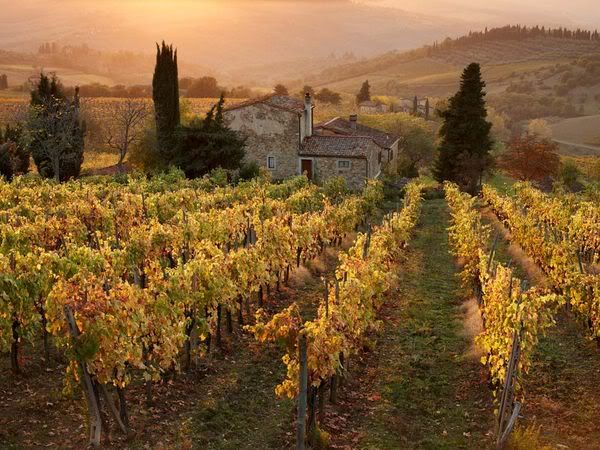
Fibonacci garden

Fibonacci Day resources on Bing.com

Fibonacci (Leonardo Bonacci, Leonardo of Pisa) has been covered here, and the Fibonacci sequence. If you go to the Fibonacci sequence page and examine those calculations; his ability as a mathematician was stunning. Another in a long list of Tuscans who advanced human knowledge in a dramatic way.


'Five Ways to Celebrate Fibonacci Day on November 23'

November 23 is celebrated as Fibonacci day because when the date is written in the mm/dd format (11/23), the digits in the date form a Fibonacci sequence: 1,1,2,3.

Heather Sheridan - AllTogether.swe.org - November 2, 2021


November 23 is celebrated as Fibonacci day because when the date is written in the mm/dd format (11/23), the digits in the date form a Fibonacci sequence: 1,1,2,3. The Fibonacci sequence begins like this:

1, 1, 2, 3, 5, 8, 13, 21, 34, 55, 89, 144…

The sequence follows a fairly simple pattern: every two numbers, when added together, equal the following number.

While this seems simple, once you begin to see the sequence in things such as the pattern of a pine cone or the petals on a daisy, it starts to seem downright incredible!

Computer data storage and processing uses this number sequence today. The sequence is also useful in the trading of stocks and architecture. Another unexpected place we find the sequence is in nature, for example in hurricanes and DNA patterns. The Fibonacci sequence can be referred to as “nature’s secret code” or “nature’s universal rule.” Here are a few ways to celebrate Fibonacci Day:

1) Plan a Fibonacci feast.

The Fibonacci sequence occurs very frequently in common fruits and vegetables and when prepared together, these foods make for a fun meal! Prepare things like artichokes, pineapple, Romanesco and pomegranate to see how the sequence occurs in nature.

2) Take a Fibonacci-inspired nature walk.


Depending on where you live, you may be able to easily discover Fibonacci sequence in flowers, trees, and much more. Take a nature walk and inspect things like pinecones, ferns, daisies, sunflowers, and snails, since all of these things are made up of Fibonacci numbers.

con't....

.

Thursday, January 10, 2019

Luigi Galvani - "the pioneer of bioelectromagnetics" - Romagnol ancestry


Luigi Galvani

WikiAudio

************


Luigi Galvani

Luigi Aloisio Galvani:: [9 September 1737 – 4 December 1798) was an Italian physician, physicist, biologist and philosopher, who discovered animal electricity. He is recognized as the pioneer of bioelectromagnetics. In 1780, he discovered that the muscles of dead frogs' legs twitched when struck by an electrical spark. This was one of the first forays into the study of bioelectricity, a field that still studies the electrical patterns and signals from tissues such as the nerves and muscles.

Galvani's wife Lucia Galeazzi Galvani encouraged his independent research, and served as a counselor and guide for his experiments until her death. Due to the conventions of the time she wasn't credited for any scientific work she may have done in the lab. She grew up with science and her father was a prominent member of the Bologna Academy of Science.


Piazza del Popolo in Cesena, Romagna


.
Galvani vs. Volta

[Luigi Galvani vs. Alessandro Volta]

[Similar to the dueling wizards "Tesla vs. Edison"]

Volta, a professor of experimental physics in the University of Pavia, was among the first scientists who repeated and checked Galvani’s experiments. At first, he embraced animal electricity. However, he started to doubt that the conductions were caused by a specific electricity intrinsic to animal's legs or other body parts. Volta believed that the contractions depended on the metal cable Galvani used to connect the nerves and muscles in his experiments.

Volta's investigations led shortly to the invention of an early battery. Galvani believed that the animal electricity came from the muscle in its pelvis. Volta, in opposition, reasoned that the animal electricity was a physical phenomenon caused by rubbing frog skin and not a metallic electricity.

Every cell has a cell potential; biological electricity has the same chemical underpinnings as the current between electrochemical cells, and thus can be duplicated outside the body. Volta's intuition was correct. Volta, essentially, objected to Galvani’s conclusions about "animal electric fluid", but the two scientists disagreed respectfully and Volta coined the term "Galvanism" for a direct current of electricity produced by chemical action. Thus, owing to an argument between the two in regard to the source or cause of the electricity, Volta built the first battery in order to specifically disprove his associate's theory. Volta's “pile” became known therefore as a voltaic pile.

After the controversy with Volta, Galvani kept a low profile partly because of his attitude towards the controversy, and partly because his health and spirits had declined, especially after the death of his wife, Lucia, in 1790.

Since Galvani was reluctant to intervene in the controversy with Volta, he trusted his nephew, Giovanni Aldini, to act as the main defender of the theory of animal electricity.


Galvani vs. Volta [36:35 to 53:41]


.

.

Tuesday, December 25, 2018

'Riccardo Giacconi, 87, Explorer of the Universe Through X-Rays, Dies'

[Right: The astrophysicist Riccardo Giacconi at a symposium at Stanford University in 1962. His specialty was studying the universe through X-rays.]

'Riccardo Giacconi, 87, Explorer of the Universe Through X-Rays, Dies'

By Dennis Overbye - New /York Times - December 13, 2018

Riccardo Giacconi, an astrophysicist who won the Nobel Prize for pioneering the study of the universe through the X-rays emitted by the most violent actors in the cosmos, including black holes, exploding stars and galumphing clouds of galaxies, died on Sunday in the La Jolla section of San Diego. He was 87.

The National Academy of Sciences, of which he was a member, announced his death.

Dr. Giacconi was one of the great captains of Big Science, leaving lasting imprints on major astronomical institutions like the Space Telescope Science Institute in Baltimore, which runs the Hubble Space Telescope, and the European Southern Observatory in Germany, where he oversaw the building of the largest telescope on Earth. He helped set the pattern for how large scientific projects are run today.

“If you need to do something big, Riccardo was up to the task,” Robert Kirshner, an astronomer at the Gordon and Betty Moore Foundation in Palo Alto, Calif., said by email. Ticking off the observatories Dr. Giacconi directed, Dr. Kirshner called them the “great tools of discovery in the 20th (and 21st) century.”

con't....


.

Wednesday, April 26, 2017

Cassini-Huygens now moving though Saturn's rings


'Cosmic Speck: See Earth Through Saturn's Rings in Amazing Cassini Photo'

Sarah Lewin - space.com - April 21, 2017

 The Cassini spacecraft spotted Earth as a bright speck (and the moon as a smaller speck) between Saturn's broad rings as the craft prepares for its final dive into the ringed planet's atmosphere.

Cassini was 870 million miles (1.4 billion kilometers) from Earth the night of April 12-13 when it snapped this photo, which shows Earth — and the even tinier moon, a faint dot to its left — framed between the icy rings of Saturn. At the time the photo was taken, the southern Atlantic Ocean was facing the spacecraft's lens, NASA officials said in a statement.


con't...

*************************

Saturn moon Enceladus


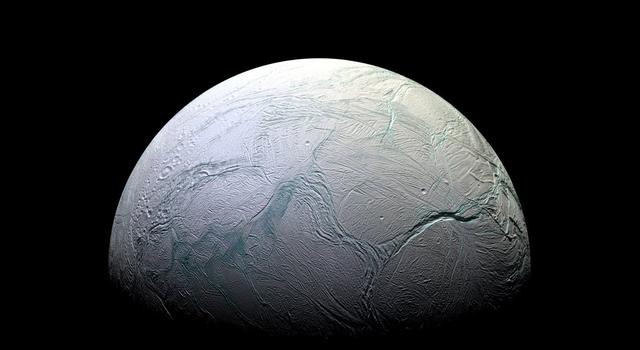
The Cassini-Huygens Mission has been a joint program between NASA, the European Space Agency (ESA), and the Italian Space Agency (ASI) since 1997. Much of the craft was designed and developed by the ASI and other corporations in our Cisalpine ancestral homeland. As fascinating as Titan and other Saturn moons have proved to be, the possibility of life on the moon Enceladus has stolen the show since last year.

This is a real photograph, not a drawing or computer generated image..

NASA twitter 4-26-17:
To go where no spacecraft has gone before…tomorrow, @CassiniSaturn makes its 1st dive between Saturn and its rings: http://go.nasa.gov/2p2oAnC

*************************

'The Cassini spacecraft’s dive in between Saturn’s rings, explained'

The spacecraft begins its “grand finale” before crashing into the gas giant later this year

Brian Resnick - vox.com - April 26, 2017

The Cassini spacecraft is going where no ship has gone before: On Wednesday, it begins a series of dives into the space between Saturn and its magnificent rings. The maneuver — a series of 22 orbits that will bring Cassini increasingly closer to Saturn’s surface before crashing into it — is called the spacecraft’s “grand finale.” And to mark this final journey, Cassini is being honored with a Google Doodle.

Over its last 13 years in orbit, Cassini has had an amazing run studying Saturn and its moons. Here’s what the spacecraft has taught us so far — and why its final mission may be its most spectacular yet.


con't...

.

Tuesday, June 16, 2015

'The World Of Enrico Fermi' - 1970 Documentary


The World Of Enrico Fermi (1970)

AskUsAnyQuestion


"A documentary which portrays the life and work of the nearly contemporary physicist, Enrico Fermi, whose work helped to transform not only physics and the style of doing research, but even the course of history itself.

This movie is part of the collection: Academic Film Archive of North America

Producer: Harvard Project Physics.; Holt, Rinehart, and Winston, inc."
https://archive.org/details/TheWorldOfEnricoFermi


************************************************** 

Enrico Fermi was one of the greatest scientists of all time. Born in Rome to a family originally from Piedmont. There's a big difference, I think, between certain "famous scientists" today who are all talk, and often make surprisingly stupid remarks regarding other issues, and ones like Tesla or Fermi who were real doers!

**************************************************

Enrico Fermi (Wikipedia)

Enrico Fermi; 29 September 1901 – 28 November 1954) was an Italian physicist, best known for his work on Chicago Pile-1 (the first nuclear reactor), and for his contributions to the development of quantum theory, nuclear and particle physics, and statistical mechanics. He is one of the men referred to as the "father of the atomic bomb". Fermi held several patents related to the use of nuclear power, and was awarded the 1938 Nobel Prize in Physics for his work on induced radioactivity by neutron bombardment and the discovery of transuranic elements. He was widely regarded as one of the very few physicists to excel both theoretically and experimentally.

Fermi's first major contribution was to statistical mechanics. After Wolfgang Pauli announced his exclusion principle in 1925, Fermi followed with a paper in which he applied the principle to an ideal gas, employing a statistical formulation now known as Fermi–Dirac statistics. Today, particles that obey the exclusion principle are called "fermions". Later Pauli postulated the existence of an uncharged invisible particle emitted along with an electron during beta decay, to satisfy the law of conservation of energy. Fermi took up this idea, developing a model that incorporated the postulated particle, which he named the "neutrino". His theory, later referred to as Fermi's interaction and still later as weak interaction, described one of the four fundamental forces of nature. Through experiments inducing radioactivity with recently discovered neutrons, Fermi discovered that slow neutrons were more easily captured than fast ones, and developed the Fermi age equation to describe this. After bombarding thorium and uranium with slow neutrons, he concluded that he had created new elements; although he was awarded the Nobel Prize for this discovery, the new elements were subsequently revealed to be fission products.

Fermi left Italy in 1938 to escape new Italian Racial Laws that affected his Jewish wife Laura. He emigrated to the United States where he worked on the Manhattan Project during World War II. Fermi led the team that designed and built Chicago Pile-1, which went critical on 2 December 1942, demonstrating the first artificial self-sustaining nuclear chain reaction. He was on hand when the X-10 Graphite Reactor at Oak Ridge, Tennessee went critical in 1943, and when the B Reactor at the Hanford Site did so the next year. At Los Alamos he headed F Division, part of which worked on Edward Teller's thermonuclear "Super" bomb. He was present at the Trinity test on 16 July 1945, where he used his Fermi method to estimate the bomb's yield.

After the war, Fermi served under J. Robert Oppenheimer on the influential General Advisory Committee, which advised the Atomic Energy Commission on nuclear matters and policy. Following the detonation of the first Soviet fission bomb in August 1949, he strongly opposed the development of a hydrogen bomb on both moral and technical grounds. He was among the scientists who testified on Oppenheimer's behalf at the 1954 hearing that resulted in the denial of the latter's security clearance. Fermi did important work in particle physics, especially related to pions and muons, and he speculated that cosmic rays arose through material being accelerated by magnetic fields in interstellar space. Many awards, concepts, and institutions are named after Fermi, including the Enrico Fermi Award, the Enrico Fermi Institute, the Fermi National Accelerator Laboratory, the Fermi Gamma-ray Space Telescope, the Enrico Fermi Nuclear Generating Station, and the synthetic element fermium.


.

Thursday, June 4, 2015

Laura Bassi - The first woman in the world to earn a university chair in science

Laura Bassi

Laura Maria Caterina Bassi (31 October 1711 – 20 February 1778) was the first woman in the world to earn a university chair in a scientific field of studies. She received a doctoral degree from the University of Bologna in May 1732, only the third academic qualification ever bestowed on a woman by a European university, and the first woman to earn a professorship in physics at a university in Europe. She was the first woman to be offered an official teaching position at a university in Europe.


Biography

Born in Bologna into the wealthy family of a lawyer, she was privately educated and tutored for seven years in her teens by Gaetano Tacconi, a University teacher of Biology, Natural History and Medicine. She came to the attention of Cardinal Prospero Lambertini, who encouraged her scientific work.

In 1732, at the age of 21, she was appointed professor of anatomy at the University of Bologna, was elected to the Academy of the Institute for Sciences, and in the following year was given the chair of philosophy. Thus, Bassi became the second woman in Europe to receive a degree from a university, after Elena Cornaro Piscopia in 1678, fifty-four years prior. In her early years, her teaching opportunities were restricted to occasional lectures.

The defence of her degree, awarding ceremony, and first lecture in 1732 were significant as they took place in the Palazzo Pubblico, one of the most important government buildings in Bologna. These events were attended by "not only the university faculty and students, but also by principal political and religious figures of the city - the Papal Legate and Vice-Legate, the Archbishop of Bologna, the Gonfaloniere, the Elders, senators and magistrates. Additionally, 'all the ladies of Bologna and all the nobility'." The Bologna community came to recognize the achievements of Bassi earning and receiving her degree.

As a political figure, the Senate expected Bassi to attend various events. The Carnival Anatomy, a public dissection with tickets open to anyone, was an event she was expected to attend because it was a central feature of public life at the University which attracted the attention of many foreigners and important community members. She began attending this event annually in 1734.


In 1738, she married Giuseppe Veratti, a fellow academic with whom she had twelve children. After this, she was able to lecture from home on a regular basis and successfully petitioned the University for more responsibility and a higher salary to allow her to purchase her own equipment.

One of her principal patrons was Pope Benedict XIV. He supported less censorship of scholarly work, such as happened with Galileo, and he supported women figures in learning, including Agnesi.

She was mainly interested in Newtonian physics and taught courses on the subject for 28 years. She was one of the key figures in introducing Newton's ideas of physics and natural philosophy to Italy. She also carried out experiments of her own in all aspects of physics. In order to teach Newtonian physics and Franklinian electricity, topics that were not focused in the university curriculum, Bassi gave private lessons. In her lifetime, she authored 28 papers, the vast majority of these on physics and hydraulics, though she did not write any books. She published only four of her papers. Although only a limited number of her scientific works were left behind, much of her scientific impact is evident through her many correspondents including Voltaire, Francesco Algarotti, Roger Boscovich, Charles Bonnet, Jean Antoine Nollet, Giambattista Beccaria, Paolo Frisi, Alessandro Volta. Voltaire once wrote to her saying "There is no Bassi in London, and I would be much happier to be added to your Academy of Bologna than that of the English, even though it has produced a Newton." Francesco Algarotti wrote several poems regarding her degree ceremonies.

In 1745, Lambertini (now Pope Benedict XIV) established an elite group of 25 scholars known as the Benedettini ("Benedictines", named after himself.) Bassi pressed hard to be appointed to this group, but there was a mixed reaction from the other academics. Ultimately, Benedict did appoint her, the only woman in the group.
From 1746 to 1777 she gave one formal dissertation per year.

In 1749, she presented a dissertation on the problem of gravity.

During the 1760s, Bassi and her husband worked together on experimental research in electricity. This attracted talent of Abbe Nollet and others to Bologna to study electricity.

In 1776, at the age of 65, she was appointed to the chair in experimental physics by the Bologna Institute of Sciences, with her husband as a teaching assistant. Two years later, she died, having made physics into a lifelong career and broken a huge amount of ground for women in academic circles.

After her death, a marble statue was made in her memory and placed above the Nautical room in the institute.

She was elected member of many literary societies and carried on an extensive correspondence with the most eminent European men of letters. She was well acquainted with classical literature, as well as with that of France and Italy.


.

Monday, February 2, 2015

'Italian Americans, California Italians' and a few random notes


'Italian Americans, California Italians' (UCLA YouTube channel)

From the video description:

This video records the beginning of a conference at UCLA titled "Italian Americans, California Italians." It was the first of its kind, made up of nearly a dozen scholarly presentations and discussions aiming to define "California Italians" within the more generic group of "Italian Americans." This opening, introductory statement to a full room was made by the Chairman of UCLA's Department of Italian, Professor Thomas Harrison.


Columbus... born in Genoa

You may be aware that the origin of Columbus has been in some dispute due to a somewhat surprising lack of evidence of his early life in Genoa. However, it does appear that he was of Genoese ancestry.

"Yo nacio en Genoba" ("I was born in Genoa")
 

--Written in Christopher Columbus' Will; February 22, 1498


"La California"

The small town of La California, along the Tuscan coast, was founded by Leonetto Cipriani. Cipriani--who was Corsican--had spent many years traveling, especially in California and the west coast of the United States. He was influential, and was acquainted with the Count of Cavour, and was something of an ambassador for a unified Italy of which he very much wanted Corsica to be included. He wrote an account of his travels entitled 'California And Overland Diaries of Count Leonetto Cipriani From 1853 through 1871'. He co-founded the city of Belmont, California in San Mateo County.


Bargetto Winery (Santa Cruz Mountains)

I love the Santa Cruz Mountains. Any excuse to visit will not disappoint. It even resembles parts of the Cisalpine Alps or the Apennine Mountains. I have not visited this winery. Feel free to send a short or long review (camunlynx@hotmail.com) for posting.


Our History (from Bargetto.com website)

The Bargetto winemaking heritage began with brothers Phillip and John Bargetto who emigrated from Castelnuovo Don Bosco, a small town in the Piedmont region of northern Italy. They brought with them years of winegrowing experience when they established BARGETTO WINERY on the banks of Soquel Creek in California.

Phillip was the first to depart Italy in 1891 at the age of seventeen. In 1909 John joined his brother in San Francisco.
The original Bargetto family winery was located in San Francisco from 1910-1917. The name of this winery was South Montebello Vineyard and Wine Company. With Prohibition on the horizon the winery was closed and the brothers moved to Soquel in 1917.

Phillip and John purchased the present site of BARGETTO WINERY in 1918 and began making wine out of an old barn on the property. During Prohibition (1919-1933), the brothers continued to make wine for family and friends, while they continued to sell produce to local customers. They also grew apples at the family ranch in Soquel. When Prohibition ended in 1933, the brothers devoted more time to the wine business. They began a wine wholesale business, while they continued to sell produce wholesale.

Phillip Bargetto passed away in 1936 and John was left the sole owner of the business throughout the 1940s and 1950s. He continued to produce wine and sell wholesale and retail. He was joined by his sons Ralph and Lawrence during these years.


The Next Generation

The Bargetto Family winemaking heritage continued with John’s son Lawrence during the 1960s and 1970s. He introduced modern technology such as stainless steel fermentation, barrel aging, and added new Santa Cruz Mountains varietals such as Pinot Noir and Chardonnay. He also created the CHAUCER’S line of dessert-style wines.


Today

The third generation of Bargettos now direct the operation of the winery. BARGETTO WINERY represents the oldest continuous-operation winery in the Santa Cruz Mountains. Their pioneering spirit continued with the establishment of Bargetto Regan Estate Vineyards, near Corralitos, California in 1992. Here, cool-climate varietals like Chardonnay, Pinot Noir, and Pinot Grigio are carefully nurtured to produce BARGETTO WINERY’s estate wines. In keeping with the family heritage, the winery also incorporates northern Italian varietals from its Estate Vineyard into its flagship LA VITA wine.


Voynich manuscript
  
This work is in the form of a short book, filled with illustrations of plants, geometric shapes, and an unknown text. It appears very deep and scientific, but there has not yet been any way to read its secrets. The book is available for purchase, free in pdf form online, documentaries on YouTube, and lots of general information in a search.. so I won't bother with links. You may want to examine it and attempt to understand it. The best I could come up with is that the characters look a bit like ancient Indo-European Tocharian writing, and the illustrations remind me of Fibonacci patterns. Very strange.

From Wikipedia:

The Voynich manuscript is an illustrated codex hand-written in an unknown writing system. The vellum in the book pages has been carbon-dated to the early 15th century (1404–1438), and may have been composed in Northern Italy during the Italian Renaissance. The manuscript is named after Wilfrid Voynich, a Polish book dealer who purchased it in 1912.

The pages of the codex are vellum. Some of the pages are missing, but about 240 remain. The text is written from left to right, and most of the pages have illustrations or diagrams.

The Voynich manuscript has been studied by many professional and amateur cryptographers, including American and British codebreakers from both World War I and World War II. No one has yet succeeded in deciphering the text, and it has become a famous case in the history of cryptography. The mystery of the meaning and origin of the manuscript has excited the popular imagination, making the manuscript the subject of novels and speculation. None of the many hypotheses proposed over the last hundred years has yet been independently verified.

The Voynich manuscript was donated by Hans P. Kraus[6] to Yale University's Beinecke Rare Book and Manuscript Library in 1969, where it is catalogued under call number MS 408. A digitized high-resolution copy is also accessible freely at its website.


.

Sunday, February 1, 2015

Real footage of Cassini-Huygens descent down to the Titan surface


Cassini-Huygens - Ten Years

It has already been ten years since the Cassini-Huygens spacecraft landed upon a moon of Saturn called Titan. The Saturn Mission has been a collaboration of NASA, the European Space Agency (ESA), and the Italian Space Agency (ASI). Initially there were a half dozen or so independent space agencies headquartered in the Cisalpine region, each constructing various parts for the mission, Someone sent me the names of these private agencies, but I misplaced it. I recall with demusement, the radio talk show host Michael Savage proclaiming the he wasn't aware that "Italy" had any space agency... despite the 107 average IQ of root stock Cisalpines, and the continuous scientific contributions to the humankind for centuries.

This video feed, from the initial landing in 2005, almost looks surreal, like a video game, or special effects from a movie. It is, however, very real. Titan has mountains, flat lands, lakes, and rivers. I have heard what almost sounded like claims that it would be about as inhospitable as Antarctica. In other words, a human could almost get by merely dressed as one would in Antarctica, with a breathing apparatus. I say almost, as the surface is about two hundred degrees below zero. Titan has an atmosphere of methane (Earth's atmosphere is partly methane), and the water is mostly methane.. apparently this liquid does not freeze. If the atmosphere could be warmed up, it could be habitable.


A few links:

Italian Space Agency (English language)

What Huygens Saw On Titan - New Image Processing | Video (same as the above, but with commentary)

NASA | Revealing Saturn: Cassini's Tenth Year

Why no Waves in Titan's Ocean's

The Sound of Saturn: The Winds of Titan, from the Huygens Probe 

The Eerie Sounds Of Saturn (very strange)

.

Wednesday, August 27, 2014

Famous Cisalpines outside of Padania: Part 5


From the video description: Jeno Paulucci and Neil Cavuto discuss the Great Depression in relation to modern hard times (2011).


From the video description:

While Joan Veon passed away in October of 2010, this may be one of the most important videos that you watch this year.

This explains how the One World Government is here now and how those countries that refuse to be a part of it can be taken out.

Up until September 1994, Joan Veon was just a businesswoman. As a result of attending the United Nations Conference on Population and Development in Cairo, Egypt, she received her “wake up call” as she found there was more going on at the global level than most Americans knew, understood or were being told.


From the video description: On the March 26, 2014 edition of "Nature of Reality Radio" I welcomed Michael Cremo who is the co-author of the book "Forbidden Archeology" and a regular guest on the History Channel show "Ancient Aliens." We discussed how much of mainstream archaeology and history is either fraudulent or not telling the whole truth...

.

Sunday, August 24, 2014

Famous Cisalpines outside of Padania: Part 2

General Carl Vuono - probably a Cisalpine
Just to continue with the previous posting, Manuel Belgrano was an important Argentine economist, lawyer, politician, and military leader during the early 1800's. He took part in the Argentine Wars of Independence and created the Flag of Argentina. He is regarded as one of the main "Libertadores" of the country. A very important figure in Argentine history, he was of Ligurian ancestry. General Carl E. Vuono was a U.S. Army General who served as Chief of Staff of the U.S. Army from 1987 to 1991. His place of birth, Monongahela, seems to suggest that his father was of Camunian (Lombardian) ancestry. His mother was of Finnish descent.

Michael Cremo is an independent author and researcher, possibly of Cisalpine ancestry. His most well known work is the book 'Forbidden Archeology: The Hidden History of the Human Race' (1994; Cremo and Thompson), in which clear evidence far predating the supposed period of human existence is presented. When fossils and artifacts don't fit the mainstream mold, they're stored away in warehouses. Whether or not he's of Cisalpine descent, I think he's done great work. Jon Volpe was a star running back for the BC Lions of the Canadian Football League. Starring alongside college and future NFL star quarterback Doug Flutie, he won the CFL's Most Outstanding Rookie Award in 1991 with 1,395 yards and 20 touchdowns. With the name "Volpe," and being a  native of Upper Michigan, seems to suggest that he's of perhaps Lombardo-Venetian descent... or at least of some Cisalpine roots.


I wanted make mention the late Joan Veon (1949-2010), which is hard to do because nothing I could write in a few sentences could ever be good enough. She was originally from Racine, Wisconsin and I think of Piedmontese ancestry, but regardless, she was a truly great American. With a Bachelor’s degree in Business, she became wealthy in the financial world, and was looking forward to retiring and moving on to new things. Instead of doing that, she—at her own expense— traveled to over 100 of the top globalist meetings to capture the most crucial information and present the big picture to all who have ears to hear and who are not afraid of the truth. After forming a media group, for sixteen years she interviewed and asked key questions of prime ministers, presidents, kings, and heads of state.

At times, as the only American reporter, Joan covered over 103 international meetings, including: the G7, G8, G10, G20, and Bank for International Settlements (BIS) in Basel Switzerland; attended yearly the World Economic Forum in Davos Switzerland; and twice a year covered the IMF World Bank meetings. In addition she attended UN meetings on the Free Trade Areas of the Americas, Sustainable Development, the Earth Summit, Climate Control, the International World Court, and numerous others. Probably her best known work was the 1999 book 'United Nations Global Strait Jacket'. If, for example, most of the wealthiest men and concerns in the world kept getting together to talk about abolishing private property (Agenda 21)... wouldn't it at least be logical to look into it?  

Joe Satriani - probably not a Cisalpine
Singer-songwriter Marcella Puppini, originally from Bologna, formed the musical trio The Puppini Sisters with two English women. The group is associated with a burlesque revival, and they're quite entertaining. Sergio Pizzorno is a British guitarist and songwriter, best known for his work with the rock band Kasabian. He is of Ligurian descent. The late Marino Pieretti was another of the many "San Francisco Italian" Major League Baseball stars. Pieretti was born in Lucca, Tuscany and grew up in North Beach. There's a mural with his name at the Crocker-Amazon playground in San Francisco, nearby the old bocce ball courts. Small reminders of what is becoming a forgotten heritage in the area. Popular actress Kate Walsh is of half Italian ancestry, probably Cisalpine. She is originally from San Jose, California.

Alexander Rossi is an up and coming auto racing star from California. The late Jim Pagliaroni was a Major League Baseball catcher for many years during the 50's and 60's. He was originally from Dearborn, Michigan. Marco Scutaro is a Major League Baseball infielder who was named MVP of the 2012 National League Championship Series with the Giants. Although very likely of Southern Italian descent and being from Venezuela, he brings up the issue of Italians from South America who are seemingly not regarded by anyone as "being Italian." Personally, I think that there is a clear connection at least with "the cone of South America" as far as Italian.. or European heritage in general. However with Venezuela, being a largely Amerindian and African country, I can understand the disconnect. Joseph "Joe" Satriani is a veteran instrumental rock guitarist who seems to have done everything and been everywhere in the rock music world. Born to Italian immigrants, someone may have suggested to me that he could be of Cisalpine descent.

Piero Scaruffi is a well known freelance software consultant and university lecturer, apparently from Piemonte originally. "Piero Scaruffi's knowledge base" website. The late Don Mossi was a major league pitcher from 1954 to 1965. He was a left-handed control pitcher whose strikeout-to-walk ratio was regularly among the league leaders (he led the league in 1961). He was born in St. Helena in Napa County, California, and grew up in Daly City (just south of San Francisco); both cities with roots of people of Cisalpine ancestry.. at least then. Kristin Cavallari is a popular television personality, fashion designer, and actress.. originally from Denver. Gina Gretta is a young actress from Bethlehem, Pennsylvania. San Francisco native Lady Fanucci is a well known local artist.

The late Lani O'Grady (Lanita Agratti) was an actress best remembered for her role as Mary Bradford in the early 80's television series 'Eight is Enough'. Originally from Walnut Creek, California, and of Italian-American parentage.. presumably Cisalpine. An entry from an IMDB-user: I had the pleasure of meeting Lani O'Grady back in 1989 when she came to Crawfordville, Indiana for a 4th of July fundraiser. She was full of pep and joy as she met everyone with a big smile and a hug. Heck, she even let me kiss her!! She was really a crowd pleaser and the fans just loved her. To me, Lani was a wonderful person and it broke my heart when I heard she had passed on. She will never be forgotten. Rest in peace Lani!!! I will never forget that 4th of July!!!

.

Thursday, August 21, 2014

Famous Cisalpines outside of Padania: Part 1

Diane Cilento - probably a Cisalpine
The problem with identifying people of Cisalpine ancestry is three-fold. One, there's often no way to be certain. For example, Olympic gold-medalist Alpine skier Julia Mancuso appears to be Cisalpine from appearance and where she is from. She is actually half Calabrian and half.. Irish, German, something or another.

Two, it's not necessarily all that important anyway. Enrico Fermi was from Rome, and is actually of Piedmontese ancestry. There have been famous and important Cisalpines in the United States far beyond what logic would dictate. However, a community doesn't absolutely need these types of role-models.

Three, with many races or ethnic groups, there can exist a type of ungenuine "cult of celebrity." Certain people will run around trying to "make claim" on as many famous people as possible. Often these celebrities could care less about their ancestry in the first place! I'm tempted to give a few colorful and humorous examples of this, but something tells me that it's not a good idea. Suffice to say that those individuals who you associate with on any concern, are really the important people for that concern.

I thought that I would share just a small sampling of certain well-known people who I have come across or were suggested to me by others as possible Cisalpines. After this, I'm not going to keep track of this subject as a general rule. Just for the record, a "Padanian-American" is a "European-American" with some genuine roots in the former "northern nations." It's safe to say that not all of the following people are of Cisalpine ancestry.

Grammy nominee Francesca Battistelli, from New York City, is a star of the Christian music genre. Attorney, Prosecutor, and Author Vincent Bugliosi, from Minnesota, is most famous as the Prosecutor in the trial of Charles Manson. Graciano Rocchigiani is a former world super middleweight and light heavyweight boxing champion. He was born in Germany of Italian parentage, and looks like a German which makes me think his parents may have been from perhaps Lombardy. Actress Rene Russo, from California, is Italian on both sides, presumably Cisalpine.

Geraldine Ferraro - probably not a Cisalpine
Someone seems to have told me that young actress Brittany Curran, from Massachusetts, has some Cisalpine roots. The late World War II Medal of Honor recipient Mike Colalillo, from Duluth, Minnesota, is an Italian-American. Duluth is an area with deep roots for people of Lombardian and Cisalpine ancestry. Tony Iommi is the former guitarist for the heavy metal band Black Sabbath (lead singer Ozzy Osbourne). Born in Birmingham, England of Italian parentage.. possibly Cisalpine. Actor Jim Caviezel, from Washington state, has some Romansh roots. The Romansh language is of Latin origin, and was once much more prevalent in northeast Italy and Switzerland.

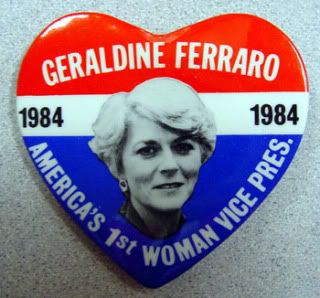
Someone seems to have told me that Canadian actor Enrico Colantoni was of Cisalpine descent. Actress Beverly D'Angelo, from Columbus, Ohio, always has seemed to me to have Cisalpine roots. I really don't know, but I loved 'National Lampoon's Vacation'.. which has an almost cult following even today. The late Geraldine Ferraro is a former vice presidential candidate for the Democrat Party, and an Italian-American from a town about sixty miles north of New York City. Her mother was from Campania in Southern Italy, but it just seems that she may have Cisalpine roots on her paternal side.. perhaps not. The late Jeno Paulucci was an important businessman and entrepreneur from St. Louis County, Minnesota (county seat is Duluth). He founded over seventy companies, including Bellisio Foods, and was likely of Lombardian or Cisalpine ancestry.

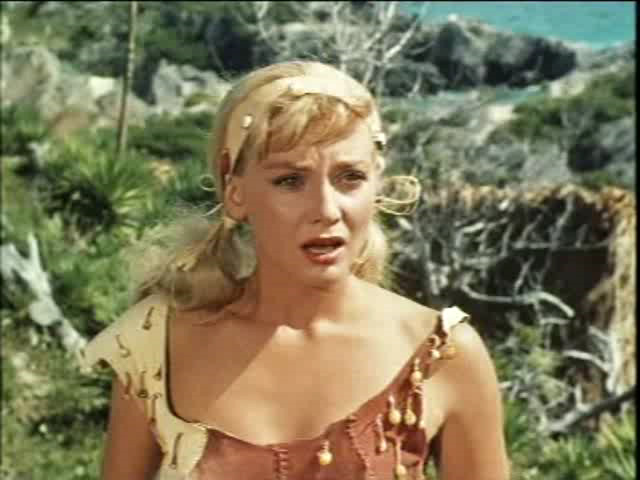
The late former Major League Baseball Shortstop and Manager Jim Fregosi was born in San Francisco and raised in San Mateo County. As you can see, he has a long resume with numerous records, and was very likely of Cisalpine ancestry. A few years ago, there was a long article in the San Francisco Chronicle about the history of "San Francisco Italian" Major League baseball players.. which I lost. They were virtually all Cisalpines, and it was quite a history; however, we must admit that the most famous was a Sicilian, Joe DiMaggio. The late Australian actress Diane Cilento was an Academy Award Nominee for Best Supporting Actress ('Tom Jones'; British; 1963; with Albert Finney and Susannah York). She was well known to American audiences, and it's a pretty good bet that she was a Cisalpine.

Dante Gabriel Rossetti was a famous poet, illustrator, painter and translator. He was born in London of Italian parentage, and was very likely of Cisalpine ancestry. The lifelike detail in his art was truly amazing, as well as beautiful. James A. Baffico--born in San Francisco in 1942 when the city was heavily Cisalpine--is a television soap opera director, producer, actor, and script writer. Film composer Marco Beltrami, from New York City, has a very Cisalpine surname. Sabina Magliocco  is a professor of Anthropology and Folklore at California State University, Northridge. Born in Topeka, Kansas to Italian immigrant parents, she may be of Tuscan descent.

.

Friday, January 17, 2014

Giorgio de Santillana


Giorgio de Santillana [Wikipedia]

Giorgio Diaz de Santillana (Rome, 30 May 1902 – Beverly, Massachusetts, 1974) was an Italian-American philosopher of science and historian of science, and professor at MIT. He moved to the United States in 1936 and became a naturalized US citizen in 1945. In 1948, he married. In 1941 he commenced his academic career at the Massachusetts Institute of Technology (MIT), becoming an Assistant Professor the following year. From 1943 to 1945 he served in the United States Army as a war correspondent. Following the war, in 1945 he returned to MIT and was made an Associate Professor in 1948 and a full Professor of the History of Science in the School of Humanities in 1954. In 1969, he published a book entitled: Hamlet's Mill, An Essay on Myth and the Frame of Time with Dr. Hertha von Dechend. This book focussed upon the understanding of the connection between the mythological stories of Pharaonic Egypt, Babylon, Greece, Christianity, etc. and the ancient observations pertaining to the stars, planets and, most notably, the 26,000 year precession of the equinoxes.[1]

Isis, a professional journal of the history of science, included an obituary by friend, Professor Nathan Sivin in Volume 67 (1976), pages 439-443. An excerpt can be found online.

http://platonism347.tripod.com/de_santillana.htm


Bibliography

Development of rationalism and empiricism. With Edgar Zilsel. Chicago: University of Chicago Press, 1941. (International encyclopedia of unified science Foundations of the unity of science ; v2 no.8).

Leonardo Da Vinci (1956)

Crime of Galileo. London: Heinemann, 1958.

The Origins of Scientific Thought: from Anaximander to Proclus, 600 BC to 300 AD. London: Weidenfeld & Nicolson, 1961.

Reflections on Men and Ideas (1968)

Hamlet's Mill. With Hertha von Dechend (1915–2001). Boston: Gambit Inc., 1969.

The Mentor Philosophers: The Age of Adventure: Renaissance Philosophers


Further reading

Payne-Gaposchkin, Cecilia (1972). "Review of Hamlet's Mill, by Giorgio de Santillana and Hertha von Dechend". Journal for the History of Astronomy 3: 206–211. Bibcode:1972JHA.....3..206P.


**************************************************


From the video (YouTube user cfapps7865)

Joe and John Anthony West discuss the theory behind one of my all time favorite books, 'Hamlet's Mill' written by Giorgio de Santillana and Hertha von Dechen. This fascinating,.. but of course highly criticized book brings into question the self-congratulatory assumptions of Western science about the unfolding development and transmission of knowledge. This is a truly seminal and original thesis, a book that should be read by anyone interested in myth and science, and the interactions between the two.

From book: "Mistaking cultural history for a process of gradual evolution, we have deprived ourselves of every reasonable insight into the nature of culture. It goes without saying that the still more modern habit of replacing "culture" by "society" has blocked the last narrow path to understanding history. Our ignorance not only remained vast, but became pretentious as well." (page 71)

From The Joe Rogan Experience, Podcast 226

Full interview:
http://www.youtube.com/watch?v=swEmL2a-h5o

http://en.wikipedia.org/wiki/Hamlet%27s_Mill
http://www.bibliotecapleyades.net/hamlets_mill/hamletmill.htm
http://podcasts.joerogan.net/


**************************************************


From MaverickScience.com

We are not alone in this belief. For several decades now, the words of Giorgio de Santillana and Hertha von Dechend have served as a rallying cry for those of us who believe ancient astronomical conceptions pervade myth:

"The real actors on the stage of the universe are very few, if their adventures are many. The most 'ancient treasure'--in Aristotle's word--that was left to us by our predecessors of the High and Far-Off Times was the idea that the gods are really stars, and that there are no others. The forces reside in the starry heavens, and all the stories, characters and adventures narrated by mythology concentrate on the active powers among the stars, who are the planets."
--'Hamlet's Mill


************************************************** 


An emerging pioneer, beyond his lifetime

Giorgio de Santilana was a pioneer into areas of revisionist science which are too numerous to go into detail about now, including the scientific basis for astrology, the electric universe, Saturn as a dwarf star, the Venus-Mars connection, and the reconfiguration of our solar system. 


**************************************************


1-19-14 Addition: I couldn't help but add here the irony that Santilana was from Rome, where Saturn was a very big part of Rome's ancient spirituality and culture. In fact, the archaic name for the Roman-Italian peninsula was "Saturnia." The irony being that Saturn is extremely relevant in his theories, which are only gaining momentum now.

.