'Unbroken' (film)
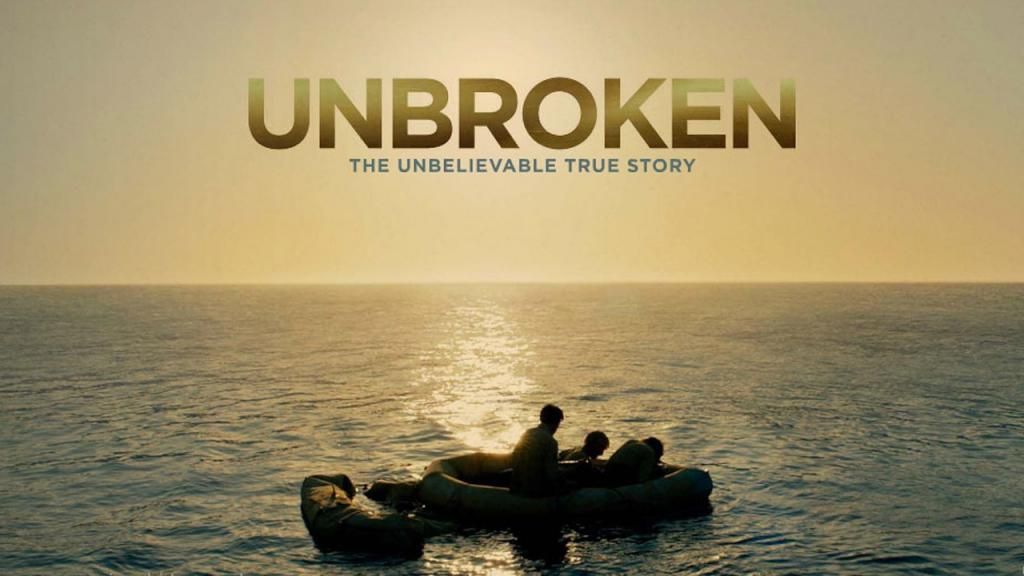
Unbroken is a 2014 American biographical war drama film, produced and directed by Angelina Jolie, and based on the 2010 non-fiction book by Laura Hillenbrand, Unbroken: A World War II Story of Survival, Resilience, and Redemption. The film revolves around the life of USA Olympian and athlete Louis "Louie" Zamperini, portrayed by Jack O'Connell. Zamperini survived in a raft for 47 days after his bomber was downed in World War II, then was sent to a series of prisoner of war camps.
The film begins with a WWII U.S. Army Air Corps fighter plane engaged in combat over the Pacific. The extreme danger of this engagement is quickly and strongly portrayed, with enemy bullets seemingly able to pierce through any portion of the plane at any time, and with dangerously close flybys. Louis Zamperini is a member of this air crew. Then the movies shifts back to Louis' childhood, which would be the less complicated manner to begin reviewing this film; in chronological order, which it does eventually follow midway though.
His parents were immigrants from Verona, in the Veneto region; having settled in a small town in eastern New York state. Growing up during the Great Depression, life was not easy for anyone, and less so for immigrants apparently. His parents were shown as having achieved great respect in the town, but young American-born Louis was always getting into trouble. Encouraged by his brother, he finally finds some focus when he starts to run track in high school. He begins to make a name for himself as one of the best middle distance runners in the country.
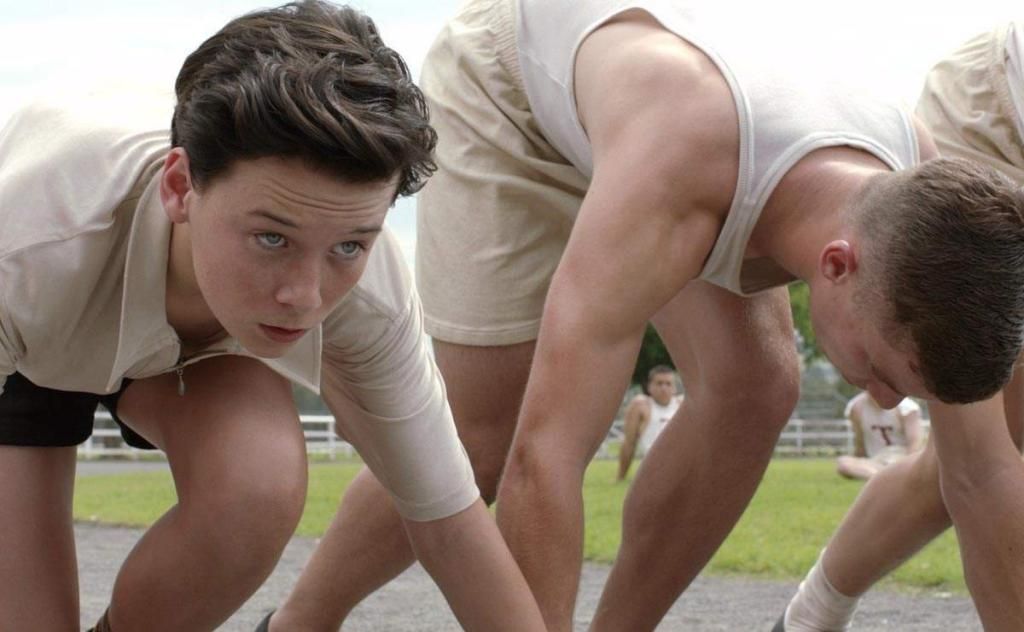 Not much of his 1936 Olympic experience in Germany was portrayed. It did show his come-from-behind eighth place showing in the 5000 meters, where he finished with a phenomenal fifty-six second final lap in a twelve and a half lap race. His physical peak probably would have been in the 1940 Olympics, which was cancelled. A couple of years later, before going off to war, he set a national collegiate mile record in the 1600 meters. He set that record despite being severely spiked by other runners during the race. Personally, I think that those fouls were every bit at insane as Mike Tyson biting Evander Holyfield's ear.
Spoiler alert beyond this point...
.
.
.
.
During a rescue mission in 1943 by the air crew, the plane had to be crash landed in the water due to engine problems. Only three men survived, including Louis Zamperini. They were afloat in a life raft for forty seven days! Since you cannot drink the salt water, being stranded in a life raft in the middle of the Pacific is practically a death sentence. At one point, the men were awakened by a shark fin nudging against the raft, which must have been terrifying enough in itself. They later had to beat back sharks with their fists. After catching and eating a raw sea gull, they got sick and threw up. Eventually, in a prey-to-predator scene depicting pure evolutionary struggle, they pulled in and killed a small shark. Rain water further helped sustain them.
 After failing to attract an American aircraft with a flare, they got another chance; only this time it turned out to be a Japanese aircraft that proceeded to fire upon the raft. Louis jumped into the water with the sharks. Somehow nobody was hit. Eventually they ran into a Japanese navy vessel, but their struggle was really just beginning. The Japanese military engaged in policies such as beheading prisoners. They somehow survived brutal interrogation before being sent to a detention camp.
After falsely being reported as having been killed in action, the Japanese allowed Louis to send a radio message to his family. This act of seemingly good will was actually only a ploy to later get him to deliver an anti-American message over the radio. He had a choice of either delivering the false message with a chance of living and eating well until the end of the war, or refusing and being sent back to the detention camp with further beatings. He still refused.
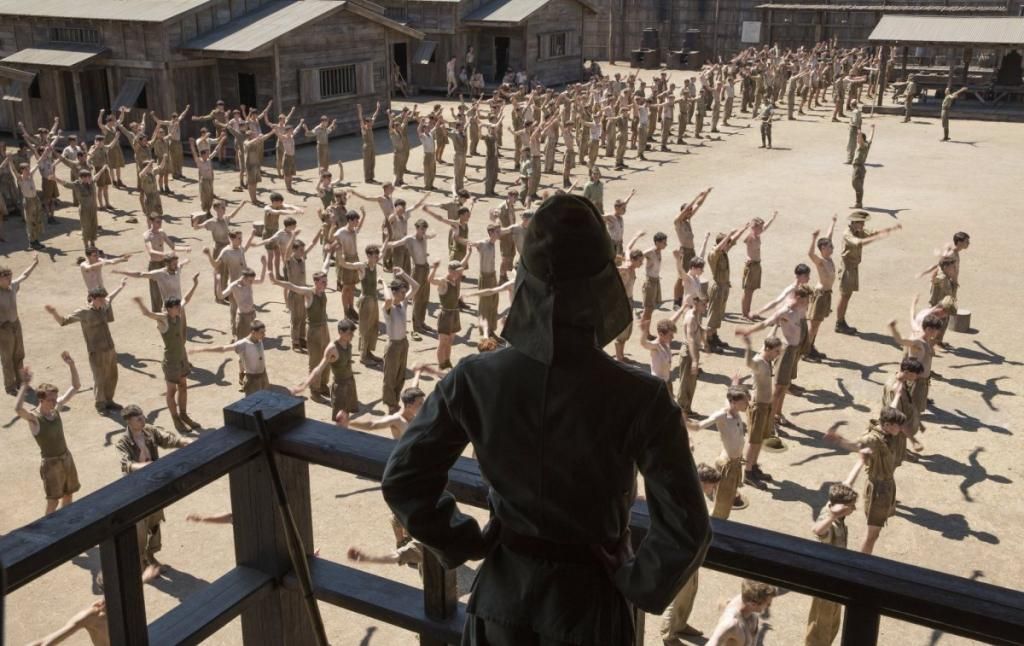
The camp commander was Sergeant Mutsuhiro Watanabe, a sadistic torturous psychopath who had it in for Louis. Watanabe always carried a wooden stick/club, which he used at his every whim. Louis was probably targeted due to his Olympic status, which made him a man whom they wanted to break down in front of the other Allied prisoners. I'm not going to describe all of the physical and psychological torture depicted, some of which would sound almost unbelievable in their brutality. However, in a possible psyop, at one point Watanabe was to have been moving on to a different position due to a promotion. He said to Louis: "Aren't you going to congratulate me?," with no response.
Shortly after, due to emergencies stemming from Japan losing the war, the prisoners were relocated to a work camp. The new commander of this work camp was none-other-than Sergeant Watanabe. This wasn't just hard labor, but they worked prisoners to death. It was apparent policy that if Japan lost the war, all prisoners would be executed, which even took away their hope. This mining camp was dark and desolate, and the poorly fed prisoners were all filthy from the work. Pure misery. Finally, all of the prisoners were ordered into the water of the lake or ocean, fully expecting to finally be executed. Instead, the war was declared over.
 The movie ends with his return and some actual photographs and details from his life. Later he is shown at age 81--at the 1998 Nagano, Japan Winter Olympics festivities--carrying the Olympic torch and running well. Sergeant Watanabe went into hiding and was never prosecuted. The film was a financial success, but received mixed reviews. I think that many critics fail to understand that not every movie is made for the intended purpose of them to be "woo'd." It wasn't 'The Shawshank Redemption', but it is a true story. As a movie, it could be called a survival story, depicting one mans plight more than any kind of political message.
.