
Showing posts with label Venetian. Show all posts
Showing posts with label Venetian. Show all posts
Wednesday, November 5, 2014
'Gloria'.... by Vivaldi
A few days ago, I heard this piece on KDFC.. a classical music radio station out of San Francisco.
[From treblechoir99 - Choir of King's College, Cambridge - Gloria(Vivaldi).wmv - 'Gloria in excelsis Deo'; 2- 'Et in Terra pax'; 3 - 'Gratias agimus tibi'; 4 - 'Propter magnam gloriam' - Sir David Willcokcs, dir.]
Gloria (Vivaldi)
Antonio Vivaldi wrote at least three settings of the hymn Gloria in excelsis Deo, whose words date probably from the 4th Century and which is an integral part of the Ordinary of the Mass. Two survive: RV 588 and RV 589. A third, RV 590, is mentioned only in the Kreuzherren catalogue and presumed lost. The RV 589 Gloria is a familiar and popular piece among sacred works by Vivaldi. It was probably written at about the same time as the RV 588, possibly in 1715.
.


Tuesday, September 30, 2014
'The Four Seasons' (Vivaldi)
The Four Seasons (Vivaldi)
The Four Seasons (Italian: Le quattro stagioni) is a set of four violin concertos by Antonio Vivaldi. Composed in 1725, The Four Seasons is Vivaldi's best-known work, and is among the most popular pieces in the classical music repertoire.
.
Tuesday, March 18, 2014
Venice votes on cutting ties with Italy

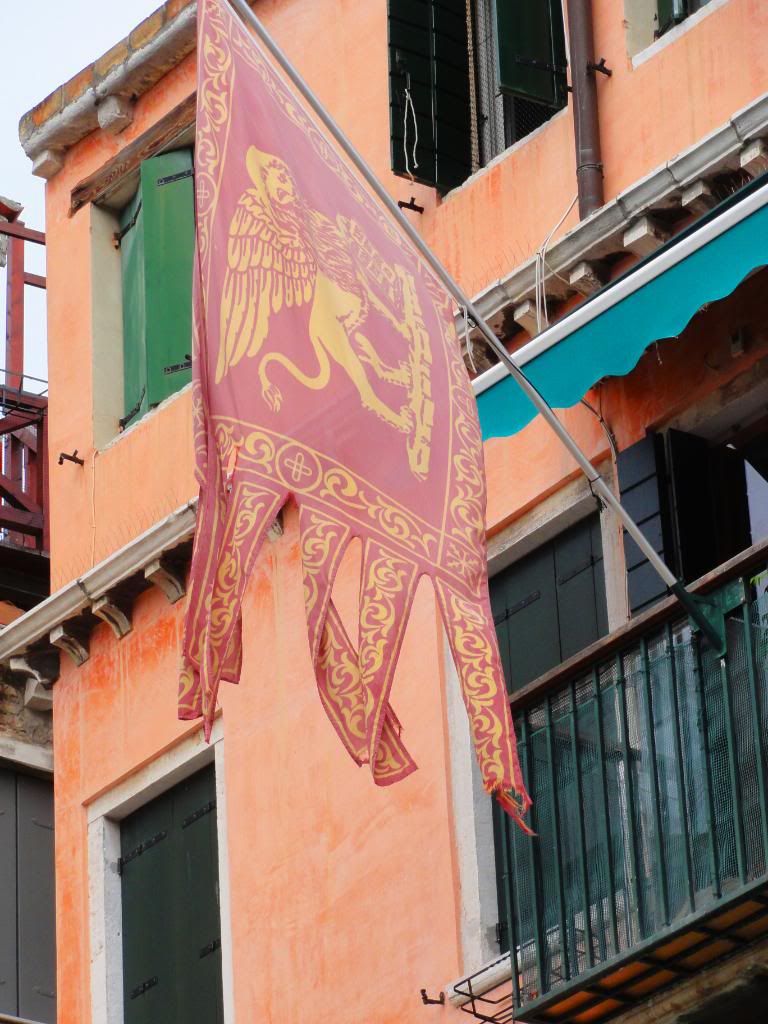
There are differing opinions of what a Venetian nation would look like geographically. Some want the entire territory of the old Venetian Republic, including places like Bergamo, others would like to see the "tri-Veneto regions, while others have stayed with the Veneto only (as here apparently). Of course, there's the possibility of a Venetian state expanding at a later time. The Venetian language is spoken or at least understood by two million people, mostly in the Veneto.
The Venetian League is considered a politically "right" group, while Venetian Independence is considered politically "left." To me, "left and right politics" are a nightmare... with the negative aspects of both always winning out in the end.. while the positive aspects always lose! I don't think we should take any side, but just wait to see what develops. What if a Venetian state did gain independence, and it later absorbs Lombardy, Piedmont, and Tuscany?
Venice votes on cutting ties with Italy
By Ella Ide - Agence France Presse - March 17, 2014
Rome (AFP) - Italians in Venice and its surrounding region are voting this week on whether to break away from the rest of the country and form their own state.
The online vote, organised by local independence parties, is not legally binding but aims to galvanise support for a bill calling for a referendum on whether the region of Veneto should split from Italy.
The new Republic of Veneto would be inspired by the ancient Venetian republic -- a rich economic, cultural and trading power which existed from the 7th century until its fall to Napoleon in 1797.
The Indipendenza Veneta party behind the bill told AFP the separatist movement was fuelled by the government's apparent inability to stamp out corruption, protect its citizens from a damaging recession and plug waste in the poorer south.
"We no longer want to be part of a country that has gone to the wall. Nothing works anymore," party coordinator Nicola Gardin said.
"Italy is weighed down by an enormous level of public debt, thousands of businesses have closed, we have lost count of the number of people who have committed suicide in Veneto," he said.
The region pays around 71 billion euros ($98 billion) in taxes to Rome, 21 billion euros more than it receives in investment and services.
 'Reconquering sovereignty'
The latest polls show that -- of the 3.8 million people eligible to vote in the region -- around 60 percent are in favour of independence.
Despite protests that an attempt to split from Italy could be unconstitutional, the governor of the Veneto region has told Italian media that secession is an option under international law.
"The push for independence comes from the people. It is a democratic request born of Rome's indifference," governor Luca Zaia told Liberoquotidiano.
Venetians will be closely watching independence movements in Scotland -- which will hold a referendum in September -- and Catalonia, he said.
"If Barcelona gets independence, Veneto could adopt the same method and get it too. We have knocked politely on the door of federalism, but it did not open. Now we will break down the door," he said.
The poll on plebiscito.eu asks inhabitants of historic cities such as Treviso, Vicenza and Verona whether -- if the new republic was created -- they would want to keep the euro and belong to the European Union and Nato.
Independents took to Twitter to urge others to vote, with some like separatist Alessio Morosin saying the region was "reconquering its sovereignty. We are at the point of no return!"
Organisers of the online poll, which opened on Sunday and closes Friday, said they expected up to two million voters to take part.
A large independence demonstration is then planned in Padova on Sunday, expected to draw hundreds of thousands of people.
"The history of the Venetian republic is not taught in schools any more, neither is the Venetian language. The state has erased our identity," Gardin said.
"The vote for independence is not just driven by economic reasons, it is also a bid to protect and revive our culture," he said.
.
Tuesday, March 4, 2014
Strip the City - Venice
Strip the City - Venice by limukohou
From last week's 'Strip the City' program on the Science Channel. It's hard to believe that millennium old tree posts--protected from erosion in mud--have held up the city for all this time.
.
Saturday, April 21, 2012
Top 100 Bay Area Restaurants 2012: Part 2 of 3

Adesso

4395 Piedmont Ave. (at Pleasant Valley Road)Oakland
Tel. (510) 601-0305
Map | www.dopoadesso.com
It seems just about every restaurant these days offers
house-made salumi, but no place does it better than this compact Oakland
restaurant. Owner Jon Smulewitz was inspired by the aperitivo bars in
Bologna and has recreated that feel in an industrial-looking space near
his other Italian gem, Dopo. Chad Arnold creates up to 40 kinds of cured
meats on a menu that includes pates, antipasti, oysters, cheese,
dessert and exceptional cocktails. Every meat is distinctive -- you can
taste the fennel, garlic and red wine in the Abruzzo,; the vanilla and
anise in the Felino. Early in the evening and late at night, look for
free platters of salumi to go with cocktails and wine.
Specialties: Any of the house-made salumi; pates such as duck liver mousse in a jar; 18-month-old prosciutto; any cocktail.
Specialties: Any of the house-made salumi; pates such as duck liver mousse in a jar; 18-month-old prosciutto; any cocktail.
Hours
Dinner 5 p.m.-midnight Monday-Wednesday, until 1 a.m. Friday-Saturday.Cuisines
- Italian
Features
- Beer and wine
- Credit Cards: Accepted
- Open Late
- Seating (50)
- Bar Bites
- Reservations: No

Overall
Price

Noise

Food
Service
Ambience

Flour + Water
2401 Harrison St. (at 20th Street)
San Francisco
Tel. (415) 826-7000
Map | www.flourandwater.com
Flour + Water
2401 Harrison St. (at 20th Street)San Francisco
Tel. (415) 826-7000
Map | www.flourandwater.com
 Make a Reservation with
Even after nearly three years, getting a seat at this small
Italian restaurant hasn't gotten any easier. While half the restaurant
is open for walk-ins, if you don't get at the door well before the 5:30
p.m. opening, you're in for a long wait. However, people don't seem to
mind once they fork into Thomas McNaughton's pasta with smoked duck and
fresh horseradish or his classic take on the Piedmontese agnolotti dal
plin. He also offers great pizza, a couple of main courses and some of
the best Italian-inspired desserts in the city. The casual interior has a
soulful quality, with stained-glass accents from the still-missed Myth,
rustic ceiling beams and handsome walnut tables.
Specialties: Pasta tasting menu, featuring five pastas, appetizer and dessert ($60); chocolate budino tart with espresso caramel cream.
Specialties: Pasta tasting menu, featuring five pastas, appetizer and dessert ($60); chocolate budino tart with espresso caramel cream.
Hours
Dinner 5:30 p.m.-midnight nightly.Cuisines
- Italian
- Pizza
Features
- Beer and wine
- Credit Cards: Accepted
- Open Late (until midnight Thursday-Saturday)
- Parking: Street (Fairly easy)
- Seating (40 (plus 19 in the lounge))
- Reservations: Accepted
Overall
Price

Noise

Food
Service
Ambience

Venetian-inspired seafood is what sets this Polk Street
restaurant apart from other Italian places. Chef-owner Ruggero Gadaldi,
who also owns Beretta and Delarosa, offers a unique take on cicchetti,
small plates such as grilled sardines, tuna conserva with a three-bean
salad, or an Italian take on cioppino. The few larger plates include
whole roast fish, and spaghetti with lobster, saffron, tomato and brandy
cream sauce. You'll also find a few meat dishes, including milk-braised
pork with gnocchi. The comfortable interior features a zinc bar, teak
shelving, mahogany paneling and hexagonal floor tiles.
Specialties: Warm octopus salad with potatoes; crab tower; fennel and arugula salad; squid ink risotto; pappardelle with duck; sgroppino (a dessert drink).
Specialties: Warm octopus salad with potatoes; crab tower; fennel and arugula salad; squid ink risotto; pappardelle with duck; sgroppino (a dessert drink).
Hours
Dinner 5-9:30 p.m. Sun.-Thurs., until 11 p.m. Fri.-Sat.Cuisines
- Italian
- Seafood
Features
- Online Reservation
- Credit Cards: Accepted
- Full Bar
- Parking: Difficult
- Parking: Street
- Private Dining Room (Semi-private room for 14)
- Reservations: Accepted
- Seating (38 plus 15 at the bar)
Overall
Price
Noise

Food
Service
Ambience
.
.
Saturday, February 25, 2012
From the Adriatic: Venetians, Croatians, Slovenes, in San Francisco
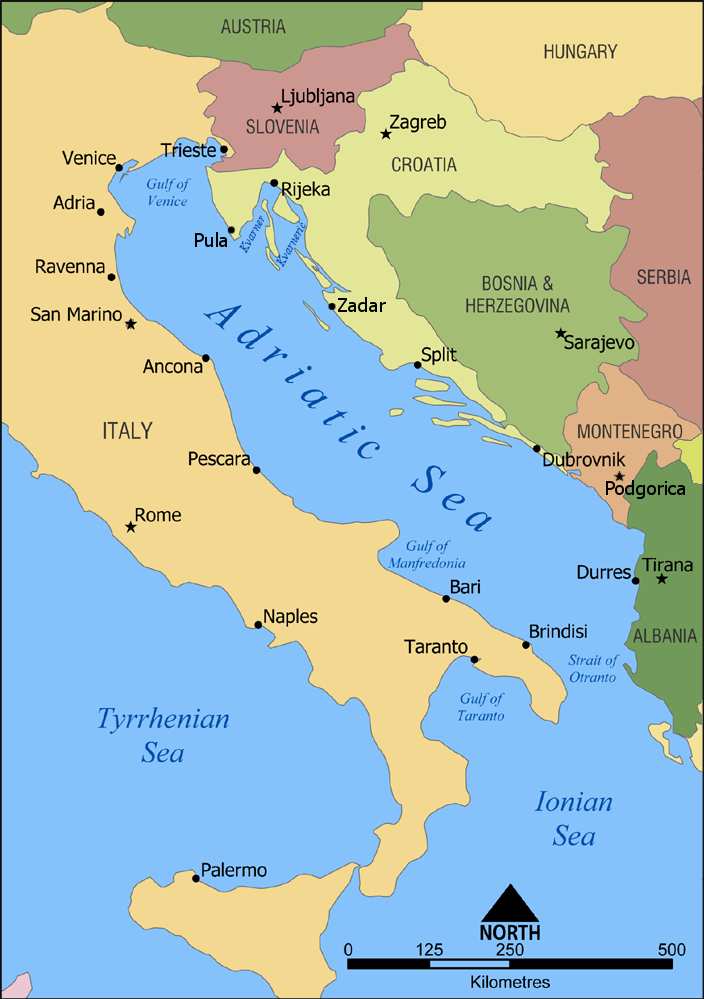
When my family immigrated from the province of Brescia, they eventually settled along the Montreal River between Upper Michigan and Wisconsin (the Ironwood-Hurley area). Although the Upper Peninsula was largely settled by Finns, Lombardians and Venetians were already well settled there as well, and some of their neighbors were Croatian. Ironically, a century and a quarter earlier, many western Croatians lived under the same government--the Venetian Republic--as did the Brescians. Now here they were, Croatian and Brescian descendants, living in a rural area along the Montreal River.
When my parents moved to San Francisco many years later in the mid-60s, there was a large Croatian-American community there. San Francisco has a similar history of European immigration as does the other big American cities of a century ago, such as New York, Chicago, Philadelphia, St. Louis, and New Orleans. A lot of Irish and Italians, except that the "Italians" were chiefly from northwest of the peninsula; as well as Germans, Slovenes, Croatians, Russians, Ukrainians, Scandinavians, Maltese, and others.
Today, with so much contrived turnover, few San Franciscans are even aware of the city's past connection with the Adriatic Sea. There were a sizable number of immigrants from the Tri-Veneto area, as well as the Croatians and Slovenes. Since the Venetians, Croatians, Slovenes, and other groups, long struggled for Trieste and the Istria region, tensions may have been... "warm." If you look at the map above, Istria is the land that is shaped like a little arrowhead at the north end of the Adriatic. It was part of the Langobard Kingdom at one time. I can recall reading that the Langobards teamed up with the Avars to raid some of those nearby Slavic areas, which included a lot of carnage; so I guess this "west Adriatic vs. east Adriatic" conflict goes back quite a long time, with the "east" certainly getting its licks in along the way as well.
My cousin lives in Pennsylvania, in an area with an old Croatian community, and she told me that some still have at least a slight grudge against "Italians" merely because of the historical struggle between Croatians and Italians. This struggle seemed to have started with Venetian aggression, and was inflamed later with Fascist aggression. I had heard that about 60,000 Italian settlers, and perhaps long-standing Venetians, were killed in the later stages of World War II. As a Padanist, I would admit that their issue--or "ours" for that matter--if there even is one anymore, is with "us," and not Southern Italians.
My cousin lives in Pennsylvania, in an area with an old Croatian community, and she told me that some still have at least a slight grudge against "Italians" merely because of the historical struggle between Croatians and Italians. This struggle seemed to have started with Venetian aggression, and was inflamed later with Fascist aggression. I had heard that about 60,000 Italian settlers, and perhaps long-standing Venetians, were killed in the later stages of World War II. As a Padanist, I would admit that their issue--or "ours" for that matter--if there even is one anymore, is with "us," and not Southern Italians.
If this issue is still even remotely alive with anyone in Pennsylvania in 2012, then I would speculate that there could have been some tension between the Venetians, Croatians, and Slovenes in San Francisco a century ago. I just think it's ironic in that San Francisco is so far from Trieste. However, it couldn't have really amounted to much. I do know that feuding Balkan immigrants, even today, hold strong grudges against each other in certain cities where they live. Someone once told me even in Phoenix! Phoenix is pretty far from the Balkans.
I always thought that the Balkans and the Italian peninsula had a lot in common. Both were made up of quite a few different nations, with different languages and cultures; at least up to the Risorgimento. The big difference after that was that nobody forced everyone in the Balkans to give up their languages and all become "Balkonians." It probably should be stated that the past Venetian-Croatian conflict is nothing compared to the conflict between Croatians and Serbians, or any other conflict in the Balkans. For whatever it's worth, I only wish that our culture fostered the same type of folkishness and self-identity as does the Croatian.
When I was loosely involved, a few years ago, in the local construction industry; I came across a handful of recent Bosnians and Albanians. There were also some Montenegrins in early and later migrations to San Francisco. For that matter, also some Greeks and south Italian Adriatics as well. I suppose that within the sizable German community, going back many years, there must have been Austians, which is really just a little north of the northern Adriatic coast. Also Hungarians, which weren't too far off from there either; because I recall once on Geary Street in San Francisco, of seeing some Hungarian-American center. There were also Romanians in the Istrian mix, from long ago, and I have come across a few people who said they were of Romanian descent in the Bay Area; a couple old and a couple more recent.
.
Wednesday, November 30, 2011
"Masters of Venice" at the de Young Museum

Masters of Venice: Renaissance Painters of Passion and Power from the Kunsthistorisches Museum, Vienna
October 29, 2011 - February 12, 2012
Masters of Venice: Renaissance Painters of Passion and Power is a worldwide exclusive presentation of 50 paintings by Venetian painters Titian, Giorgione, Veronese, Tintoretto, Mantegna, and more, primarily from the sixteenth century, all on loan from the Gemäldegalerie of the Kunsthistorisches Museum in Vienna. Featured are outstanding examples of the work of these artists that were collected by the archdukes and emperors of the Habsburg family, which are among the most celebrated holdings in the collections of the Gemäldegalerie.
Key works include Titian’s sumptuous Danáe (1560s), Mantegna’s tortured Saint Sebastian (1457–1459) and four rare paintings by Giorgione, including The Three Philosophers (ca. 1508–1509) and Portrait of a Young Woman (Laura) (1506). The exhibition also includes works by Palma, Bordone, Bassano, and more. Together, these examples represent the range of Venetian accomplishment in Renaissance-era painting.
October 29, 2011 - February 12, 2012
Masters of Venice: Renaissance Painters of Passion and Power is a worldwide exclusive presentation of 50 paintings by Venetian painters Titian, Giorgione, Veronese, Tintoretto, Mantegna, and more, primarily from the sixteenth century, all on loan from the Gemäldegalerie of the Kunsthistorisches Museum in Vienna. Featured are outstanding examples of the work of these artists that were collected by the archdukes and emperors of the Habsburg family, which are among the most celebrated holdings in the collections of the Gemäldegalerie.
Key works include Titian’s sumptuous Danáe (1560s), Mantegna’s tortured Saint Sebastian (1457–1459) and four rare paintings by Giorgione, including The Three Philosophers (ca. 1508–1509) and Portrait of a Young Woman (Laura) (1506). The exhibition also includes works by Palma, Bordone, Bassano, and more. Together, these examples represent the range of Venetian accomplishment in Renaissance-era painting.
Educational Resources (link for further study)
This exhibition, featuring works that were once part of the collection of the Habsburg family, offers you and your students a unique opportunity study works from the Renaissance. Highlighting artists such as Titian, Giorgione, Tintoretto and Veronese, the exhibition traces the Renaissance, High Renaissance and Venetian Mannerism through these artist’s paintings—many never before seen in San Francisco. The exhibition also provides a rich opportunity for Bay Area teachers to expand their curriculum by utilizing the show to look at literary, aesthetic, social and economic differences and similarities when comparing 16th-century Venice and its artistic output with San Francisco and the FAMSF collections.
The resources assembled here may provide you and your students with ideas for viewing the exhibition and for conducting follow-up activities to expand the experience.
Ticket Information
Admission prices: adults $20, seniors 65+ $17, students with current ID $16, youths 6–17 $10, members and children 5 and under free.
Groups of 10 or more have access to priority booking and discounted rates. For additional information please contact the group sales office at groupsales@famsf.org or by calling 415.750.3620.
Reserve your tickets now
Member tickets
Catalogue
Exhibition catalogue available
Related Lectures & Events
Tuesday December 6, 2011
Docent Lecture: "Masters of Venice: Renaissance Painters of Passion and Power from the Kunsthistorisches, Vienna," Rita Dunlay
1:00 pm
Today's Docent Tours
11:00 am
1:00 pm
Press Release
Masters of Venice: Renaissance Painters of Passion and Power From the Kunsthistorisches Museum, Vienna
Credit Line
This exhibition is organized by the Fine Arts Museums of San Francisco in collaboration with the Gemäldegalerie of the Kunsthistorisches Museum, Vienna.
Major Patron
Penny and James George Coulter
San Francisco Auxiliary of the Fine Arts Museums
Patrons
Athena and Timothy Blackburn
William G. Irwin Charity Foundation
Sponsors
T. Robert and Katherine Burke
Samuel H. Kress Foundation
Mrs. James K. McWilliams
Greta R. Pofcher
Education programs presented in conjunction with the exhibition are sponsored by Wells Fargo and the S. D. Bechtel, Jr. Foundation.
This exhibition is supported by an indemnity from the Federal Council on the Arts and the Humanities.
.
Subscribe to:
Posts (Atom)