Showing posts with label Venice. Show all posts

Monday, March 13, 2023

Lepanto 1571: Shattering the Idea of Ottoman Invincibility

Lepanto 1571: Shattering the Idea of Ottoman Invincibility

SandRhoman History

262K subscribers

202,313 views -  February 19, 2023

#educational #battle #history

Thanks to Nord VPN for sponsoring this video. Check it out here:  https://nordvpn.com/sandrhoman It's risk free with Nord's  30-day-money-back-guarantee!

The battle of Lepanto 1571 was one of the greatest naval battles of the Mediterranean and the last one to be fought almost exclusively by rowing vessels. According to maritime historian Lawrence Mott a staggering amount of 70 to 90 percent of all war galleys in the basin participated in the fighting.  Lepanto was in some sense the naval counterpart of the 1683 siege of Vienna. Contemporaries and historians long saw it as a climactic battle between east and west and mythologized it as the battle in which a Christian fleet defeated the seemingly unstoppable Ottoman threat from the east. In this video were going to look at what exactly happened in the gulf of Patras and look critically at the impact the battle really had.

con't....

.

Friday, September 24, 2021

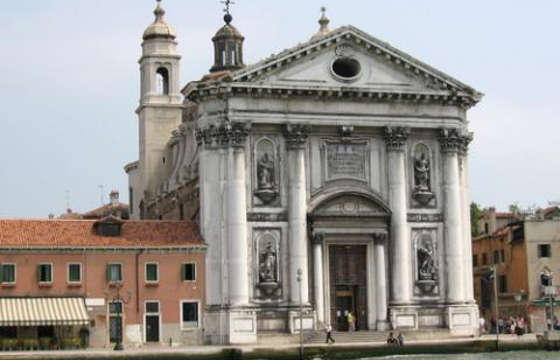
Church of Santa Maria del Rosario (Gesuati) in Venice - 18th century baroque architecture


Church of Santa Maria del Rosario(Gesuati)

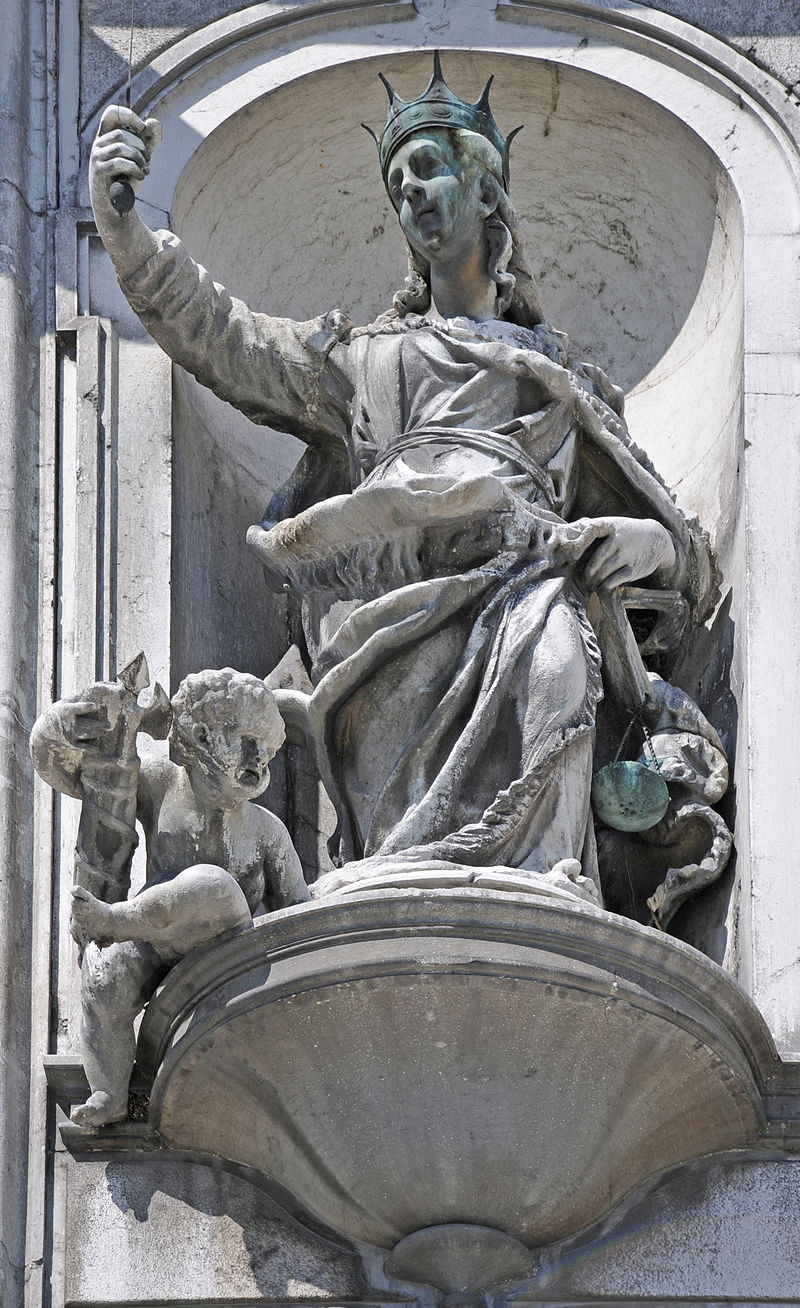
The Church of the Gesuati, the largest convent complex in XVIIIth century Venice, was built between 1726 and 1735 for the Dominican Order to replace the smaller church that still stands beside it, which had become too small to hold all the parishioners. The Dominican Order took over from the Jesuates (from whom the church took its name) in 1668, when the order was suppressed. Giorgio Massari was the architect who designed the church and the decorations in the interior, with the help of two great artists of the time: Giambattista Tiepolo and Gian Maria Morlaiter. The three definitively established their fame in the city thanks to the remarkable work they did on the church. There is a beautiful harmony to the interiors, with the striking ceiling frescoes by Giambattista Tiepolo, featuring three splendid frescoes representing “The Virgin Appearing to St. Dominic”, “The Institution of the Rosary” and “The Glory of St. Dominic”, surrounded by a number of monochrome medallions.


Gesuati (Wikipedia)

Santa Maria del Rosario (St. Mary of the Rosary), commonly known as I Gesuati, is an 18th-century Dominican church in the Sestiere of Dorsoduro, on the Giudecca canal in Venice, northern Italy. The classical style building has a well-lit interior and is exceptional in preserving its original layout and Rococo decoration intact. The church and almost all its sculpture and paintings were created within a thirty-year period: construction began in 1725, the church was consecrated in 1743, and the last sculptural decoration was in place by 1755.


Baroque (Wikipedia)

The Baroque is a style of architecture, music, dance, painting, sculpture, and other arts that flourished in Europe from the early 17th century until the 1740s.


baroque (Websters)

Baroque came to English from a French word meaning "irregularly shaped." At first, the word in French was used mostly to refer to pearls. Eventually, it came to describe an extravagant style of art characterized by curving lines, gilt, and gold.


.

Monday, October 29, 2018

Halloween In Venice


Halloween In Venice | Italy

Broshar's Adventures


Halloween in Venice, Italy

Dr Kakoon

Touristing around the island city. Wanted to upload this earlier, but too busy traveling. The whole place is photogenic. Old, weathered architecture and materials. Original frescoes, hundreds of years old.  Wish I could have gotten to Poveglia island.  I needed another day or two, and probably bribe money to get there.  A licensed water taxi will not go there.  It was off limits while owned by the government. Now that Poveglia is sold to a developer, it could be even more of a challenge if they have security. So close, and yet........ so far.


.

Friday, December 16, 2016

Giovanni Battista Ferrandini - 'Catone in Utica' 1753


Giovanni Battista Ferrandini - Catone in Utica - Aria di Catone - Con si bel nome in fronte

KuhlauDilfeng5

*************************


Giovanni Battista Ferrandini

Giovanni Battista Ferrandini (c. 1710 – 25 October 1791), an Italian composer of the Baroque and Classical eras, was born in Venice, Italy and died in Munich, at the age of about 81.
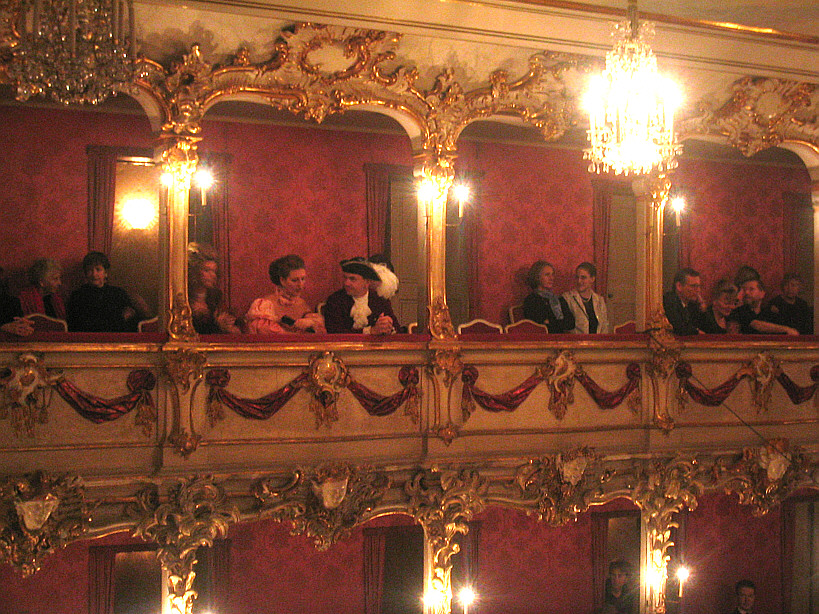
He was a child prodigy and entered the service of Duke Ferdinand Maria Innocenz of Bavaria at the age of 12 as an oboist.[1] The newly constructed Bavarian Court Theatre (the Old Residenztheater, now known as the Cuvilliés Theatre after the architect) in Munich opened on 12 October 1753 with Ferrandini's opera Catone in Utica. A recording of the opera made 250 years later in the same theatre is available (Oehms Classics OC 901).[2]

In 1755, Ferrandini retired to Padua, where in 1771, Wolfgang Amadeus Mozart and his father Leopold Mozart visited him in retirement.


[Above: Interior of the Old Residenztheater, now Cuvilliés Theatre, which opened with Ferrandini's opera Catone in Utica in 1753]

.

Friday, February 12, 2016

The Battle Of Lepanto


TRIBUTE TO THE BATTLE OF LEPANTO

The Ghost of Lepanto

Events Leading to Battle of Lepanto, 7 October 1571

The battle of Lepanto was one of the turning points in the struggle of Europeans to preserve their Freedom and Humanity from the talons of the encroaching Turk Ottoman Empire.

In 1571, the European Union forged by Don Juan of Austria, saved Italy and the Western Mediterranean from unimaginable destruction and human suffering.

Lepanto ranks with the Battle of Vienna (1683) as one of the two major watersheds that saved the European way of Life and protected the tender bud of Renaissance.

Since the 16th century, October 7 has been celebrated as a Feast Day in the Catholic Tradition.


Battle of Lepanto

The Battle of Lepanto was a naval engagement taking place on 7 October 1571 in which a fleet of the Holy League, a coalition of European Catholic maritime states arranged by Pope Pius V and led by Spanish admiral Don Juan of Austria, decisively defeated the fleet of the Ottoman Empire on the northern edge of the Gulf of Corinth, off western Greece. The Ottoman forces sailing westwards from their naval station in Lepanto (Turkish: İnebahtı; Greek: Ναύπακτος or Έπαχτος Naupaktos or Épahtos) met the Holy League forces, which came from Messina, Sicily, where they had previously gathered.

The victory of the Holy League prevented the Ottoman Empire from expanding further along the European side of the Mediterranean. Lepanto was the last major naval battle in the Mediterranean fought entirely between galleys and has been assigned great symbolic and historical importance by several historians.


Battle of Lepanto, 1571: What REALLY Happened

Real Crusades History

http://www.realcrusadeshistory.com 

.

Tuesday, September 30, 2014

'The Four Seasons' (Vivaldi)


The Four Seasons (Vivaldi)

The Four Seasons (Italian: Le quattro stagioni) is a set of four violin concertos by Antonio Vivaldi. Composed in 1725, The Four Seasons is Vivaldi's best-known work, and is among the most popular pieces in the classical music repertoire.

.

Tuesday, March 4, 2014

Strip the City - Venice


Strip the City - Venice by limukohou


From last week's 'Strip the City' program on the Science Channel. It's hard to believe that millennium old tree posts--protected from erosion in mud--have held up the city for all this time.

.

Wednesday, November 30, 2011

"Masters of Venice" at the de Young Museum

Masters of Venice: Renaissance Painters of Passion and Power from the Kunsthistorisches Museum, Vienna

October 29, 2011 - February 12, 2012

Masters of Venice: Renaissance Painters of Passion and Power is a worldwide exclusive presentation of 50 paintings by Venetian painters Titian, Giorgione, Veronese, Tintoretto, Mantegna, and more, primarily from the sixteenth century, all on loan from the Gemäldegalerie of the Kunsthistorisches Museum in Vienna. Featured are outstanding examples of the work of these artists that were collected by the archdukes and emperors of the Habsburg family, which are among the most celebrated holdings in the collections of the Gemäldegalerie.

Key works include Titian’s sumptuous Danáe (1560s), Mantegna’s tortured Saint Sebastian (1457–1459) and four rare paintings by Giorgione, including The Three Philosophers (ca. 1508–1509) and Portrait of a Young Woman (Laura) (1506). The exhibition also includes works by Palma, Bordone, Bassano, and more. Together, these examples represent the range of Venetian accomplishment in Renaissance-era painting.


Educational Resources (link for further study)
This exhibition, featuring works that were once part of the collection of the Habsburg family, offers you and your students a unique opportunity study works from the Renaissance. Highlighting artists such as Titian, Giorgione, Tintoretto and Veronese, the exhibition traces the Renaissance, High Renaissance and Venetian Mannerism through these artist’s paintings—many never before seen in San Francisco. The exhibition also provides a rich opportunity for Bay Area teachers to expand their curriculum by utilizing the show to look at literary, aesthetic, social and economic differences and similarities when comparing 16th-century Venice and its artistic output with San Francisco and the FAMSF collections.

The resources assembled here may provide you and your students with ideas for viewing the exhibition and for conducting follow-up activities to expand the experience.


Ticket Information

Admission prices: adults $20, seniors 65+ $17, students with current ID $16, youths 6–17 $10, members and children 5 and under free.

Groups of 10 or more have access to priority booking and discounted rates. For additional information please contact the group sales office at groupsales@famsf.org or by calling 415.750.3620.

Reserve your tickets now

Member tickets


Catalogue
Exhibition catalogue available


Related Lectures & Events

Tuesday December 6, 2011

Docent Lecture: "Masters of Venice: Renaissance Painters of Passion and Power from the Kunsthistorisches, Vienna," Rita Dunlay

1:00 pm


Today's Docent Tours

11:00 am

1:00 pm


Press Release
Masters of Venice: Renaissance Painters of Passion and Power From the Kunsthistorisches Museum, Vienna


Credit Line
This exhibition is organized by the Fine Arts Museums of San Francisco in collaboration with the Gemäldegalerie of the Kunsthistorisches Museum, Vienna.


Major Patron
Penny and James George Coulter
San Francisco Auxiliary of the Fine Arts Museums


Patrons
Athena and Timothy Blackburn
William G. Irwin Charity Foundation


Sponsors
T. Robert and Katherine Burke
Samuel H. Kress Foundation
Mrs. James K. McWilliams
Greta R. Pofcher


Education programs presented in conjunction with the exhibition are sponsored by Wells Fargo and the S. D. Bechtel, Jr. Foundation.


This exhibition is supported by an indemnity from the Federal Council on the Arts and the Humanities.

.

Tuesday, July 22, 2008

Niccolo di Conti and the Chinese Discovery of Australia?

I had posted this item in our Yahoo Group some years ago. I'm glad that I did because I'm not able to find this text anywhere online now. It was written by someone in anticipation of the release of Gavin Menzies' 2004 book '1421: The Year China Discovered America.' Apparently a much better account of this is within this book, but I just wanted to make an entry for it here now, and perhaps we can look into this further sometime. I have some definite opinions around the basic information in the book, but I don't want to get offtrack right here. Niccolo di Conti may not have been one of the great explorers, but he likely did witness something important.

Niccolo di Conti (ca.1395-1469) - Venetian Merchant/Explorer

Nothing is known of his early life. Determined to further open up trade with the east, he left Venice in about 1419 and took up residence in Damascus, where he studied Arabic. From Damascus, and for the following 25 years, he embarked on a number of journeys in Asia. Like earlier Venetian Marco Polo, he made the trek overland before the European powers had rounded the tip of Africa. He first crossed the desert to Baghdad and sailed down the Tigris to Basra. After sailing through the Persian Gulf he touched at Colcus and Hormuz, then continued along the coast of Iran via Calacatia (where he learned Persian) to Cambay (in Gujerat).

He then preceded along the west coast of India to Pacamuria and Helly, moved inland to Vijayanagar (which was until its destruction in 1555 the capital of the principal Hindu state of the Deccan) and crossed to the east coast at Maliapur, where he visited the tomb of St. Thomas (the biblical Thomas who according to certain traditions had founded a Christian community there). In about 1421 he crossed to Pedir (north Sumatra), where he spent a year, gaining knowledge of its cannibalistic natives, camphor, pepper and gold. The account of his travels refers to this island as Taprobana, called by the natives Sciamuthera.

He was the first European traveler who distinguished Ceylon from Taprobane and identified the latter as Sumatra. He then continued (by a stormy passage of 16 days) to Tenassarim on the Malay peninsula, sailed to the mouth of the Ganges, visited Burdwan (in Bangla Desh), then passed overland to Arakan (in Burma). He then passed to the Racha River (in Burma) which he ascended, crossing the mountains to the River Irrawady at Ava, and returning to Panconia (in Pegu), from where he sailed to Java. He later described the Kingdom of Ava and it's King riding on his white elephant adorned with golden necklaces set with sparkling gemstones.

There he spent nine months before continuing to Vijaya in Champa (northwestern Vietnam). He sailed back to Coloen (c. 1440), then to Cocym, Calicut, Cambay, Sechutera (Socotra, which he described as inhabited by Nestorians), Aden, Barbora (in Somalia), Jidda and Aydhab (on the Egyptian coast), from where he traveled overland via Mt. Sinai to Cairo. He returned to Venice in 1444, where he remained as a respected merchant. As a penance for his compulsory renunciation of Christianity during his wanderings, Pope Eugenius IV ordered him to relate his history to Poggio Bracciolini, the Papal Secretary.

Conti's name-forms, often Latinized by Poggio to a point beyond recognition, make some aspects of his route difficult to identify, but his narrative remains as the best account of the East by a 15th century traveler. UPDATE APRIL 2002: Did Chinese sailing vessels reach Australia 350 years before Captain Cook? The evidence includes the travel manuscripts, including maps, written in 1434 by Niccolo di Conti, who was aboard one of the Chinese vessels. The Venetian wrote that he sailed from China to a great land mass to the south. A soon to be published book by Gavin Menzies will present evidence that this was the continent known today as Australia.

Menzies believes the maps were taken to Venice by di Conti, who had joined one of the Chinese junks in India. In his travel book published in 1434, da Conti seems to have sailed to China via Australia - 350 years before Captain Cook. Menzies argues that, on his way through Venice in 1428, the King of Portugal's eldest son obtained the salvaged maps and incorporated them into a map of the world. The most controversial part of his theory is that copies of parts of this mappa mundi were used by da Gama, Magellan, and Cook. Some of these still survive in museums: Patagonia (1513), North America (1507), Africa (1502) and Asia and Australia
(1542).

**************************************************

I thought it was also worth mentioning that although the Chinese vessel on which di Conti apparently sailed, was a traditional Chinese "junk," Chinese builders did once construct a massive ship, apparently using the Western European model. However, it was much bigger, probably to the point of being impractical. They once sailed all the way to Kenya, but didn't colonize it. It would seem logical that they would have at least attempted to colonized Australia if they knew it was there, being that it's so much closer than the Americas or Africa, and was very uninhabited.

I came upon some 3-D images of a Venetian merchant ship, of a much different make than Venetian naval vessels I presume. Even though this type of ship was not used in di Conti's apparent voyage, I still wanted to put a link to it here:

3-D Model: Venetian Merchant Ship

Genoa also long possessed a trading empire and a very strong navy, and had competed with Venice for centuries. That's also something that we need to take a look at. In the nineteen century, Genoese sailers (Italian nationals from Italy, not California), on merchant ships, were traveling as far as San Francisco. Perhaps by coincidence, some of the ports that they traveled to then were the same ports which many Genoese/Ligurians migrated to (San Francisco, New Orleans, Buenos Aires, Sao Paulo). As usual, I'm all over the place here, but we'll get to all of these subjects eventually.

**************************************************

7/26/08 - I wanted to add a link to the website The '1421' myth exposed. I had heard some of the rebuttals to this book, but this website really lays them out. I think we need to look at all the evidence regarding anything, and continue to sift through it. There are some countries in the world, and even in the West, in which people have been imprisoned for merely saying that.