
Thursday, April 5, 2012


Friday, March 9, 2012
Winemakers to Watch pay tribute to traditional methods
 |
| Letizia Pauletto and Enrico Bertoz, Arbe Garbe Wines |
Jon Bonné, Chronicle wine editor - January 15, 2012
In many cases, our Winemakers to Watch for 2012 deserve attention for what they don't do. It comes down to a strong streak of traditionalism, a willingness to innovate by eschewing intrusive winemaking and, instead, working smarter.
That includes the use of old-fashioned wooden fermenters and whole Pinot Noir clusters on the Sonoma coast. It means making Chardonnay by barely touching the barrels, and fermenting with indigenous yeast to highlight Lodi's old-vine Zinfandel. It means minimizing additions in the cellar, and innovating the historical practice of blending white wines.
In doing so, our five choices highlight the best of what California offers.
.
That includes the use of old-fashioned wooden fermenters and whole Pinot Noir clusters on the Sonoma coast. It means making Chardonnay by barely touching the barrels, and fermenting with indigenous yeast to highlight Lodi's old-vine Zinfandel. It means minimizing additions in the cellar, and innovating the historical practice of blending white wines.
In doing so, our five choices highlight the best of what California offers.
.
Winemakers: Enrico Bertoz, Letizia Pauletto
For two people in love with America, Letizia Pauletto and Enrico Bertoz began their wine lives somewhat farther afield: the vineyards of Silvio Jermann, in Italy's northern Friuli region, where they were picking grapes to earn cash while attending the university.
They were already high school sweethearts, living just eight minutes apart in two villages north of Trieste. Bertoz's family had an unusual tie to wine: His father was the local tire dealer, an important man to every vintner with a tractor.
The tedium of harvest was not a kind initiation.
"We swore at the time that we were never going to do that again," Pauletto says.
Bertoz's family also had another tie, to the Nonino family, one of Italy's top grappa makers, who taught him about distillation. And he was familiar with the United States; his aunt lived in Woodhaven, N.Y.
So in 1998, at 24, Bertoz packed his bags for Los Angeles. The Noninos connected him to restaurateur Piero Selvaggio, and Bertoz began working in the wine cellar at Valentino, Selvaggio's restaurant. Pauletto followed a month later, to work as an interpreter and translator.
Valentino's cellar was full of rarities, like an 1892 Brunello from Biondi Santi, but Bertoz was drawn to a flourishy bottle sealed in wax: a 1994 Queen of Spades, the Syrah-based debut from Manfred Krankl's Sine Qua Non. Selvaggio let the young man taste it.
"That's when I think I had an epiphany of American viticulture," Bertoz says. "It was overdone, but I'd never had anything like it before."
Soon he was regularly visiting Sine Qua Non in Ventura, where he worked two harvests and paid close attention to Krankl's unconventional but fastidious winemaking.
The couple got married and in 2005 moved to Napa Valley, where Bertoz worked harvest at Joseph Phelps. Eventually he was hired as assistant winemaker at Girard, and then at Flora Springs.
But their Friulian roots still called. Recalling his work with Krankl, Bertoz found some Viognier in Russian River Valley and hauled it back to Napa in a decrepit 1972 El Camino. Then he discovered grapes familiar from their childhoods, Pinot Bianco and Malvasia, in Sonoma's fastidiously farmed Saralee's Vineyard. In 2007, he called owner Saralee Kunde and secured enough for a first vintage. Arbe Garbe - it means "bad weeds" in Friulian dialect - was born.
In Friuli, white wine is a way of life - as is blending, in part to fend off the challenges of ripeness in a cold climate. "The whole project was to make a wine that reminded us of Friuli," Pauletto says. "It would have been hard with a Napa Chardonnay."
Ultimately Viognier was replaced by Pinot Grigio and the Friulian grape Ribolla Gialla. But Arbe Garbe primarily showcases Bertoz's talents as a white-wine innovator. That includes his use of concrete fermentation vessels to enhance texture; soaking Pinot Grigio on its skins (a frequent technique in Friuli); and partially dehydrating Malvasia in a cold room to concentrate flavor (a trick learned from Krankl).
Now the couple live in a tiny pink farmhouse amid a Rutherford vineyard, where Pauletto runs the business and looks after their 5-year-old son. They have found their perfect hybrid of Friulian tradition and California bounty.
"The beauty of being able to do all of what we do here," Bertoz says, "to bring it all together, is priceless."
Ages: Both are 37
Wines with dinner: 2010 Abbazia di Novacella Alto Adige Kerner
Quotes: "Neutral barrels don't lie, so it was a matter of seeing what the fruit would say." (Bertoz) "They put it next to the Santa Margherita." (Pauletto, on selling a Pinot Grigio-based wine to restaurants)
From the notebook
2010 Arbe Garbe Russian River Valley White ($28, 14.3% alcohol): Mostly from Pinot Grigio and Malvasia, with some Ribolla Gialla. A few more months in the bottle have added apricot-like flesh to match the deep saline and snap-pea freshness. Complex and almost electric in intensity.
Arbe Garbe Wines website
For two people in love with America, Letizia Pauletto and Enrico Bertoz began their wine lives somewhat farther afield: the vineyards of Silvio Jermann, in Italy's northern Friuli region, where they were picking grapes to earn cash while attending the university.
They were already high school sweethearts, living just eight minutes apart in two villages north of Trieste. Bertoz's family had an unusual tie to wine: His father was the local tire dealer, an important man to every vintner with a tractor.
The tedium of harvest was not a kind initiation.
"We swore at the time that we were never going to do that again," Pauletto says.
Bertoz's family also had another tie, to the Nonino family, one of Italy's top grappa makers, who taught him about distillation. And he was familiar with the United States; his aunt lived in Woodhaven, N.Y.
So in 1998, at 24, Bertoz packed his bags for Los Angeles. The Noninos connected him to restaurateur Piero Selvaggio, and Bertoz began working in the wine cellar at Valentino, Selvaggio's restaurant. Pauletto followed a month later, to work as an interpreter and translator.
Valentino's cellar was full of rarities, like an 1892 Brunello from Biondi Santi, but Bertoz was drawn to a flourishy bottle sealed in wax: a 1994 Queen of Spades, the Syrah-based debut from Manfred Krankl's Sine Qua Non. Selvaggio let the young man taste it.
"That's when I think I had an epiphany of American viticulture," Bertoz says. "It was overdone, but I'd never had anything like it before."
Soon he was regularly visiting Sine Qua Non in Ventura, where he worked two harvests and paid close attention to Krankl's unconventional but fastidious winemaking.
 |
| Enrico and Letizia are natives of the Friuli region (Friùl) |
But their Friulian roots still called. Recalling his work with Krankl, Bertoz found some Viognier in Russian River Valley and hauled it back to Napa in a decrepit 1972 El Camino. Then he discovered grapes familiar from their childhoods, Pinot Bianco and Malvasia, in Sonoma's fastidiously farmed Saralee's Vineyard. In 2007, he called owner Saralee Kunde and secured enough for a first vintage. Arbe Garbe - it means "bad weeds" in Friulian dialect - was born.
In Friuli, white wine is a way of life - as is blending, in part to fend off the challenges of ripeness in a cold climate. "The whole project was to make a wine that reminded us of Friuli," Pauletto says. "It would have been hard with a Napa Chardonnay."
Ultimately Viognier was replaced by Pinot Grigio and the Friulian grape Ribolla Gialla. But Arbe Garbe primarily showcases Bertoz's talents as a white-wine innovator. That includes his use of concrete fermentation vessels to enhance texture; soaking Pinot Grigio on its skins (a frequent technique in Friuli); and partially dehydrating Malvasia in a cold room to concentrate flavor (a trick learned from Krankl).
Now the couple live in a tiny pink farmhouse amid a Rutherford vineyard, where Pauletto runs the business and looks after their 5-year-old son. They have found their perfect hybrid of Friulian tradition and California bounty.
"The beauty of being able to do all of what we do here," Bertoz says, "to bring it all together, is priceless."
Ages: Both are 37
Wines with dinner: 2010 Abbazia di Novacella Alto Adige Kerner
Quotes: "Neutral barrels don't lie, so it was a matter of seeing what the fruit would say." (Bertoz) "They put it next to the Santa Margherita." (Pauletto, on selling a Pinot Grigio-based wine to restaurants)
From the notebook
2010 Arbe Garbe Russian River Valley White ($28, 14.3% alcohol): Mostly from Pinot Grigio and Malvasia, with some Ribolla Gialla. A few more months in the bottle have added apricot-like flesh to match the deep saline and snap-pea freshness. Complex and almost electric in intensity.
Arbe Garbe Wines website
Thursday, March 8, 2012
Renaissance City: Part II
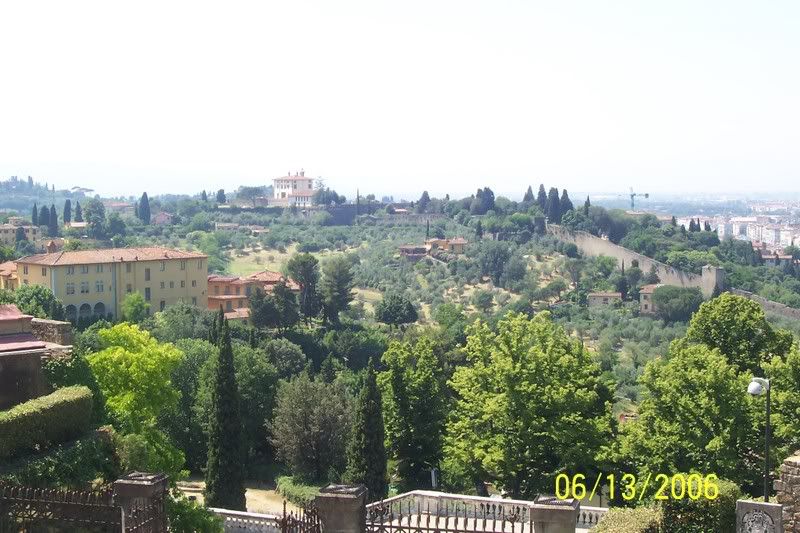
Best New Hotspots in Florence, Italy
From September 2011 By Maria Shollenbarger - 'Travel & Leasure' - September 2011 [Appeared as 'Renaissance City' in T+L Magazine]
Bonan also designed J. K. Place Firenze, the boutique hotel on the Piazza di Santa Maria Novella that, after eight years, continues to evolve. Its cocreator, Ori Kafri, is a sharp 34-year-old entrepreneur with his hands in, among other things, publishing and art galleries. J. K.’s well-connected general manager, Claudio Meli, launched Bravo Concierge service in 2007 so he could finesse clients’ time in Italy beyond their J. K. Place stay. On any given evening one might find a small cross-section of the city’s art, fashion, media, and business worlds commingling in the hotel’s living room and restaurant; on Sundays at lunchtime, the terrace proliferates with friends and families. With its alchemy of ease and style, exclusivity and openness, the hotel has become a Florence institution—one that’s spreading, with an outpost in Capri, a planned opening in Rome in late 2012, and aspirations to launch projects outside of Italy in London, New York City, and Tel Aviv (birthplace of Kafri’s mother and father).
IO Osteria Personale, on the Borgo San Frediano, by contrast, opened just months ago, but it already has the feel of an institution in the making. Owner Matteo Fantini studied and practiced veterinary medicine, but dreamed for years of starting a restaurant. So last December, enlisting 23-year-old chef Nicolò Baretti, he did just that. IO organizes its menu by primary ingredient (meat, fish, vegetables) rather than by course. Fantini, who chats happily with diners for half an hour at a time, draws whimsical art naïf deconstructions of the day’s dishes onto chalkboards above the sparsely elegant table settings. The facile presentation is in winking contrast to the sophistication of the food: whole pigeon embellished with smoked pig’s cheek; delicate warm seafood salad served with minced panzanella and asparagus gelato.
About a mile down the river in San Niccolò there’s a sliver of storefront marked ZEB, outside of which a line forms most days around noon. Inside, Giuseppina and Alberto Navari, mother and son, prepare dishes of simple rustic perfection the way they’ve probably been prepared for a hundred years. It’s the space itself—white, conspicuously designed, equal parts chic diner and fancy urban food emporium—that startles, given that this food is more often paired with scuffed-wood shelving, dusty Chianti flasks, and rickety tables. Instead, customers perch on chrome-and-kidskin stools and point to what they want behind the glass-and-steel counter; and while Alberto pours a nice something from Bolgheri or Montecucco, Giuseppina, with a lambent smile like a benediction, serves up polpettine, lampredotto, and carciofi.
Not that there’s no room in this evolution for tradition of the most established, proto-Florentine sort. Some of the city’s oldest winemaking families—the Frescobaldis and Antinoris, Mazzeis and Ricasolis, Corsinis and Incisa della Rocchettas—collaborated with IMG Artists last year to launch Divino Tuscany, an ultraexclusive annual wine festival. The four-day event saw guests from 17 countries sample prized vintages from 50 of the region’s top producers. There were private concerts, tours, and lavish dinners at family palaces around the city. The weekend culminated in a party hosted by Sting and Trudie Styler at Il Palagio, their estate in Figline Valdarno, 45 minutes outside the city—a hot ticket also attended (and, in a few amusing cases, crashed) by a nice representation of Florentine society.
 But if you were to canvass the locals at any of these settings as to the most conspicuously successful manifestation of a putative New Florence, many would point you in the direction of the Fondazione Palazzo Strozzi. Created in 2006, the FPS has in five years hosted a clutch of exhibitions that have earned international praise; last fall’s Bronzino retrospective—the most comprehensive to date of the Mannerist painter’s work—garnered unprecedented attendance and requests from major American and European museums to host it. Here, in the courtyard café of the imposing 15th-century Strozzi family palace that houses the foundation, you’re likely to find James Bradburne, the FSP’s tall, dandy, fiftysomething Anglo-Canadian director, holding an impromptu meeting in a fluent Italian-English mix or simply observing the ebb and flow of visitors though the massive twinned double doors. “This place used to be closed to the public when there wasn’t an exhibition on; there were no plants, no café, no shop,” Bradburne notes. “Now it’s open all the time, and it’s a living building. It gets 25,000 visitors a week. And we aren’t even targeting tourists.”
The FPS is an Italian experiment in institutional management. Its board of directors represents both the public and private sectors; among them are Florence’s museums superintendent Cristina Acidini and hotelier Rocco Forte. “We have a lot more freedom,” Bradburne says. “The board tends to say ‘yes’ rather than ‘no.’ There’s a level of transparency and immediacy that’s”—he smiles—“not typically Italian.” He says he was given two clear mandates. “One: Bring international-caliber exhibitions to Florence. As it happens, we don’t bring them here, we produce them here. Two: Give the palazzo back to the Florentines.”
“It needed someone as bright as James to make it happen,” says Leonardo Ferragamo one morning at Ferragamo headquarters, in the Palazzo Spini-Feroni. Besides holding various executive positions within his family’s company and chairing Lungarno Hotel, Ferragamo is president of the Associazione Partners Palazzo Strozzi, one of the FPS’s founding entities—and, as such, one of Bradburne’s bosses. “This started five years ago because of our frustration with Florence not doing its best in terms of managing its assets,” he said. “It piqued the pride of certain among us, enough so we finally acted.”
The FPS is also home to the Centro di Cultura Contemporanea Strozzina. To run this gallery, Bradburne enlisted Franziska Nori, a former director of Frankfurt’s Museum for Applied Art, who has made CCCS a showcase for topically provocative, intelligent exhibitions that have moved contemporary art from relative obscurity to near the forefront of Florence’s public cultural offerings—significant for a city in a constant struggle to escape from under the shadow of the Renaissance it spawned. “The goal [of FPS] is to be a contemporary institution in a Renaissance city,” Bradburne says. “One doesn’t negate the other. The backdrop is the inspiration.”
It remains a delightfully inescapable backdrop. Across the river, below the brushstroke cypresses surrounding San Miniato, is the 14th-century San Niccolò tower, the southeastern entry to Florence during its golden age. On July 1, after a 40-year closure and a $400,000 restoration effort, it was reopened to the public as part of Mayor Renzi’s improvements program. Stairs lead to its 148-foot summit, where one can gaze over the entire city. The view isn’t terribly dissimilar to the one enjoyed from nearby Piazzale Michelangelo. All the monuments, all the familiar landmarks are spread out below—bathed in the same pellucid sunshine, cradled in the same gentle hills. It’s still the Florence we all know and love, but amazing how a small change of perspective can make it seem just a bit different, somehow new.
Il Salviatino 21 Via del Salviatino, Fiesole; 39-055/904-1111; salviatino.com; doubles from $760.
J. K. Place Firenze 7 Piazza di Santa Maria Novella; 39-055/264-5181; jkplace.com; doubles from $490.
Palazzo Vecchietti 4 Via degli Strozzi; 39-055/230-2802, palazzovecchietti.com; doubles from $440.
St. Regis Florence 1 Piazza d’Ognissanti; 877/787-3447 or 39-055/27161; stregisflorence.com; doubles from $1,386.
Villa San Michele This timelessly elegant Fiesole stalwart is more than keeping up with the competition. 4 Via Doccia, Fiesole; 39-055/567-8200; villasanmichele.com; doubles from $1,200.
’ino There’s no better place to pop in for an expertly executed panino and a glass of red from a boutique producer. 3R Via dei Georgofili; 39-055/219-208; lunch for two $18.
IO Osteria Personale 167R Borgo San Frediano; 39-055/933-1341; dinner for two $112.
Ora d’Aria On a tiny lane in the shadow of the Uffizi, chef Marco Stabile gathers traditional ingredients and reimagines them in wildly creative ways. 11R Via dei Georgofili; 39-055/200-1699; dinner for two $168.
Zeb 2R Via San Miniato; 39-055/234-2864; lunch for two $53.
Luisa Via Roma A Florence classic that’s been recently renovated, with Felice Limosani as creative consultant. 19/21R Via Roma; 39-055/906-4116.
Divino Tuscany For more information on next year’s event, to be held in May, visit divinotuscany.com.
Fondazione Palazzo Strozzi/Centro di Cultura Contemporanea Strozzina Piazza degli Strozzi; 39-055/277-6461.
Le Murate Piazza della Madonna della Neve; lemurate.comune.fi.it.
San Niccolò Tower Piazza Giuseppe Poggi.
IO Osteria Personale, on the Borgo San Frediano, by contrast, opened just months ago, but it already has the feel of an institution in the making. Owner Matteo Fantini studied and practiced veterinary medicine, but dreamed for years of starting a restaurant. So last December, enlisting 23-year-old chef Nicolò Baretti, he did just that. IO organizes its menu by primary ingredient (meat, fish, vegetables) rather than by course. Fantini, who chats happily with diners for half an hour at a time, draws whimsical art naïf deconstructions of the day’s dishes onto chalkboards above the sparsely elegant table settings. The facile presentation is in winking contrast to the sophistication of the food: whole pigeon embellished with smoked pig’s cheek; delicate warm seafood salad served with minced panzanella and asparagus gelato.
About a mile down the river in San Niccolò there’s a sliver of storefront marked ZEB, outside of which a line forms most days around noon. Inside, Giuseppina and Alberto Navari, mother and son, prepare dishes of simple rustic perfection the way they’ve probably been prepared for a hundred years. It’s the space itself—white, conspicuously designed, equal parts chic diner and fancy urban food emporium—that startles, given that this food is more often paired with scuffed-wood shelving, dusty Chianti flasks, and rickety tables. Instead, customers perch on chrome-and-kidskin stools and point to what they want behind the glass-and-steel counter; and while Alberto pours a nice something from Bolgheri or Montecucco, Giuseppina, with a lambent smile like a benediction, serves up polpettine, lampredotto, and carciofi.
Not that there’s no room in this evolution for tradition of the most established, proto-Florentine sort. Some of the city’s oldest winemaking families—the Frescobaldis and Antinoris, Mazzeis and Ricasolis, Corsinis and Incisa della Rocchettas—collaborated with IMG Artists last year to launch Divino Tuscany, an ultraexclusive annual wine festival. The four-day event saw guests from 17 countries sample prized vintages from 50 of the region’s top producers. There were private concerts, tours, and lavish dinners at family palaces around the city. The weekend culminated in a party hosted by Sting and Trudie Styler at Il Palagio, their estate in Figline Valdarno, 45 minutes outside the city—a hot ticket also attended (and, in a few amusing cases, crashed) by a nice representation of Florentine society.

The FPS is an Italian experiment in institutional management. Its board of directors represents both the public and private sectors; among them are Florence’s museums superintendent Cristina Acidini and hotelier Rocco Forte. “We have a lot more freedom,” Bradburne says. “The board tends to say ‘yes’ rather than ‘no.’ There’s a level of transparency and immediacy that’s”—he smiles—“not typically Italian.” He says he was given two clear mandates. “One: Bring international-caliber exhibitions to Florence. As it happens, we don’t bring them here, we produce them here. Two: Give the palazzo back to the Florentines.”
“It needed someone as bright as James to make it happen,” says Leonardo Ferragamo one morning at Ferragamo headquarters, in the Palazzo Spini-Feroni. Besides holding various executive positions within his family’s company and chairing Lungarno Hotel, Ferragamo is president of the Associazione Partners Palazzo Strozzi, one of the FPS’s founding entities—and, as such, one of Bradburne’s bosses. “This started five years ago because of our frustration with Florence not doing its best in terms of managing its assets,” he said. “It piqued the pride of certain among us, enough so we finally acted.”
The FPS is also home to the Centro di Cultura Contemporanea Strozzina. To run this gallery, Bradburne enlisted Franziska Nori, a former director of Frankfurt’s Museum for Applied Art, who has made CCCS a showcase for topically provocative, intelligent exhibitions that have moved contemporary art from relative obscurity to near the forefront of Florence’s public cultural offerings—significant for a city in a constant struggle to escape from under the shadow of the Renaissance it spawned. “The goal [of FPS] is to be a contemporary institution in a Renaissance city,” Bradburne says. “One doesn’t negate the other. The backdrop is the inspiration.”
It remains a delightfully inescapable backdrop. Across the river, below the brushstroke cypresses surrounding San Miniato, is the 14th-century San Niccolò tower, the southeastern entry to Florence during its golden age. On July 1, after a 40-year closure and a $400,000 restoration effort, it was reopened to the public as part of Mayor Renzi’s improvements program. Stairs lead to its 148-foot summit, where one can gaze over the entire city. The view isn’t terribly dissimilar to the one enjoyed from nearby Piazzale Michelangelo. All the monuments, all the familiar landmarks are spread out below—bathed in the same pellucid sunshine, cradled in the same gentle hills. It’s still the Florence we all know and love, but amazing how a small change of perspective can make it seem just a bit different, somehow new.
Guide to Florence
Stay
Great Value Casa Howard Florence Guest House 18 Via della Scala; 39-06/6992-4555; casahoward.com; doubles from $180.Il Salviatino 21 Via del Salviatino, Fiesole; 39-055/904-1111; salviatino.com; doubles from $760.
J. K. Place Firenze 7 Piazza di Santa Maria Novella; 39-055/264-5181; jkplace.com; doubles from $490.
Palazzo Vecchietti 4 Via degli Strozzi; 39-055/230-2802, palazzovecchietti.com; doubles from $440.
St. Regis Florence 1 Piazza d’Ognissanti; 877/787-3447 or 39-055/27161; stregisflorence.com; doubles from $1,386.
Villa San Michele This timelessly elegant Fiesole stalwart is more than keeping up with the competition. 4 Via Doccia, Fiesole; 39-055/567-8200; villasanmichele.com; doubles from $1,200.
Eat
Il Santo Bevitore An elevated interpretation of the trattoria, this new two-room restaurant is always packed. 64/66R Via di Santo Spirito; 39-055/211-264; dinner for two $90.’ino There’s no better place to pop in for an expertly executed panino and a glass of red from a boutique producer. 3R Via dei Georgofili; 39-055/219-208; lunch for two $18.
IO Osteria Personale 167R Borgo San Frediano; 39-055/933-1341; dinner for two $112.
Ora d’Aria On a tiny lane in the shadow of the Uffizi, chef Marco Stabile gathers traditional ingredients and reimagines them in wildly creative ways. 11R Via dei Georgofili; 39-055/200-1699; dinner for two $168.
Zeb 2R Via San Miniato; 39-055/234-2864; lunch for two $53.
Shop
Flair The best spot for Italian design inspiration. 6R Piazza Carlo Goldoni, 39-055/267-0154.Luisa Via Roma A Florence classic that’s been recently renovated, with Felice Limosani as creative consultant. 19/21R Via Roma; 39-055/906-4116.
See and Do
Cascine Gardens Via delle Cascine; no phone.Divino Tuscany For more information on next year’s event, to be held in May, visit divinotuscany.com.
Fondazione Palazzo Strozzi/Centro di Cultura Contemporanea Strozzina Piazza degli Strozzi; 39-055/277-6461.
Le Murate Piazza della Madonna della Neve; lemurate.comune.fi.it.
San Niccolò Tower Piazza Giuseppe Poggi.
Wednesday, March 7, 2012
Renaissance City: Part 1
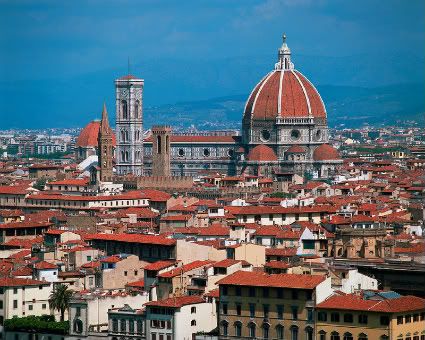
From September 2011 By Maria Shollenbarger - 'Travel and Leasure' - September 2011 [Appeared as 'Renaissance City' in T+L Magazine]
Some 500 years after the Medici left their mark here, a new generation of tastemakers and power brokers is breathing fresh life into Florence, Italy’s old soul. T+L reports on the welcome dose of contemporary culture that’s reinvigorating this Tuscan city.
We may as well start by calling this what it is: a sort of love letter. It’s of course not the first penned to Florence, famously one of the world’s more love-letter-inspiring cities. (For rather more accomplished paeans, please see Forster, Stendhal, Lawrence, Shelley. And you might also check D, for Dante.) Florence’s CV is virtually unmatched among destinations: it is the birthplace of modern poetry and merchant banking, the locus of a robust share of the most important architectural and artistic monuments of postmedieval times. In more recent ones, it has been a temporary home to an equally robust share of American college students, who come to immerse themselves in, and perhaps be irrevocably changed by, Italy’s cultural endowments and profligate, heart-constricting beauty. I was one of them; maybe you were, too. But whether you first see it at 18 or at 68, Florence tends to imprint itself on you in a series of visual mnemonics: the sedate, rosy curve of the Duomo; the sylvan fairness of Botticelli’s Primavera; the cypresses like black-ink brushstrokes on the hills near San Miniato—single components which, to paraphrase Walt Whitman (who, sadly for him, never laid eyes on this city), contain numinous multitudes.
Definitely lovable. But is it livable? Or, more precisely: living? Alas, that is a more complex discourse. Milan is virtually defined by its relentlessly contemporary fashion industry. Rome is kept current by maintaining, after two-odd millennia, its status as a political seat. Even gloriously moribund Venice has conspired to focus the attention of the 21st century’s great and good on itself for a few months each year, with twinned Biennales of art and architecture and a film festival.
But with mass tourism generally doing more damage than service to both its resources and reputation, and citizens feeling disenfranchised by a city they perceive to be managed more for visitors’ benefit than their own, Florence has run the risk of becoming a hostage of its own patrimony—a hermetically sealed monument to, well, its many monuments. Città d’arte, yes—and not much else.
Change is in the air here, though. After reaching a collective sense of essere stufi (being fed up), citizens from across the spectrum are waking up to the potential of a Florence that’s more than simply the sum of its beautiful parts. They come from private and public sectors: civil servants, businesspeople, and members of the founding families, along with artists, hoteliers, and curators. All have a stake in moving the city forward along social, civic, commercial, and cultural lines, with an aim of helping Florence recapture the title of contemporary hub, some six centuries after first holding it.
Foremost among these agents of change is Matteo Renzi, Florence’s charismatic 36-year-old mayor, who took office in 2009. It’s hard to think of another European politician who enjoys such uniform approval across such a broad demographic and partisan swath. (The enthusiasm with which he’s name-checked at both working-class bars around Piazza Savonarola and dinner tables presided over by scions with 900-year-old titles recalls the fairy-dusted cachet Obama possessed in his “Yes We Can” days.) “We’ve been a bit asleep to our own potential,” Renzi says when we meet one afternoon in late April in his magnificently frescoed office in the Palazzo Vecchio. “And also to one important imperative: you can’t organize a city like a museum. We have to create every opportunity for citizens to be engaged with and proud of [Florence,]. As for the tourists, you have to give them more, and better, reasons to come back.”
Then there is Le Murate, a 15th-century former monastery on the Via Ghibellina, which through public grants has reopened as an arts space comprising galleries, a café, and administrative offices. The brainchild of town alderman for culture Giuliano da Empoli, Le Murate’s public areas go by the acronym SUC, for Spazi Urbani Contemporanei; the idea is for it to serve as a social nexus for emerging artists and those who are interested in them—Italian and international, local and tourist alike.
Away from the Palazzo Vecchio and the official ministrations of civil servants, hoteliers and restaurateurs have tapped into a sense of the city’s elevated potential. Though most have strictly local roots, one notable opening by an American hotel group constitutes a major vote of confidence. The St. Regis Florence made its debut in May on the site of the old Grand Hotel Firenze, in the Piazza d’Ognissanti. Some of its 100 rooms and suites fly (in perfectly tasteful fashion) the Medici-inspired flag of opulent silks and velvets in royal-ecclesiastical shades; others are rendered in a gorgeous muted palette. St. Regis is a hotel brand on a roll, and much strategy goes into the selection of its locations. Its arrival here, now, is a direct result of what St. Regis brass is actually calling Florence’s “second Renaissance.”
At Il Salviatino, just up the hill toward Fiesole, the traditional hospitality model is turned neatly on its head by a staff of Service Ambassadors—driver, butler, waiter, guide, and concierge rolled into a single, nattily-dressed individual. They’ve been met with mixed reviews, as has the hotel’s erratic décor: at times admirably tasteful (as in the beautiful double-height, wood-paneled library), at others less so (hanging old-master reproductions from metal chains, parallel to the ceiling in the restaurant, defies explanation). Thank goodness the terrace, with its white sofas and views of the villa’s gardens, is a delight.
Back in town, just off the Piazza della Repubblica, is a discreet jewel, Palazzo Vecchietti: more residence than hotel, tailor-made for the creative classes seeking low-key live-work space and privacy. There’s no lounge or bar, but all rooms have stocked kitchens and working and sitting areas; and all are prettily modern—the handiwork of local designer Michele Bonan, whose imprimatur of artfully contained flamboyance is instantly recognizable.
.
Thursday, March 1, 2012
Hidden Havens: Valle Acquasanta

[This article is borrowed from the Uncommon travel in authentic Italy: Exploring Le Marche, Italy's unsung gem blog]
Duncan Campbell - August 2, 2010
With
sharp ridges, steep hills, and repetitive undulations being a feature
of this area, finding a flat trail is unusual. But that's essentially
what the path to the Acquasanta waterfalls and gorge is, with just a
few rises and falls at either end of it. Better still, in these hot
days of summer, the majority of it is through the cool of the forest,
with tall beeches providing shade and respite from the beating sun.
Wildflowers appear in colourful clusters, the trees range heavenward in their impressive strength and grandeur, and - in the latter half of the walk - waterfalls roll down rock walls and scree banks, offering refreshment and cooling stations, not to mention the beauty spell that cascades seem to cast on our human sensibilities.
The main destination for most walkers are the waterfalls towards the end of the trail, and they're well worth the effort - streams fall down the steep hills in veils in one spot, and gush down in a singular channel in another. But beyond them lies the gorge itself, which - due to its narrowness and height - has been used in the past as a natural cantina, the sun barely (if ever) reaching in to warm its stones. You can reach the gorge through a tunnel cut into the rock, and then - if you're drawn on - clamber up the river's rocky bed into the narrowing gorge, which twists and turns to its sheer-sloped beginnings. You'll need shoes for wading, and a strong constitution - the water is very, very cold.
With all this wonderful water around, it's no wonder that an aqueduct has been built here, and for much of the way you'll follow its course, the raised concrete blocks and flagstones making for easy walking. Every now and then you can see into its channel, the cool, clear water running invitingly below, happily wending its way down to the town of Bolognola. Its quite an engineering feat, cutting through sheer rock walls in places, and disappearing under steep forested slopes in others. But it's had its impact on the landscape, particularly at its source and down in the valley below, and one wonders how it would be if left to its own (natural) devices. That said, it's a wonderful hike, and is good for the whole family, although at around 3-4 hours round trip, might be a bit long for the young ones.
Directions: Just behind the church in the main (middle) section of Bolognola, there's a brown signpost for the Cascata di Acquasanta - follow this road, keeping left and go through the small borgo to the end of the road, where there's a small parking lot. The trail is obvious just beyond the parking lot, heading down into the forest.
Wildflowers appear in colourful clusters, the trees range heavenward in their impressive strength and grandeur, and - in the latter half of the walk - waterfalls roll down rock walls and scree banks, offering refreshment and cooling stations, not to mention the beauty spell that cascades seem to cast on our human sensibilities.
The main destination for most walkers are the waterfalls towards the end of the trail, and they're well worth the effort - streams fall down the steep hills in veils in one spot, and gush down in a singular channel in another. But beyond them lies the gorge itself, which - due to its narrowness and height - has been used in the past as a natural cantina, the sun barely (if ever) reaching in to warm its stones. You can reach the gorge through a tunnel cut into the rock, and then - if you're drawn on - clamber up the river's rocky bed into the narrowing gorge, which twists and turns to its sheer-sloped beginnings. You'll need shoes for wading, and a strong constitution - the water is very, very cold.
With all this wonderful water around, it's no wonder that an aqueduct has been built here, and for much of the way you'll follow its course, the raised concrete blocks and flagstones making for easy walking. Every now and then you can see into its channel, the cool, clear water running invitingly below, happily wending its way down to the town of Bolognola. Its quite an engineering feat, cutting through sheer rock walls in places, and disappearing under steep forested slopes in others. But it's had its impact on the landscape, particularly at its source and down in the valley below, and one wonders how it would be if left to its own (natural) devices. That said, it's a wonderful hike, and is good for the whole family, although at around 3-4 hours round trip, might be a bit long for the young ones.
Directions: Just behind the church in the main (middle) section of Bolognola, there's a brown signpost for the Cascata di Acquasanta - follow this road, keeping left and go through the small borgo to the end of the road, where there's a small parking lot. The trail is obvious just beyond the parking lot, heading down into the forest.
Saturday, February 25, 2012
From the Adriatic: Venetians, Croatians, Slovenes, in San Francisco
When my family immigrated from the province of Brescia, they eventually settled along the Montreal River between Upper Michigan and Wisconsin (the Ironwood-Hurley area). Although the Upper Peninsula was largely settled by Finns, Lombardians and Venetians were already well settled there as well, and some of their neighbors were Croatian. Ironically, a century and a quarter earlier, many western Croatians lived under the same government--the Venetian Republic--as did the Brescians. Now here they were, Croatian and Brescian descendants, living in a rural area along the Montreal River.
When my parents moved to San Francisco many years later in the mid-60s, there was a large Croatian-American community there. San Francisco has a similar history of European immigration as does the other big American cities of a century ago, such as New York, Chicago, Philadelphia, St. Louis, and New Orleans. A lot of Irish and Italians, except that the "Italians" were chiefly from northwest of the peninsula; as well as Germans, Slovenes, Croatians, Russians, Ukrainians, Scandinavians, Maltese, and others.
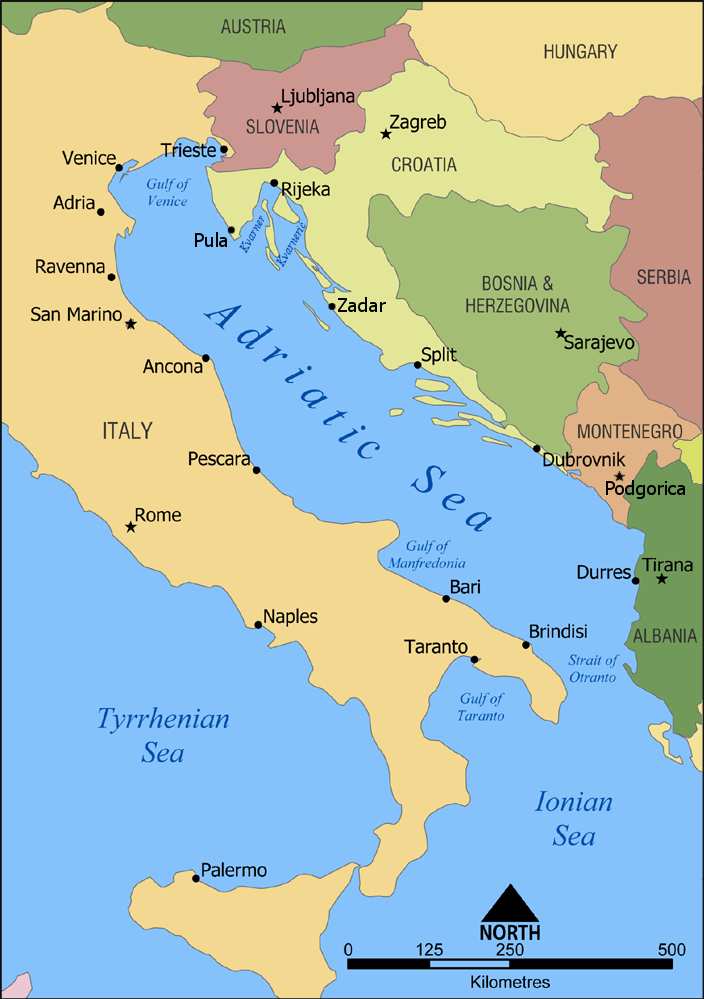
Today, with so much contrived turnover, few San Franciscans are even aware of the city's past connection with the Adriatic Sea. There were a sizable number of immigrants from the Tri-Veneto area, as well as the Croatians and Slovenes. Since the Venetians, Croatians, Slovenes, and other groups, long struggled for Trieste and the Istria region, tensions may have been... "warm." If you look at the map above, Istria is the land that is shaped like a little arrowhead at the north end of the Adriatic. It was part of the Langobard Kingdom at one time. I can recall reading that the Langobards teamed up with the Avars to raid some of those nearby Slavic areas, which included a lot of carnage; so I guess this "west Adriatic vs. east Adriatic" conflict goes back quite a long time, with the "east" certainly getting its licks in along the way as well.
My cousin lives in Pennsylvania, in an area with an old Croatian community, and she told me that some still have at least a slight grudge against "Italians" merely because of the historical struggle between Croatians and Italians. This struggle seemed to have started with Venetian aggression, and was inflamed later with Fascist aggression. I had heard that about 60,000 Italian settlers, and perhaps long-standing Venetians, were killed in the later stages of World War II. As a Padanist, I would admit that their issue--or "ours" for that matter--if there even is one anymore, is with "us," and not Southern Italians.
My cousin lives in Pennsylvania, in an area with an old Croatian community, and she told me that some still have at least a slight grudge against "Italians" merely because of the historical struggle between Croatians and Italians. This struggle seemed to have started with Venetian aggression, and was inflamed later with Fascist aggression. I had heard that about 60,000 Italian settlers, and perhaps long-standing Venetians, were killed in the later stages of World War II. As a Padanist, I would admit that their issue--or "ours" for that matter--if there even is one anymore, is with "us," and not Southern Italians.
If this issue is still even remotely alive with anyone in Pennsylvania in 2012, then I would speculate that there could have been some tension between the Venetians, Croatians, and Slovenes in San Francisco a century ago. I just think it's ironic in that San Francisco is so far from Trieste. However, it couldn't have really amounted to much. I do know that feuding Balkan immigrants, even today, hold strong grudges against each other in certain cities where they live. Someone once told me even in Phoenix! Phoenix is pretty far from the Balkans.
I always thought that the Balkans and the Italian peninsula had a lot in common. Both were made up of quite a few different nations, with different languages and cultures; at least up to the Risorgimento. The big difference after that was that nobody forced everyone in the Balkans to give up their languages and all become "Balkonians." It probably should be stated that the past Venetian-Croatian conflict is nothing compared to the conflict between Croatians and Serbians, or any other conflict in the Balkans. For whatever it's worth, I only wish that our culture fostered the same type of folkishness and self-identity as does the Croatian.
When I was loosely involved, a few years ago, in the local construction industry; I came across a handful of recent Bosnians and Albanians. There were also some Montenegrins in early and later migrations to San Francisco. For that matter, also some Greeks and south Italian Adriatics as well. I suppose that within the sizable German community, going back many years, there must have been Austians, which is really just a little north of the northern Adriatic coast. Also Hungarians, which weren't too far off from there either; because I recall once on Geary Street in San Francisco, of seeing some Hungarian-American center. There were also Romanians in the Istrian mix, from long ago, and I have come across a few people who said they were of Romanian descent in the Bay Area; a couple old and a couple more recent.
.
Friday, February 10, 2012
From Trader Joe's Fearless Flyer for February
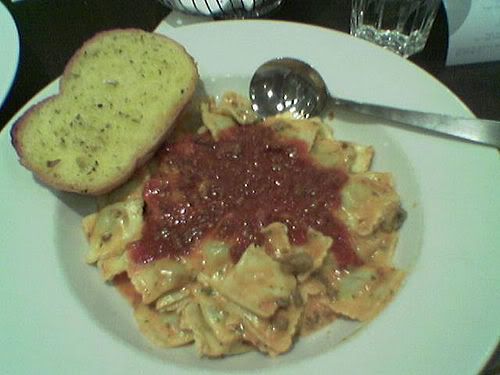 Trader Joe's always has many products from or of the Cisalpine region, and a number of them were featured in it's "Fearless Flyer" for February.
Bolognese Stuffed Ravioli
The Outside On The Inside!
Like most recipes that originate in one country and migrate to the cuisines of other countries, incarnations of Spaghetti Bolognese are as varied as the cooks who make them. We've tasted a good many Bolognese variations over the years, but until now we've never tasted anything quite like Trader Joe's Bolognese Stuffed Ravioli.
Bolognese Stuffed Ravioli take the concept of Bolognese and turn it inside out—or, more accurately, outside in. We've taken fresh, thin, Italian-style ravioli and stuffed them with a hearty meat sauce—tomato, ground beef, onions, carrots, celery, butter, garlic & herbs with Parmesan cheese. The pasta cooks in minutes to a wonderfully al dente finish, and the filling is so rich and satisfying that you really don't even need a sauce—a drizzle of our President's Reserve Extra Virgin Olive Oil and a dusting of freshly grated cheese are an excellent way to accent the pasta without distracting from its stellar flavors.
We're selling each nine ounce package of Bolognese Stuffed Ravioli for a mere $2.99—you'll find them in our refrigerated case.
Arugula Pizza
Arugula Pizza Imported from Italy
Pizza may not have originated in Italy (Greece is the most likely source, though history is still unclear), but the Italians most assuredly get credit for elevating a mere flatbread to an art form. Trader Giotto's Arugula Pizza, the newest in our array of imported Italian pizzas, further elevates this humble pie.
Our Arugula Pizza features a hand-stretched, wood-fired crust, topped with five ferociously flavorful formaggios: mozzarella, grana padano, manchego, provolone and pecorino. Cherry tomatoes and arugula are placed atop the cheeses, making a colorful statement that, when paired with the white of the cheeses, begins to resemble the color scheme of the Italian flag? Coincidence? Hmmmm…
Because the pizza is flash frozen immediately, both the arugula and the tomatoes look and taste fresh when you bake it at home—which takes less than 10 minutes in a pre-heated oven, by the way. We like to rev up the fresh flavors even more by drizzling some of our Fat Free Balsamic Vinaigrette atop the freshly baked pie. Trust us; it’ll make your taste buds tingle. Serve Trader Giotto’s Arugula Pizza with a salad for dinner, or cut it into smaller slices and serve as a memorable appetizer course. Memorable, too, is our price of $4.29 for each 15.3 ounce Pizza. You’ll find it in our freezer case.
Tuscano Marinara Sauce
Tuscano Marinara SauceBig can! Small price!
When it comes time to dress your pasta, you want a sauce that's fresh-tasting, free of preservatives and vibrant in flavor as well as color. You could spend several hours at the stove in pursuit of perfection, or you could buy a can of Trader Giotto's Tuscano Marinara Sauce.
This is a sauce for tomato purists. It begins with perfectly ripe, fresh-from-the-vine, California-grown tomatoes. (We really do mean “fresh-from-the-vine”—these tomatoes are "sauced" within hours of harvest.) The tomatoes are gently peeled using natural steam, then blended with extra virgin olive oil and a savory blend of herbs and spices. Nothing else is added. Unlike many canned sauces, ours has no added citric acid or preservatives, so the overwhelming flavor is exactly what you'd get if you made it from scratch—fresh tomatoes.
Try Tuscano Marinara Sauce on our High Fiber Pastas, on a pizza or in a calzone, in your next lasagna or a on meatball sandwich. We're selling each big, 28 ounce can for a mere $1.79, a price that seems too good to be true for a sauce that is so truly good. You'll find it in our grocery aisle.
Creamy Blue Cambozola
Cambozola is a delicious blend of the assertive flavor of good blue cheese with the creamy richness of triple cream soft ripened cheese. (Think Gorgonzola crossed with Camembert and you'll have a pretty good idea what you’re getting here.) Cambozola is produced by a dairy that's been in the business of making premium quality cheeses for nearly one hundred years. That history and craftsmanship combined make one of the most unique cheeses we've seen.
And though the cheese is unique, its uses are countless. Enjoy Cambozola just as you would a Brie or creamy blue—on a cheese tray, in wedges alongside a green salad or fresh fruit, or melted over a grilled steak. And for a real treat, try Cambozola and sliced Prosciutto on a baguette or sourdough bread. We're selling Cambozola in random weight pieces of about seven ounces for $11.99 per pound, every day—to give you an idea of what a great value this is, we've seen Cambozola selling for nearly twice this amount in other stores.
Asiago Cheese
Asiago CheeseNew World meet Old World. Old World, meet New.
After World War I, much of the cheesemaking infrastructure was destroyed in the Italian mountain town of Asiago. Needing to make a living and seeing vast opportunity, many of the dairy-farming, cheesemaking families of the region uprooted themselves and moved to the upper Midwest of the United States, where they soon established themselves and their distinctive cheeses as a force to be reckoned with. Asiago, the namesake cheese of their hometown, led the way in this Italian-American rivoluzione de formaggio.
Trader Joe's Asiago is made for us in Wisconsin using milk gathered within a 30 mile radius. It's handcrafted and aged for five months to achieve its signature sweet, nutty flavor that's just a touch sharp. This is a great cheese to serve on a platter, and, with ripe pears and a loaf of crusty bread, makes a wonderful Euro-style lunch. It is also an excellent grating cheese and adds a distinctive flavor to pizzas and mac & cheese. We're selling random weight wedges of Trader Joe's Asiago for $5.99 a pound, a terrific price, every day.
Amusant Bubbly Pink Moscato
Amusant Pink Moscato Amusant Bubbly Pink Moscato is currently only available in our stores where wine is sold.*
Is there a special occasion you'd like to celebrate? A special someone you'd like to toast? Or perhaps you're just feeling bubbly? Amusant Bubbly Pink Moscato will fit right in to any of these scenarios. This is a bubbly wine that's made primarily with Moscato grapes, so its aromatic bouquet greets you with every sip. The wine's off-dry balance (meaning sweet, but not too sweet) leads to flavors of apricot, peach, bergamot (think Earl Grey tea), a touch of mint and hints of orange blossom. These flavors get a boost from the fine bubbles, and the wine concludes with a clean and crisp finish.
Serve Amusant Bubbly Pink Moscato with your celebratory meal or save it for dessert. It's a natural with sweets, especially if they're chocolate. We're selling each bottle for $5.99*. Ooh, chocolate, bubbly wine and a great price… we're in love.
*Amusant Bubbly Pink Moscato is $6.49 in KY & GA; $7.99 in OH. Alcohol availability & price may vary due to state laws, taxes, shipment fees & other such stuff. (If we could, we would.)
"Just Sauce" Turkey Bolognese
"Just Sauce" Turkey Bolognese Ever have one of those nights when the last thing you want to do is cook dinner? One of those nights where regardless of your mood, dinner must, in fact, find its way to the table? One of those nights where even putting a pot of water on the stove can feel like a monumental effort? We understand. And we can help.
Trader Joe's "Just Sauce" Turkey Bolognese is about as close to homemade as you can get without standing in front of the stove stirring a hot pot for hours and hours. It's a traditional Bolognese sauce, slow-cooked with tomatoes, dry white wine, celery, onions, and carrots and exactly the right ratio of basil, oregano, thyme & fennel. We've lightened it up a bit by using turkey meat in place of the traditional combo of beef, pork & veal. It's not light on flavor, though. This chunky sauce is positively bursting with fresh, vibrant flavors. It's ready to dress your favorite pasta (we suggest our High Fiber Pastas), it makes a terrific dip for crusty bread, and it's a tasty, protein-rich companion to roasted or grilled vegetables for a quick, simple dinner.
Speaking of quick and simple, Trader Joe's "Just Sauce" Turkey Bolognese is ready to eat in about five minutes (less if you microwave it), and requires quite close to no effort on your part. See? We told you we could help. Even the price is helpful—to your wallet, that is. We're selling each 12 ounce package for $3.29, every day. You'll find it in our freezers.
**************************************************
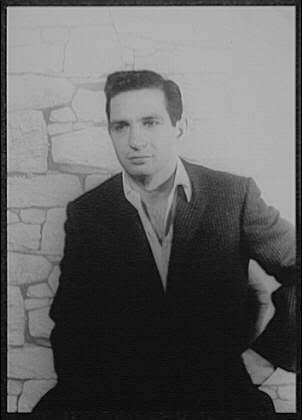
Ben Gazzara 1930-2012
.
Subscribe to:
Posts (Atom)