Showing posts with label wine industry. Show all posts

Friday, May 6, 2022

"The Stack" - Part 2

Ramazzotti Winery
21015 Geyserville Avenue
Geyserville, CA 95441
707-814-0016
https://www.ramazzottiwines.com

Our Story

From the heart of the beautiful Le Marche region of Italy, the Ramazzotti story began in 1958 when Ramazzotti Wines owner and winemaker Joe (Giuseppe) Ramazzotti immigrated to the Dry Creek Valley with his mother, Yolanda, father, Germano, and two sisters, Maria Lucia and Romana.  A few years later they had two more children, Adriano and Linda.  They brought with them a deep love of Italian farming, winemaking, traditions and appreciation of life to the Dry Creek Valley. La terra—the earth and its gifts—is a tradition that has passed to our generations and guides everything we do in Sonoma County.

con't....

ZAP Part 1: Ramazzotti Wines & Berryessa Gap Vineyards

ZAP Part 2: Ramazzotti Wines & Berryessa Gap Vineyards


************


Wine Road

This concern is based on the Wine Country in northern Sonoma County, of which there are more wineries founded by Cisalpine families that I could begin to feature here. I just added one, the Ramazzotti Winery, above. Some of these families go back to the 19th century, however some are much newer, or even relatively recent. This region is large, including the Alexander Valley, Dry Creek Valley, smf Russian River Valley.

WineRoad.com


*************************


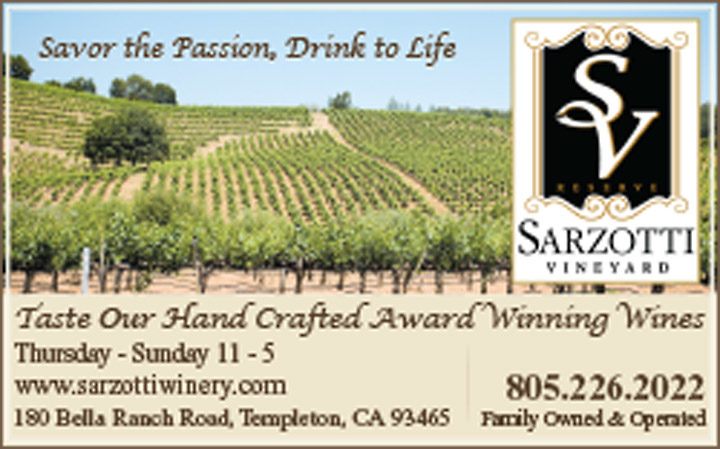
Sarzotti Winery
180 Bella Ranch Road
Templeton, CA 93465
805-226-2022
https://sarzottiwinery.com


************ 

Paso Robles Wine Country

PasoWine.com

This is a large brochure, including a map of this wine country which is actually along California's central coast. Again, numerous old and even new wine families of Cisalpine origin. I just happened to add Sarzotti Winery above, a name of Piemontese origin. The following related link is not associated with the brochure, but a different effort for the same region apparently.

https://pasorobleswineries.net


*************************


Chateau Montelena Winery

Experience a Taste of Montelena

Napa Winery with a second tasting room at the Westin St. Francis Hotel

Montelena.com


*************************


Walking Food Tours

Local Tastes of the City Tours

SFFoodTour.com


*************************


Is the Hornet Haunted?

History Mystery Program

Come aboard and learn about Hornet's more chilling history as you tour the ship after hours.

uss-hornet.org/tours/mystery-tour

info@uss-hornet.org

510-521-8448 x224


*************************


Santa Maria Valley

Come play in the coastal dunes, experience wine country with the longest growing season and get your fillof our iconic Santa Maria Barbecue.

SantaMariaValley.com

Santa Maria is also along the central coast of California. In north Santa Barbara County. I wasn't aware that it's the largest city in the county. It's known for its wine industry and the Santa Maria–style barbecue.


*************************


Castello di Amorosa

Napa Valley

Tour the authentic, 13th century inspired Tuscan castle-winery where you may taste world-class Napa Valley wines made by a fourth generation winemaking family in tradition of over 130 years.

4045 Saint Helena Highway
Calistoga, CA 94515
707-967-6272
castellodiamorosa.com

The place is spectacular. A magnificent piece of Tuscan culture in Northern California.


Dario Sattui: The Inspiration and Passion behind the Building of Castello di Amorosa

Castello di Amorosa

Dario Sattui, owner of Castello di Amorosa and V.Sattui Winery in St. Helena, California reflects on his inspiration to build the Castello.  Speaking from his monastery and estate in Sinalunga, Sattui describes how he studied medieval architecture in Italy and across Europe and how Castello di Amorosa came to fruition.

Dario Sattui introduces his signature wine, Sinalunga, which received 94 points from Robert Parker, The Wine Advocate, a leading international wine critic.

Here are the links to our website and social media.
Website - http://www.castellodiamorosa.com/
Instagram - https://www.instagram.com/thecastello
Facebook - https://www.facebook.com/castellodiamorosa
Twitter - https://twitter.com/TheCastello
Vimeo - https://vimeo.com/castellodiamorosa

Castello di Amorosa is located at 4045 St. Helena Highway in Calistoga, California.  We offer a variety of wine tasting and wine education touring options which can be found here:
https://castellodiamorosa.com/tour-tasting2/

Please call 707-967-6272 to book your tour of Castello di Amorosa.


*************************


Sterling Vineyards

Napa Valley Elevated

Enjoy sweeping and noteworthy views of the Napa Valley from our one-of-a-kind aerial tram.

SterlingVineyards.com


*************************


Sonoma County Official Visitors Map

"Life Opens Up"

There wasn't any name, address, or website in this brochure/map, although I assume that it was from one of several country tourist boards. I thought I would add one more location which I didn't see any brochure for, that being Fort Ross near Healdsburg. Constructed in 1812, it was the southernmost post of Russian colonialism of North America.

Fort Ross, California

Fort Ross Conservancy

Fort Ross State Historic Park

Fort Ross Vineyard & Winery


Fort Ross, California - historic Russian fort, from the early 1800's

TheWWWatson

This Russian fort has been on old (Alta) California soil since the very early 1800's. At the time, Spain owned this area and named it Alta California. Some years later, it came under the control of Mexico before finally becoming U.S. territory and then a state. The name Fort Ross was 1st documented around 1842 - Ross derives from the Russian word russ (or ros).

The original idea was to establish a Russian settlement in the area, with the Russian-American Company being one of the main forces at the time. In addition to these settlers, other nationalities eventually began living there, along with various Indian tribes in the vicinity.

After the heyday and eventual abandonment of the fort, there has been constant re-modeling, repair done due to the extreme wetness and ocean winds of the area that affected the fort.

Today it is a national monument on the historic registers and also a state park. Many events & pilgrimages are held there annually.

For a change, I was the one doing all of the camcorder monitoring, while Ed was doing the narration you hear (reading from the park brochure about the history of the fort)


************


"Fort Ross (originally Fortress Ross ) was the hub of a number of smaller Russian settlements which were located in California, north of the limit of Spanish occupation in San Francisco, from 1812 to 1841 and were spread over an area stretching from Point Arena to Tomales Bay."
-- Алексей Мишин

.

Monday, April 18, 2022

"The Stack" - Part 1

Cioppino's Restaurant on San Francisco's Fisherman's Wharf

TheWebVideoPlayer

Enjoy the sunny terrace and delicious food at Cioppino's Restaurant on San Francisco's Fisherman's Wharf . Our specialty is Cioppino; made with a rich broth of tomatoes and fish stock, fresh cracked crab, and the finest fish from the day’s market. Our chefs season it with a special blend of spices and just the right amount of garlic. In addition to our signature dish, Cioppino’s offers a full menu of seafood, pastas and pizzas.

************

"Cioppino is a fish stew originating in San Francisco, California. It is considered an Italian-American dish, and is related to various regional fish soups and stews of Italian cuisine.

"Cioppino is traditionally made from the catch of the day, which in San Francisco is typically a combination of Dungeness crab, clams, shrimp, scallops, squid, mussels, and fish all sourced from salt-water ocean; in this case the Pacific. The seafood is then combined with fresh tomatoes in a wine sauce."

-- vilko skorlich

************

From the brochure:

Cioppino's on the Wharf

Restaurant & Bar

Pasta * Seafood * Pizza

Best Cioppino in San Francisco

Indoor & Outdoor Dining

Best People Watching on the Wharf

Full Bar

Gift Certificates Available

Nearby Parking

Private Meeting and Banquet Space

************

Cioppino's on the Wharf

400 Jefferson Street

(Across from the Cannery @ Leavenworth

San Francisco, CA 94109

415-775-9311

www.cioppinosf.com

*************************

"The Stack"

I had picked up a stack of tourist/travel brochures from the display at the motel in which I spent much of this year so far at. I just thought I would run through some of them which are applicable. Obviously I'm backdating this from September.

*************************

California Redwoods Information Center

"Avenue of the Giants"

Redcrest California (Humboldt County)

I remember visiting here with my family way back when..

www.redcrestresort.com

*************************

Stockton Visitors Guide

VisitStockton.org

*************************

"Agriventure in Vacaville"

VisitVacaville.com

*************************

"Discover Fairfield"

VisitFairfieldCA.com

*************************

Paying Your Toll on the Golden Gate Bridge

www.GoldenGate.org/tolls

Ever since they eliminated the toll booths, this has been a hassle. They practically force locals to sign up with them.

*************************

Roaring Camp Railroads

Steam Trains - Beach Trains - Redwoods - Nature Trails - Chuckwagon BBQ - 1880s Village, Depot and General Store - Henry Cowell Redwoods State Park 

In Felton, six miles north of Santa Cruz (75 miles south of SF)

RoaringCamp.com

*************************

Grgich Hills Estate

Taste the Legacy

Visit our family-owned and operated winery and share in tour legacy

1829 St. Helena Hwy, Rutherford, CA

Grgich.com

*************************

Experience Sonoma Valley

"Valley of the Moon"

Wine Country

SonomaValley.com/guide

*************************

Two sleepers which didn't have a brochure


Filoli Historic House & Garden

Woodside, CA (San Mateo County)

The house from 'Dynasty' from the 80s

https://filoli.org/


Dynasty Tour | Filoli Historic House and Garden

Fioli

Join Interpretation Manager, Willa Brock (and a surprise guest), on a tour of Filoli's historic House – AKA the Dynasty Mansion! 2021 marks 40 years since Dynasty entered prime time. We celebrate Filoli’s role as a backdrop to a show that helped pioneer compelling narratives around gender inequality and featured prime time’s first openly gay character and first Black female lead. On your next visit to Filoli, look for the new exhibit to relive all the Dynasty drama! And Join us for Summer Nights on June 3, when you're invited to dress up and have your own Dynasty Moment. Learn more at https://filoli.org/pride#dynasty

 ************

Traintown

Sonoma Traintown Railroad

Sonoma, CA

I remember visiting here and riding the little train with my mother. If life was fair, mothers would last forever..

https://www.traintown.com/

.

Tuesday, May 26, 2020

Mondavi - Woodbridge commercial


Woodbridge From One For All :15

Woodbridge Wines


************


I think there was a longer version of this ad. Robert Mondavi exemplified the spirit of our people in the history of northern California. He was actually from Minnesota, of Marchese ancestry.

ROBERT MONDAVI WINERY - THE LEGACY

Robert Mondavi Winery - Napa Valley - California [4K]

.

Monday, September 17, 2018

Total Wine - The glamour of the agricultural estate


Total Wine and More

Total Wine and More--or "Total Wine Superstore" as it shows on its store banner--is a chain of 130 stores nationwide. They specialize in wine, as well as all other types of alcoholic beverages and accessories. The owners are David and Robert Trone, who started the company as one small store in Delaware in 1991. I found the store to be very interesting just to walk through. It was large, spacious, and decorative to start with. Perhaps 60% of the store was wine-oriented; usually separated by country or region. There's a wide range of pricing, and I can say that the prices are comparatively good. When they first opened here, I thought that I would like it despite an over-saturation of the market locally.

Of course, there are many wines from nearby Napa and Sonoma counties; but the store features all other chief wine-producing regions, with an emphasis on France.. as well as Piedment. There's a large beer section, as well as all types of alcohol and accessories. There is also a temperature-controlled cigar room... adding a further touch of class... or at least perceived class. There is also a temperature-controlled fine wine section, a very nice large wine tasting room, and an education room where one can sign up for classes. Beverages and More is more beer oriented, with many non-alcoholic beverages. I know of a few particularly interesting and top notch liquor stores with a large selection, as well as small stores with a separate wine room it the back. In this market, personally, I don't think that I prefer either larger chains like Total Wine, or top notch smaller businesses.

Each store currently offers a free 230 page complimentary 'Guide to Wine'. The guide is filled with photos, the history of wine making, including separate histories such as in America, and all aspects of wine past and present. There's an interesting map of the chief wine-producing regions of the world. The tropics are not at all known for wine production. It's only in certain northern climates, many with hot summers and cold winters. South and central Europe, California and up through central Washington, most of New England, the northern part of the cone of South America, the Maghrib coast of northwest Africa, west and southeast Australia, northern New Zealand, and in a small area of southwest Australia, a part of the Chinese coast near North Korea, small pockets of central Japan, and a part of southwest South Africa.

www.TotalWine.com

Our own Cisalpine people were major pioneers, going back a long time, of the wine production in northern California, the cone of South America, and South Africa. As it is stated next to the map: Just over 19 million acres of the world's surface is planted with grape vines. Total Wine has a lot of business with French vintners from the famous wine-producing regions there; and the guide shows a lot of these chateaus. The guide states: Historians believe Italian wine has been produced for some 4,000 years. Italian wines are also featured to a large extend in the guide. The vast majority of Spain is of prime climate and soil for wine production; more per capita than any other country in the world it appears. Then it goes onto Portugal, Germany, Austria, and of course California.

Another wine producing region that has grown a lot in recent years is the state of Washington. I've been seeing a lot more Washington wines on the market lately. It then featured a few pages each on Oregon, New York and Virginia, South Africa, Australia, New Zealand, Argentina, Chile, Uruguay, Greece, and Israel; then it went into sparkling wine and dessert wine. There are a very large number of photographs within the guide. One thing that struck me is the many photos of the Trone family visiting with the families of these various vintners. I don't know if glamour is really the word, as it's something more than glamour, more than prestige; but there is a certain warmth surrounding the wine industry in general... much more so than any air of snobbishness. Vintners are essentially farmers living on farm estates. I suppose it could be said that wealthy vintners could represent the rural high socio-economic class... the old concept of a country gentleman.

I remember one time I was traveling with a couple of friends through Lake County, California--a growing wine area--during the the twilight hour. We stopped at Ployez Winery and discovered that it was closed. However, the owner Gerard invited us in anyway and we visited. He was originally from France; drawn to Lake County for it wine producing potential. There's still a particular good nature surrounding the industry. The Nichelini family winery near St. Helena--a winery with deep roots in the area--is another good example of this gracious spirit.


The old Cisalpine family wineries of northern California

There was a certain glory, at least in my perception, to the history of the Cisalpine vintners in northern California... largely of Ligurian or Tuscan descent. Even back to the 19th century, our pioneer ancestors were--by opportunity, will, and hard work--able to form, or help form, new communities in rural areas. That's just about the polar opposite of the modern urban sea of strangers. Most often, these clans did all of the work themselves, and enjoyed the benefits of their toil. They lived on beautiful estates, could propagate themselves and their own culture, and had the freedom to control their own destiny. They were their own boss. Of course, this would also pertain to all areas of farming as well.


Agriculture and the Sicilian immigrants in Louisiana

I recall one time listening to a man, from one of the Italian-American associations in Louisiana, speaking on the distinct history of Sicilian immigrants who settled in Louisiana and took over the agricultural work from the slaves who had done with work before the Civil War. Some of these Sicilians soon became small farmers themselves, and made do in difficult to farm wetlands. He was describing how the French/Catholic or European/Latin culture of New Orleans and south Louisiana was largely the same as from what they remembered, and how it was easy for them to adapt. Basically what he was saying is that there was a certain glory (he didn't actually use that word) to this time period... from that perspective. We have to remember today that this was a totally different time. It could be harsh, so family and community were important.


German farming communities in the Midwest

During roughly the 20 years following the Civil War, about 6 million German immigrants (Germany, Austria, Switzerland, Prussia) emigrated to the United States... largely to the Midwest. They formed farming communities in what was then a large frontier region. Of course, these communities reflected German language and culture. There certainly was a particular glory to this time period, and for a long time after that, from a their perspective. Unlike today, these family clans also did all of the work themselves. According to Thomas Sowell, the more research he did, the more he realized just how much German immigrants detested the institution of slavery. These farmers lived by a certain code of honor surrounding their business and work, and slavery was against everything they believed in.


My favorite white wine: Beringer White Zinfandel

White Zinfandel is a great option for someone who doesn't really like wine. It is sweet and light, and leaves none of the sour or bitterness that some wines create. Beringer does a great job of delivering a quality product for an awesome price.

.

Thursday, May 25, 2017

Candoni wines - From Udine to Atlanta


Candoni Wines Harvest

antonio dore

*************************

The Candoni De Zan family is from the province of Udine in the Friuli-Venezia Giulia region, or as I like to say the Tri-Veneto region including the Veneto. The Candoni headquarters in America is located in Atlanta.

*************************

Candoni De Zan Wines

Candoni De Zan Family (YouTube)

Candoni De Zan history in wine making


Candoni Wines Harvest 2013

Candoni De Zan Family


Candoni Wines with Caterina Candoni and Women in Business Radio Michele Price

Candoni De Zan Family

.

Sunday, July 24, 2016

'Oakland mourns the looming closure of 90 year old Genova deli'

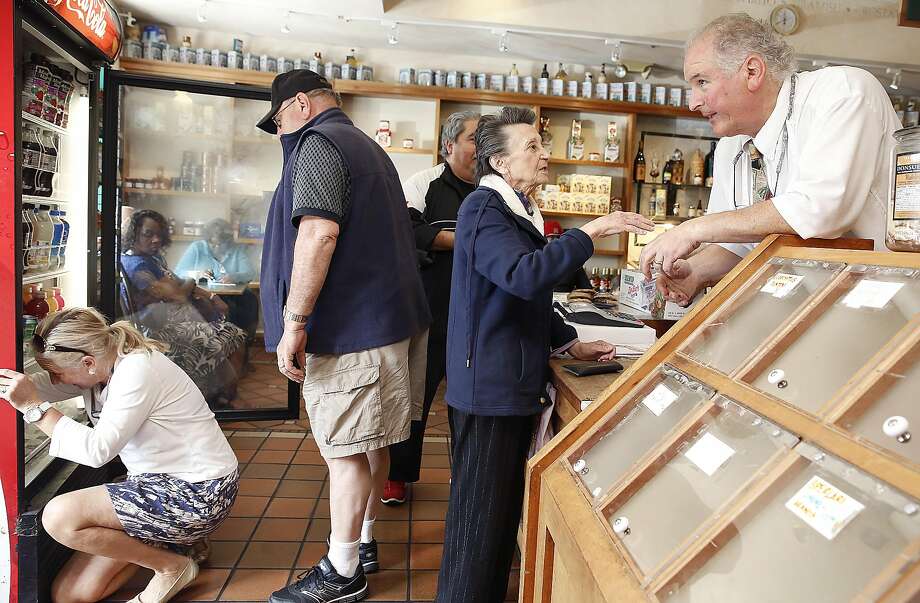
David DeVincenzi (right), son of Genova Deli owner Dominic DeVincenzi, helps customer Mrs. Gasparro, while his wife, Patti, kneels in front of a display case to help Joe Scodella (center), a deli customer since 1956.


'Oakland mourns the looming closure of 90 year old Genova deli'

Ethan Fletcher - San Francisco Chronicle - April 26, 2016

The vibe inside Genova Delicatessen on Monday afternoon had the feel of a living wake, with old friends gathering one last time to celebrate a loved one soon to pass.

In this case, that loved one took the form of overstuffed Italian sandwiches, homemade meat ravioli and softball-size fried artichokes, all of which longtime customers were loading up on one last time before this immensely popular 90-year-old Oakland institution closes for good on Saturday.

While the announcement was officially made late last week, the closure had been threatened — and for many locals, dreaded — since January. That’s when news leaked that owner Dominic DeVincenzi was considering shutting down his family’s flagship Italian deli due in part to a rent dispute with the property owners of Temescal Plaza, where Genova has been located since 1996. (It’s been in Temescal since 1926.)

According to David DeVincenzi, son of Genova Deli owner Dominic DeVincenzi, the family is continuing to work on finding a new location in Oakland.

“We’re working on a couple of places,” DeVincenzi said. Where that might be exactly, however, DeVincenzi was unwilling to divulge.

The Temescal neighborhood’s reputation has soared in recent years as a foodie destination — home to the likes of Pizzaiolo, Burma Superstar and Bakesale Betty — and as a hot spot for house hunters priced out of San Francisco. But the crowd inside Genova, packed with everyone from families to firefighters, felt very old school.


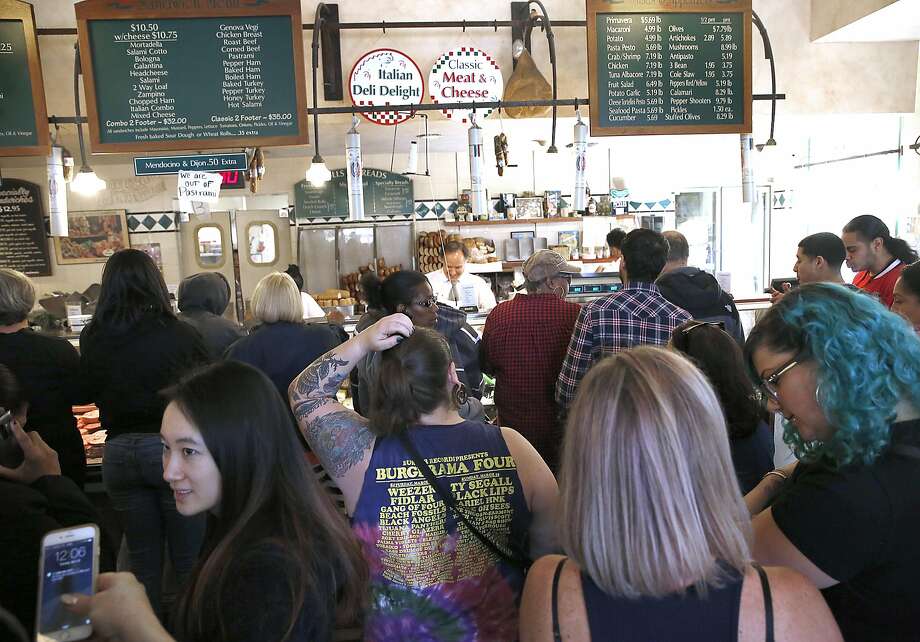
Customers pack Genova Delicatessen for their last orders and to say goodbye before it closes on Saturday after 90 years in Oakland.


Generations of patrons

Terry Barnes, 41, grew up around the corner and said he’d been coming to Genova since he was 4 years old, back in the days when it was located in a tiny Victorian on Telegraph Avenue, and lines would stretch out the door and down the block. He was waiting for his number to be called — which even at 3 in the afternoon was taking upward of an hour — to get one final Italian combo sandwich with extra dry salame and marinated cucumbers. “And a cannoli. Gotta have my cannoli,” Barnes added.

“My family, my mother and my grandmother and all my cousins, we all grew up on this,” he said. “My kids grew up on this, my kids’ friends and their cousins all grew up on this. Every girlfriend I ever had, I would take them here, and now I see all of them coming in with their kids. So it’s sad to see this happen because you would think this place would stick around.”

Genova’s factory and Napa store will remain open, and the property’s landlords have said they’re looking to keep the space as a deli. That seemed small consolation for many customers, nearly all of whom it seemed had been coming for decades and knew each other.

Another customer, Emmy Fearn, ordered three sandwiches — an Italian combo, a coppa and a pastrami. One was for her, one was for her husband getting treatment at a nearby hospital, and the third was for her husband’s doctor, who had promptly put in an order upon hearing the deli was closing. Like many, Fearn expressed shock that Genova was actually closing.

“At first I thought that it was just a play to get some leverage with the landlord,” Fearn said. “But now that it’s really happening, I think it’s horrible. I think it’s a terrible loss to the community.”


‘This is a real loss’

Inside, she ran into an old friend, Marge Gibson Haskell, a former Oakland city councilwoman who had worked with Dominic back in the 1980s to ensure that the deli remained in the neighborhood.

“Back then, there was hardly anything else around here, so you had to really hold on to what you had,” said Haskell while waiting for her Italian combo (light on the peppers). “That was really important for this neighborhood and to a large extent made it possible for everything else that came here afterwards. This is what started it all. … I think not keeping this here is a serious mistake.”

“This city has changed a lot over these last few years, some good, some bad,” said Haskell. “But this. This is a real loss.”

Similar sentiments were echoed by many inside Genova, where there was a palpable sense of unease among longtime locals at the speed with which the rapidly gentrifying city was changing and losing its ties to its past. And while it’s unclear to what extent any rent increase played in the store closing — Genova’s owners have cited the general cost of doing business in Oakland and not wanting to pass that on to the consumer as the main factor — there was plenty of blame to go around that something couldn’t be worked out.

“I understand you want to get fair market value and all that, but you can’t expect people to pay so much, especially in the restaurant industry where the margins are so thin,” said Lex Gopnik, loaded up with a big bag stuffed with Italian provisions. Gopnik said he has been coming to Genova since he moved to the East Bay in 1988. Genova has served as a touchstone for him, his wife and three kids, whether it was grabbing takeout to bring to an A’s game or as an easy dinner for a busy family of five.

“It’s indicative of what’s happening here in the East Bay and the Bay Area in general. I think they would have had to charge like $20 for a sandwich. So it’s sad to see them go, but I respect them for taking a stand and saying, ‘No, I don’t want to do that.’”


‘Things change’

Gopnik is more familiar with the industry than most. He’s been looking for space to open a Montreal-style deli in Oakland, but says news like this makes him reconsider whether he has a future in the city in which rising rents threaten the feasibility of the types of small, independently run businesses that make the place so attractive in the first place.

“I just don’t understand that mentality,” he says. “To me it seems so shortsighted.”

Brian McCabe, an Oakland native waiting for one last turkey sandwich on sourdough, took a more pragmatic view.

“I’ve been coming here for years, and it’s a special place,” he said. “It’s been around for so long, and there’s something comforting about that. But things change.”


Ethan Fletcher is a Bay Area freelance writer. Email: food@sfchronicle.com


*************************


Giovanni Beltramo, who opened a wholesale and
retail wine and spirits business in Menlo Park in
1882, in his vineyard. Photo courtesy Beltramo family.

'Menlo Park: Beltramo's closing after 134 years'

Melanie Wong - Chowhound - May 9, 2016

Whoa. Beltramo's ends 134 years in business this summer.

https://www.beltramos.com/

*************************

It would be worth it to click on the above link just to see the old photos, and there's a short interesting history. When Beltramo's opened, it was the El Camino trail with horses and carriages. The story of Beltramo's, the family originating from Piemonte, is everything our people have been about in northern California. I didn't realize that they were initially in the wine business. It was a truly great store. Why do I miss things most when they're no longer there...

'Beltramo's Wines and Spirits is closing its doors in Menlo Park' (history and old photos)

'Menlo Park's oldest business, Beltramo's, is a family tradition' (history)

.

Sunday, May 3, 2015

Lake County Wine Adventure 2015


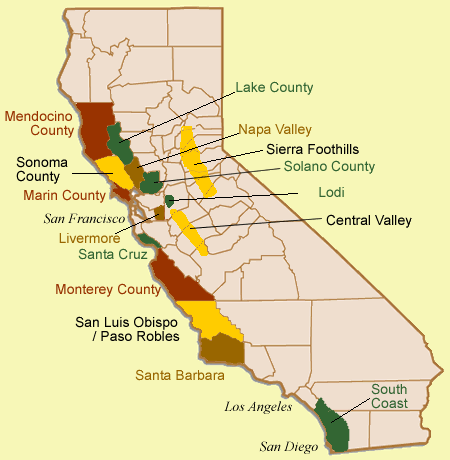
Recently my Mother received a fancy post card ad from LakeCountyWineries.com. It was in regard to their first big event of the year, the Lake County Wine Adventure 2015. It runs for three days (Fri-Sun) from May 15 to 17. The information is on the website. When we think of northern California wine, especially in regards to the history of the Cisalpine people, we think of Napa or Sonoma counties. However, Lake County is part of that history, and is emerging as an important center for the multi-billion dollar California wine industry.

Much of northern California looks so much like the "northern nations." Napa can look like Tuscany, Santa Cruz like the Apennine Mountains, Sonoma like Piemonte, and Lake County like the "Lakes region" of Lombardy. The self-determinist Cisalpine people and early northern California was a perfect match. Whenever I drive down 101 in Sonoma County at night, and I see the old farm properties with perhaps just a few lights on... as if a scene from a century ago with a few oil lamps on against a black surrounding landscape. 


An ancient name

I recall, when I read the book 'History of the Lombards', the old Langobard names. Most often they were typical ancient Germanic names. However, one seems to be more rooted in the Cisalpine culture. According the the website BehindTheName.com, the name "Romilda" is "Italian" and "ancient Germanic." It means "famous battle" from the Germanic elements hrom ("fame") and hild ("battle"). Although once used as both feminine and masculine, naturally it would be feminine today unless altered with an "o" at the end. It's a name which became more well-known due to the Harry Potter character Romilda. The noteworthy nineteenth century opera singer Romilda Pantaleoni was from Udine.

.

Friday, February 13, 2015

Robert Mondavi Tribute


The Official Robert Mondavi Tribute 

Artemis Film YouTube channel


The official tribute to Robert Mondavi


**************************************************

Fittingly, Robert Mondavi wrote the foreward to 'Wine Heritage: The Story of Italian-American Vintners' (2000; Dick Rosano). You can get a used hardcover for a couple of bucks. Wine Heritage is the story of Italian immigrants whose descendants now dominate American wine making.

**************************************************

This is a fantastic reference book. I had no idea what a elaborate web the italians have weaved in the US. Everyone knows about the Mondavi and Gallo families but who would have thought that so many italian winemakers exist in so many states. An added feature of this book is the winery profile section in the back. This is not typical for a history book. You get the history and the acumen of a very knowledgeable wine reviewer who used to write for the Washington Post. 

I was a devoted Rosano reader when he wrote for the Post and really felt the quality of wine writing for that paper declined significantly when he left. This compelling story doesn't include wine reviews but adds an interesting aspect above and beyond the average history book. I am a winemaker and read just about anything I can get my grape stained hands on about the subject. This is a book for everyone interested in the noble grape or just loves drinking the stuff. Take my advice and run, don't walk to the store to get it, then leave it out somewhere on a table and pick it up from time to time while enjoying a nice class of Sangiovese.
 

--Eric Daniel Weinstein, book review

**************************************************

I was going to add one more book that someone told me about. It was about the history of the Napa wine industry, with a focus on the Mondavi family, but when I tried to search it on Amazon.com... there were hundreds of books about all aspects of Napa wine.

When Robert Mondavi first made a name for himself in Napa, many people in the world did not even believe that Napa wines were in the same class as in the South of France or Tuscany. He was a big part of changing that attitude to reality, and eventually to what is today a thirty-five billion a year industry in California.. and still growing.

.

Saturday, August 30, 2014

California Wine: Santa Cruz Mountains

The following article appeared in last Sunday's San Francisco Chronicle in the 'California Wine' special section. Although Napa and Sonoma are the counties that usually are thought of when people think of the local wine industry, Santa Cruz County ranks high as well. Not surprisingly, Cisalpine influence was present from the beginning.


Santa Cruz Mountains blend chill and warmth for Pinot to Cabernet

By Patrick Comiskey - San Francisco Chronicle - August 23, 2014

The San Andreas Fault runs right through the Santa Cruz Mountains appellation, separating parts of the Pacific plate to the west and the North American plate to the east. Between them, geographical chaos ensues. Not surprisingly, it can seem hard to get around by car, with all the winding mountain roads.

There are more than 70 vineyards and wineries in the area, but aside from Ridge and David Bruce, nearly all are tiny and obscured behind mantles of towering redwoods and Douglas firs. The region is largely defined by elevation, and the fog line, so you won’t see many vines planted below 800 feet.

The slopes are so dramatic, and the climatic conditions so variable, that the Santa Cruz Mountains are one of those rare places in the state where it’s possible to farm Pinot Noir, Chardonnay and Cabernet Sauvignon on the same estate.

“We’re definitely on the cool side for Cabernet,” says winemaker Jeffrey Patterson, who grows all three, “and probably a little on the warm side for Pinot Noir.”

Patterson farms and makes wine at Mount Eden Vineyards, one of the mountains’ most historic properties, a hidden enclave that has been continuously farmed for grapes since 1946, when a stockbroker named Martin Ray ventured to the property outside Saratoga, seeking high-elevation slopes upon which to plant Pinot Noir. From his aerie, Ray was one of the era’s most cantankerous but also talented winemakers, a gadfly for everything from proper cellar methods to more transparent varietal labeling.

When you factor in Ray’s tenure, Mount Eden remains the oldest continuous producer of Pinot Noir and Chardonnay in the country.


Total acres: 408,000

Known for: Pinot Noir, Chardonnay, Cabernet Sauvignon.

Defining features: Proximity to the Pacific and its effects result in an appellation with a wildly varying climate. Sedimentary and volcanic soils, depending on which side of the San Andreas Fault you’re on.

Places to visit: Mount Eden Vineyards (tours only by appointment), 22020 Mount Eden Rd., Saratoga. (408) 867-5832. www.mounteden.com.

Ridge Vineyards (weekends, and weekdays by appointment), 17100 Monte Bello Road, Cupertino. (408) 867-3233. www.ridgewine.com.

Thomas Fogarty Winery, 19501 Skyline Drive, Woodside. (650) 851-6777. www.fogartywinery.com.


**************************************************

A few Santa Cruz County wineries, not necessary in the mountains:

http://www.bruzzonevineyards.com/
 

http://www.domenicowinery.com/
 

http://www.lanebbiawinery.com/
 

http://www.larusticanadorsa.com/
 

http://www.muccigrosso.com/
 

http://www.regalewine.com/
 

http://www.traviesowinery.com/
 

http://villadelmontewinery.com/
 

http://www.zayantevineyards.com/
 

http://www.santewinery.com/

http://www.bargetto.com/

**************************************************

Santa Cruz Mountains Winegrowers Association

http://scmwa.com/

.

Monday, August 26, 2013

California Wine 2013

Yesterday, the San Francisco Chronicle published its annual 'California Wine' section. It was subtitled 'Sunny days - Now's the best time in years to enjoy the state's bounty.' In it were numerous articles about regional wines, corresponding foods, fall events, wine tasting, and different grapes. Unfortunately, this group of articles isn't available as a separate section online; but here is the link to their "wine" homepage.

No aspect of regional northern California culture brings out more the long standing local Cisalpine heritage than the wine industry. Not just the older wineries, but newer ones; as well as Cisalpines who came here in later times like Robert Mondavi. One of the wineries featured is the Fanucchi Vineyards in Fresno County.


In one of the articles entitled 'A toast to California wines', it states "California wine is booming as never before. You can see it clearly in the numbers. As we'll relate in the following pages, the state's wine industry remains on a nearly two-decde surge of popularity, accounting for more than $34 billion in sales last year."

In another article from the section entitled 'California wine enjoys a long boom', a sub-section shows the following facts:
*California's wine economy
-$61.5 billion in overall economic impact in the state
-330,000 jobs generated
-$12.3 billion in wages
-$14.7 billion generated in state and federal taxes


I often like to try foreign wines, and it's easy for for locals to forget that we live in very likely the best wine producing region in the world. One interesting development in recent years has been the growth of wine in Sonoma County; although I don't really know if it actually comes close to challenging the famous Napa County wine region in sales. Another interesting aspect of this industry is that there are big growers who don't even have a label of their own, and find it profitable enough in the farming end of the business.

The wine community of Lodi in the Central Valley--a city named after Lodi, Lombardy--had a full page ad to promote their wines, with their website LodiWine.com. If you're near a Chronicle distributor, you could just walk in and purchase the Sunday paper of August 26; especially if you wanted to attend some of the late Summer and Fall events. I find sfgate.com to be hard to search and navigate. Lastly, St. Helena is the heart of the wine industry in North America. It truly is a great place to visit. Our people were predominant in making this industry from it's inception.


.

Friday, March 9, 2012

Winemakers to Watch pay tribute to traditional methods

Letizia Pauletto and Enrico Bertoz, Arbe Garbe Wines

Jon Bonné, Chronicle wine editor - January 15, 2012

In many cases, our Winemakers to Watch for 2012 deserve attention for what they don't do. It comes down to a strong streak of traditionalism, a willingness to innovate by eschewing intrusive winemaking and, instead, working smarter.

That includes the use of old-fashioned wooden fermenters and whole Pinot Noir clusters on the Sonoma coast. It means making Chardonnay by barely touching the barrels, and fermenting with indigenous yeast to highlight Lodi's old-vine Zinfandel. It means minimizing additions in the cellar, and innovating the historical practice of blending white wines.

In doing so, our five choices highlight the best of what California offers.
.

Winemakers: Enrico Bertoz, Letizia Pauletto

For two people in love with America, Letizia Pauletto and Enrico Bertoz began their wine lives somewhat farther afield: the vineyards of Silvio Jermann, in Italy's northern Friuli region, where they were picking grapes to earn cash while attending the university.

They were already high school sweethearts, living just eight minutes apart in two villages north of Trieste. Bertoz's family had an unusual tie to wine: His father was the local tire dealer, an important man to every vintner with a tractor.

The tedium of harvest was not a kind initiation.

"We swore at the time that we were never going to do that again," Pauletto says.

Bertoz's family also had another tie, to the Nonino family, one of Italy's top grappa makers, who taught him about distillation. And he was familiar with the United States; his aunt lived in Woodhaven, N.Y.

So in 1998, at 24, Bertoz packed his bags for Los Angeles. The Noninos connected him to restaurateur Piero Selvaggio, and Bertoz began working in the wine cellar at Valentino, Selvaggio's restaurant. Pauletto followed a month later, to work as an interpreter and translator.

Valentino's cellar was full of rarities, like an 1892 Brunello from Biondi Santi, but Bertoz was drawn to a flourishy bottle sealed in wax: a 1994 Queen of Spades, the Syrah-based debut from Manfred Krankl's Sine Qua Non. Selvaggio let the young man taste it.

"That's when I think I had an epiphany of American viticulture," Bertoz says. "It was overdone, but I'd never had anything like it before."

Soon he was regularly visiting Sine Qua Non in Ventura, where he worked two harvests and paid close attention to Krankl's unconventional but fastidious winemaking.

Enrico and Letizia are natives of the Friuli region (Friùl)
The couple got married and in 2005 moved to Napa Valley, where Bertoz worked harvest at Joseph Phelps. Eventually he was hired as assistant winemaker at Girard, and then at Flora Springs.

But their Friulian roots still called. Recalling his work with Krankl, Bertoz found some Viognier in Russian River Valley and hauled it back to Napa in a decrepit 1972 El Camino. Then he discovered grapes familiar from their childhoods, Pinot Bianco and Malvasia, in Sonoma's fastidiously farmed Saralee's Vineyard. In 2007, he called owner Saralee Kunde and secured enough for a first vintage. Arbe Garbe - it means "bad weeds" in Friulian dialect - was born.

In Friuli, white wine is a way of life - as is blending, in part to fend off the challenges of ripeness in a cold climate. "The whole project was to make a wine that reminded us of Friuli," Pauletto says. "It would have been hard with a Napa Chardonnay."

Ultimately Viognier was replaced by Pinot Grigio and the Friulian grape Ribolla Gialla. But Arbe Garbe primarily showcases Bertoz's talents as a white-wine innovator. That includes his use of concrete fermentation vessels to enhance texture; soaking Pinot Grigio on its skins (a frequent technique in Friuli); and partially dehydrating Malvasia in a cold room to concentrate flavor (a trick learned from Krankl).

Now the couple live in a tiny pink farmhouse amid a Rutherford vineyard, where Pauletto runs the business and looks after their 5-year-old son. They have found their perfect hybrid of Friulian tradition and California bounty.

"The beauty of being able to do all of what we do here," Bertoz says, "to bring it all together, is priceless."


Ages: Both are 37

Wines with dinner: 2010 Abbazia di Novacella Alto Adige Kerner

Quotes: "Neutral barrels don't lie, so it was a matter of seeing what the fruit would say." (Bertoz) "They put it next to the Santa Margherita." (Pauletto, on selling a Pinot Grigio-based wine to restaurants)
From the notebook

2010 Arbe Garbe Russian River Valley White ($28, 14.3% alcohol): Mostly from Pinot Grigio and Malvasia, with some Ribolla Gialla. A few more months in the bottle have added apricot-like flesh to match the deep saline and snap-pea freshness. Complex and almost electric in intensity.

Arbe Garbe Wines website

.

Monday, November 1, 2010

Continuum Estate the latest Mondavi family twist


[Above: Tim Mondavi and daughter Carissa stand in the vineyards of Continuum Estate, which he sees as a way of contributing to the Mondavi family legacy]


Continuum Estate the latest Mondavi family twist

Jon Bonné - San Francisco Chronicle - Oct 31, 2010

Find the exact spot at Continuum Estate, Tim Mondavi's new wine project, and you can glimpse the entirety of the Mondavi family's Napa Valley history.

On a clear day high on Pritchard Hill above the Silverado Trail, it's possible to view the Mondavis' famed Oakville winery across the valley. Next to it lies the To Kalon Vineyard that helped spur their fame. Glancing north past St. Helena, you might spy the Charles Krug property, where the family established its Napa roots in 1943, decades before the infamous brotherly split that propelled Robert Mondavi, Tim's father, to seek his own fortune.

Now Tim is ready to show off his addition to the Mondavi legacy - one built on decades of work in the family business.

"We are betting on the fact that we know a little bit about what we're doing," says Tim, 59.

The Mondavis have been writing their next chapter for nearly six years, and Continuum is a major piece. After selling their winery in 2004 to Constellation Brands, the world's largest wine company, the Mondavis found themselves well compensated but little more than figureheads. As Tim puts it, "Everything went up in smoke."

Suddenly the first family of American wine had no winery to its name. Robert's sons, Tim and Michael, diverged to create their own endeavors.

Michael, always the consummate businessman, created Folio Fine Wine Partners, an effort that includes both his own California wines and a series of imports - a scale model of the diverse Robert Mondavi empire.

Tim, trained at UC Davis, was the winemaker of the two. His was a more constrained notion: to create a single-estate wine that cut none of the winemaking corners he had been forced to trim at his father's winery.

It would provide a continuity of the Mondavi legacy, with his father offering guidance and his kids lending a hand, just as Robert ushered him and Michael into the family business.

Hence the name: Continuum.

"We had not missed a vintage since 1919 as a family, and we wanted to carry that on," Tim says.

That meant something in the Cabernet realm, specifically from To Kalon, long the source of top Mondavi wines.

Soon after the sale, Tim got his sister Marcia Mondavi Borger as a partner, received his dad's blessing and began securing the large oak and concrete fermenters he had wanted at the Mondavi facility, an expense seen by some as an extravagance.

Determined to make wine again in 2005, Tim assumed that he could rely on To Kalon fruit - an informal part of the sale agreement.

Initially, grapes did come from To Kalon. But it became evident its new owners wouldn't make the fruit available to him for much longer. Continuum's 2007 vintage was the last to include a majority of grapes from the site that helped seal the Mondavi reputation.

"The first three vintages are Dad's final ode to To Kalon," says Tim's daughter, Carissa Mondavi.


Splits in family

In the brothers' differing paths, and Tim's choices for Continuum, lie echoes of their sometimes dramatic splits running their family's empire under the careful watch - and active hand - of their father.

"I think the great thing is, this has allowed each of us to focus on something where we get the maximum satisfaction," says Michael Mondavi. "But I think we each excel in our own ways."

Although the brothers briefly served as co-CEOs of the Mondavi winery, Tim's role was clearly in the cellar and vineyards, while Michael's was in the boardroom - a split underscored by Robert's decision to end those co-equal roles in 1994, when the company went public and Robert installed Michael as sole CEO, with Tim as a managing director in charge of winegrowing.

There was also a gap in philosophy. If Michael felt the Mondavi name could bring cachet to lower-priced wines, Tim defended the top end, conducting sometimes costly winemaking trials. His work faced scrutiny in a public company guided by a board accountable to Wall Street.

"What gave focus to Robert Mondavi was my father's singular focus on the wines, from the first day. That clarity dimmed as the company went public," Tim says. "Continuum was born of the continuation of that clarity."


A move east

Though the family's legacy was established on Napa's western valley floor, Tim looked east toward spots like Howell Mountain and Atlas Peak, and their less fertile soils.

Eventually, Pritchard Hill caught his eye. Mondavi knew the area was a tougher prospect than Oakville's richer soils. Yields are scant - Continuum gets just under 2 tons of grapes per acre, perhaps half the valley average - so farming is expensive.

"If you are up here and you don't have that expectation, you're going to be out of business in a hurry," Tim says.

He was taken by a parcel near the Chappellet winery owned by Leighton and Linda Taylor of the Cloud View label. They said no when Tim approached them in 2007, but they changed their minds just in time for Robert, then 94, to see Continuum's eventual home before his death in May 2008. A few months later, on July 16 - the same day, Tim is fond of noting, that his father broke ground on his winery in 1966 - 86 acres of land was in Mondavi hands.

It took a little more than a year to acquire a second parcel from Tim's new next-door neighbor, Dick Martin, a Los Angeles architect who founded the Versant label. The two parcels, ranging from about 1,300 to 1,600 feet elevation, together formed 173 total acres of prime Napa ground - with 63 currently in vineyard, 21 newly planted by the Mondavis, farmed organically but not certified.

It's a site with a track record; the first plantings came in 1991, with more in 1996 and 2004, providing ample fruit for Continuum, which Tim wants to cap at 5,000 cases - meaning a lot of fruit or wine will be sold off or turned into a potential second label.

It is also a precious neighborhood, a sort of Gold Coast for Napa with its high-dollar bottles and closed-door properties. The adjacent Chappellet property is noted for its Pritchard Hill Cabernet. And just as Robert Mondavi welcomed Donn and Molly Chappellet to the valley in the mid '60s, the Chappellets more recently welcomed Tim and his family to their part of Napa.

"We're delighted it is them, because it could have been, who knows, any entity," says Cyril Chappellet of Chappellet Winery, one of Donn and Molly's sons. "It could have been one of the big behemoths that is publicly owned and has no feel for the valley."

Not far away is Bryant Family, one of Napa's most visible 1990s cult projects, and Ovid, one of its most ambitious recent launches. Just downslope lie Dalla Valle's vineyards, source of the lauded Maya blend.

Maya actually serves as a key reference for Continuum; both are based on a mix of Cabernet Sauvignon and a large portion of finicky, aromatic Cabernet Franc, which has found a lukewarm reception in Napa. But Tim was reminded of his experiences at Ornellaia, the Tuscan estate briefly owned by the Mondavi winery, and of his fondness for Bordeaux's Right Bank.

"I personally loved the wines that had the highest percentages of Cabernet Franc. So we reflected that," he says. "It also had to be different from what we'd done before."

Given the neighborhood, and the limited production of just 1,500 cases, Continuum is not cheap. But the 2007 sold out in three weeks at $140 per bottle - about the cost of the Mondavi Reserve Cabernet, and well under the going rate for many neighbors, including Bryant Family, currently about $325.


A different path

Tim, loquacious and displaying the artistic streak he was known for at Robert Mondavi, insists on driving up to the property's high point to show off a favorite parcel of Cabernet Franc. He seems to feel relaxed here, pursuing the sort of winemaking he loves without the financial pressures that caused strife in Oakville.

The forthcoming 2008 vintage marks the Mondavis' true break with To Kalon and the valley floor. It contains 70 percent fruit from Pritchard Hill; that jumps to 90 percent in the 2009.

The wines have been made at outsourced facilities, currently at the Ranch, a St. Helena custom-crush winery. But a home is coming. On a rise near that favored Cab Franc block, a facility designed by architect Howard Backen, built on pillars of rammed earth, is due by 2014.

Though Tim tapped some veteran non-family talent from the Mondavi realm - Greg Brady, Continuum's general manager, was a senior vice president at the Mondavi winery - like most things Mondavi, Continuum is ultimately a family affair. Daughter Carissa does sales and communications. Son Dante has been working as a cellarmaster. Son Carlo, who previously founded a line of skin-care products, is in sales. Daughter Chiara painted the label design, a rendering of a Cabernet Franc vine.

Tim clearly sees that as the path to ensuring that the Mondavi legacy endures beyond his generation.

"I think the fact my family has been in the wine business since 1919 tilts things in our favor. And I think the fact we're serious tilts things in our favor," Tim says.

"It'll be a while before we actually make money, but we know that."


From the notebook

How is Continuum? It is a masterful work in progress - by design, clearly, because the vineyard source has been shifting. But the template remains largely the same: a big dose of Cabernet Sauvignon, a healthy addition of Cabernet Franc and a bit of Petit Verdot for structure and color.

The 2007 Continuum ($140) comes primarily from the To Kalon site, with about 15 percent from the estate. At 60 percent Cabernet Sauvignon, 22 percent Cabernet Franc and 18 percent Petit Verdot, it receives 100 percent new oak.

As a young wine, the wood is evident. It's hefty, lavish and packed with graphite, black olive and peppery Franc aromatics, plus deep kirsch and black cherry - a more overt effort that wears the To Kalon signature of rich black fruit. That To Kalon mark often falls prey to a Napa tendency to take a good thing too far. Continuum takes it just far enough; it's a well-executed powerhouse.

By contrast, the 2008 Continuum ($150; to be released in March) is predominantly an estate effort, with 70 percent of the fruit from Pritchard Hill. The proportion of Cabernet Sauvignon rises to 71 percent and there's a touch of Merlot, with a bit less new oak.

The result is far more perfumed and fresh, with smoked tobacco leaf and dried flower scents and bright huckleberry and cassis flavors. There's a much purer fruit signature, with sinewy tannins and a dark-stone mineral presence that already shows tremendous potential to age. As a sign of the project's future, it shows Tim Mondavi's wisdom in moving across the valley and up to the hills.


--Jon Bonné

Jon Bonné is The Chronicle's wine editor. Find him at jbonne@sfchronicle.com or twitter.com/jbonne.

This article appeared on page J - 1 of the San Francisco Chronicle

.