
Showing posts with label Bologna. Show all posts
Showing posts with label Bologna. Show all posts
Sunday, March 31, 2019
Lamborghini Huracan; Murcielago LP640
Here's Why the Lamborghini Huracan Is Worth $250,000
3,123,279 views
Doug DeMuro
GO READ MY COLUMN HERE: http://autotradr.co/Oversteer
COOL NISSAN S-CARGO SHIRT HERE: https://www.zazzle.com/nissan+tshirts
I drove a Lamborghini Huracan to find out why it's worth $250,000. Here's what I discovered.
Here's Why the Lamborghini Murcielago LP640 Is Worth $215,000
2,899,739 views
Doug DeMuro
GO READ MY COLUMN HERE! http://autotradr.co/Oversteer
The Lamborghini Murcielago LP640 has retained a lot of its original value. So I drove one to find out exactly why this is.
FOLLOW ME!
Facebook - http://www.facebook.com/ddemuro
Twitter - http://www.twitter.com/dougdemuro
Instagram - http://www.instagram.com/dougdemuro
.


Thursday, January 10, 2019
Luigi Galvani - "the pioneer of bioelectromagnetics" - Romagnol ancestry
Luigi Galvani
WikiAudio
************
Luigi Galvani
Luigi Aloisio Galvani:: [9 September 1737 – 4 December 1798) was an Italian physician, physicist, biologist and philosopher, who discovered animal electricity. He is recognized as the pioneer of bioelectromagnetics. In 1780, he discovered that the muscles of dead frogs' legs twitched when struck by an electrical spark. This was one of the first forays into the study of bioelectricity, a field that still studies the electrical patterns and signals from tissues such as the nerves and muscles.
Galvani's wife Lucia Galeazzi Galvani encouraged his independent research, and served as a counselor and guide for his experiments until her death. Due to the conventions of the time she wasn't credited for any scientific work she may have done in the lab. She grew up with science and her father was a prominent member of the Bologna Academy of Science.
 |
| Piazza del Popolo in Cesena, Romagna |
.
Galvani vs. Volta
[Luigi Galvani vs. Alessandro Volta]
[Similar to the dueling wizards "Tesla vs. Edison"]
Volta, a professor of experimental physics in the University of Pavia, was among the first scientists who repeated and checked Galvani’s experiments. At first, he embraced animal electricity. However, he started to doubt that the conductions were caused by a specific electricity intrinsic to animal's legs or other body parts. Volta believed that the contractions depended on the metal cable Galvani used to connect the nerves and muscles in his experiments.
Volta's investigations led shortly to the invention of an early battery. Galvani believed that the animal electricity came from the muscle in its pelvis. Volta, in opposition, reasoned that the animal electricity was a physical phenomenon caused by rubbing frog skin and not a metallic electricity.
Every cell has a cell potential; biological electricity has the same chemical underpinnings as the current between electrochemical cells, and thus can be duplicated outside the body. Volta's intuition was correct. Volta, essentially, objected to Galvani’s conclusions about "animal electric fluid", but the two scientists disagreed respectfully and Volta coined the term "Galvanism" for a direct current of electricity produced by chemical action. Thus, owing to an argument between the two in regard to the source or cause of the electricity, Volta built the first battery in order to specifically disprove his associate's theory. Volta's “pile” became known therefore as a voltaic pile.
After the controversy with Volta, Galvani kept a low profile partly because of his attitude towards the controversy, and partly because his health and spirits had declined, especially after the death of his wife, Lucia, in 1790.
Since Galvani was reluctant to intervene in the controversy with Volta, he trusted his nephew, Giovanni Aldini, to act as the main defender of the theory of animal electricity.
Galvani vs. Volta [36:35 to 53:41]
.
.
Thursday, June 23, 2016
Cooking Lentil Bolognese
Cooking Lentil Bolognese
Wholesome Day
Cooking a Lentil Bolognese from the Deliciously Ella book by Ella Woodward.
.
Thursday, June 4, 2015
Laura Bassi - The first woman in the world to earn a university chair in science

Laura Maria Caterina Bassi (31 October 1711 – 20 February 1778) was the first woman in the world to earn a university chair in a scientific field of studies. She received a doctoral degree from the University of Bologna in May 1732, only the third academic qualification ever bestowed on a woman by a European university, and the first woman to earn a professorship in physics at a university in Europe. She was the first woman to be offered an official teaching position at a university in Europe.
Biography
Born in Bologna into the wealthy family of a lawyer, she was privately educated and tutored for seven years in her teens by Gaetano Tacconi, a University teacher of Biology, Natural History and Medicine. She came to the attention of Cardinal Prospero Lambertini, who encouraged her scientific work.
In 1732, at the age of 21, she was appointed professor of anatomy at the University of Bologna, was elected to the Academy of the Institute for Sciences, and in the following year was given the chair of philosophy. Thus, Bassi became the second woman in Europe to receive a degree from a university, after Elena Cornaro Piscopia in 1678, fifty-four years prior. In her early years, her teaching opportunities were restricted to occasional lectures.
The defence of her degree, awarding ceremony, and first lecture in 1732 were significant as they took place in the Palazzo Pubblico, one of the most important government buildings in Bologna. These events were attended by "not only the university faculty and students, but also by principal political and religious figures of the city - the Papal Legate and Vice-Legate, the Archbishop of Bologna, the Gonfaloniere, the Elders, senators and magistrates. Additionally, 'all the ladies of Bologna and all the nobility'." The Bologna community came to recognize the achievements of Bassi earning and receiving her degree.
As a political figure, the Senate expected Bassi to attend various events. The Carnival Anatomy, a public dissection with tickets open to anyone, was an event she was expected to attend because it was a central feature of public life at the University which attracted the attention of many foreigners and important community members. She began attending this event annually in 1734.
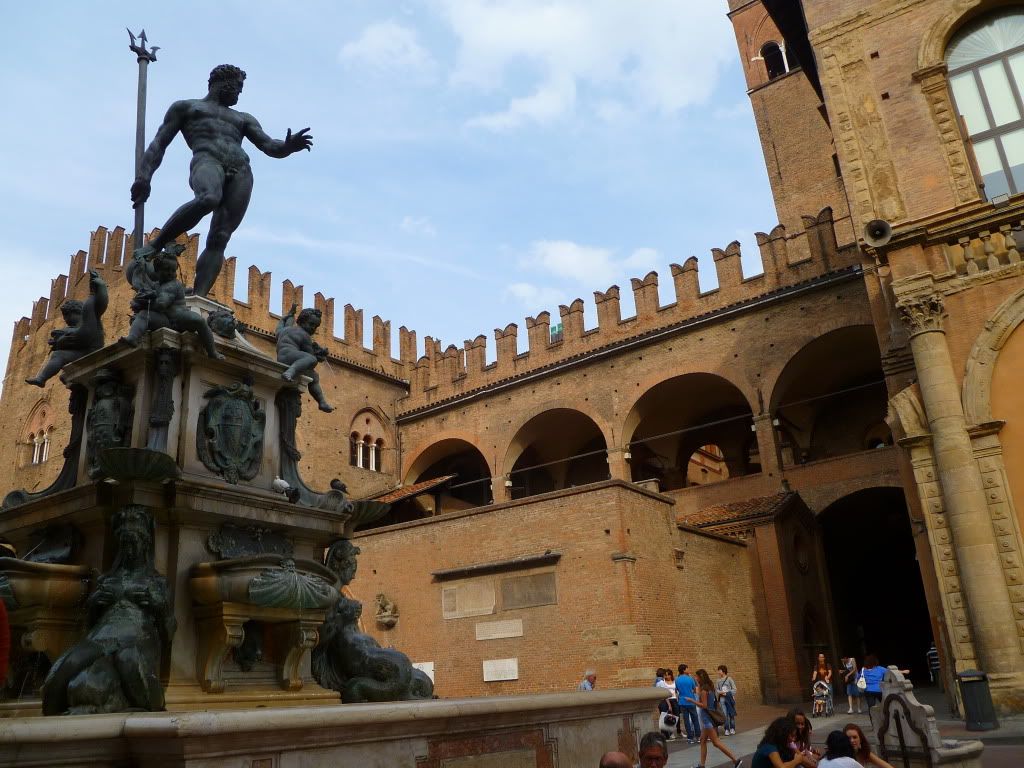 In 1738, she married Giuseppe Veratti, a fellow academic with whom she had twelve children. After this, she was able to lecture from home on a regular basis and successfully petitioned the University for more responsibility and a higher salary to allow her to purchase her own equipment.
One of her principal patrons was Pope Benedict XIV. He supported less censorship of scholarly work, such as happened with Galileo, and he supported women figures in learning, including Agnesi.
She was mainly interested in Newtonian physics and taught courses on the subject for 28 years. She was one of the key figures in introducing Newton's ideas of physics and natural philosophy to Italy. She also carried out experiments of her own in all aspects of physics. In order to teach Newtonian physics and Franklinian electricity, topics that were not focused in the university curriculum, Bassi gave private lessons. In her lifetime, she authored 28 papers, the vast majority of these on physics and hydraulics, though she did not write any books. She published only four of her papers. Although only a limited number of her scientific works were left behind, much of her scientific impact is evident through her many correspondents including Voltaire, Francesco Algarotti, Roger Boscovich, Charles Bonnet, Jean Antoine Nollet, Giambattista Beccaria, Paolo Frisi, Alessandro Volta. Voltaire once wrote to her saying "There is no Bassi in London, and I would be much happier to be added to your Academy of Bologna than that of the English, even though it has produced a Newton." Francesco Algarotti wrote several poems regarding her degree ceremonies.
In 1745, Lambertini (now Pope Benedict XIV) established an elite group of 25 scholars known as the Benedettini ("Benedictines", named after himself.) Bassi pressed hard to be appointed to this group, but there was a mixed reaction from the other academics. Ultimately, Benedict did appoint her, the only woman in the group. From 1746 to 1777 she gave one formal dissertation per year.
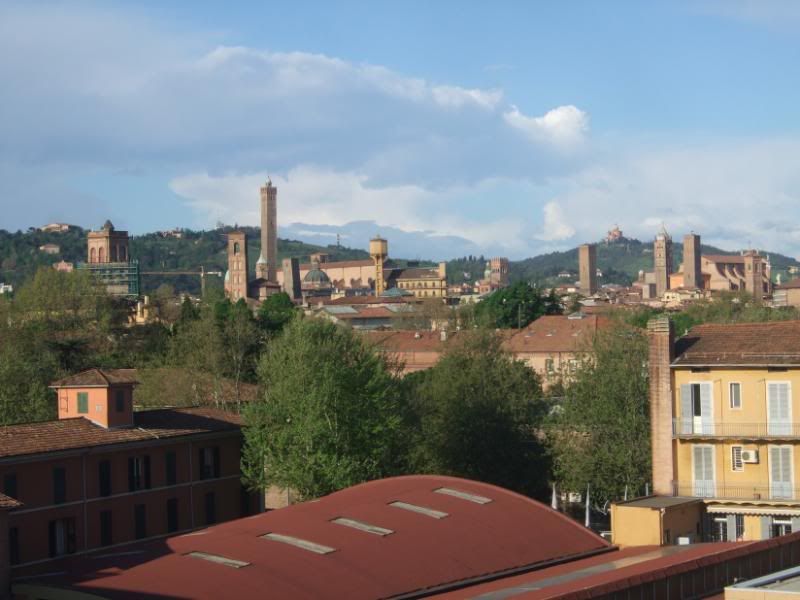 In 1749, she presented a dissertation on the problem of gravity.
During the 1760s, Bassi and her husband worked together on experimental research in electricity. This attracted talent of Abbe Nollet and others to Bologna to study electricity.
In 1776, at the age of 65, she was appointed to the chair in experimental physics by the Bologna Institute of Sciences, with her husband as a teaching assistant. Two years later, she died, having made physics into a lifelong career and broken a huge amount of ground for women in academic circles.
After her death, a marble statue was made in her memory and placed above the Nautical room in the institute.
She was elected member of many literary societies and carried on an extensive correspondence with the most eminent European men of letters. She was well acquainted with classical literature, as well as with that of France and Italy.
.
Monday, May 25, 2015
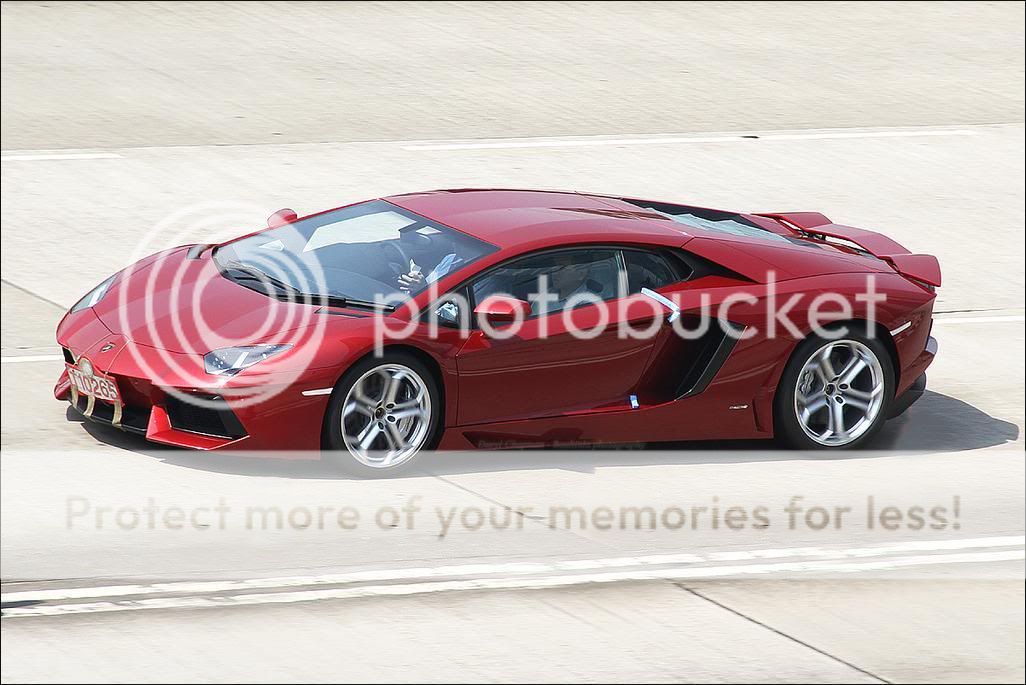
'How Its Made: Dream Cars' - Lamborghini Aventador
The fastest Lamborghini yet with a 12-cylinder engine, and a look at how a new leap in artistic design and manufacturing logistics occurs.
'Lamborghini Factory: The Story' - National Geographic
.
Thursday, July 31, 2014
The $4.5 Million Lamborghini Veneno driving in California
From the video description (TheStradman):
The $4.5 Million Lamborghini Veneno driving in California
Check me out on Facebook: www.facebook.com/StradmanPhotography
See the other Lamborghini Veneno I've filmed here: https://www.youtube.com/watch?v=Fu-X4...
This $4.5 million dollar Lamborghini Veneno was shown at the Quail Motorsports gathering in Monterey, California. Lamborghini is producing just 4 Venenos; This one will be at the Lamborghini factory in Sant'agata Bolognese, Italy. Two of the remaining three will end up in the United States, one in Miami, Florida and one in Long Island, New York. The third one will end up in the Middle East. The two American bound Lamborghini Venenos have been delivered. The Veneno in Long Island, owned by Antoine Dominic (owner of Lamborghini Long Island) is expected to be displayed at the showroom of Lamborghini Long Island. Dominic is a long time Ferrari owner who had an F40, F50, Enzo and an MC12 prior to switching to Lamborghini. The Miami bound Veneno, owned by Kris Singh, is expected to be driven somewhat regularly. Mr. Singh is managing director of Tequesta Investments. Each of the three customer delivered Venenos is finished in a different colored accent, red, white and green. The Veneno in this video is red. This is noticeable on the front splitter and rear diffuser.
It has been announced that Lamborghini will also introduce a roadster version of the Veneno. Lamborghini will produce 9 Lamborghini Veneno Roadsters.

The Lamborghini Veneno was first unveiled at the Genevea Auto Show in April 2013. The Lamborghini Veneno Roadster was first photographed at a special private viewing in Beverly Hills, California in November 2013. It's official debut was on an Italian air craft carrier in Abu Dhabi. It also was shown at CES 2014, Consumer Electronics Show in Las Vegas, Nevada in conjunction with Monster Audio, who fitted a custom $100,000 sound system in the Veneno Roadster.
The Lamborghini Veneno is a development of the Lamborghini Aventadors 6.5L V12 producing 740 HP. Veneno means venom in Spanish. Lamborghini currently produced the Aventador, the Veneno and is set to begin production of the Gallardo replacement, the Lamborghini Huracan. The Lamborghini Huracan LP610-4 is set to be officially unveiled at the Geneva International Auto Show on March 4, 2014.
The Lamborghini Veneno follows in the footsteps of other extremely limited production Lamborghinis. Prior to the Veneno, Lamborghini built 20 race oriented Lamborghini Sesto Elementos, based off the Gallardo. Prior to the Sesto Elemento, Lamborghini produced the Lamborghini Reventon, of which only 20 coupes and 15 roadsters. The Reventon was sold for $2 million USD.
The Lamborghini Veneno is featured in Forza Motorsport 5 and Need for Speed.
.
Sunday, February 16, 2014
$2.2 Million Lamborghini Sesto Elemento Will Blow Your Mind

$2.2 Million Lamborghini Sesto Elemento Will Blow Your Mind
Brian Warner - CelebrityNetWorth.com - February 7, 2014
Are you in the market for a new car? Looking for something a little more sporty than your current whip? Do you have a couple million dollars lying around gathering dust? If you answered yes to these questions, then
 we highly recommend you consider buying the new $2.2 Million Lamborghini Sesto Elemento. The $2.2 million sticker price makes this Lambo the second most expensive car in the world, right behind the $2.4 million Bugatti Veyron Super Sport. If you are still interested, you better act fast because Lamborghini is only producing 20 Sesto Elementos.
So what do you get for $2.2 million? "Sesto Elemento" literally translates to "Sixth Element" which is a reference to the fact that the car is made almost entirely out of an extremely expensive rare carbon fiber and is therefore the lightest Lamborghini ever manufactured. The car weighs 2200 pounds which is less than most sub-contact mini-cars. The name, unfortunately, is not a reference to "The Fifth Element", one of the greatest movies of all time, but the Sesto Elemento is absolutely out of this world. The car is powered by a 570 horsepower V10 engine. Combined with a semi-automatic six speed paddle-shift transmission and nearly 400 lbs of torque, the Lamborghini Sesto Elemento can go from 0-60 in 2.6 seconds and has a top speed of 217 MPH! For comparison, the 2013 Ford Taurus takes 13 seconds to go from 0-60 and has a top speed of 133 MPH.
Let's say you are rich enough to afford the Sesto Elemento and lucky enough to be one of the only 20
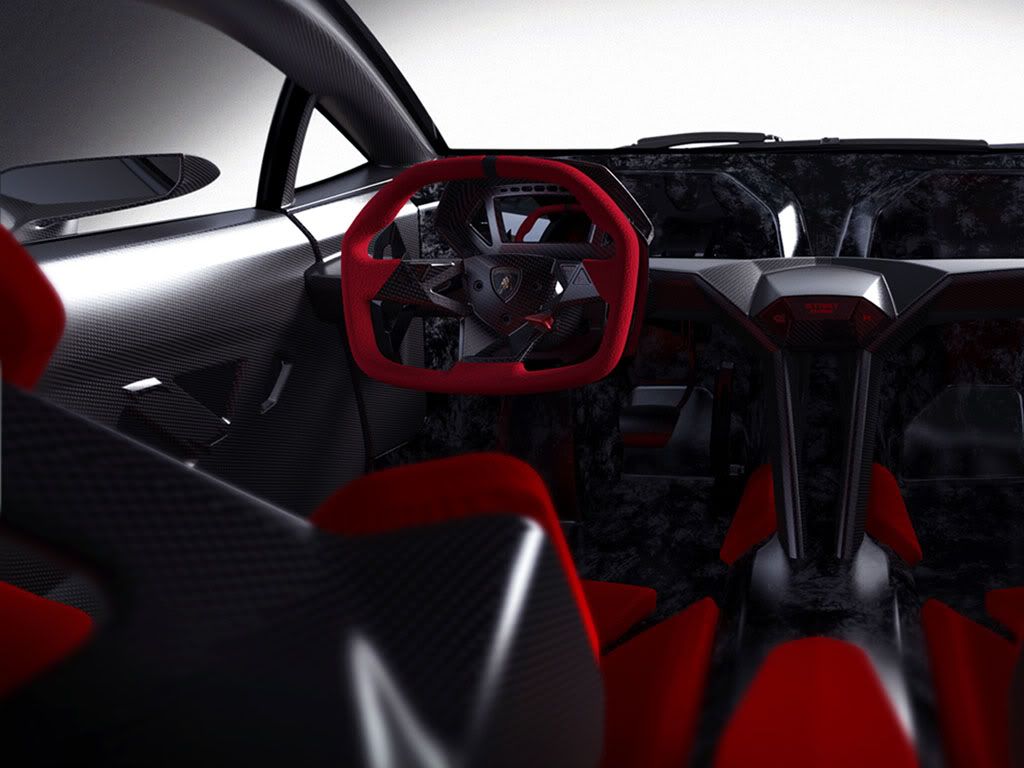
What do you think of the Lamborghini Sesto Elemento? Would you pay $2.2 million for a car you could never drive on the streets?
[More images]
.
Monday, October 29, 2012
Lamborghini Gallardo LP 560-4 Spyder gets a facelift for 2013
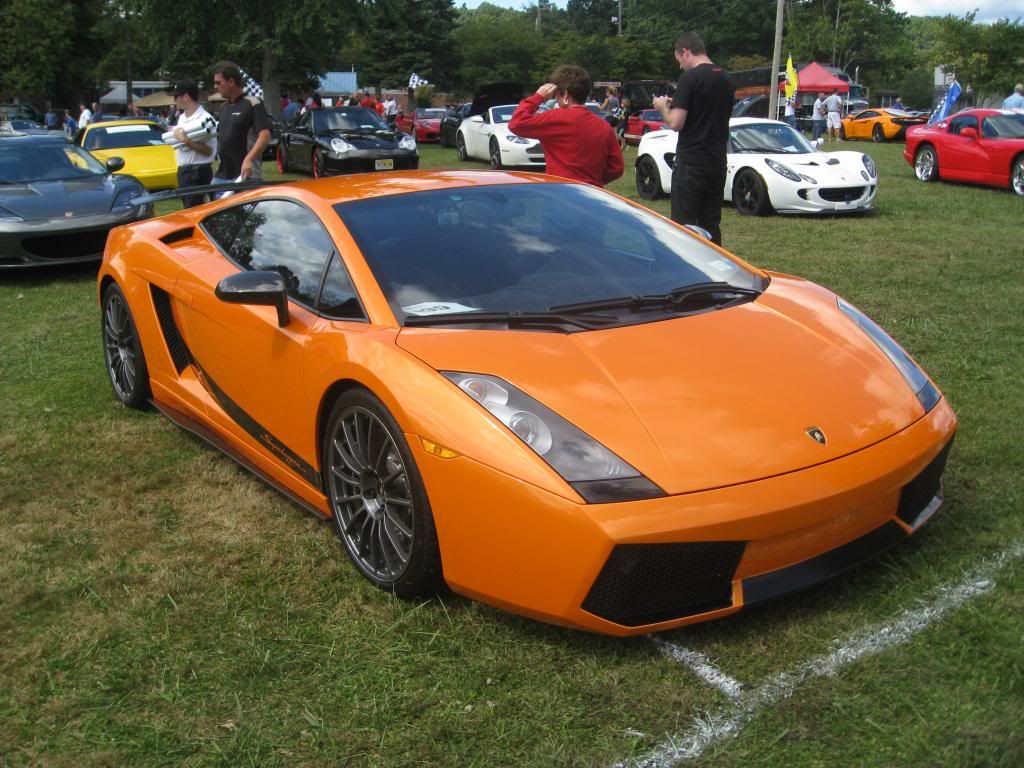
For 2013, changes to the Aventador's little brother are skin deep. What enthusiasts really want is an all-new Gallardo that can take on Ferrari and McLaren.
By Stephen Edelstein - DigitalTrends.com - October 17, 2012
These days, even beautiful people go under the knife for some aesthetic augmentation, and the same is true of beautiful automobiles. Lamborghini’s Gallardo LP 560-4 Spyder has been on sale since 2008, so the company decided it was time for a refresh.
Most of the changes are skin deep, and are shared with the restyled Gallardo LP 560-4 coupe shown at last month’s Paris Motor Show. At the front, the intake is segmented by delicate-looking struts, making the car look like it either has redneck teeth or has been in a crash. There’s also a more pronounced vent in front of the wheels.
Nineteen-inch “Apollo” polished alloy wheels are also new for 2013.
At the back, the angular theme continues with a big piece of trapezoidal mesh, and taillights molded to fit. Overall, it looks like Lamborghini was trying to incorporate cues from its Sesto Elemento concept and Aventador flagship, but they don’t seem to jibe with the rest of the Gallardo’s styling.
Buyers who want a new Gallardo, but don’t like the way this one looks, needn’t fret. The LP 560-4 is actually the middle of three Gallardo trim levels. The less expensive LP 550-2 (available only as a coupe) and high performance LP 570-4 Superleggera and Spyder Performante are unchanged visually.
Aside from the styling changes, the LP 560-4 Spyder remains pretty much the same. Its 5.2-liter V10 still produces 552 horsepower and 398 pound-feet of torque. Power is sent to all four wheels through Lamborghini’s “e-gear” six-speed automated manual transmission.
The LP 550-2 continues with rear-wheel drive and the option of a six-speed manual. The Superleggera and Spyder Performante still have 570 hp, and are now offered with an Edizione Tecnica package that includes a big rear spoiler, carbon ceramic brakes, and exclusive two-tone paint.
With the fresh and fierce Ferrari 458 Italia and McLaren MP4-12C nipping at its heels, what Lamborghini really needs is an all-new Gallardo. Sant Agata has been steadily updating its car over the years, but the basic chassis hasn’t been changed since the original Gallardo debuted in 2003.
Lamborghini isn’t talking about when that new Gallardo will appear, but there are rumors of a 2013 Frankfurt Motor Show debut, with a launch sometime in 2014.
.
Sunday, October 28, 2012
Ludovico di Varthema
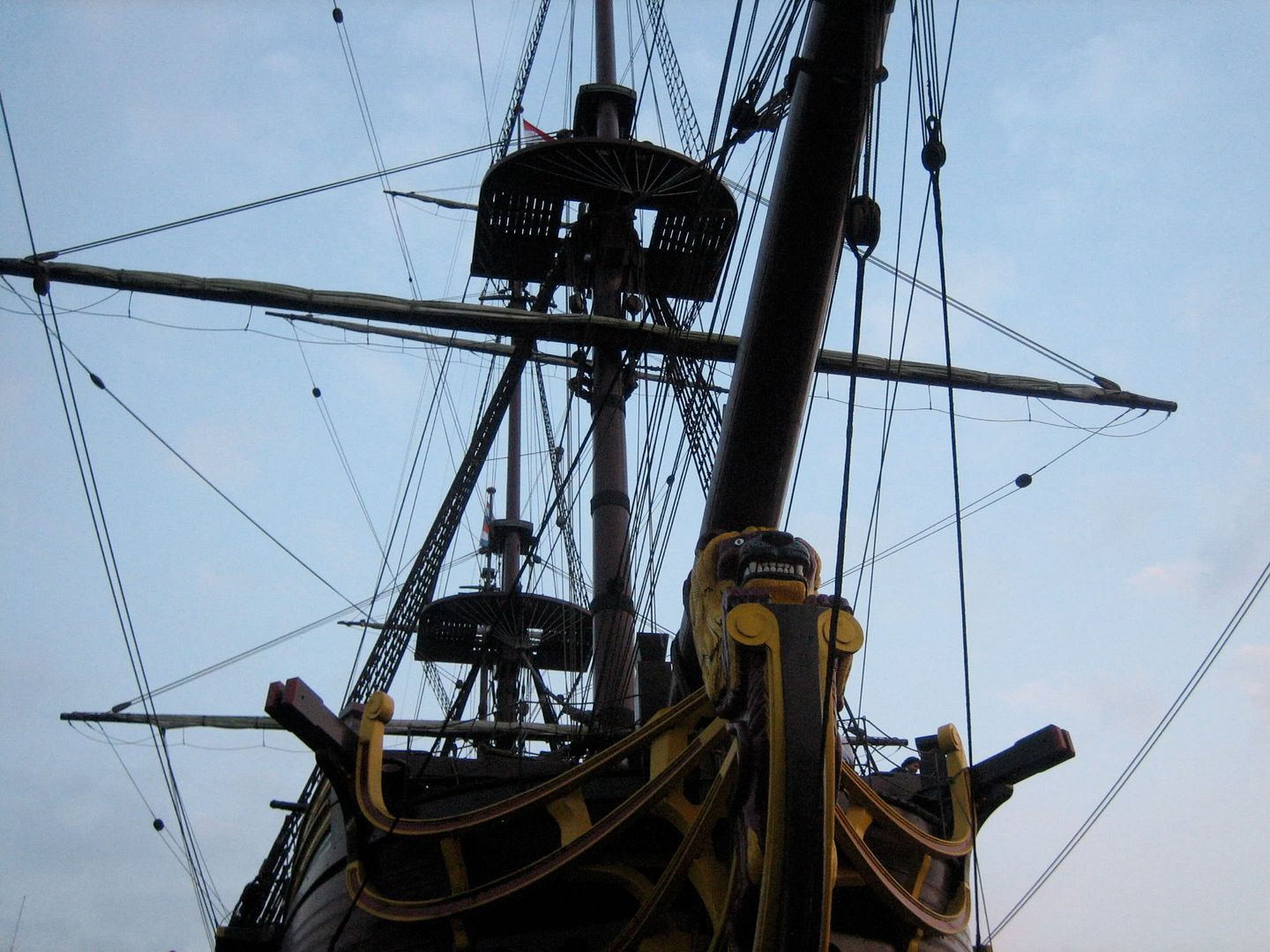
Ludovico di Varthema, also known as Barthema and Vertomannus (c. 1470-1517) was an Italian traveller, diarist and aristocrat known for being the first non-Muslim European to enter Mecca as a pilgrim. Nearly everything that is known about his life comes from his own account of his travels, Itinerario de Ludouico de Varthema Bolognese, published in Rome in 1510.
Biography
First explorations and journey to Mecca
Varthema was born in Bologna.
He was perhaps a soldier before beginning his distant journeys, which he undertook apparently from a passion for adventure, novelty and the fame which (then especially) attended successful exploration.
Varthema left Europe near the end of 1502. Early in 1503, he reached Alexandria and ascended the Nile to Cairo. From Egypt, he sailed to Beirut and thence travelled to Tripoli, Aleppo and Damascus, where he managed to get himself enrolled, under the name of Yunas (Jonah), in the Mamluk garrison. From Damascus, Varthema made the pilgrimage to Mecca and Medina as one of the Mamluk escort of the Hajj caravan (April-June 1503).
He describes the sacred cities of Islam and the chief pilgrim sites and ceremonies with remarkable accuracy, almost all his details being confirmed by later writers.
From the imprisonment to India
With the view of reaching India, he embarked at Jeddah, a city-port around 80 km west to Mecca, and sailed down the Red Sea and through the Straits of Bab-el-Mandeb to Aden, where he was arrested and imprisoned as a Christian spy. By his own account, he gained his liberty after imprisonment both at Aden and Radaa because of a love affair with one on the sultanas of Yemen. Later, he made an extensive tour in south-west Arabia (visiting San‘a’), and took ship at Aden for the Persian Gulf and India. On the way, he alighted at Zeila and Berbera in Somalia. He then in early 1504 traveled to the Indian port of Diu in Gujarat, which later became famous as a Portuguese fortress.
From Diu he sailed up the Gulf of Cambay to Gogo, and thence turning back towards the Persian Gulf made Julfar (just within the entrance of the gulf), Muscat and Ormuz. From Ormuz he seems to have journeyed across Persia to Herat, returning thence south-west to Shiraz, where he entered into partnership with a Persian merchant, who accompanied him during nearly all his travels in South Asia.
After an unsuccessful attempt to reach Samarkand, the two returned to Shiraz, came down to Ormuz, and took ship for India. From the mouth of the Indus, Varthema coasted down the whole west coast of India, touching at Cambay and Chaul: at Goa, whence he made an excursion inland to Bijapur, at Cannanore, from which he again struck into the interior to visit Vijayanagar on the Tungabhadra; and at Calicut (c. 1505), where he stopped to describe the society, manners and customs of Malabar, as well as the topography and trade of the city, the court and government of its sovereign (the Zamorin), its justice, religion, navigation and military organization.
Nowhere do Varthema's accuracy and observing power show themselves more strikingly. Passing on by the backwater of Kochi, and calling at Kollam (formerly known as Quilon), he rounded Cape Comorin, and passed over to Ceylon (c. 1506). Though his stay here was brief (probably at Colombo), he learnt a good deal about the island, from which be sailed to Pulicat, slightly north of Madras, then subject to Vijayanagar. Thence he crossed over to Tenasserim in the Malay Peninsula, to Bengal, perhaps near Chittagong, at the head of the bay of Bengal, and to Pegu, in the company of his Persian friend and of two Chinese Christians whom he met at Bengal.
Sumatra, Borneo, Java and Nagapattinam
After some successful trading with the king of Pegu, Varthema and his party sailed on to Malacca, crossed over to Pider (or Pedir) in Sumatra, and thence proceeded to Banda Aceh and Monoch (one of the Moluccas), the farthest eastward points reached by the Italian traveller.
From the Moluccas, he returned westward, touched at Borneo, and there chartered a vessel for Java, the largest of islands, as his Christian companions reckoned it. Varthema notes the use of compass and chart by the native captain on the transit from Borneo to Java, and preserves a curious, more than half-mythical, reference to supposed Far Southern lands.
From Java, he crossed over to Malacca, where Varthema and his Persian ally parted from the Chinese Christians. From Malacca, he returned to the Coromandel coast, and from Nagapattinam in Coromandel he voyaged back, round Cape Comorin, to Kulam and Calicut.
Return to Europe
Varthema was now anxious to resume Christianity and return to Europe. After some time he succeeded in deserting to the Portuguese garrison at Cannanore (early in 1506). He fought for the Portuguese in various engagements, and was knighted by the viceroy Francisco de Almeida, the navigator Tristão da Cunha being his sponsor.
For a year and a half, Varthema acted as Portuguese factor at Kochi, and on the 6th of December 1507 he finally left India for Europe by the Cape route. Sailing from Cannanore, Varthema apparently struck Africa about Malindi, and (probably) coasting by Mombasa and Kilwa arrived at Mozambique, where he noticed the Portuguese fortress then building, and described with his usual accuracy the Negroes of the mainland.
Beyond the Cape of Good Hope he encountered furious storms, but arrived safely in Lisbon after sighting St Helena and Ascension Island and touching at the Azores. In Portugal the king received him cordially, kept him some days at court to learn about India, and confirmed the knighthood conferred by d'Almeida.
Legacy
His narrative finally brings him to Rome, where he takes leave of the reader. As Richard Francis Burton said in his book The Pilgrimage to Al-Medinah and Meccah:
For correctness of observation and readiness of wit Varthema stands in the foremost rank of the old Oriental travellers. In Arabia and in the Indian archipelago east of Java he is (for Europe and Christendom) a real discoverer. Even where passing over ground traversed by earlier European explorers, his keen intelligence frequently adds valuable original notes on peoples, manners, customs, laws, religions, products, trade, methods of war.
Varthema's work (Itinerario de Ludouico de Varthema Bolognese) was first published in Italian at Rome in 1510. Other Italian editions appeared at Rome, 1517, at Venice, 1518, 1535, 1563, 1589, &c., at Milan, 1519, 1523, 1525. Latin translations appeared at Milan, 1511 (by Archangelus Madrignanus); and at Nuremberg, 1610.
Notes
Thomas Suárez (1999). Early mapping of Southeast Asia. Tuttle Publishing. p. 79. ISBN 978-962-593-470-9. Retrieved 18 October 2011.
References
This article incorporates text from a publication now in the public domain: Chisholm, Hugh, ed. (1911). Encyclopædia Britannica (11th ed.). Cambridge University Press.
Itinerary of Ludovico Di Varthema of Bologna from 1502 to 1508. By Lodovico de Varthema, John Winter Jones, Richard Carnac Temple. Contributor Lodovico de Varthema, John Winter Jones, Richard Carnac Temple. Published by Asian Educational Services, 1997. ISBN 81-206-1269-8, ISBN 978-81-206-1269-3. 121 pages.
The Travels of Ludovico di Varthema in Egypt, Syria, Arabia Deserta and Arabia Felix, in Persia, India, and Ethiopia, A.D. 1503 to 1508. By Lodovico de Varthema; Edited by George Percy Badger; Translated by John Winter Jones. Originally published by the Hakluyt Society, London in 1863. Reprint by Adamant Media Corporation, 2001. ISBN 1-4021-9553-2, ISBN 978-1-4021-9553-2.
The travels of Ludovico di Varthema in Egypt, Syria, Arabia Deserta and Arabia Felix, in Persia, India, and Ethiopia, A.D. 1503 to 1508 (1863). Various formats
.
Subscribe to:
Posts (Atom)