Showing posts with label Islam. Show all posts

Friday, May 26, 2017

Europe under siege - Now just a way of life


What Pisses Me Off About The Ariana Grande Terrorist Attack

Stefan Monlyneux


*************************


In 2016, an estimated 360,000 Libyans have crossed into Italy; the vast majority have continued on into northern Europe... and this has not ceased. This is only a part of the subject which had led to several years now of, for example, news report after news report of pregnant women and very young infants being raped by Muslim migrants in Germany.... and a lot of other occurrences and crime statistics which would be difficult for most to believe. There has been very little backlash to this, as one might expect if this had occurred in the United States. This is the condition because certain powerful forces have engineered it to be this way.

Islam is the traditional enemy of our people. This is entirely different than war between nations, a short-term enemy, or soft cultural conflict. When a Moroccan runs up some steps and starts pounding a two-thousand years old nude female Roman statue with a hammer... I believe that it's a culture war... and really, a race war. Our time is up.... they want the world now... and why not? They have a couple of billion people now, and are entirely untroubled by guilt or shame. When thousands of Sub-Saharan Africans are shot and thrown into pits, that's a race war! Black Africans are not, however, the prize. WE.. are the prize! They're coming for us, not anyone else.

Muslims have shown virtually no interest in migrating into Latin America or the Far East; only marginally so in Sub-Saharan Africa and India... mostly due to close proximity. They want Europe, the United States, Canada, and Australia. There's much more to the means and methods of this planned takeover; but I think they're simply coming out... they want the world! The current demographics of the United States produces a few tough guys, but in reality the Muslims are tougher... in the mind. The success of Islam is all the vicarious satisfaction that they require. Many of their leaders in Europe speak very openly about taking over in numbers as well as culturally.


A Sub-Saharan migrant is led off for execution in Libya 2012
 .

.


.

Friday, February 12, 2016

The Battle Of Lepanto


TRIBUTE TO THE BATTLE OF LEPANTO

The Ghost of Lepanto

Events Leading to Battle of Lepanto, 7 October 1571

The battle of Lepanto was one of the turning points in the struggle of Europeans to preserve their Freedom and Humanity from the talons of the encroaching Turk Ottoman Empire.

In 1571, the European Union forged by Don Juan of Austria, saved Italy and the Western Mediterranean from unimaginable destruction and human suffering.

Lepanto ranks with the Battle of Vienna (1683) as one of the two major watersheds that saved the European way of Life and protected the tender bud of Renaissance.

Since the 16th century, October 7 has been celebrated as a Feast Day in the Catholic Tradition.


Battle of Lepanto

The Battle of Lepanto was a naval engagement taking place on 7 October 1571 in which a fleet of the Holy League, a coalition of European Catholic maritime states arranged by Pope Pius V and led by Spanish admiral Don Juan of Austria, decisively defeated the fleet of the Ottoman Empire on the northern edge of the Gulf of Corinth, off western Greece. The Ottoman forces sailing westwards from their naval station in Lepanto (Turkish: İnebahtı; Greek: Ναύπακτος or Έπαχτος Naupaktos or Épahtos) met the Holy League forces, which came from Messina, Sicily, where they had previously gathered.

The victory of the Holy League prevented the Ottoman Empire from expanding further along the European side of the Mediterranean. Lepanto was the last major naval battle in the Mediterranean fought entirely between galleys and has been assigned great symbolic and historical importance by several historians.


Battle of Lepanto, 1571: What REALLY Happened

Real Crusades History

http://www.realcrusadeshistory.com 

.

Sunday, August 3, 2014

'Minneapolis Renames Columbus Day As Indigenous People's Day' - Part 2


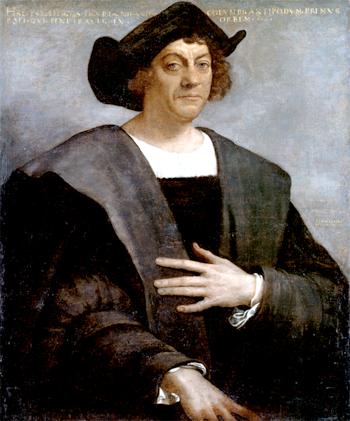
After viewing many Columbus Day protests, I found it amusing that elsewhere like New York City, the parade goes on seemingly without a hitch. About a minute into this video, you will see the name of an organization called the Columbus Citizens Foundation. The foundation is in full support of anything Columbus, but is based on "Italian heritage" not specifically "Columbus." In other words, from what I can gather, they avoid any "intellectualizing" about all the facets of the Columbus issue (just as the opposing side does), and merely hangs their hat on the "Italian-American" heritage concept.

There's an old saying that I think is mostly true: "Every nation was born in blood." Christopher Columbus was one of many explorers in the New World, starting with Leif Erikson. Erikson was even praised by President Obama... a sometimes-anti-imperialist. Erikson certainly would have set up a permanent colony along the eastern Canadian coast, but it was too far out of the way at that time. Beyond Leif Erikson, all of these early explorers did their part to set up the Americas for colonization.

Columbus, to some "the new Hitler"
Personally, I believe that it was actually "Spanish, Portuguese, English, French, and Dutch Imperialism," not "EUROPEAN IMPERIALISM." Again, how many nations participated? There were perhaps fifty European nations in 1492! If someone doesn't like something that China did, they can't blame Tibet, even if they may look similar! If something bad happens in Algeria, you can't blame Pakistan, even if they may look similar! Even the overwhelming colonization of later times right up to the 60s, was the United Kingdom, France, Portugal, and Holland; with the rest being small and sporadic. Even Soviet expansion into Asia, early on, was in huge very depopulated regions.

There's nothing that "the West" did in the New World that Islam did not equal or surpass for 1,500 years on three continents. What did the Berbers, an Indo-European-like people in northwest Africa, endure that the Amerindians didn't endure? They were either driven from their lands or forced to convert to a foreign religion and culture. Islamic colonization took down many peoples and cultures in this manner; just as the Catholic Church did... but some people prefer to ignore all of the facts and just blame Columbus. There was imperialism and slavery all over the world long before Columbus.

Sometimes Mexico is included among the victims of American Imperialism. Really? That's really selling Mexico short, as it adhered to all of the same imperialism, slave trading, and religious supremacy. There aren't too many people in Mexico who don't speak a European language, have a European name, or practice a European-centered religion. Somehow it just seems a little late in the game for Mexican Columbus protesters to suddenly "become Indians" after all the bloody conflicts with Amerindians in Mexico and the Southwest over the centuries. Those protesters want us to "Go back to Europe," when some of their own ancestors were among the very worst Spanish imperialists, slave owners, and Catholic supremacists.

The Cherokees put hundreds of thousands of innocent Africans in chains
If someone wants to blame Columbus, then they must have the entire plate! They cannot ignore the establishment, expansion, and mere existence of the United States, the role of the Vatican in American colonialism (Latin America), the fact that 19 out of 20 captured Africans were sold into slavery in Latin America, and much more. How about the African Chieftains and their henchmen who captured people by literally the millions to sell along the West African coast? Maybe it's time to find out who really owned all those slave ships? Also, there were many Arab slavers working along the West African coast. How many people know that the Cherokee Nation was up to their necks in the slave trade? I think that the Columbus protesters, of all races, should be careful of what they ask for.

Where does it end? There have been hundreds of cases such as demands that a grammar school change its name from "George Washington," or for Andrew Jackson's name to be removed from the $20 bill... because they were "racists." Well, are we going to rehash all the history of all other nations too... the vast majority of which were "born in blood"..? What about the Cherokee Nation... are they going to give an apology for their large role in the slave trade? I don't think there were any Latvians, Hungarians, or Greeks bidding on captured Africans... but there sure were Cherokees bidding. Why is that such a secret? How many people realize that many Irish people were sold into slavery in the Americas? 


.

Sunday, February 3, 2013

The Tuscan Orient Expeditions: Part 1


[Introducing new contributor 'Etrusco-Umbro-Gallic'. He was trained in the sciences, and well versed in matters concerning the anthropology and history of N/C Italy and the Western World. Any questions or comments can be directed to him, or if you would like to e-mail him directly, please send them to camunlynx@live.com, and they will be forwarded to him. Thank you.]


 The Tuscan Orient Expeditions: Part 1


      Tuscany. No question about it, this is the Western Man’s Kosovo. It’s a microcosm of Western civilization, even surpassing Rome in importance. It is not just the home of Puccini, Of Michelangelo, of Dante, of Galileo, of Bocelli, but also of lesser known characters whose impact on the course of Western civilization was just as monumental. How about Francesco Redi,  Amerigo Vespucci,  Eugenio Barsanti and Felice Matteucci? Tuscany’s influence on the Western World is as immense as it is historically consistent in nearly all important aspects. This essay and its sequels will explore in a chronological manner the encounters, of both individual Tuscans and Tuscany as a whole, with the Orient, that is to say, the Islamic Mediterranean world. Such encounters are a recurring theme in Western history and, in many ways, define who we are as Westerners, as people of European descent.

      After the fall of Rome, Saracen armies went on to conquer the entire Eastern and Southern Mediterranean thanks to their zeal and unorthodox tactics as well as the plagues, political corruption and economic crises which hit the region hard. It was a dark time for Europe, indeed, with Saracen fleets prowling the sea unchecked, plundering settlements (even Rome was almost sacked once), stealing slaves and treasures in the process. According to the insightful, yet obscure and underappreciated historian Henri Pirenne, it were these events, rather than the invasions of the so-called barbarians (who were actually Romanized within century and never really constituted a majority in the former Roman empire anyway) that precipitated the so-called Dark Age.

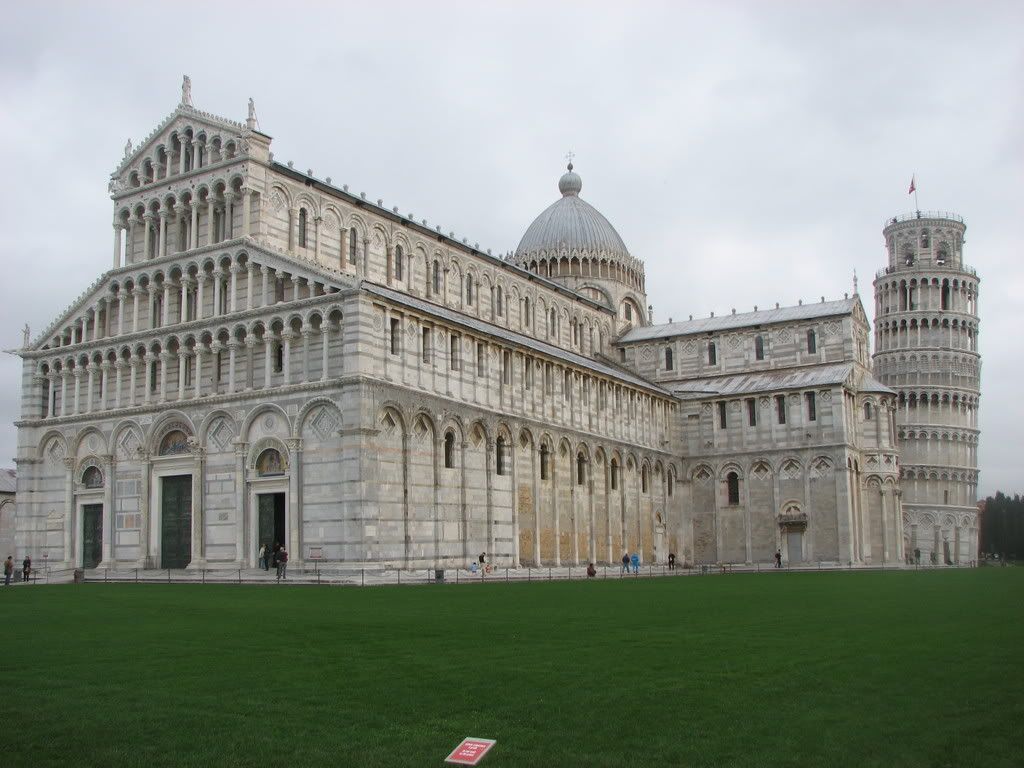
      Situated on the southern shores of Europe, it was only natural that, one way or another, Tuscany, too, was in the crosshairs. The Tuscan coast was repeatedly harassed by the Saracen pirate-marines and long stretches of it were abandoned. Such was not the case with Pisa, a former Roman municipium which was, by that time, the most important city in Tuscany. In the 9th century, spurred by constant Saracen attacks, Pisa began to expand its fleet. In 828, Pisan ships already made headway by taking the fight to the enemy, by assaulting the North African coast. In 871 they took part in the defense of Salerno, then a Lombard-rule principality in Southern Italy, from the Saracens.

      In 970, the Pisans were operating in Calabria, probably making war on its Muslim occupants in order to secure safe passage for their merchants through the Strait of Messina that separated Muslim Sicily from the peninsula. Pisan annals also record a Muslims naval attack on Pisa in 1004 and a Pisan victory over the Muslims off Reggio in 1005. The Muslim assault of 1004  may have originated in Spain, or it may have been a typical pirate raid. The Pisan attack of 1005 was likely a response, and perhaps a serious attempt to put an end to Muslim piracy, for which Reggio served as a perennial base. This victory greatly expanded Pisa’s maritime power.

      In 1011, an expedition from what is today southern Spain went on to wreck havoc on the Tyrrhenian coastline, clipping the Pisa region. The fleet most likely came from the Umayyad port of Denia, then ruled by the emir Mujahid, or Musetto, as he was called in Tuscan. By the time Musetto took power, the Emirate of Denia had established a foothold in the Balearic islands. An ambitious emir, Musetto decided to island-hop to Sardinia. As with most Saracen expeditions, it began with intensive coastal raids and the establishment of tactically important beachheads. The then-acting Pope John VIII was alarmed since Sardinia lay directly across the Tyrrhenian Sea from Rome and urged the Christian lay powers to expel the Saracens from the island. It was no trivial concern since Rome was nearly sacked by Saracen pirates in 846 (St. Peter’s basilica did end up being looted, though, since it was outside the walls). Well, Pisa and Genoa answered that call. Not many details are known, but what is known is that Musetto’s large scale attempt to invade the island in 1015 was thwarted.

      The persistent Musetto returned to Sardinia in 1016, however, intending a more thorough conquest of the island. After defeating the local Judges, as the local Sard rulers were called, Musetto immediately set about building cities using the local Sards for slave labour, which was the economic backbone of early and later Islamic caliphates. It was also that year that Musetto’s pirate-marines raided the Lunigiana, a picturesque area separating Tuscany and Liguria, in an in-your-face fashion. Once again, the wasp had awakened the boar. Once again, the pope called for an expedition and the combined Pisan-Genoese fleet scored---this time for good. With the Saracens expelled from the island, Pisans and Genoese began to bicker over the newly conquered territory, hence initiating their bitter rivalry which was to last unabated for two more centuries.

      Pisa’s fortunes continued to multiply and between 1030 and 1035, Pisa went on to defeat several rival towns in Sicily, conquer Carthage and sack Bona (now Annaba) in North Africa. In 1051–1052 the admiral Jacopo Ciurini conquered Corsica. During this time that Pisa’s rivalry with Genoa continued to grow.

      In 1085 Pope Gregory VII had granted suzerainty over the Balearic islands, off the coast of Iberia, to Pisa. Twenty-eight years later, in the fall of 1113 a Pisan fleet making an expedition to Majorca was put off course by a storm and ended up near the coast of Catalonia, which they initially mistook for the Balearics. The Pisans met with the Count of Barcelona and signed a treaty. Among other things, the treaty called for a military cooperation, the chief goal of which was to suppress Islamic piracy plaguing their coasts and to free Christian slaves. In 1113 Pisa and the Pope Paschal II set up, together with the count of Barcelona and other contingents from Provence and Italy (Genoese excluded), a war to free the Balearic Islands, which were at that time held by the Moors.  To make a long story short, the expedition was a success and the ruler of Majorca was brought in chains to Tuscany. Even though the Almoravids, the dynasty ruling much of Iberia at the time, soon reconquered the island, this was not really a major setback for Pisa. The booty taken helped the Pisans in their magnificent building program, especially its cathedral.  More importantly, Pisa still maintained its dominant military and mercantile role in the Western Mediterranean.

      It was also during this time that Pisa helped pave the way for the First Crusade, a long overdue, yet small-scale effort to roll back some of the conquests and stem the tide of Islamic attacks against the then Christian world. In 1087, prompted by a wave of pirate attacks on the Tyrrhenian coast orchestrated by the Zirid ruler of Mahdia (a city in present day Tunisia), the Pisans, augmented by the Genoese and Amalfitan forces, captured and plundered the city. The Muslim fleet stationed in the harbor was burned during the fighting. As in the Balearic campaign, Mahdia was soon reconquered but, once more, the ever resourceful Pisans used the money gained from plunder to further beautify and enrich their city. By burning the Muslim fleet, the Pisans helped secure the European Western Mediterranean coast which was to become a launchpad for Levant-bound Crusader fleets only 10 years later. Now, the Pisans did not simply initiate the First Crusade. In fact, they actually helped ensure its victorious outcome: the capture of Jerusalem in 1099. Some 120 Pisan ships took part in the First Crusade, no small number for the time.

      Through all of this, several important developments had taken place. By about 1100, thanks largely to the courage of Tuscan marines (along with those from Liguria, Provence, Catalonia, of course), Western Europeans were no longer afraid to go for a boat ride on their own beach. Well, the threat of Saracen piracy was still very much looming and would continue to do so until the French conquest of the Barbary Coast in the 1800s, but the bully’s nose was badly bloodied, so to speak. The pirates were no longer seen as an insurmountable obstacle, but as an inevitable inconvenience. Big difference. Additionally, since Pisa and the other maritime republics/states like Genoa had the ability to field powerful armed fleets, they could now escort their merchant navies safely to the bazaars of the Orient, and to, once again, obtain those now exotic goods, once commodities during the Roman era. Naturally, this wealth trickled down from the Arno Valley to the rest of the European continent over the decades and centuries that followed. 

      The Levant and North Africa were bustling hubs of intellectual activity in the Classical Era. To be fair, yes, a fair amount of that knowledge was preserved under the new Saracen overlords, but few original contributions were made by them to the major disciplines: medicine, philosophy, alchemy, and mathematics. Nevertheless, the region was a treasure trove of old manuscripts pertaining to those subjects and, by way of trade, Pisan travelers and merchants could now bring them back to the Occident. Perhaps the best such example is Leonardo Fibonacci, a forerunner of his fellow Tuscan namesake Leonardo Da Vinci, really. Leonardo was born in 1170 to a Pisan merchant operating in Algiers. As a young man, he was an avid traveler and had perused many mathematical manuscripts during that time. He was exposed to “Arabic” numerals (in quotes because they were actually developed in India and had reached the Mediterranean by way of conquest) and introduced the system to the Western world. He also developed a new notation of expressing fractions, similar to that used today. His name is most strongly associated with what is known as the Fibonacci sequence, where the first two numbers are 0 and 1, and each subsequent number is the sum of the previous two: 0, 1, 1, 2, 3, etc. Leonardo arrived at this sequence from a hypothetical situation involving an immortal rabbit population undergoing reproduction. Interestingly, the ratio of two sequential numbers of the Fibonacci sequence approaches the famous Golden Ratio the further along in the sequence that pair of numbers occurs. The Golden Ratio is commonly associated with art and, yes, has inspired many artists during the renaissance, but it has many applications in the financial market world, too. 


      Fibonacci may have been unique in his intellectual ability, but certainly not in his travels and not in bringing back the most valuable of all commodities, long denied but finally available to all Western Europeans thanks to the courage of his Tuscan countrymen: knowledge. And this knowledge was not destined to simply gather dust and be deemed blasphemic. In Europe, it was elaborated and expanded upon, criticized and corrected. Consequently, new knowledge was generated and systematically recorded and circulated, and this exponential process repeated itself many times over. Nothing like this has ever happened in all of mankind’s history and on no other continent. And here I am writing this on my laptop computer, itself a fruit of this process, much like the nearly microscopic components of its circuitry.

.

Sunday, October 28, 2012

Ludovico di Varthema

Ludovico di Varthema

Ludovico di Varthema, also known as Barthema and Vertomannus (c. 1470-1517) was an Italian traveller, diarist and aristocrat known for being the first non-Muslim European to enter Mecca as a pilgrim. Nearly everything that is known about his life comes from his own account of his travels, Itinerario de Ludouico de Varthema Bolognese, published in Rome in 1510.


Biography


First explorations and journey to Mecca

Varthema was born in Bologna.

He was perhaps a soldier before beginning his distant journeys, which he undertook apparently from a passion for adventure, novelty and the fame which (then especially) attended successful exploration.

Varthema left Europe near the end of 1502. Early in 1503, he reached Alexandria and ascended the Nile to Cairo. From Egypt, he sailed to Beirut and thence travelled to Tripoli, Aleppo and Damascus, where he managed to get himself enrolled, under the name of Yunas (Jonah), in the Mamluk garrison. From Damascus, Varthema made the pilgrimage to Mecca and Medina as one of the Mamluk escort of the Hajj caravan (April-June 1503).

He describes the sacred cities of Islam and the chief pilgrim sites and ceremonies with remarkable accuracy, almost all his details being confirmed by later writers.


From the imprisonment to India

With the view of reaching India, he embarked at Jeddah, a city-port around 80 km west to Mecca, and sailed down the Red Sea and through the Straits of Bab-el-Mandeb to Aden, where he was arrested and imprisoned as a Christian spy. By his own account, he gained his liberty after imprisonment both at Aden and Radaa because of a love affair with one on the sultanas of Yemen. Later, he made an extensive tour in south-west Arabia (visiting San‘a’), and took ship at Aden for the Persian Gulf and India. On the way, he alighted at Zeila and Berbera in Somalia. He then in early 1504 traveled to the Indian port of Diu in Gujarat, which later became famous as a Portuguese fortress.

From Diu he sailed up the Gulf of Cambay to Gogo, and thence turning back towards the Persian Gulf made Julfar (just within the entrance of the gulf), Muscat and Ormuz. From Ormuz he seems to have journeyed across Persia to Herat, returning thence south-west to Shiraz, where he entered into partnership with a Persian merchant, who accompanied him during nearly all his travels in South Asia.
 

After an unsuccessful attempt to reach Samarkand, the two returned to Shiraz, came down to Ormuz, and took ship for India. From the mouth of the Indus, Varthema coasted down the whole west coast of India, touching at Cambay and Chaul: at Goa, whence he made an excursion inland to Bijapur, at Cannanore, from which he again struck into the interior to visit Vijayanagar on the Tungabhadra; and at Calicut (c. 1505), where he stopped to describe the society, manners and customs of Malabar, as well as the topography and trade of the city, the court and government of its sovereign (the Zamorin), its justice, religion, navigation and military organization. 

Nowhere do Varthema's accuracy and observing power show themselves more strikingly. Passing on by the backwater of Kochi, and calling at Kollam (formerly known as Quilon), he rounded Cape Comorin, and passed over to Ceylon (c. 1506). Though his stay here was brief (probably at Colombo), he learnt a good deal about the island, from which be sailed to Pulicat, slightly north of Madras, then subject to Vijayanagar. Thence he crossed over to Tenasserim in the Malay Peninsula, to Bengal, perhaps near Chittagong, at the head of the bay of Bengal, and to Pegu, in the company of his Persian friend and of two Chinese Christians whom he met at Bengal.


Sumatra, Borneo, Java and Nagapattinam

After some successful trading with the king of Pegu, Varthema and his party sailed on to Malacca, crossed over to Pider (or Pedir) in Sumatra, and thence proceeded to Banda Aceh and Monoch (one of the Moluccas), the farthest eastward points reached by the Italian traveller.

From the Moluccas, he returned westward, touched at Borneo, and there chartered a vessel for Java, the largest of islands, as his Christian companions reckoned it. Varthema notes the use of compass and chart by the native captain on the transit from Borneo to Java, and preserves a curious, more than half-mythical, reference to supposed Far Southern lands.

From Java, he crossed over to Malacca, where Varthema and his Persian ally parted from the Chinese Christians. From Malacca, he returned to the Coromandel coast, and from Nagapattinam in Coromandel he voyaged back, round Cape Comorin, to Kulam and Calicut.


Return to Europe

Varthema was now anxious to resume Christianity and return to Europe. After some time he succeeded in deserting to the Portuguese garrison at Cannanore (early in 1506). He fought for the Portuguese in various engagements, and was knighted by the viceroy Francisco de Almeida, the navigator Tristão da Cunha being his sponsor.

For a year and a half, Varthema acted as Portuguese factor at Kochi, and on the 6th of December 1507 he finally left India for Europe by the Cape route. Sailing from Cannanore, Varthema apparently struck Africa about Malindi, and (probably) coasting by Mombasa and Kilwa arrived at Mozambique, where he noticed the Portuguese fortress then building, and described with his usual accuracy the Negroes of the mainland.

Beyond the Cape of Good Hope he encountered furious storms, but arrived safely in Lisbon after sighting St Helena and Ascension Island and touching at the Azores. In Portugal the king received him cordially, kept him some days at court to learn about India, and confirmed the knighthood conferred by d'Almeida.


Legacy


His narrative finally brings him to Rome, where he takes leave of the reader. As Richard Francis Burton said in his book The Pilgrimage to Al-Medinah and Meccah:

For correctness of observation and readiness of wit Varthema stands in the foremost rank of the old Oriental travellers. In Arabia and in the Indian archipelago east of Java he is (for Europe and Christendom) a real discoverer. Even where passing over ground traversed by earlier European explorers, his keen intelligence frequently adds valuable original notes on peoples, manners, customs, laws, religions, products, trade, methods of war.

Varthema's work (Itinerario de Ludouico de Varthema Bolognese) was first published in Italian at Rome in 1510. Other Italian editions appeared at Rome, 1517, at Venice, 1518, 1535, 1563, 1589, &c., at Milan, 1519, 1523, 1525. Latin translations appeared at Milan, 1511 (by Archangelus Madrignanus); and at Nuremberg, 1610.


Notes


Thomas Suárez (1999). Early mapping of Southeast Asia. Tuttle Publishing. p. 79. ISBN 978-962-593-470-9. Retrieved 18 October 2011.

References
This article incorporates text from a publication now in the public domain: Chisholm, Hugh, ed. (1911). Encyclopædia Britannica (11th ed.). Cambridge University Press.

Itinerary of Ludovico Di Varthema of Bologna from 1502 to 1508. By Lodovico de Varthema, John Winter Jones, Richard Carnac Temple. Contributor Lodovico de Varthema, John Winter Jones, Richard Carnac Temple. Published by Asian Educational Services, 1997. ISBN 81-206-1269-8, ISBN 978-81-206-1269-3. 121 pages.

The Travels of Ludovico di Varthema in Egypt, Syria, Arabia Deserta and Arabia Felix, in Persia, India, and Ethiopia, A.D. 1503 to 1508. By Lodovico de Varthema; Edited by George Percy Badger; Translated by John Winter Jones. Originally published by the Hakluyt Society, London in 1863. Reprint by Adamant Media Corporation, 2001. ISBN 1-4021-9553-2, ISBN 978-1-4021-9553-2.

The travels of Ludovico di Varthema in Egypt, Syria, Arabia Deserta and Arabia Felix, in Persia, India, and Ethiopia, A.D. 1503 to 1508 (1863). Various formats


.