Thursday, February 14, 2013
The Gauls and Langobards drank mead: Part 2
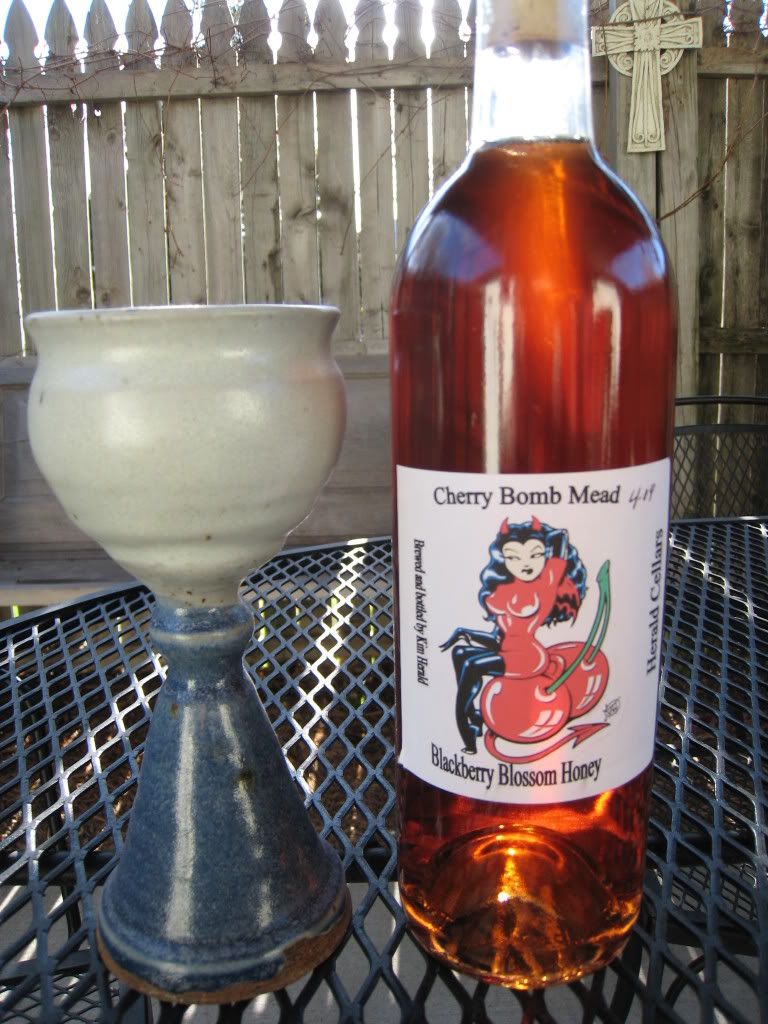
The website GotMead.com was designed to help promote the market and culture of mead... also known as "honey wine." Just searching around on the subject, I can see some of the local meaderies from the SF Chronicle article above are mentioned often. If you're close to a Bev and More, then finding a good honey wine shouldn't be any problem.
The Viking heritage website ScandinavianAggression.com features a section about Viking-themed meads and meaderies. The following is from that main page...
Viking Brews and Booze
When it comes to drinking, no one can top the Vikings. No one. Which is why it is only appropriate that some modern day beverages are dedicated solely to Viking glory. In one of my more samaritan moods, I decided to compile a list of those drinks here, which is broken down into the following categories:
Barley Brews
Honey Brews
Distilled Options
Fruity Booze
Viking Booze Burial Mound
And a few short notes on the listings:
—First, everything is broken down by type of beverage as indicated in the submenu above (and also in the menu on the right-hand column), then alphabetically by title of brewery/distillery/etc. as indicated.
—Second, most of these beverages are, by some sick joke of the norns, rather hard to find, and I have not yet succeeded at apprehending most of them myself at the local booze stores. Fy fan!
—Third, I hope to keep this list as complete as possible. If you know of any appropriate beverages not listed here, please let me know! My email is on the FÅQ page. I can also be reached on facebook and myspace.
Happy browsing and drinking. Skål!
Heraldry
*************************
If the Greeks and Romans drank wine, then the Vikings and Gauls drank mead. I don't necessarily know that there is any type of really interesting documentary on the history of mead, as it was just part of the scenery.. part of those cultures. It was sold and traded on the market just like any other product. Even before Roman expansion, the Gauls had a system of roads that linked various tribal settlements, and even to Celtic nations outside of Gaul. They traded with Celtiberians, Vikings, Etruscans, Germans, Bohemians, and probably Greeks, Slavs, and Phoenicians. I can imagine that a good northern mead, perhaps produced by ancient Belgian-Celts, would have been a good sell at a trade-market along the southern coast of Gaul. Actually, mead can be produced even more readily in warmer climates.
Somewhere about 1300 A.D., the Italian voyager Marco Polo (1254-1324) returned from the Spice Islands with sugar cane. This inexpensive source of sugar became dominant and honey went underground - well almost. The tradition of mead was sustained in the monasteries of Europe. The need for ceremonial candles made of beeswax necessitated managed bee colonies and surplus honey was used to make mead, which was enjoyed by the monks in their more secular moments. [from medovina.com]
.
Wednesday, February 13, 2013
The Gauls and Langobards drank mead: Part 1
Mead (pron.: /ˈmiːd/; archaic and dialectal "medd"; from Old English "meodu" Ukrainian: Мед or Russian: Медовуха or Lithuanian: Midus), also called honey wine, is an alcoholic beverage that is produced by brewing a solution of honey and water. It may also be produced by brewing a solution of water and honey with grain mash, which is strained after fermentation. Depending on local traditions and specific recipes, it may be flavored with spices, fruit, or hops (which produce a bitter, beer-like flavor). The alcoholic content of mead may range from about 8% ABV to 18%. It may be still, carbonated or naturally sparkling, and it may be dry, semi-sweet or sweet.
Mead is known from many sources of ancient history throughout Europe, Africa and Asia, although archaeological evidence of it is ambiguous. Its origins are lost in prehistory. "It can be regarded as the ancestor of all fermented drinks," Maguelonne Toussaint-Samat has speculated, "antedating the cultivation of the soil."
Claude Lévi-Strauss makes a case for the invention of mead as a marker of the passage "from nature to culture." Mead has played an important role in the beliefs and mythology of some peoples. One such example is the Mead of Poetry, a mead of Norse mythology crafted from the blood of the wise being Kvasir which turns the drinker into a poet or scholar.
History
The earliest archaeological evidence for the production of mead dates to around 2000 BC. Pottery vessels containing a mixture of mead, rice and other fruits along with organic compounds of fermentation were found in Northern China. In Europe, it is first attested in residual samples found in the characteristic ceramics of the Bell Beaker Culture (ca. 2800 – 1800 BC).
The earliest surviving description of mead is in the hymns of the Rigveda, one of the sacred books of the historical Vedic religion and (later) Hinduism dated around 1700–1100 BC. During the Golden Age of Ancient Greece, mead was said to be the preferred drink. Aristotle (384–322 BC) discussed mead in his Meteorologica and elsewhere, while Pliny the Elder (AD 23–79) called mead militites in his Naturalis Historia and differentiated wine sweetened with honey or "honey-wine" from mead. The Spanish-Roman naturalist Columella gave a recipe for mead in De re rustica, about AD 60.
Take rainwater kept for several years, and mix a sextarius of this water with a pound of honey. For a weaker mead, mix a sextarius of water with nine ounces of honey. The whole is exposed to the sun for 40 days, and then left on a shelf near the fire. If you have no rain water, then boil spring water.
Etymology
The English word mead derives from the Old English meodu, from Proto-Germanic meduz, from Proto-Indo-European *médʰu (honey, fermented honey drink). Slavic med / miod , which means both "honey" and "mead", (Czech, Slovak, Serbian, Bosnian, Bulgarian, Croatian: med vs. medovina, Polish 'miód' pronounce [mju:t] - honey, mead) and Baltic medus "honey"/midus "mead", also derive from the same Proto-Indo-European root (cf. Welsh medd, Old Irish mid and Sanskrit madhu).
Festivals
Mazer Cup International Mead Competition and Tasting Event -- Sponsored by Gotmead.com, this event is held every year in March in Boulder, Colorado. It is the largest mead event in the world, with over 300 home meads and over 200 commercial meads in competition. There is a Friday tasting event with the gold medal winning commercial meads from the previous year, plus feature meads from around the world.
Real Ale Festival in Chicago, Illinois, includes categories for mead as well as cider and perry.
Woodbridge International Mead Festival - Sponsored by local residents, it claims to be the only mead festival east of the Mississippi. While few types of mead are available, all are home-brewed and go through a rigorous judging process.
In literature
Mead is featured in many Germanic myths and folktales such as Beowulf, as well as in other popular works that draw on these myths. Notable examples include books by Tolkien, George R. R. Martin and Neil Gaiman. It is often featured in books using a historical Germanic setting and in writings about the Viking era. Mead is mentioned many times in Neil Gaiman's 2001 novel, American Gods; it is referred to as the drink of the gods. Also, in the books of the Inheritance Cycle by Christopher Paolini, it is often drunk by Eragon Shadeslayer at feasts in honor of him. Mead is also referenced in The Kingkiller Chronicle novel series by Patrick Rothfuss. The protagonist Kvothe is known to drink metheglin. The non-existent "Greysdale Mead" is also drunk, although it is merely water.
[See above link for distribution, varieties, and local variants; see also Mead of poetry]
.
Sunday, March 7, 2010
Seeking a taste of the past? Get thee to a meadery
Evan Peter Ehrlich - Special to The Chronicle - February 19, 2004
Honey, created from flowers by bees, is a wonder unto itself. Add a little water and yeast, and you have mead.
Mead is enjoying a renaissance. It is suitable for almost any occasion and is becoming increasingly available. For many, it offers something new to please the palate.
Mead is made from honey, diluted with water and fermented by yeast and has an alcohol content similar to wine. Still or sparkling, dry and light or sweet and full-bodied, mead is usually clear and light-golden in color. "Traditional mead is a treasure capturing the essence of honey and the nectar of blossoms," says Charlie Papazian, president and founder of the Association of Brewers.
Dry mead is lively and crisp up front with a pleasing acidity. Hints of apricot, pear and other soft fruits characterize the mid-palate and are followed by soft honey tones that override a long finish, which can include caramel and nuts, especially in older meads.
With semisweet and sweet meads, the front palate has a noticeable fruitiness (sweetness) with the honey becoming apparent early and carrying through to the finish as it commingles with fruits and sometimes raisins.
Mead can exhibit as much flavor and aromatic complexity as wine, but generally absent are those earthy tones and tannins. Bottle-conditioned meads, such as the one Arcata's Heidrun Meadery offers, will also express some yeast flavors with age.
There are many variations of mead incorporating various fruits and spices. Some mead makers refer to mead made with fruit as honey wine. However, in contemporary usage, "honey wine" and "mead" are generally interchangeable.
Mead's first appearance in history is a mystery, but most agree it's the oldest fermented beverage. Plato described mead before the time of Christ. A 12,000-year-old cave painting in Belgium depicts honey gathering and an amorous liaison between a man and a woman -- a reference to mead's professed aphrodisiacal qualities. Cave paintings in South Africa indicate that the drinking of this beverage was part of an ancient culture there at least 25,000 years ago.
Mead making arose independently in a wide range of ancient cultures. Over time, mead's popularity lost ground to the advent of beer making, and a greater availability of wine, especially through expanded trade to northern climates that were inhospitable to viticulture.
Today, there are at least five commercial mead makers in California and several dozen in the United States, with others in countries around the world. Compared to winemakers, mead makers are few and far between. But the beverage is available if you are willing to look.
The oldest commercial mead producer in California is Bargetto Winery. In addition to its wines from the Santa Cruz Mountains, Bargetto makes Chaucer's Mead, a blend of sage, alfalfa and orange blossom honeys. Bargetto includes a spice packet with every bottle to encourage people to try this mead mulled, meaning warmed with spices. According to Mel Nunez, a former Bargetto tasting room employee who now heads the beverage department at Cost Plus in Santa Cruz, "Heated Chaucer's Mead with spices sold well at the tasting room in Monterey, especially when the cool summer weather hit."
In Sunnyvale, Rabbit's Foot Meadery has produced excellent mead for more than 14 years. The proprietor, Michael Faul, makes each of his meads from a single variety of honey.
Rabbit's Foot currently offers four meads. Its sweet mead is made with jasmine honey and the dry mead is made with raspberry honey, or honey from raspberry blossoms. Rabbit's Foot also makes Private Reserve Pear Mead, which is made from honey, pears and spices. Each of these is 12 percent to 13 percent alcohol by volume.
The Rabbit's Foot Grand Reserve Mead of Poetry is distinctive because of its method of aging and its strength. It weighs in at 17 percent alcohol by volume and is the result of years of work. It is aged in oak barrels using the Solera system, the method used to produce fine sherry. This involves bottling from the oldest of a multitiered collection of barrels and blending in younger mead to top off the barrels.
"It allows one to achieve a sameness in product year after year," says Faul.
This aperitif stands apart from other meads because of its strength, full body and round, nutty flavor. Production is only 100 cases; advance ordering may be the only way to get some.
Another avant-garde mead producer is Gordon Hull of Heidrun Meadery. Named after the mythological goat that provided mead for Odin and other battle- glorious Norsemen in Valhalla, Heidrun is California's only maker of sparkling meads. Chuck Hayward, the wine buyer at The Jug Shop in San Francisco, refers to mead as an eclectic product of which not many people are aware. Still, "When Gordon pours a tasting, it sells well," says Hayward.
Heidrun offers five varieties in each of two styles. It produces bottle- fermented meads, which are described as a lightly effervescent, rustic tradition. Heidrun also makes meads in the methode champenoise style, similar to that of fine sparkling wine and Champagne. The mead undergoes a second fermentation in the bottle, the bottle is turned on a regular basis so that the yeast sediment settles into its neck, and then the yeast is expelled, or disgorged, before the bottle is capped.
Mountain Meadows Meadery, a family-owned micro-winery in Westwood (Lassen County), produces several traditional meads and a wide variety of fruit and spiced meads including persimmon, cranberry, apricot and agave.
Enat Winery in Oakland makes a beverage called Tej -- a traditional Ethiopian drink made from honey and gesho, which Enat describes as a unique form of hops.
A glass of mead reflects on the history and mythology that surrounds this beverage. When you enjoy mead you are engaging in an activity that has spanned many cultures since before written history.
MORE ABOUT MEAD
Local retail prices for meads range between $8 and $16 for a 750 ml bottle. Rabbit's Foot Grand Reserve Mead of Poetry sells for $35 for a 350 ml bottle.
With the exception of Rabbit's Foot Grand Reserve, all the meads described come in 750 ml bottles with cork closures. The sparkling meads from Heidrun Meadery are packaged in 750 ml Champagne-style bottles with cork and wire closures.
Sparkling meads should be served as you would Champagne or sparkling wine, chilled to 40°F and served in a flute. Temperatures for serving other meads is a matter of taste; as a general rule, dry meads are served chilled and sweet meads can be chilled or served at room temperature.
SELECTED BAY AREA RETAILERS
Beverages & More, various locations
Cost Plus, various locations
Whole Foods, various locations
Rainbow Grocery, 1745 Folsom St., San Francisco; (415) 863-0620
The Jug Shop, 1567 Pacific Ave., San Francisco; (415) 885-2922
Berkeley Bowl Marketplace, 2020 Oregon St., Berkeley; (510) 843-6929
Ethiopian-style mead is also poured at Sawa Eritrean Restaurant #2 ($20/bottle and $5/glass), 1655 Divisadero St., San Francisco; (415) 441-4182
CONTACT THE MEADERIES
Bargetto Winery -- (800) 422-7438; www.bargetto.com
Enat Winery -- (800) 554-0346; www.enatwinery.com
Heidrun Meadery -- (877) 434-3786 www.heidrunmeadery.com
Mountain Meadows Mead -- (530) 256-3233; www.ountainmeadowsmead.com
Rabbit's Foot Meadery -- (877) 632-3379; www.rabbitsfootmeadery.com
Further reading about mead making
"The Joy of Home Brewing, Third Edition" (HarperResource; 432 pages; $14. 95) by Charles Papazian, America's home brew guru. This is the quintessential guide for home brewers of beer and features an informative section on mead making that includes recipes.
-- E.P.E.
Evan Peter Ehrlich is a writer and mead maker in Elkhorn. He writes a column on home brewing for Northwest Brewing News and works as a news editor in Monterey.
.
Friday, May 8, 2009
Wotan, Mead, the Irminsul, the Nine Noble Virtues, and other pagan loose ends
For example, the 'Nine Noble Virtues'.
Odinic Rite:
1. Courage
2. Truth
3. Honour
4. Fidelity
5. Discipline
6. Hospitality
7. Self Reliance
8. Industriousness
9. Perseverance
Asatru Folk Assembly:
1. Strength is better than weakness
2. Courage is better than cowardice
3. Joy is better than guilt
4. Honour is better than dishonour
5. Freedom is better than slavery
6. Kinship is better than alienation
7. Realism is better than dogmatism
8. Vigor is better than lifelessness
9. Ancestry is better than universalism
The "Viking Era" was a very small part of the history of what we call Odinism or Asatru. Actually, our ancient Lombard ancestors called what was basically the chief god, usually called Odin, the god of war, as Wotan or Wodan. They were Wotanists or Wodanists, and I mean this was many, many centuries ago. The 'Nine Noble Virtues' was taken from one of the Norse Sagas I believe, and the first one, from the Odinic Rite, was the original.
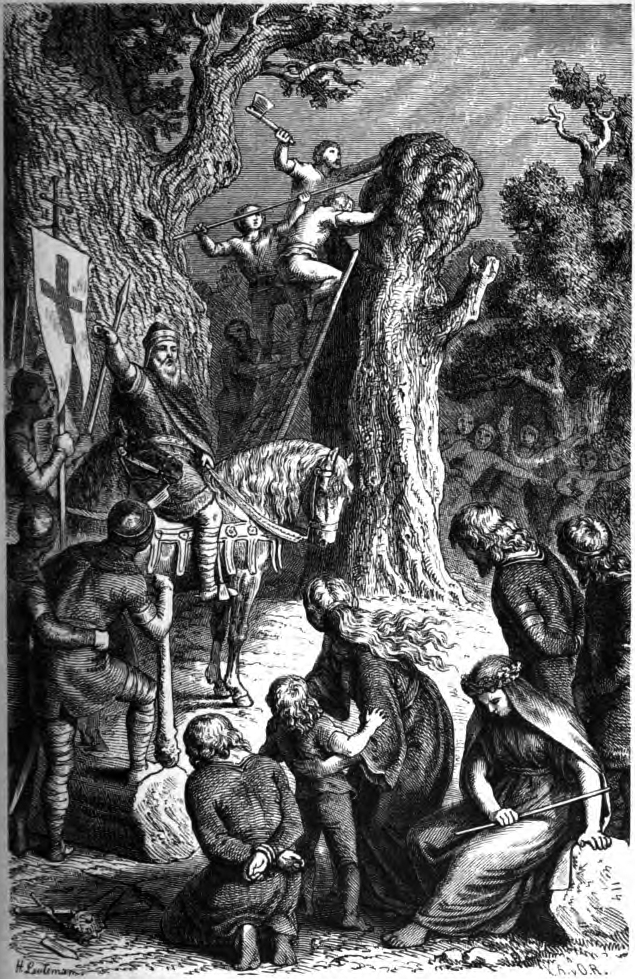
I would also like to at least mention the "Irminsul" (see image to the right), which was a large carved wooden pillar, which was a very important part of this spirituality. I don't think that it was intrinsically worshipped, but may have been a manner to get in touch with all of the gods. Perhaps someone could clue us in there. It appears that the old Germanic tribes often just used a carved tree trunk for this purpose as well. When the Romans, and later powers, finally mobilized themselves to spread Christianity, lets face it, they often did it via force. The following painting was composed by German painter Heinrich Leutemann in 1882, and was entitled 'The destruction of Irminsul through Charlemagne'. It depicts Wotanists literally being forced to accept Christianity as their Irminsul is demolished.
Did you know that names from the days of the week, which we use every day, are from Norse/Germanic spirituality or gods?
Sunday -- "Sun's Day"
Monday -- "Moon's Day"
Tuesday -- "Tiu's Day"
Wednesday -- "Wodan's Day"
Thursday -- "Thor's Day"
Friday -- "Freya's Day"
Saturday -- "Saturn's Day"
Wodan, Wotan, or Woden, may have originally come from the worship of the Greek god Mercury. It's hard sometimes to substantiate some of these things due to various cultures wanting to maintain the purity or originality of their history. I suppose that if this was true, that it was probably due to influence from the Romans, or possibly the Etruscans. I don't really know.
Mead (from description at Wikipedia): "Mead is a typically alcoholic beverage, made from honey and water via fermentation with yeast. Its alcoholic content may range from that of a mild ale to that of a strong wine. It may be still, carbonated, or sparkling. It may be dry, semi-sweet, or sweet.
"Depending on local traditions and specific recipes, it may be brewed with spices, fruits, or grain mash. It may be produced by fermentation of honey with grain mash; mead may also, like beer, be flavored with hops to produce a bitter, beer-like flavor."
What is amazing is that Mead is so hard to find! It was such a part of our ancestors lives, yet it's difficult to find in the market. I don't think that it would be very difficult to make. It can be purchased online pretty easily. Try Yahoo Shopping. Check the Wikipedia link, as there is much more than we have time to research and cover right now. YouTube has videos on how to make Mead as well.
There is an interesting FAQ, from the Wisconsin Vinland Association, called 'An FAQ: Asatru, Wicca, and paganism', which is quite interesting. However, it's pretty apparent that they are a "Universalist" group, meaning that they have a belief that the traditions of their ancestors belong to all other cultures of the earth just as much as it belongs to them. It's probably a split down the middle as far as pagans of European traditions, between those who are Universalist or Folkish. Folkish means that one's heritage is inherently "theirs," and not belonging to every other culture in the world.
Interview With a Gothi - Part 1
Interview With a Gothi - Part 2
Interview With a Gothi - Part 3
Interview With a Gothi - Part 4