Showing posts with label Langobard. Show all posts

Wednesday, February 13, 2013

The Gauls and Langobards drank mead: Part 1

Mead

Mead (pron.: /ˈmiːd/; archaic and dialectal "medd"; from Old English "meodu" Ukrainian: Мед or Russian: Медовуха or Lithuanian: Midus), also called honey wine, is an alcoholic beverage that is produced by brewing a solution of honey and water. It may also be produced by brewing a solution of water and honey with grain mash, which is strained after fermentation.  Depending on local traditions and specific recipes, it may be flavored with spices, fruit, or hops (which produce a bitter, beer-like flavor). The alcoholic content of mead may range from about 8% ABV to 18%. It may be still, carbonated or naturally sparkling, and it may be dry, semi-sweet or sweet.

Mead is known from many sources of ancient history throughout Europe, Africa and Asia, although archaeological evidence of it is ambiguous. Its origins are lost in prehistory. "It can be regarded as the ancestor of all fermented drinks," Maguelonne Toussaint-Samat has speculated, "antedating the cultivation of the soil."

Claude Lévi-Strauss makes a case for the invention of mead as a marker of the passage "from nature to culture." Mead has played an important role in the beliefs and mythology of some peoples. One such example is the Mead of Poetry, a mead of Norse mythology crafted from the blood of the wise being Kvasir which turns the drinker into a poet or scholar.


History

The earliest archaeological evidence for the production of mead dates to around 2000 BC. Pottery vessels containing a mixture of mead, rice and other fruits along with organic compounds of fermentation were found in Northern China. In Europe, it is first attested in residual samples found in the characteristic ceramics of the Bell Beaker Culture (ca. 2800 – 1800 BC).
 

The earliest surviving description of mead is in the hymns of the Rigveda, one of the sacred books of the historical Vedic religion and (later) Hinduism dated around 1700–1100 BC. During the Golden Age of Ancient Greece, mead was said to be the preferred drink. Aristotle (384–322 BC) discussed mead in his Meteorologica and elsewhere, while Pliny the Elder (AD 23–79) called mead militites in his Naturalis Historia and differentiated wine sweetened with honey or "honey-wine" from mead. The Spanish-Roman naturalist Columella gave a recipe for mead in De re rustica, about AD 60.

Take rainwater kept for several years, and mix a sextarius of this water with a pound of honey. For a weaker mead, mix a sextarius of water with nine ounces of honey. The whole is exposed to the sun for 40 days, and then left on a shelf near the fire. If you have no rain water, then boil spring water.
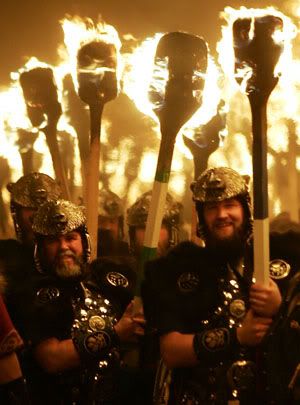
Around AD 550, the Brythonic-speaking bard Taliesin wrote the Kanu y med or "Song of Mead." The legendary drinking, feasting and boasting of warriors in the mead hall is echoed in the mead hall Dyn Eidyn (modern day Edinburgh), and in the epic poem Y Gododdin, both dated around AD 700. In the Old English epic poem Beowulf, the Danish warriors drank mead. Later, taxation and regulations governing the ingredients of alcoholic beverages led to commercial mead becoming a more obscure beverage until recently. Some monasteries kept up the old traditions of mead-making as a by-product of beekeeping, especially in areas where grapes could not be grown, a well-known example being at Lindisfarne, where mead continues to be made to this day, albeit not in the monastery itself.


Etymology

The English word mead derives from the Old English meodu, from Proto-Germanic meduz, from Proto-Indo-European *médʰu (honey, fermented honey drink). Slavic med / miod , which means both "honey" and "mead", (Czech, Slovak, Serbian, Bosnian, Bulgarian, Croatian: med vs. medovina, Polish 'miód' pronounce [mju:t] - honey, mead) and Baltic medus "honey"/midus "mead", also derive from the same Proto-Indo-European root (cf. Welsh medd, Old Irish mid and Sanskrit madhu).


Festivals

Mazer Cup International Mead Competition and Tasting Event -- Sponsored by Gotmead.com, this event is held every year in March in Boulder, Colorado. It is the largest mead event in the world, with over 300 home meads and over 200 commercial meads in competition. There is a Friday tasting event with the gold medal winning commercial meads from the previous year, plus feature meads from around the world.

Real Ale Festival in Chicago, Illinois, includes categories for mead as well as cider and perry.

Woodbridge International Mead Festival - Sponsored by local residents, it claims to be the only mead festival east of the Mississippi. While few types of mead are available, all are home-brewed and go through a rigorous judging process.


In literature

Mead is featured in many Germanic myths and folktales such as Beowulf, as well as in other popular works that draw on these myths. Notable examples include books by Tolkien, George R. R. Martin and Neil Gaiman. It is often featured in books using a historical Germanic setting and in writings about the Viking era. Mead is mentioned many times in Neil Gaiman's 2001 novel, American Gods; it is referred to as the drink of the gods. Also, in the books of the Inheritance Cycle by Christopher Paolini, it is often drunk by Eragon Shadeslayer at feasts in honor of him. Mead is also referenced in The Kingkiller Chronicle novel series by Patrick Rothfuss. The protagonist Kvothe is known to drink metheglin. The non-existent "Greysdale Mead" is also drunk, although it is merely water.


[See above link for distribution, varieties, and local variants; see also Mead of poetry]


.

Tuesday, August 10, 2010

Children of Godan IV: Life along the Danube


Children of Godan IV: Life along the Danube

After peace is made with the Romans and Avars, the Langobard tribe experiences a brief period peace as they reside along the Danube River.

Danube River
http://en.wikipedia.org/wiki/Danube
The Danube (pronounced DAN-ewb in English) is the longest river in the European Union and Europe's second longest river after the Volga.

The river originates in the Black Forest in Germany as the much smaller Brigach and Breg rivers which join at the German town Donaueschingen, after which it is known as the Danube and flows eastwards for a distance of some 2850 km (1771 miles), passing through four Central and Eastern European capitals, before emptying into the Black Sea via the Danube Delta in Romania and Ukraine.

Known to history as one of the long-standing frontiers of the Roman Empire, the river flows through—or forms a part of the borders of—ten countries: Germany (7.5%), Austria (10.3%), Slovakia (5.8%), Hungary (11.7%), Croatia (4.5%), Serbia (10.3%), Bulgaria (5.2%), Moldova (0.017%), Ukraine (3.8%) and Romania (28.9%).


[Music: 'The Night Visits' by Dutch Ramblers; from 'Folk Spirit' CD which is distributed by Odinic Rite Media:

From the OR website:
http://www.odinic-rite.org/ormedia/2009/10/folk-spirit-a-compilation-of-odinist-music/

Also available from Amazon.com, either the CD or individual songs:
http://www.amazon.com/gp/product/B00373IOJ6/ref=dm_sp_alb?ie=UTF8&qid=1281296501&sr=8-1

Sample music from the CD:
http://www.youtube.com/watch?v=_D9E-db0JAs

Wednesday, November 11, 2009

Fortezza Longobarda New Merchandise Out Now

From our friend from YouTube LongobardWarrior:

FORTEZZA LONGOBARDA NEW MERCHANDISE OUT NOW !!!

Available with postepay all Fortezza Longobarda the jobs and new t-shirt !!!
Disponibili con postepay tutti i lavori e nuove t-shirt di Fortezza Longobarda

Info Email : bifrost89@hotmail.it

Fortezza Longobarda Channel (YouTube)

Fortezza Longobarda MySpace Page

Pagan Earth Blog

Tuesday, July 21, 2009

Women in Langbard

I am currently examining the footnotes of the book 'History of the Lombards'. Although the book was written by Paul the Deacon, it was edited by Edward Peters. More than in most books, I find myself disagreeing with both of them. Rather than using a lot of text explaining why, which I may cover some other time, I wanted to just look briefly at an issue that I saw on one open set of pages (pgs. 194-195), in the footnotes.

On page 194, Edwards is commenting on the advance of the Catholic Church in Langbard (the Lombards were either Arian Christian or "heathen" (some form of Wotanism most likely). He writes "The conversion of the Langobards to the Catholic faith was prompted by their intermarriage with Roman wives."

This is a clumsy statement based on the easy concept that everyone living on the Italian peninsula before the Langobards was "Roman." However, this concept is not used for Roman citizenry outside of the peninsula. Also, the population were no longer "Roman citizens," but some still attach an easy, catch-all "Roman" ethnic title to the entire population. Most of the population, at least north of Etruria, was either Alpine Euganean or Celtic Gaul, with some old Etruscan or later Germanic genes admixed. Therefore, when a Germanic Lombard married a culturally Romanized ethnic Celt, it became Edwards "intermarriage with a Roman wife."

On page 195, Edwards is discussing Lombard Law, and states "Rothari Edict was published Nov. 22nd, 643. It was composed of 388 chapters. Although written in Latin, the greater part of this Edict was of purely Langobard origin." After giving some examples of this law, he gets to the treatment of women in Langbard, and writes "'If anyone should "place himself in the way" of a free woman or girl or injure her he must pay nine hundred solidi (540 pounds sterling). If any one should "place himself in the way" of a free man he must pay him twenty solidi .....' These provisions indicated the high estimation the high estimation in which the free women were held."

For thousands of years, in both Wotanist and Wicca-like faiths, women not only were often equal, but actually held much power in many instances. Often in matters of faith, though not nearly as much in politics. I'm not sure about pre-Christian Etruscan society and spirituality.


Tuesday, June 30, 2009

Barbarians II: The Lombards


Barbarians II: The Lombards

[For more great documentaries, visit TheDocumentaryCenter.blogspot.com]

At its peak, the Roman Empire feared nothing in Heaven or on Earth. Perhaps they should have paid closer attention to the pagan rabble. Coming in waves from the dark forests of Europe, the hordes drove the mighty empire to its knees. Relentless, unmerciful and united only in their hatred for Rome, each of these warrior tribes - Vandals, Saxons, Franks and Lombards - had its own violent agenda, dark rites, savage tactics, and secret weapons. Barbarians 2 follows these four fearsome tribes as they cut a swath of destruction through the heart of the Roman world. Barbarians 2 recreates the world of these invaders through breathtaking stunts, large-scale battle reenactments, and a fast-paced, exciting narrative.

THE LOMBARDS: The ferocious tribe partial to severing their foes' heads and stealing their women. Their brutal leader, Alboin, overcame Roman defenses, surrounded The Eternal City, and forced a captured foe's wife to drink from her slain father's skull.

"Estimates of the number range between about fifty thousand and two hundred thousand adult males, so we may be talking about a population of four or five hundred thousand people altogether." --Professor Thomas Noble, Chairperson, Department of History, University of Notre Dame, on the Lombard invasion population numbers in 568 A.D. during verbal interview for the History Channel's 'Barbarians II: The Lombards'

Sunday, June 28, 2009

The Longobardian Migration Saga

The Longobardian Migration Saga


By Viktor Rydberg

Comunita Odinista - Vinland


What there still remains of migration sagas from the middle ages, taken from the saga-treasure of the Teutons themselves, is, alas! but little. Among the Franks the stream of national traditions early dried up, at least among the class possessing Latin culture. Among the Longobardians it fared better, and among them Christianity was introduced later. Within the ken of Roman history they appear in the first century after Christ, when Tiberius invaded their boundaries.

Tacitus speaks of them with admiration as a small people whose paucity, he says, was balanced by their unity and warlike virtues, which rendered them secure in the midst of the numerous and mighty tribes around them. The Longobardians dwelt at that time in the most northern part of Germany, on the lower Elbe, probably in Luneburg. Five hundred years later we find them as rulers in Pannonia, whence they invade Italy. They had then been converted to Christianity. A hundred years after they had become settled in North Italy, one of their Latin scholars wrote a little treatise, De Origine Longobardorum, which begins in the following manner: "In the name of our Lord Jesus Christ! Here begins the oldest history of our Longobardian people. There is an island called Skadan, far in the north. There dwelt many peoples. Among them was a little people called the Vinnilians, and among the Vinnilians was a woman by name Gambara. Gambara had two sons: one by name Ibor, the other named Ajo. She and these sons were the rulers among the Vinnilians. Then it came to pass that the Vandals, with their dukes Ambri and Assi, turned against the Vinnilians, and said to them: ‘Pay ye tribute unto us. If ye will not, then arm yourselves for war!’

Then made answer Ibor and Ajo and their mother Gambara: ‘It is better for us to arm ourselves for war than to pay tribute to the Vandals’. When Ambri and Assi, the dukes of the Vandals, heard this, they addressed themselves to Odin (Godan) with a prayer that he should grant them victory. Odin answered and said: ‘Those whom I first discover at the rising of the sun, to them I shall give vie tory’. But at the same time Ibor and Ajo, the chiefs of the Vinnilians, and their mother Gambara, addressed themselves to Frigg (Frea), Odin’s wife, beseeching her to assist them. Then Frigg gave the advice that the Vinnilians should set out at the rising of the sun, and that the women should accompany their husbands and arrange their hair so that it should hang like a beard under their chins. When the sky cleared and the sun was about to rise, Frigg, Odin’s wife, went to the couch where her husband was sleeping and directed his face to the east (where the Vinnilians stood), and then she waked him. And as he looked up he saw the Vinnilians, and observed the hair hanging down from the faces of their women. And then said he: ‘What long-beards are they?’ Then said Frigg to Odin:

‘My lord, as you now have named them, you must also give them victory!’ And he gave them victory, so that they, in accordance with his resolve, defended themselves well, and got the upper hand. From that day the Vinnilians were called Longobardians— that is to say, long-beards. Then the Longobardians left their country and came to Golaida, and thereupon they occupied Aldonus, Anthaib, Bainaib, and Burgundaib."

In the days of Charlemagne the Longobardians got a historian by name Paulus Diaconus, a monk in the convent Monte Cassino, and he was himself a Longobardian by birth. Of the earliest history of his people he relates the following: The Vinnilians or Longobardians, who ruled successfully in Italy, are of Teutonic descent, and came originally from the island Scandinavia. Then he says that he has talked with persons who had been in Scandinavia, and from their reports he gives some facts, from which it is evident that his informants had reference to Scania with its extensive coast of lowlands and shallow water. Then he continues: "When the population on this island had increased beyond the ability of the island to support them, they were divided into three parts, and it was determined by lot which part should emigrate from the native land amid seek new homes. The part whose destiny it became to leave their native land chose as their leaders the brothers Ibor and Ajo, who were in the bloom of manhood and were distinguished above the rest.

Then they bade farewell to their friends and to their country, and went to seek a land in which they might settle. The mother of these two leaders was called Gambara, who was distinguished among her people for her keen understanding and shrewd advice, and great reliance was placed on her prudence in difficult circumstances." Paulus makes a digression to discuss many remarkable things to be seen in Scandinavia: the light summer nights and the long winter nights, a maelstrom which in its vortex swallows vessels and sometimes throws them up again, an animal resembling a deer hunted by the neighbours of the Scandinavians, the Scritobinians (the Skee [1] Finns), and a cave in a rock where seven men in Roman clothes have slept for centuries (see Nos. 79-81, and No. 94). Then he relates that the Vinnilians left Scandinavia and came to a country called Scoringia, and there was fought the aforesaid battle, in which, thanks to Frigg’s help, the Vinnilians conquered the Vandals, who demanded tribute from them.

The story is then told how this occurred, and how the Vinnilians got the name Longobardians in a manner corresponding with the source already quoted, with the one addition, that it was Odin’s custom when he awoke to look out of the window, which was open, to the east toward the rising sun. Paulus Diaconus finds this Longobardian folk-saga ludicrous, not in itself, but because Odin was, in the first place, he says, a man, not a god. In the second place, Odin did not live among the Teutons, but among the Greeks, for he is the same as the one called by the Romans Mercury. In the third place, Odin-Mercury did not live at the time when the Longobardians emigrated from Scandinavia, but much earlier. According to Paulus, there were only five generations between the emigration of the Longobardians and the time of Odoacer. Thus we find in Paulus Diaconus the ideas in regard to Odin-Mercury which I have already called attention to. Paulus thereupon relates the adventures which happened to the Longobardians after the battle with the Vandals. I shall refer to these adventures later on. They belong to the Teutonic mythology, and reappear in mythic sources (see No. 112), but in a more original from, and as events which took place in the beginning of time in a conflict between the Asas and Vans on the one hand, and lower beings on the other hand; lower, indeed, but unavoidable in connection with the wellbeing of nature and man. This conflict resulted in a terrible winter and consequent famine throughout the North. In this mythological description we shall find Ajo and Ibor, under whose leadership the Longobardians emigrated, and Hengist, under whom the Saxons landed in Britain.

It is proper to show what form the story about the Longobardian emigration had assumed toward the close of the twelfth century in the writings of the Danish historian Saxo Grammaticus. The emigration took place, he says, at a time when a Danish king, by name Snö, ruled, and when there occurred a terrible famine. First, those starving had resolved to kill all the aged and all children, but this awful resolve was not carried out, thanks to a good and wise woman, by name Gambaruc, who advised that a part of the people should emigrate. This was done under the leadership of her sons Aggo and Ebbo. The emigrants came first to Blekingia (Blekinge), then they sailed past Moringia (Möre) and came to Gutland, where they had a contest with the Vandals, and by the aid of the goddess Frigg they won the victory, and got the name Longobardians. From Gutland they sailed to Rugen, and thence to the German continent, and thus after many adventures they at length became masters of a large part of Italy.

In regard to this account it must be remarked that although it contains many details not found in Paulus Diaconus, still it is the same narrative that has come to Saxo’s knowledge. This Saxo also admits, and appeals to the testimony of Paulus Diaconus. Paulus’ Gambara is Saxo’s Gambaruc; Ajo and Ibor are Aggo and Ebbo. But the Longobardian monk is not Saxo’s only source, and the brothers Aggo and Ebbo, as we shall show, were known to him from purely northern sources, though not as leaders of the Longobardians, but as mythic characters, who are actors in the great winter which Saxo speaks of.

The Longobardian emigration saga—as we find it recorded in the seventh century, and then again in the time of Charlemagne— contains unmistakable internal evidence of having been taken from the people’s own traditions. Proof of this is already the circumstance, that although the Longobardians had been Christians for nearly 200 years when the little book De Origine Longobardorum appeared, still the long-banished divinities, Odin and Frigg, reappear and take part in the events, not as men, but as divine beings, and in a manner thoroughly corresponding with the stories recorded in the North concerning the relations between Odin and his wife. For although this relation was a good and tender one, judging from expressions in the heathen poems of the North (Völusp., 51; Vafthr., 1-4), and although the queen of heaven, Frigg, seems to have been a good mother in the belief of the Teutons, this does not hinder her from being represented as a wily person, with a will of her own which she knows how to carry out. Even a Norse story tells how Frigg resolves to protect a person whom Odin is not able to help; how she and he have different favourites among men, and vie with each other in bringing greater luck to their favourites. The story is found in the prose introduction to the poem "Grimnismál," an introduction which in more than one respect reminds us of the Longobardian emigration saga. In both it is mentioned how Odin from his dwelling looks out upon the world and observes what is going on. Odin has a favourite by name Geirrod. Frigg, on the other hand, protects Geirrod’s brother Agnar.

The man and wife find fault with each other’s proteges. Frigg remarks about Geirrod, that he is a prince, "stingy with food, so that be lets his guests starve if they are many." And the story goes on to say that Geirrod, at the secret command of Odin, had pushed the boat in which Agnar was sitting away from shore, and that the boat had gone to sea with Agnar and had not returned. The story looks like a parable founded on the Longobardian saga, or like one grown in a Christian time out of the same root as the Longobardian story. Geirrod is in reality the name of a giant, and the giant is in the myth a being who brings hail and frost. He dwells in the uttermost North, beyond the mythical Gandvik (Thorsdrapa, 2), and as a mythical winter symbol he corresponds to king Snö in Saxo. His "stinginess of food when too many guests come" seems to point to lack of food caused by the unfavourable weather, which necessitated emigrations, when the country became over-populated. Agnar, abandoned to the waves of the sea, is protected, like the Longobardians crossing the sea, by Frigg, and his very name, Agnar, reminds us of the names Aggo, Acho, and Agio, by which Ajo, one of the leaders of the Longobardians, is known. The prose introduction has no original connection with Grimnismál itself, and in the form in which we now have it, it belongs to a Christian age, and is apparently from an author belonging to the same school as those who regarded the giants as the original inhabitants of Scandinavia, and turned winter giants like Jökull, Snaer, & company, into historical kings of Norway.

The absolutely positive result of the Longobardian narratives written by Longobardian historians is that the Teutonic race to which they belonged considered themselves sprung, not from Troy or Asia, but from an island, situated in the ocean, which washes the northern shores of the Teutonic continent, that is to say, of Germany.

Note: [1] The snow-skate, used so extensively in the north of Europe, is called Ski in the Norse, and I have taken the liberty of introducing this word here and spelling it phonetically—skee, pl. skees. The words snow-shoes, snow-skates, hardly describe sufficiently these skees used by the Finns, Norsernen, and Icelanders. Compare the English word skid, the drag applied to a coachwheel.—TR.

Friday, June 19, 2009

Children of Godan III: Heathen Langobard Nation


Children of Godan III: Heathen Langobard Nation

Heathen means "not Christian," similar to the word infidel in it's usage. Paul the Deacon, an extremely dedicated servant of the Roman Church, when composing his work 'History of the Lombards, seemed clearly to view the pagan beliefs and mythology of the Lombards as something to be frowned upon. However, in other areas, I think that Edward Peters wasn't entirely fair in some of his contradictions of Paul the Deacon.

After migrating to Pannonia, some of the Lombards converted to something called Arian Christianity. Later in their Langbard Kingdom, Queen Theodelinda brought the Roman Church into the kingdom, and the old ways eventually disappeared. However, their pagan ways lasted many centuries, and ultimately went back thousands of years. Some say as long as forty thousand years.

Thursday, June 18, 2009

Children of Godan II: Fighting Langobard Nation


Children of Godan II: Fighting Langobard Nation

The Langobard tribe migrates to the Pannonia region, which was located in modern Hungary. Warfare with another tribe two or three times it's size did not seem to present much of a problem for them, as they often killed ten to one.

Wednesday, June 17, 2009

Children of Godan: Migrating Langobard Nation


Children of Godan: Migrating Langobard Nation

Initially settling in Scoringa in ancient northern Germany, the fierce Longobard tribe migrates southeast across central Europe, gaining a supremely fearsome reputation even among the other warlike tribes.

Tuesday, June 16, 2009

Winnili Tribe: Roving Teutonic Nation


Winnili Tribe: Roving Teutonic Nation

Our third video


Origo Gentis Langobardorum

The text mentions an island Scanadan (Scandinavia), the home of the Winnili. Their ruler was a woman called Gambara, with her sons Ybor and Agio. The leaders of the Vandals, Ambri and Assi, asked them to pay them tribute, but they refused, saying they would fight them. Ambri and Assi then went to Godan, and asked him for victory over the Winnili. Godan replied that he would give the victory to whomever he saw first at sunrise. At the same time, Gambara and her sons asked Frea, Godan's wife, for victory. Frea advised that the women of the Winnili should tie their hair in front of their faces like beards and join their men for battle. At sunrise, Frea turned her husband's bed so that at he was facing East, and woke him. Godan saw the women of the Winnili, their hair tied in front of their faces, and asked "who are these longbeards?," and Frea replied, since you named them, give them victory, and he did. From this day, the Winnili were called Langobardi, "longbeards."


Lombards

The fullest account of Lombard origins, history, and practices is the Historia gentis Langobardorum (History of the Lombards) of Paul the Deacon, written in the 8th century. Paul's chief source for Lombard origins, however, is the 7th-century Origo Gentis Langobardorum (Origin of the People of the Lombards).

The Origo tells the story of a small tribe called the Winnili dwelling in southern Scandinavia (Scadanan) (The Codex Gothanus writes that the Winnili first dwelt near a river called Vindilicus on the extreme boundary of Gaul.) The Winnili were split into three groups and one part left the native land to seek foreign fields. The reason for the exodus was probably overpopulation. The departing people were led by the brothers Ybor and Aio and their mother Gambara and arrived in the lands of Scoringa, perhaps the Baltic coast or the Bardengau on the banks of the Elbe. Scoringa was ruled by the Wandals, and their chieftains, the brothers Ambri and Assi, who granted the Winnili a choice between tribute or war.

The Winnili were young and brave and refused to pay tribute, saying "It is better to maintain liberty by arms than to stain it by the payment of tribute." The Wandals prepared for war and consulted Godan (the god Odin), who answered that he would give the victory to those whom he would see first at sunrise. The Winnili were fewer in number and Gambara sought help from Frea (the goddess Frigg), who advised that all Winnili women should tie their hair in front of their faces like beards and march in line with their husbands. So it came that Godan spotted the Winnili first, and asked, "Who are these long-beards?" and Frea replied, "My lord, thou hast given them the name, now give them also the victory." From that moment onwards, the Winnili were known as the Langobards (Latinised and Italianised as Lombards).