Wednesday, November 21, 2018
BIOGRAPHY OF GIACOMO PUCCINI - FULL AudioBook | Greatest AudioBooks
Greatest AudioBooks
This biography of Puccini was written while the composer was at the height of his career. Besides the usual biographical information, the author summarizes and discusses Puccini's works to this point, including Le Villi, Edgar, Manon Lescaut, La Boheme, Tosca, and Madama Butterfly (which was in production at the time of this writing). - Summary by Ciufi Galeazzi
************
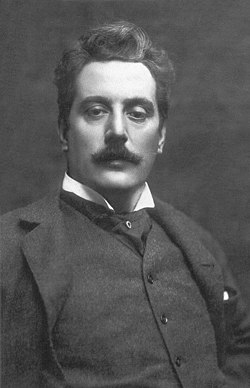
Giacomo Puccini
Giacomo Antonio Domenico Michele Secondo Maria Puccini; 22 December 1858 – 29 November 1924) was an Italian opera composer who has been called "the greatest composer of Italian opera after Verdi."
Puccini's early work was rooted in traditional late-19th-century romantic Italian opera. Later, he successfully developed his work in the realistic verismo style, of which he became one of the leading exponents.
Puccini's most renowned works are La bohème (1896), Tosca (1900), Madama Butterfly (1904), and Turandot (1924), all of which are among the important operas played as standards.
.
Tuesday, January 27, 2015
'Ave Maria' (Schubert) by Andrea Bocelli
Thursday, August 14, 2014
'St Matthew Passion'
Hungarian Festival Choir - Hungarian State Symphony Orchestra - conducted by Géza Oberfrank
St Matthew Passion
The St Matthew Passion (also frequently St Matthew's Passion; German: Matthäus-Passion), BWV 244 is a sacred oratorio from the Passions written by Johann Sebastian Bach in 1727 for solo voices, double choir and double orchestra, with libretto by Picander (Christian Friedrich Henrici). It sets chapters 26 and 27 of the Gospel of Matthew (in the German translation of Martin Luther) to music, with interspersed chorales and arias. It is widely regarded as one of the masterpieces of classical sacred music. The original Latin title Passio Domini Nostri J.C. Secundum Evangelistam Matthaeum translates to "The Passion of our Lord Jesus Christ according to the Evangelist Matthew."
Although Bach wrote four (or five) settings of the Passions only two have survived; the other is the St John Passion. The St Matthew Passion was probably first performed on Good Friday (11 April) 1727 in the Thomaskirche in Leipzig, where Bach was the Kantor of the School and Directoris Chori musici of Leipzig. He revised it by 1736, performing it again on 30 March 1736, this time including two organs in the instrumentation. He further revised and performed it again on 23 March 1742. Possibly due to the second organ being under repair, he switched the continuo instrument to harpsichord in Chorus II, reinforced the continuo group in Chorus II with a viola da gamba, and inserted a ripieno soprano in both movements 1 and 29. There is evidence of a further revision in 1743–1746, when the score as it is known originated, but no performance.
.
Monday, August 19, 2013
'Le Nozze Di Figaro' ("Opera Song" from the 'Shawshank Redemption')
'Le Nozze Di Figaro', or 'The Marriage of Figaro', was the "Opera Song" featured in the movie 'The Shawshank Redemption'.
From Wikipedia: Le nozze di Figaro, ossia la folle giornata (The Marriage of Figaro, or The Day of Madness), K. 492, is an opera buffa (comic opera) in four acts composed in 1786 by Wolfgang Amadeus Mozart, with an Italian libretto written by Lorenzo Da Ponte based on a stage comedy by Pierre Beaumarchais, La folle journée, ou le Mariage de Figaro (1784).
Quote from the movie: I have no idea to this day what those two Italian ladies were singin about. Truth is I dont wanna know. Id like to think they were singin about something so beautiful it can't be expressed in words and makes your heart ache because of it. I tell you those voices soared higher and farther than anybody in a gray place dares to dream. It was like some beautiful bird flapped into our drab little cage and made those walls dissolve away and for the briefest of moments every last man in Shawshank felt free.
.
Monday, April 29, 2013
'Il Trovatore' and 'La Traviata' by Giuseppe Verdi in Bay Area
Hear some of Verdi’s most melodious music including his exciting Anvil Chorus sung by Spanish gypsies. It is full of dramatically powerful scenes: tales of flames at the stake, kidnapping and revenge master-minded by Azucena, the conniving gypsy woman; a mysterious troubadour and Leonora who loses her heart to him; the drama of war waged on a castle fortress; and two brothers separated at birth who unknowingly become mortal enemies. Set in Spain in the early 15th century, the story is told by three separate, intertwining sub-plots, rich with colorful history.
Check periodically for next showing
La Traviata
Experience the effervescent music and the heart-wrenching drama of La Traviata. A time of excess and excitement, of living for the moment and flaunting newfound freedoms creates the mood. Verdi’s eternally popular opera, spins the tale of a conflicted courtesan, her devoted lover and his disapproving father. Violetta dares to break society’s rules by allowing herself to love and be loved.
Coming in June
.
Monday, November 19, 2012
San Francisco Opera - 'Tosca'
Music by Giacomo Puccini
Libretto by Luigi Illica and Giuseppe Giacosa
SAN FRANCISCO OPERA PRODUCTION
Puccini's masterful melodrama is a sexually charged, edge-of-your-seat thriller, in which a great singer, a rebellious painter and a corrupt police chief engage in a deadly test of wills. Music director Nicola Luisotti, "one of his generation's most accomplished Puccini conductors" (Opera News), leads two astonishing casts.
One stars Angela Gheorghiu, "in a part she seems to have been born to play" (Opera Today) and "who, like Tosca, is a born diva" (The Independent, London); Massimo Giordano, praised by The New York Times for his "ardent, expressive singing;" and veteran baritone Roberto Frontali, who brought "vocal brass and weight" (The Dallas Morning News) to San Francisco Opera's The Girl of the Golden West (2010).
The next cast stars Patricia Racette, who "tapped into Tosca's combination of regal and all-too-human traits and backed up her vibrant characterization with singing of considerable expressive fire" (Opera News); tenor Brian Jagde, lauded for his "beautiful singing, now nuanced, now ringing and forceful" (Washington Post); and Mark Delavan (Wotan in the Ring cycle, 2011), a singer of "ferocious power" (San Francisco Chronicle).
Sung in Italian with English supertitles
Approximate running time: 2 hours, 40 minutes including two intermissions
Pre-Opera Talks are free to ticketholders and take place in the main theater in the Orchestra section, 55 minutes prior to curtain.
Production photos: Cory Weaver
**************************************************
See the above link for the cast, credits, profiles, synopsis, times, prices, seating, etc.
.
Friday, September 7, 2012
'Rigoletto' at the San Francisco Opera
Music by Giuseppe Verdi
Libretto by Francesco Maria Piave
SAN FRANCISCO OPERA PRODUCTION
One of opera's most vivid and compelling characters, a vengeful court jester, desperately tries to protect his daughter from disaster in this heart-wrenching tragedy. The first of two world-class casts led by Music Director Nicola Luisotti stars Željko Lučić, "whose vocal artistry is exceptional" (The New York Times); Aleksandra Kurzak, "a superstar in the making" (The Guardian, London); and, as the lecherous Duke, Francesco Demuro, "whose open, bright, superbly focused tone was reminiscent of Pavarotti" (Opera News).
The equally impressive next cast stars Marco Vratogna, who, as the sinister Iago in Otello (2009), thrilled San Francisco Opera audiences with his "vocal power and theatrical electricity" (San Francisco Chronicle); Albina Shagimuratova, "a phenomenon that must be heard to be believed" (Opera News); and Merola Opera Program graduate Arturo Chacón-Cruz with his "clarion tone and piercingly clean top notes" (Washington Times).
Sung in Italian with English supertitles
Approximate running time: 2 hours, 35 minutes including one intermission
Pre-Opera Talks are free to ticketholders and take place in the main theater in the Orchestra section, 55 minutes prior to curtain (please note there is no talk on Opening Night, September 7, 2012).
.
Tuesday, October 11, 2011
'Don Giovanni' - San Francisco Opera
Libretto by Lorenzo Da Ponte
Mozart’s bold, beguiling blend of comedy and drama tells the tale of a proud, predatory nobleman and the women who are drawn to him. Music Director Nicola Luisotti conducts a cast of exciting young singers led by Lucas Meachem, whose baritone is “sweet, dark-grained and supple, and insinuating enough to make any woman give at the knees” (Santa Fe New Mexican). The enticing cast also features Ellie Dehn, who mixes “a stunning voice” with “real dramatic authority” (Opera News); Serena Farnocchia, who is “nothing short of spectacular” (Toronto Star); Kate Lindsey, "a powerhouse Zerlina" (Dallas Morning News) and Topi Lehtipuu, “one of the most elegant and musical young lyric tenors to have emerged in a decade” (London Daily Telegraph). Noted Italian film and theater director Gabriele Lavia makes his San Francisco Opera directorial debut.
Sung in Italian with English supertitles
Approximate running time: 3 hours, 30 minutes including one intermission
Pre-Opera Talks are free to ticketholders and take place in the main theater in the Orchestra section, 55 minutes prior to curtain.
San Francisco Opera production
Saturday, January 29, 2011
Quintessential experience when in Italy: The opera
By Giovanna Dell'orto - Associated Press - June 24, 2011
MILAN, Italy – Opera is as fundamental to Italy's soul as the Colosseum, Michelangelo or pasta. To attend an opera performance here in the summer is a quintessential Italian experience — especially if you're willing to brave the often-byzantine process for getting last-minute but astonishingly cheap tickets.
"I don't understand a word of Italian, but I had to be here for the experience," Dr. Ravindran Kanesvaran, a young oncologist from Singapore, confessed in a whisper as we waited in La Scala, Italy's most famous opera house, for the crimson curtain to open on "Aida."
Top tickets for the season-opener at La Scala in Milan go for about $2,400 (2,000 euros), but the last-minute seats Kanesvaran and I got for a midseason sold-out performance cost just $15 (12 euros).
The basic concept of opera — putting dramatic presentations to music — is universal, but the modern version was created at the end of the 16th century for Italian aristocracy. Largely thanks to late tenor and native son Luciano Pavarotti, it has become part of pop culture here.
Teatro alla Scala, the theater's official full name, was one of three iconic venues I hit last summer. It's the must-do for acoustics and prestige. The other two are notable in part for their settings: Arena di Verona, an almost-intact Roman amphitheater in Verona; and Torre del Lago Puccini, where another open-air theater sits on the bank of a marshy lake in Tuscany. It's next to the place where Giacomo Puccini composed many of his most famous operas.
From champagne flutes in gilded halls to a panini picnic on 1,900-year-old steps, the three evenings couldn't have been more different. Here are some details, along with a word of caution: Some shows have been canceled this year due to wildcat strikes over new government regulations.
TEATRO ALLA SCALA: Never mind that I was perched high above the swirls of gilded flowers and red velvet draperies, above four tiers of regal boxes and nearly up against the rosette-covered ivory ceiling. The firefighter on duty at the top gallery row inside this fantastically opulent 1770s theater approved of my choice of seat.
Top critics, he said, like to be in the gallery so no abundance of visual flourish could distract them from the sublime listening. No serious opera connoisseur myself, I found it hard not to be absorbed by Franco Zeffirelli's lavish staging of Giuseppe Verdi's "Aida."
Premiered in 1871 in Cairo, and next year at La Scala, the opera tells a tragic tale of love and pharaonic intrigue in ancient Egypt. The grandest of grand operas, its staging that July night was a profusion of massive choruses against gigantic hieroglyphs.
Then Radames, the hero captain of the Egyptian guards who spurns his king's daughter to love her slave, Aida, with devastating consequences for all, sang out the most celebrated solo aria, "Celeste Aida."
And I realized the firefighter was right. Eyes shut, I let myself be transported by this most poignantly lyrical political tirade masquerading as love song. After all, the paeans for lost motherlands sung by Radames and other Verdi characters are but thinly veiled, urgent calls to arms.
That was clear to Italians as well as to their foreign occupiers 150 years ago. In the 19th century, revolts rocked Italy until unification. Verdi, composing operas filled with appeals to freedom and cries against tyrants, literally became the voice of the patriotic Risorgimento movement.
He was so revered as a founding father of modern Italy that when he lay dying in his suite, steps from La Scala, the streets were covered in straw so no noise would disturb the maestro.
Listening to Verdi's music at La Scala is an immersion not only in art but history, and well worth the day I spent getting a rush ticket.
But the procedure was tortuous: Around 11:30 a.m., I got in line outside the theater so that my name would be among the 140 taken down by volunteers at the roll-call beginning at 1 p.m. At 5:30 p.m., I got in line again to be given a number, with which I queued one last time to get the ticket that would finally grant me entry that evening. But it only cost a fraction of the front-row $300 tickets.
ARENA DI VERONA: If "Aida" is the grandest of Italian operas, its most stunning staging is at Verona's Arena, a first-century Roman amphitheater that has hosted theater performances since the early 1700s.
In the warm July dusk, I sat on the top row of giant limestone steps, as the sunset cast a salmon-pink glow over the city's medieval bell-towers and vine-covered hills, while strings opened the first notes.
In the 19,000-seat open-air arena, it's hard to distinctly make out the lyrics, but no setting can better display Verdi's dramatic monumentality. And Verdi's popular appeal is nowhere more apparent than in the contrast between the informal feel of the audience sharing jugs of wine and sandwiches on the steps and the over-the-top staging.
The first massive, full-orchestra chorus invoking war against Egypt's Ethiopian invaders was so thrillingly powerful that even the director jumped up and down. In "Celeste Aida," the tenor's lone voice miraculously filled the entire arena as the city disappeared in the darkness.
But the Arena experience is truly unsurpassable in "Aida'"s most famous moment, the triumphal march celebrating Radames' victorious return.
As trumpeters rang out deceptively simple notes, guards carrying torches filed down and lined up along one-third of the arena.
Four white horses pranced on the obelisk-fringed stage and knelt before the pharaoh while a ballet troupe swirled among the palms and sphinxes. The two toddlers sprawled between me and their German-speaking parents seemed as utterly enthralled as I was.
When "Aida" inaugurated the first summer opera season at the Arena in 1913, the audience included Puccini, whose operas are as renowned as Verdi's, though at the other end of the emotional spectrum.
Where Verdi's music excites fury and glory, Puccini's aims straight at the heart with sensuous, tear-jerking melodies.
PUCCINI FESTIVAL: Puccini penned some of his most famous arias in his Tuscan house by the marshy Lake Massaciuccoli in the late 19th and early 20th centuries. Every summer, a Puccini festival is held next-door in an open-air theater. Ducklings scurry away as you enter via a lakeside wooden bridge.
Years ago, lantern-laden rowboats were sprinkled on the lake behind the stage for a performance of "Madama Butterfly." For last summer's performance of "Turandot," I thought the orchestra was going all out with gongs and cymbals until I realized a strong thunderstorm was exploding in the mountains behind our seats.
"Turandot" is Puccini's last, unfinished opera from 1924. It is the story of a namesake Chinese princess who resolves to marry only the suitor who can solve three riddles (she kills all the others). Finally a prince gets the three answers right, and tells Turandot she can only get out of marrying him by guessing his name.
One of the world's most recognizable arias is "Nessun Dorma," which the prince sings anticipating love's final victory as the dawn deadline approaches and Turandot remains clueless.
I grew up listening to Luciano Pavarotti's signature rendition of this powerful hymn to hope, so no other tenor, however good, will ever be quite as meltingly emotional for me.
But to experience this aria not in a theater, but among fragrant linden trees on a balmy night, is incomparable. No stage setting could so precisely replicate the fairy tale's first glimpse of a happy ending.
Most poignantly, it is the same lakeside evening Puccini enjoyed, when this aria was still playing only in the mind of one of Italy's greatest musicians.
If You Go...
LA SCALA: Located in Milan. The opera season is year-round, with no performances in August; http://www.teatroallascala.org. Guidelines for rush tickets (about $15): http://bit.ly/92I2IC
ARENA DI VERONA: Located in Verona, about halfway between Milan and Venice. The 2010 season is June 18-Aug. 29; http://www.arena.it
PUCCINI FESTIVAL: Located in Torre del Lago, in Tuscany, about 20 miles from Pisa. The 2010 edition is July 16-Aug. 22; http://www.puccinifestival.it
STRIKES: Some performances in the 2010 season have been canceled last minute due to wildcat strikes.
.