Showing posts with label culture. Show all posts

Sunday, July 9, 2017

Is there a such thing as anti-Italian/Greek/Slavic/etc bigotry in America or the world today?


I would argue YES. It has become ever increasingly difficult to ignore the fact that "we" (Southeastern European Americans?) don't fit into the plans of the new ruling class coalition. They don't even want "us" as front people for them! The Obama administration actually had numerous people working for them with clear ties to the Muslim Brotherhood. I guess they may as well..... they sure don't want us around!! When they want more "diversity," we're not part of that plan either! The simple truth is that they, even in the larger coalition, do not like us as a general rule. They hate our culture.

I would take this one step further. Many on "the right" refer to the politically correct status quo university professors as "Marxist Professors." Actually, they're Globalist professors. Every few weeks, one of these mostly Anglo male professors makes some grand announcement of his disdain for "the white race," "Western Civilization," "Christianity," etc. Where did Western Civilization come from anyway? Greece and Rome! Also, aren't "we" dragged down with no place to go within this hostile environment? I mean... how are "we" supposed to respond? We're NOT expected to respond! We're nothing to them!

Almost down to the last one of these so-called Marxist professors, judges, politicians, etc..... they espouse their belief in Globalization; not a nickname, but a distinct politic. In other words, they believe in Global, borderless rootless, predatory, anti-labor, monopoly capitalism. I would argue that these people are not "Marxist" at all, but the rise of a new far right class. These days they're very angry because the Wall Street endless war machine didn't get their hand-picked candidate into the presidency. We're reminded of that fact every day as a mere six corporations--which make up over 90% of the mainstream media (25,000 different pieces of media), making up the Council on Foreign Relations--are packed solid with financial and manufacturing war profiteering interests!

"The only difference between the Republican and Democratic parties is the velocities with which their knees hit the floor when corporations knock on their door. That's the only difference." -- Ralph Nader

They want things to go their way every time, even to the point where they stick trained stooges into positions of power whom they will then project as individuals who cannot be criticized. The modern leadership of both parties are both part and parcel of this far right Globalist endeavor. Just because they hate Christianity or Western Civilization doesn't make them "on the left." This is a new brand of far right, monopoly capitalist, anti-labor politic. Trump has led a civil war of sorts; the paleo-right vs. the Globalist right.

These are people whom I call "the anti-labor left." They're the people who, for example, made the arrangements which traded away the labor movement for the gay movement. The corporate supremacists at the very top have eliminated entire societies for financial gain in the third world with one hand.. and use the other hand to slander people with the word "Racist." A gigantic horde of mixed race people are swarming all over Europe and committing mass MASS rape, including old ladies, pregnant women, little girls, and even literally infants... is that "racist" too?

Donald Trump is an undisciplined egomaniac who has at least pretended to be anti-Globalist. At least, for example, on his second day in office he met with American labor union representatives--who had never even seen the inside of the White House--and afterward he threw out the far right Corporatist-Globalist and extreme anti-labor Trans-Pacific Partnership (TPP). The Globalists hate him so much to the point of hysteria! For example, they're pretending to be up in arms over the "travel ban"; however these media monopolies had been proponents of what I call the "medicine ban" against Iraq, in which a million Iraqis (mostly children) died as a result. That murderous "ban" was okay.

Another example, Trump's infantile but secretly recorded comment about how he likes to grope women. Hillary Clinton was recorded laughing because her then client--accused of sodomy rape against a 12-year old girl--was exonerated after he passed a lie-detector test... despite the fact that she stated that she knew that he was guilty. ............ Bernie Sanders wrote an essay once about how he believes that every woman privately fantasizes about being raped by three men at the same time. It seems to me that the latter two comments were much worse offenses... don't you think?

These types of slanted examples are too many to list. Trump signs an executive order to have an oil pipeline through an Indian reservation... big news! Obama signs an execute order handing over millions acres of Navajo sacred lands over to the mining companies.... even worse, but not newsworthy. The Navajos are fighting, but CNN is not covering. I don't believe in any executive orders, eminent domain laws, or infringement on reservation territory; however, this is not honest news reporting. What about all of the war mongering by Obama and Hillary Clinton? What about their actions in Libya?

I suppose one thing that could be said of Gaddafi is that he had constructed one of the greatest socialist projects in history; a massive water infrastructure bringing free water to his people from deep underneath the Sahara desert. If Obama and Hillary are who they claim to be, why did they bomb and destroy that? It goes on and on; Trump was calling for gay marriage when Obama and Hillary were against it. They're further to the right than he is I think! They were nothing but shills for the international corporations and the Wall Street war machine.

Obama signed the National Defense Authorization Act (NDAA) in 2014, which clearly stipulates that the government/military has authorization to abduct any American citizen for any or no reason, detain them for any length of time without legal representation, and without informing anyone of their status. They're also authorized with the power to torture and/or murder them.. all outside of the judicial system... and without ever being compelled to inform anyone of this. Now really... what if Trump had signed NDAA?

Trump is just a deflection; a way of consummating the fact that the protestors are no longer anti-war or anti-Globalization. A good example of this is the actor Martin Sheen--an outspoken anti-war activist until the start of 2009--who then declared that anyone who dares criticize President Obama is a "racist"... and dropped his anti-war activism during Obama's eight year warmongering reign. It's an open secret that the war profiteers paid off Hollywood to not only produce pro-war propaganda films, but to institute an unwritten gag order to the charmed circle of Hollywood against any criticism of all of these wars for profit... under penalty of what has been referred to as "economic discipline."

Digressing back to the original point. The extreme and normalized anti-white politic on university campuses, in which a heterosexual white Christian male is pronounced as the ultimate expression of evil, is deceptive. While the vast majority of these professors espouse this concept, they also espouse that supernational economic and financial entities controlled by white males should be given free reign to plunder, pollute, and control the entire globe! The leadership and/or ownership of all of these Globalist entities, cooperatives, and think tanks are not of any one particular background; however, the basic flavor is clearly of three main financial root sources: The Vatican, the British Royal Family, and the Rothschild/Goldman Sachs interests.

A few weeks ago Justin Gest, Assistant Professor of Public Policy at George Mason University's Schar School of Policy and Government, made the following quote about the "white working class." You know... people like us. Now think, is this really the angry anti-Trump left; or is it really a far right wing, anti-labor, anti-small business, socio-economic and anti-white ethnic bigot? I would argue that it's the later. We have no friend in either of these two parties; they're just two arms of the same Globalist monster that hates us. Every few weeks, one of these trained apes comes out with a comment such as this.

"The only way of addressing their plight is a form of political hospice care,” Gest said. “These are communities that are on the paths to death. And the question is: How can we make that as comfortable as possible?"

This isn't a joke. This is, in large part, an open ethnic and cultural discrimination--against the descendants of immigrants from Slavic countries, Greece, Italy, Rumania, Hungary, etc... whom they can openly attack without actually naming us. This comment was actually one of the tamer ones; most are more vicious. I mean, what do they expect us to do? Well for starters, they probably don't figure that we have any rights at all. One hundred years ago those of this pathology at least called us out by name.

The overwhelming majority of those in authority who hate us are either "Anglo" or Jewish; while other like-minded individuals of other races in some form of authority are usually put up to it and seldom dislike us in particular.. at least in America. All you have to do is look around; we're not truly part of the new America. The mainstream projects mostly negativity against us and our culture. How often do you see anyone in an important post with an Italian, Greek, Polish, or Hungarian name? Very few. Only in the military perhaps. Their "diversity" doesn't even include us either. These Globalists are trying to destroy our ancestral countries as well. Wake up.. this new ruling class hates us!

“Abolish the White Race – By Any Means Necessary. The key to solving the social problems of our age is to abolish the White race. So long as the White race exists, all movements against racism are doomed to fail. Treason to Whiteness is loyalty to humanity.”

"We’ll keep bashing the dead White males, and the live ones, and the females too, until the social construct known as the White race is destroyed. Not deconstructed, but destroyed.”

“The goal of abolishing the White race is on its face so desirable that some may find it hard to believe that it could incur any opposition other than from committed White supremacists.”We’ll keep bashing the dead White males, and the live ones, and the females too, until the social construct known as the White race is destroyed. Not deconstructed, but destroyed.”

“The goal of abolishing the White race is on its face so desirable that some may find it hard to believe that it could incur any opposition other than from committed White supremacists.”

-- Noel Ignatiev, Harvard Professor

***

"How easily any sense of humanity of civilization slips away from their face, leaving only the beast. This beast has many faces and names. Sometimes they are called Germans, Poles, Croatians, Ukrainians… While at other times they became the Church, the Red Cross, or Prime Ministers, Kings, Fuhrer. These are people of ultimate evil as the beast stays just below the surface, ready to savage.. The planet would be well rid of the European predator. Perhaps we will be fortunate to live in such interesting times (an old Chinese curse), to see the decline and disappearance of the graveyard called Europe."

-- Emmanuel Winston, Gamla News 


***


 "The white race is the cancer of human history."

-- Susan Sontag, cultural icon


***


"The Greek people are anarchic and difficult to tame. For this reason we must strike deep into their cultural roots: Perhaps then we can force them to conform. I mean, of course, to strike at their language, their religion, their cultural and historical reserves, so that we can neutralize their ability to develop, to distinguish themselves, or to prevail; thereby removing them as an obstacle to our strategically vital plans in the Balkans, the Mediterranean, and the Middle East."

-- Henry Kissenger, Oikonomikos Tachydromos Magazine (Aug. l997), Kissinger while addressing a group of Washington, D.C. businessmen in Sept.1974


These same Globalist interests, always looking to prey on a people's weakness, created "Feminism." Feminism is not feminine, but an attempt to adopt masculine traits for women. I remember growing up, those strong Italian or Croatian women who would just look at you when you did something stupid. They usually didn't even have to say anything, and we knew what they meant. They were extremely powerful figures of class and morality. Why aren't those "traditional" women put up as an example of something to be aspired to? It's the biggest joke in the world.. those mostly Anglo and Jewish Feminists hate us and our culture.. PERIOD, END OF STORY!! It should be said that they preyed on our weaknesses... but they did it in order to destroy us. It would be interesting to see someone prey on their many weaknesses for a change.

These rabbit holes go very deep. Over 60 million Russians and Ukrainians were mass murdered between 1919 and 1940! The greatest killing spree in the history of the world. Who was responsible? It's goes on and on. 95% of the Trans-Atlantic slave trade occurred between African Chieftains, Jewish-owned shipping companies, and buyers in the Spanish and Portuguese colonies of the New World. Soo.. that's supposed to somehow be our fault?

Whatever happened to the good ole days when, even if you had some sort've issue with your family, if someone attacked your family... all bets were off!? I'm tired of bowing down to these people.. they hate us! Even if you thought that changes were/are needed... would you want your sworn enemy to make those decisions for you? Lastly, to our enemies... NAME US BY NAME from now on! We need to come out've denial about some of these things. I remember growing up in San Francisco amidst old world Italians, Slavs, etc., along with people who believed that every person on the face of the earth was the product of a rape. They hated us then, and they hate us even more now. I don't give a damn about Trump.. but how about taking our own side for a change?

.

Tuesday, February 16, 2016

Food from Tuscany


Food from Tuscany
 

RAI

Tuscany. Home of high quality products appreciated throughout the world: its olive oil, its Chianti wine. And then its Fiorentina T-bone steak from Chianina cattle, one of the most ancient and prized breeds in the world.


See more video at http://www.expo.rai.it/youritaly


.


Friday, January 31, 2014

"Italian horror movies": Part 2

I have to laugh because I actually had the book to the left when I was very young. I got it for my birthday or Christmas, and it was a very good book. It covered the history up to 1974, including a lot about the Hammer films, with lots and lots of photos. Getting more back on topic, I do know that many people absolutely love Italian horror movies, going back decades. They're like Spaghetti westerns in that they have a certain style all to themselves. I found one piece of text that makes this point well.


*************************


From '12 Classic Italian Horror Movies You Need To See Before You Die' by Clare Simpson:

Hardly anything in the world gives me as much pleasure as Italian horror movies. They just make me really happy. Even the really crappy ones like Manhattan Baby (directed by Lucio Fulci) or – heaven forbid – anything directed by Bruno Mattei. Yes, I will sit down to that man’s films. I love cannibals, I love zombies, i positively adore all sorts of Italian horror based mayhem. I am also a huge fan of Giallo movies, and as some of you may have read, I wrote an article rating the best Giallo movies a while back.

The line dividing Giallo and straight out horror often becomes blurred in Italian cinema. Take a film like Torso (The Bodies Bear Traces of Carnal Violence). On one level it is a typical Giallo concerning a murder-mystery – a who dunnit with a masked killer running around – one of the most obvious motifs in the Giallo genre. On another level, it can be read as a typical straight slasher horror film – which is how it was marketed to overseas audiences.

In this list, I have mainly tried to focus on pure Italian horror, however some Giallo elements inevitably sneak in. There is a lot of pilfering and copying in Italian horror cinema, so I have attempted to pick the most original movies possible as well as the classics we all know and love. So please enjoy 12 Classic Italian Horror Movies – and if you have your own favourites please list them below.


**************************************************


If you can remember watching television before the cable-age, then you probably saw some of these movies and maybe didn't even realize that they were Italian or European. Someone compiled a list of the 50 top Italian horror directors, which gives a good quick overview of this sub-genre.

.
Hardly anything in the world gives me as much pleasure as Italian horror movies. They just make me really happy. Even the really crappy ones like Manhattan Baby (directed by Lucio Fulci) or – heaven forbid – anything directed by Bruno Mattei. Yes, I will sit down to that man’s films. I love cannibals, I love zombies, i positively adore all sorts of Italian horror based mayhem. I am also a huge fan of Giallo movies, and as some of you may have read, I wrote an article rating the best Giallo movies a while back.
The line dividing Giallo and straight out horror often becomes blurred in Italian cinema. Take a film like Torso (The Bodies Bear Traces of Carnal Violence). On one level it is a typical Giallo concerning a murder-mystery – a who dunnit with a masked killer running around – one of the most obvious motifs in the Giallo genre. On another level, it can be read as a typical straight slasher horror film – which is how it was marketed to overseas audiences.
In this list, I have mainly tried to focus on pure Italian horror, however some Giallo elements inevitably sneak in. There is a lot of pilfering and copying in Italian horror cinema, so I have attempted to pick the most original movies possible as well as the classics we all know and love. So please enjoy 12 Classic Italian Horror Movies – and if you have your own favourites please list them below.

Read more at http://whatculture.com/film/12-classic-italian-horror-movies-you-need-to-see-before-you-die.php#t7ZFKkbzaIOWlBm3.99

Friday, May 31, 2013

Gallo-Italic languages

After the Romans conquered the Gallo-Alpine tribes, the slow process of linguistic Romanization of the languages began. Ancient family and village names were either translated or an Italian suffix was added on to the end (ini, oni, ucci, etti, etc.). In this way, a translated Sicilian name could be the same as a translated Piedmontese name. Still, after the fall of Rome, language shifted back to the natives languages and dialects. What we had in 1860 were the hybrid languages of Roman-Latin and the various Cisalpine dialects. Had cultural and linguistic Romanization not taken place, the Italian peninsula would be just like the Balkans today in terms of constituting entirely different languages and cultures.

If you look at the "linguistic map of Italy," and then look at the nations of 1860 (or any map between the fall of Rome and the Risorgimento, or even the regions today), it always closely matches! There is always the "northern nations," the "Roman state," and the "southern nations." All separated by different languages with local dialects. As Americans, we have a hard time comprehending the way Europe was socio-geographically over the centuries. I could move to Montana, a thousand miles away, tomorrow and instantly become a Montanan. That's what we're used to. I could move From the Bay Area to Maine, and probably fit in better than I do here, even though I have no knowledge of the state. That would be like going from Ireland to Belarus. The cultural-geographical scale, up until very recently, was entirely different.


Within many Italian provinces, there exists even different native dialects (ex. Brescia). Sometimes there are even two different language families, and in parts of the Tri-Veneto area there are three different deep-rooted languages spoken (Italian, Venetian, and Ladin), and it was once four when the German-Cimbrian language was alive. [I would consider the South Tyrol to be a different dynamic since it was wrongly acquired after World War II.]


Gallo-Italic languages (Wikipedia)

The Gallo-Italian or Gallo-Italic languages constitute the majority of northern Italian languages. Among them are are Piedmontese, Lombard, Emiliano-Romagnolo and Ligurian, although there is some doubt about the position of the latter due to its retention of final /o/.

The Gallo-Italian languages have characteristics both of the Gallo-Romance languages to the northwest (including French and Occitan) and the Italo-Romance languages to the south (including standard Italian). Examples of the former are the loss of all final vowels other than -a; the occurrence of lenition; the development of original /kt/ to /jt/ (and often later to /tʃ/); and the development of front-rounded vowels (e.g. the change of /u/ to /y/). Examples of the latter are the use of vowel changes to indicate plurals, in place of /s/; the widespread occurrence of metaphony of stressed vowels, triggered by original final /i/; and the development in some areas of /tʃ/ instead of /ts/ as the result of palatalization of original /k/ before e and i. As a result, there is some debate over the proper grouping of the Gallo-Italian languages. Most commonly, they are grouped with the Gallo-Romance languages, but some Italian linguists prefer to group them with the Italo-Romance languages.


Geographic distribution

Traditionally spoken in Northern Italy, Southern Switzerland, San Marino and Monaco, most Gallo-Italian languages have given way in everyday use to Standardized Italian. The vast majority of current speakers are bilingual with Italian. These languages are still spoken by immigrants in countries with Italian immigrant communities. Ligurian is formalised in Monaco as Monegasque.

The Venetian language is usually considered to belong to a different dialect community, while some publications place it among the Gallo-Italian languages.


.

Monday, November 19, 2012

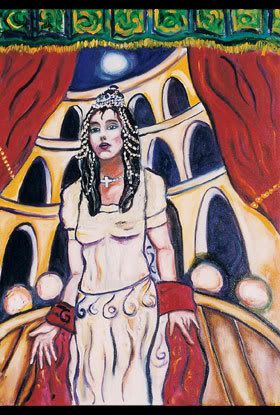
San Francisco Opera - 'Tosca'

Tosca

Music by Giacomo Puccini

Libretto by Luigi Illica and Giuseppe Giacosa

SAN FRANCISCO OPERA PRODUCTION

 
Puccini's masterful melodrama is a sexually charged, edge-of-your-seat thriller, in which a great singer, a rebellious painter and a corrupt police chief engage in a deadly test of wills. Music director Nicola Luisotti, "one of his generation's most accomplished Puccini conductors" (Opera News), leads two astonishing casts.

One stars Angela Gheorghiu, "in a part she seems to have been born to play" (Opera Today) and "who, like Tosca, is a born diva" (The Independent, London); Massimo Giordano, praised by The New York Times for his "ardent, expressive singing;" and veteran baritone Roberto Frontali, who brought "vocal brass and weight" (The Dallas Morning News) to San Francisco Opera's The Girl of the Golden West (2010).

The next cast stars Patricia Racette, who "tapped into Tosca's combination of regal and all-too-human traits and backed up her vibrant characterization with singing of considerable expressive fire" (Opera News); tenor Brian Jagde, lauded for his "beautiful singing, now nuanced, now ringing and forceful" (Washington Post); and Mark Delavan (Wotan in the Ring cycle, 2011), a singer of "ferocious power" (San Francisco Chronicle).

Sung in Italian with English supertitles
 

Approximate running time: 2 hours, 40 minutes including two intermissions

Pre-Opera Talks are free to ticketholders and take place in the main theater in the Orchestra section, 55 minutes prior to curtain.

Production photos: Cory Weaver

**************************************************


See the above link for the cast, credits, profiles, synopsis, times, prices, seating, etc.

.

Saturday, January 29, 2011

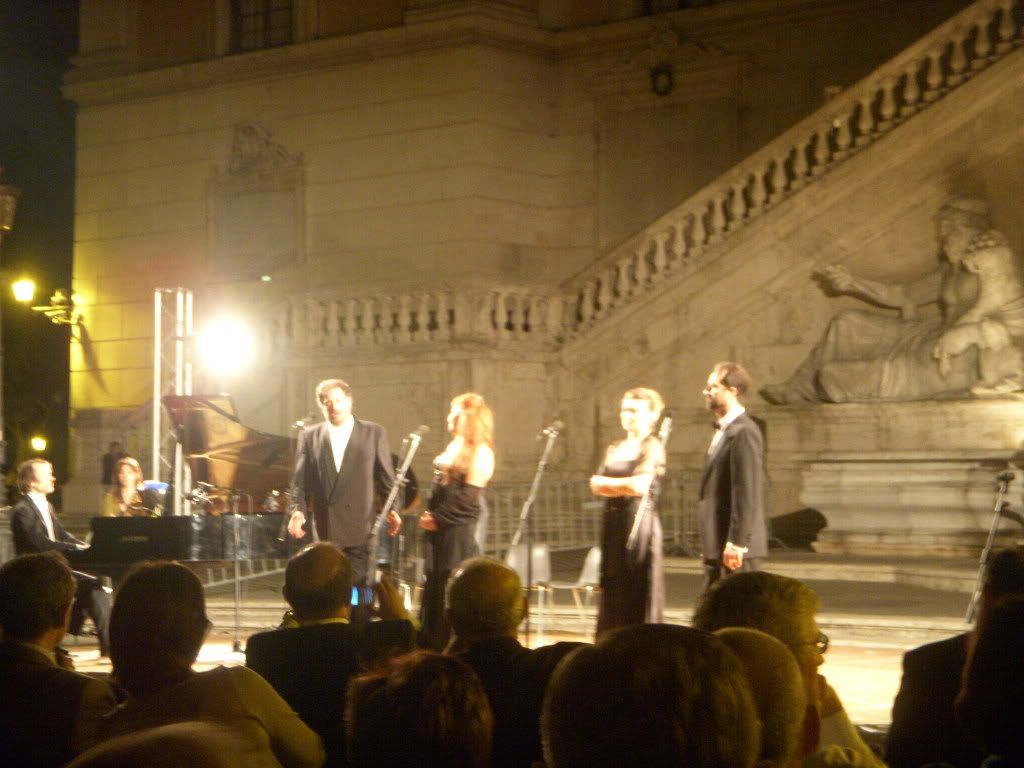
Quintessential experience when in Italy: The opera

Quintessential experience when in Italy: The opera

By Giovanna Dell'orto - Associated Press - June 24, 2011

MILAN, Italy – Opera is as fundamental to Italy's soul as the Colosseum, Michelangelo or pasta. To attend an opera performance here in the summer is a quintessential Italian experience — especially if you're willing to brave the often-byzantine process for getting last-minute but astonishingly cheap tickets.

"I don't understand a word of Italian, but I had to be here for the experience," Dr. Ravindran Kanesvaran, a young oncologist from Singapore, confessed in a whisper as we waited in La Scala, Italy's most famous opera house, for the crimson curtain to open on "Aida."

Top tickets for the season-opener at La Scala in Milan go for about $2,400 (2,000 euros), but the last-minute seats Kanesvaran and I got for a midseason sold-out performance cost just $15 (12 euros).

The basic concept of opera — putting dramatic presentations to music — is universal, but the modern version was created at the end of the 16th century for Italian aristocracy. Largely thanks to late tenor and native son Luciano Pavarotti, it has become part of pop culture here.

Teatro alla Scala, the theater's official full name, was one of three iconic venues I hit last summer. It's the must-do for acoustics and prestige. The other two are notable in part for their settings: Arena di Verona, an almost-intact Roman amphitheater in Verona; and Torre del Lago Puccini, where another open-air theater sits on the bank of a marshy lake in Tuscany. It's next to the place where Giacomo Puccini composed many of his most famous operas.

From champagne flutes in gilded halls to a panini picnic on 1,900-year-old steps, the three evenings couldn't have been more different. Here are some details, along with a word of caution: Some shows have been canceled this year due to wildcat strikes over new government regulations.

TEATRO ALLA SCALA: Never mind that I was perched high above the swirls of gilded flowers and red velvet draperies, above four tiers of regal boxes and nearly up against the rosette-covered ivory ceiling. The firefighter on duty at the top gallery row inside this fantastically opulent 1770s theater approved of my choice of seat.

Top critics, he said, like to be in the gallery so no abundance of visual flourish could distract them from the sublime listening. No serious opera connoisseur myself, I found it hard not to be absorbed by Franco Zeffirelli's lavish staging of Giuseppe Verdi's "Aida."

Premiered in 1871 in Cairo, and next year at La Scala, the opera tells a tragic tale of love and pharaonic intrigue in ancient Egypt. The grandest of grand operas, its staging that July night was a profusion of massive choruses against gigantic hieroglyphs.

Then Radames, the hero captain of the Egyptian guards who spurns his king's daughter to love her slave, Aida, with devastating consequences for all, sang out the most celebrated solo aria, "Celeste Aida."

And I realized the firefighter was right. Eyes shut, I let myself be transported by this most poignantly lyrical political tirade masquerading as love song. After all, the paeans for lost motherlands sung by Radames and other Verdi characters are but thinly veiled, urgent calls to arms.

That was clear to Italians as well as to their foreign occupiers 150 years ago. In the 19th century, revolts rocked Italy until unification. Verdi, composing operas filled with appeals to freedom and cries against tyrants, literally became the voice of the patriotic Risorgimento movement.

He was so revered as a founding father of modern Italy that when he lay dying in his suite, steps from La Scala, the streets were covered in straw so no noise would disturb the maestro.

Listening to Verdi's music at La Scala is an immersion not only in art but history, and well worth the day I spent getting a rush ticket.

But the procedure was tortuous: Around 11:30 a.m., I got in line outside the theater so that my name would be among the 140 taken down by volunteers at the roll-call beginning at 1 p.m. At 5:30 p.m., I got in line again to be given a number, with which I queued one last time to get the ticket that would finally grant me entry that evening. But it only cost a fraction of the front-row $300 tickets.

ARENA DI VERONA: If "Aida" is the grandest of Italian operas, its most stunning staging is at Verona's Arena, a first-century Roman amphitheater that has hosted theater performances since the early 1700s.

In the warm July dusk, I sat on the top row of giant limestone steps, as the sunset cast a salmon-pink glow over the city's medieval bell-towers and vine-covered hills, while strings opened the first notes.

In the 19,000-seat open-air arena, it's hard to distinctly make out the lyrics, but no setting can better display Verdi's dramatic monumentality. And Verdi's popular appeal is nowhere more apparent than in the contrast between the informal feel of the audience sharing jugs of wine and sandwiches on the steps and the over-the-top staging.

The first massive, full-orchestra chorus invoking war against Egypt's Ethiopian invaders was so thrillingly powerful that even the director jumped up and down. In "Celeste Aida," the tenor's lone voice miraculously filled the entire arena as the city disappeared in the darkness.

But the Arena experience is truly unsurpassable in "Aida'"s most famous moment, the triumphal march celebrating Radames' victorious return.

As trumpeters rang out deceptively simple notes, guards carrying torches filed down and lined up along one-third of the arena.

Four white horses pranced on the obelisk-fringed stage and knelt before the pharaoh while a ballet troupe swirled among the palms and sphinxes. The two toddlers sprawled between me and their German-speaking parents seemed as utterly enthralled as I was.

When "Aida" inaugurated the first summer opera season at the Arena in 1913, the audience included Puccini, whose operas are as renowned as Verdi's, though at the other end of the emotional spectrum.

Where Verdi's music excites fury and glory, Puccini's aims straight at the heart with sensuous, tear-jerking melodies.

PUCCINI FESTIVAL: Puccini penned some of his most famous arias in his Tuscan house by the marshy Lake Massaciuccoli in the late 19th and early 20th centuries. Every summer, a Puccini festival is held next-door in an open-air theater. Ducklings scurry away as you enter via a lakeside wooden bridge.

Years ago, lantern-laden rowboats were sprinkled on the lake behind the stage for a performance of "Madama Butterfly." For last summer's performance of "Turandot," I thought the orchestra was going all out with gongs and cymbals until I realized a strong thunderstorm was exploding in the mountains behind our seats.

"Turandot" is Puccini's last, unfinished opera from 1924. It is the story of a namesake Chinese princess who resolves to marry only the suitor who can solve three riddles (she kills all the others). Finally a prince gets the three answers right, and tells Turandot she can only get out of marrying him by guessing his name.

One of the world's most recognizable arias is "Nessun Dorma," which the prince sings anticipating love's final victory as the dawn deadline approaches and Turandot remains clueless.

I grew up listening to Luciano Pavarotti's signature rendition of this powerful hymn to hope, so no other tenor, however good, will ever be quite as meltingly emotional for me.

But to experience this aria not in a theater, but among fragrant linden trees on a balmy night, is incomparable. No stage setting could so precisely replicate the fairy tale's first glimpse of a happy ending.

Most poignantly, it is the same lakeside evening Puccini enjoyed, when this aria was still playing only in the mind of one of Italy's greatest musicians.


If You Go...

LA SCALA: Located in Milan. The opera season is year-round, with no performances in August; http://www.teatroallascala.org. Guidelines for rush tickets (about $15): http://bit.ly/92I2IC

ARENA DI VERONA: Located in Verona, about halfway between Milan and Venice. The 2010 season is June 18-Aug. 29; http://www.arena.it

PUCCINI FESTIVAL: Located in Torre del Lago, in Tuscany, about 20 miles from Pisa. The 2010 edition is July 16-Aug. 22; http://www.puccinifestival.it

STRIKES: Some performances in the 2010 season have been canceled last minute due to wildcat strikes.

.

Thursday, January 27, 2011

Choosing an identifying name

Many times it's hard to find a proper word to use in casually identifying people, places, and things which are "northern nations." "Northern Italian" isn't necessarily all that accurate because that term suggests that there is a definite "Italian." The Italian Peninsula should be a regional term, like the British Isles or the Balkans. Try explaining to someone in Ireland that he's not Irish, but a "British Islander," or to people in the Balkans that they're all the same... "Balkonians!" Yet we are expected to accept the Italian-arrangement without question, despite clear evidence to the contrary. Even the Austrians didn't outlaw our language and culture.

Other terms tended to be too regional or focus on only one aspect of our history. "Subalpine" is a term, while interesting, refers more to a particular climate around the world. "Gallo-Tuscan" is okay, but is still too regionally specific for us. Of course, "Padanian," while in various forms, is a term that goes back centuries, is still identified as a very modern political term. Although we like "northern nations," it would be entirely lost upon people not of our ancestry, and it's not an adjective.

What it really boils down to is that "Padania" or "northern nations" are, to us, fine descriptive terms for a shared ancestry or a federation of former nations which are very similar; but it would still would draw criticism to throw around the Padanian name in everyday language. The best term for that, I believe, is "Cisalpine." The Romans called the land of our Gallic ancestors "Gallia Cisalpina" (Cisalpine Gaul), which meant "Gaul on this side of the Alps." Cisalpine, by itself, literally means "south of the Alps." Also, there were Celts in Tuscany and Umbria.

For our unique heritage--which is different than the much more historically unified cultures of countries like Germany, Spain, France, Poland, etc.--we require acceptable terminology. Therefore "Padania" is a good term for the modern-day Cisalpine Gaul, Etruria, or Langbard Kingdom. It should be a federation of very similar cultures from past nations, and a reference to a common heritage. However for everyday language, a less political and more regional term for description is needed: Cisalpine or Cisalpines.

.

Sunday, November 2, 2008

History of Italians in South Africa

Viva Afritalia!

Story by Janice Winter

Early Italian immigrants – and, more recently, prisoners of war – brought a cornucopia of food, fashion, furniture, industry and ingenuity, as well as passion, perseverance and a tradition of family values, to our country. While we often acknowledge the role of the Dutch settlers, French Huguenots and British colonists in forming our nation, the significant contributions of the Italians seem to have been overlooked along the way. It’s a great pity.

A trickle of Italians began settling in South Africa from as early as 1689. It was only from 1861, though, that they starting flooding into the country, as refugees from the Italian War of Independence. But rather than arriving as helpless victims seeking aid, they brought fresh ideas and skills and began developing our nation.

Italians have constantly pioneered new ventures in South Africa. In 1878, for example, Oreste Nannucci opened a small laundry in Long Street, Cape Town, and that was the beginning of dry cleaning in South Africa. The first soccer club, the ‘Italia Football Club’, was established in Cape Town in 1929 by Giovanni Perosino. In 1937, Umberto Pomilio and Giuseppe Raimondo started a paper mill, inventing and pioneering a process that’s still used around the world today. Their company, the South African Pulp and Paper Industries Limited, is now known as Sappi. In the 1880s, a small community of Sicilian fishermen arrived in Langebaan, on the West Coast, modernising our fishing industry, importing motorised engines, setting up a fish canning industry and developing the area by building bathing facilities for leisure, and roads for the distribution of fish.

Many more of our central industries are peppered with Italian influence, and some iconic national symbols that we’ve taken as our own inventions owe their existence to early Italian immigrants. Some of our world-renowned Cape vintage wines are of Italian lineage and, yes, even our supposedly traditional and ‘proudly South African’ biltong is likely to have had its true origins not on the plaas, but in the Alps, as this method of curing meat has been used there for centuries.

During the Great Trek of the 19th century, Italian merchants followed the trekkers’ oxwagons, selling groceries, gunpowder, pots and pans – virtual delis on wheels long before they became a trendy way of eating ‘out’ at home.

And, of course, no discussion on Italian food is complete without reference to pasta, especially the name that’s in almost every South African kitchen cupboard today: Fatti’s & Moni’s. Luigi Fatti built a pasta factory in Johannesburg in 1912, after working as a grocer for several years. The Moni brothers (Giuseppe, Giacomo, Pietro and Roberto) were also grocers in Johannesburg and opened their own pasta factory which they then transferred to Cape Town. The two companies merged in 1920 to form the United Macaroni Factories Limited – not as catchy as the brand name we know today! Initially selling just egg pastas and ice cream cones, the company soon became a roaring success, diversifying their products and processing several thousand tons of grain every month.

But these men were far ahead of their time. It was only in the 1950s that most Italians began opening restaurants, in order to feed the many Italian workers who were rebuilding South Africa’s railway lines. We now travel those railways, and drive over mountain passes, work in skyscrapers and worship in churches, oblivious to their origins and the creative characters who built them. Many dams and bridges throughout South Africa were masterfully constructed by skilled Italian artisans, despite appalling working conditions and rampant malaria. But then, perseverance and perfectionism characterise the Italians, who don’t seem to enjoy anything in half measures.

Take Raffaele Monzali, for example. He was instrumental in constructing most of Natal’s railways. He also brought fresh drinking water to the city of Durban, through his Shongweni Reservoir Dam project. It was he who broke a world record with the 59-metre-deep foundations he laid for the Umgeni Bridge – just one of the many bridges he built around the country.

The Berettas are another example. These were four brothers who immigrated to South Africa and worked hard constructing the railways in Pilgrim’s Rest, Mpumalanga. Before long, though, one was the mayor of the town, and another the deputy mayor – good potential for a spaghetti western! These landmarks typify the Italian ability to start with little and work hard enough to leave a tangible legacy.

Italian builders, tilers, carpenters, contractors and engineers were also at the forefront of the South African construction boom in the early 1900s. From basic design and construction to the finer embellishments of terrazzo flooring, Carrara marble and mosaics, Italian influence pervades our architecture. In fact, many familiar buildings were designed and built by just a handful of highly prolific Italians.

Giuseppe Rubbi is without doubt the icon in this regard. Having completed a diploma in Industrial Arts at 16, he worked in several countries before arriving in the Transvaal to make a lasting impression on the South African landscape. Starting as a carpenter on the mines, he soon rose in status, building the military barracks on Robben Island (during the Anglo-Boer War) and many of the first skyscrapers in Cape Town. The Old Mutual, Sanlam, Southern Insurance and Cape Times buildings, as well as the Alhambra theatre and the Volkshospitaal (today the Cape Town Medi-Clinic), all carry his signature. Rubbi Road in Kommetjie, Cape Town, keeps his name on the lips of locals. He was one of many Italians who laid some of the most enduring foundations of our country.

When diamonds were discovered at Kimberley in 1867 and gold deposits in Barberton in 1882, foreign interest in South Africa exploded. The country was seen as a treasure chest of commercial opportunities and the world’s largest market for dynamite. Italians once again seized the gap. Two men arrived with five cases of dynamite to start an explosives factory at Leeuwfontein, near Pretoria, which not only became the most important dynamite factory in Africa, but also helped establish the largest commercial venture in South Africa at the time. Another factory was soon set up in Modderfontein. Many Italians worked here, among them the so-called cartuccere (‘cartridge girls’), who had the dangerous task, for 12 hours a day, of packing the dynamite cartridges in waxed paper. These workers lived in the vicinity of the Modderfontein factory, forming the first real Italian community and creating the suburb of Orange Grove in Johannesburg.

The discovery of diamonds and gold brought many fascinating characters to the country. Among them was Guglielmo Martinaglia, a minerologist who worked in Kimberley during the diamond rush, finding underground waterways and springs. He was invited to probe for gold in Roodepoort, Pretoria, and hit paydirt in only three weeks. In 1896 he obtained a lease for land at Zwartkrans. He laid explosives, attached them to the detonator, took cover and innocently pushed the plunger, hoping to find limestone. Instead, the explosion left an enormous black hole in the side of the mountain. Fearing that he’d demolished half the hillside, he went to explore. It turns out that Martinaglia had discovered, inadvertently, the astounding Sterkfontein Caves – now one of the major fossil sites in the world and home to the skull of ‘Mrs Ples’, an advanced humanlike ape creature, discovered in 1947 by Dr Robert Broom.

Italians have been part of our military history from as far back as the Battle of Bloukrans during the Great Trek. When the Zulus attacked the Voortrekkers, an Italian woman, Teresa Viglione, rode down to the Bushman’s River, courageously risking her life to warn the Boer laagers and tend to the wounded. A carved marble tablet in the Voortrekker Monument honours her valour. During the next major conflict, the Anglo-Boer War of 1899, over 200 Italians formed the most renowned foreign legion to support the Boer cause, under the leadership of Italian cavalry officer Camillo Ricchiardi. This distinguished officer earned the status of hero as well as gentleman, writing condolence letters to the families of slain enemies and including any personal belongings found on the deceased.

But it was the Second World War that was of most significance, bringing a massive influx of Italians into the country as prisoners of war. They were used for very tough manual labour, quarrying the Outeniqua Pass from the hardest solid rock in the country, and constructing the Du Toitskloof Pass and the Orange River irrigation scheme in Upington.

Up to 96,000 Italian prisoners were held in Pretoria’s Zonderwater, the largest Allied prisoner-of-war camp. This tented camp was grim and the Italian prisoners were demoralised, starved and far from anything familiar. But, once again, they rose above their circumstances. The enterprising prisoners transformed the barren camp into a thriving community, with 50 districts, 30 km of road, 20 theatres, 16 soccer fields, 22 dramatic societies, a large hospital, a chapel and an elementary school. They printed school textbooks, wrote and edited a weekly journal and taught 11 000 illiterate prisoners to read and write. They also set up a training centre where they taught mechanics, joinery, carving, physics, chemistry, painting, design and sculpture. Their artworks, toys, carved wooden boxes, rings, watches, wrought-iron handicrafts and furniture were so exquisite that local exhibitions were held and each worker earned a shilling a day.

Zonderwater established a new relationship and respect between Italy and South Africa. Indeed, thousands of Italians immigrated to South Africa in the 1950s, this time to influence, develop and transform our country, as they did Zonderwater. But what we celebrate even more than their many practical contributions is the passion for food, wine, art, architecture, industry, sport and religion, and the love of life in general, that they have fostered throughout our country. Viva l’Italia!

We would like to thank André Martinaglia and Maria Martinengo for the time and information they so generously gave for this feature.

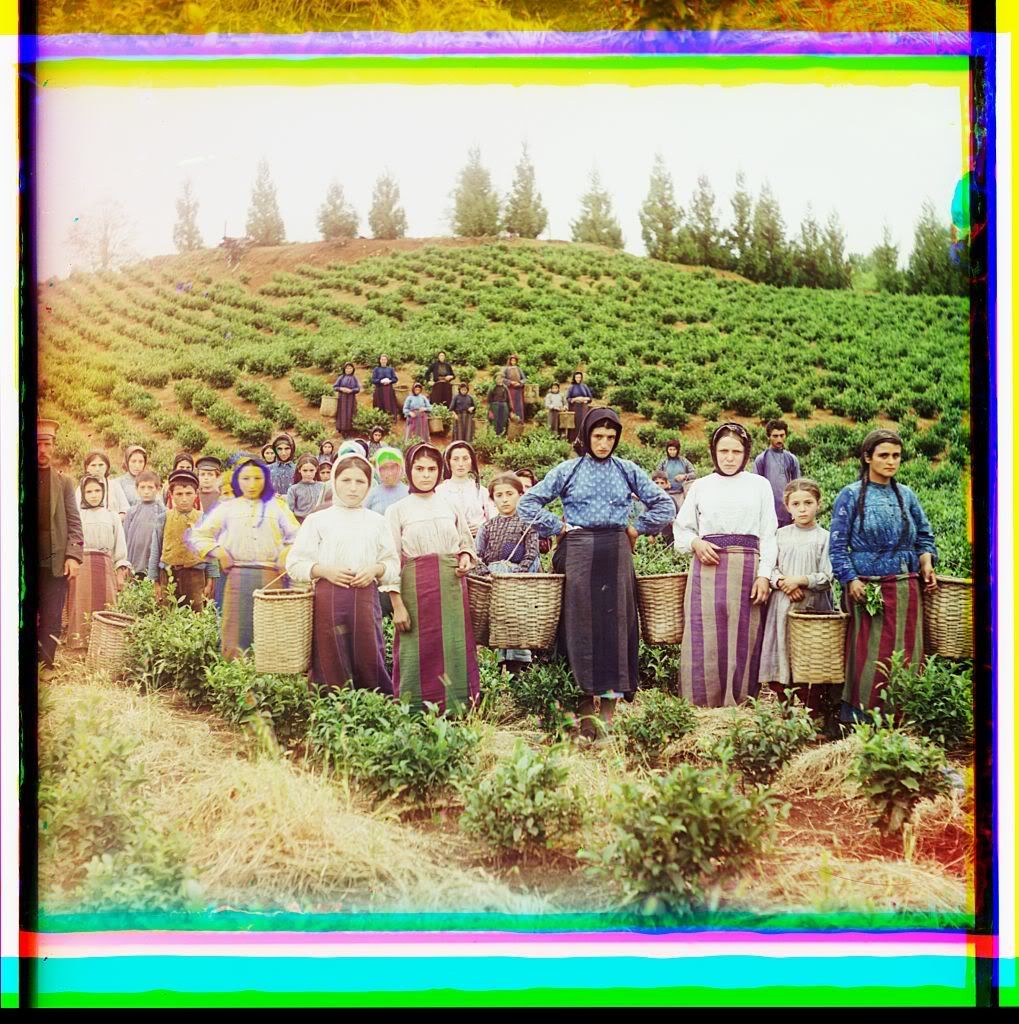
[Pictures courtesy of the Italian community of South Africa (see link)]:
'Viva Afritalia!' on the Pam Golding Properties website