Showing posts with label Cisalpine culture. Show all posts

Monday, July 12, 2021

Italian Cheese Board: Four famous northern cheeses

Italian Cheese Board (Safeway)

Last week I purchased an item at the supermarket chain Safeway called 'Italian Cheese Board'. Not that it was particularly fancy, but they were very tasty cheeses; four little stacks of northern cheeses which are well known in America, stacked on top of a hard waxed cardboard backing. There are other cheeses a bit off the beaten path of course, but I thought it significant that these four are so well-known worldwide. Of course Parmesan--originating from Emilia and Lombardia--would be the equivalent to Swiss, feta, gouda, muenster, cheddar, etc. Aged and in slices, it was very adequate in this product. Officially, the name is Parmigiano-Reggiano cheese.

Aged and delicious Asiago cheese has increased much in popularity in recent years, and is similar to Parmesan, but it also seems to be a bit like aged gouda. It originates in Veneto and Trentino, and is very adequate in this product. Provolone cheese should be well-known to any cheese lover, and originates in the Po Basin of Lombardia and Veneto. It's somewhat like white American cheese, but is also a bit like Helvetica cheese from Switzerland. Now "provolone valpadana" is not the same as "provolone del Monaco" originating from the Naples area.

Fontina cheese, which originates in the Aosta Valley, is similar to Swiss cheese. In the Alps or Apennine Mountains, some cheese is traditionally stored for six months or so in a cave for aging. Although well packaged, the damp conditions are perfect. Some of these caves are fancy, but many are just small rural caves where individuals or families can age home made cheese. In Lombardia I saw the name for these caves once from a book I have, but I couldn't locate it; I want to say a "cave grotto," but I think it was another word that starts with a "g." It showed a small cave with a heavy old fashioned door. This method goes back many centuries. In more urban settings, cheese is stored in deep cellars to age, although I think the cave method seems to be more effective for the best results. The dampness is probably the key. There are also special wooden boxes constructed for aging cheese, some very small for a family home.


Fontina cheese aging in a damp Alpine cave

Top 20 Most Popular Italian Cheeses

A Trip to a Cheese Cave, Arona, Piedmont, Italy

Valentine Warner visits the Fontina Cheese Caves, Aosta Valley, Italy

.

Wednesday, March 8, 2017

Langobard architecture - Langobard temple in Spoleto


Lombard Romanesque architecture

The link is HERE in case this image doesn't hold. Spoleto (Umbria) was one of two southern Langobard duchies; Benevento being the other. They actually lasted longer than the larger three northern duchies thanks to the Vatican-Carolinian (Charlemagne) alliance.

.More examples of Langobard era architecture and artifacts can be viewed on the Italian Wikipedia "Longobardi" webpage, the "Duomo di Monza" webpage,, the "Architetture longobarda" webpage, and at 'The Cathedral at Monza: Centerpoint of the Langobard period'.

.

Saturday, December 17, 2016

Befana - The Christmas Witch


Epcot Italy's CHRISTMAS WITCH - LA BEFANA - Holidays Around The World

BigFatPanda

Epcot Holidays Around The World - ITALY
 

Meet the kind-hearted witch La Befana who arrives on the eve of the Epiphany to grant gifts to good children.

David's Vacation Club Rentals is the exclusive sponsor of the Big Fat Panda Show.


Visit dvcRENTALS.com to inquire about renting a Deluxe Disney Villa.


You don't have to be a Disney Vacation Club member to enjoy a stay in a Deluxe Disney Villa!


*************************

Befana

In Italian folklore, Befana (pronounced [beˈfaːna]) is an old woman who delivers gifts to children throughout Italy on Epiphany Eve (the night of January 5) in a similar way to St Nicholas or Santa Claus.

A popular belief is that her name derives from the Feast of Epiphany or in Italian La Festa dell'Epifania. Epiphania (Epiphany in English) is a Latin word with Greek origins. "Epiphany" means either the "Feast of the Epiphany" (January 6) or "manifestation (of the divinity)." Some suggest that Befana is descended from the Sabine/Roman goddess named Strina.


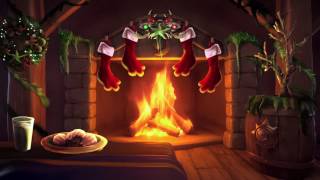
In popular folklore Befana visits all the children of Italy on the eve of the Feast of the Epiphany to fill their shoes with candy and presents if they are good, or a lump of coal or dark candy if they are bad. In many poorer parts of Italy and in particular rural Sicily, a stick in a stocking was placed instead of coal. Being a good housekeeper, many say she will sweep the floor before she leaves. To some the sweeping meant the sweeping away of the problems of the year. The child's family typically leaves a small glass of wine and a plate with a few morsels of food, often regional or local, for the Befana.

She is usually portrayed as a hag riding a broomstick through the air wearing a black shawl and is covered in soot because she enters the children's houses through the chimney. She is often smiling and carries a bag or hamper filled with candy, gifts, or both.

She is also referred to as the Christmas Witch.


con't

.

Sunday, April 24, 2016

Rosa Feola and Fabio Centanni - American debut at SF's Herbst Theatre on May 6


Rosa Feola - TOSTI Non t'amo più

Rosenblatt Recitals

London 09.01.14 - On this evening Italian soprano Rosa Feola performed songs and arias by Giménez, Bizet, Villa-Lobos, Gounod, Rossini, Tosti, Donizetti, Verdi and Gastaldon, accompanied by Iain Burnside.

************

See Performances.org for details

Rosa Feola - Soprano

Fabio Centanni - Piano

US Recital Debut

Fri May 6 - 7:30 PM

Herbst Theatre

************

Artist Change

Rosa Feola and Fabio Centanni replace Anna Caterina Antonacci and Donald Sulzen who are unable to perform as scheduled.

San Francisco Performances’ Vocal Series is made possible, in part, by a generous grant from The Bernard Osher Foundation.

US Recital Debut

Friday, May 6, 2016

7:30pm

Herbst Theatre

$65/$55/$40

************

“London likes to think it lies at the centre of the musical universe, but many great singers had relatively small careers here and most of today’s up-and-coming stars make their names elsewhere. No one fits that description better than the Italian lyric soprano Rosa Feola…the key to Feola’s artistic personality is not just her vocal prowess: what counts is that she never gives less than a performance. ”

-- Financial Times (Five Star Review)

************

About This Performance

Known for her sparkling soprano and gifts as an actress on both the concert platform and opera stage, she regularly collaborates with conductors such as Riccardo Muti and gives recitals internationally. Her strengths are many, including her natural timbre, flawless technique, and abundance of self-confidence, enough to hold the stage on her own—without a score. Feola’s San Francisco recital program brings together Italian songs that magnify the natural sympathy between music and poetry. In Italy this union has its own particular history, and produced some of the most beautiful—if not always well-known—settings of great Italian poets by composers such as Rossini, Donizetti, Mercadante, Verdi and Tosti. Liszt, the one non-Italian composer in the program is included for his innovative Tre Sonetti del Petrarca, a tribute to one of Italy’s greatest poets and a clear influence on Giuseppe Martucci’s Tre pezzi of 1905–6.

This performance is sponsored in part by a generous gift from Mr. and Mrs. J. Patterson McBaine.

.

Tuesday, February 23, 2016

Tribute To European Art and Architecture


Tribute To European Art and Architecture

GermanicGod's channel


Renaissance architecture and art, most of it Catholic and Cisalpine, or inspired. Below, Medieval Catalan music. Catalans are Cisalpine-like people.


trovadores! Si us quer conselh bel'ami'Alamanda...
 

nachosaen

.

Tuesday, May 26, 2015

The Atmospheres of Padanian Alps - Distinct architecture of the Padanian Alps


If you haven't watched this, you may find this fascinating. This Alpine architecture is not Swiss or German, but distinctly of the Padanian Alps. I don't know how many centuries it goes back. You may want to click the full-screen button on the lower right for this one.

.

Sunday, May 24, 2015

Buonconsiglio Castle in Trento


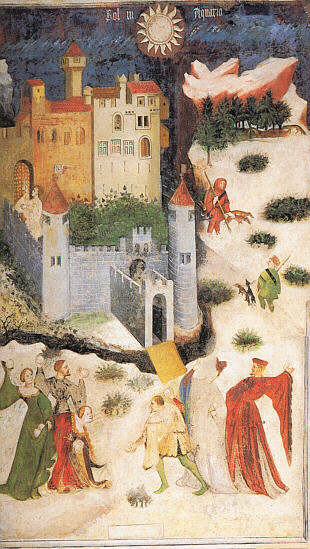
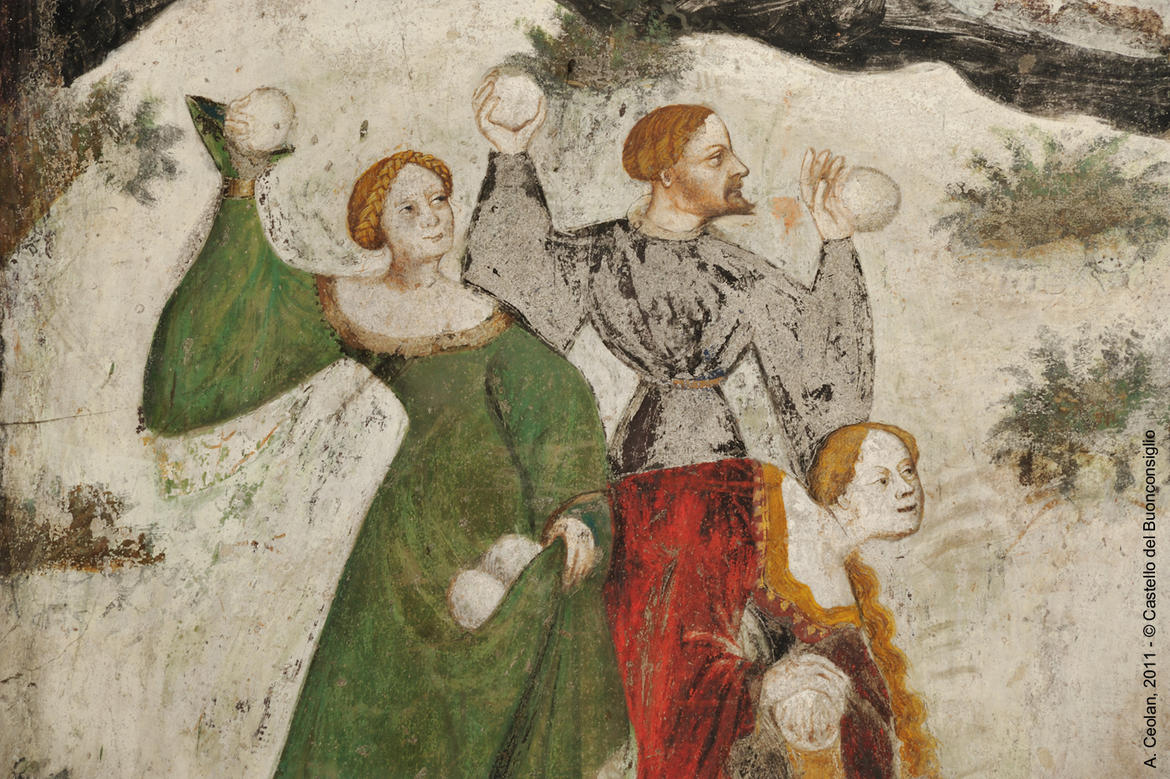
The Buonconsiglio Castle could be a lot of other castles in the Cisalpine region. It stands out a little due to it's history, size, and artistry. If you click on the above image, right-click, click view image, and click to get the full size; you can see the faces and fine detail on the upper columns. Many centuries old structures further stand out within the picturesque and colorful mountain areas, such as the Trento province.


The castle, which was constructed in the 13th century, was an important state administrative headquarters for the next five hundred years. Invading groups, such as the Austrians, occupied it as a military base.


Decorated by the aristocracy over the centuries, the castle also houses many frescoes and art pieces.


Appearing much as it must have in the 1200s, the castle sits majestically against the Alps at twilight.


**************************************************


The castles of Tuscany

The website CastelliToscani.com has an index of all the major castles in the region.

.

Monday, February 2, 2015

'Italian Americans, California Italians' and a few random notes


'Italian Americans, California Italians' (UCLA YouTube channel)

From the video description:

This video records the beginning of a conference at UCLA titled "Italian Americans, California Italians." It was the first of its kind, made up of nearly a dozen scholarly presentations and discussions aiming to define "California Italians" within the more generic group of "Italian Americans." This opening, introductory statement to a full room was made by the Chairman of UCLA's Department of Italian, Professor Thomas Harrison.


Columbus... born in Genoa

You may be aware that the origin of Columbus has been in some dispute due to a somewhat surprising lack of evidence of his early life in Genoa. However, it does appear that he was of Genoese ancestry.

"Yo nacio en Genoba" ("I was born in Genoa")
 

--Written in Christopher Columbus' Will; February 22, 1498


"La California"

The small town of La California, along the Tuscan coast, was founded by Leonetto Cipriani. Cipriani--who was Corsican--had spent many years traveling, especially in California and the west coast of the United States. He was influential, and was acquainted with the Count of Cavour, and was something of an ambassador for a unified Italy of which he very much wanted Corsica to be included. He wrote an account of his travels entitled 'California And Overland Diaries of Count Leonetto Cipriani From 1853 through 1871'. He co-founded the city of Belmont, California in San Mateo County.


Bargetto Winery (Santa Cruz Mountains)

I love the Santa Cruz Mountains. Any excuse to visit will not disappoint. It even resembles parts of the Cisalpine Alps or the Apennine Mountains. I have not visited this winery. Feel free to send a short or long review (camunlynx@hotmail.com) for posting.


Our History (from Bargetto.com website)

The Bargetto winemaking heritage began with brothers Phillip and John Bargetto who emigrated from Castelnuovo Don Bosco, a small town in the Piedmont region of northern Italy. They brought with them years of winegrowing experience when they established BARGETTO WINERY on the banks of Soquel Creek in California.

Phillip was the first to depart Italy in 1891 at the age of seventeen. In 1909 John joined his brother in San Francisco.
The original Bargetto family winery was located in San Francisco from 1910-1917. The name of this winery was South Montebello Vineyard and Wine Company. With Prohibition on the horizon the winery was closed and the brothers moved to Soquel in 1917.

Phillip and John purchased the present site of BARGETTO WINERY in 1918 and began making wine out of an old barn on the property. During Prohibition (1919-1933), the brothers continued to make wine for family and friends, while they continued to sell produce to local customers. They also grew apples at the family ranch in Soquel. When Prohibition ended in 1933, the brothers devoted more time to the wine business. They began a wine wholesale business, while they continued to sell produce wholesale.

Phillip Bargetto passed away in 1936 and John was left the sole owner of the business throughout the 1940s and 1950s. He continued to produce wine and sell wholesale and retail. He was joined by his sons Ralph and Lawrence during these years.


The Next Generation

The Bargetto Family winemaking heritage continued with John’s son Lawrence during the 1960s and 1970s. He introduced modern technology such as stainless steel fermentation, barrel aging, and added new Santa Cruz Mountains varietals such as Pinot Noir and Chardonnay. He also created the CHAUCER’S line of dessert-style wines.


Today

The third generation of Bargettos now direct the operation of the winery. BARGETTO WINERY represents the oldest continuous-operation winery in the Santa Cruz Mountains. Their pioneering spirit continued with the establishment of Bargetto Regan Estate Vineyards, near Corralitos, California in 1992. Here, cool-climate varietals like Chardonnay, Pinot Noir, and Pinot Grigio are carefully nurtured to produce BARGETTO WINERY’s estate wines. In keeping with the family heritage, the winery also incorporates northern Italian varietals from its Estate Vineyard into its flagship LA VITA wine.


Voynich manuscript
  
This work is in the form of a short book, filled with illustrations of plants, geometric shapes, and an unknown text. It appears very deep and scientific, but there has not yet been any way to read its secrets. The book is available for purchase, free in pdf form online, documentaries on YouTube, and lots of general information in a search.. so I won't bother with links. You may want to examine it and attempt to understand it. The best I could come up with is that the characters look a bit like ancient Indo-European Tocharian writing, and the illustrations remind me of Fibonacci patterns. Very strange.

From Wikipedia:

The Voynich manuscript is an illustrated codex hand-written in an unknown writing system. The vellum in the book pages has been carbon-dated to the early 15th century (1404–1438), and may have been composed in Northern Italy during the Italian Renaissance. The manuscript is named after Wilfrid Voynich, a Polish book dealer who purchased it in 1912.

The pages of the codex are vellum. Some of the pages are missing, but about 240 remain. The text is written from left to right, and most of the pages have illustrations or diagrams.

The Voynich manuscript has been studied by many professional and amateur cryptographers, including American and British codebreakers from both World War I and World War II. No one has yet succeeded in deciphering the text, and it has become a famous case in the history of cryptography. The mystery of the meaning and origin of the manuscript has excited the popular imagination, making the manuscript the subject of novels and speculation. None of the many hypotheses proposed over the last hundred years has yet been independently verified.

The Voynich manuscript was donated by Hans P. Kraus[6] to Yale University's Beinecke Rare Book and Manuscript Library in 1969, where it is catalogued under call number MS 408. A digitized high-resolution copy is also accessible freely at its website.


.

Wednesday, September 25, 2013

'Libira Me' - Roman Catholic chant


Deliver me, O Lord, from death eternal on that fearful day,
 

When the heavens and the earth shall be moved,
 

When thou shalt come to judge the world by fire.
 

I am made to tremble, and I fear, till the judgment be upon us, and the coming wrath,
 

When the heavens and the earth shall be moved.
 

That day, day of wrath, calamity, and misery, day of great and exceeding bitterness,
 

When thou shalt come to judge the world by fire.
 

Rest eternal grant unto them, O Lord: and let light perpetual shine upon them.


Libira Me (Wikipedia)

Líbera me ("Deliver me") is a Roman Catholic responsory that is sung in the Office of the Dead and at the absolution of the dead, a service of prayers for the dead said beside the coffin immediately after the Requiem Mass and before burial. The text of Libera Me asks God to have mercy upon the deceased person at the Last Judgment.

.

Wednesday, February 27, 2013

Cisalpine IQ and human accomplishment: Part 1

Cassini-Huygens Mission to Saturn and Titan
An intelligence quotient, or IQ, is a score derived from one of several standardized tests designed to assess intelligence. 

Some can agree with it, disagree with it, but it remains as the current scientific method for accessing what's between our ears. Obviously someone could be immoral, amoral, evil, violent, twisted, perverted, a political zealot, an ideologue, a relative conformist, or just totally opposed to something normal or good.... and still have a high IQ.

I think, like anything else, it should be questioned. What is "intelligence?" Someone, for example, could attain advanced degrees due to having great memorizational ability; but they could be severely lacking in creative ability, problem solving skills, and sometimes even common "cause and effect" logic. Political figures are a good example of this. Still, IQ does tell us a lot. I wouldn't totally hang my hat on it, but it can be compared to global demographics, sources of technologies, and other factors; and it can at least be determined that IQ tells us much.

Quite frankly, the IQ of native Cisalpines is about 110... the highest in the world. Even then, that doesn't mean that every individual is up to that standard; nor does is mean that a Cisalpine society will always be the best. One good example of "a self-propelled milieu of ideas" (as opposed to an intercultural crossroads of ideas) is the early automobile industry; whereby urban industrial centers in north Italy, Germany, and Japan in particular were able to develop entrepreneurial-technological environments for development.

Germany--which has a slightly lower average IQ (about 105) than true Cisalpines--still maintains a higher standard of living, a slightly higher inherent technological ingenuity, and better infrastructure. What is interesting is that the German-speaking countries, which are of Alpine and Germanic stock; and the Cisalpine regions, which are of true-Mediterranean and Alpine stock with Germanic admixture.... have gotten the best technological results in Europe. Again, this does not guarantee a better society or even a higher standard of living.

Etruscan ruins
Still, this south-central European ingenuity and IQ is higher than the more Teutonic or Norse countries; or anywhere else in Europe for that matter. It seems to shatter the idea of a Mediterranean or Teutonic basis for human accomplishment. The ancient true-Mediterraneans led the world in every area of human endeavor; yet in recent centuries the more advanced societies have become much more oriented toward generally northern/western Europe or their colonies. However, despite these realities, this Transalpine/Cisalpine creativity and ingenuity--at least in the area of science and technology--remains a driving force in the world.

There are endless theories and quagmires regarding the comparing of collective or demographic IQs, so I think I will just avoid that part of it mainly due to the endless complexities and layers of bias. Suffice to say, IQ tells us a lot, but not everything. I think that an individual could have a high IQ and not be nearly as successful as a cunning person with an average IQ. I like to think that creativity and logic carry a little more weight than cold intelligence and ruthless cunning. Actually, it's all mixed together; but it's helpful to assess ourselves.


.

Wednesday, January 30, 2013

Pan-Padanist ideas and flags

Basically, a "Padanist" is a person who believes in "Padanism"--the concept that the Cisalpine region, people, history, and culture are unique, great, and worth protecting. I would amend that the "Cisalpine culture" is a "group of related cultures." This idea of a clear "cultural grouping" isn't much different than what we have seen with German, modern-Celtic, Slavic, or Greek cultures since the middle of the nineteenth century. We use the word "Cisalpine" for discussion because "Padanian" is a politically-charged word.. at least for now.

"Pan-Padanism" is something related, but different. It's the concept of acknowledging a diaspora, and getting in touch with manifestations of a root-culture in different parts of the world. Here in northern California, we are at least fifty years removed from even a small degree of immigration from the Cisalpine ancestral homeland... which was chiefly from the northwest region. However, there was a type of chain-migration which existed for about a century. Still, fifty years--and it's really more like seventy years--is a long time. We've collectively lost touch. If we wish to get back in touch, then wouldn't it be best to do it globally?


Regions and flag ideas


Europe

Naturally we would look to the Lega Nord political party for inspiration. The proposed flag (see above) is an ancient green rosette/sun of the alps symbol on white background. They used green as it's a Celtic color; however, sometimes blue or red have been associated with the Celts/Gauls. I think "Gaulish"--or "Celto-Gaulish"--is more the term to describe that part of Cisalpine history. The flag's alternative would be white rosette on green background; as would any Cisalpine flag discussed below.


South America

Argentina is the largest "Cisalpine colony" outside of the ancestral homeland. A significant (one-third?) percentage of the Argentine population is of Cisalpine ancestry. More generally, the "cone of South America" was a region of great settlement of Lombardians, Ligurians, Piedmontese, etc. Argentina clearly stands out, and it's flag is bacially light blue and white. A light blue rosette on white background would seem to be a natural flag for the South American colony in general.


North America

Northern California stands out as the chief area of past settlement of the Cisalpine peoples on this continent. The California flag is mainly red and white. The largest country, Canada, has a red and white flag, Even the old "red ensign" flag of pre-1965 Canada was red. The flag of the United States is largely red and white. Even the Mexican flag is two-thirds "red and white." Yes, some of our people settled in Mexico along with some other non-Hispanic European immigrants.

Even beyond that, red and white seems to be the natural colors in Cisalpine history. The flags of Lombardy and Milano are red cross on white background, and sometimes the opposite, as well as historical Genoese flags. Also the flag of Piedmont is white cross on dark red background; and historical flags of Venice and Tuscany are red. The Lombardian Crusaders painted the red cross on white background on the walls of Jerusalem, and this symbol represents "the religion of our people" (the primary religion, not the only one--or lack thereof).

I would propose the red rosette on white background as the natural flag of the Cisalpines on this continent. The white rosette on red background may tend to look strange to others, but the red on white seems to emit positive energy. In general, the rosette/sun of the Alps symbol is now "the symbol of our people" in the same way that the ancient symbol of Saturn was adopted as the symbol of the Jewish people worldwide.. not just in Israel. Ironically, the Alpine-rosette shares some of the same mathematical dimentions as the Saturnian-hexagram.


South Africa/Zimbabwe

The small Cisalpine population in what was Rhodesia, which included farming communities who fed the nation, has basically been dismantled permanently. Still, in South Africa there are Cisalpine communities, and the Cisalpines have been a part of the country for a long time. The old flag of South Africa was an orange-white-blue, top-to-bottom tricolor. The orange bar on top stood out, and could be used as the Cisalpine flag of the region. Orange rosette on white background--two-thirds of the old Afrikaner flag--but not the blue.... so it's not an "Afrikaner flag," but a mild reminder of the Cisalpine history in the region.


Australia/New Zealand

Both the flag of Australia, and the flag of New Zealand are blue with some white. Therefore, this darker shade of blue on a rosette on white background would seem to clearly be the colors of the Cisalpines of the region.


Alternate symbols

Many concerns adopt "alternate symbols" to use. I think any symbol, arms, or flags which are clearly part of our ancestral history are fair game. However, as sort've a second symbol, the Gothic-style Catholic cross is one which can be seen above-right; and as perhaps a third symbol, the solar cross seen above-right, symbolizing the various ancient spiritual traditions of the Cisalpine hearth which go back deep in our history. However, generally, Roman Catholicism is "the religion of our people."

.

Friday, September 7, 2012

'Rigoletto' at the San Francisco Opera


'Rigoletto' at the San Francisco Opera

Music by Giuseppe Verdi

Libretto by Francesco Maria Piave

SAN FRANCISCO OPERA PRODUCTION

One of opera's most vivid and compelling characters, a vengeful court jester, desperately tries to protect his daughter from disaster in this heart-wrenching tragedy. The first of two world-class casts led by Music Director Nicola Luisotti stars Željko Lučić, "whose vocal artistry is exceptional" (The New York Times); Aleksandra Kurzak, "a superstar in the making" (The Guardian, London); and, as the lecherous Duke, Francesco Demuro, "whose open, bright, superbly focused tone was reminiscent of Pavarotti" (Opera News).

The equally impressive next cast stars Marco Vratogna, who, as the sinister Iago in Otello (2009), thrilled San Francisco Opera audiences with his "vocal power and theatrical electricity" (San Francisco Chronicle); Albina Shagimuratova, "a phenomenon that must be heard to be believed" (Opera News); and Merola Opera Program graduate Arturo Chacón-Cruz with his "clarion tone and piercingly clean top notes" (Washington Times).


Join us at Books, Inc. in Opera Plaza for Opera on the Couch—a lively post-performance discussion following the September 30 performance of Rigoletto at approximately 5pm. FREE and open to the public.
Sung in Italian with English supertitles

Approximate running time: 2 hours, 35 minutes including one intermission

Pre-Opera Talks are free to ticketholders and take place in the main theater in the Orchestra section, 55 minutes prior to curtain (please note there is no talk on Opening Night, September 7, 2012).


.