Showing posts with label space exploration. Show all posts

Wednesday, April 26, 2017

Cassini-Huygens now moving though Saturn's rings


'Cosmic Speck: See Earth Through Saturn's Rings in Amazing Cassini Photo'

Sarah Lewin - space.com - April 21, 2017

 The Cassini spacecraft spotted Earth as a bright speck (and the moon as a smaller speck) between Saturn's broad rings as the craft prepares for its final dive into the ringed planet's atmosphere.

Cassini was 870 million miles (1.4 billion kilometers) from Earth the night of April 12-13 when it snapped this photo, which shows Earth — and the even tinier moon, a faint dot to its left — framed between the icy rings of Saturn. At the time the photo was taken, the southern Atlantic Ocean was facing the spacecraft's lens, NASA officials said in a statement.


con't...

*************************
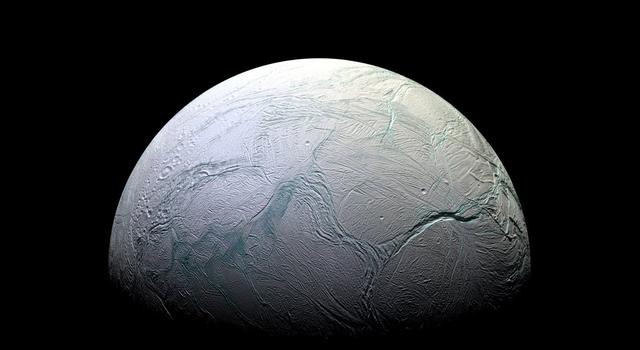
Saturn moon Enceladus


The Cassini-Huygens Mission has been a joint program between NASA, the European Space Agency (ESA), and the Italian Space Agency (ASI) since 1997. Much of the craft was designed and developed by the ASI and other corporations in our Cisalpine ancestral homeland. As fascinating as Titan and other Saturn moons have proved to be, the possibility of life on the moon Enceladus has stolen the show since last year.

This is a real photograph, not a drawing or computer generated image..

NASA twitter 4-26-17:
To go where no spacecraft has gone before…tomorrow, @CassiniSaturn makes its 1st dive between Saturn and its rings: http://go.nasa.gov/2p2oAnC

*************************

'The Cassini spacecraft’s dive in between Saturn’s rings, explained'

The spacecraft begins its “grand finale” before crashing into the gas giant later this year

Brian Resnick - vox.com - April 26, 2017

The Cassini spacecraft is going where no ship has gone before: On Wednesday, it begins a series of dives into the space between Saturn and its magnificent rings. The maneuver — a series of 22 orbits that will bring Cassini increasingly closer to Saturn’s surface before crashing into it — is called the spacecraft’s “grand finale.” And to mark this final journey, Cassini is being honored with a Google Doodle.

Over its last 13 years in orbit, Cassini has had an amazing run studying Saturn and its moons. Here’s what the spacecraft has taught us so far — and why its final mission may be its most spectacular yet.


con't...

.

Sunday, February 1, 2015

Real footage of Cassini-Huygens descent down to the Titan surface


Cassini-Huygens - Ten Years

It has already been ten years since the Cassini-Huygens spacecraft landed upon a moon of Saturn called Titan. The Saturn Mission has been a collaboration of NASA, the European Space Agency (ESA), and the Italian Space Agency (ASI). Initially there were a half dozen or so independent space agencies headquartered in the Cisalpine region, each constructing various parts for the mission, Someone sent me the names of these private agencies, but I misplaced it. I recall with demusement, the radio talk show host Michael Savage proclaiming the he wasn't aware that "Italy" had any space agency... despite the 107 average IQ of root stock Cisalpines, and the continuous scientific contributions to the humankind for centuries.

This video feed, from the initial landing in 2005, almost looks surreal, like a video game, or special effects from a movie. It is, however, very real. Titan has mountains, flat lands, lakes, and rivers. I have heard what almost sounded like claims that it would be about as inhospitable as Antarctica. In other words, a human could almost get by merely dressed as one would in Antarctica, with a breathing apparatus. I say almost, as the surface is about two hundred degrees below zero. Titan has an atmosphere of methane (Earth's atmosphere is partly methane), and the water is mostly methane.. apparently this liquid does not freeze. If the atmosphere could be warmed up, it could be habitable.


A few links:

Italian Space Agency (English language)

What Huygens Saw On Titan - New Image Processing | Video (same as the above, but with commentary)

NASA | Revealing Saturn: Cassini's Tenth Year

Why no Waves in Titan's Ocean's

The Sound of Saturn: The Winds of Titan, from the Huygens Probe 

The Eerie Sounds Of Saturn (very strange)

.

Friday, September 26, 2008

Cassini–Huygens: Mission to Saturn & Titan

On our main page, we have long had a page entitled "Cassini–Huygens: Mission to Saturn & Titan," in an attempt to track and monitor the mission. Over the last number of years, Cassini-Huygens has frequently been in the news, and we did republish many articles in our Yahoo Group. The mission is winding down now and we're moving it here.

Much of the technology for this mission came from space agencies in Northern Italy. I can recall a mainstream radio talk show host stating, after an early Cassini-Huygens story, "I didn't even know that Italy had a space program." He may as well said that the French don't know how to make wine, or that Persians don't know how to make rugs. As clearly laid out in the 2003 book 'Human Accomplishment,' Northern Italy (and German-speaking regions) have been at the very TOP of science and technology for the past 600 years. The same host is a big "Sopranos" fan, so it's just another example of just how far this stunning "Italian duality" has gone in this country.

Some of the independent space agencies in Northern Italy (via ASI Agenzia Spaziale Italiana), which are directly involved in Cassini-Huygens, are Alenia Spazio, Galileo Avionica, LABEN, and Carlo Gavazzi Space. Other space agencies are owned by Finmeccanica, a state owned company. Also, there are many other Northern Italian insustries involved in space programs (via ASI or via ESA) like Agusta, Aermacchi, Fiat-Avio, and many others. I had a link to what formerly was Alena Spazio, but it was merged into the whole European corporate conglomerate landscape, which I think is tragic, and just goes along with the diminishing concept of national sovereignty.

[Right: Amazing photo of Titan, one of Saturn's moons]


FROM WIKIPEDIA:

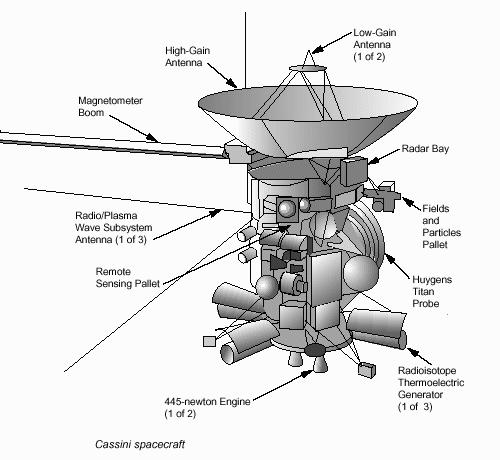
Cassini–Huygens is a joint NASA/ESA/ASI robotic spacecraft mission currently studying the planet Saturn and its moons. The spacecraft consists of two main elements: the NASA Cassini orbiter, named after the Italian-French astronomer Giovanni Domenico Cassini, and the ESA Huygens probe, named after the Dutch astronomer, mathematician and physicist Christiaan Huygens. It was launched on October 15, 1997 and entered into orbit around Saturn on July 1, 2004. On December 25, 2004 the Huygens probe separated from the orbiter at approximately 02:00 UTC; it reached Saturn's moon Titan on January 14, 2005 where it made an atmospheric descent to the surface and relayed scientific information. On April 18, 2008, NASA announced a two year extension of the mission.[1] Cassini is the first spacecraft to orbit Saturn and the fourth to visit it.

Hundreds of scientists and engineers from 16 European countries and 33 states of the United States make up the team responsible for designing, building, flying and collecting data from the Cassini orbiter and Huygens probe. The mission is managed by NASA’s Jet Propulsion Laboratory, where the orbiter was designed and assembled. Development of the Huygens Titan probe was managed by the European Space Technology and Research Center, whose prime contractor for the probe is Alcatel in France. Equipment and instruments for the probe were supplied from many countries, including the United States. The Italian Space Agency (ASI) provided Cassini's high-gain communication antenna, and a revolutionary compact and light-weight multimode radar (synthetic aperture radar, radar altimeter, radiometer).

*************************
**************************************************

There is much more information and links at the Cassini-Huygens Wikipedia page. Other websites include the Cassini-Huygens home at JPL, the latest Saturn-Titan images at the same JPL site, and a European Cassini-Huygens site with a lot of related images. Also, three recent news items that I happened to see recently include Saturn's rings may be older than thought (Yahoo news), Probe gets close up to Enceladus (BBC), and New Enceladus Closeups Now Arriving (Sky & Telescope). Lastly, let us not forget the Giovanni Domenico Cassini Wikipedia page.