Showing posts with label the Americas. Show all posts

Sunday, August 3, 2014

'Minneapolis Renames Columbus Day As Indigenous People's Day' - Part 2


After viewing many Columbus Day protests, I found it amusing that elsewhere like New York City, the parade goes on seemingly without a hitch. About a minute into this video, you will see the name of an organization called the Columbus Citizens Foundation. The foundation is in full support of anything Columbus, but is based on "Italian heritage" not specifically "Columbus." In other words, from what I can gather, they avoid any "intellectualizing" about all the facets of the Columbus issue (just as the opposing side does), and merely hangs their hat on the "Italian-American" heritage concept.

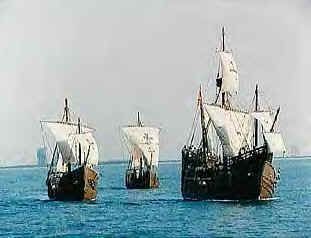
There's an old saying that I think is mostly true: "Every nation was born in blood." Christopher Columbus was one of many explorers in the New World, starting with Leif Erikson. Erikson was even praised by President Obama... a sometimes-anti-imperialist. Erikson certainly would have set up a permanent colony along the eastern Canadian coast, but it was too far out of the way at that time. Beyond Leif Erikson, all of these early explorers did their part to set up the Americas for colonization.
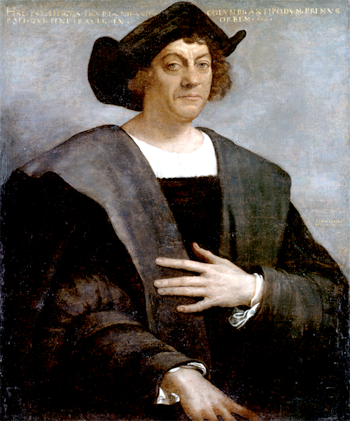
Columbus, to some "the new Hitler"
Personally, I believe that it was actually "Spanish, Portuguese, English, French, and Dutch Imperialism," not "EUROPEAN IMPERIALISM." Again, how many nations participated? There were perhaps fifty European nations in 1492! If someone doesn't like something that China did, they can't blame Tibet, even if they may look similar! If something bad happens in Algeria, you can't blame Pakistan, even if they may look similar! Even the overwhelming colonization of later times right up to the 60s, was the United Kingdom, France, Portugal, and Holland; with the rest being small and sporadic. Even Soviet expansion into Asia, early on, was in huge very depopulated regions.

There's nothing that "the West" did in the New World that Islam did not equal or surpass for 1,500 years on three continents. What did the Berbers, an Indo-European-like people in northwest Africa, endure that the Amerindians didn't endure? They were either driven from their lands or forced to convert to a foreign religion and culture. Islamic colonization took down many peoples and cultures in this manner; just as the Catholic Church did... but some people prefer to ignore all of the facts and just blame Columbus. There was imperialism and slavery all over the world long before Columbus.

Sometimes Mexico is included among the victims of American Imperialism. Really? That's really selling Mexico short, as it adhered to all of the same imperialism, slave trading, and religious supremacy. There aren't too many people in Mexico who don't speak a European language, have a European name, or practice a European-centered religion. Somehow it just seems a little late in the game for Mexican Columbus protesters to suddenly "become Indians" after all the bloody conflicts with Amerindians in Mexico and the Southwest over the centuries. Those protesters want us to "Go back to Europe," when some of their own ancestors were among the very worst Spanish imperialists, slave owners, and Catholic supremacists.

The Cherokees put hundreds of thousands of innocent Africans in chains
If someone wants to blame Columbus, then they must have the entire plate! They cannot ignore the establishment, expansion, and mere existence of the United States, the role of the Vatican in American colonialism (Latin America), the fact that 19 out of 20 captured Africans were sold into slavery in Latin America, and much more. How about the African Chieftains and their henchmen who captured people by literally the millions to sell along the West African coast? Maybe it's time to find out who really owned all those slave ships? Also, there were many Arab slavers working along the West African coast. How many people know that the Cherokee Nation was up to their necks in the slave trade? I think that the Columbus protesters, of all races, should be careful of what they ask for.

Where does it end? There have been hundreds of cases such as demands that a grammar school change its name from "George Washington," or for Andrew Jackson's name to be removed from the $20 bill... because they were "racists." Well, are we going to rehash all the history of all other nations too... the vast majority of which were "born in blood"..? What about the Cherokee Nation... are they going to give an apology for their large role in the slave trade? I don't think there were any Latvians, Hungarians, or Greeks bidding on captured Africans... but there sure were Cherokees bidding. Why is that such a secret? How many people realize that many Irish people were sold into slavery in the Americas? 


.

Friday, July 25, 2014

'Minneapolis Renames Columbus Day As Indigenous People's Day'

'Minneapolis Renames Columbus Day As Indigenous People's Day'

by Bill Chappell - NPR - April 27, 2014

Minneapolis has designated the second Monday of October, the federal Columbus Day holiday, as Indigenous Peoples Day. The city council adopted the plan after hearing concerns that hailing Columbus as the discoverer of America is inaccurate and ignores the history of indigenous people.

Last week, Indigenous Peoples Day supporter and Lakota activist Bill Means told Minnesota Public Radio that the story that Christopher Columbus discovered America was "one of the first lies we're told in public education."

He expanded on that idea Friday.

"We discovered Columbus, lost on our shores, sick, destitute, and wrapped in rags. We nourished him to health, and the rest is history," Means . "He represents the mascot of American colonialism in the western hemisphere. And so it is time that we change a myth of history."

Similar measures that rename or replace Columbus Day are already in place in other parts of the U.S., from South Dakota to Berkley and other California cities. Several states, such as Alaska, Hawaii, and Oregon, do not observe Columbus Day.

The federal holiday has a long and complex history, including an 1892 proclamation by Benjamin Harrison and its establishment as a federal holiday in 1937. Many came to see Columbus Day "as a way for Italian Americans to be accepted by the mainstream," as NPR's has reported.

Now the holiday is gaining a new identity in Minneapolis, as part of what says is the city's effort "to better reflect the experiences of American Indian people and uplift our country's Indigenous roots, history, and contributions."

According to MPR, the city council gave its unanimous support to the Indigenous Day measure after it was introduced by eight council members, led by Alondra Cano.

"The American Indian Movement emerged in the 1960s from the streets of south Minneapolis, a longtime cultural crossroads for American Indian communities in the Midwest," .

But MPR's Curtis Gilbert adds, "Council President Barbara Johnson noted that some of her Italian-American constituents are 'somewhat offended' by the city's snub of the Genoa-born explorer."


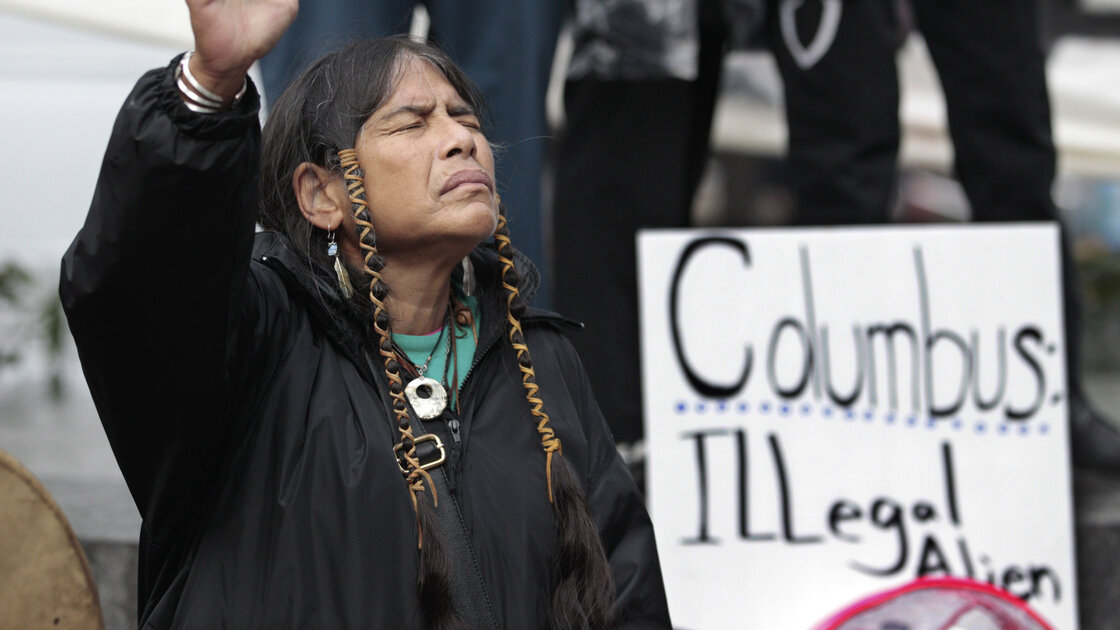
Columbus Day will be designated as Indigenous Peoples Day in Minneapolis, which has become one of several U.S. cities to make the change. Here, a member of the Cowichan Tribes holds her hand up in prayer during a 2011 Native American protest against Columbus Day in Seattle.


Why no mention of the Spanish Empire?

"We discovered Columbus, lost on our shores, sick, destitute, and wrapped in rags. We nourished him to health, and the rest is history," --Bill Means. He said "We," so obviously he sees 100% kinship with the Bahamian natives, or any other natives from Alaska to the tip of South America. Therefore, in order to stay congruent, we need to define the equivalent "Us." So in the expanded picture, the "Us" isn't Cristoforo Columbo nearly as much as it is the Imperial Spanish Empire as the face of European colonial supremacy. Columbus was an agent of the Spanish Monarchy, who were entirely in league with the Vatican and various banking cartels and economic interests.

It's interesting that those who would would attack Columbus don't mention the Spanish Empire or the Catholic Church. As Jesus said "Conquer in my name." How about King Ferdinand? Was he not Columbus' boss? How about Queen Isabella who led the "Spanish Inquisition?" What about Pope Alexander VI? The truth is that they need to revision Columbus as a "European bad guy," while not offending the many people who may feel threatened if they dared attack all the other institutions and individuals who were more important in the imperial effort than Columbus. In other words, Columbus must be projected as "a European"; and not as a Catholic, a Spanish citizen, a capitalist, or even an Italian! He must, in their estimation, stand entirely on his own for examination. This is the worst type of intellectual dishonesty.


Will the "bad guys" please stand?

Every person of European descent is a "white person." But how many are even descended from a nation who had a damn thing to do with all this genocide or slavery of the Americas? My quick count is five. Five countries who seemed to be in parcipitation, with the Vatican as a defacto sixth. Clearly most of it was the result of the Spanish and Portuguese Imperial Empires. I mean, if Japan had committed some type of historical atrocity, you don't blame Cambodia!; Unless someone wanted to somehow--against any logic--blame ALL Asians. Why would it be any different with Europe? So who's to blame? King Ferdinand, or a Polish peasant farmer?

Do you see how crazy this is? For the record, people of North and South America, who are of Amerindian or West African ancestry, are the numerical majority. Just within this "Columbus bashing" effort, how can any person with more than a room temperature IQ ignore all the important people who were behind Columbus' voyages as central figures of Western imperialism and slavery? How about Aaron Lopez? He was one of the leading figures of the Trans-Atlantic slave trade. Arguably at the very top of the list. Like Columbus, he was a very important middle-management figure within the larger scheme of things. Could it be that Columbus makes a much better projected bad guy than Lopez, despite the fact that Lopez administered much more actual harm to people?


.

Friday, January 28, 2011

Erickson good... Columbus bad?

The Viking Leif Erickson landed in the Americas sometime about the year 1,000 AD, before Columbus did under the Spanish flag. In fact, Erickson landed on the North American mainland, whereas Columbus landed in the Bahamas. Somehow, via "political correctness," Columbus is in question, while Erickson is not. Why?

Even President Obama, himself a revisionist regarding European colonization, gave the following presidential proclamation regarding "Leif Erickson Day" in 2009. As you can clearly see in this proclamation, Obama continually praises Erickson. I don't think anyone would be going too far out on a limb to state that he absolutely would NOT say a single word of praise for Columbus. Why?

The annual "Leif Erickson Day" is held each and every year without protesters or controversy, while any Columbus Day celebration is marked with much unrest. Often, it's centered around racial unrest. Certainly the Vikings did as much raiding and plundering as the Conquistadors later did, but the Vikings almost always raided other Europeans, while the Conquistadors conquered the Amerindians. Also, the Vikings did not usually occupy conquered lands, while the Spanish did.

That last point brings up another series of questions. The overwhelming percentage of Columbus Day protesters seem to be of Mexican and Anglo-Saxon descent, the very descendants or partial-descendants of the supposed horrible oppressors themselves! Of course, European-Hispanics were the ones who conquered most of the land in the Americas, killed most of the Amerindians, imported most of the slaves from West Africa, and took most of the gold and resources. Okay, that could be a reason, since Columbus sailed under the flag of Spain, while the Vikings simply stayed for awhile and left. However, the protesters don't seem to be interested in acknowledging these facts at all... ?

To digress, although Christopher Columbus (Cristoforo Columbo) was specifically of our folk, we should also share in on Leif Erickson's voyage to North America. The Winnili (later the "Langobards") were originally from Scandinavia, although they had left six or seven hundred years before Erickson's landing in North America. It should also be mentioned that other ancient civilizations east of the Atlantic Ocean had reached the Americas, but the evidence has either been suppressed or is not entirely adequate.

I wish that there was a good way to end this posting, but there is not. Columbus is denigrated because his discovery led to the colonization of the Americas by Europeans, and to the Trans-Atlantic slave trade. The fact that those "Europeans" were mostly from Spain and Portugal (Hispanic) doesn't interest the Columbus Day protesters in the slightest. In other words, to be very blunt, a self-loathing Anglo-Saxon protester would never dream of criticizing Hispanic colonization and slavery; while Mexican protesters don't seem very interested in any "Hispanic-guilt" concept either. They appear to only motivated by a dislike for anything European or White. Even if that were not entirely true for many of them, then why the dismissal of the important underlying facts?? The mistreatment of the Amerindians, and the establishment of the Trans-Atlantic slave trade, was predominantly a Hispanic-phenomenon, more-so than a European one.

.

Saturday, August 2, 2008

Columbus and the Name "Columbia"

This is a pretty expansive subject that I will base on the Wikipedia page "Columbia (name)." To make sense of this concept, which is tied into so many things, and to make it easier for me, I will start by sifting through this page and then expand where I can. So this will not follow a consistent or chronological pattern.

In the very first paragraph, it states: "Columbia is the first popular and poetic name for the United States of America; it is also the origin of the name for the District of Columbia, the federal district which is coextensive with the federal capital, Washington. Columbia is a feminine form derived from Christopher Columbus, one of the first Europeans to explore the Americas after the Vikings. The moniker dates from before the American Revolution in 1776 but fell out of use in the early 20th century."

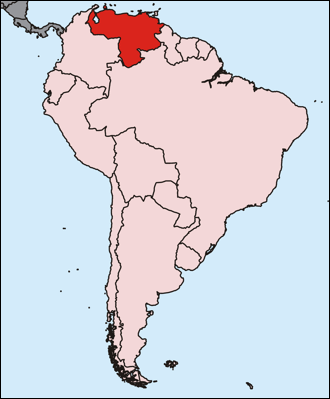
As stated in the Venezuela entry, "the Americas" was usually just called "America," and still is in most of the world. The proper name for our country is the "united states of America," not "America" or the "United States (U.S.)." With a twist of fate, it may have been named "Vespuccia" after Amerigo Vespucci's surname rather than his first name. It may have been called "Columbia" after Christopher Columbus, or some other name.

At the beginning of the 'History' section, it states: "Christopher Columbus was not considered a hero of the Thirteen Colonies until the mid-18th century and the growing feeling of nationalism among the colonies. The English had always emphasized John and Sebastian Cabot and downplayed Columbus for political reasons. But, for the emerging United States, the Cabots made poor national heroes and were "shadowy agents of a British king," while Spain no longer posed a serious threat. The new nation began to look back to Columbus as a founding hero, and with that change of attitude, the name Columbia became increasingly popular. Advocates for naming the United States "Columbia" continued to press for the name even after the United States Constitution was ratified.

The name of our country may very well have been the "united states of Columbia," and we would be "Columbians." This section went on to state: "At that time, it was common for European countries to use their Latin name as second name, used mainly in formal and poetical contexts and confering respectability on the country concerned (for example "Gallia" for France, "Helvetia" for Switzerland, "Caledonia" for Scotland, "Hibernia" for Ireland etc). In many cases, these names were personified as statuesque female figures. "Columbia" was, in effect, the closest which the United States - located in a continent which the Romans did not know about and hence did not name - could come to emulating this custom. Use of "Columbia" was part of the tendency to use Roman terms and symbols, manifested in the American Eagle as the new country's coat of arms and the use of "Senate" for the US Congress' Upper House and Capitol Hill for Congress' physical location - all derived from Roman history."

There are so many places and institutions in the United States and Canada with the name "Columbia," that I won't list them now. A Wikipedia search for "Columbia" will confirm this in spades. Two large areas which must be named because of their size are the Canadian province of "British Columbia" and the South American country of "Columbia." British Columbia was not named after Christopher Columbus, but Columbia was. That brings us into the part of this which is difficult to understand. That being that there is a parallel between Columbus and the ancient occultic "Queen Columba," which goes right back into the ancient world. With Christopher Columbus' (Christoforo Columbo) real origin so strangely shadowy, some believe that "Columbus" was more of a "Queen Columba banner" for the financiers in Spanish royalty, and possibly in the Vatican, Venice, and Florence (de Medicis). We still don't really know! Even his real name is still vague.

The early Romans worshipped Queen Columba, and it has been an undercurrent personification for Western Civilization ever since, and later as a personification for The USA. Queen Columba was featured in a beautiful American "Manifest Destiny" painting (see image above) by John Gast entitled "American Progress." We have "Uncle Sam," but we also have this shadowy, undefined female "alter-ego" so to speak. And yes, the Statue of Liberty is indeed QUEEN COLUMBA, having been given to us by French Freemasons. This shadowy "woman figure" is incredible when we view it in a historical context. As stated before, this goes clear back into the ancient world, before Greece, into the early civilizations of the Middle East.

As if all of this wasn't odd enough, England, France, Italy, and others, also have their versions, or self-personifications of Queen Columba. Obviously this is a result of Freemasons in these countries. This would explain the tie-in between the ancient Middle East and certain modern symbolism in the West. Why isn't she "acknowledged" in mainstream society?

Friday, August 1, 2008

The Naming of Venezuela

While many people are aware that "America" (often used to refer to all of "the Americas") was named after Tuscan explorer and cartographer Amerigo Vespucci, few people know about the naming of Venezuela.


From geographia.com: Venezuela - History & Culture

Christopher Columbus was the first European to visit Venezuela. He came in 1498 during his third voyage to the New World, and landed on the Peninsula de Paria. Following the coast, he explored the Rio Orinoco Delta and concluded that he had found much more than another Caribbean island. More explorers came a year later, and it was Alonso de Ojeda who gave the country its name. Arriving at Lake Maracaibo, he admired the stilted houses that the Indians had build above the lake and called the place Venezuela - "Little Venice."


From Wikipedia: Venezuela - Etymology

The name "Venezuela" is believed to have originated from the cartographer Amerigo Vespucci who, along with Alonso de Ojeda, led a 1499 naval expedition along the northwestern coast's Gulf of Venezuela. On reaching the Guajira Peninsula, the crew observed villages (palafitos) that the people had built over the water. This reminded Vespucci of the city of Venice (Italian: Venezia), so he named the region "Venezuola",[5] meaning "little Venice" in Italian. In Spanish, the suffix -zuela is used as a diminutive term (e.g., plaza / plazuela, cazo / cazuela); thus, the term's original sense would have been that of a "little Venice".[6]

5 - Dydynski, K & C Beech (2004), 'Venezuela, Lonely Planet', Retrieved on 10 March 2007. p. 177.

6 - Thomas, Hugh (2005). 'Rivers of Gold: The Rise of the Spanish Empire, from Columbus to Magellan'. Random House, p. 189.


From MSN encarta: Venezuela - History Christopher Columbus first sighted the coast of Venezuela in 1498. In 1499 Spanish explorer Alonso de Ojeda followed the coast to Lake Maracaibo. He named the region Venezuela, or Little Venice, because the Native American buildings constructed on stilts along the lake’s edge reminded him of the Italian city of Venice, which was built on a series of islands in a lagoon.

[Above: a palafito, similar to those seen by Amerigo Vespucci]


From the University of South Florida website: Multicultural Education Through Miniatures: Venezuela - Little Venice (by Maria; a Venezuelan)

Venezuela was “discovered” by Spanish explorers many, many years ago. When they landed on the coast of South America, they saw Indians living in stilt houses. The Indians were using boats that were shaped like gondolas. The country looked like Venice, Italy, so the explorers named it Venezuela, which means “Little Venice.”


**************************************************


Venezuela today has not remotely the significance to me that Argentina does, but the naming of a country is significant, even if it was due to a vague comparison of stilt huts on a tropical shoreline to the slendor of Venice (which is further north than Minnesota). Venice is the most visited city in the world, but we can get to that at some future point. Also significant was that Vespucci was right there with the Spanish troops when Venezuela was named. I don't think that de Ojeda was motivated to name it "Little Venice" just because Vespucci was there. Vespucci was a Florentine anyway. However, it's possible that Vespucci may have made the reference to Venice. I don't know if that was ever clarified.