Showing posts with label america. Show all posts

Sunday, June 14, 2009

Beyond the Sky: Genova to San Francisco 1850-1950


Beyond the Sky: Genova to San Francisco 1850-1950

Our first video

Being inherently more pioneer than immigrant, these people needed nobodys help. Leading a rugged underdeveloped society by example, former squalors were soon transformed into class family districts and thriving commercial centers.

Literally from each and every step, from land to sea, from slaughterhouse to dairy farm to field work to fishing net to bakery to stove, and through their own cuisine, they took the lead in simply feeding the hard working populations of California, decade after decade.

Former wilderness regions were soon dotted with roads, houses, ranches, farms, churches, vineyards, gardens, glass factories, blacksmith shops, schools, lumber mills, bakeries, building supply stores, food processing buildings, eateries, manufacturing plants, and symbols of artistic expression.

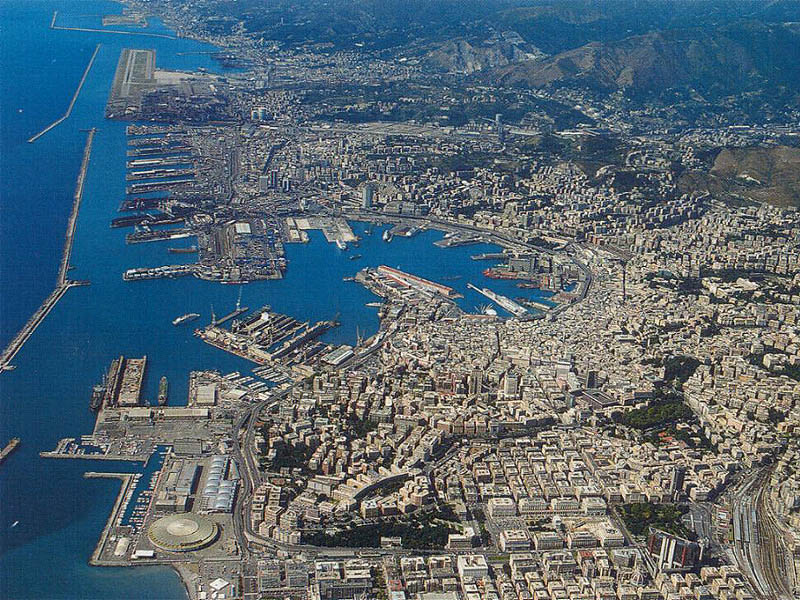
Looking from the vantage point of their departure location in Genoa, they truly created a paradise many thousands of miles away... beyond the sky!


Friday, January 9, 2009

Lega Nord in Portland, Oregon??


As amazing as it may seem, it appears that Lega Nord (Northern League) held a meeting in Portland, Oregon last month to launch the Padani nel Mondo (Padanians in the World) concept into this area of the world. Jimmy Moglia, a native of Torino, will be running the operation. He may have some type of dual citizenship. Lega Nord already has a branch office in Argentina. Also, we know that they have had a North American representative to process a scattering of votes from "Italians working abroad."

This development did come as a surprise to us. Especially considering that Padani nel Mondo doesn't seem to even have a website! It seems unlikely that they will be able to reach the long disconnected cousins on America's west coast. We'll just have to wait and see. We do know that Lombardi nel Mondo - Area Nord America, a totally separate organization, has made no effort to connect with Americans, and seems to be for Italians working abroad only.

Saturday, August 2, 2008

Columbus and the Name "Columbia"

This is a pretty expansive subject that I will base on the Wikipedia page "Columbia (name)." To make sense of this concept, which is tied into so many things, and to make it easier for me, I will start by sifting through this page and then expand where I can. So this will not follow a consistent or chronological pattern.

In the very first paragraph, it states: "Columbia is the first popular and poetic name for the United States of America; it is also the origin of the name for the District of Columbia, the federal district which is coextensive with the federal capital, Washington. Columbia is a feminine form derived from Christopher Columbus, one of the first Europeans to explore the Americas after the Vikings. The moniker dates from before the American Revolution in 1776 but fell out of use in the early 20th century."

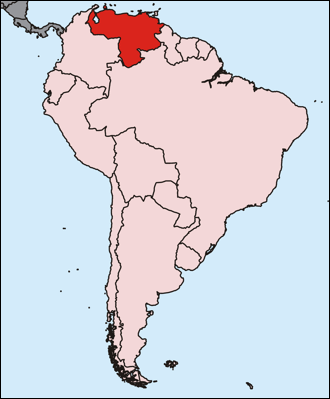
As stated in the Venezuela entry, "the Americas" was usually just called "America," and still is in most of the world. The proper name for our country is the "united states of America," not "America" or the "United States (U.S.)." With a twist of fate, it may have been named "Vespuccia" after Amerigo Vespucci's surname rather than his first name. It may have been called "Columbia" after Christopher Columbus, or some other name.

At the beginning of the 'History' section, it states: "Christopher Columbus was not considered a hero of the Thirteen Colonies until the mid-18th century and the growing feeling of nationalism among the colonies. The English had always emphasized John and Sebastian Cabot and downplayed Columbus for political reasons. But, for the emerging United States, the Cabots made poor national heroes and were "shadowy agents of a British king," while Spain no longer posed a serious threat. The new nation began to look back to Columbus as a founding hero, and with that change of attitude, the name Columbia became increasingly popular. Advocates for naming the United States "Columbia" continued to press for the name even after the United States Constitution was ratified.

The name of our country may very well have been the "united states of Columbia," and we would be "Columbians." This section went on to state: "At that time, it was common for European countries to use their Latin name as second name, used mainly in formal and poetical contexts and confering respectability on the country concerned (for example "Gallia" for France, "Helvetia" for Switzerland, "Caledonia" for Scotland, "Hibernia" for Ireland etc). In many cases, these names were personified as statuesque female figures. "Columbia" was, in effect, the closest which the United States - located in a continent which the Romans did not know about and hence did not name - could come to emulating this custom. Use of "Columbia" was part of the tendency to use Roman terms and symbols, manifested in the American Eagle as the new country's coat of arms and the use of "Senate" for the US Congress' Upper House and Capitol Hill for Congress' physical location - all derived from Roman history."

There are so many places and institutions in the United States and Canada with the name "Columbia," that I won't list them now. A Wikipedia search for "Columbia" will confirm this in spades. Two large areas which must be named because of their size are the Canadian province of "British Columbia" and the South American country of "Columbia." British Columbia was not named after Christopher Columbus, but Columbia was. That brings us into the part of this which is difficult to understand. That being that there is a parallel between Columbus and the ancient occultic "Queen Columba," which goes right back into the ancient world. With Christopher Columbus' (Christoforo Columbo) real origin so strangely shadowy, some believe that "Columbus" was more of a "Queen Columba banner" for the financiers in Spanish royalty, and possibly in the Vatican, Venice, and Florence (de Medicis). We still don't really know! Even his real name is still vague.

The early Romans worshipped Queen Columba, and it has been an undercurrent personification for Western Civilization ever since, and later as a personification for The USA. Queen Columba was featured in a beautiful American "Manifest Destiny" painting (see image above) by John Gast entitled "American Progress." We have "Uncle Sam," but we also have this shadowy, undefined female "alter-ego" so to speak. And yes, the Statue of Liberty is indeed QUEEN COLUMBA, having been given to us by French Freemasons. This shadowy "woman figure" is incredible when we view it in a historical context. As stated before, this goes clear back into the ancient world, before Greece, into the early civilizations of the Middle East.

As if all of this wasn't odd enough, England, France, Italy, and others, also have their versions, or self-personifications of Queen Columba. Obviously this is a result of Freemasons in these countries. This would explain the tie-in between the ancient Middle East and certain modern symbolism in the West. Why isn't she "acknowledged" in mainstream society?

Friday, August 1, 2008

The Naming of Venezuela

While many people are aware that "America" (often used to refer to all of "the Americas") was named after Tuscan explorer and cartographer Amerigo Vespucci, few people know about the naming of Venezuela.


From geographia.com: Venezuela - History & Culture

Christopher Columbus was the first European to visit Venezuela. He came in 1498 during his third voyage to the New World, and landed on the Peninsula de Paria. Following the coast, he explored the Rio Orinoco Delta and concluded that he had found much more than another Caribbean island. More explorers came a year later, and it was Alonso de Ojeda who gave the country its name. Arriving at Lake Maracaibo, he admired the stilted houses that the Indians had build above the lake and called the place Venezuela - "Little Venice."


From Wikipedia: Venezuela - Etymology

The name "Venezuela" is believed to have originated from the cartographer Amerigo Vespucci who, along with Alonso de Ojeda, led a 1499 naval expedition along the northwestern coast's Gulf of Venezuela. On reaching the Guajira Peninsula, the crew observed villages (palafitos) that the people had built over the water. This reminded Vespucci of the city of Venice (Italian: Venezia), so he named the region "Venezuola",[5] meaning "little Venice" in Italian. In Spanish, the suffix -zuela is used as a diminutive term (e.g., plaza / plazuela, cazo / cazuela); thus, the term's original sense would have been that of a "little Venice".[6]

5 - Dydynski, K & C Beech (2004), 'Venezuela, Lonely Planet', Retrieved on 10 March 2007. p. 177.

6 - Thomas, Hugh (2005). 'Rivers of Gold: The Rise of the Spanish Empire, from Columbus to Magellan'. Random House, p. 189.


From MSN encarta: Venezuela - History Christopher Columbus first sighted the coast of Venezuela in 1498. In 1499 Spanish explorer Alonso de Ojeda followed the coast to Lake Maracaibo. He named the region Venezuela, or Little Venice, because the Native American buildings constructed on stilts along the lake’s edge reminded him of the Italian city of Venice, which was built on a series of islands in a lagoon.

[Above: a palafito, similar to those seen by Amerigo Vespucci]


From the University of South Florida website: Multicultural Education Through Miniatures: Venezuela - Little Venice (by Maria; a Venezuelan)

Venezuela was “discovered” by Spanish explorers many, many years ago. When they landed on the coast of South America, they saw Indians living in stilt houses. The Indians were using boats that were shaped like gondolas. The country looked like Venice, Italy, so the explorers named it Venezuela, which means “Little Venice.”


**************************************************


Venezuela today has not remotely the significance to me that Argentina does, but the naming of a country is significant, even if it was due to a vague comparison of stilt huts on a tropical shoreline to the slendor of Venice (which is further north than Minnesota). Venice is the most visited city in the world, but we can get to that at some future point. Also significant was that Vespucci was right there with the Spanish troops when Venezuela was named. I don't think that de Ojeda was motivated to name it "Little Venice" just because Vespucci was there. Vespucci was a Florentine anyway. However, it's possible that Vespucci may have made the reference to Venice. I don't know if that was ever clarified.

Sunday, April 6, 2008

Tying Loose Ends: Pre-Risorgimento Immigration and other Revelations

This entry is to tie up some loose ends, so it won't necessarily follow a consistent pattern and will probably bounce all over the place. Personally, I have had many questions about the patterns of immigration from the Italian peninsula over time. One of them is regarding early immigration to San Francisco from one specific perimeter around Genoa, which includes the rest of Liguria, Northern Tuscany, and even extends to Italian Monaco and Nice, France (formerly "Nizza"), and including Corsica. Over the years, I have heard locals tell of ancestors from Monte Carlo, Nice, and Ajaccio. In fact, the majority of Italian immigrants to San Francisco were from this perimeter, which I dubbed "the Italian Riviera circle."

It appears that prior to Italian unification, emigration out of the peninsula was generally restricted to this area. That explains a whole lot. There were nineteenth century Genoese communities not only in San Francisco, but New Orleans, and to some extent New York, Chicago, Philadelphia, and other large cities. Also from Tuscany to a lesser extent. This immigration went from about 1850 to 1880. After 1880, it fizzed out (except for California), and was replaced by Southern Italians in much greater numbers. There were a few exceptions, like in St. Louis, where Milanese immigrants formed a neighborhood called "The Hill."

Later immigration from other parts of Northern Italy was to "the cone of South America" (Argentina, Uruguay, Chile, and Sao Paulo, Southern Brazil). That's part of a whole new study which I can't go into now. It is odd, however, that the Northern Italians ended up in Southern-South America and California and Southern Italians ended up in the much closer eastern USA and Canada. That's not any innate rule, as there were "Northerners" who settled in the eastern areas mentioned, as well as Northern Michigan and Western Pennsylvania. As to why those particular areas, is a question which we haven't answered yet. And, there were Southern Italians that migrated to Buenos Aires, Sao Paulo, etc.

One Italian pioneer in early California was Leonetto Cipriani, who went on to co-found the San Francisco area city of Belmont, as well as a whole slew of other things. A short look at Cipriani experience in Belmont is located in a blog entry entitled 'Pioneers of Belmont California' on the Rougeknights blog. Also, a book was published from his own personal journal, written all during his vast travels through the West, entitled 'California and Overland Diaries of Count Leonetto Cipriani from 1853 Through 1871'. Cipriani was from Corsica, from an aristocratic background, and believed in Italian unification, including Corsica. He worked with the Italian consulates here to achieve that end. He was the first Italian to settle (for a time) in San Mateo County. Later, when he lived in Tuscany, he founded another city which he named "La California." How many locals do we have here who knew that? That is something that we have to look at in future study.

I should also mention that prior to 1860, Sardinia was also open to emigration. I have no information at all about Sardinian immigration. There was one Sardinian family on the block that I grew up on, with the familiar surname ending (do, ddo, da, or dda). This whole revelation is a key to understanding why, for example, there is a huge Lombardian presence in Argentina, and virtually none in the USA. If you traveled to Buenos Aires, it would be like what it is for Sicilians in New York City or Calabrians in Chicago. There's a lot of study to do, but at least we can start to unravel some of these patterns. They aren't necessarily positive or negative, but we need to understand some of the reasons.

Our friend Marco in Tuscany.... in fact, IN "La California," has stated that he will send us some information about his city, which will be much appreciated. You can read part of our communication at the end of 'Pioneers of Belmont California'. I barely scratched the surface on the life of Leonetto Cipriani, so that's another area of interest that we need to look into. He was indeed the first known Italian settler in San Mateo County.


1-27-11 ADDITION: I wanted to add an item here, rather than make a new post. Leonetto Cipriani is an important part of our local history, whether or not we agree with his politics. Just the foundation of "La California" alone should make that a fact. The following text is from the book 'Peninsula Portrait: An Illustrated History of San Mateo County' (Postel; 1988), under the section "The Italians":

“Perhaps the first Italian to live in San Mateo County was Leonetto Cipriani. Cipriani was born on the island of Corsica in 1812 to an aristocratic family. As a young man he became involved in Italy’s quest for unification, but he tired of the struggle by 1850 and decided to find his fortune by joining the search for gold in California. With much cargo, including an entire prefabricated house, two servants, and two friends (Alessandro Garbi, an engineer, and Guiseppi Del Grande, a patriot), Cipriani left for California in late 1851. Just before he departed, Victor Emmanuel II, the king of Sardinia, appointed him the first Sardinian consul to California, a position of honor but without salary.

“After Cipriani arrived in San Francisco, his work as consul put him in contact with other pioneer Italians who were working to improve the status of recently arrived fellow countrymen. In fact, with Nicola Larco and Domenico Ghirardelli, he eventually organized the Societa Italiana di Mutua Benificenza, a mutual aid society that created the first Italian American hospital in San Francisco. The organization still exists. Its main charge is the operation of the Italian Cemetery in Colma.

“While his office as consul was a prestigious one, Cipriani desired to accumulate wealth while in California. He therefore resigned his position and set out with his companion, Garbi, on a rather ill-fated cross-country cattle drive and “scientific” expedition. After returning from the adventure, he purchased acreage that had once been a part of the Pulgas Rancho from S.M. Mezes, a law partner of Cipriani’s cousin, Ottavio Cipriani.

“At this site in what is now Belmont, Leonetto Cipriani built a fine home and landscaped it beautifully. Garbi came to live with him, and the two men were often to be found in the company of “society ladies” at a nearby hotel.

“Between 1855 and 1860 Cipriani made several trips to Italy and participated in the long-awaited unification of that nation. In 1864 he was declared a count when his old political ally, Victor Emmanuel II, became king of Italy. After hearing of this honor, Cipriani sold his estate and returned to Italy.

“Cipriani’s experience as an aristocrat was, of course, completely different from that of the Italian immigrants who followed. Like Cipriani, however, the first of these individuals came to California because of the Gold Rush. Most became discouraged and settled in the North Beach area of San Francisco. A few who had formerly been peasants came down the peninsula. Some took jobs as laborers on the farms of the Irish and German immigrants who preceded them. Others must have been struck by the apparent environmental similarities between their old country and the new. They purchased or leased land, and began growing vegetables the way their people had for generations.”

I didn’t photocopy the entire section at the library back when I got it some time ago, but I wanted to at least add the part about Cipriani. There is also a parallel with France and Corsica, with the former refusing to let go of the later like they did with Algeria and other regions. Corsicans are not French. Their language is not French. In fact, their language has been outlawed. Sound familiar? The section also goes on to discuss the connection with Genoa and an outline of the local history. We can look at that at another time using more thorough source material.

.

Thursday, February 15, 2007

Globilization Policed by Guilt

I would like to thank "insubria87" for his posts in the PAL Yahoo Club. I just wanted to comment on two of the articles that he had posted recently, which I thought went hand-in-hand, and applied dramatically to the future of America, Italy, and the entire world. Actually, the message archive on Yahoo is down currently, but I will just go by memory. One news item was regarding Italian center-left leader Romano Prodi, a well-known frontman for the bankers who are behind the EU and UN, who has openly stated that Globalization is inevitable, and that we must embrace it. It is true that very powerful entities like the World Bank are full steam ahead with this grand plan.

There are an endless slew of inconsistencies. I will just name a couple. One is that the U.S. government, with our tax dollars, funds 50 million abortions in the third world each year. This has gone on for over 20 years, and you can do the math. Regardless of what anyone's position is on abortion, isn't it inconsistent to abort all those children while promoting almost daily "saving the world's children" at the same time? If famous Irish musician Bono is so deeply concerned with the world's children, why has he not mentioned this policy? Second, global warming. Depleted uranium dust, being dropped by the tonage in Iraq, and with a shelf life of about 22 billion years, is also a major environmental concern, as one speck of it can fry your insides. This is an eco-disaster of epic proportions! Why doesn't Al Gore mention this? Where's the media? When he ran for Vice-President in 1991, Gore promised time and time again that the very first thing he would do is meet with a panel of experts to find new sources of environmentally friendly energy. In 8 years, he did nothing of the sort. In fact, he was part of the power structure which killed the electric car. Everyone should see the new documentary 'Who Killed the Electric Car?' Where's the Hollywood crowd on this issue?

The other story posted on the club message board was a story from Italy regarding the struggles of Italian immigrants to America a century ago, and how it relates to the massive influx of third world immigration to Italy today. Italian immigrants, overwhemingly from Southern Italy, did not have it any worse than any other non-English speaking European immigrants of that time period. Irish immigrants, who had arrived earlier, for a host of reasons, acutally were treated worse overall. Anyway, these two issues are apples and oranges! As far as whether a flood of immigrants from every corner of the world should be allowed to enter Italy, well, I can't answer that for you. I'm just stating facts and posing questions here. Personally, I think every people need an exclusive homeland of their own, just like Israel, although I don't agree with their methodology. The World Bank has actually demanded that countries like Russia (who are planning on building up their own population from within), to accept more immigrants from the third world. Regardless of your position on that, is it unreasonable to be concerned with this type of "Global Authority," on ANY issue! The CEO's of American-based transnational corporations, who have abused people and the environment around the world, not to mention our national economy and sovereignty, will never see the "World Court." What if a mad dictator or group took over this global authority some day? Who would stand against them??