Showing posts with label European history. Show all posts

Monday, March 13, 2023

Lepanto 1571: Shattering the Idea of Ottoman Invincibility

Lepanto 1571: Shattering the Idea of Ottoman Invincibility

SandRhoman History

262K subscribers

202,313 views -  February 19, 2023

#educational #battle #history

Thanks to Nord VPN for sponsoring this video. Check it out here:  https://nordvpn.com/sandrhoman It's risk free with Nord's  30-day-money-back-guarantee!

The battle of Lepanto 1571 was one of the greatest naval battles of the Mediterranean and the last one to be fought almost exclusively by rowing vessels. According to maritime historian Lawrence Mott a staggering amount of 70 to 90 percent of all war galleys in the basin participated in the fighting.  Lepanto was in some sense the naval counterpart of the 1683 siege of Vienna. Contemporaries and historians long saw it as a climactic battle between east and west and mythologized it as the battle in which a Christian fleet defeated the seemingly unstoppable Ottoman threat from the east. In this video were going to look at what exactly happened in the gulf of Patras and look critically at the impact the battle really had.

con't....

.

Friday, November 10, 2017

"The Dark Ages" - documentary


The Dark Ages (Full Documentary)

ajvaughan3 Documentary Films

Between the Fall of Rome and the dawn of the Renaissance, Europe plunged into a dark night of constant war, splintered sovereignties, marauding pagans, rabid crusaders and devastating plague. That anything of value arose from this chaotic muck - much less the Renaissance - is nothing short of miraculous. The History Channel examines the Dark Ages from the fall of the Roman Empire to the First Crusade.

Between the Fall of Rome and the dawn of the Renaissance, Europe plunged into a dark night of constant war, splintered sovereignties, marauding pagans, rabid crusaders and devastating plague. That anything of value arose from this chaotic muck - much less the Renaissance - is nothing short of miraculous. The History Channel examines the Dark Ages from the fall of the Roman Empire to the First Crusade.


.

Monday, September 18, 2017

'The Eagle' - movie review


The Eagle (2011 film)

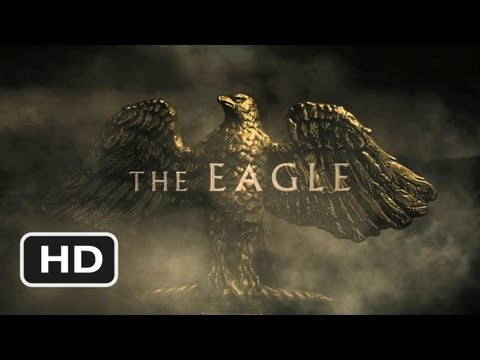
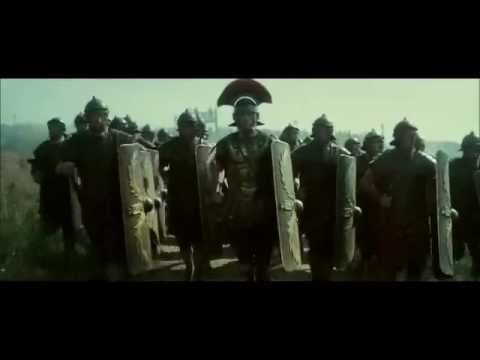
The Eagle is a 2011 epic historical drama film set in Roman Britain directed by Kevin Macdonald, and starring Channing Tatum, Jamie Bell and Donald Sutherland. Adapted by Jeremy Brock from Rosemary Sutcliff's historical adventure novel The Eagle of the Ninth (1954), the film tells the story of a young Roman officer searching to recover the lost Roman eagle standard of his father's legion in the northern part of Great Britain. The story is based on the Ninth Spanish Legion's supposed disappearance in Britain.

The film was an Anglo-American co-production. It was released in the U.S. and Canada on February 11, 2011, and in the United Kingdom and Ireland on March 25, 2011.

The Eagle is effectively a sequel to the film Centurion, written and directed by Neil Marshall, because Channing Tatum's character in The Eagle is Marcus Flavius Aquila, the son of Titus Flavius Virilus who led the Ninth Legion that was lost in the far north of Britannia, and who was therefore the same person as Dominic West's character Titus Flavius Virilus in Centurion: it continues the story of the disappearance of the Ninth Legion fighting the Picts in what is now northern Scotland, north of Hadrian's Wall by following the leader's son's search to solve the mystery of what happened to his father, and the Legion, and the golden eagle standard that they carried everywhere with them, and to restore his family's honor.

As a historical matter, the purported disappearance of the Ninth Legion in Northern Britain is a subject of debate and dispute (see Legio_IX_Hispana § Theories about the Ninth's disappearance for details.)


*************************


Partial spoiler alert! This review perhaps spoils the first 1/3 of the film....


The premise of the entire movie was the desire of one man, Marcus Flavius Aquila, to put himself at great risk to recapture the lost honor of both the Roman Empire and that of his own family. Since we no longer live in an honor-bound society, this becomes something to really ponder. The symbol of this endeavor was the lost Roman golden eagle standard; a golden Roman eagle which was attached to a pole such as a national flag; a vexillum. Of course, since his own father commanded the 9th Legion, it was both patriotic and personal. The legion contained 5,000 soldiers, a great loss and embarrassment to the empire; similar to the great Roman defeat in the Teutoburg Forest about 130 years earlier.

The 9th Legion was to have disappeared in what was called Caledonia by the Romans, or what is now Scotland. The Picts were not Gaels, but usually thought of as being a Celtic people, although may have been a particular Atlanto-Mediterranean people. The strange sounding language used by the Picts in the film was not the lost and unknown Pictish language, but Scottish Gaelic. In any case, the tribes of Caledonia were so fierce that the Romans constructed a great fortified wall to seal them off, called Hadian's Wall.

The film opens with a Roman military unit traveling through Briton by boat via a river system with heavy foliage and trees. Suddenly a small herd of large steers splashed across in front of them, showing a certain backwardness to this society; although it was under Roman rule for about a century at that point. The boat carried Marcus who was to be the new commander of a certain Roman fortification and territory in northern Briton. As he arrives, there's a certain ominous feeling. There are still strong unconquered elements about them.

There were a few references to "the gods." Marcus prayed to one of the Roman gods, possibly Mithras, on a couple of occasions. He was a man on a mission. There were rumors of Druids about as well, although the Druids were thought to have been long ago defeated. Apparently, though not militaristic, the Druids had organized resistance to Rome in the past in both Briton and Gaul. Soon after assuming command, on a gloomy night, Marcus awoke with a feeling of danger. He got up and went along the outer walls, and heard a certain noise. They tried to figure out if it was a noise from cattle or not.

Marcus made a decision to waken all of the soldiers. They dressed and manned the walls, and waited. It could have ended up as a somewhat embarrassing error by the new commander. However, an army of Britons did attack, and the attack was repelled. For this, the young Marcus gained respect from all. The next morning, the army of Britons showed themselves beyond the walls again. As they started a ritual execution of two Roman soldiers, Marcus ordered a preemptive attack. Again, a great battle ensued.

As Marcus fought, visions of his father fighting some unknown enemy was shown; hinting at a psycho-spiritual connection with something which had occurred years earlier. Although the Romans were victorious, it came at a greater loss than the night prior. Marcus was seriously injured in the battle, and was soon taken away to a different part of Briton. I assume that he was relocated to a more southern location of which the Romans had a better grip on things. There he meets his uncle, who is in some form of command, and begins his rehabilitation. At this point there is a reference to an old Roman proverb, cited in the book 'The Eagle of the Ninth':

Eagle lost, honor lost;
Honor lost, all lost.

During some type of life-and-death battle "games," a young Briton named Esca is about to be put to death with the apparent approval of the crowd. Marcus rises and objects, successfully. Esca is allowed to live, and is given to Marcus as a slave. At one point Esca pulls a small dagger on Marcus and tells him that he hates him and everything he stands for; however, due to the fact that Marcus saved his life, swears eternal loyalty to him and puts the dagger down.

When Marcus finally heals, he begins his quest to find the golden eagle beyond Hadrian's Wall. This is beyond Roman Briton, dark harsh highlands and weather, populated by savage tribes, the unknown, more dangerous than northern Briton, the top of the world. He sets out on horseback with only his slave Esca; and that's where the film really realizes it's aim.

There's a parallel to the movie 'Braveheart', however the film takes no pro or anti Roman slant. Much of the rest of the film is about redemption of Marcus, Esca, and others. Somewhat ironically, "Roman Briton" at a much later point became a new Roman Empire itself. I reviewed 'Centurion' (2010), of which 'The Eagle' was the sequel to, on the other blog... Centurion (movie review).

In ancient legends, the eagle was the symbol of oppression; perhaps more to the point... of a hording of power and knowledge. The serpent was the symbol of liberation and freedom; more to the point... of an opening up of forbidden knowledge and truth. However, it's also been challenged that the eagle is really the liberator and that it symbolizes safety and the rule of law... while the serpent is an anarchist.

.

Sunday, August 3, 2014

'Minneapolis Renames Columbus Day As Indigenous People's Day' - Part 2


After viewing many Columbus Day protests, I found it amusing that elsewhere like New York City, the parade goes on seemingly without a hitch. About a minute into this video, you will see the name of an organization called the Columbus Citizens Foundation. The foundation is in full support of anything Columbus, but is based on "Italian heritage" not specifically "Columbus." In other words, from what I can gather, they avoid any "intellectualizing" about all the facets of the Columbus issue (just as the opposing side does), and merely hangs their hat on the "Italian-American" heritage concept.

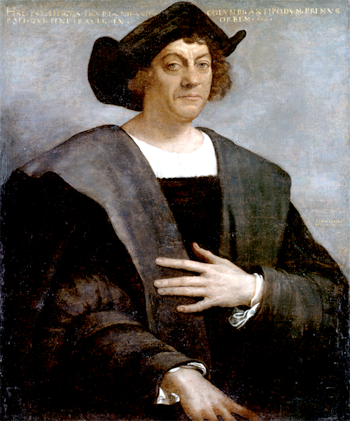
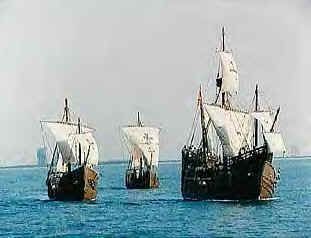
There's an old saying that I think is mostly true: "Every nation was born in blood." Christopher Columbus was one of many explorers in the New World, starting with Leif Erikson. Erikson was even praised by President Obama... a sometimes-anti-imperialist. Erikson certainly would have set up a permanent colony along the eastern Canadian coast, but it was too far out of the way at that time. Beyond Leif Erikson, all of these early explorers did their part to set up the Americas for colonization.

Columbus, to some "the new Hitler"
Personally, I believe that it was actually "Spanish, Portuguese, English, French, and Dutch Imperialism," not "EUROPEAN IMPERIALISM." Again, how many nations participated? There were perhaps fifty European nations in 1492! If someone doesn't like something that China did, they can't blame Tibet, even if they may look similar! If something bad happens in Algeria, you can't blame Pakistan, even if they may look similar! Even the overwhelming colonization of later times right up to the 60s, was the United Kingdom, France, Portugal, and Holland; with the rest being small and sporadic. Even Soviet expansion into Asia, early on, was in huge very depopulated regions.

There's nothing that "the West" did in the New World that Islam did not equal or surpass for 1,500 years on three continents. What did the Berbers, an Indo-European-like people in northwest Africa, endure that the Amerindians didn't endure? They were either driven from their lands or forced to convert to a foreign religion and culture. Islamic colonization took down many peoples and cultures in this manner; just as the Catholic Church did... but some people prefer to ignore all of the facts and just blame Columbus. There was imperialism and slavery all over the world long before Columbus.

Sometimes Mexico is included among the victims of American Imperialism. Really? That's really selling Mexico short, as it adhered to all of the same imperialism, slave trading, and religious supremacy. There aren't too many people in Mexico who don't speak a European language, have a European name, or practice a European-centered religion. Somehow it just seems a little late in the game for Mexican Columbus protesters to suddenly "become Indians" after all the bloody conflicts with Amerindians in Mexico and the Southwest over the centuries. Those protesters want us to "Go back to Europe," when some of their own ancestors were among the very worst Spanish imperialists, slave owners, and Catholic supremacists.

The Cherokees put hundreds of thousands of innocent Africans in chains
If someone wants to blame Columbus, then they must have the entire plate! They cannot ignore the establishment, expansion, and mere existence of the United States, the role of the Vatican in American colonialism (Latin America), the fact that 19 out of 20 captured Africans were sold into slavery in Latin America, and much more. How about the African Chieftains and their henchmen who captured people by literally the millions to sell along the West African coast? Maybe it's time to find out who really owned all those slave ships? Also, there were many Arab slavers working along the West African coast. How many people know that the Cherokee Nation was up to their necks in the slave trade? I think that the Columbus protesters, of all races, should be careful of what they ask for.

Where does it end? There have been hundreds of cases such as demands that a grammar school change its name from "George Washington," or for Andrew Jackson's name to be removed from the $20 bill... because they were "racists." Well, are we going to rehash all the history of all other nations too... the vast majority of which were "born in blood"..? What about the Cherokee Nation... are they going to give an apology for their large role in the slave trade? I don't think there were any Latvians, Hungarians, or Greeks bidding on captured Africans... but there sure were Cherokees bidding. Why is that such a secret? How many people realize that many Irish people were sold into slavery in the Americas? 


.

Friday, July 25, 2014

'Minneapolis Renames Columbus Day As Indigenous People's Day'

'Minneapolis Renames Columbus Day As Indigenous People's Day'

by Bill Chappell - NPR - April 27, 2014

Minneapolis has designated the second Monday of October, the federal Columbus Day holiday, as Indigenous Peoples Day. The city council adopted the plan after hearing concerns that hailing Columbus as the discoverer of America is inaccurate and ignores the history of indigenous people.

Last week, Indigenous Peoples Day supporter and Lakota activist Bill Means told Minnesota Public Radio that the story that Christopher Columbus discovered America was "one of the first lies we're told in public education."

He expanded on that idea Friday.

"We discovered Columbus, lost on our shores, sick, destitute, and wrapped in rags. We nourished him to health, and the rest is history," Means . "He represents the mascot of American colonialism in the western hemisphere. And so it is time that we change a myth of history."

Similar measures that rename or replace Columbus Day are already in place in other parts of the U.S., from South Dakota to Berkley and other California cities. Several states, such as Alaska, Hawaii, and Oregon, do not observe Columbus Day.

The federal holiday has a long and complex history, including an 1892 proclamation by Benjamin Harrison and its establishment as a federal holiday in 1937. Many came to see Columbus Day "as a way for Italian Americans to be accepted by the mainstream," as NPR's has reported.

Now the holiday is gaining a new identity in Minneapolis, as part of what says is the city's effort "to better reflect the experiences of American Indian people and uplift our country's Indigenous roots, history, and contributions."

According to MPR, the city council gave its unanimous support to the Indigenous Day measure after it was introduced by eight council members, led by Alondra Cano.

"The American Indian Movement emerged in the 1960s from the streets of south Minneapolis, a longtime cultural crossroads for American Indian communities in the Midwest," .

But MPR's Curtis Gilbert adds, "Council President Barbara Johnson noted that some of her Italian-American constituents are 'somewhat offended' by the city's snub of the Genoa-born explorer."


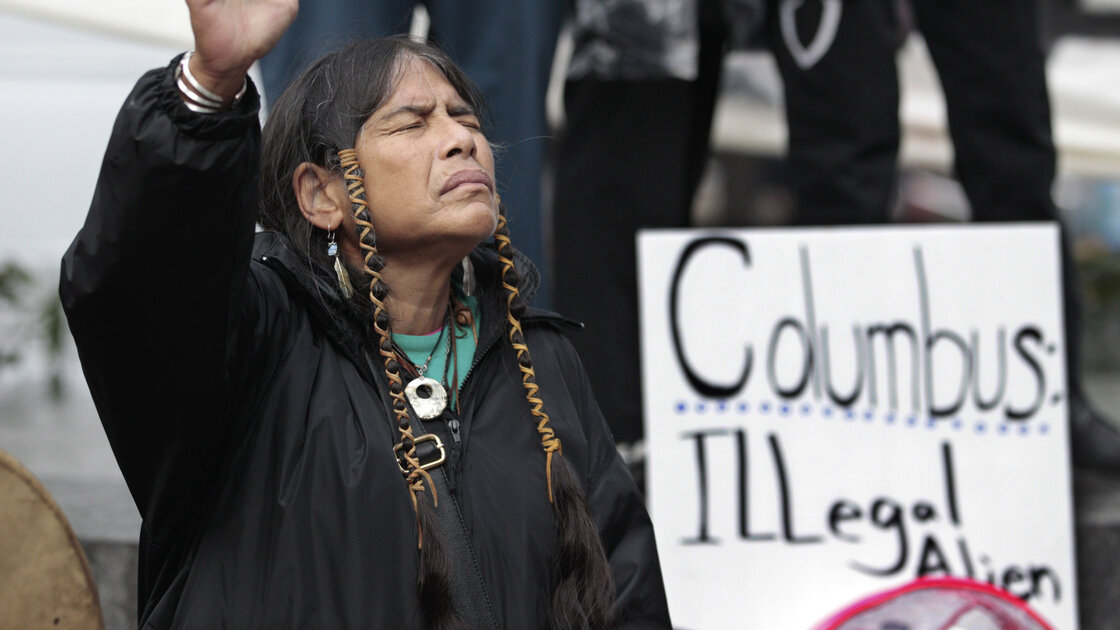
Columbus Day will be designated as Indigenous Peoples Day in Minneapolis, which has become one of several U.S. cities to make the change. Here, a member of the Cowichan Tribes holds her hand up in prayer during a 2011 Native American protest against Columbus Day in Seattle.


Why no mention of the Spanish Empire?

"We discovered Columbus, lost on our shores, sick, destitute, and wrapped in rags. We nourished him to health, and the rest is history," --Bill Means. He said "We," so obviously he sees 100% kinship with the Bahamian natives, or any other natives from Alaska to the tip of South America. Therefore, in order to stay congruent, we need to define the equivalent "Us." So in the expanded picture, the "Us" isn't Cristoforo Columbo nearly as much as it is the Imperial Spanish Empire as the face of European colonial supremacy. Columbus was an agent of the Spanish Monarchy, who were entirely in league with the Vatican and various banking cartels and economic interests.

It's interesting that those who would would attack Columbus don't mention the Spanish Empire or the Catholic Church. As Jesus said "Conquer in my name." How about King Ferdinand? Was he not Columbus' boss? How about Queen Isabella who led the "Spanish Inquisition?" What about Pope Alexander VI? The truth is that they need to revision Columbus as a "European bad guy," while not offending the many people who may feel threatened if they dared attack all the other institutions and individuals who were more important in the imperial effort than Columbus. In other words, Columbus must be projected as "a European"; and not as a Catholic, a Spanish citizen, a capitalist, or even an Italian! He must, in their estimation, stand entirely on his own for examination. This is the worst type of intellectual dishonesty.


Will the "bad guys" please stand?

Every person of European descent is a "white person." But how many are even descended from a nation who had a damn thing to do with all this genocide or slavery of the Americas? My quick count is five. Five countries who seemed to be in parcipitation, with the Vatican as a defacto sixth. Clearly most of it was the result of the Spanish and Portuguese Imperial Empires. I mean, if Japan had committed some type of historical atrocity, you don't blame Cambodia!; Unless someone wanted to somehow--against any logic--blame ALL Asians. Why would it be any different with Europe? So who's to blame? King Ferdinand, or a Polish peasant farmer?

Do you see how crazy this is? For the record, people of North and South America, who are of Amerindian or West African ancestry, are the numerical majority. Just within this "Columbus bashing" effort, how can any person with more than a room temperature IQ ignore all the important people who were behind Columbus' voyages as central figures of Western imperialism and slavery? How about Aaron Lopez? He was one of the leading figures of the Trans-Atlantic slave trade. Arguably at the very top of the list. Like Columbus, he was a very important middle-management figure within the larger scheme of things. Could it be that Columbus makes a much better projected bad guy than Lopez, despite the fact that Lopez administered much more actual harm to people?


.

Tuesday, December 28, 2010

A Lost European Culture, Pulled From Obscurity

A Lost European Culture, Pulled From Obscurity

By John Noble Wilford - New York Times - November 30, 2009 - [see above link for images]

Before the glory that was Greece and Rome, even before the first cities of Mesopotamia or temples along the Nile, there lived in the Lower Danube Valley and the Balkan foothills people who were ahead of their time in art, technology and long-distance trade.

For 1,500 years, starting earlier than 5000 B.C., they farmed and built sizable towns, a few with as many as 2,000 dwellings. They mastered large-scale copper smelting, the new technology of the age. Their graves held an impressive array of exquisite headdresses and necklaces and, in one cemetery, the earliest major assemblage of gold artifacts to be found anywhere in the world.

The striking designs of their pottery speak of the refinement of the culture’s visual language. Until recent discoveries, the most intriguing artifacts were the ubiquitous terracotta “goddess” figurines, originally interpreted as evidence of the spiritual and political power of women in society.

New research, archaeologists and historians say, has broadened understanding of this long overlooked culture, which seemed to have approached the threshold of “civilization” status. Writing had yet to be invented, and so no one knows what the people called themselves. To some scholars, the people and the region are simply Old Europe.

The little-known culture is being rescued from obscurity in an exhibition, “The Lost World of Old Europe: the Danube Valley, 5000-3500 B.C.,” which opened last month at the Institute for the Study of the Ancient World at New York University. More than 250 artifacts from museums in Bulgaria, Moldova and Romania are on display for the first time in the United States. The show will run through April 25.

At its peak, around 4500 B.C., said David W. Anthony, the exhibition’s guest curator, “Old Europe was among the most sophisticated and technologically advanced places in the world” and was developing “many of the political, technological and ideological signs of civilization.”

Dr. Anthony is a professor of anthropology at Hartwick College in Oneonta, N.Y., and author of “The Horse, the Wheel, and Language: How Bronze-Age Riders from the Eurasian Steppes Shaped the Modern World.” Historians suggest that the arrival in southeastern Europe of people from the steppes may have contributed to the collapse of the Old Europe culture by 3500 B.C.

At the exhibition preview, Roger S. Bagnall, director of the institute, confessed that until now “a great many archaeologists had not heard of these Old Europe cultures.” Admiring the colorful ceramics, Dr. Bagnall, a specialist in Egyptian archaeology, remarked that at the time “Egyptians were certainly not making pottery like this.”

A show catalog, published by Princeton University Press, is the first compendium in English of research on Old Europe discoveries. The book, edited by Dr. Anthony, with Jennifer Y. Chi, the institute’s associate director for exhibitions, includes essays by experts from Britain, France, Germany, the United States and the countries where the culture existed.

Dr. Chi said the exhibition reflected the institute’s interest in studying the relationships of well-known cultures and the “underappreciated ones.”

Although excavations over the last century uncovered traces of ancient settlements and the goddess figurines, it was not until local archaeologists in 1972 discovered a large fifth-millennium B.C. cemetery at Varna, Bulgaria, that they began to suspect these were not poor people living in unstructured egalitarian societies. Even then, confined in cold war isolation behind the Iron Curtain, Bulgarians and Romanians were unable to spread their knowledge to the West.

The story now emerging is of pioneer farmers after about 6200 B.C. moving north into Old Europe from Greece and Macedonia, bringing wheat and barley seeds and domesticated cattle and sheep. They established colonies along the Black Sea and in the river plains and hills, and these evolved into related but somewhat distinct cultures, archaeologists have learned. The settlements maintained close contact through networks of trade in copper and gold and also shared patterns of ceramics.

The Spondylus shell from the Aegean Sea was a special item of trade. Perhaps the shells, used in pendants and bracelets, were symbols of their Aegean ancestors. Other scholars view such long-distance acquisitions as being motivated in part by ideology in which goods are not commodities in the modern sense but rather “valuables,” symbols of status and recognition.

Noting the diffusion of these shells at this time, Michel Louis Seferiades, an anthropologist at the National Center for Scientific Research in France, suspects “the objects were part of a halo of mysteries, an ensemble of beliefs and myths.”

In any event, Dr. Seferiades wrote in the exhibition catalog that the prevalence of the shells suggested the culture had links to “a network of access routes and a social framework of elaborate exchange systems — including bartering, gift exchange and reciprocity.”

Over a wide area of what is now Bulgaria and Romania, the people settled into villages of single- and multiroom houses crowded inside palisades. The houses, some with two stories, were framed in wood with clay-plaster walls and beaten-earth floors. For some reason, the people liked making fired clay models of multilevel dwellings, examples of which are exhibited.

A few towns of the Cucuteni people, a later and apparently robust culture in the north of Old Europe, grew to more than 800 acres, which archaeologists consider larger than any other known human settlements at the time. But excavations have yet to turn up definitive evidence of palaces, temples or large civic buildings. Archaeologists concluded that rituals of belief seemed to be practiced in the homes, where cultic artifacts have been found.

The household pottery decorated in diverse, complex styles suggested the practice of elaborate at-home dining rituals. Huge serving bowls on stands were typical of the culture’s “socializing of food presentation,” Dr. Chi said.

At first, the absence of elite architecture led scholars to assume that Old Europe had little or no hierarchical power structure. This was dispelled by the graves in the Varna cemetery. For two decades after 1972, archaeologists found 310 graves dated to about 4500 B.C. Dr. Anthony said this was “the best evidence for the existence of a clearly distinct upper social and political rank.”

Vladimir Slavchev, a curator at the Varna Regional Museum of History, said the “richness and variety of the Varna grave gifts was a surprise,” even to the Bulgarian archaeologist Ivan Ivanov, who directed the discoveries. “Varna is the oldest cemetery yet found where humans were buried with golden ornaments,” Dr. Slavchev said.

More than 3,000 pieces of gold were found in 62 of the graves, along with copper weapons and tools, and ornaments, necklaces and bracelets of the prized Aegean shells. “The concentration of imported prestige objects in a distinct minority of graves suggest that institutionalized higher ranks did exist,” exhibition curators noted in a text panel accompanying the Varna gold.

Yet it is puzzling that the elite seemed not to indulge in private lives of excess. “The people who donned gold costumes for public events while they were alive,” Dr. Anthony wrote, “went home to fairly ordinary houses.”

Copper, not gold, may have been the main source of Old Europe’s economic success, Dr. Anthony said. As copper smelting developed about 5400 B.C., the Old Europe cultures tapped abundant ores in Bulgaria and what is now Serbia and learned the high-heat technique of extracting pure metallic copper.

Smelted copper, cast as axes, hammered into knife blades and coiled in bracelets, became valuable exports. Old Europe copper pieces have been found in graves along the Volga River, 1,200 miles east of Bulgaria. Archaeologists have recovered more than five tons of pieces from Old Europe sites.

An entire gallery is devoted to the figurines, the more familiar and provocative of the culture’s treasures. They have been found in virtually every Old Europe culture and in several contexts: in graves, house shrines and other possibly “religious spaces.”

One of the best known is the fired clay figure of a seated man, his shoulders bent and hands to his face in apparent contemplation. Called the “Thinker,” the piece and a comparable female figurine were found in a cemetery of the Hamangia culture, in Romania. Were they thinking, or mourning?

Many of the figurines represent women in stylized abstraction, with truncated or elongated bodies and heaping breasts and expansive hips. The explicit sexuality of these figurines invites interpretations relating to earthly and human fertility.

An arresting set of 21 small female figurines, seated in a circle, was found at a pre-Cucuteni village site in northeastern Romania. “It is not difficult to imagine,” said Douglass W. Bailey of San Francisco State University, the Old Europe people “arranging sets of seated figurines into one or several groups of miniature activities, perhaps with the smaller figurines at the feet or even on the laps of the larger, seated ones.”

Others imagined the figurines as the “Council of Goddesses.” In her influential books three decades ago, Marija Gimbutas, an anthropologist at the University of California, Los Angeles, offered these and other so-called Venus figurines as representatives of divinities in cults to a Mother Goddess that reigned in prehistoric Europe.

Although the late Dr. Gimbutas still has an ardent following, many scholars hew to more conservative, nondivine explanations. The power of the objects, Dr. Bailey said, was not in any specific reference to the divine, but in “a shared understanding of group identity.”

As Dr. Bailey wrote in the exhibition catalog, the figurines should perhaps be defined only in terms of their actual appearance: miniature, representational depictions of the human form. He thus “assumed (as is justified by our knowledge of human evolution) that the ability to make, use and understand symbolic objects such as figurines is an ability that is shared by all modern humans and thus is a capability that connects you, me, Neolithic men, women and children, and the Paleolithic painters in caves.”

Or else the “Thinker,” for instance, is the image of you, me, the archaeologists and historians confronted and perplexed by a “lost” culture in southeastern Europe that had quite a go with life back before a single word was written or a wheel turned.

.