muziczone1 Giulio Romano -Italian Mannerist Painter
circa 1499-1546
Giulio Romano Giulio Romano (c. 1499 – 1 November 1546) was an Italian painter and architect. A pupil of Raphael, his stylistic deviations from high Renaissance classicism help define the 16th-century style known as Mannerism. Giulio's drawings have long been treasured by collectors; contemporary prints of them engraved by Marcantonio Raimondi were a significant contribution to the spread of 16th-century Italian style throughout Europe.
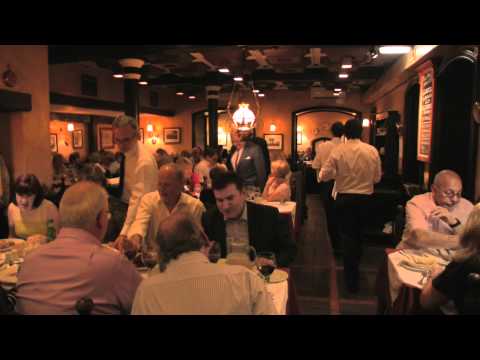
From 'Daly News' (Daly City, CA) 'Original Joe's of Westlake is now open After closing its doors two years ago, we are pleased to announce that the iconic local restaurant , which originally opened in 1956, has now reopened after extensive renovations. The owners of Original Joe's in San Francisco bought the Italian-American restaurant, a Henry Doelger-designed 10,000 square foot building, which is the centerpiece of the entire Westlake neighborhood on John Daly Boulevard. With the renovations, diners will now be able to see from room to room. The famous bar, to the left of the entrance, still has a fireplace and televisions, but also fewer tables and a new sight line to the main dining area. Similarly, the adjacent Cascade Room has been opened up with big windows letting in natural light. The main dining room still revolves around the counter and the charcoal grill, and the booths are outfitted in green leather. The menu will be similar to what it was before, with fresh pasta and ravioli prepared on site. The prices, however, will be more on par with Original Joe's in San Francisco's menu. For the latest updates, check out the restaurant's Facebook page at facebook.com/originaljoeswestlake.
Julius Castle - now re-opened - completely remodeled Established 1922 Historical registered San Francisco registered landmark Italian-French Cuisine Breathtaking view of San Francisco Bay Call for reservations 415-392-2222 Dinner 7 days a week - seating from 5:00 to 9:30 PM Saturday and Sunday Brunch - seating from 10:00 to 3:00 PM 1541 Montgomery Street on Telegraph Hill .
Rosa Feola - TOSTI Non t'amo più Rosenblatt Recitals London 09.01.14 - On this evening Italian soprano Rosa Feola performed songs and arias by Giménez, Bizet, Villa-Lobos, Gounod, Rossini, Tosti, Donizetti, Verdi and Gastaldon, accompanied by Iain Burnside. ************
See Performances.org for details Rosa Feola - Soprano Fabio Centanni - Piano US Recital Debut Fri May 6 - 7:30 PM Herbst Theatre ************ Artist Change Rosa Feola and Fabio Centanni replace Anna Caterina Antonacci and Donald Sulzen who are unable to perform as scheduled. San Francisco Performances’ Vocal Series is made possible, in part, by a generous grant from The Bernard Osher Foundation. US Recital Debut Friday, May 6, 2016 7:30pm Herbst Theatre $65/$55/$40 ************ “London likes to think it lies at the centre of the musical universe, but many great singers had relatively small careers here and most of today’s up-and-coming stars make their names elsewhere. No one fits that description better than the Italian lyric soprano Rosa Feola…the key to Feola’s artistic personality is not just her vocal prowess: what counts is that she never gives less than a performance. ” -- Financial Times (Five Star Review) ************ About This Performance Known for her sparkling soprano and gifts as an actress on both the concert platform and opera stage, she regularly collaborates with conductors such as Riccardo Muti and gives recitals internationally. Her strengths are many, including her natural timbre, flawless technique, and abundance of self-confidence, enough to hold the stage on her own—without a score. Feola’s San Francisco recital program brings together Italian songs that magnify the natural sympathy between music and poetry. In Italy this union has its own particular history, and produced some of the most beautiful—if not always well-known—settings of great Italian poets by composers such as Rossini, Donizetti, Mercadante, Verdi and Tosti. Liszt, the one non-Italian composer in the program is included for his innovative Tre Sonetti del Petrarca, a tribute to one of Italy’s greatest poets and a clear influence on Giuseppe Martucci’s Tre pezzi of 1905–6. This performance is sponsored in part by a generous gift from Mr. and Mrs. J. Patterson McBaine. .
Frank Sinatra and Frank Sinatra Jr. "All Or Nothing At All" (RARE) 1969 [Remastered] Scott Rogers Very rare video clip of Frank and his son singing a duet and joking
around. Fun and loving performance. This was at the Frontier in Las
Vegas. The video and audio have been remastered in high-definition.
************ I think the blonde was the sister, Nancy. .
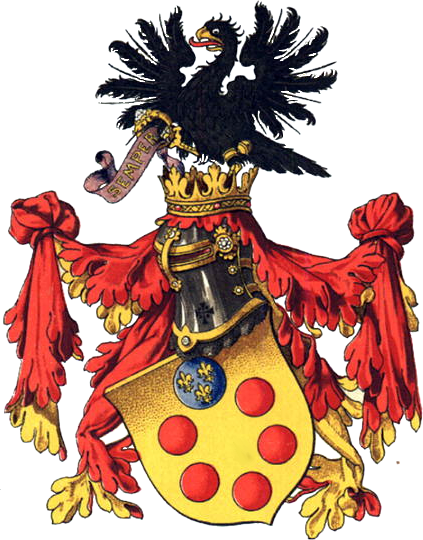
The Medici - Secrets of the most Powerful Family in the World (Full Documentary) Marcia Torres The Medici - Secrets of the most Powerful Family in the World (Full Documentary) Secrets of Rothschild Family Fortune: The Medici were among the most powerful families in the world. Beginning in the fourteenth century, they built a fortune bankrolling popes and kings. Through their wealth and their political abilities, they went from being one of many patrician clans in Florence to the city's hereditary rulers. They married into the royal houses of Austria and France, and two of their number were made pope. Scholars and lovers of art, the Medici were patrons of Leonardo, Raphael, Botticelli, Galileo, Michelangelo, and Cellini. And under their rule, Florence became the intellectual hub of the Western world. Many of the leading Medici were buried in the Chapel of San Lorenzo in Florence, which long enjoyed the family's patronage.
In 2004, we obtained Superintendent Antonio Paolucci's permission to examine 47 of the Medici interred there, including Cosimo. The multiyear project is a unique opportunity to study the health of the Medici (a rare look at a single family over a long period) and might settle allegations of murder to be found in legends about the dynasty. The House of Medici (/ˈmɛdɨtʃi/ med-i-chee; Italian pronunciation: [de ˈmɛːditʃi]) was a banking family, political dynasty and later royal house that first began to gather prominence under Cosimo de' Medici in the Republic of Florence during the late 14th century. The family originated in the Mugello region of the Tuscan countryside, gradually rising until they were able to fund the Medici Bank.
The bank was the largest in Europe during the 15th century, seeing the Medici gain political power in Florence — though officially they remained citizens rather than monarchs. The Medici produced four Popes of the Catholic Church—Pope Leo X (1513–1521), Pope Clement VII (1523–1534), Pope Pius IV (1559–1565), and Pope Leo XI (1605);[1] two regent queens of France—Catherine de' Medici (1547–1559) and Marie de' Medici (1600–1610); and, in 1531, the family became hereditary Dukes of Florence. In 1569, the duchy was elevated to a grand duchy after territorial expansion. They ruled the Grand Duchy of Tuscany from its inception until 1737, with the death of Gian Gastone de' Medici. The grand duchy witnessed degrees of economic growth under the earlier grand dukes, but by the time of Cosimo İ de' Medici, Tuscany was fiscally bankrupt. Their wealth and influence initially derived from the textile trade guided by the guild of the Arte della Lana.
Like other signore families, they dominated their city's government, they were able to bring Florence under their family's power, and they created an environment where art and humanism could flourish. They along with other families of Italy, such as the Visconti and Sforza of Milan, the Este of Ferrara, and the Gonzaga of Mantua, fostered and inspired the birth of the Italian Renaissance. The Medici Bank was one of the most prosperous and most respected institutions in Europe. There are some estimates that the Medici family were the wealthiest family in Europe for a period of time. From this base, they acquired political power initially in Florence and later in wider Italy and Europe. A notable contribution to the profession of accounting was the improvement of the general ledger system through the development of the double-entry bookkeeping system for tracking credits and debits. The Medici family were among the earliest businesses to use the system. .
Giovanni Pierluigi da Palestrina - Vergine bella - Bronzino
MrThesoundflyer Palestrina, Vergine bella, from Madrigali spirituali a cinque voci on texts by Francesco Petrarca. Bronzino, paintings. ensemble officium, Wilfried Rombach, conductor.
Giovanni Pierluigi da Palestrina (c. 1525 – 2 February 1594) was an Italian Renaissance composer of sacred music and the best-known 16th-century representative of the Roman School of musical composition. He had a lasting influence on the development of church music, and his work has often been seen as the culmination of Renaissance polyphony.


_-_Portrait_of_Do%C3%B1a_Isabel_de_Requesens_-_Louvre_612_Joconde_000PE026978.jpg)