Friday, December 16, 2016

Giovanni Battista Ferrandini - 'Catone in Utica' 1753


Giovanni Battista Ferrandini - Catone in Utica - Aria di Catone - Con si bel nome in fronte

KuhlauDilfeng5

*************************


Giovanni Battista Ferrandini

Giovanni Battista Ferrandini (c. 1710 – 25 October 1791), an Italian composer of the Baroque and Classical eras, was born in Venice, Italy and died in Munich, at the age of about 81.
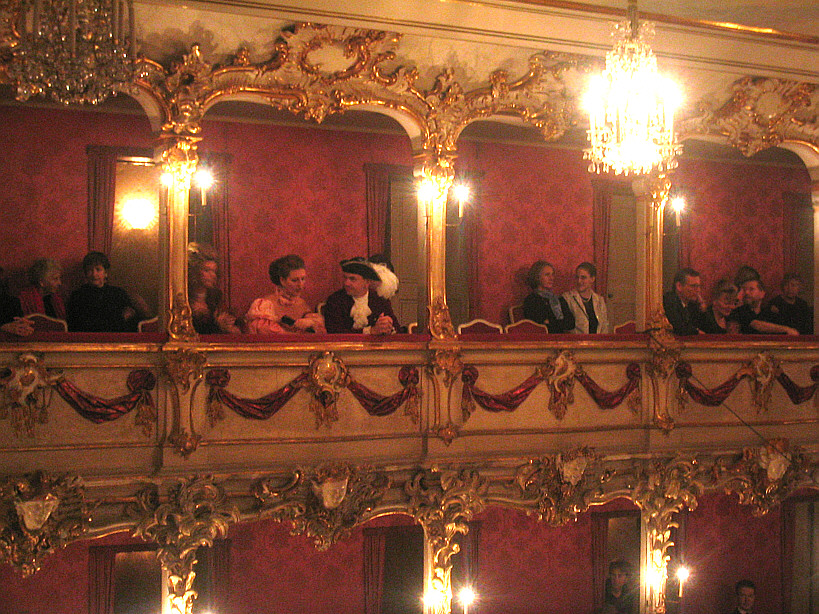
He was a child prodigy and entered the service of Duke Ferdinand Maria Innocenz of Bavaria at the age of 12 as an oboist.[1] The newly constructed Bavarian Court Theatre (the Old Residenztheater, now known as the Cuvilliés Theatre after the architect) in Munich opened on 12 October 1753 with Ferrandini's opera Catone in Utica. A recording of the opera made 250 years later in the same theatre is available (Oehms Classics OC 901).[2]

In 1755, Ferrandini retired to Padua, where in 1771, Wolfgang Amadeus Mozart and his father Leopold Mozart visited him in retirement.


[Above: Interior of the Old Residenztheater, now Cuvilliés Theatre, which opened with Ferrandini's opera Catone in Utica in 1753]

.

Saturday, December 3, 2016

'With Populist Anger Rising, Italy May Be Next Domino to Fall'

.

'With Populist Anger Rising, Italy May Be Next Domino to Fall'

Jason Horowitz - New York Times - December 2, 2016

TURIN, Italy — Italy’s prime minister, Matteo Renzi, only 41, once seemed to have solved the riddle of how to survive Europe’s populist, anti-establishment tempest. But with a critical national referendum on Sunday, the populist wave is now threatening to crush him and plunge Italy into a political crisis when the European Union is already reeling.

From Washington to Brussels to Berlin, fears are rising that Italy may be stumbling into its own “Brexit” moment. What should be an inward-looking referendum on whether to overhaul Italy’s ossified political and electoral system has taken on much broader import. Financial analysts warn of a potential banking crisis, and pro-Europe supporters fear that a “no” vote in the referendum could accelerate the populist movement across the European bloc.

Italy is potentially the next domino to fall, partly because of the disillusionment of young voters. They have been swept up by many of the same forces that led peers in Spain and Greece to vote for upstart parties, the British to vote to leave the European Union, and Americans to elect Donald J. Trump. In France, President François Hollande announced on Thursday that he would not seek re-election — another establishment figure succumbing to the political moment.

Mr. Renzi’s supporters have taken to calling his opponents in the internet-born, populist Five Star Movement “Trumpisti.” They accuse their opponents’ numerous blogs and websites of flooding the Facebook accounts of young people with anti-Renzi, pro-Russian fake news. The referendum has essentially become a referendum on Mr. Renzi, who gave extra motivation to his political enemies by vowing to resign if voters reject the proposed political changes.


“A ‘no’ vote is a vote against Renzi,” said Matteo Roselli, 25, a liberal activist who spent a recent rainy evening in Turin handing out leaflets encouraging people to vote “no.”

With polls indicating that Mr. Renzi may fail, the possibility that he could resign, and force new elections or perhaps bring a caretaker government, has alarmed many leaders, including President Obama, who honored the Italian prime minister in his final state dinner in Washington and urged him to “hang around for a while no matter what.”

If Mr. Renzi does step aside, it could open the way for opponents who have threatened to carry the Continent’s fourth-largest economy out of the euro currency zone.

Such a prospect could destabilize the shaky Italian economy; have serious implications for Italy’s troubled banking system, which has been in crisis for a decade; and have a contagion effect around the eurozone.

“The problem with Italian banks is they are fragile and they are really big,” said Ángel Talavera, senior eurozone economist at Oxford Economics in London. “Banks of that caliber, as soon as you have any noise and rumors, it creates a really bad loop.”

Mr. Renzi, who captured Italians’ imagination by positioning himself as an outsider who would demolish an arthritic political system, is arguing that the constitutional overhaul proposed in the Sunday referendum would streamline government and create more stability in a country that has had 63 governments in 70 years. To speed up the often clogged legislative process, Mr. Renzi wants to drastically reduce the size of the Italian Senate and make it a mostly consultative body. Critically, the Senate would lose the power to bring down governing coalitions.

Critics say the proposal puts too much power in the prime minister’s hands. And Mr. Renzi is showing unexpected vulnerability among the young voters who helped propel his rise but now seem to want the same job protections and social benefits their parents had more than any opportunity Mr. Renzi’s changes might create. Much of the same dynamic has been playing out in Greece, Spain and even France.


The reversal has come despite Mr. Renzi’s image as the Coca-Cola guzzling, Apple-gadget-pecking embodiment of young Italians eager to modernize the country. According to a poll in the newspaper Il Sole 24 Ore, support for Mr. Renzi’s changes is strong among voters older than 65 and weak among people younger than 45, a group that opponents of the changes lead by 20 percentage points.

The beneficiary of that erosion appears to be the Five Star Movement, with its ability to win voters on the left and right with a mix of social liberalism, economic populism and tough law-and-order talk. It has been led by Beppe Grillo, 68, a former comedian who last month called Mr. Renzi a “serial killer” and celebrated Mr. Trump’s victory as a blunt rejection of the establishment.

In recent years, the merrily vulgar Mr. Grillo has stepped back so that a new generation of less rough, but perhaps no less radical, young politicians could step forward.

Here in Turin, Chiara Appendino, 32, beat Mr. Renzi’s favored Democratic Party candidate for mayor this year. In the election, she had the support of Mr. Roselli and many like him.

“Our voters are mainly young voters,” Ms. Appendino said after stepping out of the chandeliered City Hall chamber. “I believe there really is a generation of young people, and I feel in some way that I represent them, who have desire and ability, but who cannot get ahead.”

Ms. Appendino, who speaks German, French and English and is considered a rising star in her party, said that she did not consider herself anti-European, but she argued that the current European Union did not work.

Far from breaking with the establishment, Mr. Renzi had been co-opted by its bankers, bureaucrats and power brokers, she said.

Mr. Renzi is desperately trying to persuade Italians, a large slice of them still undecided, to back him.

“Today, we mustn’t get stuck in nostalgia,” Mr. Renzi told a crowd this week in Lingotto, the section of Turin that was once home to the automaker Fiat. “We must work for the future of our children.”

But even his young supporters worry that those words are wasted on the Italian youth, who as in so many other European countries are often unemployed.


In France, where the far-right National Front has emerged as a force, the youth unemployment rate is around 25 percent. And that looks good compared with Greece and Spain, both with more than 40 percent youth unemployment and strong populist movements.

In Italy, Mr. Renzi’s 2015 labor market overhaul, hailed by many investors, has so far failed to be the boon to employment his government expected. The youth unemployment rate is still around 35 percent. In the country’s south, where opposition to the change is solid, it is nearly 50 percent.

“The young are lined up against him,” Davide Giani, 20, said with a resigned shrug after an afternoon spent trying to hand out leaflets in support of a “yes” vote on the referendum only to see young Turinese turn them down. “They see this as an opportunity to lash out against the establishment.”

Back in the summer, Mr. Renzi predicted the gathering storm as he flew on the Italian Air Force One but nevertheless strained to see a silver lining in the unwrinkled faces of his new rivals.

“The good thing is that since we have come to power, there has been a generational leap forward,” Mr. Renzi said, adding that his likely opponents, Luigi Di Maio of the Five Star Movement and Matteo Salvini, the young leader of the anti-immigration and anti-Renzi Northern League, would be younger than he is. “Great!” he said. “A sign that something has changed.”

Some of Mr. Renzi’s older enemies across the political spectrum are latching onto the referendum to return to relevance. For them, the prospect of his premature exit has had the effect of a curtain call after a bloody opera, reanimating vengeful antagonists for a final bow on center stage.

Former Prime Minister Silvio Berlusconi, 80, mindful that Mr. Renzi needs moderate center-right supporters, reversed his previous support for the constitutional overhaul out of sudden fear of “authoritarian drift.”

In Turin, former Prime Minister Massimo D’Alema, a member of Mr. Renzi’s Democratic Party who has received little deference from the current leader, delivered a disdain-dripping speech to mobilize elderly liberals and former communists against the change.


“He presents himself like the one who wants to rejuvenate the country, but the young people are against him,” Mr. D’Alema, 67, said in an interview, in which he mocked Mr. Renzi as a Twitter-obsessed “oaf” who had alienated labor unions and destroyed the left.

Mr. Renzi’s young supporters shudder at the very mention of Italy’s former leaders. On a rainy evening in Milan, Alessia Giuliani, 24, sat in a field office for the “yes” campaign hunched over lists of phone numbers she had spent the day calling in support of Mr. Renzi’s changes.

She spoke optimistically about all the older people who, having lived through scores of Italian governments, proclaimed their hope and confidence in Mr. Renzi.

But asked if she had had any luck persuading young people, her smile vanished and her hand landed woefully on her forehead.

“In general, the young voters are disinterested or for ‘no,’ ” explained her colleague, Stefano Angelinis, 24. “Many young people are going for Five Star.”

Follow Jason Horowitz on Twitter @jasondhorowitz.

Jack Ewing contributed reporting from Frankfurt.


.

Tuesday, November 8, 2016

San Francisco's new Salesforce Tower to be the secend tallest building west of the Mississippi - Part 2


History

Developer Hines, with a proposal by architect César Pelli, was selected as the winner of a global competition in 2007 to entitle and purchase the site. A seven-member jury of development experts assembled by the Transbay Joint Powers Authority (TJPA) selected Hines over proposals from Forest City Enterprises and architect Richard Rogers; and from Rockefeller Development Group Corp. and Skidmore Owings & Merrill. In 2012, Boston Properties acquired a 50% stake in the project and in 2013 acquired most of Hines' remaining interest to become 95% owners of the project.

The site of the tower was in a dilapidated area, formerly used as a ground-level entrance to the San Francisco Transbay Terminal, which was demolished in 2011. The TJPA sold the parcel to Boston Properties and Hines for US$192 million, and ceremonial groundbreaking for the new tower occurred on March 27, 2013. Actual below-grade construction work started in late 2013. The general contractor on the project is a joint venture between Clark Construction and Hathaway Dinwiddie Construction.


César Pelli - Argentine-American of Cisalpine descent
The development was originally contracted on "spec", meaning the developer/owner did not have a major tenant lease secured beforehand. On April 11, 2014, Salesforce.com announced that it signed a lease for 714,000 square feet (66,300 m2) on floors 1, 3-30, and 61 to become the building's anchor tenant. Previously known as the Transbay Tower, the building was renamed Salesforce Tower. The lease was valued at US$560 million over 15 and a half years starting in 2017.

The tower is expected to be completed in 2018 and will have 61 floors, with a decorative crown reaching 1,070 ft (326 m). The original proposal called for a 1,200-foot (370 m) tower, but the height was later reduced. It will be the tallest building in San Francisco, surpassing the Transamerica Pyramid by more than 200 feet (61 m). The tower is expected to become the second tallest building in the Western United States. The tower is expected to be completed in 2018 and will have 61 floors, with a decorative crown reaching 1,070 ft (326 m). The original proposal called for a 1,200-foot (370 m) tower, but the height was later reduced. It will be the tallest building in San Francisco, surpassing the Transamerica Pyramid by more than 200 feet (61 m). The tower is expected to become the second tallest building in the Western United States.


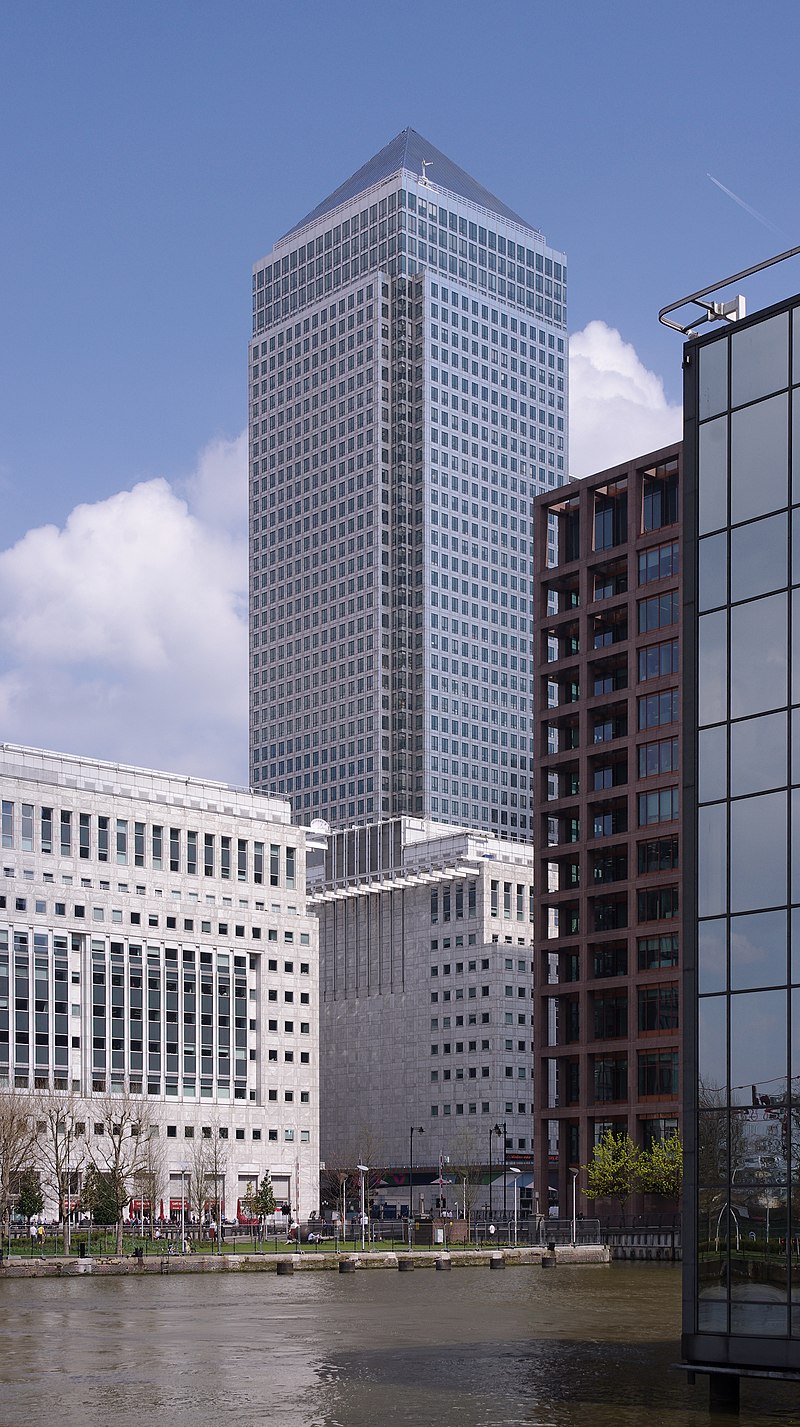
One Canada Square, London
List of works by César Pelli

This list of works by César Pelli categorizes the architect's work. Pelli has established an extremely prolific career in the span of four decades, and has designed some of the tallest buildings in the world. The following are some of his major constructions:

Completed

1966: Worldway Postal Center, Los Angeles International Airport
1967: Kukui Gardens housing, Honolulu, Hawaii

1969: San Bernardino City Hall, San Bernardino, California
1969: Century City Medical Plaza, Century City, Los Angeles, with architect Anthony J. Lumsden.

1972: US Embassy in Tokyo, Japan
1973: Commons Centre and Mall, Columbus, Indiana

1973: Eaton's Department Store, Vancouver, British Columbia, Canada
1975: Pacific Design Center, Los Angeles

1977: Wintergarden Arboretum, Niagara Falls, New York, USA (demolished in 2009)
1981–1987: World Financial Center, New York City, New York, USA
1982–1984: Herring Hall at Rice University, Houston, Texas

1984: Residential Tower atop the Museum of Modern Art (MoMA), New York City
1984–1986: Cleveland Clinic, Cleveland, Ohio, USA
1984:
Mattatuck Museum Arts and History Center renovation, Waterbury, Connecticut
1987:
Blumenthal Performing Arts Center, Charlotte, North Carolina
1987–1990: Carnegie Hall Tower, New York City, New York, USA
1987-89:
Maryland Residence, Bethesda, Maryland, USA
1987–1991:
One Canada Square, Canary Wharf, London, England, UK
1988: Wells Fargo Center (formerly Norwest Center), Minneapolis, Minnesota
1989: Gaviidae Common, Minneapolis, Minnesota

1990: Nippon Telegraph and Telephone Headquarters, Tokyo, Japan
1990: Roy Nutt Mathematics, Engineering & Computer Science Center at Trinity College, Hartford, Connecticut
1990: 181 West Madison Street, Chicago
A 50-story skyscraper thought to be inspired by Saarinen's second place entry in Chicago's Tribune Tower competition

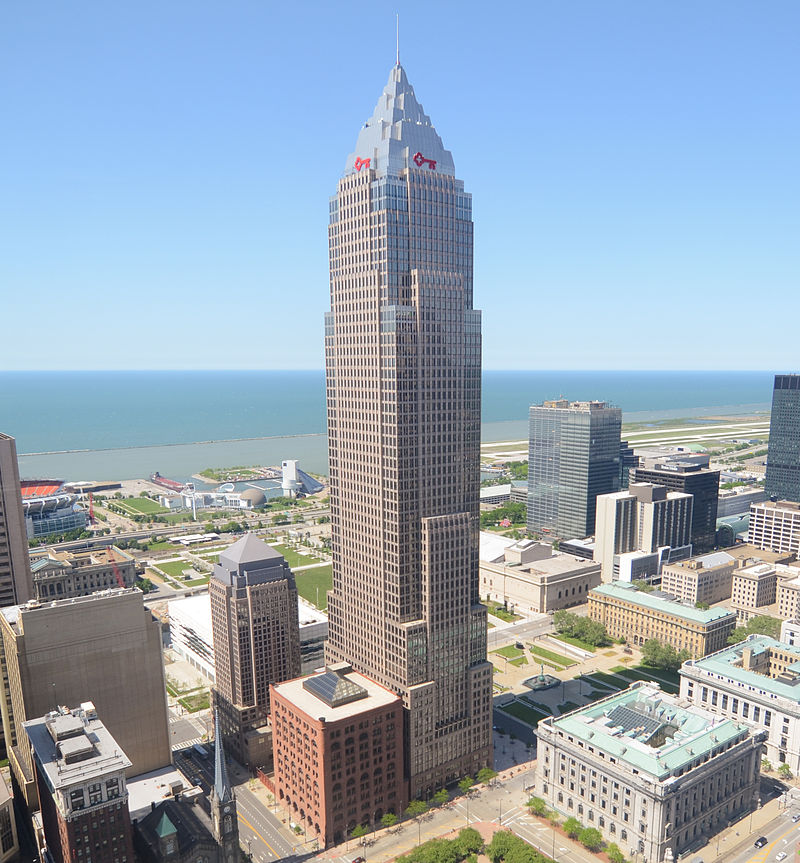
1991: Key Tower, Cleveland, Ohio, USA
1991: 777 Tower, Los Angeles, California
1991: Frances Lehman Loeb Art Center at Vassar College, Poughkeepsie, New York

1992: Bank of America Corporate Center, Charlotte, North Carolina
1992: Plaza Tower, Costa Mesa, California
1993: Worrell Professional Center, Wake Forest University School of Law, Winston-Salem, North Carolina
 

Cajasol Tower, Spain
1994: Physics and Astronomy Building, University of Washington, Seattle, USA
1995: Aronoff Center for Performing Arts, Cincinnati, Ohio

1995: 100 North Main Street (formerly Wachovia Center), Winston-Salem, North Carolina
1996: Edificio República, Buenos Aires, Argentina
1996: Residencial del Bosque, Mexico City, Mexico


1996: Owens Corning World Headquarters, Toledo, Ohio, USA
1997: Expansion of Washington National Airport, Washington, D.C.
1998: Overture Center, Madison, Wisconsin
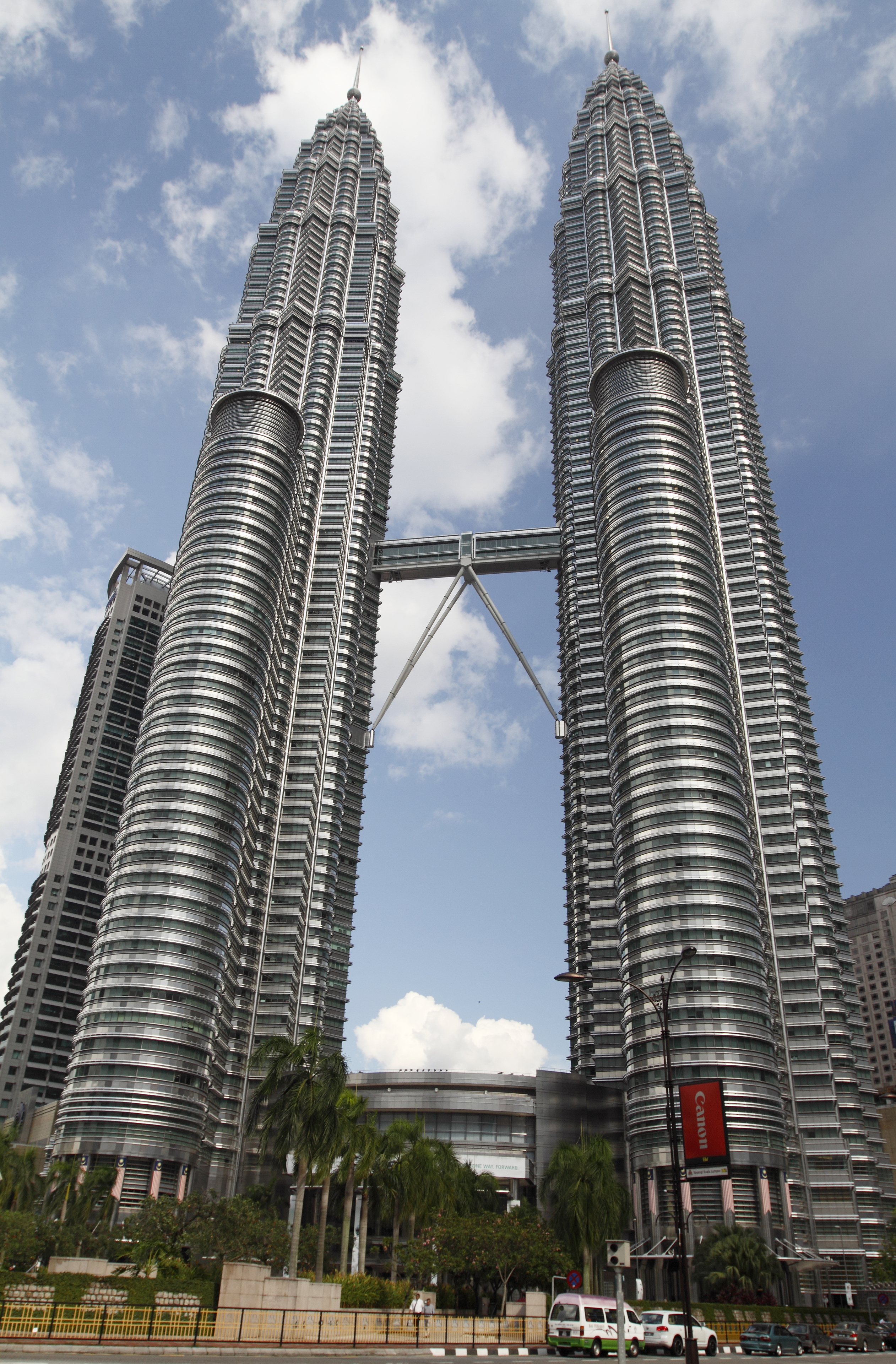
1998: Petronas Twin Towers, Kuala Lumpur, Malaysia
1998: Schuster Center, Dayton, Ohio, USA
1999: Cheung Kong Center, Hong Kong
1999: Zurich tower office building in The Hague, Netherlands
2000: Kurayoshi Park Square, Kurayoshi, Japan
2000: Boston Bank Building, Buenos Aires, Argentina
2000: KABC-TV, Los Angeles, California
2001: Citigroup Centre, 25 Canada Square, Canary Wharf, London
2001: Bucksbaum Center for the Arts at Grinnell College, Grinnell, Iowa
2001: Athletic and Fitness Center at Grinnell College, Grinnell, Iowa
2001: The Investment Building, Washington, D.C.
2002: JP MorganChase Building, San Francisco
2002: Weber Music Hall at University of Minnesota Duluth, Duluth, Minnesota
2002: Former Enron Headquarters at 1500 Louisiana Street, Houston
2003: Gerald Ratner Athletics Center at University of Chicago, Chicago, Illinois
2003: Two International Finance Centre, Hong Kong
2003: Center for Drama and Film & the Martel Theater at Vassar College, Poughkeepsie, New York
2003: 25 Bank Street, Canary Wharf, Docklands, London
2003: 40 Bank Street, Canary Wharf, Docklands, London
2003: Benjamin & Mariam Schuster Performing Arts Center, Dayton, Ohio
2004: Goldman Sachs Tower, Jersey City, New Jersey
2004 Campus University Siglo 21, Córdoba, Argentina


Kurajoshi Park Square, Japan
2005: Cira Centre, Philadelphia
2005: Malone Engineering Center, Yale University, New Haven, Connecticut
2006: Theodore Roosevelt Federal Building Eastern District Courthouse, Brooklyn, New York

2006: Science and Engineering Research and Classroom Complex at University of Houston, Houston
 

2006: Minneapolis Public Library's Central branch, Minneapolis
2006: Joe Rosenfield '25 Center, Grinnell College, Grinnell, Iowa
2006: Renée and Henry Segerstrom Concert Hall, Segerstrom Center For The Arts, Orange County Performing Arts Center, Costa Mesa, California
2006: Thomas E. Golden Jr. Center, St. Thomas More Catholic Chapel and Center, Yale University, New Haven, Connecticut
2006: Adrienne Arsht Center for the Performing Arts, Miami
2006: Madison Museum of Contemporary Art, Madison, Wisconsin
2008: BOK Center, Tulsa, Oklahoma

2008: One Park West, Liverpool, England
2008: Torre de Cristal, Madrid, Spain
2008: Repsol-YPF Building, Buenos Aires, Argentina
2008: St. Regis Residences and Hotel, Mexico City, Mexico
2008: Business Instructional Facility, University of Illinois at Urbana–Champaign, Illinois

2009: Cooperative Arts and Humanities High School, New Haven, Connecticut
2009: Connecticut Science Center, Hartford, Connecticut
2009: Aria Resort and Casino, the central feature of CityCenter, Las Vegas
2010: Shanghai IFC, Pudong, sister project of Two International Finance Centre in Hong Kong
2010: Torre Mesoamericana, Tuxtla Gutiérrez, Mexico
2011: New Airport Terminal Building (Phase 1), Winnipeg James Armstrong Richardson International Airport, Winnipeg, Canada

2011: Iberdrola Tower, office building, Bilbao, Spain
2013: The Landmark, Abu Dhabi, United Arab Emirates
2013: The Theatre School, DePaul University, Chicago
2015: Cameron and Edward Lanphier Center, Choate Rosemary Hall, Wallingford, Connecticut


.

Monday, November 7, 2016

San Francisco's new Salesforce Tower to be the secend tallest building west of the Mississippi - Part 1


Salesforce Tower

Salesforce Tower, formerly known as the Transbay Tower, is a 1,070 ft (326 m) supertall office skyscraper under construction in the South of Market district of downtown San Francisco. Located at 415 Mission Street between First and Fremont Streets, next to the Transbay Transit Center site, Salesforce Tower is the centerpiece of the San Francisco Transbay redevelopment plan that contains a mix of office, transportation, retail, and residential uses. When completed, the tower will be the tallest in San Francisco and a defining building in the burgeoning South of Market area. With a top roof height of 970 feet (300 m) and an overall height of 1,070 feet (330 m), it will be the second tallest building west of the Mississippi River after the Wilshire Grand Center in Los Angeles.


Cira Centre, Philadelphia
César Pelli

Born: October 12, 1926 (age 90)
San Miguel de Tucumán, Argentina

Nationality: Argentine – United States citizen

Occupation: Architect

Awards: Doctor of Arts, CTBUH Skyscraper Award, The Lynn S. Beedle Lifetime Achievement Award

Practice: Pelli Clarke Pelli

Design: Metallic, art deco-influenced buildings


Buildings

Petronas Towers, Kuala Lumpur
 

Key Tower, Cleveland
 

Cira Centre, Philadelphia
 

30 Hudson Street, Jersey City
 

1 Canada Square, London
 

Riverview Plaza, Wuhan


Pelli in 2010
César Pelli (born October 12, 1926), founder of Pelli Clarke Pelli, is an Argentine American architect known for designing some of the world's tallest buildings and other major urban landmarks. In 1991, the American Institute of Architects (AIA) listed Pelli among the ten most influential living American architects. His many awards include the 1995 AIA Gold Medal which recognizes a body of work of lasting influence on the theory and practice of architecture. Perhaps his most famous work are the Petronas Twin Towers, which were for a time the world's tallest buildings. He also designed the World Financial Center complex in downtown Manhattan.


Personal life

After studying architecture at the Universidad Nacional de Tucumán, Pelli completed his studies at the School of Architecture at the University of Illinois at Urbana-Champaign. He started his career in the New Haven offices of architect Eero Saarinen.

He emigrated to the United States in 1952 and became a naturalized U.S. citizen in 1964. He married Diana Balmori, a landscape and urban designer. They have two children: Denis, a neurobiologist and Professor of Psychology and Neural Science at New York University and Rafael Pelli, also well-known architect.

Pelli served as dean of the School of Architecture at Yale University from 1977 to 1984. His firm employs about 100 architects, designers, and support staff in New Haven, Connecticut.


Petronas Towers, Malaysia
Awards and honors

In 2004, his famous work Petronas Towers of Kuala Lumpur received the Aga Khan Award.

On May 15, 2004 the University of Minnesota Duluth awarded Pelli an honorary Doctorate of Humane Letters.

On May 26, 2008, Yale University bestowed an honorary Doctor of Arts degree to Pelli for his work in architecture.

He received the The Lynn S. Beedle Lifetime Achievement Award from the Council on Tall Buildings and Urban Habitat in 2008 to honor his work in the field of tall buildings.

In 2012, Konex Foundation from Argentina, granted him the Diamond Konex Award for Visual Arts as the most important artist in the last decade in his country.


Career


Works


Project Designer, Eero Saarinen

      TWA Terminal Building, John F. Kennedy International Airport, New York    

      City, New York

      Morse College & Ezra Stiles College, Yale University


Director of Design at Daniel, Mann, Johnson & Mendenhall, Los Angeles, California

      COMSAT Laboratories, in Clarksburg, Maryland, 1967–1968 (with landscape

      architect Lester Collins)


Partner, Gruen Associates, Los Angeles, 1968–1976


Cesar Pelli and Associates, 1977, currently known as Pelli, Clarke, Pelli, Architects


Key Tower, Cleveland
Publications

1982: "Skyscrapers," Perspecta 18, pp. 134–151.

1984: Introduction to The Second Generation by Esther McCoy (Peregrine Smith Books)

1999: Observations for Young Architects (Monacelli Press)

2002: Foreword to Ralph Rapson: Sketches and Drawings from Around the World by Ralph Rapson (Afton Historical Society Press)


External links

Pelli Clarke Pelli Architects


.

Sunday, October 16, 2016


Giovanni Berdondini - Chianti Sound (OFFICIAL VIDEO)

Audioglobedistro

Chianti Sound – Giovanni Berdondini original piano song.
Composed, performed and produced by Giovanni Berdondini
Realized with the support of: project 100band within GiovaniSì - Regione Toscana

Piano recorded, mixed & mastered by Mirco Mencacci & Andrea Ciacchini at SAM Recording Studio

Video filmed by The Factory PRD
Video director: Stefano Poggioni
Dop: Claudia Cataldi
Drone operator: Lorenzo Hervatin
Makup artist: Audrey Biarnais
Hairstyle: Andrea Prischi
Assistant video: Elena Poggioni, Simone Petracchi
Pianos provided by Checcacci
Special thanks to: Castello di Poppiano Guicciardini

Subscribe to my channel:  

https://www.youtube.com/channel/UCqh-URUwZtkMD31nixD1VAw
 

Follow me on Facebook: https://www.facebook.com/giovanniberdondiniofficial/

www.audioglobe.it

Become our fan on www.facebook.com/Audioglobe
 

Follow us on Twitter @audioglobe1

Subscribe to Audioglobe's YouTube Channel
https://www.youtube.com/user/Audioglobedistro


*************************

It had always been amazing to me the similarities between Tuscany and the wine country of northern California, coupled with the long cultural link.

.


Friday, October 14, 2016

It Finally Happened: America Gave up the Internet to the UN


It Finally Happened: America Gave up the Internet to the UN

Wayne Levi Price - Tribulation Saints


*************************

Now we just have to play the waiting game. The nice fox is now in charge of the chicken house, and we are the chickens. Literally almost anything can happen in time as a result of handing it over to the UN. I'm still not clear as to actually how much power and influence "they" will have. The UN doesn't recognize any 1st Amendment rights. We've already seen some very inconsistent censorship, for example on twitter, where someone may be muted for something small and inconsequential while another person is simply allowed to call for violence against individuals. Americans are not aware that the Canadian government has, for twenty years, attempted to censor websites through threats to American-based internet service providers. Now that same government, and many much worse, will have a say on what will happen with free speech. Dozens of very powerful special interests around the world are just salivating at the possibilities.

.

Tuesday, September 13, 2016

"Italian irredentism" and the concept of a "Cisalpine state"

Italian irredentism

Italian irredentism (Italian: irredentismo italiano) was a nationalist movement during the late 19th and early 20th centuries in Italy with irredentist goals which promoted the unification of geographic areas in which indigenous ethnic Italians and Italian-speaking persons formed a majority, or substantial minority, of the population.

Originally, the movement promoted the annexation to Italy of territories inhabited by an Italian indigenous population but retained by the Austrian Empire after Third Italian War of Independence in 1866.


In 1859, the Italian peninsula was similar to the Balkans; a grouping of separate nations, each with it's own language and culture. However, three aspects of the Italian peninsula made it different. One was the power and reach of the Catholic Church; the second was the centuries-long influence of the "standard Italian language" based on Tuscan, and third was the incessant invasions from foreign powers (France, Austria, Spain, Islam in the south, etc.). These three factors made it possible to form the Italian state.

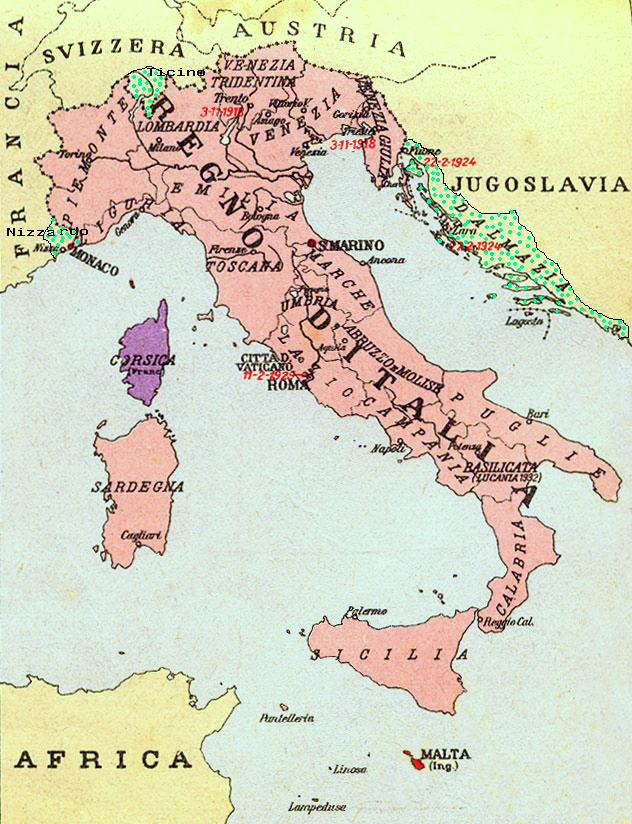
From an Italian irredentist point of view, the concept would seem to include the basic peninsula; the islands of Sicily, Sardinia, and Corsica; the county of Nice in France (Nizza); the country of Monaco; the Swiss canton of Ticino and other Swiss Italian sections to the east; parts of Croatia and the Dalmatian coast in the Balkans, and maybe Savoia (France) in the far north and the island nation of Malta. It was like a 19th century version of the EU, with the promise of security and prosperity; however, not set up along linguistic or cultural lines.


From a Cisalpine/Padanist point of view, the concept would be much simpler, and would include the peninsula north of the Roman state. In my opinion, from an 1859 geopolitical point of view, it would include a politically decentralized Roman state (Latium) and the lands north of it. This would include Monaco, Nice, Savoia, Ticino, and at least Trieste in the east. Of course, far beyond Cisalpine identity, the continuously escalating events during the last twenty years have made a mockery of even European identity itself.

In a general pragmatic way, as far as American-Padanian identity goes, a heritage such as South Tyrolian could be thought of as Cisalpine. I can recall seeing a website once where there was some type of Trentinese-South Tyrolian club somewhere in perhaps New England, in which both Alpini-style hats and traditional Tyrolian dress was worn by some.

Even if Europe is destroyed, we can still continue to exist in the United States, Canada, Argentina, and Australia. We're experiencing the same fundamental problem that has continued over 6,000 years: citizens too afraid to stand up to their own governments or other powerful entities. Even if you simply vote-out the Fabianists/Globalists... the following wrath though their raw deceitful power in government and media is shocking. In the U.S., globalist-treason is centrally organized around the Council on Foreign Relations, a Fabianist billionaire political union with its hands clutched over the main choke-points of society.

.