Showing posts with label Italian. Show all posts

Wednesday, July 29, 2020

Ancestry DNA testing: Confusion, truths, and fantasies


Ancestry DNA testing has come around now in a time of materialism, ego, instant gratification, attention seeking, socio-political agendas, and a lack of knowledge about history, so it should be of no surprise that there have been some problem areas. The first problem is that people can't truly even read and comprehend the tests. These "ancestry groupings" are somewhat arbitrary, and mix sub-markers of both very ancient and more contemporary admixtures into single groupings. For example, lets just say that my test showed that I'm 6% from "Turkey." That would not mean that I have Turkic DNA. The land now known as Turkey was once basically of varying regions, eras, and mixtures of proto-European, Mediterranean, Greek, Roman, and a type of Celtic people. In other words, European. Only about 900 years ago was it overwhelmed by Turkic tribes and took on a Turkic, Islamic, and non-European identity. However, on the test they don't make any before-and-after distinction for that 1,100 CE racial timeline change. The subject is just left to scratch their heads and say "I guess I'm part Turkish" and apply a false mindset.

One of the common features from test results of Mexican, Puerto Rican and most other Latin American origins is that those people are virtually always at least partly Iberian. Within that Iberian DNA structure is a proto-European link with the British Isles. This pretty much is not related to the overall root stock of today, but of very ancient origin. Proto-Europeans were not Teutonic or Mediterranean, but the stock of the first Europeans; for example, the Basques or the Welsh. Still, there's the "BRITISH???" reaction from the test subjects. Just like the vast majority of people, they simply cannot process the results properly because they don't really know what they're reading. For some reason, whatever that particular conflated Iberian-British sub-marker is.... it was placed under the "British" category in the results. The Puerto Rican guy's "British" ancestors probably didn't look like Sting or David Bowie, or what we would perceive as modern day root stock British.

It probably should be noted that there's a significant difference between racially-mixed and ethnically-mixed. Someone who is Irish and Ukrainian is ethnically-mixed; someone who is Irish and Mestizo is racially-mixed. On one Ancestry By DNA commercial, a Mexican woman said she just thought she was "Hispanic," whatever that meant to her. After taking the test she was so overwhelmed that she said "I'm everything!" She probably misinterpreted most of it. For example, the Iberian component might seem to reflect an exotic mix when that may not necessarily be the whole truth. For example her possible ancient Briton, Phoenician or Greek admixture would not be the same as her Mayan or Congolese admixture. She was basically Mestiza with perhaps 7% West African admixture; it's not really that complicated. In other words, certainly in today's world, there are a lot of DNA markers which reflect a similar ethnic origin or type anyway.

Since the ancient Etruscans were known to have migrated from the region now known as Anatolia in Turkey, this presents another problem in test results. Those people who later became known as the Etruscans were obviously an intelligent, creative, and successful people; these "Anatolian" Mediterraneans may have branched out in other directions. Therefore there could be people in say the near east who could take a test and it would show the "Italy/Greece" or "Italian" trace marker. It's possible that it could be from some ancient Roman colonizers, but I have no doubt that sometimes it could be the conflation of modern Tuscan DNA with "ancient Anatolian." In other words, that person's ancestors never stepped foot on the Italian peninsula, but they have that particular DNA maker from people whose progeny came to be the Tuscans at a later point in history!

There's usually a reason for everything. For example, a Puerto Rican could discover that they're part "Italian," and not just a trace amount from "Roman Spain." For some reason, long ago there were some immigrants from Corsica, Sardinia, and Ireland into Puerto Rico... but they did not remain a separate people, but merged with the local population mix. It probably should be noted that most of "Italy and Greece" are closely DNA linked, but not "Italy and Spain" despite the closer comparative linguistic link with Spain. DNA tests aren't always consistent. Sometimes siblings get different results. Sometimes smaller admixtures don't show up, or sometimes they're blown up on a test. In other words if someone was of a 3% admixture, the result might show it to be 10%. One test result in regards to an admixture stated "Your ethnicity estimate is 4%, but it can range from 0-20%." Doesn't sound very reliable, unless you took at least three tests and averaged them. There have been Nigerians who have taken the test, people whose families have always been Nigerians as far as they know. To their surprise they discover that they're only 30% Nigerian, with the rest being other regionally conflated DNA groupings that they don't even understand.

One of the absolute absurdities finally put to rest is Quentin Tarantino's "black Sicilian" myth from the film 'True Romance' from 1993... prior to the availability of these tests. Even though that had nothing much to do with our people, it was still a false narrative. Also, if you may recall, our people were mentioned in the script for that scene; something absurd like Sicilians were once all blonde haired and blue eyed just like in the north, then they were overrun by blacks. People actually believed that or wanted to believe it, especially if they didn't like Sicilians or Italians. As if there were never any Proto-Europeans or Mediterraneans, or even various darker skinned peoples to the south or east. Not that I think anyone really cares about that scene, but no part of it was generally true. I guess Tarantino assumed that Spanish or Arabs were already perceived to be mixed, but the scene could work within the context of white Sicilian criminals. For the record, I don't have any problem with Sicily or Sicilians; I just want a homeland specifically for our people--and only our people--just like the Jews and Japanese have. That's it.

One of the more interesting test results I've seen was one from a Coptic Egyptian woman. She truly was heavily of ancient Egyptian origin, probably without any significant change. She only had 0.7% European and 0.1% Sub-Saharan African. The Coptic Christians go straight back to ancient Egypt. It should be noted that there actually is a "North African" DNA category; totally separate from Sub-Saharan African. In other words, that particular DNA marker is not Sub-Saharan, but comes from the ancient migration of people from west Asia who after a long period of time developed genetic uniqueness. However, that's only in regards to that particular innate DNA category, not for the modern population of North Africa which is very mixed racially. Another important fact is that the DNA of specifically the Persian people (not the little dark Afghani types) clusters very closely with Europeans despite a long separation of time. Ancient Persians were the Aryans; there's no ifs, ans, or buts about it. They were of an ancient local Mediterranean and ancient north-Eurasian Teutonic mix. Admixtures to Persia/Iran have been relatively minor since that time.

The only truly strange admixture I ever saw was one Algerian woman who had a trace marker of Australian Aborigine. There are legends about the Phoenicians having traveled as far as Australia, but nobody really believed them. Well, maybe that's the proof that those legends are true.

.

Sunday, October 31, 2010

Another Sopranosim

Although not a fan of the show, A&E has the current rights to it and the syndicated broadcasts are shown every morning at 6 AM. Occasionally I have it on as I get up. This morning I couldn't help but notice a scene which, without going into much background, portrayed a rape incident. The victim's ex-husband entered the hospital room to see her.

This character, who I believe was supposed to be of Calabrian ancestry, was a somewhat tall gentlemanly man in his fifties. Well spoken and educated, he took great offense at the portrayal of Italian-Americans in the mainstream media, even going so far as to say that it was a roadblock to an "Italian president."

As he entered the hospital room, he tried to keep his composure as health care staff and law enforcement officials conducted their work. After a few moments, a police detective stated that the perpetrator had been arrested. The individual's last name was "Rossi." Suddenly, this man became noticeably uncomfortable. Showing more emotion than he had when he first saw his ex-wife, he blurted out something like "That's an Italian name!? I thought that witnesses described him as a Puerto Rican??"

The basic gist of it was that he has such a chip on his shoulder, that he took it almost personally that the perpetrator of this particular type of hideous crime had the name "Rossi." Of course, all this was fictional, but I couldn't help but think of what this man might think of many everyday face-to-face meetings with people?

To digress, the criminal in this fictional account was, according to the story, Puerto Rican. Some Puerto Ricans have surnames of Irish, Corsican, and Sardinian origin. This due to immigrants to the island, perhaps a century or more ago, and who melded with the local population; hence the name "Rossi." Then it occurred to me, this individual placed a lot of importance on even the intrinsic concept of "an Italian name." I just wanted to pull this issue away from this portrayal of a crime; one that, if genuinely proven, probably should be rewarded with the death penalty.... into just everyday life. Everyday interactions.

I can't help but think of what this man, and there are probably many like him, would think of maybe someone like me? To digress for just a moment, he, being from New York City, would have had almost no contact with anyone whose ancestry was is what we like to call "the northern nations," unless he traveled to "Italy." This is not good or bad in of itself, but just a fact. When studying the villages of eastern Lombardy, where my ancestors came from, it's clear that very few of them had village names (of their original dialect; used prior to 1860) that he would recognize as "Italian-sounding" The local Lombard dialects wouldn't even be recognized as "Italian" either (the Tuscan language was implemented as the official "Italian language") . However, the surnames would be recognizable to him as "Italian."

Some of those surnames would sound different than what he might be used to. Some of them being of Gallic origin. A few names from long gone eras may appear, like "Mitterpergher" in Lombardy, and many surnames in the tri-Veneto region have no vowel ending, but are very native. However, some surnames in say Sicily reflect long past eras as well; like "Martines" or "Mondinier." More often than not, a name like "Cuomo" would sound foreign in non-cosmopolitan areas in the north. I wonder what Mario Cuomo, himself very similar to the character we are looking at here, would assess that fact? In short, there's an honest aspect to this, and a dishonest one.

Maria Laurino took the challenging step of trying to sift through this issue in her 2001 book 'Were You Always an Italian?: Ancestors and Other Icons of Italian America'. It took courage to take on this issue. Without going into all of the data, I will merely quote the famous anthropologist Carlton Coon:

"No country in Europe in which one language and one cultural tradition prevail shows a greater diversity of race between its southern and its northern extremities than does Italy. The binding element which is common to all sections is the Alpine, which has reƫmerged from obscure beginnings through a superstructure composed of Dinaric, Nordic, and various kinds of Mediterranean accretions. Italy stands on the fence between the Alpine and Mediterranean worlds."

As we have gone over time and time again, even that "common language" is absolute pure fiction; no disrespect on the Tuscan dialect intended. Also, Catholicism is a very culturally ambiguous concept. Many people of entirely different cultures are "Catholic."

I recall some years ago, some high ranking political figure in Greece, I don't recall offhand his name or position, stated that "Italians" have spread the mafia all around the world. On one level, he was correct that there is no "Greek mafia." There is a present black market anywhere in the world, but nothing comparable to the mafia of Sicily, Calabria, or Campania, in, for example, Greece, Spain, or Germany. On the other hand, it was a moronic statement in that there are about five million people of "Italian" ancestry in the Brazilian province of Sao Paulo, and no mafia; many millions more in Argentina, with no mafia. Part of this is that most of those people are of "northern nations" descent.

Getting back to our Sopranos character. IF he was of Calabrian descent, and IF he took such matters so personally, then he might well have an achy heart today. The Calabrian 'Ndrangheta is possibly the world's most powerful organized crime group. They make literally billions per year in drug profits. Their GNP is higher than that of small countries like Estonia. In reality, he shouldn't take that personally; although it is quite a curiosity subject! Why Calabria? There are many areas in Europe which are historically poorer and have been subjected to much greater oppression than Calabria or Sicily. On the other hand, I don't think that I have ever heard of a "bad Italian neighborhood" (in a Southern Italian/American sense).

Lets cut to the chase. As a people, US northerners, the Gallo-Tuscan types, have taken it worse than the traditional Italian-Americans. WE are not responsible for any of the negative stereotypes, real or imagined. The image of "Italians" around the world contains some of the lowest stereotypes, with sarcasm sprinkled on top for good measure ('Analize This'); along with the highest forms of culture and ingenuity. Whether anyone likes it or not, the term "Italian" many times arouses negativity or emotion from non-Italians; just subtle enough to make someone NOT want to touch the subject, yet annoying enough to cause despair, especially if one is Gallo-Tuscan in ethnic origin.

Whether it be a quote like from the Greek politician, Camorra wars in Naples, or Robert DeNiro movies, this shouldn't have anything to do with us anyway! I had written about his subject on a few occasions, and minced my words a little. I probably injected a few awkward sentences when I backtracked a little bit to soften it up. This, again, is due to the subtle nature of the subject. One stereotype that I get a lot is "the Italian workplace bully." Okay, we can go into the "good and bad in every group" thing. From the description and names, it seemed pretty clear to me that the bullies of these stories were Southern Italian. Ironically, I can only think of one place that I ever worked where there were some vicious bullies. A lot of ex-cons and social undesirables who made life miserable, who were of various backgrounds. Everything BUT Italian. In fact, the few Italians (almost all Southern Italian) were probably the nicest guys there. I guess it's like an "opposite character" of a national and/or ethnic group. For example, many or most Germans are gregarious, back-slapping, drinking beer on Octoberfest, etc., then the opposite negative stereotype of cool, calculating, and emotionless. Well, maybe it's the same thing here. A warm, gregarious people, and the opposite character: temper, bully, bad attitude, etc.

We should coin a term to describe all the times that someone rags on "Italians" and we have to decide on whether to go along with it, laugh, try to say that we're not really the same type of Italian, or take offense as though we were all one big Italian family that should stick up for one-another no matter what. One thing is for sure, it's not "self-loathing" in the Mario Cuomo/"Were you always an Italian" idea of the term. I guess it's all relative. I guess someone could say that as a white person, I should feel guilty for slavery in America. As a human being, maybe someone could say that I should feel bad for how we pollute the environment.

I remember one time working for a company, it was graveyard shift, and the large heavy man who was the operations manager got angry with one of the other managers. The other man was "demographically Russian," even though his ethnic heritage was from one of those "stan" countries near Afghanistan. The OPS manager called him by an ethnic slur with "Russian" attached to the end of it. Then they went at it. My point is that, beyond this interaction between these two, the one individual was actually not even an ethnic Russian at all. There are many examples of this, which I won't go into, but one would hope that someone, if they had to make this type of remark... would AT LEAST GET THE STEREOTYPE CORRECT!!! Russians, in RUSSIA PROPER, visually are beautiful people, largely ancestors of Vikings! And here, some big slob can defame their name, and the person isn't even really Russian anyway. It's sort've like insulting a person, and then tacking on this added THING that I can't even coin a term for.

.

Saturday, October 4, 2008

Argentine Project


Several months ago, we added a page to the main PAL website entitled "Argentine Project." This was due to what we perceive as the need to connect with our kindred in the "cone of South America." We certainly have not changed our mind about that goal. We just want to move this here to the blog.


***************************************************************************


Buenos Aries, Argentina


***************************************************************************


Argentine Connections

The vast majority of Argentinians are of European descent, primarily Spaniards, Italians (overwhelmingly Northern Italians, especially Lombardians), Germans (Germans, Swiss, Austrians), British Isles-descendants (English, Scottish, Irish), and other Europeans. It is the home of the largest colony of Northern Italians in the world, by far.

Lega Nord has an office in Buenos Aires. We too would like to establish a line of communication between the San Francisco Metro and Buenos Aires and Sao Paulo. As immigration to Northern California was starting to fizzle out, immigration to these areas was just beginning. For a time our ancestors, and theirs, shared the same ships across the Atlantic ocean.

They often came from the same regions and provinces. Up through the 1880s, northwest Italy (mainly Liguria) was the only part of the Italian peninsula which was open for emigration, which was reflected in the makeup of Northern California. This is also why those who migrated to "the Cone" were primarily from the northeast corner of Italy.

Also, as small numbers of Padanian-descendants from the southern "Cone of South America" (Argentina, Chile, Uruguay, Sao Paulo province of Brazil) find their way to California and other states, we want to reach out to them.

We're just using the name "Argentina" as a catch-all term for the entire "Greater Argentina" region. Sao Paulo province has the largest concentration of Italians outside of Italy: Six million people! The city and metro of Sao Paulo has more Italians than any city in the world (yes, more than Rome and Milano!). The population of Sao Paulo Metro is almost 20 million people. The population of the Buenos Aries Metro is over 12 million people. Did you know that Italians MADE Sao Paulo into one of the greatest cities in the world out of absolute abject poverty (before they arrived)?

Also noteworthy is the fact that the climate in this "cone" is not tropical, but very much like the USA or Europe.

***************************************************************************

Oktoberfest 2005 - Cordoba, Argentina


Oktoberfest 2005 from Cordoba, Argentina (image gallery)


***************************************************************************


Northern League office in Argentina (Lega Nord)

Associazione Federale Padani in Europa e nel Mondo
Indirizzo Avenida Centenario 1891 - C,p. B1643CGF
Beccar, Provincia di Buenos Aires, Argentina


***************************************************************************


Sao Paulo, Southern Brazil


Wednesday, October 1, 2008

Wine Institute - 'California Wine' Insert


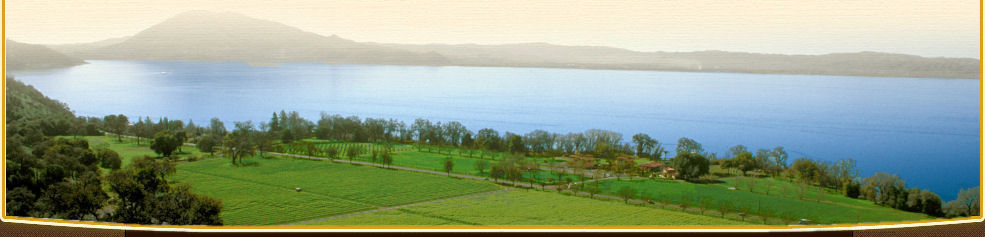
[Above: A view of the vineyard of the Ceago Vinegarden on Clear Lake]

With September being touted as "California Wine Month," a couple of weeks ago many Californians received an insert entitled 'California Wine' in their newspapers. This was courtesy of the Wine Institute, which is called "The Voice of California Wine." With the recent passing of Robert Montavi, who probably did more to put Napa and California wine on the map than anyone else, I thought this would be an interesting thing to take a peek at.

The first advertisement was from Gallo Family Vineyards, which is the third generation of the Gallo California winemakers. I believe the Gallo family is originally from Piemonte. On the first page, Wine editor Jon Bonne states "Wine is an enormous part of California's past, present, and future. And California has an undeniable love affair with the vine, buying 192 million cases of California wine each year. Another 50 million is shipped around the world, according to the Wine Institute. Yet those numbers barely define the success story. What's more amazing is how broad the wine industry's growth has been. Last year, California hosted 2,687 bonded wineries - more than triple the number in 1990."

There was one advertisement to promote wines from the Lodi area. "Lodi" is sister cities of Lodi in Lombardia, where it gets it's name. You might recall also, that the old Italian Swiss Colony winery was based in Asti, California, named after Asti in Piemonte. This advertisement was paid for by the Lodi-Woodbridge Winegrape Commission. On their website is a list of the local wineries, which includes a number of families, whose origin is particularly from around the Liguria area. It would take a little too long to go into all of them here now. Hopefully we can focus on some of these in the future.

Naturally this insert focused mainly on Napa and had a number of articles on winemaking. One advertisement was from the Napa Valley Vintners, and they have a very informative website. Other links that I would like to add here are the the Russian River Wine Road, the Livermore Valley Wine Country, and the Paso Robles Wine Country Alliance, which all had ads as well.

There are some newer up-and-coming wine regions. One such area is Lake County, which is a very picturesque area that surrounds Clear Lake, and is about 100 miles north of San Francisco. If Napa County has the perfect weather and conditions for winemaking, then Lake County is just north of it. I had visited a few of the wineries in the county several years ago. One of those was the Ployez Winery, I met the owner Gerald Ployez, who was hospitable enough to allow us to wine taste after hours. He is from France, so there must be some key reason that would bring him all the way to specifically Lake County to grow wine. The Lake County Winegrape Commission had a full-page ad in the insert.

Another winery in Lake County (among many) is the Rosa d'Oro Winery. It's owned by the Buttitta family, which apparently has long roots in winemaking, but without a label of their own until they moved to Lake County. Another winery, which caught my eye, was the Monte Lago Winery. Expecting to read about an Italian family, I saw where it is owned by a woman of Indian descent, who claims that winemaking goes back far in India. The first known production of wine seems to go back to Sumeria, Persia, and the Levant about 6,000 years ago, by ancient Sumerian, Persian, and Phoenician type peoples. However, it was really in ancient Greece that winemaking, in the form that we know today, got it's start.

Sunday, April 6, 2008

Tying Loose Ends: Pre-Risorgimento Immigration and other Revelations

This entry is to tie up some loose ends, so it won't necessarily follow a consistent pattern and will probably bounce all over the place. Personally, I have had many questions about the patterns of immigration from the Italian peninsula over time. One of them is regarding early immigration to San Francisco from one specific perimeter around Genoa, which includes the rest of Liguria, Northern Tuscany, and even extends to Italian Monaco and Nice, France (formerly "Nizza"), and including Corsica. Over the years, I have heard locals tell of ancestors from Monte Carlo, Nice, and Ajaccio. In fact, the majority of Italian immigrants to San Francisco were from this perimeter, which I dubbed "the Italian Riviera circle."

It appears that prior to Italian unification, emigration out of the peninsula was generally restricted to this area. That explains a whole lot. There were nineteenth century Genoese communities not only in San Francisco, but New Orleans, and to some extent New York, Chicago, Philadelphia, and other large cities. Also from Tuscany to a lesser extent. This immigration went from about 1850 to 1880. After 1880, it fizzed out (except for California), and was replaced by Southern Italians in much greater numbers. There were a few exceptions, like in St. Louis, where Milanese immigrants formed a neighborhood called "The Hill."

Later immigration from other parts of Northern Italy was to "the cone of South America" (Argentina, Uruguay, Chile, and Sao Paulo, Southern Brazil). That's part of a whole new study which I can't go into now. It is odd, however, that the Northern Italians ended up in Southern-South America and California and Southern Italians ended up in the much closer eastern USA and Canada. That's not any innate rule, as there were "Northerners" who settled in the eastern areas mentioned, as well as Northern Michigan and Western Pennsylvania. As to why those particular areas, is a question which we haven't answered yet. And, there were Southern Italians that migrated to Buenos Aires, Sao Paulo, etc.

One Italian pioneer in early California was Leonetto Cipriani, who went on to co-found the San Francisco area city of Belmont, as well as a whole slew of other things. A short look at Cipriani experience in Belmont is located in a blog entry entitled 'Pioneers of Belmont California' on the Rougeknights blog. Also, a book was published from his own personal journal, written all during his vast travels through the West, entitled 'California and Overland Diaries of Count Leonetto Cipriani from 1853 Through 1871'. Cipriani was from Corsica, from an aristocratic background, and believed in Italian unification, including Corsica. He worked with the Italian consulates here to achieve that end. He was the first Italian to settle (for a time) in San Mateo County. Later, when he lived in Tuscany, he founded another city which he named "La California." How many locals do we have here who knew that? That is something that we have to look at in future study.

I should also mention that prior to 1860, Sardinia was also open to emigration. I have no information at all about Sardinian immigration. There was one Sardinian family on the block that I grew up on, with the familiar surname ending (do, ddo, da, or dda). This whole revelation is a key to understanding why, for example, there is a huge Lombardian presence in Argentina, and virtually none in the USA. If you traveled to Buenos Aires, it would be like what it is for Sicilians in New York City or Calabrians in Chicago. There's a lot of study to do, but at least we can start to unravel some of these patterns. They aren't necessarily positive or negative, but we need to understand some of the reasons.

Our friend Marco in Tuscany.... in fact, IN "La California," has stated that he will send us some information about his city, which will be much appreciated. You can read part of our communication at the end of 'Pioneers of Belmont California'. I barely scratched the surface on the life of Leonetto Cipriani, so that's another area of interest that we need to look into. He was indeed the first known Italian settler in San Mateo County.


1-27-11 ADDITION: I wanted to add an item here, rather than make a new post. Leonetto Cipriani is an important part of our local history, whether or not we agree with his politics. Just the foundation of "La California" alone should make that a fact. The following text is from the book 'Peninsula Portrait: An Illustrated History of San Mateo County' (Postel; 1988), under the section "The Italians":

“Perhaps the first Italian to live in San Mateo County was Leonetto Cipriani. Cipriani was born on the island of Corsica in 1812 to an aristocratic family. As a young man he became involved in Italy’s quest for unification, but he tired of the struggle by 1850 and decided to find his fortune by joining the search for gold in California. With much cargo, including an entire prefabricated house, two servants, and two friends (Alessandro Garbi, an engineer, and Guiseppi Del Grande, a patriot), Cipriani left for California in late 1851. Just before he departed, Victor Emmanuel II, the king of Sardinia, appointed him the first Sardinian consul to California, a position of honor but without salary.

“After Cipriani arrived in San Francisco, his work as consul put him in contact with other pioneer Italians who were working to improve the status of recently arrived fellow countrymen. In fact, with Nicola Larco and Domenico Ghirardelli, he eventually organized the Societa Italiana di Mutua Benificenza, a mutual aid society that created the first Italian American hospital in San Francisco. The organization still exists. Its main charge is the operation of the Italian Cemetery in Colma.

“While his office as consul was a prestigious one, Cipriani desired to accumulate wealth while in California. He therefore resigned his position and set out with his companion, Garbi, on a rather ill-fated cross-country cattle drive and “scientific” expedition. After returning from the adventure, he purchased acreage that had once been a part of the Pulgas Rancho from S.M. Mezes, a law partner of Cipriani’s cousin, Ottavio Cipriani.

“At this site in what is now Belmont, Leonetto Cipriani built a fine home and landscaped it beautifully. Garbi came to live with him, and the two men were often to be found in the company of “society ladies” at a nearby hotel.

“Between 1855 and 1860 Cipriani made several trips to Italy and participated in the long-awaited unification of that nation. In 1864 he was declared a count when his old political ally, Victor Emmanuel II, became king of Italy. After hearing of this honor, Cipriani sold his estate and returned to Italy.

“Cipriani’s experience as an aristocrat was, of course, completely different from that of the Italian immigrants who followed. Like Cipriani, however, the first of these individuals came to California because of the Gold Rush. Most became discouraged and settled in the North Beach area of San Francisco. A few who had formerly been peasants came down the peninsula. Some took jobs as laborers on the farms of the Irish and German immigrants who preceded them. Others must have been struck by the apparent environmental similarities between their old country and the new. They purchased or leased land, and began growing vegetables the way their people had for generations.”

I didn’t photocopy the entire section at the library back when I got it some time ago, but I wanted to at least add the part about Cipriani. There is also a parallel with France and Corsica, with the former refusing to let go of the later like they did with Algeria and other regions. Corsicans are not French. Their language is not French. In fact, their language has been outlawed. Sound familiar? The section also goes on to discuss the connection with Genoa and an outline of the local history. We can look at that at another time using more thorough source material.

.

Thursday, February 22, 2007

Mazzei and Meucci


Filippo Mazzei and Antonio Meucci are two significant Italian-American figures in American history, both of Tuscan descent. Mazzei was a physician and businessman, who lived in the American colonies before and during the American Revolution. A friend of Thomas Jefferson, some of the contents of his letters became key parts of the wording in the American Constitution. Antonio Meucci is often credited, both in Italy and among Italian-American institutions, as the inventor of the telephone.

I'll just make this brief. In all likelihood, Meucci didn't invent the telephone. Intrinsically, "patents" are vastly overrated and prove nothing. He may very well have been right up there with the top minds in that particular area of research, but that doesn't mean he invented the telephone. You can take one single invention and produce twenty different patents from twenty different people! My educated guess is that he didn't invent the telephone. There are scores an scores of inventors from Northern Italy in particular, and there is no need to demand that Meucci was the inventor of the telephone. It has been hard to get at the truth in this issue because of tremendous bias, both for and against.

Filippo Mazzei, on the other hand, is vastly, vastly underrated! Although an aristocrat, he wasn't afraid to get his hands dirty. He did far more than given credit for! It wasn't just some letters, but he tirelessly recruited regiments from Piedmont, from his native Tuscany, and elsewhere. He traveled throughout Europe, promoting the American revolutionary cause. He also served as an agent, purchasing arms for Virginia during the Revolutionary War. He was a true revolutionary! Upon his eulogy, Thomas Jefferson credited him with being one of America's founders.