Showing posts with label immigration. Show all posts

Monday, February 2, 2015

'Italian Americans, California Italians' and a few random notes


'Italian Americans, California Italians' (UCLA YouTube channel)

From the video description:

This video records the beginning of a conference at UCLA titled "Italian Americans, California Italians." It was the first of its kind, made up of nearly a dozen scholarly presentations and discussions aiming to define "California Italians" within the more generic group of "Italian Americans." This opening, introductory statement to a full room was made by the Chairman of UCLA's Department of Italian, Professor Thomas Harrison.

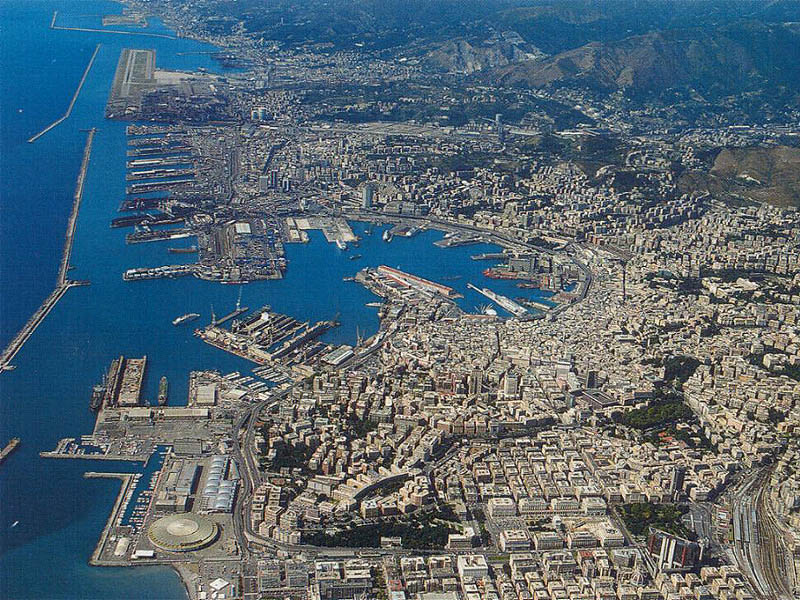
Columbus... born in Genoa

You may be aware that the origin of Columbus has been in some dispute due to a somewhat surprising lack of evidence of his early life in Genoa. However, it does appear that he was of Genoese ancestry.

"Yo nacio en Genoba" ("I was born in Genoa")
 

--Written in Christopher Columbus' Will; February 22, 1498
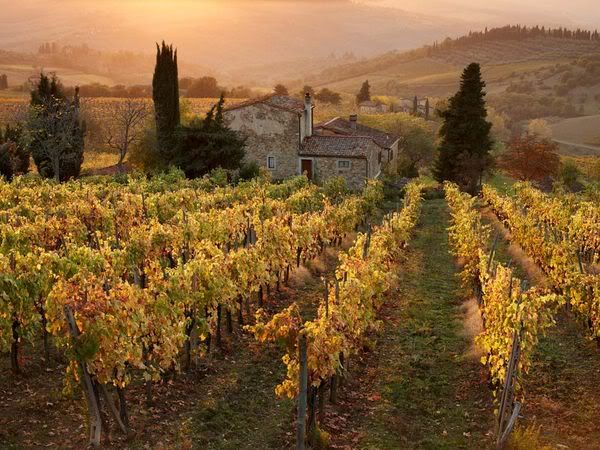


"La California"

The small town of La California, along the Tuscan coast, was founded by Leonetto Cipriani. Cipriani--who was Corsican--had spent many years traveling, especially in California and the west coast of the United States. He was influential, and was acquainted with the Count of Cavour, and was something of an ambassador for a unified Italy of which he very much wanted Corsica to be included. He wrote an account of his travels entitled 'California And Overland Diaries of Count Leonetto Cipriani From 1853 through 1871'. He co-founded the city of Belmont, California in San Mateo County.


Bargetto Winery (Santa Cruz Mountains)

I love the Santa Cruz Mountains. Any excuse to visit will not disappoint. It even resembles parts of the Cisalpine Alps or the Apennine Mountains. I have not visited this winery. Feel free to send a short or long review (camunlynx@hotmail.com) for posting.


Our History (from Bargetto.com website)

The Bargetto winemaking heritage began with brothers Phillip and John Bargetto who emigrated from Castelnuovo Don Bosco, a small town in the Piedmont region of northern Italy. They brought with them years of winegrowing experience when they established BARGETTO WINERY on the banks of Soquel Creek in California.

Phillip was the first to depart Italy in 1891 at the age of seventeen. In 1909 John joined his brother in San Francisco.
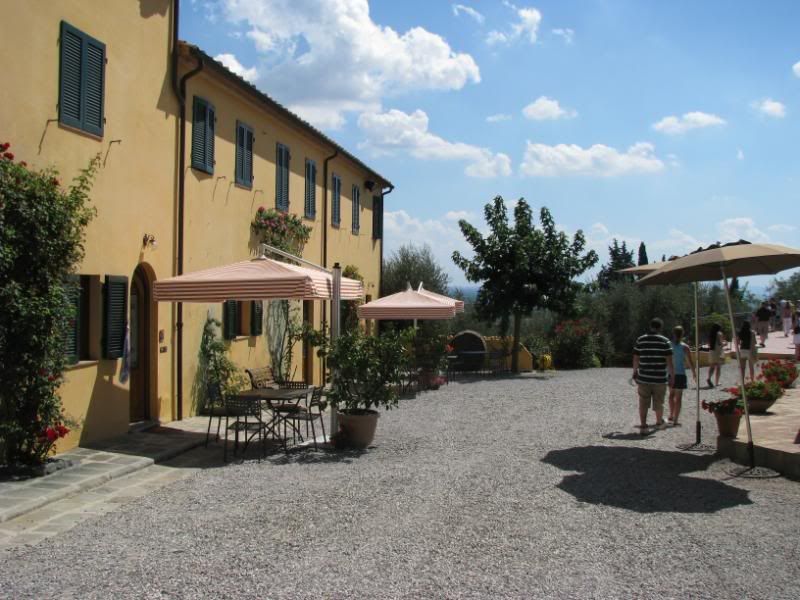
The original Bargetto family winery was located in San Francisco from 1910-1917. The name of this winery was South Montebello Vineyard and Wine Company. With Prohibition on the horizon the winery was closed and the brothers moved to Soquel in 1917.

Phillip and John purchased the present site of BARGETTO WINERY in 1918 and began making wine out of an old barn on the property. During Prohibition (1919-1933), the brothers continued to make wine for family and friends, while they continued to sell produce to local customers. They also grew apples at the family ranch in Soquel. When Prohibition ended in 1933, the brothers devoted more time to the wine business. They began a wine wholesale business, while they continued to sell produce wholesale.

Phillip Bargetto passed away in 1936 and John was left the sole owner of the business throughout the 1940s and 1950s. He continued to produce wine and sell wholesale and retail. He was joined by his sons Ralph and Lawrence during these years.


The Next Generation

The Bargetto Family winemaking heritage continued with John’s son Lawrence during the 1960s and 1970s. He introduced modern technology such as stainless steel fermentation, barrel aging, and added new Santa Cruz Mountains varietals such as Pinot Noir and Chardonnay. He also created the CHAUCER’S line of dessert-style wines.


Today

The third generation of Bargettos now direct the operation of the winery. BARGETTO WINERY represents the oldest continuous-operation winery in the Santa Cruz Mountains. Their pioneering spirit continued with the establishment of Bargetto Regan Estate Vineyards, near Corralitos, California in 1992. Here, cool-climate varietals like Chardonnay, Pinot Noir, and Pinot Grigio are carefully nurtured to produce BARGETTO WINERY’s estate wines. In keeping with the family heritage, the winery also incorporates northern Italian varietals from its Estate Vineyard into its flagship LA VITA wine.


Voynich manuscript
  
This work is in the form of a short book, filled with illustrations of plants, geometric shapes, and an unknown text. It appears very deep and scientific, but there has not yet been any way to read its secrets. The book is available for purchase, free in pdf form online, documentaries on YouTube, and lots of general information in a search.. so I won't bother with links. You may want to examine it and attempt to understand it. The best I could come up with is that the characters look a bit like ancient Indo-European Tocharian writing, and the illustrations remind me of Fibonacci patterns. Very strange.

From Wikipedia:

The Voynich manuscript is an illustrated codex hand-written in an unknown writing system. The vellum in the book pages has been carbon-dated to the early 15th century (1404–1438), and may have been composed in Northern Italy during the Italian Renaissance. The manuscript is named after Wilfrid Voynich, a Polish book dealer who purchased it in 1912.

The pages of the codex are vellum. Some of the pages are missing, but about 240 remain. The text is written from left to right, and most of the pages have illustrations or diagrams.

The Voynich manuscript has been studied by many professional and amateur cryptographers, including American and British codebreakers from both World War I and World War II. No one has yet succeeded in deciphering the text, and it has become a famous case in the history of cryptography. The mystery of the meaning and origin of the manuscript has excited the popular imagination, making the manuscript the subject of novels and speculation. None of the many hypotheses proposed over the last hundred years has yet been independently verified.

The Voynich manuscript was donated by Hans P. Kraus[6] to Yale University's Beinecke Rare Book and Manuscript Library in 1969, where it is catalogued under call number MS 408. A digitized high-resolution copy is also accessible freely at its website.


.

Sunday, January 24, 2010

World Padanian Nation: Argentina-USA Kindred


World Padanian Nation: Argentina-USA Kindred

To Padanian-Argentinian and Padanian-American kindred and friendship.

Argentina, largely the Buenos Aires province, tended to attract immigrants from the Lombardo-Venetian and Trentino regions; while the United States, largely northern California, tended to attract immigrants from Liguria and Tuscany. Some of our families and clans ended up in both locations, yet we've lost our historical memory of this connection. However, the same ancestry, the same people.


[Music: 'Crimson Tears' by Sindustry]

Saturday, October 4, 2008

Argentine Project


Several months ago, we added a page to the main PAL website entitled "Argentine Project." This was due to what we perceive as the need to connect with our kindred in the "cone of South America." We certainly have not changed our mind about that goal. We just want to move this here to the blog.


***************************************************************************


Buenos Aries, Argentina


***************************************************************************


Argentine Connections

The vast majority of Argentinians are of European descent, primarily Spaniards, Italians (overwhelmingly Northern Italians, especially Lombardians), Germans (Germans, Swiss, Austrians), British Isles-descendants (English, Scottish, Irish), and other Europeans. It is the home of the largest colony of Northern Italians in the world, by far.

Lega Nord has an office in Buenos Aires. We too would like to establish a line of communication between the San Francisco Metro and Buenos Aires and Sao Paulo. As immigration to Northern California was starting to fizzle out, immigration to these areas was just beginning. For a time our ancestors, and theirs, shared the same ships across the Atlantic ocean.

They often came from the same regions and provinces. Up through the 1880s, northwest Italy (mainly Liguria) was the only part of the Italian peninsula which was open for emigration, which was reflected in the makeup of Northern California. This is also why those who migrated to "the Cone" were primarily from the northeast corner of Italy.

Also, as small numbers of Padanian-descendants from the southern "Cone of South America" (Argentina, Chile, Uruguay, Sao Paulo province of Brazil) find their way to California and other states, we want to reach out to them.

We're just using the name "Argentina" as a catch-all term for the entire "Greater Argentina" region. Sao Paulo province has the largest concentration of Italians outside of Italy: Six million people! The city and metro of Sao Paulo has more Italians than any city in the world (yes, more than Rome and Milano!). The population of Sao Paulo Metro is almost 20 million people. The population of the Buenos Aries Metro is over 12 million people. Did you know that Italians MADE Sao Paulo into one of the greatest cities in the world out of absolute abject poverty (before they arrived)?

Also noteworthy is the fact that the climate in this "cone" is not tropical, but very much like the USA or Europe.

***************************************************************************

Oktoberfest 2005 - Cordoba, Argentina


Oktoberfest 2005 from Cordoba, Argentina (image gallery)


***************************************************************************


Northern League office in Argentina (Lega Nord)

Associazione Federale Padani in Europa e nel Mondo
Indirizzo Avenida Centenario 1891 - C,p. B1643CGF
Beccar, Provincia di Buenos Aires, Argentina


***************************************************************************


Sao Paulo, Southern Brazil


Saturday, May 10, 2008

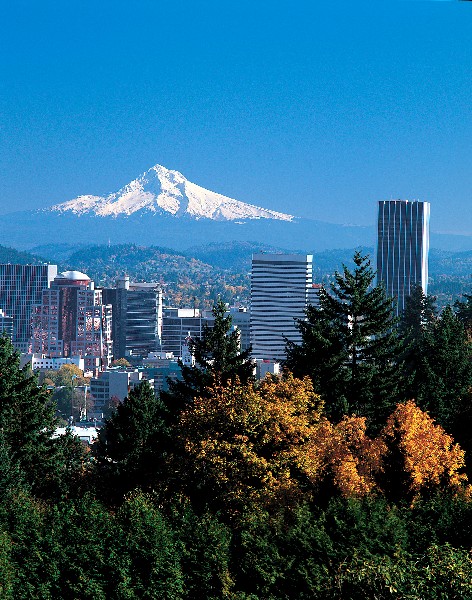
Padanians, Italians in Portland, Oregon


Immigrants from both the northern and southern regions of Italy began migrating to Portland as early as 1890. It was between 1900 and 1910, however, that Portland saw the largest growth in the city’s Italian American population. In 1900, the Italian immigrant population stood at just over 1,000 residents and by 1910, that number had increased to more than 5,000 residents. Italians settled in ethnic neighborhoods, first on the southwest edge of Portland near Marquam’s Gulch and later in the southeast neighborhoods like Ladd’s Addition, Brooklyn, and Parkrose in the northeast of Portland. Italian immigrants worked in a wide array of professions. Many hundreds of Italian immigrants worked in Portland’s extensive railroad yards or served as street graders and built and maintained roads throughout the city. Italian entrepreneurs, like Francesco Arata, shown in this photo from the 1890s, established shops and restaurants in Italian neighborhoods on both the west and east sides of the Willamette River. Almost 1,300 Italians lived and worked on the east side of the Willamette River. They rented land and grew vegetables and berries and some other families operated truck farms that sold produce to individuals and businesses across the city.

[Below right: G. Arata & Company, Wholesale Liquors; 1890]


Social organizations provided important services for Italian immigrants. Saint Michael’s Church, established in 1901 at the corner of southwest Fourth and Mill Streets, stood as a landmark to the Catholic heritage of immigrants. The Italian-American Republican Club was formed in 1916 as a way to provide Italians with the education necessary in applying for citizenship. Sunday socials were frequently held among farmers and their families and bocce bal, was among the favorite games played. The Italian Ranchers and Gardeners Association organized and established the first retail produce market on the west side but frequent flooding forced organizers to move it to the east side in 1906. The new market covered a complete block and growers from Milwaukie, Parkrose, Ladd’s Addition, and the west side Marquam Gulch Italian-American community brought their produce to the market to sell before loading the remainder on trucks to be sold throughout the city.

Written by Sarah Griffith, © Oregon Historical Society, 2002.

The Oregon History Project


Sunday, April 6, 2008

Tying Loose Ends: Pre-Risorgimento Immigration and other Revelations

This entry is to tie up some loose ends, so it won't necessarily follow a consistent pattern and will probably bounce all over the place. Personally, I have had many questions about the patterns of immigration from the Italian peninsula over time. One of them is regarding early immigration to San Francisco from one specific perimeter around Genoa, which includes the rest of Liguria, Northern Tuscany, and even extends to Italian Monaco and Nice, France (formerly "Nizza"), and including Corsica. Over the years, I have heard locals tell of ancestors from Monte Carlo, Nice, and Ajaccio. In fact, the majority of Italian immigrants to San Francisco were from this perimeter, which I dubbed "the Italian Riviera circle."

It appears that prior to Italian unification, emigration out of the peninsula was generally restricted to this area. That explains a whole lot. There were nineteenth century Genoese communities not only in San Francisco, but New Orleans, and to some extent New York, Chicago, Philadelphia, and other large cities. Also from Tuscany to a lesser extent. This immigration went from about 1850 to 1880. After 1880, it fizzed out (except for California), and was replaced by Southern Italians in much greater numbers. There were a few exceptions, like in St. Louis, where Milanese immigrants formed a neighborhood called "The Hill."

Later immigration from other parts of Northern Italy was to "the cone of South America" (Argentina, Uruguay, Chile, and Sao Paulo, Southern Brazil). That's part of a whole new study which I can't go into now. It is odd, however, that the Northern Italians ended up in Southern-South America and California and Southern Italians ended up in the much closer eastern USA and Canada. That's not any innate rule, as there were "Northerners" who settled in the eastern areas mentioned, as well as Northern Michigan and Western Pennsylvania. As to why those particular areas, is a question which we haven't answered yet. And, there were Southern Italians that migrated to Buenos Aires, Sao Paulo, etc.

One Italian pioneer in early California was Leonetto Cipriani, who went on to co-found the San Francisco area city of Belmont, as well as a whole slew of other things. A short look at Cipriani experience in Belmont is located in a blog entry entitled 'Pioneers of Belmont California' on the Rougeknights blog. Also, a book was published from his own personal journal, written all during his vast travels through the West, entitled 'California and Overland Diaries of Count Leonetto Cipriani from 1853 Through 1871'. Cipriani was from Corsica, from an aristocratic background, and believed in Italian unification, including Corsica. He worked with the Italian consulates here to achieve that end. He was the first Italian to settle (for a time) in San Mateo County. Later, when he lived in Tuscany, he founded another city which he named "La California." How many locals do we have here who knew that? That is something that we have to look at in future study.

I should also mention that prior to 1860, Sardinia was also open to emigration. I have no information at all about Sardinian immigration. There was one Sardinian family on the block that I grew up on, with the familiar surname ending (do, ddo, da, or dda). This whole revelation is a key to understanding why, for example, there is a huge Lombardian presence in Argentina, and virtually none in the USA. If you traveled to Buenos Aires, it would be like what it is for Sicilians in New York City or Calabrians in Chicago. There's a lot of study to do, but at least we can start to unravel some of these patterns. They aren't necessarily positive or negative, but we need to understand some of the reasons.

Our friend Marco in Tuscany.... in fact, IN "La California," has stated that he will send us some information about his city, which will be much appreciated. You can read part of our communication at the end of 'Pioneers of Belmont California'. I barely scratched the surface on the life of Leonetto Cipriani, so that's another area of interest that we need to look into. He was indeed the first known Italian settler in San Mateo County.


1-27-11 ADDITION: I wanted to add an item here, rather than make a new post. Leonetto Cipriani is an important part of our local history, whether or not we agree with his politics. Just the foundation of "La California" alone should make that a fact. The following text is from the book 'Peninsula Portrait: An Illustrated History of San Mateo County' (Postel; 1988), under the section "The Italians":

“Perhaps the first Italian to live in San Mateo County was Leonetto Cipriani. Cipriani was born on the island of Corsica in 1812 to an aristocratic family. As a young man he became involved in Italy’s quest for unification, but he tired of the struggle by 1850 and decided to find his fortune by joining the search for gold in California. With much cargo, including an entire prefabricated house, two servants, and two friends (Alessandro Garbi, an engineer, and Guiseppi Del Grande, a patriot), Cipriani left for California in late 1851. Just before he departed, Victor Emmanuel II, the king of Sardinia, appointed him the first Sardinian consul to California, a position of honor but without salary.

“After Cipriani arrived in San Francisco, his work as consul put him in contact with other pioneer Italians who were working to improve the status of recently arrived fellow countrymen. In fact, with Nicola Larco and Domenico Ghirardelli, he eventually organized the Societa Italiana di Mutua Benificenza, a mutual aid society that created the first Italian American hospital in San Francisco. The organization still exists. Its main charge is the operation of the Italian Cemetery in Colma.

“While his office as consul was a prestigious one, Cipriani desired to accumulate wealth while in California. He therefore resigned his position and set out with his companion, Garbi, on a rather ill-fated cross-country cattle drive and “scientific” expedition. After returning from the adventure, he purchased acreage that had once been a part of the Pulgas Rancho from S.M. Mezes, a law partner of Cipriani’s cousin, Ottavio Cipriani.

“At this site in what is now Belmont, Leonetto Cipriani built a fine home and landscaped it beautifully. Garbi came to live with him, and the two men were often to be found in the company of “society ladies” at a nearby hotel.

“Between 1855 and 1860 Cipriani made several trips to Italy and participated in the long-awaited unification of that nation. In 1864 he was declared a count when his old political ally, Victor Emmanuel II, became king of Italy. After hearing of this honor, Cipriani sold his estate and returned to Italy.

“Cipriani’s experience as an aristocrat was, of course, completely different from that of the Italian immigrants who followed. Like Cipriani, however, the first of these individuals came to California because of the Gold Rush. Most became discouraged and settled in the North Beach area of San Francisco. A few who had formerly been peasants came down the peninsula. Some took jobs as laborers on the farms of the Irish and German immigrants who preceded them. Others must have been struck by the apparent environmental similarities between their old country and the new. They purchased or leased land, and began growing vegetables the way their people had for generations.”

I didn’t photocopy the entire section at the library back when I got it some time ago, but I wanted to at least add the part about Cipriani. There is also a parallel with France and Corsica, with the former refusing to let go of the later like they did with Algeria and other regions. Corsicans are not French. Their language is not French. In fact, their language has been outlawed. Sound familiar? The section also goes on to discuss the connection with Genoa and an outline of the local history. We can look at that at another time using more thorough source material.

.

Tuesday, September 4, 2007

Hiding the Welcome Mat

Minerva has something to say about leukophobia and its effects on Italy.

A few years ago when the economic crisis in Argentina was at its worst, many Argentineans of Italian descent wanted to come back to Italy. They were either the children or descendants of Italian parents who had settled there. As such they didn’t have Italian passports, but they invoked the right of return, the fast lane if you wish, to settle in what they had always regarded as their original motherland.


By all accounts they made ideal immigrants. Brilliant, educated, they were skilled workers or professionals. They could already speak Italian because they had learned it at home from their parents or grandparents. What’s more, they didn’t just “know” Italian culture, they belonged to it. Italians — in one variant or another — constitute a sizable portion of the Argentinean population.


Since one of Italy’s problems is an ageing, dwindling population, you’d think our politicians would have jumped at the occasion to bring in loads of energetic, enthusiastic people whose dearest wish was to be reunited to the country they loved. These “immigrants” would have adjusted easily; there would not have been the usual problems encountered in moving to a foreign country: the Argentinean-Italians would have been eager to assimilate. In fact it wasn’t even a question of integration or assimilation. These South Americans of Italian extraction just wanted to come home.


So what happened to the fast lane?


It was the same old story — the fast lane disappeared in the thickets of EU plans. The right, which was in power at the time, briefly considered the idea of the right of return. The left, though, which actually holds the reins of power, refused utterly, afraid the newcomers would naturally gravitate to the right when it came time to vote. The whole thing was quietly dropped and fell into the memory hole.


As
Ida Magli repeatedly says, the EU was constituted to bring the Orient into Europe. The goal of our elites is to have fewer Italians around, not more of us. We are to be replaced gradually — or not so gradually — preferably with immigrants from Asia and Africa. The last thing these “leaders” wanted was a big bunch of starry-eyed Italians full of patriotic zeal.

Affected as they are with leukophobia
*, fear of white, the elites also frown upon too many immigrants from Eastern Europe (unless they’re Rom — that is, gypsies). Letting in those who are not only unforgivably white, but also come from cultures akin to ours, is not part of the elites’ plans for Italy.

Despite all the hype we get from the media, unquestionably we have more in common with, say, Bulgarians than with we do with Arabs. Permitting those with Italian or European ancestry to obtain citizenship would have spoiled The Plan. Thus it was goodbye to the right of return. It didn’t matter that the newcomers, or rather the returnees, would have been an asset for Italy, or that we native born Italians could have helped our compatriots. What we wanted, and what they so badly desired, was not to be.


Italians are not wanted here in Italy. Whites need not apply.


*
You’ll notice I use the term leukophobia to indicate the loathing of white people, a condition that is widespread among our splendiferous elites. As a phobia — fear of the colour white — the word is already in use clinically. However, I don’t see why its meaning shouldn’t be extended to include the spreading pathology of anti-white racism.

Ciao,

Minerva

['Hiding the Welcome Mat' was borrowed from the Gates of Vienna blog. Grazia.]