Showing posts with label wine. Show all posts

Monday, September 17, 2018

Total Wine - The glamour of the agricultural estate


Total Wine and More

Total Wine and More--or "Total Wine Superstore" as it shows on its store banner--is a chain of 130 stores nationwide. They specialize in wine, as well as all other types of alcoholic beverages and accessories. The owners are David and Robert Trone, who started the company as one small store in Delaware in 1991. I found the store to be very interesting just to walk through. It was large, spacious, and decorative to start with. Perhaps 60% of the store was wine-oriented; usually separated by country or region. There's a wide range of pricing, and I can say that the prices are comparatively good. When they first opened here, I thought that I would like it despite an over-saturation of the market locally.

Of course, there are many wines from nearby Napa and Sonoma counties; but the store features all other chief wine-producing regions, with an emphasis on France.. as well as Piedment. There's a large beer section, as well as all types of alcohol and accessories. There is also a temperature-controlled cigar room... adding a further touch of class... or at least perceived class. There is also a temperature-controlled fine wine section, a very nice large wine tasting room, and an education room where one can sign up for classes. Beverages and More is more beer oriented, with many non-alcoholic beverages. I know of a few particularly interesting and top notch liquor stores with a large selection, as well as small stores with a separate wine room it the back. In this market, personally, I don't think that I prefer either larger chains like Total Wine, or top notch smaller businesses.

Each store currently offers a free 230 page complimentary 'Guide to Wine'. The guide is filled with photos, the history of wine making, including separate histories such as in America, and all aspects of wine past and present. There's an interesting map of the chief wine-producing regions of the world. The tropics are not at all known for wine production. It's only in certain northern climates, many with hot summers and cold winters. South and central Europe, California and up through central Washington, most of New England, the northern part of the cone of South America, the Maghrib coast of northwest Africa, west and southeast Australia, northern New Zealand, and in a small area of southwest Australia, a part of the Chinese coast near North Korea, small pockets of central Japan, and a part of southwest South Africa.

www.TotalWine.com

Our own Cisalpine people were major pioneers, going back a long time, of the wine production in northern California, the cone of South America, and South Africa. As it is stated next to the map: Just over 19 million acres of the world's surface is planted with grape vines. Total Wine has a lot of business with French vintners from the famous wine-producing regions there; and the guide shows a lot of these chateaus. The guide states: Historians believe Italian wine has been produced for some 4,000 years. Italian wines are also featured to a large extend in the guide. The vast majority of Spain is of prime climate and soil for wine production; more per capita than any other country in the world it appears. Then it goes onto Portugal, Germany, Austria, and of course California.

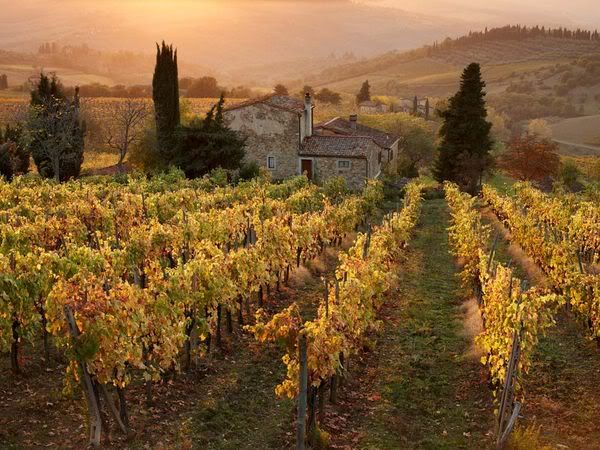
Another wine producing region that has grown a lot in recent years is the state of Washington. I've been seeing a lot more Washington wines on the market lately. It then featured a few pages each on Oregon, New York and Virginia, South Africa, Australia, New Zealand, Argentina, Chile, Uruguay, Greece, and Israel; then it went into sparkling wine and dessert wine. There are a very large number of photographs within the guide. One thing that struck me is the many photos of the Trone family visiting with the families of these various vintners. I don't know if glamour is really the word, as it's something more than glamour, more than prestige; but there is a certain warmth surrounding the wine industry in general... much more so than any air of snobbishness. Vintners are essentially farmers living on farm estates. I suppose it could be said that wealthy vintners could represent the rural high socio-economic class... the old concept of a country gentleman.

I remember one time I was traveling with a couple of friends through Lake County, California--a growing wine area--during the the twilight hour. We stopped at Ployez Winery and discovered that it was closed. However, the owner Gerard invited us in anyway and we visited. He was originally from France; drawn to Lake County for it wine producing potential. There's still a particular good nature surrounding the industry. The Nichelini family winery near St. Helena--a winery with deep roots in the area--is another good example of this gracious spirit.


The old Cisalpine family wineries of northern California

There was a certain glory, at least in my perception, to the history of the Cisalpine vintners in northern California... largely of Ligurian or Tuscan descent. Even back to the 19th century, our pioneer ancestors were--by opportunity, will, and hard work--able to form, or help form, new communities in rural areas. That's just about the polar opposite of the modern urban sea of strangers. Most often, these clans did all of the work themselves, and enjoyed the benefits of their toil. They lived on beautiful estates, could propagate themselves and their own culture, and had the freedom to control their own destiny. They were their own boss. Of course, this would also pertain to all areas of farming as well.


Agriculture and the Sicilian immigrants in Louisiana

I recall one time listening to a man, from one of the Italian-American associations in Louisiana, speaking on the distinct history of Sicilian immigrants who settled in Louisiana and took over the agricultural work from the slaves who had done with work before the Civil War. Some of these Sicilians soon became small farmers themselves, and made do in difficult to farm wetlands. He was describing how the French/Catholic or European/Latin culture of New Orleans and south Louisiana was largely the same as from what they remembered, and how it was easy for them to adapt. Basically what he was saying is that there was a certain glory (he didn't actually use that word) to this time period... from that perspective. We have to remember today that this was a totally different time. It could be harsh, so family and community were important.


German farming communities in the Midwest

During roughly the 20 years following the Civil War, about 6 million German immigrants (Germany, Austria, Switzerland, Prussia) emigrated to the United States... largely to the Midwest. They formed farming communities in what was then a large frontier region. Of course, these communities reflected German language and culture. There certainly was a particular glory to this time period, and for a long time after that, from a their perspective. Unlike today, these family clans also did all of the work themselves. According to Thomas Sowell, the more research he did, the more he realized just how much German immigrants detested the institution of slavery. These farmers lived by a certain code of honor surrounding their business and work, and slavery was against everything they believed in.


My favorite white wine: Beringer White Zinfandel

White Zinfandel is a great option for someone who doesn't really like wine. It is sweet and light, and leaves none of the sour or bitterness that some wines create. Beringer does a great job of delivering a quality product for an awesome price.

.

Saturday, February 3, 2018

La Marca sparkling wine from the Veneto.... now at all major retail stores


Although La Marca is fifty years old this year, it has only really exploded onto the American market in only the last several years it appears. It has an apple taste, goes down easy, and is available in various size bottles. La Marca USA is located in Hayward, California.

*************************

Prosecco Fresh with La Marca: Open that bottle and appreciate the finer points of Prosecco --the wine and the region-- as La Marca winemaker Fabrizio Gatto talks bubbles with Wine Spectator's Gloria Maroti Frazee.

*************************

LaMarca.it

La Marca came into being in 1968 from the intuition of a noteworthy group of winegrowers who felt the need to introduce the quality of their local wines to the world. They came together to pool their energies and experience to protect and represent their wines with greater strength.

It was of the utmost importance to create a technical and commercial organization able to support the winegrowers in growing grapes and serve as a commercial platform to promote awareness of the area’s quality wines. The company continued to grow year after year working with high levels of professionalism on the quality, the image and typical characteristics of the territory.
 
La Marca is today a wine producing company representing the products of 9 cooperative wineries in the Province of Treviso with over 5000 winegrowers on vineyards extending over approximately 10.000 hectares. The majority of these lands is cultivated with Glera, named after the historic variety from which Prosecco is obtained.

The company is named for its place of origin, La Marca Trevigiana (March of Treviso), located in the heart of the Province of Treviso, between the plains and hills of the Conegliano-Valdobbiadene Doc and DOCG areas (Controlled Designation of Origin and Controlled and Guaranteed Designation of Origin), where its grapes are grown.

Know-how handed down through the years, experience and winegrowing professionalism, sectorial expertise and dynamic commercial strategies are the keystones that make it one of the most representative and visible companies in the Prosecco world.

We are committed to uniting tradition with innovation, as well as native know-how with advanced technology. In addition to working together for a sustainable viticulture that thinks about protecting future generations, we also believe in respecting natural resources which ensure characteristic wines that are strongly rooted in the territory.

La Marca markets white and red wines, Prosecco DOC, Prosecco Treviso and Prosecco Conegliano Valdobbiandene DOCG, under the brand-names of La Marca, Millage, Foscaro, San Nicola and Torri Della Marca.


.

Thursday, May 25, 2017

Candoni wines - From Udine to Atlanta


Candoni Wines Harvest

antonio dore

*************************

The Candoni De Zan family is from the province of Udine in the Friuli-Venezia Giulia region, or as I like to say the Tri-Veneto region including the Veneto. The Candoni headquarters in America is located in Atlanta.

*************************

Candoni De Zan Wines

Candoni De Zan Family (YouTube)

Candoni De Zan history in wine making


Candoni Wines Harvest 2013

Candoni De Zan Family


Candoni Wines with Caterina Candoni and Women in Business Radio Michele Price

Candoni De Zan Family

.

Tuesday, February 16, 2016

Food from Tuscany


Food from Tuscany
 

RAI

Tuscany. Home of high quality products appreciated throughout the world: its olive oil, its Chianti wine. And then its Fiorentina T-bone steak from Chianina cattle, one of the most ancient and prized breeds in the world.


See more video at http://www.expo.rai.it/youritaly


.


Monday, February 2, 2015

'Italian Americans, California Italians' and a few random notes


'Italian Americans, California Italians' (UCLA YouTube channel)

From the video description:

This video records the beginning of a conference at UCLA titled "Italian Americans, California Italians." It was the first of its kind, made up of nearly a dozen scholarly presentations and discussions aiming to define "California Italians" within the more generic group of "Italian Americans." This opening, introductory statement to a full room was made by the Chairman of UCLA's Department of Italian, Professor Thomas Harrison.


Columbus... born in Genoa

You may be aware that the origin of Columbus has been in some dispute due to a somewhat surprising lack of evidence of his early life in Genoa. However, it does appear that he was of Genoese ancestry.

"Yo nacio en Genoba" ("I was born in Genoa")
 

--Written in Christopher Columbus' Will; February 22, 1498


"La California"

The small town of La California, along the Tuscan coast, was founded by Leonetto Cipriani. Cipriani--who was Corsican--had spent many years traveling, especially in California and the west coast of the United States. He was influential, and was acquainted with the Count of Cavour, and was something of an ambassador for a unified Italy of which he very much wanted Corsica to be included. He wrote an account of his travels entitled 'California And Overland Diaries of Count Leonetto Cipriani From 1853 through 1871'. He co-founded the city of Belmont, California in San Mateo County.


Bargetto Winery (Santa Cruz Mountains)

I love the Santa Cruz Mountains. Any excuse to visit will not disappoint. It even resembles parts of the Cisalpine Alps or the Apennine Mountains. I have not visited this winery. Feel free to send a short or long review (camunlynx@hotmail.com) for posting.


Our History (from Bargetto.com website)

The Bargetto winemaking heritage began with brothers Phillip and John Bargetto who emigrated from Castelnuovo Don Bosco, a small town in the Piedmont region of northern Italy. They brought with them years of winegrowing experience when they established BARGETTO WINERY on the banks of Soquel Creek in California.

Phillip was the first to depart Italy in 1891 at the age of seventeen. In 1909 John joined his brother in San Francisco.
The original Bargetto family winery was located in San Francisco from 1910-1917. The name of this winery was South Montebello Vineyard and Wine Company. With Prohibition on the horizon the winery was closed and the brothers moved to Soquel in 1917.

Phillip and John purchased the present site of BARGETTO WINERY in 1918 and began making wine out of an old barn on the property. During Prohibition (1919-1933), the brothers continued to make wine for family and friends, while they continued to sell produce to local customers. They also grew apples at the family ranch in Soquel. When Prohibition ended in 1933, the brothers devoted more time to the wine business. They began a wine wholesale business, while they continued to sell produce wholesale.

Phillip Bargetto passed away in 1936 and John was left the sole owner of the business throughout the 1940s and 1950s. He continued to produce wine and sell wholesale and retail. He was joined by his sons Ralph and Lawrence during these years.


The Next Generation

The Bargetto Family winemaking heritage continued with John’s son Lawrence during the 1960s and 1970s. He introduced modern technology such as stainless steel fermentation, barrel aging, and added new Santa Cruz Mountains varietals such as Pinot Noir and Chardonnay. He also created the CHAUCER’S line of dessert-style wines.


Today

The third generation of Bargettos now direct the operation of the winery. BARGETTO WINERY represents the oldest continuous-operation winery in the Santa Cruz Mountains. Their pioneering spirit continued with the establishment of Bargetto Regan Estate Vineyards, near Corralitos, California in 1992. Here, cool-climate varietals like Chardonnay, Pinot Noir, and Pinot Grigio are carefully nurtured to produce BARGETTO WINERY’s estate wines. In keeping with the family heritage, the winery also incorporates northern Italian varietals from its Estate Vineyard into its flagship LA VITA wine.


Voynich manuscript
  
This work is in the form of a short book, filled with illustrations of plants, geometric shapes, and an unknown text. It appears very deep and scientific, but there has not yet been any way to read its secrets. The book is available for purchase, free in pdf form online, documentaries on YouTube, and lots of general information in a search.. so I won't bother with links. You may want to examine it and attempt to understand it. The best I could come up with is that the characters look a bit like ancient Indo-European Tocharian writing, and the illustrations remind me of Fibonacci patterns. Very strange.

From Wikipedia:

The Voynich manuscript is an illustrated codex hand-written in an unknown writing system. The vellum in the book pages has been carbon-dated to the early 15th century (1404–1438), and may have been composed in Northern Italy during the Italian Renaissance. The manuscript is named after Wilfrid Voynich, a Polish book dealer who purchased it in 1912.

The pages of the codex are vellum. Some of the pages are missing, but about 240 remain. The text is written from left to right, and most of the pages have illustrations or diagrams.

The Voynich manuscript has been studied by many professional and amateur cryptographers, including American and British codebreakers from both World War I and World War II. No one has yet succeeded in deciphering the text, and it has become a famous case in the history of cryptography. The mystery of the meaning and origin of the manuscript has excited the popular imagination, making the manuscript the subject of novels and speculation. None of the many hypotheses proposed over the last hundred years has yet been independently verified.

The Voynich manuscript was donated by Hans P. Kraus[6] to Yale University's Beinecke Rare Book and Manuscript Library in 1969, where it is catalogued under call number MS 408. A digitized high-resolution copy is also accessible freely at its website.


.

Tuesday, May 31, 2011

Lunardi's Market: Wine Tastina in San Bruno

Lunardi's Supermarket
2801 San Bruno Avenue West
San Bruno, CA 94066


San Bruno Only - June Schedule:

* Friday, June 3 - J Winery, 4-7 PM

* Saturday, June 4 - Belle Glos, Mersoleil, 1-4 PM

* Friday, June 10 - Wines of Argentina, 4-7 PM

* Saturday, June 11 - Chateau Ste Michelle, 1-4 PM

* Friday, June 24 - Bear Ridge Wines, 4-7 PM

* Saturday, June 25 - Lou's Selections, 1-4 PM


The Lunardi family of San Francisco and San Mateo County, and proprietors of Lunardi's Markets, are originally from Lucca, Tuscany. This looks like a good combination of local and international wines. Also, the promotion of Argentine wines ties very much into our Cisalpine heritage as well.

.

Monday, September 13, 2010

"Wine tasting in Genoa" ..... Nevada


Last year, while visiting South Lake Tahoo, I picked up a brochure entitled 'Wine Tasting in Genoa'. It was subtitled 'Nevada's First Settlement', and was referencing Tahoe Ridge Winery in Genoa, Nevada. The winery is fairly new, having been founded in 1990. The brochure shows that the town and winery are located twenty miles east of South Lake Tahoe. From the brochure: "Nestled in the picturesque town of Genoa, on the eastern slope of the great Sierra Nevada mountain range, lies the home of Tahoe Ridge Winery & Marketplace. Tahoe Ridge sources grapes from high quality growers who farm vineyards throughout Nevada and California."

The winery seems to have everything a large wine operation usually has, including entertainment events. Their events schedule shows that on September 5th, Victoria Vox performed there live; on September 18th, they will host an Annual Grape Stomp at their marketplace and bistro; and on October 17th, Beppe Gambetta, a musical artist from Genova, will perform there as well. From the website: "From Genova, Italy comes this smiling troubadour for his fourth appearance in the Carson Valley. Beppe’s diverse blend of styles range from romantic Italian ballads to traditional Americana and Bluegrass. His sense of humor accentuates his performances while his blazingly quick flatpicking style weaves multi-layered melodies that mesmerize the house."


From Wikipedia's Genoa, Nevada webpage:

"Genoa is an unincorporated township in Douglas County, Nevada, United States. Founded in in 1850, it was the first settlement in what became the Nevada Territory. It is situated within Carson Valley and is about 42 miles (68 km) south of Reno.

"Located within Utah Territory before the Nevada Territory was created in 1861, Genoa was first settled by Mormon pioneers. The settlement originated as a trading post called Mormon Station, which served as a respite for travelers on the California trail. Orson Hyde changed the name of the community to Genoa, after Genoa, Italy. The original Mormon settlers withdrew in 1857 when they were recalled by Brigham Young due to the Utah War.

"The community was the home to Nevada's first hotel, newspaper and court. Nevada's first newspaper, the Territorial Enterprise was founded in Genoa in 1858, but moved to Virginia City, Nevada in 1860. Another first for the state, the Genoa Bar, billed "Nevada's oldest thirst parlor," was patronized by Mark Twain, Teddy Roosevelt and Johnny Cash and was used in John Wayne and Clint Eastwood films. The village was also the set for the movie Misery, starring Kathy Bates. The village doubled in size with buildings added and then removed after the filming.

"Much of Genoa, including the original fort, station and hotel was destroyed in a fire in 1910, but replica of the fort was built in 1947. Every year since 1919 Genoa has held a festival called The Candy Dance, where candy, food and crafts are sold to support its town government. The Candy Dance is usually held during the final weekend of September. Many pioneers rest in the Genoa graveyard including Snowshoe Thompson, his wife and his son.

"A mile south of Genoa is David Walley's Resort, a famous natural hot springs and spa, now a mediocre resort. It was first built in 1862 and known as Walley's Hot Springs.

"Unlike the city of Genoa in Italy, the Nevada community's name is pronounced with the accent on the second syllable: juh-NO-uh.

"Genoa Historic District

"In 1975, the community was listed as a historic district on the National Register of Historic Places."


The town's website states about their town "Nevada's First Recorded Permanent Settlement." It was founded in 1851.


From the website's "Visit Genoa" page:

"Historic charm attracts visitors year-round

"Historic Genoa, Nevada, is nestled at the base of the eastern slope of the Sierra Nevada Range, just 25 minutes east of beautiful Lake Tahoe, and one hour south of Reno.

"It is home to Mormon Station Memorial State Park which commemorates the settlement of Nevada in 1851, when the first permanent trading post was established by a group of Mormon traders from Salt Lake City.

"Genoa’s natural beauty and historic charm still beckon travelers and local wildlife. It is not unusual to spot mule deer as they come down from the forested area on the west side of Genoa and cross local roads to graze on vegetation or fields along the Carson River Valley to the east of Genoa.

"The small town of approximately 250 residents and many local amenities and shops, welcomes visitors for a day trip or longer restful stay. Plan to learn about Genoa’s past with a visit to Mormon Station State Park Museum, Genoa Courthouse Museum, the Genoa Cemetery and the Hanging Tree. Stroll through a variety of shops, and be sure to make time for a leisurely lunch or dinner. Click HERE to download the Greater Genoa Business Association Walking Tour Map of town attractions, including shops, dining, drinking and lodging accommodations.

"Considering a stay in Genoa? There is much to do in the surrounding area including hiking, biking, golfing, flying, fishing and shopping, just to name a few. Click here to link to the Carson Valley Visitors Authority for more information about Genoa and the surrounding Carson Valley.

"Be sure to mark your calendar for the last weekend in September to visit the town’s annual Candy Dance Arts and Crafts Faire. Since 1919, the residents of Genoa have made the wonderful homemade candy sold during the weekend and complimented by a Saturday night dinner-dance. Over the years the event has evolved, and today the Genoa Candy Dance is well-known as one of the greatest craft fairs in Northern Nevada drawing artisans from all over the west who come to sell their wares."


There are more tourist links on this page for Carson County, but I think that I'll just leave it at that. The whole Tahoe area is a great place to explore.

.

Monday, March 1, 2010

Wines of the Santa Cruz Mountains: Part II

I recall a few years ago at a local library, looking through a book on California wineries. It was from 1972 I think. I noticed that one winery listed was located in Mountain View. I almost want to say that the name was "Grimaldi Winery," but I forget now. I wrote down the address, and the next chance I got, I drove there. There was no winery. Only homes, probably built in the 1980s. When that book was written, the Bay Area's population was probably less than half of what it is today. That winery was probably on the north fringes of the Santa Cruz Mountain's wine region. Interestingly, there is a farm left on Grant Road, which sells it's produce on it's entrance on Grant Road; and is known for its own wreaths, sold during the Christmas season. I seem to recall that the "Grimaldi" winery was also located on Grant Road.

Continuing on Grant toward 280 (which begins on El Camino Real in Mountain View), you can see the majestic Santa Cruz Mountains. Still pure, rolling mountains far into the distance, much of it wooded. Those of you on the east coast might be surprised to know that there are a good population of mountain lions up there, so close to the suburban sprawl of the San Jose area. They're seen quite frequently. A new massive series of corporate buildings and concrete jungle parking lot, built in the middle of a quiet bedroom community, and which blocks the view of the mountains from Questa Park (off Grant), reflects the ongoing encroachment of Manhattan-style development on the formerly green paradise of the South Bay.

Shortly, you may turn left on Foothill Expressway. Actually it's more of a merger, but will look like a left turn I recall, and just take that straight as it further merges and changes names. I won't confuse you will all the name changes, just go straight through Cupertino. I don't want to get anyone lost, so only do this if you feel a little adventurous. I doubt you will have any problems, especially if you're somewhat familiar with the area.

Soon you will arrive in an open space area (which is actually a number of open space areas together), which surrounds Stevens Creek Reservoir. The reservoir has a very nice shaded picnic area next to the water. From the reservoir, you may just continue on the same road (now called Stevens Creek Road) into some access points into the remote area (I must warn you, there is a lot of poison oak on those trails!), or you may turn right onto Montebello Road. Montebello Road is where several of the northern Santa Cruz Mountain wineries are located. It may be a little bit difficult to follow Yahoo directions on this, but from that initial left turn off Grant.... just go straight until you see the reservoir, and the Montebello right turn will be coming up. Naturally you should have your addresses handy.

One of the Montebello wineries is the Picchetti Winery. If I'm not mistaken, this is the one located at the base of a very beautiful steep mountain. I haven't visited there yet, but have driven by it. There is a list of calendar dates on the website. The following >>> LINK is a map which will give you a good idea of the general location of the Santa Cruz Mountain wineries, which is from the website of the Santa Cruz Mountains Winegrowers Association. Another Montebello winery is Ridge Vineyards, founded by Ossea Perrone in 1885.

I couldn't help but notice, from the earlier Chronicle article from yesterday, that this wine region ends in Watsonville at its southern tip. That reminded me of S. Martinelli and Company, which is headquartered there, and which also goes back to the nineteenth century. Our roots are sewed so deep into the development of this area from the pioneering days that we probably are unaware of the extent.

.


Sunday, February 28, 2010

Wines of the Santa Cruz Mountains: Part I

Santa Cruz Mountains wines reach a peak, quietly

Jon Bonné - San Francisco Chronicle - February 28, 2010

[Right: Mount Eden Vineyards]

Next week, Paul Draper and his team at Ridge Vineyards will pause from their work at the legendary Monte Bello vineyard and raise a glass to 50 years of winemaking, high above the streets of Cupertino.

Ridge's half-century history is a testament to the improbable. Neither Draper nor any of Ridge's founders, all Stanford scientists, were wine people by training. And Monte Bello is the exception that proves the rules in California Cabernet: made in American oak and not French; rarely exceeding 13 percent alcohol.

This would be reactionary if not for the fact that its style (with the exception of more new oak) hasn't wavered much in more than 40 vintages - a tribute to the old-fashioned techniques that Draper pioneered after arriving in 1969.

"We, in a sense, turned the clock back when the rest of California was turning the clock forward," he says.

Ridge's milestone offers the opportunity to look at the broader neighborhood. The Santa Cruz Mountains - less a cohesive wine region than a patchwork of vineyards from Woodside to Watsonville - is a downright puzzle. It hosts some of California's defining wines and vineyards, and yet fame has eluded the region itself.

Yet for more than a century, these coastal ridges have been a magnet for wine pioneers. Immigrants first headed up the slopes in the 1860s, and by the 1880s thirsty adventurers were hunting vineyard sites along a ridge dubbed the Chaine d'Or ("chain of gold"), which stretches from Woodside to south of Los Gatos.

Soon its reputation for outstanding wines would be sealed. In 1886, Osea Perrone, an Italian doctor who settled in San Francisco, began building the Monte Bello Winery.


Paul Masson in the mix

There was also Paul Masson, the Burgundian whose wines were known nationwide in the early 20th century. In 1936, Masson sold his winery - now known to fans of Steve Miller as the Mountain Winery - to a quixotic stockbroker named Martin Ray, who would acquire another site just to the north.

Ray's impact is legendary; his varietal wines, always extravagantly priced, were by turns brilliant or undrinkable. When finances faltered, that second property became Mount Eden Vineyards which, under the watch of winemaker Jeffrey Patterson, consistently makes one of California's best Chardonnays. These wines are not simply impressive; they are historic, with an untrammeled lineage.

But discuss the Santa Cruz Mountains as a region, and even savvy wine types squawk. For all the famous wines, there is no coherent image. "The appellation's confusing, and it always will be," Patterson suggests, "because it's big and it's not known for any one wine."

If most of its 70 or so area wineries have not shared in the acclaim that falls upon a top tier of labels like Ridge or Mount Eden, things aren't necessarily easier for those famous labels.

Despite a loyal following, the Kathryn Kennedy Winery may lose its estate vineyard after the death of its namesake founder last year. Randall Grahm of Bonny Doon Vineyard, perhaps Santa Cruz's most outspoken winemaker, found fame in grapes grown far afield; his dream of a Pinot Noir vineyard near Santa Cruz was dashed by Pierce's disease. Dreams of a lavish wine lifestyle are fleeting.

"We have our private lives. We don't have to walk down the street in St. Helena and see 20 other winemakers," Draper says. "Up in these hills you're not looking for social connections and glossy articles about your lovely garden. You're here because you want to do your own thing."

That solitude has favored a generation of pioneers like Bob and Jim Varner, who found an opportunity in the late 1970s to turn pristine Santa Cruz Mountains land into a perfect jewel of a vineyard, even replanting their Chardonnay on its own roots. Even now, it is a fully self-contained entity; Bob Varner and his crew hand-hoe the entire vineyard.

The raw materials are impressive. Monte Bello is not simply a great Cabernet site. It is one of those special self-regulating places where the right conditions fall into harmony. At 2,700 feet, Monte Bello sits on a rare patch of limestone. In geological terms it is "exotic terrain," a remnant of the Pacific plate left behind as the plate continued to shift.

The entire area offers similarly astounding geography. The mountains are sliced in half by the San Andreas Fault. The North American Plate's sandstone and Pacific Plate's uplifted ocean floors are constantly grinding. The result? An utter jumble of shallow, rocky soils, not unlike portions of the Sonoma Coast.

Two converging climates are also at work - cool moderating influences of the ocean to the west, and a similar, if warmer, influence from San Francisco Bay to the east. Slightly warmer sites can ripen a subtle style of Cabernet, while delicate Pinot Noir and Chardonnay thrive nearby.

Terrain, however, has also been the mountains' downfall. Wine historian Charles L. Sullivan, author of "Like Modern Edens," a history of local winemaking, notes that only one large winery, the pre-Prohibition Ben Lomond facility, was ever situated there.

A lack of ready transportation or contiguous vineyards made the region a hard sell for the big companies that have helped propel Napa and Sonoma.

"It's replete with really important historical places," he says, "but it's not the kind of thing that's going to excite corporate investment."

Even when the best wines are noticed, there's not much to be found. Exact figures vary, but despite the region covering some 400,000 acres, just a tiny fraction - perhaps 1,500 acres - contain vineyards. That's less than 4 percent of the vineyard land in far smaller Napa Valley.


Little land potential

There's not likely to be much more. Land may have been more accessible to a previous generation of pioneers like David Bruce. But when you take away the rocky screes, deep forests and swaths of open space on the western side, and add in encroaching development and stratospheric real estate prices on the eastern, it becomes evident that new projects are the domain of the deep-pocketed: someone like Kevin Harvey of Rhys Vineyards, for instance, or T.J. Rodgers, founder of Cypress Semiconductor, and his spare-no-cost Clos de la Tech project. So long, economies of scale.

"The Santa Cruz Mountains," Harvey says, "is never going to make inexpensive wines."

Yet the isolation and lack of attention have also made the region a perfect laboratory for winemaking not held hostage to fashion. That has sometimes meant wines that were more than a touch rustic. But it also allowed a style of wine to flourish that skipped the industry's steroidal tendencies of the past 20 years.

Even Monte Bello has escaped the whims of modernity. Ridge's founders wisely kept their vines on hearty St. George rootstock, making it the rare property to escape the traumas of phylloxera; rather than select fashionable new vine clones, Ridge replanted Cabernet over the years primarily with selections traced back to Emmet Rixford's old La Questa winery, which in turn traced its lineage back to Margaux. Genetically, these vines have resided in the mountains for more than a century.

The use of American oak - a Monte Bello signature - would barely pass muster elsewhere. Nor would the delicate flavors or fruit that typically has higher acids than in Bordeaux.

"If someone else was here and they tried to make the Napa style, they could make it maybe two years out of five," Draper says.

That restraint is a selling point for newcomers. Consider the Rhys wines - pure, soil-influenced Pinot Noir and Chardonnay that deliver power at around 12 or 13 percent alcohol.

Such delicacy favors Pinot, which is becoming the region's bellwether. Thirty years ago, wines from David Bruce and Ken Burnap's Santa Cruz Mountains Vineyard drew attention - and controversy. Today, Pinots made by Jeff Emery, Burnap's successor, radiate a clarity of flavor, even though their style can be rough-edged. But always, the quality of fruit shines through. It's what attracted Harvey, a software entrepreneur who sought to grow Pinot that paid homage to Burgundy.

That's a frequent inspiration, of course, but few in California have done their homework as well as Harvey, who began planting his Home vineyard in his backyard in 1995.

What drew him to hunt parcels on the hillsides near Portola State Park was that shifting mix of soils.

His five vineyards each offer distinct signatures, depending on which side of the fault they're located. The North American plate's sandstone and Franciscan shale offers more red fruit; the Pacific plate trends toward black.

Little of this has drawn broader attention. Despite its proximity to San Francisco and San Jose, thirsty tourists typically turn their gaze farther afield. And the area has never made itself convenient.

Even now, a day of wine touring is a matter of navigating winding roads or else trawling the stretch of tasting rooms in Santa Cruz, far from the vineyards, where Bonny Doon Vineyard recently set up shop. Most wineries are so small that their wines rarely appear on retail shelves. A visit might feel like a throwback to a couple generations earlier.

"There're people down here who are happy to have a few cars drive up their driveway over a weekend, and pour their wine over a barrel," says Marty Mathis, president of Kathryn Kennedy Winery.

Mathis' estate vineyard, 7 acres tucked into a residential slice of Saratoga, is a perfect demonstration of the region's other limitation: the encroachment from Silicon Valley's sprawl.

Indeed, it was fear of losing the area's rural charms that inspired Mathis' mother, Kathryn, to plant the vineyard in 1973. After her death last year, it's become increasingly likely that the vineyard won't survive; quite simply, the land underneath has become too valuable. Mathis is looking for new sites, though he insists there's plenty of estate wine left to buy.


Signs of hope

Will the Santa Cruz Mountains ever rally? If you believe that less oak and alcohol, and more subtlety, hold the future for California wines, here is a place that fits the bill. The increasing focus on top-notch Pinot offers added hope.

"I feel it's just a matter of time before it happens," says Ryan Beauregard of Beauregard Vineyards of Bonny Doon, whose grandfather Amos established a vineyard in 1949. Beauregard moved into the old Bonny Doon Vineyard tasting room in 2008.

Another novel solution might be found in Mathis' Small Lot Cabernet. He buys and blends the tiny lots produced by new vineyards funded by dot-com money.

And there's still new terrain to explore. Big Basin Vineyards has shown potential for Syrah in the western hills above Ben Lomond. South near Corralitos, east of Santa Cruz, labels like Alfaro show potential with new Pinot plantings.

But the region might well remain a string of fiefdoms. And not everyone resents that. Patterson, for example, acknowledges that his isolation - at the end of a 2-mile dirt road - is the price of chasing perfection.

"Here, that uniqueness in the wine comes naturally," he says. "It's a little vineyard in a forest on top of a mountain. There's nothing else."


From the notebook


A sampling of wines from some top Santa Cruz Mountains producers.

2006 Kathryn Kennedy Small Lot Santa Cruz Mountains Cabernet ($42) Almost floral in its delicate berry fruit, with deeper oak-edged scents of violets, cassis, coffee and charred herbs. Bright, pure Cabernet that's showing charms young.

2007 Mount Eden Vineyards Estate Santa Cruz Mountains Pinot Noir ($48): A drought year and steady weather produced a gorgeous 2007, with lots of spice and dark fruit, plus heather and sage accents. The powerful mineral presence and supple texture mark that Mount Eden ability to age with grace. Keep an eye out for the forthcoming 2007 Estate Chardonnay - an absolute knockout.

2008 Rhys Vineyards Alpine Vineyard Santa Cruz Mountains Pinot Noir (price n/a): The forthcoming Rhys 2008s are intense and radiant, including this one from a steep, tightly-planted site just 8 miles from the coast. A darker expression for Rhys, more blackberry and bark edged with an intense mineral twang. Almost leathery, yet remarkably light on its feet.

2006 Ridge Monte Bello California ($145): Oak is more evident right now, offsetting sappy, meaty Cabernet fruit, with bright watermelon-skin highlights. But the tannins are plenty supple, and as the oak folds in it should gain that great Monte Bello seamlessness. Also watch for the plush 2007 Santa Cruz Mountains Estate, due in April.

2007 Varner Amphitheater Block Spring Ridge Vineyard Santa Cruz Mountains Chardonnay ($39): Bursts with but scents of lemon oil, darker mineral and apple skin. Slightly closed at the moment and marked with a bit of grape skin-like bite, but it has classic structure and ripeness to keep improving for years.


Want a taste?

To sample the Santa Cruz Mountains' potential with Pinot, there's the Santa Cruz Mountains Winegrowers Association's upcoming Pinot Paradise, March 27 and 28. It includes a self-guided wine tour ($25/person) and Sunday tasting in Campbell. More information at scmwa.com.


Jon Bonné is The Chronicle's wine editor. Find him at jbonne@sfchronicle.com or twitter.com/jbonne.

.

Wednesday, October 1, 2008

Wine Institute - 'California Wine' Insert


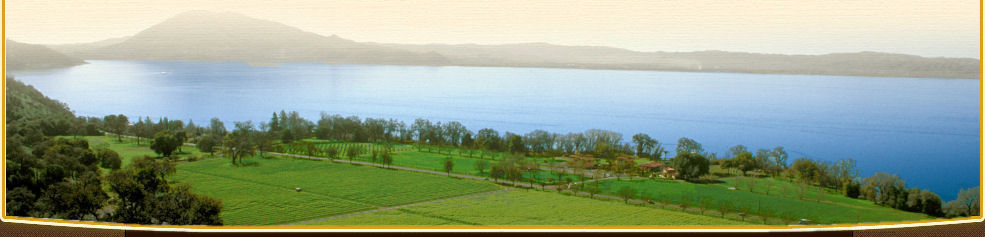
[Above: A view of the vineyard of the Ceago Vinegarden on Clear Lake]

With September being touted as "California Wine Month," a couple of weeks ago many Californians received an insert entitled 'California Wine' in their newspapers. This was courtesy of the Wine Institute, which is called "The Voice of California Wine." With the recent passing of Robert Montavi, who probably did more to put Napa and California wine on the map than anyone else, I thought this would be an interesting thing to take a peek at.

The first advertisement was from Gallo Family Vineyards, which is the third generation of the Gallo California winemakers. I believe the Gallo family is originally from Piemonte. On the first page, Wine editor Jon Bonne states "Wine is an enormous part of California's past, present, and future. And California has an undeniable love affair with the vine, buying 192 million cases of California wine each year. Another 50 million is shipped around the world, according to the Wine Institute. Yet those numbers barely define the success story. What's more amazing is how broad the wine industry's growth has been. Last year, California hosted 2,687 bonded wineries - more than triple the number in 1990."

There was one advertisement to promote wines from the Lodi area. "Lodi" is sister cities of Lodi in Lombardia, where it gets it's name. You might recall also, that the old Italian Swiss Colony winery was based in Asti, California, named after Asti in Piemonte. This advertisement was paid for by the Lodi-Woodbridge Winegrape Commission. On their website is a list of the local wineries, which includes a number of families, whose origin is particularly from around the Liguria area. It would take a little too long to go into all of them here now. Hopefully we can focus on some of these in the future.

Naturally this insert focused mainly on Napa and had a number of articles on winemaking. One advertisement was from the Napa Valley Vintners, and they have a very informative website. Other links that I would like to add here are the the Russian River Wine Road, the Livermore Valley Wine Country, and the Paso Robles Wine Country Alliance, which all had ads as well.

There are some newer up-and-coming wine regions. One such area is Lake County, which is a very picturesque area that surrounds Clear Lake, and is about 100 miles north of San Francisco. If Napa County has the perfect weather and conditions for winemaking, then Lake County is just north of it. I had visited a few of the wineries in the county several years ago. One of those was the Ployez Winery, I met the owner Gerald Ployez, who was hospitable enough to allow us to wine taste after hours. He is from France, so there must be some key reason that would bring him all the way to specifically Lake County to grow wine. The Lake County Winegrape Commission had a full-page ad in the insert.

Another winery in Lake County (among many) is the Rosa d'Oro Winery. It's owned by the Buttitta family, which apparently has long roots in winemaking, but without a label of their own until they moved to Lake County. Another winery, which caught my eye, was the Monte Lago Winery. Expecting to read about an Italian family, I saw where it is owned by a woman of Indian descent, who claims that winemaking goes back far in India. The first known production of wine seems to go back to Sumeria, Persia, and the Levant about 6,000 years ago, by ancient Sumerian, Persian, and Phoenician type peoples. However, it was really in ancient Greece that winemaking, in the form that we know today, got it's start.

Thursday, August 28, 2008

Beltramo's Wines & Spirits - Since 1882

Beltramo's Wines and Spirits
1540 El Camino Real
Menlo Park, CA 94025

(650) 325-2806
(888) 710-WINE (9463)
(650) 323-8450 fax
sales@beltramos.com

From Beltramo's website - History:

In 1880, Giovanni Beltramo arrived in California with Nebbiolo and Barbera grape cuttings from his native town of Castel Nuovo di Don Bosco in the province of Asti, Italy. He cultivated a vineyard in Menlo Park, and in 1882 he established a wholesale-retail wine and spirits business in town. After Prohibition his son Alexander moved the family business nearby to the store's current site. The store is half-way between the cities of San Francisco and San Jose, and just a few minutes away from the Stanford University campus, and although the family no longer cultivates any grapes, the store is within driving distance of the finest wine cultivating regions in California.

Since the late 1950's, Beltramo's has carried the largest selection of fine wines and spirits in the San Francisco Bay Area. Still a family-owned business, John R. and Daniel Beltramo, sons of Alexander Beltramo, have been guiding the store since the mid-1960's. The store was one of the first to specialize in imported wines. In the mid-1970's you could find 1947 Petrus for $99.00, 1967 Chateau d'Yquem for $27.00 and Domaine Dujac's first vintage of Morey St. Denis for $9.95. With the expansion of the California wineries, Beltramo's introduced the first vintages of new wineries such as Spottswoode, Chalone, Duckhorn, Silver Oak, Chateau Montelena and Ridge to the Bay Area's wine lovers.

Continuing with the family tradition of excellence in service and selection, Beltramo's has also been voted "Best Place to Buy Wine" in local polls of Menlo Park and Palo Alto for the last 10 years in a row. It has received recognition over the years as "Retailer of the Year" by Market Watch, the wine industry affiliate of the Wine Spectator and by the state of California by the National Liquor Stores Association with further recognition as “a top wine shop” from publications such as Food and Wine Magazine’s Wine Guide and The New York Times.

The Beltramo Family remains committed to keeping Beltramo's Wines and Spirits one of the world's finest wine stores, with a broad selection to suit everyone’s tastes and budget.

**************************************************


Beltramo's has a nice wine tasting room. See website for their wine tasting schedule. I have found the staff to be very friendly and helpful. I recommend a visit if you haven't been there.

Sunday, August 17, 2008

Cal-Ital's second act -- After a slow start, Italian grapes find their place in California

Tim Teichgraeber - Special to The Chronicle - August 1, 2008

[Left: Winemaker Greg Graziano examines clusters of Sangiovese grapes on the vine in Mendocino County's Redwood Valley. (Craig Lee - The Chronicle)]

During the last two decades, California wines made from Italian grape varieties have seen both a promising boom and a crushing bust, leaving only the most dedicated specialists still standing. Their hope is that grapes like Sangiovese, Barbera and Nebbiolo, maybe even Dolcetto, Cortese and Aglianico will yet have their day in the California sun.

Whether motivated by their love of the grapes and the wines they make or a desire to pay tribute to their Italian heritage, a few Cal-Ital champions remain dedicated to their cause despite tough financial challenges.

"Sometimes it's easier to make headway doing something different," says Jim Gullett, whose Vino Noceto winery produces several such wines in the Sierra Foothills.

At least that was the rationale among California's early proponents of Italian varieties. Many would learn that the varieties were surprisingly challenging to grow, and sometimes even harder to sell. After two decades of learning the hard way, the movement's survivors can finally see the light at the end of the tunnel, and may be able to show others the way.

Make no mistake, Cal-Ital wines are still a tough sell, but by most producers' accounts the resistance to them seems to be waning now that many of the weakest have been weeded out, the best have improved, and the weak dollar has driven up the price of imports and making for a mixed, but bullish, market. Almost one-third fewer tons of Sangiovese grapes were crushed in 2007 than a year earlier, according to the Wine Institute, but the price rose almost one-third. Less prominent grapes like Dolcetto, Cortese and Nebbiolo have all shown increases, though plantings remain small.

There was never a compelling reason why Italian grape varieties shouldn't succeed in California. The climates of the two regions are generally similar. And with tens of millions of Americans of Italian descent, Cal-Ital wines - California wines made from Italian grapes - shouldn't be hard to like.

At least that's what a lot of people thought in the late 1980s. Unfortunately, sometimes even the best laid plans go awry. Two decades later, only Pinot Grigio has emerged as a bona fide success.

Sangiovese was the great red hope of the Cal-Ital movement, a more elegant alternative to Cabernet Sauvignon, modeled after Tuscany's Chianti Classico, which Americans already knew and loved.

By the early 1990s, a number of wineries scattered around the state had begun producing Sangiovese and a few other varieties like Barbera, Nebbiolo, Dolcetto and Pinot Grigio.

Among them were Martin & Weyrich in Paso Robles; Montevina, Boeger and Vino Noceto in the Sierra Foothills; Greg Graziano's Enotria and Monte Volpe brands in Mendocino County; and Seghesio in Dry Creek Valley, which had been growing a little bit of Sangiovese since 1910. Even Robert Mondavi launched a Cal-Ital brand called La Famiglia with winemaker Jim Moore at the helm.

Moore had worked in Montalcino, the home of Italy's great Brunello wine, and he knew how great Sangiovese was made. Moore believed that Sangiovese planted in the right place, like the Napa Valley hillsides, could make world class wine, and he wasn't alone.


Movement gains credibility

In 1987, renown Italian producer Piero Antinori announced that he was partnering with British brewing concern Whitbread and Bollinger in the purchase of a property atop Atlas Peak in Napa Valley and he was going to plant Sangiovese - not Cabernet. Suddenly the Cal-Ital movement had credibility.

Others followed suit in planting Italian grapes, including winemaker Chris Dearden of Napa Valley's Benessere Vineyards, which released its first Sangiovese in 1995.

"I thought we could be the pinnacle of production for Italian varieties publicized by Antinori and Mondavi," says Dearden. He was just one of many that saw Sangiovese and other Italian grapes as a growing opportunity.

You can often identify pioneers by the arrows in their backs. Some of the early Cal-Ital wines showed real promise - specifically those from farmers who knew how to grow difficult grapes like Sangiovese, and those who had tasted enough Italian wines to know what made them great. Unfortunately, others were simply chasing a trend and had no idea what they were getting into. The result was a flood of mediocre Cal-Ital wines that undermined the good ones.

"Most of the winemakers that were making Italian varietals didn't have a f- clue about what Italian wine tasted like," says winemaker Greg Graziano. "All they cared about was what their neighbor was making, and they had no idea what was going on in the world."

Graziano produces Northern Italian-style wines in Mendocino County from Nebbiolo, Arneis, Barbera, Cortese and Dolcetto grapes under his Enotria brand and several other Italian varieties like Sangiovese, Pinot Grigio and Montepulciano under his Monte Volpe label, a sort of tribute to the Italian wines he loves. For the most part he purchases grapes to make his wines, and has coaxed Mendocino farmers into planting several varieties, often persuading them to grow them organically or biodynamically.


Courting retailers

[Right: Graziano produces Pinot Grigio, Sangiovese and Tocai Friulano under his Monte Volpe label. (Craig Lee - The Chronicle)]

Graziano is a road warrior, traveling the country to ferret out adventurous retailers and sommeliers willing to try and judge Cal-Ital wines on their merits.

Not everyone had as clear an aesthetic vision. Even Atlas Peak, the $25-a-bottle Sangiovese that was supposed to lead the way stumbled through the 1990s. Piero Antinori's estate never managed to make extraordinary Sangiovese, and was generally seen as overpriced. Young vineyards, inexperienced winemakers and competitively priced Italian wines were all part of the problem.

Italian varieties like Sangiovese and Nebbiolo were never intended for novice growers or winemakers. "If you think Pinot Noir is tough (to grow and vinify), Sangiovese is Pinot Noir squared, and Nebbiolo is Pinot Noir cubed," says Moore. "Nebbiolo is the toughest red grape to make in the known universe."

Nebbiolo, the noble grape of Piedmont, is the source for the brilliant wines of Barolo and Barbaresco, but it hasn't made outstanding wines anywhere else. Moore even has a "Letterman top 10 list" of Nebbiolo's fatal flaws, "10: It buds out too early; 9: It ripens too late; 8: It has too high in acid and tannin ..."

Martin & Weyrich's Nebbiolo vines were planted in 1992 from Italian vine cuttings sourced from unnamed persons at an undisclosed rendezvous location during the 1990 Italian World Cup, and smuggled into the United States as a so-called Samsonite clone. "Twenty-five years of experience with the variety is the key, and we still have so much more to learn," says winemaker Craig Reed.

Today Reed makes 4,500 cases of Nebbiolo, and it's the winery's No. 2 or 3 seller behind a wildly successful wine called Allegro, a slightly sweet, lightly bubbly Moscato that sells 70,000 cases a year. "That one keeps the lights on," says Reed.

Moore says that even with a few good Nebbiolos out there, "Nebbiolo may never succeed in California. If it has to any degree, it's where Pinot Noir was in 1970, when there were a handful of decent ones, but it wasn't on anyone's radar screen."

Likewise, Sangiovese is no easy grape to manage. "Young Sangiovese just produces and produces," says Montevina general manager Jeff Myers. Growers who don't cut back the crop wind up with watery, pale wines that lack body and color. "With vineyards now approaching 20 years old, we're getting better concentration and consistency."


Producers unite

Still, the Cal-Ital movement had momentum. Producers of Italian varieties banded together to form the Consorzio Cal-Italia and staged annual tastings at Fort Mason in San Francisco that drew thousands of wine fans. At its peak, around the year 2000, the consorzio had about 140 members.

Then came 9/11. Only a week before, Moore had sold one of his L'Uvaggio di Giacomo wines to Windows on the World restaurant atop the World Trade Center, placing it on one of the most iconic American wine lists. By 2002, the market had stagnated. Even the wineries making good wines from Italian varieties were struggling to sell them to the broader market but were continuing to sell them directly to loyal consumers who had come to know their quality.

Moore and Greg Graziano and Martin & Weyrich found open-minded retail and restaurant buyers in the Midwest, while others, like Noceto and Benessere, sold directly to customers that were looking for something different.


Vintners shapen skills

Through the hard years, dedicated Cal-Ital vintners honed their skills, and their vineyards matured. Even Nebbiolo has made remarkable progress in California, most notably at Paso Robles' Martin & Weyrich winery. "We considered giving up on it, but it's a labor of love," says winemaker Reed, whose favorite wines are Barolo and Barbaresco made from Nebbiolo.

Though Pinot Grigio has been a big hit, Sangiovese, Dolcetto and Aglianico from California are still a hard sell, even when well executed. Today's Cal-Ital wines are often as good as their like-priced Italian equivalents, especially now that the weak dollar has European prices rising, but they're often regarded as being "fake Italian" when French varietal wines like Chardonnay and Pinot Noir from California are regarded as perfectly legitimate rivals to their European counterparts. "The wine business has always been Franco-centric," explains Moore.

"We've all gone to the Italian restaurant, and you meet the Italian guy. He's like, 'But this wine's not Italian,' " says Graziano. "I'll say, "What do you have that's Italian? You've got dried pasta and olive oil! Your bread is from L.A., your vegetables are from Southern California, and your meat is from California. Don't give me this crap!' "

"I had that experience at Angelini on Melrose, one of the best trattorias in Los Angeles," echoes Moore. "I showed him my wines and he was blown away. I said, 'Are you going to buy any?' He says, 'No, because I have my Italian wines.' I said, 'Wait a sec, you have Burgundy and you have Russian River Valley Pinot Noir. You have Napa Cabernet and you have Bordeaux. Should you have only Rhone Syrah and none of this Australian Shiraz?' He says, 'You know, you have a point.' But did he buy any? No."


Unpopular label

[Left: Chris Dearden, who makes Italian-style wines for Benessere in St. Helena, stands next to the winery's open-top French oak fermenter made in Italy. (Craig Lee - The Chronicle)]

For some the term Cal-Ital itself has been a sore point. "I don't want to hear the term Cal-Ital anymore," says Benessere's Dearden. Does anybody say Cal-Franco? Cal-Espana? Get rid of it," says Dearden, who is tired of his work being regarded as a "failed experiment."

The most dedicated California devotees of Italian varieties have proven that it can, in fact, be done well.

Though it's easy to wonder if some would have chosen another path if they had it to do all over, Noceto's Jim Gullett sees a light at the end of the tunnel in consumers in their 20s and 30s who are looking for something new. "Now people are interested in what's new and different ... You need to be a little bit zealous about it and have a good story and a lot of confidence. You have to be willing to accept a little defeat."

"How long did it take California, and Oregon to figure our how to make Pinot Noir with consistency? It's at least as tough to make Sangiovese as Pinot Noir," says Gullett.

He has no regrets, but is he happy? "Yes, but I probably wouldn't be if it was much harder to sell," says Gullett.

For the best California producers of Italian varieties, the clouds are parting. They're looking forward to a decade where they're more competitive in quality and value to the Italian wines they were modeled after, Cal-Ital producers once again see the glass half-full.

Montevina's Jeff Myers puts it succinctly: "We're real happy with where we're at."


Tasting notes

WHITES

2007 Benessere Napa Valley Carneros Pinot Grigio ($26) A superb California interpretation of the Italian style - ripe, flavorful and full with green apple, nectarine and cream flavors and a crisp, minerally finish.

2007 Enotria Mendocino Cortese ($15) From the grape that makes Gavi di Gavi in Piedmont, this lovely white is every bit as refined as the best Italian examples, with sweet-tart Granny Smith apple, cream, fennel and lemon drop flavors.

2006 Monte Volpe Mendocino Pinot Grigio ($14) Fresh and expressive and flavorful with zesty green apple and lilac aromas, fresh apple flavors and a clean finish. A terrific value.

2007 Terra d'Oro Santa Barbara County Pinot Grigio ($16) Focused and aromatic with beautiful freesia, lavender and honeydew aromas and crystalline citrus, melon and mineral flavors. Excellent.

REDS

2003 Benessere Napa Valley Aglianico ($50) This powerful Southern Italian red variety seems to like Napa Valley. From a 1/2-acre block of the BK Collins vineyard comes this dark, full red with vanilla, licorice, blackberry and blueberry aromas and deep plum and berry flavors finishing with sturdy tannins on the graceful finish. The most Cabernet-like of the great Italian reds. Winery only.

2006 Enotria Mendocino Dolcetto ($17) This wine captures well the many charms of this underappreciated Northern Italian variety from its pretty violet aromas to its bright blackberry and cherry fruit, racy acidity and gritty tannins that soften with age.

2004 Enotria Mendocino Barbera ($17) Beautiful blueberry and blackberry pie aromas, vanilla, fruity middle, very approachable with a nice spank of acidity and tarry tannin on the finish. Lovely.

2005 L'Uvaggio di Giacomo Lodi Barbera ($18) Very young, with tight blueberry, blackberry and cranberry aromas. Dark, very ripe blackberry fruit in the middle and a tight finish, but should develop some jammier flavors and soften soon.

2002 L'Uvaggio di Giacomo Il Leopardo Central Coast Nebbiolo ($36) Another solid showing. Elegant, perfumed, textbook Nebbiolo from Stolpman Vineyards in Santa Barbara County with complex plum, cherry, cinnamon, licorice and tar flavors.

2003 Martin & Weyrich Reserve Il Vecchio Paso Robles Nebbiolo ($22) A seamless, beautifully matured red from the frustrating variety of Barolo and Barbaresco with amber-rimmed brick red color, dried rose, lavender, sweet oak, licorice and mushroom aromas, pretty, expressive, tangy cherry and raspberry fruit kissed with toast and a velvety finish. Superb.

2006 MonteVina Amador County Barbera ($12) A fruity red that's at once bright and deep with juicy cherry, raspberry, rose, toast and tar aromas, a round mouthfeel and bright cherry fruit on the finish. Perfect for a picnic or pizza.

2005 Monte Volpe Mendocino Sangiovese ($17) Delicious, fruit-driven California Sangiovese with youthful violet aromas, fresh blueberry and cherry pie flavors trailing into a moderately astringent finish typical of the grape.


Washington and Oregon

[Right: Benessere's 2005 Napa Valley Sangiovese. The winery released its first vintage of the varietal in 1995. (Craig Lee - The Chronicle)]

Wash-Ital and Or-Ital might not have the same ring as Cal-Ital, but the Golden State isn't the only place where growers and vintners have been honing their skills with Italian varieties.

Benchmark producer Ponzi makes a very nice white from Arneis, which is native to Piedmont. Earl and Hilda Jones of southern Oregon's Abacela Vineyards grow a daunting pastiche of Italian grapes, including the varieties Dolcetto, Sangiovese and Freisa.

A number of Washington state wineries are making first-rate wines from Italian varieties, especially Sangiovese. Star Walla Walla producer Leonetti makes a small batch of it each year. Like its other wines, the Sangiovese is excellent and at around $70 a bottle, pricey. Stella Fino, also of Walla Walla, and Cavatappi are two Washington wineries that focus on Italian varieties with great success. Stella Fino sources its Sangiovese ($25) from the excellent Pepper Bridge vineyard in Walla Walla, and Cavatappi's superb Maddalena Nebbiolo ($25) comes from Washington's historic Red Willow vineyard, where many varieties were first planted in Washington. Others to look for include Andrew Will's Ciel du Cheval Vineyard Sangiovese ($30) and Maryhill's Brunello-like Reserve Sangiovese ($32).

Some Italians are still wary of growing Italian grapes in the New World. After abandoning his Sangiovese dreams in Napa Valley, Tuscan producer Piero Antinori partnered with Chateau Ste. Michelle on Washington's Red Mountain in an estate dubbed Col Solare, which makes one red wine, a Bordeaux blend, without a drop of Sangiovese.

Tim Teichgraeber is a San Francisco writer. E-mail him at wine@sfchronicle.com.

San Francisco Chronicle Link (sfgate.com):
'Cal-Ital's second act'

Monday, August 11, 2008

Mondavi legacy lives on in Napa Valley

[Left: The Robert and Margrit Mondavi Center for the Performing Arts was established at UC Davis in 2002. (Jeremy Sykes)]

Mondavi legacy lives on in Napa Valley

Edward Guthmann, Chronicle Staff Writer

August 7, 2008

From her office window, Margrit Biever Mondavi sees the vineyards that her husband built. She sees the lawn where Ella Fitzgerald and Benny Goodman performed on summer evenings, and she sees the Spanish Colonial archway that appears on the label of each bottle from the Robert Mondavi Winery.

Her husband, Robert Mondavi, was Napa Valley's most successful and influential vintner. Born in Minnesota to Italian immigrants, he not only brought international standards to his winery but also, through relentless salesmanship, established Napa Valley as one of the world's foremost wine regions.

Before Robert Mondavi, wine wasn't a staple in most American homes, and Napa Valley was more famous for its mental hospital than its vineyards. Before Robert Mondavi, a British journalist wickedly observed in the Guardian of London, "Americans hardly knew their country produced wine, and seemed content to live on tuna melt and meat loaf washed down by Coke."

It's been three months since Robert died and Margrit, his wife of 28 years and an important component in the winery's success, is sitting in his office and reminiscing about her husband's dedication and single-mindedness.

Forty-five years ago, Margrit says, "The whole valley was for sale for $1,000 an acre. Nobody believed in Napa Valley. And I think it was very much Robert Mondavi who turned it around."

He was a handsome blade, with a strong jaw and Roman nose, and for all of his life looked like a classic Western movie star - a cinematic brother to Randolph Scott, Joel McCrea or John Wayne. "You know, he looked good till his last day," Margrit says. "He had no wrinkles. Can you imagine? He was 95 and had no wrinkles! I think he had a subcutaneous layer of olive oil."

Robert's last four years were marked by mobility problems and mental decline. In the last six months, Margrit says, "He had a slow dementia, which made it very hard on me, because I didn't know where he was. He didn't communicate much any more."

Margrit, 82, is dressed in white silk pants and a knee-length cardigan. A native of Switzerland, she's small and elegant and still speaks with a pronounced accent after 60 years of life in the United States. Sitting on a leather love seat in Robert's surprisingly small office, next to several shelves of Mondavi family photos, she's wistful, proud and happy to talk about her husband.

Since his death, says Margrit, she's had support from friends and family - two daughters from her first marriage live nearby - but the evenings are lonely. "We had a wonderful life together," she says. "We never argued."

[Right: Robert Mondavi. (Gary Fong / The Chronicle)]


A good match


It's clear that Robert and Margrit were well-matched: Both were ambitious and hardworking, both loved wine and food culture, both adored the contacts and lifestyle that Robert's spectacular success afforded them.

When they met in the 1960s, after Margrit was hired as a tour guide at the winery, both were married with three children apiece: Robert to his childhood sweetheart Marjorie Declusin, Margrit to former U.S. Army officer Philip Biever, whom she had met and married in Switzerland when she was 20.

In her dishy 2007 book "The House of Mondavi: The Rise and Fall of an American Wine Dynasty" (Gotham Books), author Julia Flynn Siler traces the evolution of the relationship and the disruption it caused.

Robert's three children were fiercely opposed to his relationship with Margrit, and winery personnel resented her rapid ascent within the company. They were envious when she started the Summer Music Festival in 1969, turned the Vineyard Room into an art gallery and introduced a program of cooking classes. Marjorie, who married Robert in 1937, was viewed as the wronged woman; when her drinking got out of control, people blamed Robert's philandering.

"We had a little bit of a soap opera," Margrit admits. "(But) we were very attracted to each other. We always knew we were going to end up together ... once we dissolved our past lives."

Margrit wasn't like anyone else in Napa Valley. Reared in Ticino, a Swiss canton on the Italian border, she had artistic appreciation in her blood: Her father played piano, kept a wine cellar and practiced homeopathic medicine. Her mother was a splendid cook and music lover who, when Margrit was 12, took her on a four-hour bus ride to Verona just to hear "Aida." With her background and flair, Siler writes, Margrit "complemented and enabled Robert Mondavi's dream" in ways that his first wife hadn't.

The early hostility from Robert's children was hurtful, Margrit says, "but Bob was always so supportive of me. He always said, 'I'll take care of you, don't worry.' " The couple married in 1980, and eventually she built strong bonds with Robert's daughter Marcia and son Timothy. "It's very good now," she says. "I didn't expect it."


Expanding horizons

In their last years together, Margrit and Robert became Napa Valley's premier philanthropists, helping to establish Copia: The American Center for Wine, Food & The Arts in Napa. In 2001, they donated $25 million to establish the Robert Mondavi Institute for Wine and Food Science at UC Davis - it opens in October - and gave $10 million to the Robert and Margrit Mondavi Center for the Performing Arts, which opened in 2002 and includes the 1,800-seat Jackson Hall and the 250-seat Studio Theatre.

Today, Margrit is the only Mondavi still working at the Robert Mondavi headquarters and tasting room on Highway 29 in Oakville. In November 2004, the company was bought by Constellation Brands Inc., the world's biggest wine conglomerate, for $1.6 billion. Both Robert and Margrit were retained as ambassadors; Margrit still oversees cultural activities as vice president of cultural affairs.

On a stroll through the winery, Margrit points out the Vineyard Room, where she presented artists Richard Diebenkorn and Wayne Thiebaud; the fanciful Beniamino Bufano sculptures she collected; and the lawn where Vince Guaraldi, Cal Tjader and countless jazz artists performed over the years. None of it would have happened, she says, if her late husband hadn't backed her, if he hadn't by nature been a gambler and an optimist.

"I'd say, 'Is it all right, Bob? Should I try this?'

"And he'd say, 'Look, if it's good, let's not talk about it. Do it!' "

[Left: Margrit Biever Mondavi, widow of vintner Robert Mondavi, is the only member of the family working at the Robert Mondavi Winery in the Napa Valley, where she serves as vice president of cultural affairs. She helped establish art shows and concerts at the winery. (Photo by Craig Lee / The Chronicle)]

Italian Passions: Concert part of the Music in the Vineyards series. 7:30 p.m. Aug. 15. Robert Mondavi Winery, Highway 29, Oakville. Go to musicinthevineyards.org or robertmondaviwinery.com.

For information about forthcoming events at Copia and the Robert and Margrit Mondavi Center for the Performing Arts at the University of California at Davis, go to copia.org/calendar and mondaviarts.org.

E-mail Edward Guthmann at eguthmann@sfchronicle.com

**************************************************

Article Link from the San Francisco Chronicle (sfgate.com):
Mondavi legacy lives on in Napa Valley

Robert Mondavi's parents were from the Marche region, while Margrit Mondavi was originally from the Ticino canton.

The following are books which tie into the subjects of the Napa County wine industry, and of the families which founded them:

'Napa: The Story of an American Eden' (James Conaway; 2002)

'Harvests of Joy: How the Good Life Became Great Business' (Robert Mondavi; 1999)

'Wine Heritage: The Story of Italian-American Vintners' (Dick Rosano; 2000)