 Viva Afritalia!
Story by Janice Winter
Early Italian immigrants – and, more recently, prisoners of war – brought a cornucopia of food, fashion, furniture, industry and ingenuity, as well as passion, perseverance and a tradition of family values, to our country. While we often acknowledge the role of the Dutch settlers, French Huguenots and British colonists in forming our nation, the significant contributions of the Italians seem to have been overlooked along the way. It’s a great pity.
A trickle of Italians began settling in South Africa from as early as 1689. It was only from 1861, though, that they starting flooding into the country, as refugees from the Italian War of Independence. But rather than arriving as helpless victims seeking aid, they brought fresh ideas and skills and began developing our nation.
Italians have constantly pioneered new ventures in South Africa. In 1878, for example, Oreste Nannucci opened a small laundry in Long Street, Cape Town, and that was the beginning of dry cleaning in South Africa. The first soccer club, the ‘Italia Football Club’, was established in Cape Town in 1929 by Giovanni Perosino. In 1937, Umberto Pomilio and Giuseppe Raimondo started a paper mill, inventing and pioneering a process that’s still used around the world today. Their company, the South African Pulp and Paper Industries Limited, is now known as Sappi. In the 1880s, a small community of Sicilian fishermen arrived in Langebaan, on the West Coast, modernising our fishing industry, importing motorised engines, setting up a fish canning industry and developing the area by building bathing facilities for leisure, and roads for the distribution of fish.
Many more of our central industries are peppered with Italian influence, and some iconic national symbols that we’ve taken as our own inventions owe their existence to early Italian immigrants. Some of our world-renowned Cape vintage wines are of Italian lineage and, yes, even our supposedly traditional and ‘proudly South African’ biltong is likely to have had its true origins not on the plaas, but in the Alps, as this method of curing meat has been used there for centuries.
During the Great Trek of the 19th century, Italian merchants followed the trekkers’ oxwagons, selling groceries, gunpowder, pots and pans – virtual delis on wheels long before they became a trendy way of eating ‘out’ at home.
 And, of course, no discussion on Italian food is complete without reference to pasta, especially the name that’s in almost every South African kitchen cupboard today: Fatti’s & Moni’s. Luigi Fatti built a pasta factory in Johannesburg in 1912, after working as a grocer for several years. The Moni brothers (Giuseppe, Giacomo, Pietro and Roberto) were also grocers in Johannesburg and opened their own pasta factory which they then transferred to Cape Town. The two companies merged in 1920 to form the United Macaroni Factories Limited – not as catchy as the brand name we know today! Initially selling just egg pastas and ice cream cones, the company soon became a roaring success, diversifying their products and processing several thousand tons of grain every month.
But these men were far ahead of their time. It was only in the 1950s that most Italians began opening restaurants, in order to feed the many Italian workers who were rebuilding South Africa’s railway lines. We now travel those railways, and drive over mountain passes, work in skyscrapers and worship in churches, oblivious to their origins and the creative characters who built them. Many dams and bridges throughout South Africa were masterfully constructed by skilled Italian artisans, despite appalling working conditions and rampant malaria. But then, perseverance and perfectionism characterise the Italians, who don’t seem to enjoy anything in half measures.
Take Raffaele Monzali, for example. He was instrumental in constructing most of Natal’s railways. He also brought fresh drinking water to the city of Durban, through his Shongweni Reservoir Dam project. It was he who broke a world record with the 59-metre-deep foundations he laid for the Umgeni Bridge – just one of the many bridges he built around the country.
The Berettas are another example. These were four brothers who immigrated to South Africa and worked hard constructing the railways in Pilgrim’s Rest, Mpumalanga. Before long, though, one was the mayor of the town, and another the deputy mayor – good potential for a spaghetti western! These landmarks typify the Italian ability to start with little and work hard enough to leave a tangible legacy.
Italian builders, tilers, carpenters, contractors and engineers were also at the forefront of the South African construction boom in the early 1900s. From basic design and construction to the finer embellishments of terrazzo flooring, Carrara marble and mosaics, Italian influence pervades our architecture. In fact, many familiar buildings were designed and built by just a handful of highly prolific Italians.
Giuseppe Rubbi is without doubt the icon in this regard. Having completed a diploma in Industrial Arts at 16, he worked in several countries before arriving in the Transvaal to make a lasting impression on the South African landscape. Starting as a carpenter on the mines, he soon rose in status, building the military barracks on Robben Island (during the Anglo-Boer War) and many of the first skyscrapers in Cape Town. The Old Mutual, Sanlam, Southern Insurance and Cape Times buildings, as well as the Alhambra theatre and the Volkshospitaal (today the Cape Town Medi-Clinic), all carry his signature. Rubbi Road in Kommetjie, Cape Town, keeps his name on the lips of locals. He was one of many Italians who laid some of the most enduring foundations of our country.
When diamonds were discovered at Kimberley in 1867 and gold deposits in Barberton in 1882, foreign interest in South Africa exploded. The country was seen as a treasure chest of commercial opportunities and the world’s largest market for dynamite. Italians once again seized the gap. Two men arrived with five cases of dynamite to start an explosives factory at Leeuwfontein, near Pretoria, which not only became the most important dynamite factory in Africa, but also helped establish the largest commercial venture in South Africa at the time. Another factory was soon set up in Modderfontein. Many Italians worked here, among them the so-called cartuccere (‘cartridge girls’), who had the dangerous task, for 12 hours a day, of packing the dynamite cartridges in waxed paper. These workers lived in the vicinity of the Modderfontein factory, forming the first real Italian community and creating the suburb of Orange Grove in Johannesburg.
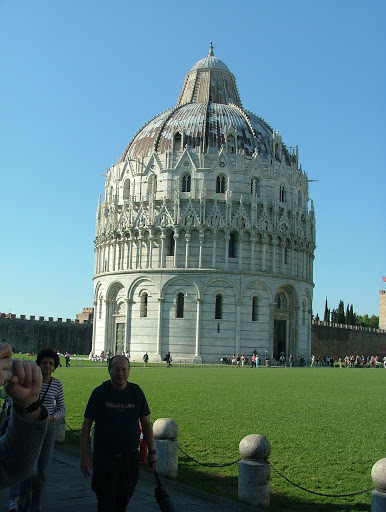 The discovery of diamonds and gold brought many fascinating characters to the country. Among them was Guglielmo Martinaglia, a minerologist who worked in Kimberley during the diamond rush, finding underground waterways and springs. He was invited to probe for gold in Roodepoort, Pretoria, and hit paydirt in only three weeks. In 1896 he obtained a lease for land at Zwartkrans. He laid explosives, attached them to the detonator, took cover and innocently pushed the plunger, hoping to find limestone. Instead, the explosion left an enormous black hole in the side of the mountain. Fearing that he’d demolished half the hillside, he went to explore. It turns out that Martinaglia had discovered, inadvertently, the astounding Sterkfontein Caves – now one of the major fossil sites in the world and home to the skull of ‘Mrs Ples’, an advanced humanlike ape creature, discovered in 1947 by Dr Robert Broom.
Italians have been part of our military history from as far back as the Battle of Bloukrans during the Great Trek. When the Zulus attacked the Voortrekkers, an Italian woman, Teresa Viglione, rode down to the Bushman’s River, courageously risking her life to warn the Boer laagers and tend to the wounded. A carved marble tablet in the Voortrekker Monument honours her valour. During the next major conflict, the Anglo-Boer War of 1899, over 200 Italians formed the most renowned foreign legion to support the Boer cause, under the leadership of Italian cavalry officer Camillo Ricchiardi. This distinguished officer earned the status of hero as well as gentleman, writing condolence letters to the families of slain enemies and including any personal belongings found on the deceased.
But it was the Second World War that was of most significance, bringing a massive influx of Italians into the country as prisoners of war. They were used for very tough manual labour, quarrying the Outeniqua Pass from the hardest solid rock in the country, and constructing the Du Toitskloof Pass and the Orange River irrigation scheme in Upington.
Up to 96,000 Italian prisoners were held in Pretoria’s Zonderwater, the largest Allied prisoner-of-war camp. This tented camp was grim and the Italian prisoners were demoralised, starved and far from anything familiar. But, once again, they rose above their circumstances. The enterprising prisoners transformed the barren camp into a thriving community, with 50 districts, 30 km of road, 20 theatres, 16 soccer fields, 22 dramatic societies, a large hospital, a chapel and an elementary school. They printed school textbooks, wrote and edited a weekly journal and taught 11 000 illiterate prisoners to read and write. They also set up a training centre where they taught mechanics, joinery, carving, physics, chemistry, painting, design and sculpture. Their artworks, toys, carved wooden boxes, rings, watches, wrought-iron handicrafts and furniture were so exquisite that local exhibitions were held and each worker earned a shilling a day.
Zonderwater established a new relationship and respect between Italy and South Africa. Indeed, thousands of Italians immigrated to South Africa in the 1950s, this time to influence, develop and transform our country, as they did Zonderwater. But what we celebrate even more than their many practical contributions is the passion for food, wine, art, architecture, industry, sport and religion, and the love of life in general, that they have fostered throughout our country. Viva l’Italia!
We would like to thank André Martinaglia and Maria Martinengo for the time and information they so generously gave for this feature.
[Pictures courtesy of the Italian community of South Africa (see link)]:
'Viva Afritalia!' on the Pam Golding Properties website

This history of the Gold Rush was basically about immigrants from the Genoa area. I had used this one on an earlier website a few years ago, and I recall there was more of a writeup on Olivia "Grandma" Rolleri with an image. I don't recall if I saved that or not. Many of the locations here have been made into landmarks, so we will have to compile a list at some point.
**************************************************
The Italian Legacy in the Mother Lode
 Introduction
Nearly 200 members of the Sacramento Italian Cultural Society and the Folsom Historical Society attended the opening reception for the exhibit "Nostra Storia" on January 28, 2000. This is a unique story about that wave of people from Italy, primarily from the area around Genoa in the region of Liguria, who settled in the foothills of the Mother Lode region of Northern California in the Mid-19th century. This is the first time that an exhibit has been created to tell the story of these enterprising people who contributed so much to the economic and cultural fabric of California. The history of the Italian Americans is often relegated to the margins of American and California history despite the fact that the Italians are the 5th largest ancestry group in America with more than 25 million Americans claiming to be of Italian decent. Some two million California's are of Italian decent, In fact, for much of California's history, the Italians have been the largest immigrant group in the State
This exhibit is part of the determination by us, this generation of Italians, to see that our story is told and included in the history of the nation so we to can snare in that history. It is well known that from the 1880's to the 1940's, the Italians were among the largest of the immigrant groups to settle in America. But less is known about the earlier wave of Italians from northern Italy who established their economic and cultural communities across the United States. It was in California that their communities and enterprises flourished the most. We have all benefited from their legacy. From our access to banking services to the food we eat, we are all indebted to these pioneers for the inheritance they have left us.
This story, like so many others about the Italians, would not have been told without the financial and intellectual resources devoted to this project by a committed Italian American institution in our community such as the Italian Cultural Society of Sacramento. It takes a large financial investment to put such an exhibit and a well organized team of Italian American scholars and activists that can make such a project a reality. This project, like so many others sponsored by the Society, is a reflection of the need for Italian American institutions like the Society to maintain our Italian community and speak for us when no one else well. That is why we work so hard at marshaling the resources of our community to support these goals.
This exhibit is our way of saying thank you to those who preceded us but it is also a way of showing out pride in our contributions to American life. This exhibit is also our way of connecting our past to our future as a community, a people. Without a knowledge of our past we have no memory upon which to build our future and the Italian American movement in the United States is about creating a future for us as we have helped create the past. Without a vibrant Italian American community we can no longer make such a contribution to American society.
This exhibit which will become a traveling exhibit, will join the Italian American World War II exhibit "Una Storia Segreta" and other exhibits being developed about the Italians in California agriculture, in the coastal fishing communities and in the urban centers and other regions of California. None of these exhibits has a home. One of the priority public policy goals of the statewide Italian American community is to establish a California Italian American Museum to house these and other exhibits under development. One of the primary goals of the "Italians in the Mother Lode project" is to establish a regional Italian American Museum in the Mother Lode where our story can be collected and displayed. The support and leadership of the Italian American community is vital to the success of these projects.
Arrival and Settlement
The story of the American West would be incomplete without telling the story of the Italian settlement of the west. This is especially true of California and the settlement of the Gold Country counties of the" Mother Lode" of Northern California. The Italians were one of the earliest and most important groups of people to settling the California foothills of the Sierra Nevada referred to as the "Mother Lode".The Italians settlement in the Mother Lode began with the Gold Rush. From the 1850s through the 1880s, Italian immigrants from Northern Italy, primarily from the area around Genoa in the region of Liguria, settled in large numbers in the Mother Lode counties of California's Gold Country.
The Italians came early in the states history. Lured by the promise of gold and land, the early Italian pioneers of California came to stay. Here they could use the traditional skills of their cultural heritage to develop the land and the region. The Italian immigrants established themselves in the mining, cattle ranching, lumbering, construction and stone masonry, fruit and vegetable market gardening, orchard, grocery, olive oil, railroading, mercantile, banking, restaurant, hotel and boardinghouse, and the vineyard and the wine industries of the California Gold Country. Their descendents still carry on the traditions brought to early California by the people from Italy. Seven Sisters Arriving From Genoa 1853Their heaviest settlement was in the southern Mother Lode and by 1870, 25 percent of the Italian population of California lived in the three foothill counties of Amador, Calaveras and Tuolumme. They were soon one of the largest immigrant groups in the Mother Lode. Most came from the same region of Italy and represented the distinctive chain migration of the Italians from the area around Genoa, especially from the province of Chiavari. Later waves of Italian immigrants from Liguria and other regions of Italy, such as the Venetians from the Veneto region also settled in the Gold Country and carried on the traditions brought by the early Italian pioneers. To this day, the Mother Lodes populated by many Italian Families that have their roots in the Gold Rush.
 Gold Rush and Mining
Beginning with the Gold Rush of 1848, Italian miners played an important role in the mining industry of California. Attracted by the discovery gold, the early Italian gold miners left their legacy emblazoned in history on historic places with names like Italian Camp, Italian Diggings, Italian Bar and the Italian Bar Trail in Tuolumne County, the Italian Mine in Nevada City and Italian Bar on the American River in El Dorado County.
Between the 1860s and 1890s, numerous quartz and gravel mines along the mining belts of the Mother Lode were operated by Italian miners such as La Fortuna Mine, the Volponi, the Garabina, the Porto Fino , and the Bella Vista.
During the later deep mining period of the 19th and 20th century, Italian miners were recruited from Italy by the large mines to work the deep veins in both northern southern mines. By the turn of the century, the Italians were among the largest of the European immigrant groups in the mines.
The Italian Garden Mother Lode residents, isolated from major population centers, were dependent on local market gardeners and ranchers for their foodstuffs. Many Italians, attracted by mining, turned to market gardening and farming to meet the demands of the local population for fruits, vegetables, meat and dairy products, grain and wine. By the 1860s, many Italians in the Mother Lode were operating these agricultural enterprises. By 1880, around 1200 commercial market gardens were being operated in California by an estimated 10,000 people from the region around Genoa, Italy, who dominated the industry. The picture to the left is a Italian Garden at Mokelumne Hill.
The Italian Gardens involved the entire Italian family. Women as well as men worked raising the vegetables. The plowing and cultivating was done with horses while the hoeing and cultivating of small plants was done by hand with a zappa, a short-handled Italian hoe.
Italian Gardens were operated throughout the Mother Lode. Some of the most prominent were the upper and lower "Italian Gardens" at Mokelume Hill. Another, The Italian "Pa-ta-ta" Ranch at Bald Mountain was started in 1862 as a cooperative garden by six young Italian miners. The ranch was referred to as "Little Genoa" because of the large number of Italian families that lived there and their use of the Genovese dialect.
Some of the other well-known Italian Gardens were the Volponi Gardens in Sonora, the Podesta Gardens in Columbia, The Gardella Gardens in Mokelumne Hill, the Sanguinetti Gardens in Vallecito, the Costa Gardens in Calaveritas, the Cavalero Gardens at Sonora and the Palemone Gardens in Tuolumne.
The Italians also played an important role in developing the early Olive Oil industry in the foothills. The Orsi family in Roseville was a major producer of olive oil until the mid 20th century. The rolling hills of the Gold Country, which resemble the Mediterranean hills of Liguria, are dotted with the remnants of the early Italian olive tree orchards and with new orchards reflecting the rebirth of this ancient tradition from Italy.
 Stone Masons & Wood Cutters
Italians have worked in the Lumbering industry throughout the forested hills of the Mother Lode since the Gold Rush. They were heavily involved in logging and harvested timber off their ranches which delivered to the mines by horse team. Many of the Italian immigrants were woodcutters and the landscape was covered by the cabins of Italians woodcutters who split wood to make the charcoal used in the mining forges.
The Italian immigrants brought their skill in working with stone from Liguria, a rugged and mountainous land with an estimated 25,000 miles of terraced hillsides.
Crews of Italians skilled in rock work helped build the mountain roads carved out of the canyon walls of the western Sierra's from Nevada City to Yosemite. The old stone terraces on todays Gold Country ranches and along its roadsides are a reminder of this cultural tradition. The picture to the right is a Old Stone Mill, Liguria, Italy.
Ranching, an Italian-American Tradition
For the past 150 years, many Italian families have made their living off of cattle ranching in the Mother Lode foothills at the base of the Sierra Nevada Mountains. The early Italian immigrants became one of the main groups in the ranching industry of the Sierra foothills which are dotted with Italian family ranches to the present day.
Some of the oldest ranches in the Mother Lode were started by the early Italian pioneers, The Fregulia Ranch in Jackson was started in 1852 by Domenico Fregulia
from Genoa and is operated as a cattle ranch today by great-granddaughter Carolyn Fregulia and her three children. Giuseppe Rosasco came from Genoa in 1860 and by 1907, the Rosasco family owned seven ranches in Tuolumne County. To the right is the Old blacksmith shop on the Fregulia Ranch at Jackson, California dating from the 19th century.
The family still operates a 5,000 acre ranch near Sonora. The Cuneo ranch at Calaveritas was started in 1850 by immigrants from Genoa and is still operated by the Cuneo family as is the Sanguinetti Ranch and scores of other Italian family ranches in the region.
 Italian Merchants
The history of the Mother Lode is also the history of the many Italian merchants that have operated businesses from the Gold Rush to the present. Some of the earliest merchants in the Gold Country were Italian Immigrants. Among the early Italian pioneers who established general stores were Luigi Costa in 1852 in Calaveritas; Louis Trabucco in 1850 in Hornitos; Joseph Arata in 1854 in Vallecito, Domenico Ghiradelli in 1855 in Hornitos, Agostino Chichizola in 1850 in Jackson; Frank Cuneo in 1857 in San Antonio Camp, Giuseppe Prince in 1857 in Altaville, Nicolas Pendola in 1859 in Angels Camp, John Peirano in 1854 in Angels Camp, Carlo Marre in 1858 in Jackson, Francesco Bruschi in 1854 in Coulterville, Andrew Olcese in 1861 in Mariposa, Enrico Bruno in 1857 in Butte City, Nicolas Quirolo in 1861 in Todds Valley, Bartolomeo Dughi in 1860 in Mountain Ranch and Gerolomo Tiscornia in 1868 in San Andreas. The Costa Store in Calaveritas has been restored by the Cuneo family as has the Chichizola Store at Jackson Gate. The Butte Store, operated by the Ginocchio family until 1926, is a State Historic Landmark.
One of the best examples of Italian architecture in the region is the Giuseppe Murer House in Folsom which was built by an enterprising immigrant who arrived in 1906 from the Veneto region of Italy. The Murer House is now a historic site and museum. The picture to the right is the Chichizola Store at Jackson Gate, Amador County, California.
Boarding Houses & Hotels
In the rural settlements of the foothills, miners and single men often lived in boarding houses owned and operated by fellow Italians. Some of the well-known Italian boarding houses of the past were Calaveras Hotel in Angels Camp; Bisordi's Itala Hotel in Sonora; the Torino Hotel in Nevada City; the Trabucco Hotel in Mt. Bullion; the Colombo Hotel in San Andreas and the Europa Hotel in Sonora.
Bisord's Italia HotelOlivia "Grandma" Rolleri came to Sonora from Genoa in 1860 at age 16. Left with 11 children after her husband died in 1884, she became a prominent businesswoman who established the Calaveras Hotel in 1887 and owned several cattle ranches and mining interests. The Calaveras Hotel contained more than 50 rooms, a butcher shop, saloon and barber shop under one roof. Sunday dinners were famous and people came from across the county for family homestyle dinners and to take home "ravioli," She operated the hotel for 40 years until 1927.
 Italian Stone Ovens, a Unique Tradition
One of the cultural traditions brought to the Gold Country by the Italian immigrants was the tradition of baking in stone ovens. Many Italian families used outdoor stone ovens to bake bread, a vital part of Italian culture. Around 100 stone ovens have been identified in Calaveras, Amador and Tuolumne and dot the countryside where the Italians settled. "Victoria's Oven" was moved from the Ratto Ranch to the Calaveras Museum in 1994 where bread is once again baked fresh from this historic oven.
The oven to the left is from the Fregolia ranch.
Family & Community
The Italian immigrants to the Mother Lode established their own cultural communities wherever they settled. They had their own "Little Italy" communities such as at Jackson Gate and at Clinton in Amador County. To this day, Jackson Gate is the site of several Italian family restaurants and Clinton Road, is lined with Italian Ranches.
The Italian pioneers celebrated their pride in their Italian heritage by building "Bocce" courts, holding Columbus Day celebrations, and forming mutual benefit organizations.
There are a number of Italian organizations serving the Italians, in the Mother Lode. The Gold Country Italian American Club in Grass Valley plays bocce at the courts it has built in the local public park and the Italian Benevolent Society in Amador, organized in 1881, holds an annual "Italian Festa" at the " Italian Society Park " at Sutter Hill. The Society is 118, years old and made up of descendents of the early Italian immigrants to the Mother Lode.
Columbus Day Parade 1890Angelo Noce, an Italian immigrant to Clinton in 1858, is credited as the "Father of Columbus Day" in the United States for obtaining recognition of Columbus Day as a legal holiday by thirtyfive states. Native son, Andrew Caminetti, born in Jackson Gate in 1854 of Italian immigrant parents, was the first native-born California elected to the United States Congress.
 From Italy to California
The early Italian settlement of the Mother Lode mining counties of northern California was part of the larger settlement of California by Italian people from the region of Liguria.
During the mid-19th century, Italian immigrants from the region of Liguria in Italy settled in the major cities of the United States and established Italian communities in places like New Orleans, Philadelphia, San Francisco, Chicago, Boston, and New York. The arrival of these "Genovesi" in California, beginning in the 1850's, coincided with the early development of the state. As a result, the Italians played a vital role in the creation of California.
It wasn't long before Italian fishermen had established themselves in fishing villages from Eureka to Benicia, Martinez, Pittsburg, San Francisco, Santa Cruz, San Diego and Monterey.
By the 1880's, California had become a leading fishery and its coastal waters were dominated by Italian fishermen and their graceful sailing "felucca's"
Across the state, the Italians also settled the states farmlands and played a prominent role in developing today's fruit, vegetable, and dairy industries. By the 1880's, Italians dominated the fruit and vegetable industry in the great Central Valleys of California. Italian immigrants also left their mark on the California food processing industry. Marco Fontana arrived in the United States in 1859 and along with another Ligurian, Antonio Cerruti, established a chain of canneries under the "Del Monte" label. Most of their workers were Italian and their cannery soon became the largest in the world.
Another enterprising Italian was Domenico Ghiradelli, who traveled through the gold mines in the 1850's, selling chocolates, and hard candies. He settled in San Francisco after the Gold Rush and founded the Ghiradelli chocolate empire, with Italian immigrant labor, at the site of the present Ghiradelli Square.
The California wine industry also owes much to the Italian founders of the industry. Italians have been planting vineyards and making wine in America since the early colonial days when Filippo Mazzei, planted vineyards with Thomas Jefferson. The founding of the Italian Swiss Colony, at Asti in 1881 as a cooperative of Italian immigrants from the wine growing regions of Italy promoted the widespread participation and success of the Italians in the California wine industry and the vineyards of the Napa, and Sonoma valleys.
One of the most inspiring of California's Italians was Amadeo Pietro Giannini who was born 1870 to immigrant Italian parents from Genoa. He started the first statewide system of branch banks in the nation by opening branches of his Bank of Italy, in the Italian neighborhoods, across the state. He later changed the name of his bank to Bank of America which became the largest bank in the world.
More than most people realize, the Italian Americans helped shape the cultural landscape of California and the modern West. The enterprise and success of these Italian pioneers is a unique legacy – one shared by all of us.
The Italian Legacy in the Mother Lode (Sacramento Italian Cultural Society)
 As you probably already know, there are already numerous regional and provincial Northern Italian cultures spread around the world. First, it should be pointed out that Northern Italians didn't emigrate in any large numbers anywhere until the late 1800s to the 1950s, or even up to 1960. The peak was in the early twentieth century. This migration was to South America. There's a great irony in that the Southern Italians migrated to America and Canada, while the Northern Italians migrated to Argentina, Uruguay, and Sau Paulo (in fairly sizable numbers as well).
[above: "Bergamask" folk musicians]
In particular, there are large numbers of Lombardian heritage societies and clubs in Argentina. So, if you can imagine the sense of community that say Americans of Sicilian descent have in Brooklyn, Chicago, or Philadelphia, then imagine a similar sense of community in Buenos Aires for example. Argentina is a beautiful, albeit underachieving, nation filled with Spaniards, Italians (Lombards, Venetians), Germans (and Austrians, Swiss), and British Islanders (including English, Welsh, Irish, Scots), so therefore very different than Mexico or Puerto Rico. I dream of a day, very soon, where you and me can plan a trip to Buenos Aires, or Melbourne, or Toronto, and be received by people who would treat us like family... and of course we could do the same in return.
It's not just Lombardians, but other regional cultures as well (Tuscans, Piedmontese, etc.). One example of a provincial culture with a very strong sense of identity are the Bergamaschi (Bergamo Province in Lombardia). Perhaps it's something in the water, but these people have incredible passion! When the soccer teams from Bergamo and Brescia play, they practically riot! The Bergamaschi nel Mondo ("Bergamasks in the World" in English) have clubs all around the world (but not America). It's amazing the closeness they feel for each other, even after emigrating. They take a lot of group pictures, and you can really sense the close-knit feeling of family and extended family. I find it interesting that there's such a prominent Bergamaschi nel Mondo, but no "Bresciani nel Mondo" anywhere, for example.
I would strongly encourage any of you, to just go ahead and create some regional, or even provincial, society. It would also go hand-in-hand with research you may be doing. It could be a lot of fun, as you can connect with a lot of people all over as well. Make a name, but probably Anglicize it with society, circle, association, etc. At virtualitalia.com, you can see that there are some in the Bay Area who have done this.
I think I mentioned in past writings that there is a branch of the Northern League party called "Padani nel Mondo." The only activity that I have heard them do overseas is in Argentina. Consider taking that step. Just kick the idea of a name around, and you may be surprised that you could really develop something. It would be more than "Joe Blow's Blog," as your name would be associated with it's name. Lets say, for example, that you descended from "Lucchesi." You could call it "Lucchesi nel Mondo of the Bay Area," or the "Lucca Circle of Northern California."
It's a shame that there isn't a Lucchesi or Genovesi society in California, or even a Lombardian one in Missouri (St. Louis once had a "Little Lombardy" district. With my obligations here, I wouldn't be able to do it right. In other words, with everything I'm planning to do, this endeavor would require a "double set" of everything. I would rather someone else do it, and I would assist them in any way I could, and any of the rest of you as well. I would like to make a "Clan Rondoni" website, or a "Bresciani nel Mondo" club, and I could go in other directions as well, but you can see that it's difficult to duplicate each activity in this way. Anyway, something to think about.
 Last evening, I was viewing some old postings from the Lega Nord message board. The PAL was listed as one of their topics. It was clear that most of the posters were poking fun at some of the perceived "ideology." We don't have any political idealogy, as we're not a political group! I guess it was a form of "Italian humor," making fun of new things that are introduced.
I know that the "Padani nel Mondo" (Padanians in the World) wing of the Northern League has indeed reached out to "Padanian-Argentinians." This brings up the issue of how one should deal with those who we (as individuals or groups) would like to reach out to, and the methodology of doing this. I feel that many Italians and Padanians, or even Europeans for that matter, have a "Parent-Child Complex" when it comes to dealing with those around the world who are descended from their nation(s). Something like "Oh, they're trying to be Italian."
Of course, we're not "Italian," "Padanian," or "European!" Geeez. I was born in San Francisco! My parents were born in Ironwood, Michigan. Gimme a break! We are indeed "here." Once I even had a "Keyboard Commando" accuse me of "trying to effect politics in his county." LOL Pleeease! Naturally we would like to connect with Padanians, Padanian-Australians, etc.
If you want to connect with someone or something, just say so. We don't have to fall all over someone. I'm not going to twist anybody's arm. So to answer that queston: No, I don't "want to be Italian" in any type of nationalistic standpoint. We have our national problems here, like the North American Union or NAFTA Superhighway that nobody wants, and has not been put up for public debate. But socially, YES, we DO want to connect with "cousins" overseas. Definitely.
One of the "unpadanian ideas" that was made fun of was that "Rome" and "Romans" (in a modern sense) were "Padanian." In fact, with recent changes in the political aparatus of Lega Nord, even Tuscany is questioned as being "part of Padania." Again, the "Parent-Child Complex." After all, doesn't a parent always have a little advantage over even their grown child? LOL They really seem to have that attitude. We're not in the Lega Nord party, nor are we in the same social setting as they are. We don't really have distinctions between Ligurians, Tuscans, or Venetians. The millenium+ long border between "Naples & Sicily" and the Northern Italian states and Roman state was in "southern Lazio."
Also, they all seem to hate the government in Rome, in the same way that American dissidents hate the government in Washington D.C. They seem to totally disown Rome. But that's the government they have a grievence with, NOT the Roman people!! So, in conclusion, that "social-cultural structure" doesn't even apply to us.
Lastly, Lega Nord symbolically leans heavily on Nordic Lombard or Celtic roots. Well, I respectfully disagree. To me, the soul of North Italy is the Etruscans and other Italic tribes, which I refer to just as "Etruscan." Someone told me, and I can't confirm or deny this, that there were only about 30,000 Lombards who invaded Italy, a relatively small number. The Kingdom of the Lombards was significant in that it tied together, in an administrative sense, virtually all of "Padania." So somehow I view it as being a "Padania" where the symbolic flag is Lombard, but the soul is Etruscan.
I should end by pointing out that we DO have some allies in Lega Nord, but they were not really able to defend us in this particular debate due to the nature of the hard-nosed political debate. The hard liners want it both ways. They want to tease us that we're "trying to be Padanian," while at the same time holding us up to their own social and political standards! However, you don't have to tell me, "communication, communication."

 Viva Afritalia!
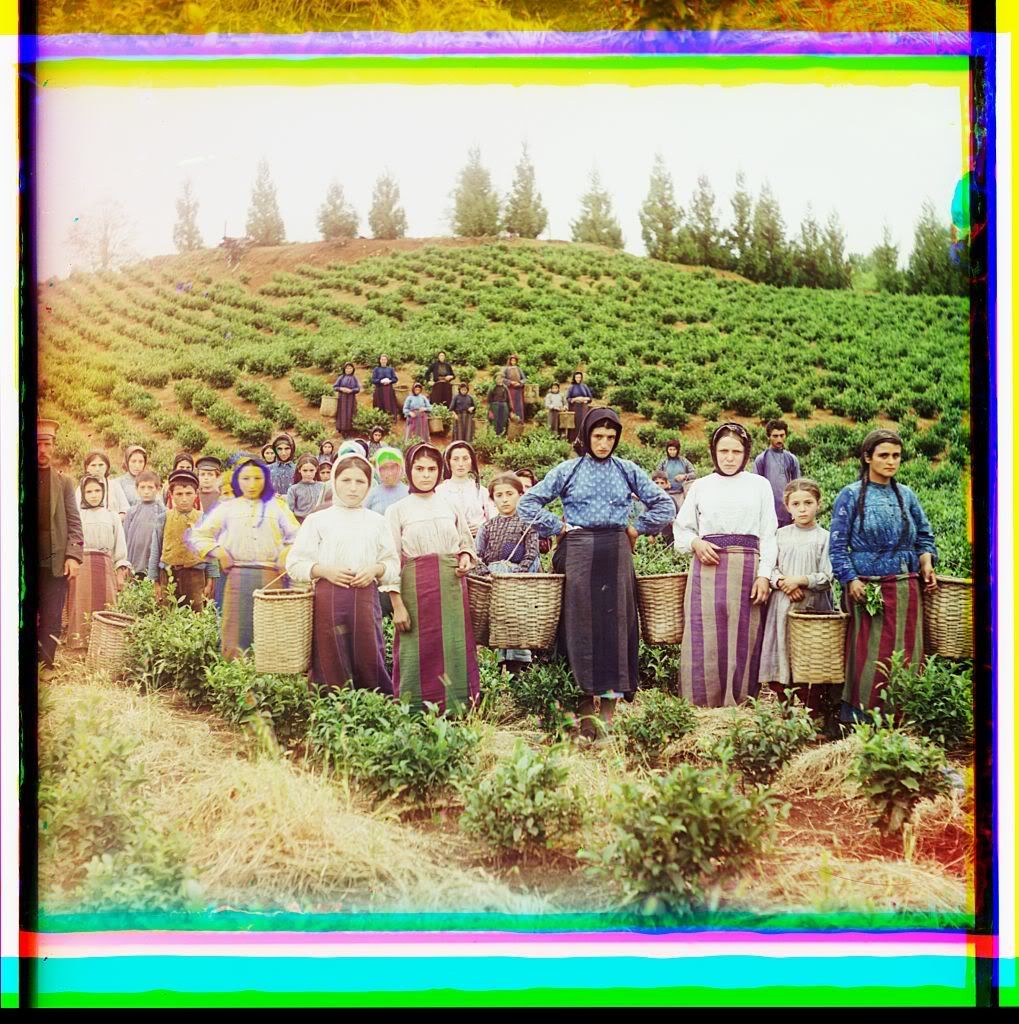 And, of course, no discussion on Italian food is complete without reference to pasta, especially the name that’s in almost every South African kitchen cupboard today: Fatti’s & Moni’s. Luigi Fatti built a pasta factory in Johannesburg in 1912, after working as a grocer for several years. The Moni brothers (Giuseppe, Giacomo, Pietro and Roberto) were also grocers in Johannesburg and opened their own pasta factory which they then transferred to Cape Town. The two companies merged in 1920 to form the United Macaroni Factories Limited – not as catchy as the brand name we know today! Initially selling just egg pastas and ice cream cones, the company soon became a roaring success, diversifying their products and processing several thousand tons of grain every month.
 The discovery of diamonds and gold brought many fascinating characters to the country. Among them was Guglielmo Martinaglia, a minerologist who worked in Kimberley during the diamond rush, finding underground waterways and springs. He was invited to probe for gold in Roodepoort, Pretoria, and hit paydirt in only three weeks. In 1896 he obtained a lease for land at Zwartkrans. He laid explosives, attached them to the detonator, took cover and innocently pushed the plunger, hoping to find limestone. Instead, the explosion left an enormous black hole in the side of the mountain. Fearing that he’d demolished half the hillside, he went to explore. It turns out that Martinaglia had discovered, inadvertently, the astounding Sterkfontein Caves – now one of the major fossil sites in the world and home to the skull of ‘Mrs Ples’, an advanced humanlike ape creature, discovered in 1947 by Dr Robert Broom.


