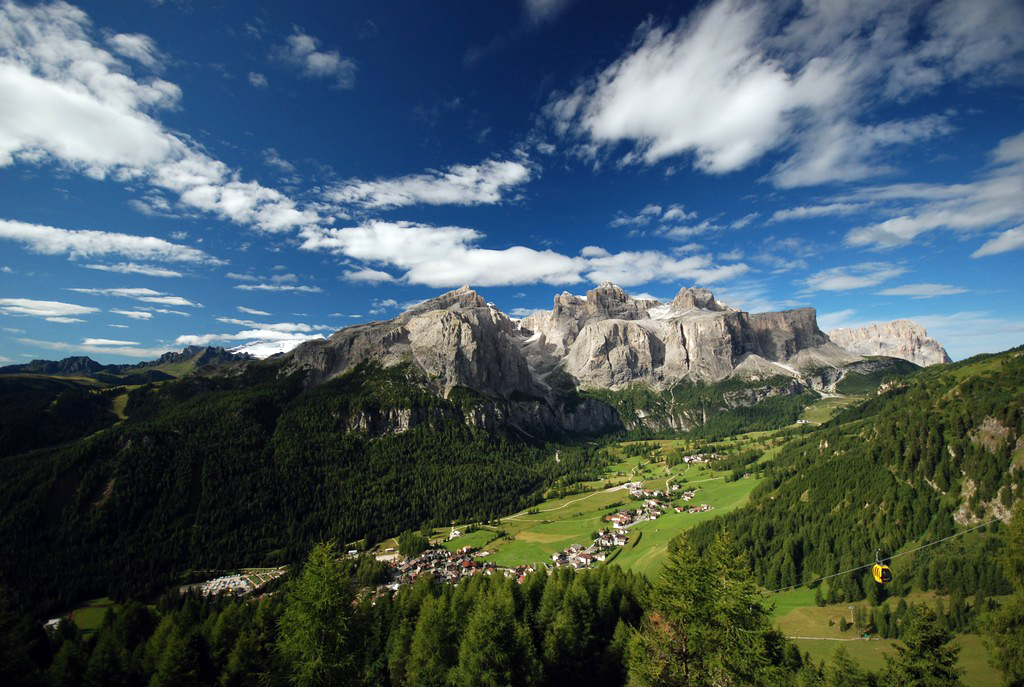
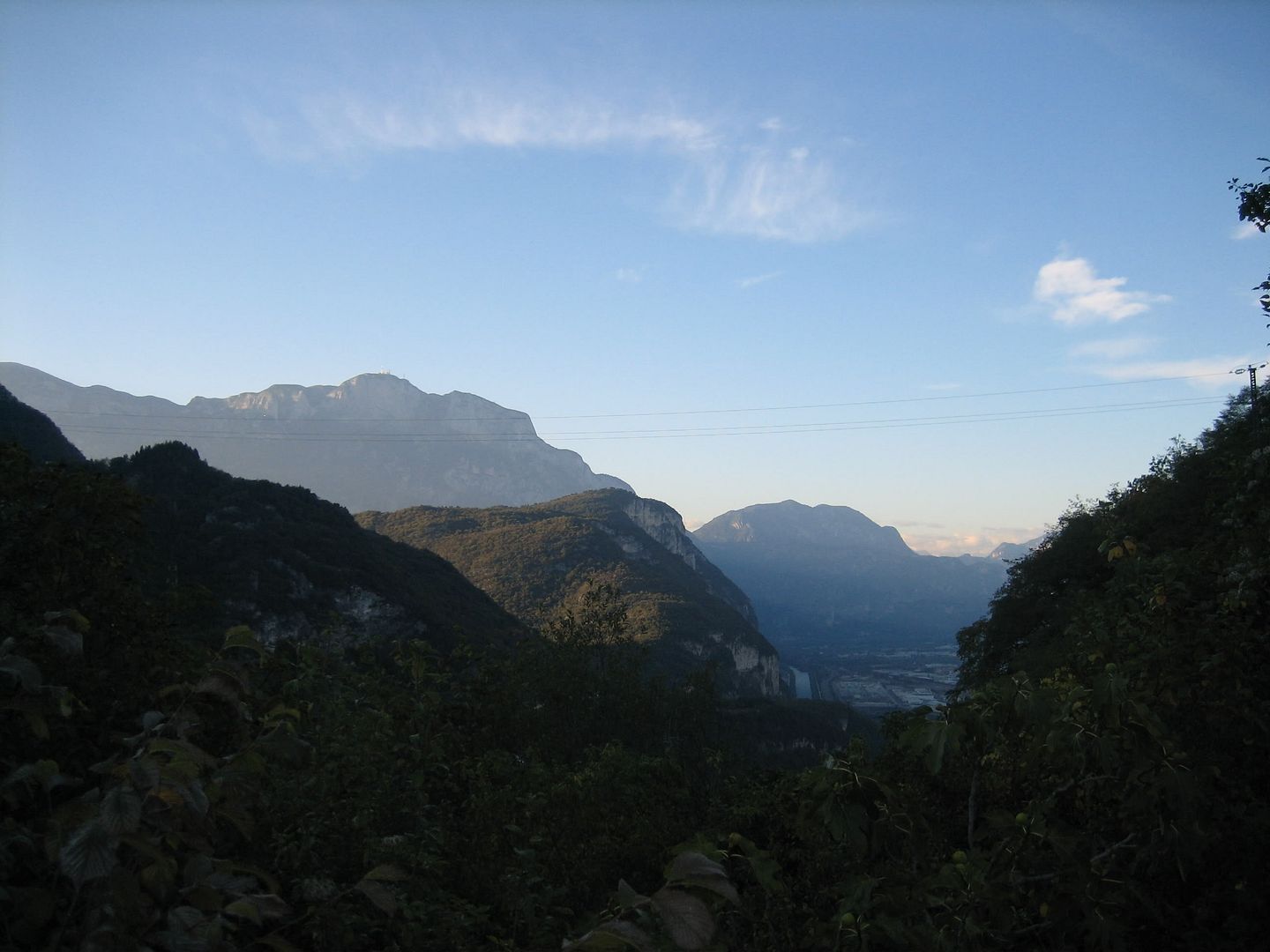
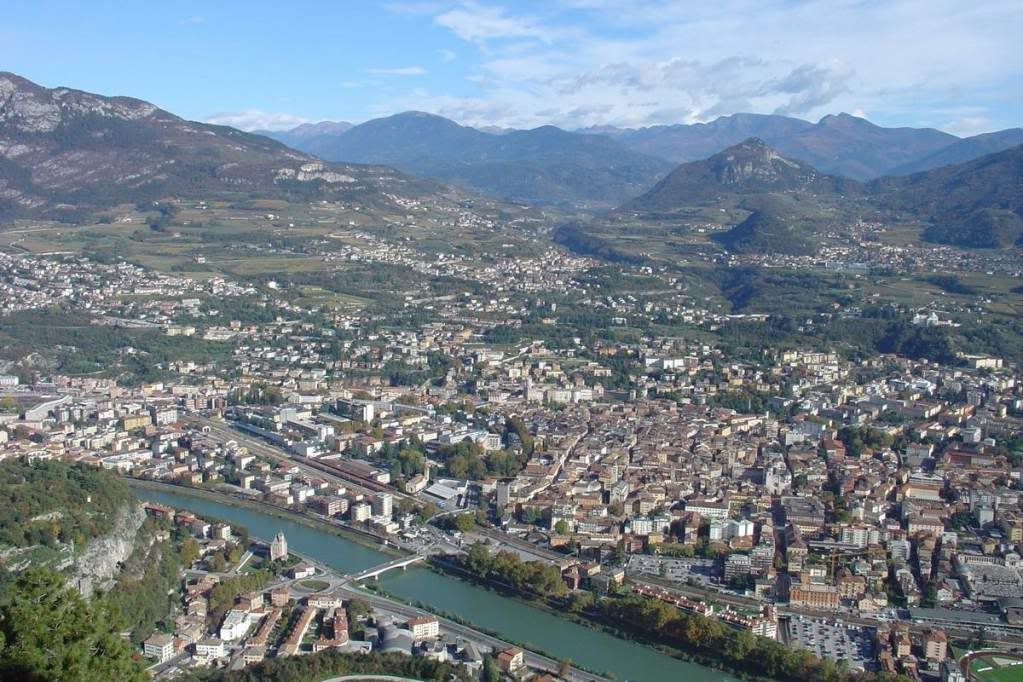
This lake seen here at the base of Seekofel Mountain in the Südtirol. I couldn't find the exact Spotlight image. Seekofel Mountain is part of the Dolomites.
The Pragser Wildsee, or Lake Prags, Lake Braies (Italian: Lago di Braies; German: Pragser Wildsee) is a lake in the Prags Dolomites in South Tyrol, Italy. It belongs to the municipality of Prags which is located in the Prags Valley.
In recent years, the lake earn the nickname of "Pearl of the Alps" due to its increasing popularity among tourists.
Seekofel Mountain, Sudtirol
*************************
Note: I'm backdating this from August 28, 2022. I'm currently living in Sonoma, California. I'll explain in detail later.
A line of abandoned, alien-like fortresses dot the mountains of North Italy
[AtlasObscura.com] Similar to the Maginot line of France, the Alpine Wall was built as a defense for Italy in preparation for World War II. There was concern that the natural defense of North Italy’s mountainous terrain was not enough as tensions rose with its neighbors along the top of the “boot”—France, Switzerland, Austria and the former Yugoslavia.
The mountains were enhanced with lookout posts and fortifications all along the passes, stretching over 1,100 miles. The Alpine Wall fortifications varied between three designs: large mountainside forts, rallying points and bunkers, and point-defense fortifications. Many of these can still be seen today.
I saw this subject featured a few days ago on a 2018 episode of 'Mysteries of the Abandoned' (Science Channel) entitled 'Doomsday at Dragon's Teeth'. This elaborate defense system was constructed in 1931, and reflects how Mussolini did not trust Hitler at that point.
In the Val Venosta valley, between the borders of Italy and Austria, a weir system was built during WWII, the heart of which was a tank barrier. We will take a closer look at this barrier, as well as the various bunkers which lie 550 meters above Resia. On the way there we enjoy a pleasant, circular hike and inspect the source of the river Adige, the biggest river in South Tyrol.
. Windows 10 is currently featuring the spring image of "green field and blue sky." There aren't as many sights on earth as colorful as this simple and common image. It symbolizes life itself.
. The distinct Ladin people within the Dolomite region have been covered here. They're a rural mostly farming people with a very particular culture and language, which essentially could remind Americans of the Amish. They seem to have some affinities to the old Cimbrian settlements, but speak a Rhaeto-Romance language related to Swiss Romansh and Friulian. They have a time-honored culture and way of life which is unique in that it inherently promotes environmental sustainability and respect for the earth. Like the Amish, they are known for being great craftspeople. The famous singer-songwriter Giorgio Moroder and world champion and Olympic medalist ice skater Carolina Kostner are probably thought of by many as being Tyrolian, but they're actually Ladin. Ladinia overlaps the South Tyrol a bit, but they don't speak German. According to the FTOW (Flags Of The World) webpage about the Ladin flag, "The flag symbolizes the landscape: blue for the sky, white for the mountains and green for the meadows." Apparently the flag isn't official, but it still recognized by the Italian government. Ladin people Ladin language Ladinia
. Above, the Sella mountains and the Ladin village of Calfosch (Corvara). "Blue, white, and green." .
As we're now well into the 2018 Winter Olympics in PyeongChang, it should be noted that the northeast Alps is overwhelmingly the source of Winter Olympic athletes for Italy. Close to half of the Italian team are natives of the South Tyrol alone; with the vast majority of the rest being natives of Lombardy, Trentino, and Tri-Veneto Alps. Südtiroler Dominik Windisch has already won a bronze in the Men's 10km Sprint Biathlon. Even China only has one silver so far, as it's still early. The Italy at the 2018 Winter Olympics Wikipedia page gives a rundown on all of the events and athletes of the Italian team. Speed skater Arianna Fontana and Alpine skiiers Sofia Goggia and Nadia Fanchini are a few that I'm watching. In last months' World Cup in Austria, Italy took all three medals in the Woman's Alpine Downhill (image below); Sofia Goggia, Federica Brignone, and Nadia Fanchini ('Goggia leads Italian sweep at World Cup downhill'). NBCOlympics.com
. The U.S. equivalent to the northeast Italian Alps is Colorado. In fact, many winter athletes from around the world train in the mountainous state. 17 year old snowboarder and Colorado native Red Gerard was the first American to win a gold medal for the slopestyle snowboard event. Michigan native Ryan Pivirotto, with roots in the Veneto Alps apparently, is an American short track speed skater. .
Kathy McCabe of DreamofItaly.com talks to Karen Pizzolini about the Ladini or Ladins of the Dolomites, an ethnic minority who have their own culture and language and have lived in these valleys for thousands of years. Recorded on September 13, 2009 using a Flip Video camcorder.
The more I learn about the Trentino, the more fascinated I become with it. It's so ruggedly beautiful, and almost mysterious in the way it occupies the mostly Dolomite Alpine mountain valleys north of Lombardy and the Tri-Veneto regions. Sometimes, to me, it has an almost Transylvania-like quality as far as with some of it's timeless dark green mountains, often of wood and heavy brush, and it's majestic centuries old castles.
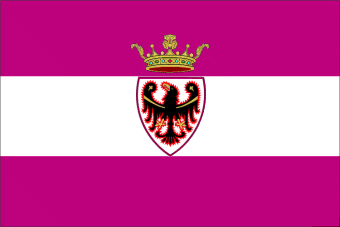
This autonomous region is officially called the Trentino-Alto Adige. It's made up of two provinces: The Trentino or Trento, which is basically Lombardian ethnically (Tridentum), and the Alto Adige (South Tyrol) or Bolzano, which is ethnically German. The South or Sud Tyrol is just that, the southern part of the historically Alpine German Tyrol, but which ended up under the control of the Republic of Italy after World War II. The Trento province is represented by a black eagle, and the South Tyrol is represented by a red eagle, as far as in their flags and arms, and which are combined in the regional flag. The above flag is of the Trento province. Trento is also the name of the capitol city of the province. The black eagle of the city of Trento arms is a mirror of the eagle on the flag of the Kingdom of the Lombards. As if this isn't all confusing enough, there is also the Ladin people, who speak an altogether separate language from Italian and German, and even have a distinct flag. We can cover them at another time.
There is an excellent website called Trentino: Our Ancestral Culture and Heritage, which covers a lot of what we can't here. I will not reproduce anything from this site, but will just place the link here. It covers much about Trentini in America as well. I realize that I can't even begin to cover this subject the way it should be, but I just wanted to get a start. We can get back to this, and other subjects, again.
"The History of Trentino begins in the mid-Stone Age the valleys of what is now Trentino were already inhabited by man, the main settlements being in the valley of the Adige River, thanks for its milder climate. Scholars have supposed the first settlers (probably hunters) came from the Padana Plain and the Venetian Prealps, after the first glaciers started to melt at the end of the Pleistocene glaciations.
"Findings (in particular, sepultures) from the Mesolithic, have been discovered in several part of the province. These include the comuni of Zambana and Mezzocorona. A large area of a hunting-based settlement from the Neolithic has been found out near the lakes of Colbricòn, not far from the Rolle Pass.
"Ancient history
"Around 500 BCE, the Raetians appeared in the Trentine territory, coming from the Central and Eastern Alps area. They settled in several valleys and improved and introduced new activities along with the traditional hunting: agriculture (wine, vegetables, cereals), breeding (ovines, goats, bovines and horses). From the Roman Age, a portion of the territory of current Trentino-Alto Adige/Südtirol made up the province of Raetia.
"This region was conquered by the Romans only in the 1st century BC. The definitive defeat of the Rhaetians, near Bolzano, occurred during the military campaigns in the Alps of Drusus and Tiberius (16-17 BC). Trento became a Roman municipium between in the 40s BC. During the reign of Emperor Claudius (41-54 AD) the Trentino was integrated in the Imperial roadnet with the construction of the Via Claudia Augusta Padana (from Ostiglia to the Resia Pass) and the Via Augusta Altinate (from Treviso to Trento, passing through the Valsugana).
"Middle Ages
"During the Late Antiquity, in the 5th century AD, the Trentino was invaded several times, from North and East: first by the Ostrogoths, then by the Bavarians and Byzantines and finally by the Lombards. With the latter's domination an idea of territorial identity of the province began to shape (Tridentinum territorium). In the same century the region became largely Christianized. In 774 the Trentino was conquered by the Franks and became part of the Kingdom of Italy, a sometimes vague entity included in what was to become the Holy Roman Empire.
"The first territorial unity of Trentino dates back to 1027, when emperor Conrad II officially gave the rule of the area to the Bishopric of Trent. This entity survived for some eight centuries and granted Trentino a certain autonomy, first from the Holy Roman Empire and then from the Austrian Empire.
"Modern age
"In the early 19th century the Trentine people participated actively to the resistance against the French invasion led by the Tyrolese Andreas Hofer. After the end of the Napoleonic era (1815), the Bishopric of Trent was dissolved and Trentino became part of the County of Tyrol, in which the majority of the population was German speaking. Though relatively well administered, and despite the presence of Trentine representants in the Diets of Innsbruck and Vienna, in the second half of the 19th century a movement (part of the general movement called Italian irredentism) arose with the aim of annexing the region to the Kingdom of Italy: this, however, was largely put forward by intellectuals like Cesare Battisti and Fabio Filzi, and met little support by the predominantly rural population.
"The Trentine territory was one of the main fronts of the conflict (1915-1918) between Italy and Austria-Hungary, and suffered heavy destruction. After the call to arms summoned by Emperor Francis Joseph I of Austria on July 31, 1914, more than 60,000 Trentine fought for Austria, first against Russia and Serbia and, starting from 1915, also against Italians. More than 10,000 of them died, and many others were wounded or made prisoners. Further, hundreds of thousands of civilians were forced to abandon their native area when they were too near to the front lines. Many of them, captured by the Italian Army, were later transferred to Southern Italy as colonists.
"Annexation to Italy
"With the Treaty of Versailles (1919), the Trentino was annexed to Italy, together with the new Province of Bolzano-Bozen, firstly as part of Venezia Tridentina. The centralization process brought on by the Fascists reduced the autonomy that cities like Trento or Rovereto had enjoyed under the precedent Liberal governments, while many of the smaller comuni were united, reducing their number from the 366 under the Habsburg to 127.
"After World War II, the treaty signed by the Italian and Austrian Ministers of Foreign affairs, the Trentine Alcide De Gasperi and Karl Gruber, the autonomous Region of Trentino-Alto Adige/Südtirol was constituted (see Gruber-De Gasperi Agreement).
"In the following decades the main party in Trentino was Christian Democracy, while autonomistic instances found their voice in the Partito Popolare Trentino Tirolese (Trentine-Tyrolese Popular Party). In 1957 strife between Trentino and the largely German-speaking Bolzano-Bozen led to the diffusion of the slogan Los von Trient ("Away from Trento"). In 1972, finally, the regional authorities was largely handed over to the two provinces.
"In the 1960s and 1970s Trentino witnessed strong economic development, spurred mainly by the tourism sector and by the new autonomy. It is currently one of the richest and best developed Italian provinces.