Eusebio Kino (Wikipedia)
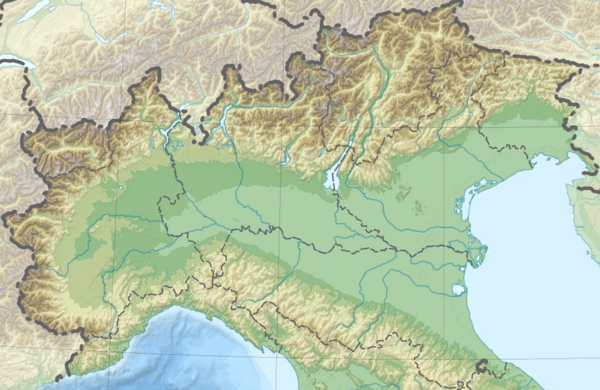
Eusebio Francisco Kino, S.J., (August 1645 – 15 March 1711) was a Jesuit priest from a town which is now a part of northern Italy. For the last 24 years of his life he worked in the region then known as the
Pimería Alta, modern day
Sonora in Mexico and southern Arizona. He explored the region worked with the indigenous Native American population, including primarily the Sobaipuri and other Upper Piman groups. He proved that Baja California is not an island by leading an overland expedition there. By the time of his death he had established 24 missions and visitas (country chapels or visiting stations).
Born:
Eusebius Franz Kühn (or Chini)
August 1645
Segno, Bishopric of Trent,
Holy Roman Empire
Died:
15 March 1711
Mission Santa Maria Magdalena, Pimería Alta, New Spain,
Spanish Empire
Nationality:
Holy Roman Empire
Occupation:
Priest, missionary, explorer
Biography
Early life
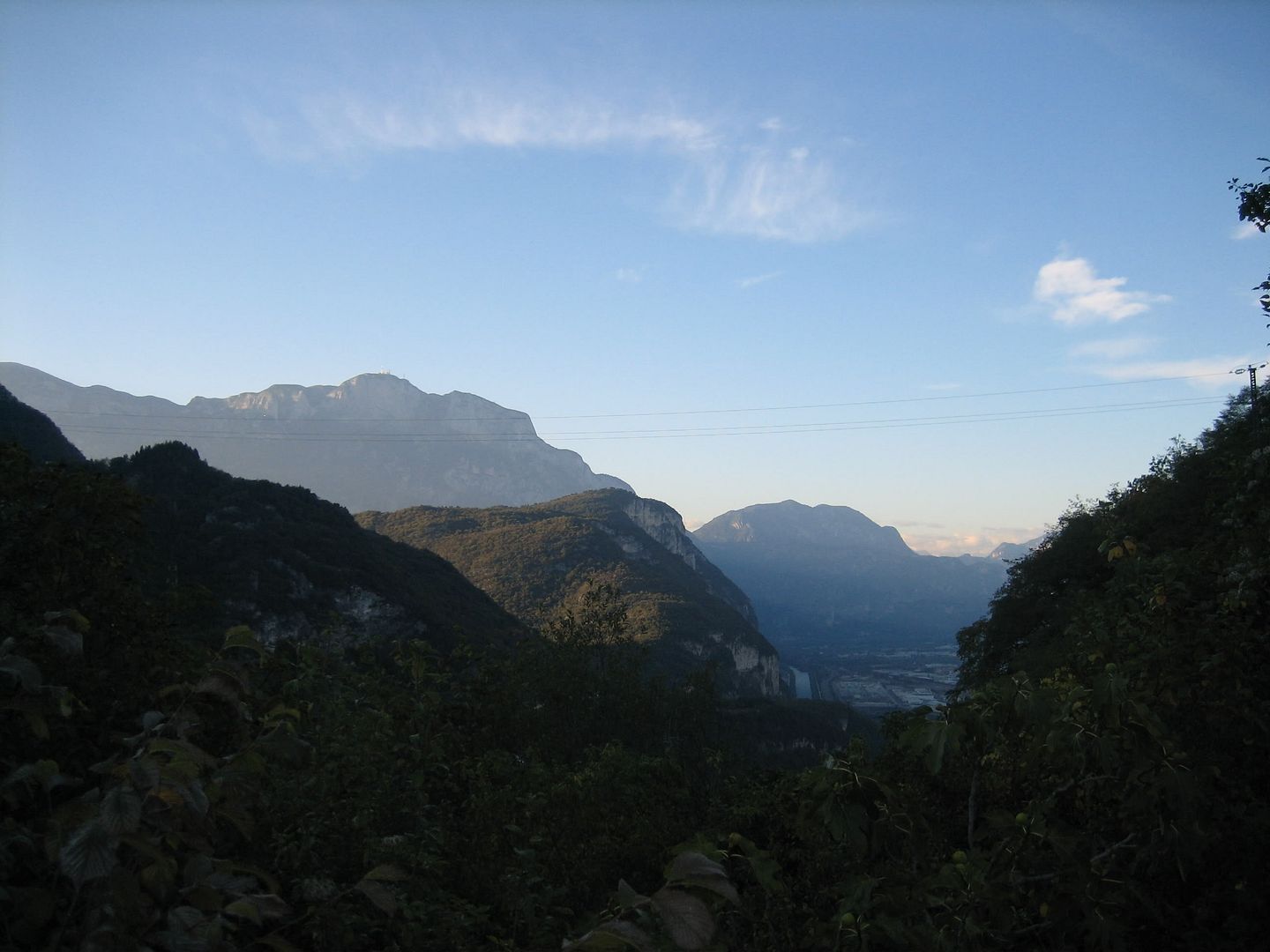
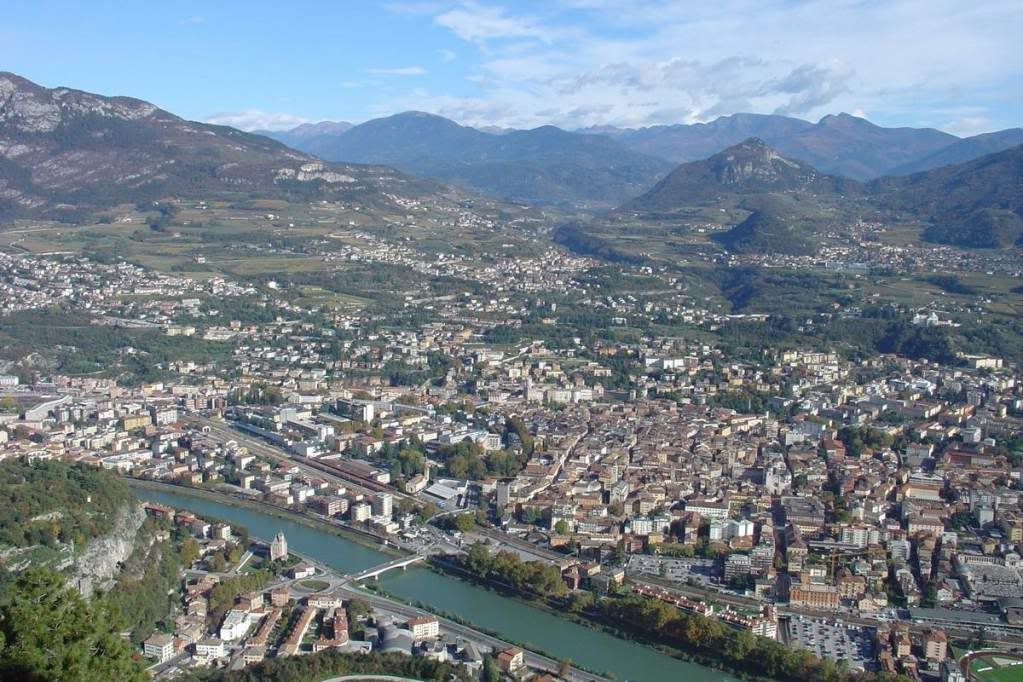
Kino was born Eusebius Franz Kühn (the name Kino was the version for use in Spanish-speaking domains) in the village of Segno, (now part of the
town of Taio), then in the sovereign
Prince-bishopric of Trent, a part of the
Holy Roman Empire. Other sources cite his name as Eusebio Francesco Chini.
His parents were Franz Kühn (or Francesco Chini) and Margherita Luchi. The exact date of his birth is unknown but he was baptized on 10 August 1645 in the parish church, located in Taio. Kino was educated in Innsbruck, Austria, and after recuperating from a serious illness, he joined the
Society of Jesus on 20 November 1665. From 1664-69, he received religious training as a member of the Society at Freiburg, Ingolstadt, and Landsberg, Bavaria. After completing a final stage of training in the Society, during which he taught mathematics in Ingolstadt, he received
Holy Orders as a priest on 12 June 1677.
Although Kino wanted to go to the Orient, he was sent to New Spain. Due to travel delays across Europe he missed the ship on which he was to travel and had to wait a year for another ship. While waiting in Cadiz, Spain, he wrote on his observations of a comet, Exposción Astronómica de el Cometa.[1] This publication was later the subject of a sonnet by Sor
Juana Inés de la Cruz.
Life in New Spain
Mission in Baja
Kino's first assignment was to lead the Atondo expedition to the Baja California peninsula of the Las Californias Province of New Spain. He established the Misión San Bruno in 1683. After a prolonged drought there in 1685, Kino and the Jesuit missionaries were forced to abandon the mission and return to the viceregal capital of Mexico City.
 |
| Pimeria Alta |
Missions in the Pimeria Alta
Father Kino began his career in the Pimería Alta on the morning of 14 March 1687, 24 years and one day before his death on 15 March 1711. This was the morning he left Cucurpe, a town once considered the "Rim of Christendom."
Once Father Kino arrived in the Pimería Alta, at the request of the natives, he quickly established the first mission in a river valley in the mountains of Sonora. Subsequently Kino traveled across northern Mexico, and to present day California and Arizona. He followed ancient trading routes established millennia prior by the natives. These trails were later expanded into roads. His many expeditions on horseback covered over 50,000 square miles (130,000 km2), during which he mapped an area 200 miles (320 km) long and 250 miles (400 km) wide. Kino was important in the economic growth of area, working with the already agricultural indigenous native peoples and introducing them to European seed, fruits, herbs and grains. He also taught them to raise cattle, sheep and goats. Kino's initial mission herd of twenty cattle imported to Pimería Alta grew during his period to 70,000. Historian Herbert Bolton referred to Kino as Arizona's first rancher.
Interaction with the Natives
In his travels in the Pimería Alta, Father Kino interacted with 16 different tribes. Some of these had land that bordered on the Pimería Alta, but there are many cases where tribal representatives crossed into the Piman lands to meet Kino. In other cases, Father Kino traveled into their lands to meet with them. The tribes Kino met with are the Cocopa, Eudeve, Hia C-ed O'odham (called Yumans by Kino), Kamia, Kavelchadon, Kiliwa, Maricopa, Mountain Pima, Opata, Quechan, Gila River Pima, Seri, Tohono O'odham, Sobaipuri, Western Apache, Yavapai, and the Yaqui (Yoeme).
Interests
Kino opposed the slavery and compulsory hard labor in the silver mines that the Spaniards forced on the native people. This also caused great controversy among his co-missionaries, many of whom acted according to the laws imposed by Spain on their territory. Kino was also a writer, authoring books on religion, astronomy and cartographys. He built missions extending from the present day states of Mexican Sonora, northeast for 150 miles (240 km), into present-day Arizona, where the San Xavier del Bac mission, near Tucson, a popular National Historic Landmark, is still a functioning Franciscan parish church. Kino constructed nineteen rancherías (villages), which supplied cattle to new settlements.
Kino practiced other crafts and was reportedly an expert astronomer, mathematician and cartographer, who drew the first accurate maps of Pimería Alta, the Gulf of California and Baja California. Father Kino enjoyed making model ships out of wood. His knowledge of maps and ships led him to believe that Mexican Indians could easily access California by sea, a view taken with skepticism by missionaries in Mexico City. When Kino proposed and began making a boat that would be pushed across the Sonoran Desert and to the Mexican west coast, a controversy arose, as many of his co-missionaries began to question Kino's faculties. Kino had an unusual amount of wealth for his vocation, which he used his primarily to fund his missionary activities. His contemporaries reported on his wealth with suspicion.
Death
Kino remained among his missions until his death in 1711. He died from fever on 15 March 1711, aged 65, in what is present-day Magdalena de Kino, Sonora, Mexico. His skeletal remains can be viewed there.
Legacy
Kino has been honored both in Mexico and the United States, with various towns, streets, schools, monuments, and geographic features named after him. In 1965, a statue of Kino was donated to the United States Capitol's National Statuary Hall collection, one of two statues representing Arizona. Another statue of him stands above Kino Parkway, a major thoroughfare in Tucson. Another equestrian statue featuring Kino stands in Wesley Bolin Memorial Plaza across from the Arizona State Capitol in Phoenix. A time capsule is encapsuled in the base. Another equestrian statue also stands next to the Cathedral in the city of Hermosillo, Sonora, México. The towns of Bahía Kino and Magdalena de Kino in Sonora are named in his honor. A park with statue of Kino resides in the city of Nogales, AZ.
 Missions and visitas founded
After the first voyage of Christopher Columbus, the Catholic Church awarded to the Spanish Crown the lands of "New Spain." This grant was with the directive that the Crown would underwrite the efforts to convert the pagan inhabitants to Catholicism. The lands included the Caribbean, Mexico, and portions of what is now the Southwestern United States.
In its new lands, the Spanish Crown employed three major agencies to extend its borders and consolidate its colonial presence: the presidio (royal fort), pueblo (town), and the misión (mission). In addition, there were asistencias (sub-missions or contributing chapels) which were small-scale missions that regularly conducted Divine service on days of obligation, but lacked a resident priest. Visitas (visiting chapels or country chapels) also lacked a resident priest, and were often attended only sporadically. These different types of settlements were established such that each of the installations was no more than a long day's ride by horse or boat (or three days on foot) from one another.
Each type of frontier station needed to be self-supporting, because supply lines (roads) were non-existent. There was no way to maintain a village from outside sources. To sustain a mission settlement, the Fathers needed either Spanish colonists or converted natives to cultivate crops and tend livestock in the volume needed to support a fair-sized Church establishment. Scarcity of imported materials and lack of skilled laborers compelled the Fathers to employ simple building materials and methods.
Although the Spanish hierarchy considered the missions temporary ventures, individual settlement development was not based simply on a priestly whim. The founding of a mission followed long-standing rules and procedures. The paperwork involved required months, sometimes years of correspondence, and demanded the attention of virtually every level of the Spanish bureaucracy.
Once empowered to erect a mission in a given area, the men assigned to it chose a specific site that featured a good water supply, plenty of wood for fires and building material, and ample fields for grazing herds and raising crops. The Fathers blessed the site, and with the aid of their military escort fashioned temporary shelters out of tree limbs roofed with thatch, reeds, or in Pimería Alta saguaro ribs or ocotillo branches topped with brush and mud. These simple huts would ultimately give way to the stone and adobe buildings that exist today.
The majority of structures, indeed whole villages, were oriented on a roughly east-west axis to take the best advantage of the sun's position for interior illumination; the exact alignment depended on the geographic features of the particular site. Directives from Spain clearly stated that villages were to be sited on the west side of any valley so that the sun would shine in the homes first thing in the morning, discouraging slothful behavior on the part of the inhabitants.
When founding a mission compound, first the spot for the church itself was selected, its position marked and then the remainder of the mission complex would be laid out. Workshops, kitchens, living quarters, storerooms, and other ancillary chambers were usually grouped in a quadrangle, inside which religious celebrations and other festive events could take place.
List of missions
This listing of the sites founded by Kino is not complete. Also, since names have changed over time, there appears to be some duplication. They are:
* Mission San Bruno: founded 1683 (Kino led the Atondo expedition to the Baja California peninsula of the Las Californias Province of New Spain. In 1685, after a prolonged drought there, Kino and the Jesuit missionaries were forced to abandon the mission.
* Mission Nuestra Señora de los Dolores: founded on March 13, 1687. This was the first Pimaria Alta mission founded by Father Kino. By 1744, the mission was abandoned.
* Nuestra Señora de los Remedios was founded in 1687 and was abandoned by 1730. Nothing remains of this mission.
* San Ignacio de Cabórica was founded in 1687 and is located in San Ignacio, Sonora.
* Mission San Pedro y San Pablo del Tubutama was founded in 1687, in Tubutama, Sonora.
* Santa Teresa de Atil was founded in 1687, in the small town of Atil, Sonora.
* Santa Maria Magdalena was founded in 1687, located in Magdalena de Kino, Sonora. Kino's grave is located here.
* San José de Imuris was founded in 1687, in Imuris, Sonora.
* Nuestra Señora del Pilar y Santiago de Cocóspera was founded in 1689. It is located in Cocóspera, Sonora.
* San Antonio Paduano del Oquitoa was founded in 1689. It is located in Oquitoa, Sonora.
* San Diego del Pitiquito was founded in 1689. It is located in Pitiquito, Sonora.
* San Luis Bacoancos was founded in 1691, but was soon abandoned after Apache attacks.
* Mission San Cayetano del Tumacácori was founded in 1691 at a native Sobaipuri settlement. This was southern Arizona's first mission and Arizona's first Jesuit mission. Later a chapel was built. (San Cayetano de Calabasas was established in a different location much later, after Kino's time.) Sometime after the 1751 Pima Revolt the settlement and mission were moved to the opposite side of the river and became San José de Tumacácori.
* Mission San José de Tumacácori, the presently known location that is a National Historic Park. The farming land around the mission was sold at auction in 1834 and the mission was abandoned by 1840. It is now a National Monument in Tumacácori National Historical Park in Southern Arizona.
* La Misión de San Gabriel de Guevavi was founded in 1691. It became a cabecera or head mission in 1701 with the establishment of what Kino described affectionately as a "neat little house and church." Through the years its name changed many times so that now it is known by the generic name referencing many saints: Mission Los Santos Ángeles de Guevavi. The chapel was initially established in a native settlement, but then was destroyed by fire, probably during an indigenous uprising. The church rebuilt in new locations twice, the final and largest one being built in 1751. Its ruins are part of Tumacácori National Historical Park.
* San Lázaro was founded in 1691, but was soon abandoned after Apache attacks.
Missions and visitas founded
After the first voyage of Christopher Columbus, the Catholic Church awarded to the Spanish Crown the lands of "New Spain." This grant was with the directive that the Crown would underwrite the efforts to convert the pagan inhabitants to Catholicism. The lands included the Caribbean, Mexico, and portions of what is now the Southwestern United States.
In its new lands, the Spanish Crown employed three major agencies to extend its borders and consolidate its colonial presence: the presidio (royal fort), pueblo (town), and the misión (mission). In addition, there were asistencias (sub-missions or contributing chapels) which were small-scale missions that regularly conducted Divine service on days of obligation, but lacked a resident priest. Visitas (visiting chapels or country chapels) also lacked a resident priest, and were often attended only sporadically. These different types of settlements were established such that each of the installations was no more than a long day's ride by horse or boat (or three days on foot) from one another.
Each type of frontier station needed to be self-supporting, because supply lines (roads) were non-existent. There was no way to maintain a village from outside sources. To sustain a mission settlement, the Fathers needed either Spanish colonists or converted natives to cultivate crops and tend livestock in the volume needed to support a fair-sized Church establishment. Scarcity of imported materials and lack of skilled laborers compelled the Fathers to employ simple building materials and methods.
Although the Spanish hierarchy considered the missions temporary ventures, individual settlement development was not based simply on a priestly whim. The founding of a mission followed long-standing rules and procedures. The paperwork involved required months, sometimes years of correspondence, and demanded the attention of virtually every level of the Spanish bureaucracy.
Once empowered to erect a mission in a given area, the men assigned to it chose a specific site that featured a good water supply, plenty of wood for fires and building material, and ample fields for grazing herds and raising crops. The Fathers blessed the site, and with the aid of their military escort fashioned temporary shelters out of tree limbs roofed with thatch, reeds, or in Pimería Alta saguaro ribs or ocotillo branches topped with brush and mud. These simple huts would ultimately give way to the stone and adobe buildings that exist today.
The majority of structures, indeed whole villages, were oriented on a roughly east-west axis to take the best advantage of the sun's position for interior illumination; the exact alignment depended on the geographic features of the particular site. Directives from Spain clearly stated that villages were to be sited on the west side of any valley so that the sun would shine in the homes first thing in the morning, discouraging slothful behavior on the part of the inhabitants.
When founding a mission compound, first the spot for the church itself was selected, its position marked and then the remainder of the mission complex would be laid out. Workshops, kitchens, living quarters, storerooms, and other ancillary chambers were usually grouped in a quadrangle, inside which religious celebrations and other festive events could take place.
List of missions
This listing of the sites founded by Kino is not complete. Also, since names have changed over time, there appears to be some duplication. They are:
* Mission San Bruno: founded 1683 (Kino led the Atondo expedition to the Baja California peninsula of the Las Californias Province of New Spain. In 1685, after a prolonged drought there, Kino and the Jesuit missionaries were forced to abandon the mission.
* Mission Nuestra Señora de los Dolores: founded on March 13, 1687. This was the first Pimaria Alta mission founded by Father Kino. By 1744, the mission was abandoned.
* Nuestra Señora de los Remedios was founded in 1687 and was abandoned by 1730. Nothing remains of this mission.
* San Ignacio de Cabórica was founded in 1687 and is located in San Ignacio, Sonora.
* Mission San Pedro y San Pablo del Tubutama was founded in 1687, in Tubutama, Sonora.
* Santa Teresa de Atil was founded in 1687, in the small town of Atil, Sonora.
* Santa Maria Magdalena was founded in 1687, located in Magdalena de Kino, Sonora. Kino's grave is located here.
* San José de Imuris was founded in 1687, in Imuris, Sonora.
* Nuestra Señora del Pilar y Santiago de Cocóspera was founded in 1689. It is located in Cocóspera, Sonora.
* San Antonio Paduano del Oquitoa was founded in 1689. It is located in Oquitoa, Sonora.
* San Diego del Pitiquito was founded in 1689. It is located in Pitiquito, Sonora.
* San Luis Bacoancos was founded in 1691, but was soon abandoned after Apache attacks.
* Mission San Cayetano del Tumacácori was founded in 1691 at a native Sobaipuri settlement. This was southern Arizona's first mission and Arizona's first Jesuit mission. Later a chapel was built. (San Cayetano de Calabasas was established in a different location much later, after Kino's time.) Sometime after the 1751 Pima Revolt the settlement and mission were moved to the opposite side of the river and became San José de Tumacácori.
* Mission San José de Tumacácori, the presently known location that is a National Historic Park. The farming land around the mission was sold at auction in 1834 and the mission was abandoned by 1840. It is now a National Monument in Tumacácori National Historical Park in Southern Arizona.
* La Misión de San Gabriel de Guevavi was founded in 1691. It became a cabecera or head mission in 1701 with the establishment of what Kino described affectionately as a "neat little house and church." Through the years its name changed many times so that now it is known by the generic name referencing many saints: Mission Los Santos Ángeles de Guevavi. The chapel was initially established in a native settlement, but then was destroyed by fire, probably during an indigenous uprising. The church rebuilt in new locations twice, the final and largest one being built in 1751. Its ruins are part of Tumacácori National Historical Park.
* San Lázaro was founded in 1691, but was soon abandoned after Apache attacks.
 |
| Mission San Xavier del Bac |
* San Xavier del Bac (O'odham [Sobaipuri-O'odham]: Wa:k), 16 m south of Tucson, Arizona, founded as a missionary location in 1692. The present building, located 1 mi from the original Kino-period location, dates from 1785. The interior is richly decorated with ornaments showing a mixture of New Spain and Native American artistic motifs. It is still used by Tohono O'odham Nation members (Wa:k community members especially) and Yaqui tribal members.
* Visitas San Cosme y Damián de Tucson: founded 1692
* Visitas Los Santos Reyes de Sonoita/San Ignacio de Sonoitac: a rancheria near Tumacacori, founded 1692.
* La Purísima Concepción de Nuestra Señora de Caborca: founded 1693
* Santa María Suamca: founded 1693
* San Valentín de Busanic/Bisanig: founded 1693
* Nuestra Señora de Loreto y San Marcelo de Sonoyta: founded 1693
* Nuestra Señora de la Ascención de Opodepe: founded 1704
Movie
* Father Kino, Padre on Horseback (or Mission to Glory: A True Story) starring Richard Egan as Kino, was made in 1977. The movie is available in DVD format.
References
* Bolton, Herbert Eugene, Kino's Historical Memoir of Pimeria Alta, vol. 1 (Cleveland, Ohio: Arthur H. Clark, 1919.
* Bolton, H., Rim of Christiandom, New York: The MacMilliam Co, 1936.
* Bolton, H., Padre on Horseback, Loyola Press, 1963.
* Polzer, Charles W., Kino Guide II: a Life of Eusebio Francisco Kino, S.J., Arizona's First Pioneer, and a Guide to His Missions and Monuments, Southwest Mission Research Center, 1982.
* Polzer, C., Kino: His Missions, His Monuments, Jesuit Fathers of Southern Arizona, 1998.
* Polzer, C. & Sheridan, Thomas H., Presidio and Militia on the Northern Frontier of New Spain: A Documentary History, Volume Two, Part One: The Californias and Sinaloa-Sonora, 1700–1765, University of Arizona Press, 1997.
* Seymour, Deni J., 1989 The Dynamics of Sobaipuri Settlement in the Eastern Pimeria Alta. Journal of the Southwest 31(2): 205-22.
* Seymour, D., 1997 Finding History in the Archaeological Record: The Upper Piman Settlement of Guevavi. Kiva 62(3): 245-60.
* Seymour, D., 2003 Sobaipuri-Pima Occupation in the Upper San Pedro Valley: San Pablo de Quiburi. New Mexico Historical Review 78(2): 147-66.
* Seymour, D., 2007 Delicate Diplomacy on a Restless Frontier: Seventeenth-Century Sobaipuri Social And Economic Relations in Northwestern New Spain, Part I. New Mexico Historical Review, Volume 82(4): 469-99.
* Seymour, D. 2007 A Syndetic Approach To Identification Of The Historic Mission Site Of San Cayetano Del Tumacácori. International Journal of Historical Archaeology, Vol. 11(3): 269-96.
* Seymour, D., 2008a Delicate Diplomacy on a Restless Frontier: Seventeenth-Century Sobaipuri Social And Economic Relations in Northwestern New Spain, Part II. New Mexico Historical Review, Volume 83(2): 171–99.
* Seymour, D. 2009 Father Kino’s 'Neat Little House and Church' at Guevavi. Journal of the Southwest 51(2):285-316.
* Seymour, D., 2011 Where the Earth and Sky are Sewn Together: Sobaípuri-O’odham Contexts of Contact and Colonialism. University of Utah Press, Salt Lake City.
* Soule, J.A., 2011. Father Kino's Herbs:Growing and Using Them Today. Tierra del Sol Institute Press, Tucson, AZ.
* Sor Juana Ines de la Cruz, "Soneto. Aplaude la ciencia Astronomica del Padre Eusebio Francisco Kino, de la Compania de Jesus, que escrivio del Cometa....", Inundacion castalida de la unica poetisa, musa decima...; Madrid, 1689. [1]Portions of this biography are courtesy National Statuary Hall.
* Spicer, E. H. Cycles of Conquest. University of Arizona Press, Tucson, Arizona 1962
.