
Showing posts with label Western Civilization. Show all posts
Showing posts with label Western Civilization. Show all posts
Wednesday, June 12, 2019
Legionarii - 'Rebirth'
Legionarii - Rebirth (Official video)
ILegionarii
Official Legionarii homepage: http://legionariieurope.wordpress.com
The world is falling deeper into it's own vortex of degeneration, true art and values are facing their final extinction. Let us join together under one goal - we must never let the true European beauty die! We only have one life, one home, and we only have one chance to make a change in this world and earn our right to stand side by side with our ancestors. Let the rebirth of our true spirit begin!
************
Legionarii - We Are The Wolves
.


Sunday, July 9, 2017
Is there a such thing as anti-Italian/Greek/Slavic/etc bigotry in America or the world today?
I would argue YES. It has become ever increasingly difficult to ignore the fact that "we" (Southeastern European Americans?) don't fit into the plans of the new ruling class coalition. They don't even want "us" as front people for them! The Obama administration actually had numerous people working for them with clear ties to the Muslim Brotherhood. I guess they may as well..... they sure don't want us around!! When they want more "diversity," we're not part of that plan either! The simple truth is that they, even in the larger coalition, do not like us as a general rule. They hate our culture.
I would take this one step further. Many on "the right" refer to the politically correct status quo university professors as "Marxist Professors." Actually, they're Globalist professors. Every few weeks, one of these mostly Anglo male professors makes some grand announcement of his disdain for "the white race," "Western Civilization," "Christianity," etc. Where did Western Civilization come from anyway? Greece and Rome! Also, aren't "we" dragged down with no place to go within this hostile environment? I mean... how are "we" supposed to respond? We're NOT expected to respond! We're nothing to them!
Almost down to the last one of these so-called Marxist professors, judges, politicians, etc..... they espouse their belief in Globalization; not a nickname, but a distinct politic. In other words, they believe in Global, borderless rootless, predatory, anti-labor, monopoly capitalism. I would argue that these people are not "Marxist" at all, but the rise of a new far right class. These days they're very angry because the Wall Street endless war machine didn't get their hand-picked candidate into the presidency. We're reminded of that fact every day as a mere six corporations--which make up over 90% of the mainstream media (25,000 different pieces of media), making up the Council on Foreign Relations--are packed solid with financial and manufacturing war profiteering interests!
"The only difference between the Republican and Democratic parties is the velocities with which their knees hit the floor when corporations knock on their door. That's the only difference." -- Ralph Nader
They want things to go their way every time, even to the point where they stick trained stooges into positions of power whom they will then project as individuals who cannot be criticized. The modern leadership of both parties are both part and parcel of this far right Globalist endeavor. Just because they hate Christianity or Western Civilization doesn't make them "on the left." This is a new brand of far right, monopoly capitalist, anti-labor politic. Trump has led a civil war of sorts; the paleo-right vs. the Globalist right.
These are people whom I call "the anti-labor left." They're the people who, for example, made the arrangements which traded away the labor movement for the gay movement. The corporate supremacists at the very top have eliminated entire societies for financial gain in the third world with one hand.. and use the other hand to slander people with the word "Racist." A gigantic horde of mixed race people are swarming all over Europe and committing mass MASS rape, including old ladies, pregnant women, little girls, and even literally infants... is that "racist" too?
Donald Trump is an undisciplined egomaniac who has at least pretended to be anti-Globalist. At least, for example, on his second day in office he met with American labor union representatives--who had never even seen the inside of the White House--and afterward he threw out the far right Corporatist-Globalist and extreme anti-labor Trans-Pacific Partnership (TPP). The Globalists hate him so much to the point of hysteria! For example, they're pretending to be up in arms over the "travel ban"; however these media monopolies had been proponents of what I call the "medicine ban" against Iraq, in which a million Iraqis (mostly children) died as a result. That murderous "ban" was okay.
Another example, Trump's infantile but secretly recorded comment about how he likes to grope women. Hillary Clinton was recorded laughing because her then client--accused of sodomy rape against a 12-year old girl--was exonerated after he passed a lie-detector test... despite the fact that she stated that she knew that he was guilty. ............ Bernie Sanders wrote an essay once about how he believes that every woman privately fantasizes about being raped by three men at the same time. It seems to me that the latter two comments were much worse offenses... don't you think?
These types of slanted examples are too many to list. Trump signs an executive order to have an oil pipeline through an Indian reservation... big news! Obama signs an execute order handing over millions acres of Navajo sacred lands over to the mining companies.... even worse, but not newsworthy. The Navajos are fighting, but CNN is not covering. I don't believe in any executive orders, eminent domain laws, or infringement on reservation territory; however, this is not honest news reporting. What about all of the war mongering by Obama and Hillary Clinton? What about their actions in Libya?
I suppose one thing that could be said of Gaddafi is that he had constructed one of the greatest socialist projects in history; a massive water infrastructure bringing free water to his people from deep underneath the Sahara desert. If Obama and Hillary are who they claim to be, why did they bomb and destroy that? It goes on and on; Trump was calling for gay marriage when Obama and Hillary were against it. They're further to the right than he is I think! They were nothing but shills for the international corporations and the Wall Street war machine.
Obama signed the National Defense Authorization Act (NDAA) in 2014, which clearly stipulates that the government/military has authorization to abduct any American citizen for any or no reason, detain them for any length of time without legal representation, and without informing anyone of their status. They're also authorized with the power to torture and/or murder them.. all outside of the judicial system... and without ever being compelled to inform anyone of this. Now really... what if Trump had signed NDAA?
Trump is just a deflection; a way of consummating the fact that the protestors are no longer anti-war or anti-Globalization. A good example of this is the actor Martin Sheen--an outspoken anti-war activist until the start of 2009--who then declared that anyone who dares criticize President Obama is a "racist"... and dropped his anti-war activism during Obama's eight year warmongering reign. It's an open secret that the war profiteers paid off Hollywood to not only produce pro-war propaganda films, but to institute an unwritten gag order to the charmed circle of Hollywood against any criticism of all of these wars for profit... under penalty of what has been referred to as "economic discipline."
Digressing back to the original point. The extreme and normalized anti-white politic on university campuses, in which a heterosexual white Christian male is pronounced as the ultimate expression of evil, is deceptive. While the vast majority of these professors espouse this concept, they also espouse that supernational economic and financial entities controlled by white males should be given free reign to plunder, pollute, and control the entire globe! The leadership and/or ownership of all of these Globalist entities, cooperatives, and think tanks are not of any one particular background; however, the basic flavor is clearly of three main financial root sources: The Vatican, the British Royal Family, and the Rothschild/Goldman Sachs interests.
A few weeks ago Justin Gest, Assistant Professor of Public Policy at George Mason University's Schar School of Policy and Government, made the following quote about the "white working class." You know... people like us. Now think, is this really the angry anti-Trump left; or is it really a far right wing, anti-labor, anti-small business, socio-economic and anti-white ethnic bigot? I would argue that it's the later. We have no friend in either of these two parties; they're just two arms of the same Globalist monster that hates us. Every few weeks, one of these trained apes comes out with a comment such as this.
"The only way of addressing their plight is a form of political hospice care,” Gest said. “These are communities that are on the paths to death. And the question is: How can we make that as comfortable as possible?"
This isn't a joke. This is, in large part, an open ethnic and cultural discrimination--against the descendants of immigrants from Slavic countries, Greece, Italy, Rumania, Hungary, etc... whom they can openly attack without actually naming us. This comment was actually one of the tamer ones; most are more vicious. I mean, what do they expect us to do? Well for starters, they probably don't figure that we have any rights at all. One hundred years ago those of this pathology at least called us out by name.
The overwhelming majority of those in authority who hate us are either "Anglo" or Jewish; while other like-minded individuals of other races in some form of authority are usually put up to it and seldom dislike us in particular.. at least in America. All you have to do is look around; we're not truly part of the new America. The mainstream projects mostly negativity against us and our culture. How often do you see anyone in an important post with an Italian, Greek, Polish, or Hungarian name? Very few. Only in the military perhaps. Their "diversity" doesn't even include us either. These Globalists are trying to destroy our ancestral countries as well. Wake up.. this new ruling class hates us!
“Abolish the White Race – By Any Means Necessary. The key to solving the social problems of our age is to abolish the White race. So long as the White race exists, all movements against racism are doomed to fail. Treason to Whiteness is loyalty to humanity.”
"We’ll keep bashing the dead White males, and the live ones, and the females too, until the social construct known as the White race is destroyed. Not deconstructed, but destroyed.”
“The goal of abolishing the White race is on its face so desirable that some may find it hard to believe that it could incur any opposition other than from committed White supremacists.”We’ll keep bashing the dead White males, and the live ones, and the females too, until the social construct known as the White race is destroyed. Not deconstructed, but destroyed.”
“The goal of abolishing the White race is on its face so desirable that some may find it hard to believe that it could incur any opposition other than from committed White supremacists.”
-- Noel Ignatiev, Harvard Professor
***
"How easily any sense of humanity of civilization slips away from their face, leaving only the beast. This beast has many faces and names. Sometimes they are called Germans, Poles, Croatians, Ukrainians… While at other times they became the Church, the Red Cross, or Prime Ministers, Kings, Fuhrer. These are people of ultimate evil as the beast stays just below the surface, ready to savage.. The planet would be well rid of the European predator. Perhaps we will be fortunate to live in such interesting times (an old Chinese curse), to see the decline and disappearance of the graveyard called Europe."
-- Emmanuel Winston, Gamla News
***
"The white race is the cancer of human history."
-- Susan Sontag, cultural icon
***
"The Greek people are anarchic and difficult to tame. For this reason we must strike deep into their cultural roots: Perhaps then we can force them to conform. I mean, of course, to strike at their language, their religion, their cultural and historical reserves, so that we can neutralize their ability to develop, to distinguish themselves, or to prevail; thereby removing them as an obstacle to our strategically vital plans in the Balkans, the Mediterranean, and the Middle East."
-- Henry Kissenger, Oikonomikos Tachydromos Magazine (Aug. l997), Kissinger while addressing a group of Washington, D.C. businessmen in Sept.1974
These same Globalist interests, always looking to prey on a people's weakness, created "Feminism." Feminism is not feminine, but an attempt to adopt masculine traits for women. I remember growing up, those strong Italian or Croatian women who would just look at you when you did something stupid. They usually didn't even have to say anything, and we knew what they meant. They were extremely powerful figures of class and morality. Why aren't those "traditional" women put up as an example of something to be aspired to? It's the biggest joke in the world.. those mostly Anglo and Jewish Feminists hate us and our culture.. PERIOD, END OF STORY!! It should be said that they preyed on our weaknesses... but they did it in order to destroy us. It would be interesting to see someone prey on their many weaknesses for a change.
These rabbit holes go very deep. Over 60 million Russians and Ukrainians were mass murdered between 1919 and 1940! The greatest killing spree in the history of the world. Who was responsible? It's goes on and on. 95% of the Trans-Atlantic slave trade occurred between African Chieftains, Jewish-owned shipping companies, and buyers in the Spanish and Portuguese colonies of the New World. Soo.. that's supposed to somehow be our fault?
Whatever happened to the good ole days when, even if you had some sort've issue with your family, if someone attacked your family... all bets were off!? I'm tired of bowing down to these people.. they hate us! Even if you thought that changes were/are needed... would you want your sworn enemy to make those decisions for you? Lastly, to our enemies... NAME US BY NAME from now on! We need to come out've denial about some of these things. I remember growing up in San Francisco amidst old world Italians, Slavs, etc., along with people who believed that every person on the face of the earth was the product of a rape. They hated us then, and they hate us even more now. I don't give a damn about Trump.. but how about taking our own side for a change?
.
Sunday, February 3, 2013
The Tuscan Orient Expeditions: Part 1

[Introducing new contributor 'Etrusco-Umbro-Gallic'. He was trained in the sciences, and well versed in matters concerning the anthropology and history of N/C Italy and the Western World. Any questions or comments can be directed to him, or if you would like to e-mail him directly, please send them to camunlynx@live.com, and they will be forwarded to him. Thank you.]
The Tuscan Orient Expeditions: Part 1
Tuscany. No question about it, this is the Western Man’s Kosovo. It’s a microcosm of Western civilization, even surpassing Rome in importance. It is not just the home of Puccini, Of Michelangelo, of Dante, of Galileo, of Bocelli, but also of lesser known characters whose impact on the course of Western civilization was just as monumental. How about Francesco Redi, Amerigo Vespucci, Eugenio Barsanti and Felice Matteucci? Tuscany’s influence on the Western World is as immense as it is historically consistent in nearly all important aspects. This essay and its sequels will explore in a chronological manner the encounters, of both individual Tuscans and Tuscany as a whole, with the Orient, that is to say, the Islamic Mediterranean world. Such encounters are a recurring theme in Western history and, in many ways, define who we are as Westerners, as people of European descent.After the fall of Rome, Saracen armies went on to conquer the entire Eastern and Southern Mediterranean thanks to their zeal and unorthodox tactics as well as the plagues, political corruption and economic crises which hit the region hard. It was a dark time for Europe, indeed, with Saracen fleets prowling the sea unchecked, plundering settlements (even Rome was almost sacked once), stealing slaves and treasures in the process. According to the insightful, yet obscure and underappreciated historian Henri Pirenne, it were these events, rather than the invasions of the so-called barbarians (who were actually Romanized within century and never really constituted a majority in the former Roman empire anyway) that precipitated the so-called Dark Age.
Situated on the southern shores of Europe, it was only natural that, one way or another, Tuscany, too, was in the crosshairs. The Tuscan coast was repeatedly harassed by the Saracen pirate-marines and long stretches of it were abandoned. Such was not the case with Pisa, a former Roman municipium which was, by that time, the most important city in Tuscany. In the 9th century, spurred by constant Saracen attacks, Pisa began to expand its fleet. In 828, Pisan ships already made headway by taking the fight to the enemy, by assaulting the North African coast. In 871 they took part in the defense of Salerno, then a Lombard-rule principality in Southern Italy, from the Saracens.
In 970, the Pisans were operating in Calabria, probably making war on its Muslim occupants in order to secure safe passage for their merchants through the Strait of Messina that separated Muslim Sicily from the peninsula. Pisan annals also record a Muslims naval attack on Pisa in 1004 and a Pisan victory over the Muslims off Reggio in 1005. The Muslim assault of 1004 may have originated in Spain, or it may have been a typical pirate raid. The Pisan attack of 1005 was likely a response, and perhaps a serious attempt to put an end to Muslim piracy, for which Reggio served as a perennial base. This victory greatly expanded Pisa’s maritime power.
In 1011, an expedition from what is today southern Spain went on to wreck havoc on the Tyrrhenian coastline, clipping the Pisa region. The fleet most likely came from the Umayyad port of Denia, then ruled by the emir Mujahid, or Musetto, as he was called in Tuscan. By the time Musetto took power, the Emirate of Denia had established a foothold in the Balearic islands. An ambitious emir, Musetto decided to island-hop to Sardinia. As with most Saracen expeditions, it began with intensive coastal raids and the establishment of tactically important beachheads. The then-acting Pope John VIII was alarmed since Sardinia lay directly across the Tyrrhenian Sea from Rome and urged the Christian lay powers to expel the Saracens from the island. It was no trivial concern since Rome was nearly sacked by Saracen pirates in 846 (St. Peter’s basilica did end up being looted, though, since it was outside the walls). Well, Pisa and Genoa answered that call. Not many details are known, but what is known is that Musetto’s large scale attempt to invade the island in 1015 was thwarted.
The persistent Musetto returned to Sardinia in 1016, however, intending a more thorough conquest of the island. After defeating the local Judges, as the local Sard rulers were called, Musetto immediately set about building cities using the local Sards for slave labour, which was the economic backbone of early and later Islamic caliphates. It was also that year that Musetto’s pirate-marines raided the Lunigiana, a picturesque area separating Tuscany and Liguria, in an in-your-face fashion. Once again, the wasp had awakened the boar. Once again, the pope called for an expedition and the combined Pisan-Genoese fleet scored---this time for good. With the Saracens expelled from the island, Pisans and Genoese began to bicker over the newly conquered territory, hence initiating their bitter rivalry which was to last unabated for two more centuries.
Pisa’s fortunes continued to multiply and between 1030 and 1035, Pisa went on to defeat several rival towns in Sicily, conquer Carthage and sack Bona (now Annaba) in North Africa. In 1051–1052 the admiral Jacopo Ciurini conquered Corsica. During this time that Pisa’s rivalry with Genoa continued to grow.
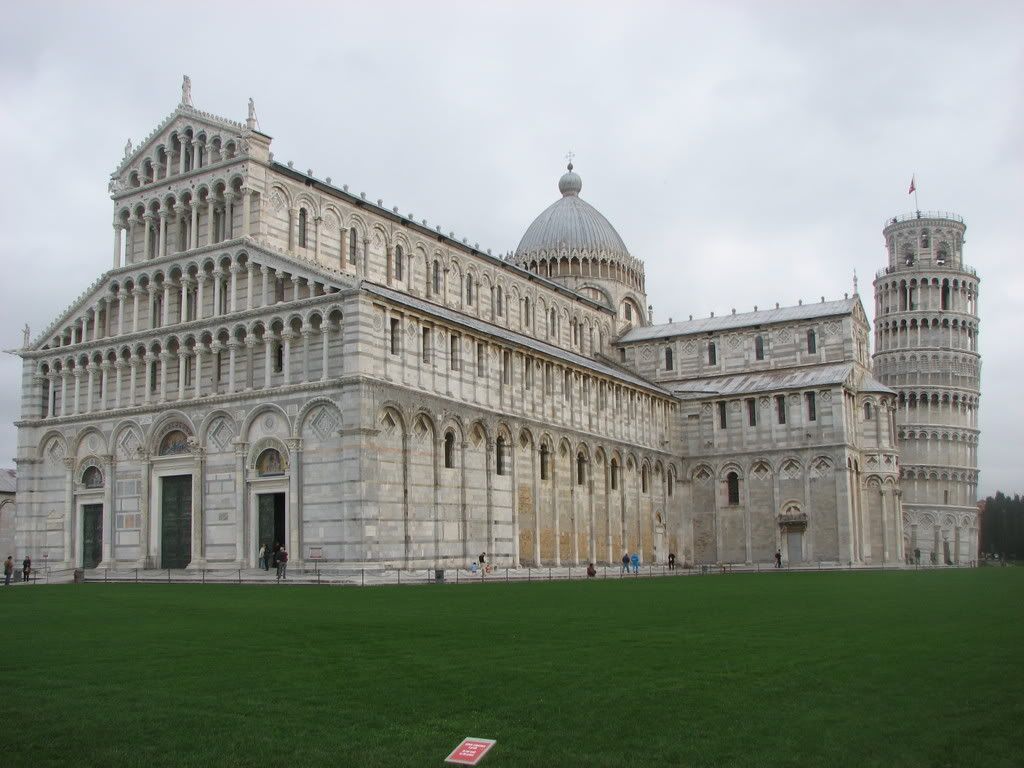 In 1085 Pope Gregory VII had granted suzerainty over the Balearic islands, off the coast of Iberia, to Pisa. Twenty-eight years later, in the fall of 1113 a Pisan fleet making an expedition to Majorca was put off course by a storm and ended up near the coast of Catalonia, which they initially mistook for the Balearics. The Pisans met with the Count of Barcelona and signed a treaty. Among other things, the treaty called for a military cooperation, the chief goal of which was to suppress Islamic piracy plaguing their coasts and to free Christian slaves. In 1113 Pisa and the Pope Paschal II set up, together with the count of Barcelona and other contingents from Provence and Italy (Genoese excluded), a war to free the Balearic Islands, which were at that time held by the Moors. To make a long story short, the expedition was a success and the ruler of Majorca was brought in chains to Tuscany. Even though the Almoravids, the dynasty ruling much of Iberia at the time, soon reconquered the island, this was not really a major setback for Pisa. The booty taken helped the Pisans in their magnificent building program, especially its cathedral. More importantly, Pisa still maintained its dominant military and mercantile role in the Western Mediterranean.
 It was also during this time that Pisa helped pave the way for the First Crusade, a long overdue, yet small-scale effort to roll back some of the conquests and stem the tide of Islamic attacks against the then Christian world. In 1087, prompted by a wave of pirate attacks on the Tyrrhenian coast orchestrated by the Zirid ruler of Mahdia (a city in present day Tunisia), the Pisans, augmented by the Genoese and Amalfitan forces, captured and plundered the city. The Muslim fleet stationed in the harbor was burned during the fighting. As in the Balearic campaign, Mahdia was soon reconquered but, once more, the ever resourceful Pisans used the money gained from plunder to further beautify and enrich their city. By burning the Muslim fleet, the Pisans helped secure the European Western Mediterranean coast which was to become a launchpad for Levant-bound Crusader fleets only 10 years later. Now, the Pisans did not simply initiate the First Crusade. In fact, they actually helped ensure its victorious outcome: the capture of Jerusalem in 1099. Some 120 Pisan ships took part in the First Crusade, no small number for the time.
Through all of this, several important developments had taken place. By about 1100, thanks largely to the courage of Tuscan marines (along with those from Liguria, Provence, Catalonia, of course), Western Europeans were no longer afraid to go for a boat ride on their own beach. Well, the threat of Saracen piracy was still very much looming and would continue to do so until the French conquest of the Barbary Coast in the 1800s, but the bully’s nose was badly bloodied, so to speak. The pirates were no longer seen as an insurmountable obstacle, but as an inevitable inconvenience. Big difference. Additionally, since Pisa and the other maritime republics/states like Genoa had the ability to field powerful armed fleets, they could now escort their merchant navies safely to the bazaars of the Orient, and to, once again, obtain those now exotic goods, once commodities during the Roman era. Naturally, this wealth trickled down from the Arno Valley to the rest of the European continent over the decades and centuries that followed.
The Levant and North Africa were bustling hubs of intellectual activity in the Classical Era. To be fair, yes, a fair amount of that knowledge was preserved under the new Saracen overlords, but few original contributions were made by them to the major disciplines: medicine, philosophy, alchemy, and mathematics. Nevertheless, the region was a treasure trove of old manuscripts pertaining to those subjects and, by way of trade, Pisan travelers and merchants could now bring them back to the Occident. Perhaps the best such example is Leonardo Fibonacci, a forerunner of his fellow Tuscan namesake Leonardo Da Vinci, really. Leonardo was born in 1170 to a Pisan merchant operating in Algiers. As a young man, he was an avid traveler and had perused many mathematical manuscripts during that time. He was exposed to “Arabic” numerals (in quotes because they were actually developed in India and had reached the Mediterranean by way of conquest) and introduced the system to the Western world. He also developed a new notation of expressing fractions, similar to that used today. His name is most strongly associated with what is known as the Fibonacci sequence, where the first two numbers are 0 and 1, and each subsequent number is the sum of the previous two: 0, 1, 1, 2, 3, etc. Leonardo arrived at this sequence from a hypothetical situation involving an immortal rabbit population undergoing reproduction. Interestingly, the ratio of two sequential numbers of the Fibonacci sequence approaches the famous Golden Ratio the further along in the sequence that pair of numbers occurs. The Golden Ratio is commonly associated with art and, yes, has inspired many artists during the renaissance, but it has many applications in the financial market world, too.
 Fibonacci may have been unique in his intellectual ability, but certainly not in his travels and not in bringing back the most valuable of all commodities, long denied but finally available to all Western Europeans thanks to the courage of his Tuscan countrymen: knowledge. And this knowledge was not destined to simply gather dust and be deemed blasphemic. In Europe, it was elaborated and expanded upon, criticized and corrected. Consequently, new knowledge was generated and systematically recorded and circulated, and this exponential process repeated itself many times over. Nothing like this has ever happened in all of mankind’s history and on no other continent. And here I am writing this on my laptop computer, itself a fruit of this process, much like the nearly microscopic components of its circuitry.
.
Wednesday, December 3, 2008
Oriana Fallaci Memorial
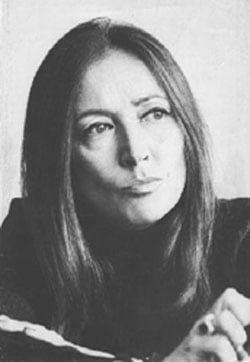
Let this be our small memorial to Oriana Fallaci, defender of her and our culture.
"The moment you give up your principles, and your values, you are dead, your culture is dead, your civilisation is dead. Period." --Oriana Fallaci
Oriana Fallaci Memorial 1926-2006
Oriana Fallaci, the Italian journalist who spent the last period of her life confronting the death of the West, has died of breast cancer, aged 77. Fittingly, she took her last breath in Florence, seat of the Renaissance.
Signora Fallaci's life showed the political complexity that has engulfed Europe. She began her political activism as a partisan against the Axis in the Second World War, and went on to a career as a journalist, where she became known as a tough interviewer. Israeli strongman Ariel Sharon feared she would "scalp" him, while Henry Kissinger smarted when she got him to compare himself to a "cowboy." He later admitted that the confrontation was "the single most disastrous conversation I have ever had with any member of the press."
Her early war experiences made Signora Fallaci a fearless frontline reporter; she was shot in Mexico City by cops in the violent run-up to the 1968 Olympics, and when she died was still under indictment for "vilipendio" (vilification) for exposing and denouncing the Islamification of Europe. The "hate" charges are perhaps her greatest honor and a lasting salute to her legacy. She was so cutting edge that "even" City Lights -- the San Francisco bookstore that smugly pretends to be a beacon of "alternative" thought -- banned her work.
Fittingly, she took her last breath in Florence, seat of the Renaissance [she was a native Tuscan].
A lifelong atheist, Signora Fallaci remained impossible to pigeonhole, and developed an admiration for Pope Benedict XVI for his stance against Islam. She also attracted the admiration of disparate groups: neocons who sought to co-opt her opposition to Islam; feminists concerned about the savage abuse of women in Islam; human rights activists worried about the growing loss of freedom in the name of "tolerance," and racial nationalists who embraced her call for the need of Europeans to grapple with the dangers of a darkening Europe. Signora Fallaci was enough of a maverick that all of her admirers found something to disagree with her on.
Signora Fallaci will be missed by all those who appreciate the heretical, the intellectually challenging and the courageous.
Oriana Fallaci, 1929-2006
Requiescat in Pace
***************************************************************************
The Force of Reason
The Force of Reason (Italian: La forza della ragione) is a 2004 book by controversial Italian author Oriana Fallaci. It focuses on criticism of Islam, and is considered xenophobic by some.
In the beginning of the book, Oriana Fallaci alludes to Mastro Cecco, the author of a heretical book who was burnt at the stake during the Inquisition in 1328, on account of his beliefs. She also claims that Europe, like Troy, is "in flames" and, under a Muslim siege, is becoming an "Eurabia" (originally the title of a journal edited by the President of the Association for Franco-Arab Solidarity, Lucien Bitterlein). Fallaci claims that pacific convivence with Islamofascism is impossible.
The book is a bestseller in Europe and the subject of controversy and Muslim groups are seeking to have it banned. Ms. Fallaci is currently under indictment in her native Italy for the crime of "vilipendio," the vilification of "any religion admitted to the state", in this case, Islam. The charge has been brought by a local muslim leader who is on trail for 'vilipendio' himself, in his case against the catholic church.
[from wikipedia.org; http://en.wikipedia.org/wiki/The_Force_of_Reason]
***************************************************************************
THE FALLACI CODE
Oriana Fallaci asks: Is Muslim immigration to Europe a conspiracy?
By BRENDAN BERNHARD
March 15, 2006
In The Force of Reason, the controversial Italian journalist and novelist Oriana Fallaci illuminates one of the central enigmas of our time. How did Europe become home to an estimated 20 million Muslims in a mere three decades?
How did Islam go from being a virtual non-factor to a religion that threatens the preeminence of Christianity on the Continent? How could the most popular name for a baby boy in Brussels possibly be Mohammed? Can it really be true that Muslims plan to build a mosque in London that will hold 40,000 people? That Dutch cities like Amsterdam and Rotterdam are close to having Muslim majorities? How was Europe, which was saved by the U.S. in world wars I and II, and whose Muslim Bosnians were rescued by the U.S. as recently as 1999, transformed into a place in which, as Fallaci puts it, "if I hate Americans I go to Heaven and if I hate Muslims I go to Hell?"
In attempting to answer these questions, the author, who is stricken with cancer and has been hounded by death threats and charges of "Islamophobia" (she is due to go on trial in France this June), has combined history with episodes of riveting firsthand reportage into a form that reads like a real-life conspiracy thriller.
If The Force of Reason sells a lot of copies, which it almost certainly will (800,000 were sold in Italy alone, and the book is in the top 100 on Amazon ), it will be not only because of the heat generated by her topic, but also because Fallaci speaks for the ordinary reader. There is no one she despises more than the intellectual "cicadas," as she calls them — "You see them every day on television; you read them every day in the newspapers" — who deny they are in the midst of a cultural, political and existential war with Islam, of which terrorism is the flashiest, but ultimately least important component. Nonetheless, to give the reader a taste of what Muslim conquest can be like, in her first chapter, Fallaci provides a brief tour of the religion's bloodiest imperial episodes and later does an amusing job of debunking some of its more exaggerated claims to cultural and scientific greatness.

Keep Reading
The book is also animated by a world-class journalist's dismay that she could have missed the story of her lifetime for as long as she did. In the 1960s and '70s, when she was a Vietnam War correspondent and a legendarily ferocious interviewer going mano a mano with the likes of Henry Kissinger and Yasser Arafat, Fallaci was simply too preoccupied with the events of the moment to notice that an entirely different narrative was rapidly taking shape — namely, the transformation of the West. There were clues, certainly. As when, in 1972, she interviewed the Palestinian terrorist George Habash, who told her (while a bodyguard aimed a submachine gun at her head) that the Palestinian problem was about far more than Israel. The Arab goal, Habash declared, was to wage war "against Europe and America" and to ensure that henceforth "there would be no peace for the West." The Arabs, he informed her, would "advance step by step. Millimeter by millimeter. Year after year. Decade after decade. Determined, stubborn, patient. This is our strategy. A strategy that we shall expand throughout the whole planet."
[Note: Regarding above image. All had to wear Fascist symbols. For example, Pope Benedict was in the Hitler Youth. He had no choice. Elian Gonzalez joined the Young Communists earlier this year. Obviously he had no choice in the matter. Quite the contrary, Fallaci was in the resistance movement, and was well known to be on the Left.]
Fallaci thought he was referring simply to terrorism. Only later did she realize that he "also meant the cultural war, the demographic war, the religious war waged by stealing a country from its citizens ... In short, the war waged through immigration, fertility, presumed pluriculturalism.” It is a low-level but deadly war that extends across the planet, as any newspaper reader can see.
Fallaci is not the first person to ponder the rapidity of the ongoing Muslim transformation of Europe. As the English travel writer Jonathan Raban wrote in Arabia: A Journey Through the Labyrinth (1979), in the mid-1970s Arabs seemed to arrive in London almost overnight. "One day Arabs were a remote people ... camping out in tents with camels ... the next, they were neighbors." On the streets of West London appeared black-clad women adorned with beaked masks that made them look "like hooded falcons." Dressed for the desert (and walking precisely four steps ahead of the women), Arab men bestrode the sidewalks "like a crew of escaped film extras, their headdresses aswirl on the wind of exhaust fumes."
Writers far better acquainted with the Muslim world than Raban have been equally perplexed. In 1995, the late American novelist Paul Bowles, a longtime resident of Tangier, told me that he could not understand why the French had allowed millions of North African Muslims into their country. Bowles had chosen to live among Muslims for most of his life, yet he obviously considered it highly unlikely that so many of them could be successfully integrated into a modern, secular European state.
Perhaps Bowles would have been interested in this passage from Fallaci’s book: "In 1974 [Algerian President] Houari Boumedienne, the man who ousted Ben Bella three years after Algerian independence, spoke before the General Assembly of the United Nations. And without circumlocutions he said: 'One day millions of men will leave the southern hemisphere of this planet to burst into the northern one. But not as friends. Because they will burst in to conquer, and they will conquer by populating it with their children. Victory will come to us from the wombs of our women.'"
Such a bald statement of purpose by a nation's president before an international forum seems incredible. Yet even in British journalist Adam LeBor’s A Heart Turned East (1997), a work of profound, almost supine sympathy for the plight of Muslim immigrants in the West, a London-based mullah is quoted as saying, "We cannot conquer these people with tanks and troops, so we have got to overcome them by force of numbers." In fact, such remarks are commonplace. Just this week, Mullah Krekar, a Muslim supremacist living in Oslo, informed the Norwegian newspaper Aftenposten that Muslims would change Norway, not the other way around. "Just look at the development within Europe, where the number of Muslims is expanding like mosquitoes," he said. "By 2050, 30 percent of the population in Europe will be Muslim."
In other words, Europe will be conquered by being turned into "Eurabia," which is what Fallaci believes it is well on the way to becoming. Leaning heavily on the researches of Bat Ye'or, author of Eurabia: The Euro-Arab Axis, Fallaci recounts in fascinating detail the actual origin of the word "Eurabia," which has now entered the popular lexicon. Its first known use, it turns out, was in the mid-1970s, when a journal of that name was printed in Paris (naturally), written in French (naturally), and edited by one Lucien Bitterlin, then president of the Association of Franco-Arab Solidarity and currently the Chairman of the French-Syrian Friendship Association. Eurabia (price, five francs) was jointly published by Middle East International (London), France-Pays Arabes (Paris), the Groupe d’Etudes sur le Moyen-Orient (Geneva) and the European Coordinating Committee of the Associations for Friendship with the Arab World, which Fallaci describes as an arm of what was then the European Economic Community, now the European Union. These entities, Fallaci says, not mincing her words, were the official perpetrators "of the biggest conspiracy that modern history has created," and Eurabia was their house organ.
Briefly put, the alleged plot was an arrangement between European and Arab governments according to which the Europeans, still reeling from the first acts of PLO terrorism and eager for precious Arabian oil made significantly more precious by the 1973 OPEC crisis, agreed to accept Arab "manpower" (i.e., immigrants) along with the oil. They also agreed to disseminate propaganda about the glories of Islamic civilization, provide Arab states with weaponry, side with them against Israel and generally toe the Arab line on all matters political and cultural. Hundreds of meetings and seminars were held as part of the "Euro-Arab Dialogue," and all, according to the author, were marked by European acquiescence to Arab requests. Fallaci recounts a 1977 seminar in Venice, attended by delegates from 10 Arab nations and eight European ones, concluding with a unanimous resolution calling for "the diffusion of the Arabic language" and affirming "the superiority of Arab culture."
While the Arabs demanded that Europeans respect the religious, political and human rights of Arabs in the West, not a peep came from the Europeans about the absence of freedom in the Arab world, not to mention the abhorrent treatment of women and other minorities in countries like Saudi Arabia. No demand was made that Muslims should learn about the glories of western civilization as Europeans were and are expected to learn about the greatness of Islamic civilization. In other words, according to Fallaci, a substantial portion of Europe's cultural and political independence was sold off by a coalition of ex-communists and socialist politicians. Are we surprised? Fallaci isn’t. In 1979, she notes, "the Italian or rather European Left had fallen in love with Khomeini just as now it has fallen in love with Bin Laden and Saddam Hussein and Arafat."
Considerably less intemperate than her last book on the topic of radical Islam, the volcanically angry The Rage and the Pride, The Force of Reason is despairing, but often surprisingly funny. ("The rage and the pride have married and produced a sturdy son: the disdain," she writes with characteristic wit.) And, Fallaci being Fallaci, it is occasionally over the top and will no doubt be deeply offensive to many, particularly when, in a postscript the book might have been better off without, she claims that there is no such thing as moderate Islam. Nonetheless, the voice and warmth and humor of the author light up its pages, particularly when she takes a leaf out of Saul Bellow’s Herzog by firing off impassioned letters to the famous both living and dead. She is savage about the Left, the "Peace" movement (war is a fundamental, if regrettable, condition of life, she states), the Catholic Church, the media and, of course, Islam itself, which she considers theological totalitarianism and a deadly threat to the world. She is much more optimistic about America than Europe, citing the bravery of New Yorkers who celebrated New Year’s Eve in Times Square despite widely publicized terrorism threats, but here one feels that she is clutching at straws. Though Fallaci now lives in New York, little amity has been extended to her by her peers since the post-9/11 publication of The Rage and the Pride, and she remains almost as much of a media pariah here as she does in Europe. The major difference is that we’re not putting her on trial.
[from 'LA Weekly'; http://www.laweekly.com/art+books/books/the-fallaci-code/12921/]
***************************************************************************
Oriana Fallaci: 'The Enemy We Treat as a Friend'
January 29, 2006
Heroic Italian thought criminal Oriana Fallaci asks why the West tolerates Islam
"There are moments in Life when keeping silent becomes a fault, and speaking an obligation. A civic duty, a moral challenge, a categorical imperative from which we cannot escape." -- Oriana Fallaci
Now, I ask myself: "What do you say, what do you have to say, about what happened in London?" They ask me face-to-face, via fax and email; often scolding me because up until now I have remained silent. Almost as if my silence were a betrayal. And each time I shake my head and murmur to myself: what else should I say?!? I’ve been saying it for four years--that I fight against the Monster that has decided to eliminate us physically and, along with our bodies, to destroy our principles and values. Our civilization. For four years I've been talking about the Islamic war against the West; about the death cult; about European suicide. About a Europe that is no longer Europe, but Eurabia, and that with its feebleness, its inertia, its blindness, its servitude to the enemy is digging its own grave. For four years, like another Cassandra, I’ve been shouting until I'm hoarse "Troy is burning! Troy is burning!" and I despair of the Danaids for whom, like Virgil in the Aeneid I weep for a city entombed in its torpor. A city that, through its wide-open doors receives fresh troops and joins complicit parties inside. For four years I've been repeating to the wind the truth about the Monster and its accomplices; that is, the accomplices of the Monster who, in good or bad faith, open wide the doors--who, like those in the Apocalypse of John the Evangelist, throw themselves at his feet and allow themselves to be stamped with the mark of shame.
I began with "The Rage and the Pride." I continued with "The Force of Reason." I followed with "Oriana Fallaci Interviews Oriana Fallaci," and "The Apocalypse." And in each one I preached, "Wake up, West! Wake up!" The books, the ideas, for which in France they tried me in 2002, accusing me of religious racism and xenophobia. For which Switzerland asked our Minister of Justice to extradite me in handcuffs. For which in Italy I will be tried for vilifying Islam; that is, for an offense of opinion. (An offense that carries a sentence of three years in prison; none of which will be served by the Islamist caught with explosives in his cantina). Books, ideas, for which the "Caviar" left, the "Fois Gras" right, and even the "Prosciutto" Center have denigrated and vilified me, putting me in the stocks together with all who think as I do. That is, together with the sensible and unprotected people who are defined by the radical-chic in their frivolous talk as "the riff-raff of the Right."
Yes, it's true: In newspapers that in the best of cases pharasaically opposed me with a conspiracy of silence now appear titles using my concepts and words--"War Against the West"; "Cult of Death"; "The Suicide of Europe"; "Wake up, Italy! Wake up!" Yes, it's true: Though without admitting I wasn't wrong, the ex-secretary of the Democratic Left now submits to interviews in which he declares that "these-terrorists-want-to-destroy-our-values"; that "this-slaughter-is-facist-in-nature-and-expresses-hatred-for-our-civilization". Yes, it's true: In speaking of Londonistan, the section of London where some 700,000 Muslims live, the newspapers which at first gave comfort to the terrorists--going so far as to make excuses for their crime are now saying what I did when I wrote that in each one of our cities exists another city. A foreign city that speaks its own language and observes its own customs; a Muslim city where terrorists go about their business undisturbed and, thus undisturbed, plan our deaths. The rest is now spoken of openly; even Islamic terrorism, something that was carefully avoided in order not to offend moderate Muslims. Yes it's true: Now, even the fifth columnists and the imams express their hypocritical condemnations, their mendacious loathing, their false solidarity with the relatives of the victims.
"There are moments in Life when keeping silent becomes a fault, and speaking an obligation. A civic duty, a moral challenge, a categorical imperative from which we cannot escape." --Oriana Fallaci
Yes, it's true: Now, thorough searches are being made in the cases of the accused Muslims; suspects are arrested; perhaps it will even be decided to expel them. But in substance, nothing has changed. Does the matter of the One God really suffice to establish a concord of concepts, of principles, of values?!? This is the point, in the unchanged reality of post-attack London that perhaps troubles me the most. I am also troubled because it goes along with, and thereby reinforces that which I consider the error committed by Pope John Paul II: not to fight as much as he should have, in my opinion, against the illiberal and anti-democratic--no, cruel--essence of Islam. During these last four years, I have done nothing but ask myself why a warrior like John Paul II, a leader so singular who contributed more than anyone else to the downfall of the Soviet empire and, therefore, of Communism, showed himself to be so weak towards a disease worse than the Soviet Empire or Communism. I have done nothing but ask myself why he did not inveigh openly against what was happening (and is happening), for example, in Sudan where the fundamentalist regime was practicing (and is practicing) slavery. Where Christians were eliminated (are eliminated) by the millions. Why he was silent about Saudi Arabia where anyone with a Bible in hand or a cross around his neck was (and is) treated like scum to be put to death. Still today, there is that silence I don’t understand, and...
************
Naturally, I understand that the philosophy of the Catholic Church is based on ecumenism and on the commandment "Love-your-enemy-as-yourself." That one of its fundamental principles (at least theoretically) is forgiveness, sacrifice, turning the other cheek. (A sacrifice I refuse not only for pride; that is, for my way of maintaining my dignity, but also because I believe there is a motive of Evil on the part of those who do evil.) But there also exists the principle of self-defense or, instead, legitimate defense and, if I’m not mistaken, the Catholic Church has made use of this principle more than once. Charles Martel turned back the Muslim invaders lifting up the crucifix. Isabella of Spain tossed them out of Spain while doing the same. And at Lepanto there were even Papal troops. In order to defend Vienna, the last bulwark of Christianity, in order to break the siege of Kara Mustafa, there was also, and above all, the Pole Jan Sobienski with the image of the Virgin of Chestochowa. And if those Catholics had not applied the principle of self-defense--of legitimate defense--we, too, would be wearing the burka or the calabash. We, too, would be calling the few survivors infidel dogs. We, too, would be cutting off their heads with the halal knife. And Saint Peter’s Basilica would be a mosque, like the Church of Saint Sophia in Istanbul.
...The Catholic Church experienced epochal changes, Your Holiness. And again, you know this better than I. At a certain point, it is remembered that the Church was preaching reason; thus choice; thus the Good, thus Liberty, and she ceased to tyrannize. To kill people. Or constrain them to paint only Christs and Madonnas. She understood secularism. Thanks to men of the first order, a long list of which you are a part, she leant a hand to democracy. And today, she speaks to people like me. She accepts them and, far from burning them alive (I never forget that up until four hundred years ago the Holy Office would have sent me to the stake), she respects their ideas. They do not. Therefore, there can be no dialogue with them. And this does not signify that I want to promote a war of religion, a Crusade, a witch hunt, as imbeciles and frauds. Religious wars, Crusades--me?!? A non-religious person? Go figure. Like I'd want to incite a religious war or a Crusade. A witch hunt--me?!? Being considered a witch and a heretic by the same laypeople and the same liberals, go figure. Like I'd want to start a witch hunt. It simply signifies that to delude one's self about them is against reason. Against Life, against one’s own survival. And woe unto those who take them into their confidence.
***************************************************************************
The Rage and The Pride
The Rage and the Pride (La Rabbia e l’Orgoglio in Italian) is a book written in the wake of the September 11, 2001 attacks by Italian journalist and author Oriana Fallaci, which condemns Islam as a totalitarian force bent on destroying Western civilisation and attacks those in Italy and other Western countries, who she believes have turned a blind eye to the threat of Islamic fundamentalism.
The book was originally an article written for Italian newspaper Corriere della Sera. The book has been a bestseller in Italy and Europe, where it has sold over 1.5 million copies.
The book has received criticism for being, according to Fallaci's critics, Islamophobic. In the wake of the article, Fallaci has received support from many right-wing political groups, receiving most criticism from the left wing. Some Muslim groups, in countries such as France, have evaluated the possibility of banning the book. However, the courts dismissed the request, as well as an additonal request to have a 'health warning' style caution on the front of every cover.
[from wikipedia.org; http://en.wikipedia.org/wiki/The_Rage_and_The_Pride]
***************************************************************************
July 16, 2005
Book Review - 'The Rage And The Pride' by Oriana Fallaci
Reviewed by Ellison J. Peterson
'The Rage And The Pride' is a book like I have never read before. Written as a result of the events of September 11th 2001, it started out as a newspaper article by the world famous, and now infamous Italian journalist and author, Oriana Fallaci, for the Italian national newspaper 'Corriere della Sera.' However, when she had come to submit the piece to her editor, of which he had reserved two pages, she realised that what she had done was "given birth to a small-book." And what a book it is!
Fallaci, born in 1929 in Florence, Italy, is well respected within the news arena and was a war-correspondent in Vietnam, for the Indo-Pakistani War, the 1965 Hungarian insurrection, in the Middle East, in South America, the 1968 massacre in Mexico City and the 1970s Latin American upheavals. She was also seriously wounded in the Gulf War and was a special correspondent for L’Europeo, an Italian political magazine. She has written for numerous leading national newspapers as well as being the author of a great many books. Fallaci is well known for her outspoken interviews with such people as Sean Connery, Sammy Davis Jr, Yasir Arafat, Henry Kissinger, Ayatollah Khomeini and many, many others. She was also a resistance fighter during the Second World War.
Fallaci actually translated the English edition of 'The Rage And The Pride' herself from it's original Italian and acknowledges that there are a few "oddities" in its terminology, grammar and sentence structure arising from her own particular writing style and her own translation. Nevertheless, she offers it to us as it is as she wants to have "total responsibility for every word and comma" that she writes under her name in the English language that she loves as much as her own. Actually, I appreciated this greatly and found that it is written in a beautiful style, a style with unconditional passion, pride and rage and a style that only Fallaci herself can produce.
It is a beautiful little hardback book. A hardback which is actually nice to hold with golden writing inset in the cover and a simple red dust cover which adds an air of mystery to it. I would say never judge a book by its cover and this is one not to judge until you have read it.
The book is aptly named in its simplicity, for it is written from the author’s heart and soul. It is written literally with a pride and a rage in response to all that she was feeling as she watched those horrendous events unfold on that tragic day of September 11th 2001. It is written with a pride and a rage for the culture that she loves so much and that is so viciously under attack today. It is written with love for the victims of that day and for those of tomorrow and is ultimately written with fierce honesty in a flaringly unabashed style where she feels no apologies are necessary. It "burst like a bomb," an "unrestrianable cry" and what we have is an emotional, no holds barred expose of the author’s feelings towards the Islamic faith that openly promotes such catastrophes to happen. 'The agenda being to dominate the world with the purpose of opening "the eyes of those who do not want to see, to unplug the ears of those who do not want to listen, to ignite the thoughts of those who do not want to think."
Fallaci points out that she has remained quiet for far too long and the time to confront a religion and culture (and she states that the "clash between us and them is not a military clash. Oh, no. It is a cultural one, a religious one.") that is so dangerous and is at total odds to our own is now. She writes in her own unique style exposing Islam as "the hate for the West" that "swells like a fire fed by the wind. And the followers of Islamic Fundamentalism multiply like protozoa of a cell which splits to become two cells then four then eight then sixteen then thirty-two to infinity." She writes that she has "remained as silent as an old and disdainful wolf. A wolf that consumes itself in the desire to sink it’s fangs into the sheep's throat, the rabbit's neck, yet succeeds in maintaining control." But also stressing the importance to note that "there are moments in Life when keeping silent becomes a fault, and speaking an obligation. A civic duty, a moral challenge, a categorical imperative from which we cannot escape."
"The clash between us and them is not a military one. It's a cultural one, a religious one, and the worst is still to come." --Oriana Fallaci
It must be in all honestly, one of the most politically incorrect books that I have ever read but one that is written with extreme caution and attention to detail rather than a simply blistering attack with unintended misconceptions and falsehoods.
Such was her dedication and willingness, her shock, horror and love, to pour out onto the pages her heart and soul and to get it to the masses that she worked on it "Without stopping, without eating, without sleeping." Yet, is open to point out that extreme and great care was taken as writing is a very serious matter for her and something that is not to be taken lightly or written half heartedly. She states that it is "not an amusement or an outlet or a relief. It is not because I never forget that written words can do a lot of good but also a lot of evil, they can heal as much as kill."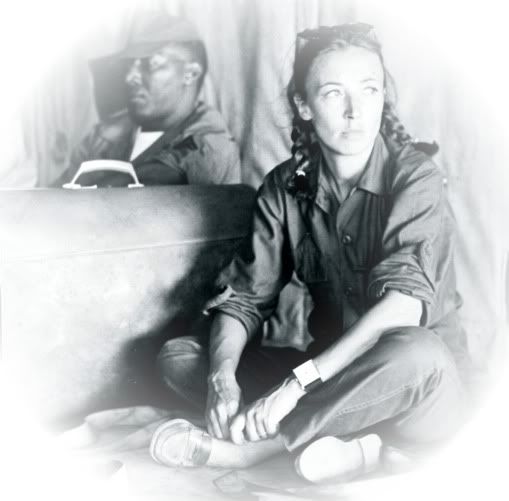
This is a very open and frank book. Absolutely no one is spared Fallaci's pen as she blasts Islam for its open yet widely unknown intolerance, bitterness, hatred and it’s ignorant stance on the human rights that we of the West hold so dear. Whilst Fallaci targets various European and American leaders, media moguls, the politically correct, the ignorant and the multiculturalists amongst scores of others she is not shy to comment on the touching unity seen with the support from around the world, the brave fire fighters that risked there own lives to save those trapped in the burning towers of the World Trade Centres and surrounding buildings, and the selfless civilians that did the same.
It states on the dust jacket something of which I fully agree so I see no need to reword it: "With her brutal sincerity she hurls pitiless accusations, vehement invectives, and denounces the uncomfortable truths that all of us know but never dare to express. With her rigorous logic, lucidity of mind, she defends our culture and blames what she calls our blindness, our deafness, our masochism, the conformism and the arrogance of the Politically Correct. With the poetry of a prophet like a modern Cassandra she says it in the form of a letter addressed to all of us."
Indeed, a tremendously stirring book. A book that chucks a bucket of cold water on your nicely snuggled up in bed body and yells at you at an ear drum splitting level to get your head out of the sand. It is a wake-up call in words that you do not want to miss!
With all this she states that "The worst is still to come." And I look forward to reading her sure to be next masterpiece, 'The Force of Reason.'
[from 'Ellison J. Peterson ONLINE'; http://ejpeterson.blogspot.com/2005/07/book-review-rage-and-pride-by-oriana.html]
***************************************************************************
Oriana Fallaci
Oriana Fallaci (born June 29, 1929) is an Italian journalist, author and political interviewer. A former partisan during World War II, she had a long and successful journalistic career.
She has been called Italy's most celebrated female writer by Ferruccio De Bortoli. The Los Angeles Times described her as "the journalist to whom virtually no world figure would say no."
She has interviewed many internationally known leaders and celebrities such as Henry Kissinger, the Shah of Iran, Ayatollah Khomeini, Willy Brandt, Zulfikar Ali Bhutto, Walter Cronkite, Omar Khadafi, Federico Fellini, Sammy Davis Jr, Nguyen Cao Ky, Yasir Arafat, Indira Gandhi, Alexandros Panagoulis, Archbishop Makarios III, Golda Meir, Nguyen Van Thieu, Haile Selassie and Sean Connery.
After retirement, she returned to the spotlight after writing a series of articles and books highly critical of Islam and Arabs that aroused substantial support, controversy and accusations of Islamophobia and racism.
Career
Fallaci was born in Florence.
During World War II she joined the resistance despite her youth, in the democratic armed group "Giustizia e Liberta"
Her father Edoardo Fallaci, a cabinet maker in Florence, was a political activist struggling to put an end to the dictatorship of Italian Fascist leader Benito Mussolini. It was during this period that Fallaci was first exposed to the atrocities of war.
Fallaci began her journalistic career in her teens, becoming a special correspondent for the Italian paper Il mattino dell'Italia centrale in 1950.
Since 1967 she worked as a war correspondent, in Vietnam, for the Indo-Pakistani War, in the Middle East and in South America. For many years, Fallaci was a special correspondent for the political magazine L'Europeo and wrote for a number of leading newspapers and Epoca magazine.
In the late 1970s, she had an affair with the subject of one of her interviews, Alexandros Panagoulis, who had been a solitary figure in the Greek resistance against the 1967 dictatorship, having been captured, heavily tortured and imprisoned for his (unsuccessful) assassination attempt against dictator and ex-Colonel Georgios Papadopoulos. Panagoulis died in 1976, under controversial circumstances, in a road accident. Fallaci maintained that Panagoulis was assassinated by remnants of the Greek military junta and her book Un Uomo (A Man) was inspired by the life of Panagoulis.
Fallaci has twice received the St. Vincent Prize for journalism, as well as the Bancarella Prize, 1971 for Nothing, and So Be It; Viareggio Prize, 1979, for Un uomo: Romanzo; and Prix Antibes, 1993, for Inshallah. She received a D.Litt. from Columbia College (Chicago).
She has lectured at the University of Chicago, Yale University, Harvard University, and Columbia University.
Fallaci's writings have been translated into 21 languages including English, Spanish, French, Dutch, German, Greek, Swedish, Polish, Croatian and Slovenian.
Controversy
A journalist from Florence, Tiziano Terzani, expressed disagreements with her approach in an open letter to her in Corriere della Sera while David Holcberg at the Ayn Rand Institute supported her cause with a letter to the Washington Times.
Fallaci has received support from rightist political parties and movements such as the Lega Nord in Italy, where her books have sold over 1 million copies alone, but also from individuals and organisations in the rest of the world.
At the first European Social Forum, which was held in Florence in November 2002, Fallaci invited the people of Florence to shut up every shop and stay in the houses and compared the ESF to the Nazi occupation of Florence, but despite her worries nothing happened and all the demonstrations were peaceful. Sabina Guzzanti, a popular leftist comic, mocked at her during the Forum.
Italian pacifist singer Jovanotti mentioned Fallaci in a song, Salvami, where she is described as "the journalist and writer who loves war/because it reminds her of when she was young and beautiful."
In 2002 in Switzerland the Islamic Center and the Somal Association of Geneva, SOS Racisme of Lausanne and a private citizen sued her for the supposedly racist content of The Rage and The Pride. In November 2002 a Swiss judge issued an arrest warrant for violations of article 261 and 261 bis of the Swiss criminal code and requested the Italian government to either try or extradite her. Roberto Castelli, Italian minister of Justice mentioned this fact in an interview broadcasted by Radio Padania affirming that the Italian Constitution protects the Freedom of Speech and thus the extradition request had to be rejected, the episode is mentioned in her book The Force of Reason.
In 2003 the MRAP (Movement against racism and for the friendship among peoples) sued to have The Rage and The Pride banned in France. A French court rejected the request, as well as the group's request for a disclaimer to be placed in each book.
In May, 2005, Adel Smith, president of the Union of Italian Muslims, launched a lawsuit against Fallaci charging that "some of the things she said in her book The Force of Reason are offensive to Islam." Smith's attorney, Matteo Nicoli, cited a phrase from the book that refers to Islam as "a pool that never purifies." Consequently an Italian judge ordered her to stand trial set for June 2006 in Bergamo on charges of "defaming Islam." A previous prosecutor had sought dismissal of the charges.
On August 27, 2005, Fallaci had a private audience with Pope Benedict XVI at Castel Gandolfo. Although an atheist, Fallaci has mentioned her great respect for Pope Benedict XVI and her admiration for his 2004 essay titled "If Europe Hates Itself."

Awards
On November 30, 2005, Oriana Fallaci received the Center for the Study of Popular Culture’s Annie Taylor Award in New York. The writer was honored for her "heroism and valor" that made of her "a symbol of struggle against oppression and fascism". Since 9/11, Fallaci has dedicated herself in the fight against "the greatest threat to Western civilization since the Cold War, Islamofascism."
On December 8, 2005, the writer received the Ambrogino d'oro, the most prestigious award of Milan.
On December 14, 2005, she was awarded by the President of the Italian Republic, Carlo Azeglio Ciampi, with a gold medal for her efforts (benemerita della cultura). Because of the writer's serious health condition, she couldn't travel to Italy. She sent a message stating (translated from Italian):
The gold medal moves me because it gratifies my hard work of writer and journalist, my engagement to the defense of our culture, my love for my Country and for Freedom. My well-known health condition prevents me to travel and to withdraw personally an award that, for me, a woman not accustomed to medals and to trophies, has an intense ethical and moral meaning.
On February 22, 2006, the president of Tuscany, Riccardo Nencini awarded Oriana Fallaci of a gold medal. Nencini explained that the writer is a symbol of Tuscany's culture in the world.
Books by Oriana Fallaci
* A Man, a novel about a hero who fights alone for freedom and for truth, never giving up, and so he dies, killed by all. (1979)
* The Seven Sins of Hollywood preface by Orson Welles, Longanesi (Milan), 1958.
* The Useless Sex: Voyage around the Woman Horizon Press (New York City), 1961.
* Penelope at War (1962).
* Limelighters (1963)
* The Egotists: Sixteen Surprising Interviews (1963)
* Quel giorno sulla Luna (1970)
* Inshallah, a fictional account of Italian troops stationed in Lebanon in 1983.
* If the Sun Dies, about the US space program.
* Interview With History (1976, a collection of interviews with various political figures Liveright)
* Letter to a child never born, a dialogue between a mother and her unborn child.
* Nothing, and so be it, report on the Vietnam war based on personal experiences.
* Oriana Fallaci intervista Oriana Fallaci, Fallaci interviews herself on the subject of "Eurabia" and "Islamofacism". (Milan: Corriere della Sera, August 2004).
* The Rage and The Pride (La Rabbia e l'Orgoglio, 2001).
* The Force of Reason (La Forza della Ragione, 2004)
* Oriana Fallaci intervista sé stessa - L'Apocalisse (in Italian). An update of the interview with herself. A new, long epilogue is added. Publisher: Rizzoli, November 2004.
Fallaci has also written essays and novels revolving around news events.
[from wikipedia.org; http://en.wikipedia.org/wiki/Oriana_Fallaci]
***************************************************************************
See also:
More Insight on Oriana: Part 1
More Insight on Oriana: Part 2
***************************************************************************

Solemn the drums thrill; Death august and royal
Sings sorrow up into immortal spheres,
There is music in the midst of desolation
And a glory that shines upon our tears.
******
They went with songs to the battle, they were young,
Straight of limb, true of eye, steady and aglow.
They were staunch to the end against odds uncounted;
They fell with their faces to the foe.
******
They shall grow not old, as we that are left grow old:
Age shall not weary them, nor the years contemn.
At the going down of the sun and in the morning
We will remember them.
.
Age shall not weary them, nor the years contemn.
At the going down of the sun and in the morning
We will remember them.
.
Wednesday, June 18, 2008
Reflections on the Etruscan Civilization
 Reflections on the Etruscan Civilization
 By Graziano Baccolini
I can never succeed in understanding why Italians still fail to recognize the enormous contribution that the Etruscan civilization has made to our Western civilization. We keep on believing the teaching that the Greeks and above all the Romans are the peoples to whom the Western world owes its origins. All of this is considerably exaggerated and based on historical falsehoods. However, I have ascertained instead that it is the Etruscans, coming from the East, who are the true founders of our European culture, for both good and bad aspects. This truth continues to be understated and at times hindered by various Italian historians while it has been being recognized for numerous decades by the majority of the historians of the whole world. Etruscology is now a subject of enormous interest all over the world and a lot of falsehoods and commonly held beliefs are crumbling because they were used to discredit a people for appropriating of their worths. In the past centuries first the powerful and unculturated Rome has falsified its own origins and has ignored the legacy of the defeated Etruscan civilization, then the first Christian emperors have completed the work with their edicts. Subsequently on the ruins of the empire, the Pontifices of the new religion appropriated many ancient insignias of the Orient handed down to the Romans from Etruscan leaders and priests. For example the purple of the Lucumones became the colour of the cardinal, the Etruscan priest's Littus became the Pastoral one of the Bishops. The solemn ceremonies of the new religion are a reproduction of the Etruscan religious ceremonies. The ancient former Etruscan cities became the first Episcopal centers (Volterra, Vulci, Orvieto, etc).
The longest existing Etruscan text is a calendar containing 12 columns with the religious instructions for every day. Also the figurative Christian patrimony retraces the images found again in the Etruscan tombs. The winged figures of the Etruscans return in the Christian figures of the angels and Satan. On top of the ancient Etruscan temples has been built the new churches which very probably still conceal in many things their walls. It is strange that Etruscologists have not considered this yet. Then first Rome, then above all the priestly heirarchy of the new Roman religion snatched the symbols of the Etruscan civilization but denied the so-called pagan origin of it all. As always happens rather in the history and in the life, slandering the legitimate owners and accusing them of various inequities. Unfortunately our culture has inherited the worse of the Etruscan religion as for example, the concept of infallibility, seconded by the Christian religion.
However as also happens at times in life, the truth is reborn. From accumulated evidence, one succeeds in gathering that the truth is quite different. The great civilizing inheritance of the Etruscans was for centuries abandoned, earths once rich with produce became uncultivated, shops of artisans and artists became empty, their advanced knowledge of metallurgy and of hydraulics was forgotten and Etruscan creative individuality was oppressed, fortunately not entirely. After centuries of cultural regression (I probabably suspect due to the new religious Imperium) of hiding and of destruction of the sources of the Etruscan civilization there came the rebirth. In the ancient suburbs of the Appennines there remained the descendants of the Etruscans and the wonder contained in the tombs of their ancestors woke up again their native genome: the central part of the ancient world earth of the Etruscans, Tuscany, became the cradle of the Humanism and of the Renaissance. In these cities, Etruscans for long generations, characters such as Dante, Leonardo, Brunelleschi, Giotto, Bernini, Michelangelo etc were born, and above all so many unknown artisans and artists to which the growth of our Western civilization is owed.
Rereading these reflections I now understand, and perhaps you will also understand yourselves, because many Italian historians are reluctant to recognize these truths.
G. Baccolini Università di Bologna , Italy April 2001
See also a summary of my researches about the Sacred Etruscan Mount of Montovolo:
http://www.fci.unibo.it/~baccolin/summary.htm
***************************************************************************

My Opinion about the Origin of Etruscan Civilization
By Graziano Baccolini
Now, I wish to report my opinion about the origin of the Etruscan culture. This opinion, or new theory, is matured during my studies which have permitted to me to individualise, in the site of Montovolo, a probable Oracular Centre or Navel of the Etruscan world, hierto unknown to historians. In addition, this research has allowed to discover that the archaic symbols, till now underestimated, of the Oval Stone and of the Cross were fundamental symbols even in the Etruscan religion. I think that these new data will bring new light to the studies on the Etruscans and consistence to my hypothesis on their cultural origin.
Firstly, I think the mystery of this people is due, above all, to the fact that their literary sources, the writings of their contemporaries, as the Etruscan history in 20 volumes by emperor Tiberius Claudius, and their religious symbols were deliberately destroyed in the first centuries of Christianity to cancel, probably, something of very important for the survival of the "new" religion. The documents that show this destruction, as for example the edicts of Teodosio (391-392 d.c), exist, but till now many historians say, with euphemistic expression, that "unfortunately there are no traces of Etruscan literature or of historical accounts or they are disappeared !"
Therefore, when we speak about Etruscans we use the term of "mysterious people" whose origins are still an object of debate for many scholars and writers .On the other hand, surprisingly, many Etruscologists think it is irrelevant knowledge!
Nowadays, there are three different hypotheses that are presented in opposition among them. There is the hypothesis of the oriental origin firstly formulated by Herodotus and supported also by many other important ancient authors. Now, this theory is accepted by many non–italian historians . In opposition, there is the hypothesis, exposed firstly by Livio, of a northern origin whose the Reti and other populations like the Veneti could be the descendants. Now, this hypothesis is practically abandoned by the contemporary historians. Then the theory of autochthonous origin formulated firstly by Dionysius of Halicarnassus, the unique dissenting voice among the ancients, probably for ideological reason and about four centuries later Herodotus. This theory was in part reformulated1 by Massimo Pallottino in 1942. He wished to turn away from the question of the "origin" and instead discussed the "formative process of the Etruscan which can only take place on the territory of Etruria itself . "The mark received by earl, fresh , primitive, flexible soul of oldest Etruscan, influenced by great overseas cultures, was as great as to definitively draw spiritual trends and the structure of the nation".
I think that this Italian formative process postpones the problem of the pregnant "origin" of their culture that certainly cannot be formed in Etruria with only some commercial contacts with the east or with small groups of immigrants from east arrived in "remote pre-historic times". Besides, knowing when this theory was enunciated by the Pallottino, published in 1942 by Hoepli in an editorial collection dedicated to Mussolini, we may suppose some ideological motivations to choose this hypothesis to "underline glories and priority of ancient Italian civilization"2. Successively he become the founder of a "School" and his numerous assistants defended and defend still now his hypothesis which is the most followed by italian hystorians. However, reading a recent book of M. Torelli3, a hystorian of Pallottino’s School, I have found that Pallottino theory is evolving towards the orientalist theory. In fact Torelli say that probably "the arrive of omogeneous groups of not-numerous people with the same advanced cultural knowledge and the same language might have influenced the indigenous populations". But for Torelli this possible arrival is an "hystorical marginal fact".
Personally, I think that the above theories may be, more or less, corrected only if they are considered as a whole. In other words, the populations that have had a fundamental role for the Etruscan culture have been people with oriental origins and permeated of Anatholian and Mesopothamian culture. During the Bronze Age and for several centuries they arrived in Italy firstly from the North, probably going up the Danubio and subsequently the Po and the Reno (at that time called Spinete) crossing first the Adriatic sea, therefore subsequently more easily from the Tyrrhenian sea crossing the oriental Mediterraneum sea. Obviously their culture is further matured in that rich zone of Italy, to south of the Po subsequently called Etruria. If it is so, it is not justified to define indigenous this culture but its pregnant origin is oriental. In addition, I think that when we speak of the origin of the Etruschans it is more correct to speak of the origin of their advanced culture in contrast with the primitive culture of other italic peoples. On the other hand there is no evidence of a strong immigration as was happened for the Greeks in the South of Italy, but, probably, there will have been a gradual and constant migration of small groups of persons with very similar culture and probably all of anatholian -mesopothamian origin. Below I will propose the motivations and the circumstances of these small migrations.
Probably, these migrations beginned just at the end of the Bronze Age when there are very few indigenous inhabitants in Italy. However, the advanced knowledge of this immigrants in all the fields allowed them to become the dominant group. After some centuries at the beginning of the Iron Age this new culture was called Villanovians and it occupied part of the Padana lowland and of the Centre of Italy. Subsequently, with new and more substantial migrations of other peoples from the same oriental place and with similar language and arriving from south by sea, this culture defined Villanovian was transformed in that more evolved civilization so-called Etruscan. Then, the Villanovians already mark the beginning of Etruscan culture, as proved by the overlap of Villanovian area with the later extent of Etruscan inhabitation in the historical period.
In a simple manner, I think that, the development of the Etruscan nation and culture may be compared to the growth of our contemporary American nation and culture that all people know without doubts. The continuous arrival of European immigrants and the wealth of the place has allowed the American nation to become, after some centuries from the first European immigrants, a new cultural center and a new economic power. But now nobody would risk to define autochhonous our contemporary American culture neither that its formative process is occurred only on the American soul but everybody would recognise that its fundamental origin, also cultural, is European, even if, after some centuries, a difference will be noticed between Europeans and Americans that now already exists.
The Anatolian-Mesopotamian cultural origin of the Etruschans are confirmed by numerous series of advanced knowledges in different fields as metallurgical, hydraulic, building, artistic, religious ones and some affinities as the art of the divination, the jewellery and attire, the refined taste etc. For this when we visit an Etruscan museum it seems to us to be in a museum of oriental cultures. Their opulence and their refined taste in the choice of the joys of life had to be in contrast with the one of surrounding Italian peoples, but also with their contemporary Greeks that conducted a most modest standard of life. The structural resemblances between the Etruscan and Lemnian languages is in favour to an origin from Aegean-Anatolian area around 1000 B.C. Also the fundamental role that had the female figure in Etruscan culture connects them to archaic oriental matriarchal civilizations where the Big Goddess was venerated. This element differentiated them from other contemporary cultures where the male figure had supplanted that female relegating the woman to a subordinate role that only in our last century has regained its role. Remember to us that even Plato, in the Timeo, considered the woman a sub-human being, and this reveals what deep differences there were between Greek culture and the Etruscan one even if the Greeks have been also influenced, by the oriental Aegean culture.
In addition, as reported in my articles4 and web pages4, after the discovery of a probable Etruscan Oracular Centre on the top of the mountain of Montovolo, analysing several facts such as symbols, legends and toponimous, I have found unequivocal connections between this mountain and the Etruscan city of Marzabotto. These findings have permitted to me to realize that the Oval stones, set on Marzabotto’s Tombs as well as in other Etruscan Necropolises, were a very important religious symbol even for Etruscans. This symbol of the Oval stone, is another affinity with archaic oriental cultures. It should be noted that today these stones are considered by Etruscologists only simple cippi or Tomb signals! The other symbols found at Montovolo as a cross inscribed in a circle, a snake and two doves are often found in other ancient Oracular Centers as Delphi, Delos, Milethos, Metsamor, Tebe as well as many other oriental centres. These symbolism make evident the oriental origin of the Etruscans because such archaic symbols cannot be accepted by simple commercial exchanges. The Cross, often inscribed in a circle, that I have found at Montovolo and at Marzabotto like in a lot of other Etruscan findings is also a Villanovian symbol up to now underestimated and defined by many historians a simple ornamental motive. The equilateral cross was already used in ancient Sumerian carvings as indication of the Divinity. A so deep rootedness of these religious symbols in a whole people presupposes a distant origins in the time. The Oval stone can also bring back us to the Pelasgian myth of Eurinome that gave birth to the Primordial Egg after she was fertilized by Ofione, the snake, that immediately rolled up himself on the egg staying motionless up to when it was opened making go out the wonder of the universe.
Images of Oval stones with a snake rolled up are also depicted on mural frescos in Pompei, notoriously of Etruscan origin.
It is interesting to note that also now the Moslem pilgrim entering in the Ka’bha shrine, in Mecca, kisses the sacred Black stone which is of an oval shape about seven inches in diameter.
Now, it remains to explain the most important question! How and why these oriental immigrants with probable same culture, came continually in Etruria, forming after several centuries a rich and homogeneous people in a new earth? We know that the first European immigrants that reached America, finding in that place a rich country informed their European compatriots that they can also reach this rich earth. It is very probable that even, in archaic ages, there was a constant connection between several Sacred Centres of different and very distant regions. As I have explained in my preceding studies, such connection was possible using traveller pigeons that owed to be replaced, at least every one or two years, by others pigeons deriving from the interested regions. (See my page regarding the use of traveller pigeons5) . This periodically transport and reintegration of the pigeons had to be done by caravans and secretly. This necessity became the origin of the constant arrival of new groups of persons that were settled in that new rich region that will become the Etruria. Probably this easy and necessary connection between ancient Sacred Centres might give interesting explanations of others so- called ancient mysteries or mythological events.
Finally, after the reading of Giovanni Semerano’s books6, I have found a farther confirmation of the oriental origin of the Etruschan culture. In fact, after sixty years of studies this 90 years old philologist, Member of the Oriental Institute of Chicago, has demonstrated the Accadian and Sumerian origin of the Etruscan language and therefore also of the Latin and European languages. In such a way the theory of the Indo-European origin becomes a mere fable. His theories had been snubbed for years by the Italian Academy that had always ignored his contributions until just recently, when his book "The Origins of European Culture" was greeted with great interest by the philosophers Massimo Cacciari, Emanuele Severino and Umberto Galimberti. But many other academic historians ignores his discovery, because this is in great contrast with their acclaimed axiomatic theories.
References
1) Massimo Pallottino Etruscologia Hoepli, 2003, 110
2) See the article of Sergio Frau, Etruschi, cosi il fascismo ne cancellò le origini La Repubblica. maggio 2001 and also reported on the web: http://www.parcodiveio.it/_ita/articoli_02.htm
3) Mario Torelli, Storia degli Etruschi, Ed Laterza, 28, 2001.
4)Graziano Baccolini, Hera,16,61, 2001; Hera 41,76,2003 . This research is also reported on the web : http://www.fci.unibo.it/~baccolin/summary.htm
5) Regarding the use of traveller pigeons see my web page: http://members.xoom.virgilio.it/Farf/ipiccioviagg.html
5) Luciano De Cresenzo, I Grandi Miti Greci, Oscar Mondadori, 2003 pag. 247-8
6) Giovanni Semerano, L’infinito: un equivoco millenario, ed. Mondadori, 2001., Giovanni Semerano, Il popolo che sconfisse la morte ed Mondadori, 2003.
- Giovanni Semerano had to wait 90 years before receiving his first institutional acknowledgement for his important discoveries concerning ancient languages, in particular, the Etruscan language. In fact in Florence, July 2001, Semerano received the "Silver Plaque" by the Tuscany Regional assembly that the president Riccardo Nencini attributed to him for his hypothesis on the "mother of all languages" which for Semerano is the Acadian-Sumerian.
G. Baccolini Università di Bologna , Italy, September 2003
***************************************************************************
Reflections on the Etruscan Civilization
The Mysterious Etruscans
Etruscan Civilization [Wikipedia]
Etruscan Foundation
Although most people just assume that ancient Greece led directly to the ascendancy of Rome and ultimately to the foundations of Western Civilization, the Etruscan culture actually predates what was considered the timeline for Ancient Greece. It was latter influenced by "Magna Graecia" (Southern Italian Greek Culture), but I tend to agree with Mr. Baccolini.
Also, we use the flag of the Lombard Kingdom as the symbol of our culture (Etruscan-Italic-Celtic-Lombard) because they administered basically "Northern Italy" and had a flag to represent it. However, while our flag is Lombard, our soul is Etruscan. By "Etruscan," I mean Etruscan and other early Italic tribes from Rome northward (Volsci, Venets, Ligurians, Camunni, etc.).
If I've said it once, I've said it a million times. There's so much to study yet. I think this article, however, is a big step in understanding our origin.
Subscribe to:
Posts (Atom)