Tuesday, November 23, 2021

IMF wants to institute "social credit scoring" to the world (based on "internet browsing history")

'IMF wants credit scores to be based on browsing'

Nick Farrell - Fudzilla.com - August 20, 2021

So that is most of the world stuffed

A post from the International Monetary Fund suggests that it would be a good idea to base your credit score on your browsing habits.

If the idea is followed, it could mean some serious changes in the way credit is obtained and mean you could be denied a mortgage based on what you were viewing.

Four researchers presented their findings from a working paper that examines the current relationship between finance and tech and sees the possibility of using the data from your browsing, search, and purchase history to create a more accurate mechanism for determining the credit rating of an individual or business.

The concept of using your web history to inform credit ratings is framed around the notion that lenders rely on hard-data that might obscure the worthiness of a borrower or paint an unnecessarily dire picture during hard times.

con't....

************

A Look Inside China’s Social Credit System | NBC News Now (NBC News; videop; 6-4-19)

************

I recall seeing a bumper sticker once that read "LEGALIZE FREEDOM." Unfortunately, it keeps going in the opposite direction, and those whom we may believe would be against it are often in full support of it. Shills in many of these various global institutions, foundations, and think tanks have been discussing issues like this since the mid-90s that I know of. After 911, some of the things they discussed were outrageous, and few of it actually came into being. Super-insider Zbigniew Brzezinski used to be a really good source for this type of "futurism" because it actually ended up happening, but he's gone now. Often the strategy is for them to ask for much more power than they actually want, while other times it's to test the waters to see what they may be able to get away with.

.

Sunday, October 31, 2021

Friday, September 24, 2021

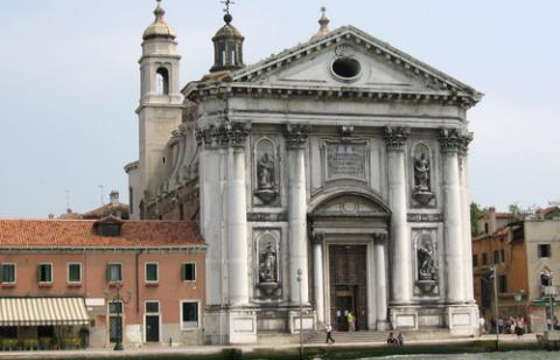
Church of Santa Maria del Rosario (Gesuati) in Venice - 18th century baroque architecture


Church of Santa Maria del Rosario(Gesuati)

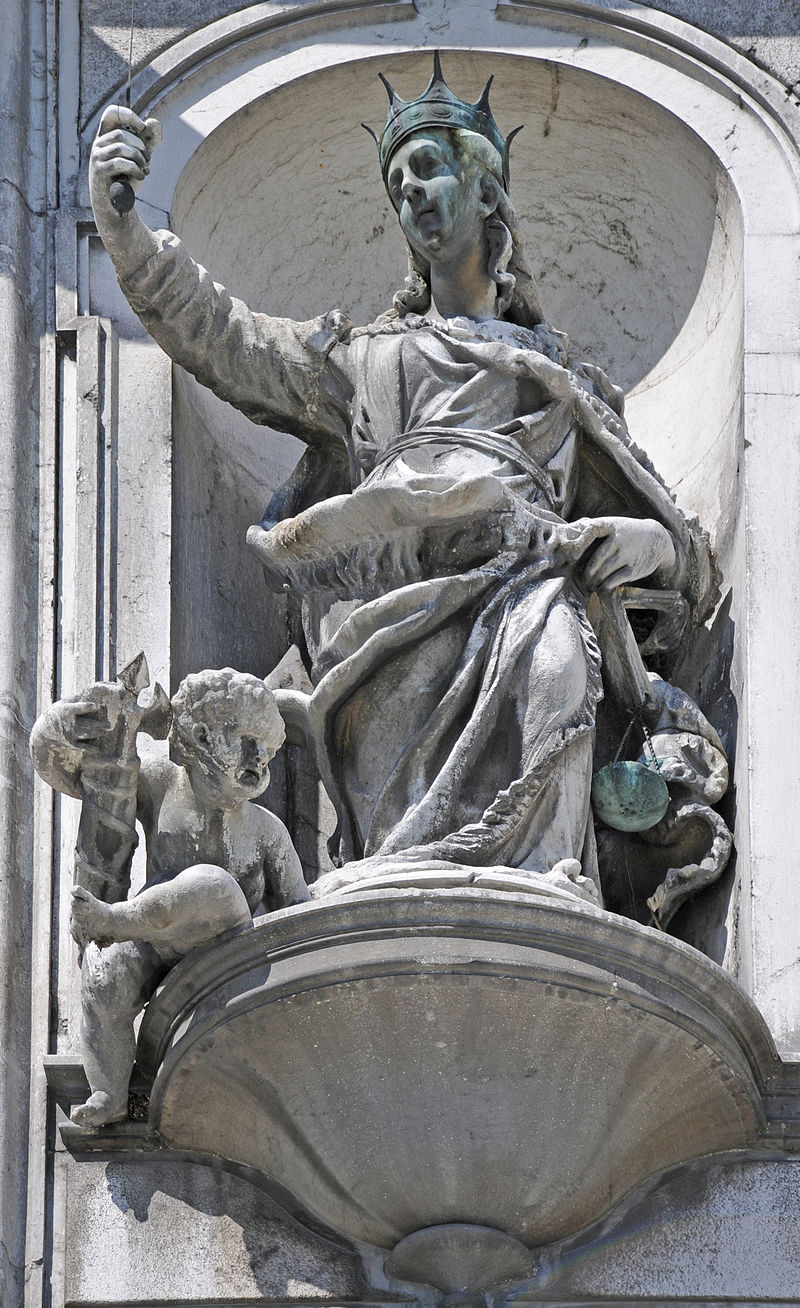
The Church of the Gesuati, the largest convent complex in XVIIIth century Venice, was built between 1726 and 1735 for the Dominican Order to replace the smaller church that still stands beside it, which had become too small to hold all the parishioners. The Dominican Order took over from the Jesuates (from whom the church took its name) in 1668, when the order was suppressed. Giorgio Massari was the architect who designed the church and the decorations in the interior, with the help of two great artists of the time: Giambattista Tiepolo and Gian Maria Morlaiter. The three definitively established their fame in the city thanks to the remarkable work they did on the church. There is a beautiful harmony to the interiors, with the striking ceiling frescoes by Giambattista Tiepolo, featuring three splendid frescoes representing “The Virgin Appearing to St. Dominic”, “The Institution of the Rosary” and “The Glory of St. Dominic”, surrounded by a number of monochrome medallions.


Gesuati (Wikipedia)

Santa Maria del Rosario (St. Mary of the Rosary), commonly known as I Gesuati, is an 18th-century Dominican church in the Sestiere of Dorsoduro, on the Giudecca canal in Venice, northern Italy. The classical style building has a well-lit interior and is exceptional in preserving its original layout and Rococo decoration intact. The church and almost all its sculpture and paintings were created within a thirty-year period: construction began in 1725, the church was consecrated in 1743, and the last sculptural decoration was in place by 1755.


Baroque (Wikipedia)

The Baroque is a style of architecture, music, dance, painting, sculpture, and other arts that flourished in Europe from the early 17th century until the 1740s.


baroque (Websters)

Baroque came to English from a French word meaning "irregularly shaped." At first, the word in French was used mostly to refer to pearls. Eventually, it came to describe an extravagant style of art characterized by curving lines, gilt, and gold.


.

Monday, August 30, 2021

Mariani Nut Company (Yolo County)

Since cow milk isn't really necessary for an adult diet, as it was intended by nature in order to help a calf to gain a ton or two, the various almond, walnut, and other "milks" can work fine for diet and for recipes that ask for milk. Also, cow milk has a lot of sugar; 13 grams per cup on one label that I looked at recently. Last week I purchased some walnut milk, which has only 2 grams of sugar and is not a GMO food. I didn't even look at the producer, which I saw today was the Mariani Nut Company (or Mariani Family Orchards) in Winters, California; founded in 1906.

From the container/label:

Meet the family

For five generations, the Marianis have been farming the land in California. Enjoy our family's labor of love any time of the day for a simply better way to live the good life.

I would venture a guess that the Mariani family, who were originally from Croatia, was either "Istrian Italian" or "Dalmatian Italian." For example, the famous race car driver Mario Andretti was born in Montona, Italy; however this town is now part of Croatia. There were a lot of Venetians who had lived in those regions going back centuries, particularly in Istria. I don't claim to know who has the better irredentist claim to Trieste or Istria, but it has long been in intellectual and historical dispute. In any case, the Mariani family has an interesting history: Our Family Story. There has also historically been a large Croatian-American population in San Francisco and the greater bay. The Mariani Nut Company is located in Yolo County, east of Napa County and north of Solano County. I purchased the "Original Walnutmilk" at Safeway.

Mariani.com

Mariani Nut Company (facebook)


*************************


I'm backdating this from October 21. I'm not going to be posting much for perhaps five or six months, as my mother's passing has taken an unexpected legal turn. Things are very uncertain for me as of now, and I have to address it.

.

Monday, July 12, 2021

Italian Cheese Board: Four famous northern cheeses

Italian Cheese Board (Safeway)

Last week I purchased an item at the supermarket chain Safeway called 'Italian Cheese Board'. Not that it was particularly fancy, but they were very tasty cheeses; four little stacks of northern cheeses which are well known in America, stacked on top of a hard waxed cardboard backing. There are other cheeses a bit off the beaten path of course, but I thought it significant that these four are so well-known worldwide. Of course Parmesan--originating from Emilia and Lombardia--would be the equivalent to Swiss, feta, gouda, muenster, cheddar, etc. Aged and in slices, it was very adequate in this product. Officially, the name is Parmigiano-Reggiano cheese.

Aged and delicious Asiago cheese has increased much in popularity in recent years, and is similar to Parmesan, but it also seems to be a bit like aged gouda. It originates in Veneto and Trentino, and is very adequate in this product. Provolone cheese should be well-known to any cheese lover, and originates in the Po Basin of Lombardia and Veneto. It's somewhat like white American cheese, but is also a bit like Helvetica cheese from Switzerland. Now "provolone valpadana" is not the same as "provolone del Monaco" originating from the Naples area.

Fontina cheese, which originates in the Aosta Valley, is similar to Swiss cheese. In the Alps or Apennine Mountains, some cheese is traditionally stored for six months or so in a cave for aging. Although well packaged, the damp conditions are perfect. Some of these caves are fancy, but many are just small rural caves where individuals or families can age home made cheese. In Lombardia I saw the name for these caves once from a book I have, but I couldn't locate it; I want to say a "cave grotto," but I think it was another word that starts with a "g." It showed a small cave with a heavy old fashioned door. This method goes back many centuries. In more urban settings, cheese is stored in deep cellars to age, although I think the cave method seems to be more effective for the best results. The dampness is probably the key. There are also special wooden boxes constructed for aging cheese, some very small for a family home.


Fontina cheese aging in a damp Alpine cave

Top 20 Most Popular Italian Cheeses

A Trip to a Cheese Cave, Arona, Piedmont, Italy

Valentine Warner visits the Fontina Cheese Caves, Aosta Valley, Italy

.

Tuesday, June 29, 2021

Abarth: Part 1: - 'What Is The Difference Between Abarth And Fiat?'


'What Is The Difference Between Abarth And Fiat?'

By Sam - GarageDreams.net - November 27, 2020

If you are familiar with Fiat, or even European sports/performance cars in general, then you have probably come across the term “Abarth”.

In 20th Century Italy, Abarth became synonymous with strong and fast (Italians would ask for an “Abarth coffee” for example).

Abarth owners will generally swear by their cars and be very enthusiastic about them. Even Doug “Quirks and Features” Demuro is a fan:
A Used Fiat 500 Abarth Is the Most Fun You Can Have For $9,000

Abarth has always been a fairly niche proposition, so what exactly is the difference between Abarth and Fiat?

In this short edition of Car Facts, we take a look at the differences between Fiat and Abarth.


The History Of Abarth

Abarth was founded in 1949 by Carlo Abarth, who had always had a passion for Motorsport and vehicles since a young age.


Carlo Abarth with some of his weird and wonderful racing creations


In its early days, Abarth produced both custom vehicles built for racing (starting with the 204 A Roadster based on the Fiat 1100) as well as producing tuning kits for existing vehicles to improve their power and performance.

A big breakthrough for Abarth came in 1958, when Fiat released the original 500.

Abarth developed a modified version (the ‘595’ – as per the modern 500 Abarth, and later the 695) that had substantially more power and performance prowess.

This is perhaps Abarth’s most famous creation.


An example of the original 595 Abarth

Over the following years, Abarth continued to develop and release performance kits as well as their own race cars and modified variants.

con't....


************


Yesterday I parked next to a little Abarth hatchback, although I didn't notice it until I had already parked. Small and sightly, it had the old Abarth scorpion logo. As the article, which I couldn't publish in full, went on to state... Abarth is a subsidiary of Fiat. It can be ambiguous, as some cars can have the Abarth logo but not be a genuine Abarth. The old days of an automobile manufacturer being associated with a city, or additionally even a heritage, now it all to the highest bidder. However, Abarth is still headquartered in Turn as it has been since 1949.

Abarth 595 hatchback

Abarth 595 hatchback review - pictures


************


Abarth

Abarth & C. S.p.A. (pronounced [ˈabart]) is an Italian racing and road car maker and performance division founded by Italo-Austrian Carlo Abarth in 1949. Abarth & C. S.p.A. is owned by Stellantis through its FCA Italy S.p.A. division. Its logo is a shield with a stylized scorpion on a yellow and red background.

Type: Subsidiary (S.p.A.)
Industry: Automotive
Founded: March 31, 1949; 72 years ago
Founder: Carlo Abarth
Headquarters: Turin, Italy
Area served: EMEA
Key people: Olivier François, CEO; Alfredo Altavilla, COO
Owner:    Stellantis
Parent: FCA Italy S.p.A.
Website: www.abarth.com

.

Wednesday, May 26, 2021

Verucchio featrued on Windows 10 Spotlight


Verucchio, in the Emilia-Romagna region of Italy

[Featured now on Windows 10 Spotlight; I'm back-dating this from July 30]

The town of Verucchio isn't large—it ranges over just ten or so miles of hilltop—but its elevated position means this location has long been strategic. The spot has been inhabited for some 3,000 years and was once ruled by the Etruscans. Later, the town was named Verucchio (or Vero Occhio) translating to 'True Eye' in reference to its peak position: It affords sweeping views over a wide swath of coastal countryside in the Emilia-Romagna region of northeast Italy. Besides cozy winding streets and charming tiled-roof houses, Verucchio boasts the magnificent Malatesta Castle and an early 13th-century Franciscan convent. Legend has it that eight centuries ago, Saint Francis of Assisi planted the cypress that's still growing outside of the convent.


Many people are unaware that the Etruscan civilization went right up to southern Lombardy, and after the Roman conquest they migrated into the Alps and merged with several other ancient peoples to form a particular Rhaetian state BCE, which itself was later conquered by the Romans.

In Italy, they're historically very good at not scaring a landscape; not blocking out views of mountains, lakes, etc. All of those towns and villages; the sightly old buildings of tan and orange, amid the plains of green, the blue skies, and white clouds. The landscapes are like works of art in of themselves.

.