Saturday, June 30, 2012

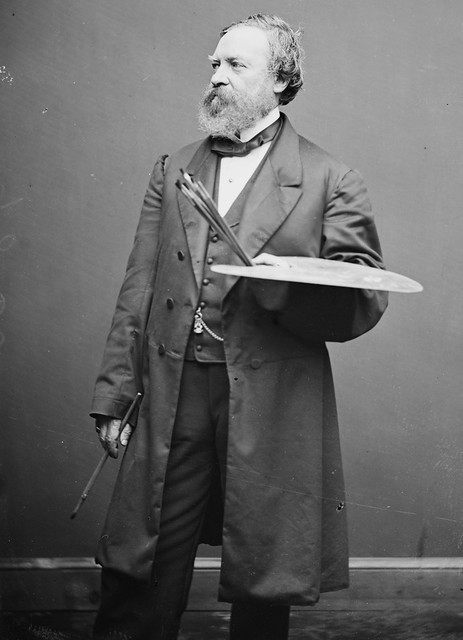
Constantino Brumidi: Artist of the Capitol

Brumidi was half Roman, so we conisder that at least an honorary Cisalpine; and in our opinion, a Padanian-American. Modern Romans are northern in character. It's surprising that there isn't much information out there on him, considering that his craftmanship is still very much featured in the U.S. capitol building. Here is a sample of that artwork. It appears--to put it bluntly--like any situation where someone was contracted to do a job, did it very well, and was forgotten about.

June 10, 2008: Rep. Ackerman manages legislation on the House floor to posthumously award Constantino Brumidi, the Artist of the Capitol, with a Congressional Gold Medal.


Constantino Brumidi (from Wikipedia)

Constantino Brumidi (July 26, 1805 – February 19, 1880) was a Greek/Italian-American historical painter, best known and honored for his fresco work in the Capitol Building in Washington, DC.


Parentage and early life

Brumidi was born in Rome, his father a Greek from Filiatra in the province of Messinia, Greece, and his mother an Italian. He showed his talent for fresco painting at an early age and painted in several Roman palaces, among them being that of Prince Torlonia. Under Gregory XVI he worked for three years in the Vatican.


Emigration and following work

The occupation of Rome by French forces in 1849 apparently persuaded Brumidi to emigrate, having joined the short-lived risorgimental Roman Republic, and he sailed for the United States, where he became a naturalized citizen in 1852. Taking up his residence in New York City, the artist painted a number of portraits. Subsequently he undertook more important works, the principal being a fresco of the Crucifixion in St. Stephen's Church, for which he also executed a Martyrdom of St. Stephen and an Assumption of Mary. He also executed frescoes at Taylor's Chapel, Baltimore, Maryland.

In 1854 Brumidi went to Mexico, where he painted an allegorical representation of the Holy Trinity in the Mexico City cathedral. On his way back to New York he stopped at Washington D.C. and visited the Capitol. Impressed with the opportunity for decoration presented by its vast interior wall spaces, he offered his services for that purpose to Quartermaster General Montgomery C. Meigs. This offer was accepted, and about the same time he was commissioned as a captain of cavalry.

His first art work in the Capitol Building was in the meeting room of the House Committee on Agriculture. At first he received eight dollars a day, which Jefferson Davis, then Secretary of War of the United States, helped increase to ten dollars. His work attracting much favourable attention, he was given further commissions, and gradually settled into the position of a Government painter. His chief work in Washington was done in the rotunda of the Capitol and included the Apotheosis of George Washington in the dome and the Frieze of American History, which contains allegorical scenes from American history. His work in the rotunda was left unfinished at his death, but he had decorated many other sections of the building, most notably hallways in the Senate side of the Capitol now known as the Brumidi Corridors.

In the Cathedral-Basilica of Sts. Peter and Paul in Philadelphia, Pennsylvania, he pictured St. Peter and St. Paul. Brumidi was a capable, if conventional painter, and his black and white modeling in the work at Washington, in imitation of bas-relief, is strikingly effective. He decorated the entrance hall of Saleaudo, located at Frederick, Maryland, and listed on the National Register of Historic Places in 1979.

He died in Washington, DC.

Forgotten for many years, Brumidi's role was rescued from obscurity by Myrtle Cheney Murdock.

.

Tuesday, May 29, 2012

New deadly quake shakes northern Italy

New deadly quake shakes northern Italy [Yahoo News link with links to images on bottom]

Stephen Jewkes - Reuters - May 29, 2012

CAVEZZO, Emilia-Romagna (Reuters) - An earthquake killed 16 people and injured about 350 in northern Italy on Tuesday, spreading fear among thousands of residents living in tents after a similarly strong tremor in the same region flattened their homes nine days ago.

Rescuers were searching through the rubble of houses and warehouses in the Emilia-Romagna region, where several building sites had just reopened after the previous quake on May 20.

Officials said 16 people were confirmed dead, more than twice the number killed in the May 20 quake that, like Tuesday's, had its epicenter near the city of Modena. The number of those forced to leave their homes doubled to 14,000.

Many residents ran out of buildings when they felt the 5.8-magnitude tremor, which hit shortly after 3 a.m. EDT just as operations to rebuild the quake-struck region were under way.

"As we were coming down the stairs, we heard the sound of crumbling houses around us. There was a big cloud of dust," said 72-year-old Giulio in Cavezzo, a badly damaged village about 30 km (20 miles) from Modena where three died.

Rescuers searched tirelessly for survivors despite initial operations being hampered by disruption to the mobile phone network and to the railway network around Bologna.

A woman was pulled alive from the debris of her house in Cavezzo after 12 hours searching, according to Sky Italia.

The quake was the most deadly to strike Italy since 2009 when a tremor partially destroyed the central city of L'Aquila, killing about 300 people and leaving thousands homeless.

With its streets deserted, Cavezzo looked like a ghost town. A shop in the centre still had fruit displayed on stalls outside in the street.

In a nearby empty coffee shop a half-eaten croissant was left on a plate on the bar and an apron lay on the floor.

"It's a disaster, I've never seen anything like it. An endless series of very strong tremors after those of May 20, which had already pulled everything to its knees," said a very shaken Stefano Draghetti, mayor of Cavezzo.

"We need a lot of help to restart, from those who can - the state, the European community."

Italian media showed buildings and shopping malls shaking and collapsing under the force of the quake and ambulances racing across towns. Churches and factories were badly damaged.

In Medolla, also near the epicenter, an electromedical equipment plant collapsed, killing a worker. Rescuers were frantically searching for three other workers still believed to be under the rubble, a Reuters witness said.

"The situation is one of great fear and uncertainty," said Salvatore Iannizzotto, provincial head for the Modena police.

"The population was becoming more relaxed and slowly moving back into their homes. They have now left their homes again."

The civil protection service was setting up new emergency campsites to provide residents with shelter for the night.


QUAKE WOUNDS ITALY

The quake hit one of the most productive regions in a country struggling with a deep economic recession.

Farmers estimated the damage of the previous quake to agriculture in one of Italy's most fertile areas at more than 200 million euros ($250 million).

Sports car maker Ferrari and motorcycle firm Ducati closed their plants in the region for safety reasons. The world's top pasta-maker Barilla, based in Parma, evacuated a plant for 15 minutes but said production had not stopped. Italian bank BPER closed around 20 branches for safety reasons while medical products company Sorin said its plant in Mirabella had been damaged.

The quake was felt across northern and central Italy, including in the most populous northern city Milan. The area was hit by several large aftershocks, one of 5.6 magnitude

Schools and buildings were evacuated as far south as Florence. A soccer match between Italy and Luxembourg in Parma scheduled later on Tuesday was called off.

Emilia-Romagna, famed for its cured ham and mature Parmesan cheese, is in the middle of the Po plain, traditionally considered safer than other areas of seismic Italy.

Several historic buildings, some hit by the previous quake, suffered further damage.

In the town of San Felice sul Panaro whose imposing 14th-century Estense Castle was badly damaged in the quake just over a week ago, three workers were killed by a crumbling warehouse.

"The situation is very serious, some people are stuck under the rubble," Alberto Silvestri, the town's mayor, told Italian television.

Italian media also reported serious damage to the Baroque cathedral of Carpi and the Te Palace in Mantua, an architectural masterpiece from the Renaissance.

Prime Minister Mario Monti, whose cabinet is due to approve fresh emergency measures on Wednesday, tried to reassure the population in an impromptu news conference.

"I want to assure everyone that the state will do all that it must do, all that is possible to do, as fast as it can to guarantee the return to normality in a region so special, so important, so productive for Italy," he said.

French President Francois Hollande's office said France stood ready to provide Italy with any experts or logistical aid it might need. Greece was among the first nations to offer help.

A 3.8 magnitude quake was also felt in western Bulgaria on Tuesday, causing no casualties or serious damage, the National Geophysical Institute said. It had its epicenter near Pernik.

(Writing by Lisa Jucca; Additional reporting by Antonella Cinelli and Steve Scherer in Rome, Svetlana Kovalyova, Antonella Ciancio and Lisa Jucca in Milan; Editing by Pravin Char)

.

Friday, May 25, 2012

Ferrari rides wave of green super-cars


[Above: BEIJING, CHINA - APRIL 27: A model stands beside a Ferrari F12 Berlinetta car during the 2012 Beijing International Automotive Exhibition at China International Exhibition Center on April 27, 2012 in Beijing, China. More than 2,000 automotive enterprises from 14 countries and regions participated in the 2012 Beijing International Automotive Exhibition from April 23 to May 2. (Photo by Feng Li/Getty Images; Photo: Feng Li / Getty Images]

Spotlight on Technology (Market date provided by Bloomberg News)
Ferrari hybrid surpassing Enzo as costliest car

Tommaso Ebhardt (tebhardt@bloomberg.net) - Bloomberg News - May 17, 2012

Ferrari will turn to fuel-saving hybrid technology to create its most powerful and expensive model, showing that even elite performance cars are under pressure to get greener.

The Italian automaker's first hybrid, called the F70 in trade press and blogs, will probably surpass the $850,000 price of the limited-edition Enzo, said a person familiar with the plan.

Using technology developed for Formula One racing, the model will combine two electric motors with a 12-cylinder gasoline engine to produce more horsepower than any previous Ferrari, while cutting fuel consumption 40 percent.

"Dedicated Ferrari drivers look first at power and technology," said Fabio Barone, chairman of the Passione Rossa owners club, who has two Ferraris. "The new Enzo will satisfy their appetite."

The model is part of a wave of green super-cars as high-end automakers step up efforts to make their models environmentally palatable, while still maintaining or boosting performance. As more models become available and emission rules tighten, sales of hybrid super-cars may surge from less than 100 this year to more than 2,100 in 2015, according to IHS Automotive.

Top-of-the-line Porsche

Porsche, which now sells hybrid versions of the Cayenne sport utility vehicle and Panamera four-door coupe, plans to start deliveries next year of the 918 Spyder, which will cost around $845,000. The top-of-the-line Porsche sports car will combine a 500-horsepower engine with 218-horsepower electric motors to hit a top speed of more than 199 mph.

BMW will roll out the i8 plug-in hybrid in 2014. The BMW super-car will be able to drive up to 21 miles on electric power and accelerate to 62 mph in less than 5 seconds.

"If you want to sell a vehicle in the U.S. and Europe, you must show you want to make the difference in terms of lower emissions, even if you sell" a $125,000 car, said Ian Fletcher, an analyst at IHS Automotive in London. "Even a super-car becomes more usable for city driving if it carries a hybrid engine."

Toyota Motor Corp.'s Lexus, which has led the way among luxury-car makers in introducing the technology, offers five hybrid models, ranging from the $29,120 CT to the $112,750 LS. Daimler AG's Mercedes-Benz sells the $91,850 S-Class hybrid and introduced a diesel-electric version of the E-Class in Germany this year. Volkswagen AG's ultra-luxury Bentley brand is considering a plug-in hybrid version of a planned SUV.


U.S. seen as big market

The Ferrari hybrid will go on sale starting next year, with the United States likely to be the model's biggest market, the person said, declining to be identified because the plans have not yet been made public. Ferrari will produce a limited number of the model, with the final price yet to be decided, the person said.

Ferrari, in Maranello in northern Italy, will show the heir to the Enzo this year, Chairman Luca Cordero Di Montezemolo said in a statement. Ferrari declined to comment on the vehicle beyond the statement.

.

Thursday, May 24, 2012

Emilia–Romagna: 4 killed, thousands homeless in 6.0 quake


Associated Press - May 21, 2012

Sant'Agostino di Ferrara

[Right: The historic Modenesi's Towers of Finale Emilia, Italy, were destroyed by an earthquake that left thousands homeless; Photo: Roberto Serra/Iguana Press / Getty Images]

Four people died, dozens were injured and 3,000 were left homeless after a magnitude 6.0 earthquake shook several small towns in northeast Italy on Sunday.

Civil protection agency official Adriano Gumina described the temblor as the worst quake to hit the region since the 1300s. It struck at 4:04 a.m., with its epicenter about 22 miles north of Bologna at a relatively shallow depth of 3.2 miles, the U.S. Geological Survey said.

The four people killed were factory workers on an overnight shift when their buildings, in three separate locations, collapsed, agency chief Franco Gabrielli said. In addition, he said, two women died - apparently of heart attacks that may have been caused by fear.

Two of the dead were workers at a ceramics factory in the town of Sant'Agostino di Ferrara. Their cavernous building turned into a pile of rubble.

"This is immense damage, but the worst part is we lost two people," fellow worker Stefano Zeni said. News reports said one of the dead had worked the shift of an ill colleague.

Premier Mario Monti, in Chicago for the NATO summit, said he was returning to Italy before the meeting ends because of the quake.

[Left: Onlookers react to a quake that killed four factory workers in northeast Italy; Photo: Luca Bruno / Associated Press]

The quake struck in the farm region known for production of Parmigiano and Grana cheeses. Italy's farm lobby Coldiretti said about 200,000 huge, round cheeses were damaged, causing a loss to producers of $65 million.

In Sant'Agostino, resident Alberto Fiorini described "pandemonium" during the night. "I took shelter under the bed, and I prayed," he said.

The epicenter was between the towns of Finale Emilia, San Felice sul Panaro and Sermide, but the quake was felt as far away as Tuscany and northern Alto Adige.

Pope Benedict XVI, in his traditional Sunday appearance from his studio window overlooking St. Peter's Square, said he was "spiritually close" to those affected by the quake and asked people to join him in prayers for the dead and injured.

.

Thursday, May 3, 2012

San Francisco Symphony: Barbary Coast and Beyond

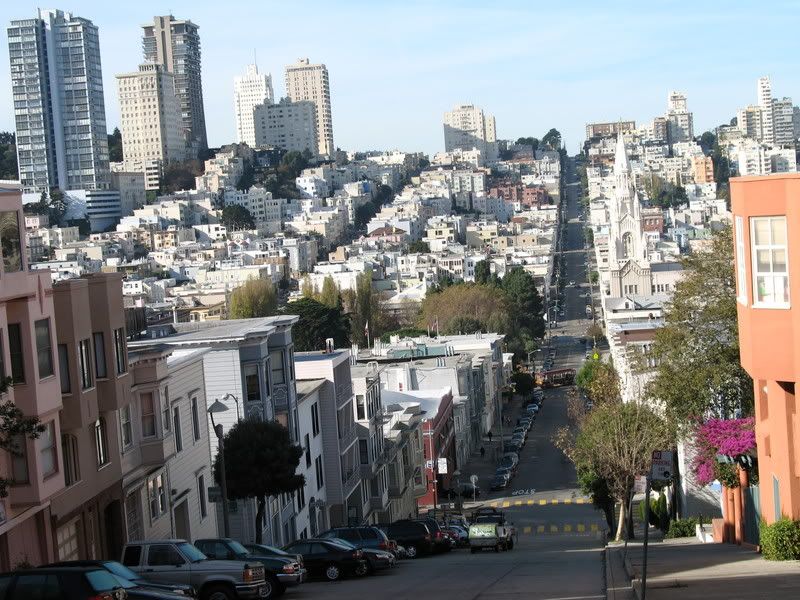
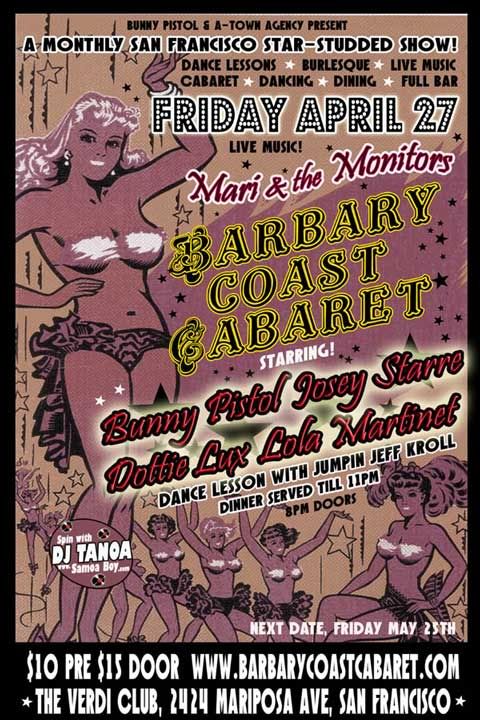
The San Francisco Symphony will feature three evenings of music from the Barbary Coast era of the latter half of the 19th century. I think that this is significant in regards to our heritage because--probably more than any other port in North America--San Francisco's Barbary Coast was the gate in which our Cisalpine foremothers and forefathers transgressed, even if they eventually settled in other areas of Northern California or Western Nevada.

A large number settled in North Beach, then part of the Barbary Coast. At that time, that area was on the north coast of the city; and has long since been subject to landfill, which has turned North Beach into an inland district. The name, however, stuck. They were more pioneer than immigrant, because all they did was build, create, and practice self-determination. The Barbary Coast was a wild and dangerous place then. It was like a Deadwood on the coast, or similar to other frontier towns. The historical record is crystal clear that our people has nothing to do with this condition; but were tough enough to handle it and thrive. What I always found interesting is that San Francisco is so far from Genoa, which was the port of departure even if a family was from some other region of the north.

So often, I believe, modern Europeans--reading about the history of European immigration to America--get the impression of great degrees of ethnic bigotry. They don't seem to comprehend that so many of these people were self-determinists who just wanted to practice this self-reliance in a way that they could not in their own country. For example, "who their family was" was not nearly as important as "what they could build and create." Very often, that immigration was totally different than the immigration in modern times.


Barbary Coast and Beyond: Music from the Gold Rush to the Panama-Pacific Exposition


Program

Music from the Gold Rush to the Panama-Pacific Exposition

Program to include works by Bull, Gottschalk, Liszt, Meyerbeer, Offenbach, Wieniawski, Tchaikovsky, Verdi, Sousa, and Saint-Saëns

Sing along with the Orchestra to “California, Here I Come”, “Hello, Frisco, Hello!”, “Hail! California”, and “San Francisco”

Thu, May 10, 2012 8:00pm
Davies Symphony Hall
$35 to $140

Fri, May 11, 2012 8:00pm
Davies Symphony Hall
$35 to $140

Sat, May 12, 2012 8:00pm
Davies Symphony Hall
$35 to $145


More about this Concert

Read the article by James M. Keller, "Music in San Francisco, From the Barbary Coast and Beyond ", about San Francisco's musical history. Read the article online.

Inside Music, an informative talk with James Keller, begins one hour prior to concerts. Free to ticketholders  Learn More.

Meet Larry Rothe, author of Music for a City, Music for the World: 100 Years with the San Francisco Symphony, for a book signing in the Symphony Store following the May 12 concert.


Conductor/Performers

Michael Tilson Thomas
conductor

Val Diamond
narrator/actress

Laura Claycomb
soprano

Vadim Gluzman
violin

Anton Nel
piano

Cameron Carpenter
organ
Bill Evans,  Jody Stecher,  Scott Nygaard
banjo

Caroline McCaskey
musical saw

Jack Van Geem
marimba

United States Air Force Band of the Golden West, Captain Haley Armstrong
commander and conductor

James Robinson
producer and director

J.D. McClatchy
writer

Jeffrey Teeter
video designer


Experience the vibrant musical history of San Francisco in Barbary Coast and Beyond: Music from the Gold Rush to the Panama-Pacific Exposition. MTT and the Orchestra are joined by guest actress and narrator Val Diamond, former star of Beach Blanket Babylon, in a multi-media musical performance celebrating the history of our City and Orchestra from the mid-1800s through the Orchestra’s founding in 1911 and beyond.

In a lively evening of musical heritage visit the rowdy days of the Gold Rush and hear familiar works of the time such as “Oh, Susanna” and “Oh My Darling, Clementine.” Revel in San Francisco’s glorious musical past as organist Cameron Carpenter, soprano Laura Claycomb, violinist Vadim Gluzman, pianist Anton Nel, and the 32-member US Air Force Band of the Golden West perform works brought to San Francisco by virtuosi such as Louis-Moreau Gottschalk and Ole Bull, and opera stars Adah Menken and Luisa Tetrazzini. Popular pieces of the time by Offenbach, Tchaikovsky, Saint-Saëns, and Sousa are represented as well, in an entertaining blend of musical styles.  And, sing along with the Orchestra to some of San Francisco’s most memorable tunes such as “California, Here I Come,” “Hello, Frisco, Hello!,” and “San Francisco.”


Patrons with Disabilities

For wheelchair accessible seating, please call Patron Services at (415) 864-6000.

Learn more about our services for patrons with disabilities.


Program Notes


Get in Touch

Box Office:  (415) 864-6000


Excerpt from the above featured article 'Music in San Francisco, From the Barbary Coast and Beyond' by James M. Keller:

By 1853, San Francisco could boast ten dedicated theaters. These would soon host many of the great names of the nineteenth-century stage, the likes of Dion Boucicault, Joseph Jefferson, Charles Kean, Edwin Forrest, and Edwin Booth. The city went mad for Shakespeare, and it cultivated a similar passion for opera. The first complete opera given in town was presented at the Adelphi Theatre in February 1851, a performance of La sonnambula by Vincenzo Bellini, whose operas would remain immensely popular in San Francisco along with those of his compatriots Gaetano Donizetti and Giuseppe Verdi. Notable opera stars established themselves here, with partisans lining up behind their favorites of the triumvirate of divas who reigned in the 1850s: the Boston-born Eliza Biscaccianti (a.k.a. “The American Thrush”), the Irish Catherine Hayes (“The Swan of Erin”), and the British Anna Bishop, whom connoisseurs generally considered the finest of the three soprano songbirds, judged on strictly vocal merits.


Excerpt from the program notes from above, entitled 'Barbary Coast and Beyond: Music from the Gold Rush to the Panama-Pacific Exposition' by James M. Keller:

The prospectors arrived with few possessions, but they carried songs with them. Many carried banjos. The five-string banjo tells the story of crossed and blurred barriers of class and race. San Francisco celebrity Lotta Crabtree played banjo for a rough and tumble Gold Rush audience, but opera diva Adelina Patti was also a banjo devotee and gave private recitals for friends.  The early banjo was a simple joining of vine, hide, and calabash. Its form and playing technique evolved from African prototypes. By the late nineteenth century, factory production employing skilled artisans produced an instrument that was at once a work of art and a precision tool for playing increasingly complex music, such as the tunes we hear tonight. Philadelphian Paul Eno (1869-1924) was a celebrated composer who conducted several banjo orchestras. Although his composition “A Ragtime Episode” was published in 1903, earlier cylinder recordings suggest it was in circulation before it appeared officially in print. Stephen Foster (1826-64) composed for the parlor and for the minstrel stage. His “Hard Times” (1854) remains current and viable today. Parke Hunter (1876-1912) was a prolific composer and a virtuoso banjoist.  His “Pensacola” captures the banjo’s essential qualities.

Polish violinist Henryk (Henri) Wieniawski (1835-80) followed the route to America in 1872. By that time he was one of Europe’s leading virtuosos. He had spent more than a decade in Russia, where pianist-composer Anton Rubinstein had lured him in an effort to improve musical standards in that country. Wieniawski served as solo violinist to the Tsar, was concertmaster for the Russian Musical Society, and taught at the newly established Saint Petersburg Conservatory. He eventually gave in to wanderlust. During his first year in America, he and Rubinstein (his accompanist) gave 215 concerts in sixty cities throughout the eastern states; and the second year (with soprano Pauline Lucca as a guest artist) his calendar extended to 240 performances. The highlight of that second year was his time in California. He documented his time in the state by composing a Souvenir de San Francisco on American song motifs, which was published in 1874. He may have begun his Violin Concerto No. 2 as early as 1856, although it was not premiered until 1862, when he was soloist in Saint Petersburg with his friend Rubinstein conducting. It would have made a hit, and no movement more than the crackling finale, marked à la Zingara—“in Gypsy Style.”

Early San Francisco embraced singers enthusiastically. The Adelphi Theater provided the stage for the first complete opera given in town, in February 1851. The work was La sonnambula by Vincenzo Bellini (1801-35), whose operas would remain immensely popular here, along with those of Gaetano Donizetti (1797-1848) and Giuseppe Verdi (1813-1901). San Francisco became a destination for opera stars of international stature, including the renowned soprano Adelina Patti, who made her local debut in March 1884 as prima donna of Colonel Mapleson’s Opera Troupe. A riot broke out when tickets for her appearances went on sale.

Early San Francisco embraced singers enthusiastically. The Adelphi Theater provided the stage for the first complete opera given in town, in February 1851. The work was La sonnambula by Vincenzo Bellini (1801-35), whose operas would remain immensely popular here, along with those of Gaetano Donizetti (1797-1848) and Giuseppe Verdi (1813-1901). San Francisco became a destination for opera stars of international stature, including the renowned soprano Adelina Patti, who made her local debut in March 1884 as prima donna of Colonel Mapleson’s Opera Troupe. A riot broke out when tickets for her appearances went on sale.

.

Sunday, April 22, 2012

Top 100 Bay Area Restaurants 2012: Part 3 of 3

Piccino

1001 Minnesota St. (at 22nd Street)
San Francisco
Tel. (415) 824-4224      
Map | www.piccinocafe.com
Before Piccino opened, few people, other than the area's residents, knew the Dogpatch neighborhood. Last year, owners Sher Rogat and Margherita Stewart Sagan moved the restaurant into much larger quarters in an old Victorian. They also lured MAC clothing into an adjoining space, developed a wine bar-shop called Dig, and opened Piccino coffee bar. The restaurant has become a destination for the Cal-Ital food produced by Rachel Sillcocks. Pizza, with a thin, golden and crisp crust, is at the heart of the menu, but Sillcocks creates some exceptional appetizers, salads, soups and a single large plate a night. Thanks to Piccino, Dogpatch is now on the culinary map.

Specialties: Pizza with mushrooms, stracchino and shaved garlic; pork and beef meatballs; pan-seared black cod with purple cauliflower.

Hours

Open continuously for lunch and dinner 11 a.m.-10 p.m. Friday-Sunday;lunch 11 a.m.-3 p.m. Tuesday-Thursday, dinner 5-10 p.m. Tuesday-Thursday. Closed Monday.

Cuisines

  • Italian
  • Pizza

Features

  • Beer and wine
  • Corkage ($15)
  • Credit Cards: Accepted
  • Disabled Access
  • Parking: Street (Difficult during the day, easy at night.)
  • Seating (70)
  • Lunch (Tuesday-Sunday)
  • Reservations: Accepted

Chronicle Rating

Overall
Price
Noise
Food
Service
Ambience


Quince

470 Pacific Ave. (near Montgomery)
San Francisco
Tel. (415) 775-8500      
Map | www.quincerestaurant.com
Opening the wildly popular Cotogna next door allowed Michael and Lindsay Tusk to further refine their elegant flagship restaurant. Pasta is always a standout, with combinations such as cappellacci filled with quail and served with flowering rapini, pine nuts and golden raisins. Other dishes are equally astounding. Lindsay Lindsay Tusk has reconfigured the elegant dining room, a warehouse-size space made intimate with dark wood and given sparkle with glittery chandeliers, by removing 15 seats; she also redecorated the lounge to make it more comfortable. While there's only a fixed-price menu in the restaurant, there are a la carte offerings in the lounge, including a Parmesan cheese tasting.

Specialties: Menu changes nightly.

Hours

Dinner 5-10 p.m. nightly.

Cuisines

  • California
  • Italian

Features

  • Corkage ($25)
  • Credit Cards: Accepted
  • Disabled Access
  • Full Bar
  • Bar Bites
  • Seating (65 (plus 10 at the bar, 16 in the lounge)
  • Reservations: Accepted

Chronicle Rating

Overall
Price
Noise
Food
Service
Ambience


Sante

100 Boyes Blvd. (in hotel lobby)
Boyes Hot Springs
Tel. (707) 939-2415      
Map | www.fairmont.com/sonoma
As a hotel restaurant, Sante walks the line between elegant and casual, weighing the demands of Sonoma Mission Inn guests and those who come just to dine. Andrew Cain has done that masterfully with his upscale take on some familiar favorites such as his "grown up macaroni and cheese"; it mixes orecchiette with lobster, black truffles and Val d'Aosta fontina. The restaurant overlooks the swimming pool and has a casual spa-like air, but the tables are set for luxury. The restaurant features a three- or four-course menu, plus a chef's tasting menu; a la carte pricing is available on request. The impressive wine list, like the food, is locally sourced.

Specialties: Seasonal cheese selections (up to 30); seasonal offerings such as lamb with braised shoulder, and cannelloni with artichokes, carrots and white bean puree.

Hours

Dinner 6-9:30 p.m. nightly.

Cuisines

  • California
  • French

Features

  • Corkage ($25)
  • Credit Cards: Accepted
  • Disabled Access
  • Full Bar
  • High Chairs
  • Live music
  • Parking: Valet (Free at dinner)
  • Seating (120 (plus 20 on patio in the summer)
  • Reservations: Accepted

Chronicle Rating

Overall
Price
Noise
Food
Service
Ambience


Zuni Cafe

1658 Market St. (near Franklin)
San Francisco
Tel. (415) 552-2522      
Map | www.zunicafe.com
Even after more than 30 years in business, this restaurant is the place to send people who want to be surrounded by the San Francisco ethos. The food has the clean but soulful notes one expects, attracting a wide range of diners including politicians, artists, celebrities, business executives and a good number of tourists. They all seem to casually mingle over oysters, Caesar salad and the wood-fired chicken prepared by Judy Rodgers and her crew. Insider's tip: Try the margarita. The interior has a rustic but dramatic loft-like feel so unique, it couldn't be duplicated anywhere else.

Specialties: Oysters; Caesar salad; polenta with mascarpone; house-cured anchovies; house-ground hamburger; wood oven-roasted whole chicken; espresso granita.

Hours

Tues-Sat 11:30 a.m.-midnight; Brunch Sun 11:00 a.m.-2:30 p.m., dinner Sun 5-11p.m.

Cuisines

  • California
  • Mediterranean

Features

  • Online Reservation
  • Credit Cards: Accepted
  • Delivery/Take out
  • Disabled Access
  • Full Bar
  • High Chairs
  • Open Late
  • Outdoor Seating
  • Parking: Valet ($10)
  • Reservations: Recommended
  • Seating (100, plus 20 at bar)

Chronicle Rating

Overall
Price
Noise
Food
Service
Ambience


.

Saturday, April 21, 2012

Top 100 Bay Area Restaurants 2012: Part 2 of 3

Adesso

4395 Piedmont Ave. (at Pleasant Valley Road)
Oakland
Tel. (510) 601-0305      
Map | www.dopoadesso.com
It seems just about every restaurant these days offers house-made salumi, but no place does it better than this compact Oakland restaurant. Owner Jon Smulewitz was inspired by the aperitivo bars in Bologna and has recreated that feel in an industrial-looking space near his other Italian gem, Dopo. Chad Arnold creates up to 40 kinds of cured meats on a menu that includes pates, antipasti, oysters, cheese, dessert and exceptional cocktails. Every meat is distinctive -- you can taste the fennel, garlic and red wine in the Abruzzo,; the vanilla and anise in the Felino. Early in the evening and late at night, look for free platters of salumi to go with cocktails and wine.

Specialties: Any of the house-made salumi; pates such as duck liver mousse in a jar; 18-month-old prosciutto; any cocktail.

Hours

Dinner 5 p.m.-midnight Monday-Wednesday, until 1 a.m. Friday-Saturday.

Cuisines

  • Italian

Features

  • Beer and wine
  • Credit Cards: Accepted
  • Open Late
  • Seating (50)
  • Bar Bites
  • Reservations: No

Chronicle Rating

Overall
Price
Noise
Food
Service
Ambience


Flour + Water

2401 Harrison St. (at 20th Street)
San Francisco
Tel. (415) 826-7000      
Map | www.flourandwater.com
Even after nearly three years, getting a seat at this small Italian restaurant hasn't gotten any easier. While half the restaurant is open for walk-ins, if you don't get at the door well before the 5:30 p.m. opening, you're in for a long wait. However, people don't seem to mind once they fork into Thomas McNaughton's pasta with smoked duck and fresh horseradish or his classic take on the Piedmontese agnolotti dal plin. He also offers great pizza, a couple of main courses and some of the best Italian-inspired desserts in the city. The casual interior has a soulful quality, with stained-glass accents from the still-missed Myth, rustic ceiling beams and handsome walnut tables.

Specialties: Pasta tasting menu, featuring five pastas, appetizer and dessert ($60); chocolate budino tart with espresso caramel cream.

Hours

Dinner 5:30 p.m.-midnight nightly.

Cuisines

  • Italian
  • Pizza

Features

  • Beer and wine
  • Credit Cards: Accepted
  • Open Late (until midnight Thursday-Saturday)
  • Parking: Street (Fairly easy)
  • Seating (40 (plus 19 in the lounge))
  • Reservations: Accepted

Chronicle Rating

Overall
Price
Noise
Food
Service
Ambience


Pesce

2227 Polk St. (near Vallejo)
San Francisco
Tel. (415) 928-8025      
Map | www.pescesf.com
Venetian-inspired seafood is what sets this Polk Street restaurant apart from other Italian places. Chef-owner Ruggero Gadaldi, who also owns Beretta and Delarosa, offers a unique take on cicchetti, small plates such as grilled sardines, tuna conserva with a three-bean salad, or an Italian take on cioppino. The few larger plates include whole roast fish, and spaghetti with lobster, saffron, tomato and brandy cream sauce. You'll also find a few meat dishes, including milk-braised pork with gnocchi. The comfortable interior features a zinc bar, teak shelving, mahogany paneling and hexagonal floor tiles.

Specialties: Warm octopus salad with potatoes; crab tower; fennel and arugula salad; squid ink risotto; pappardelle with duck; sgroppino (a dessert drink).

Hours

Dinner 5-9:30 p.m. Sun.-Thurs., until 11 p.m. Fri.-Sat.

Cuisines

  • Italian
  • Seafood

Features

  • Online Reservation
  • Credit Cards: Accepted
  • Full Bar
  • Parking: Difficult
  • Parking: Street
  • Private Dining Room (Semi-private room for 14)
  • Reservations: Accepted
  • Seating (38 plus 15 at the bar)

Chronicle Rating

Overall
Price
Noise
Food
Service
Ambience


.