 |
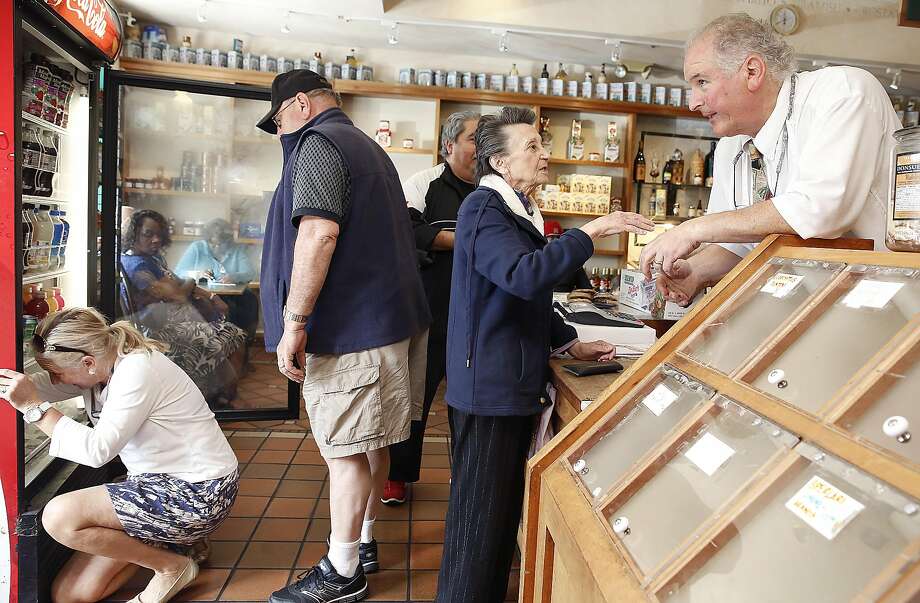
| David DeVincenzi (right), son of Genova Deli owner Dominic DeVincenzi, helps customer Mrs. Gasparro, while his wife, Patti, kneels in front of a display case to help Joe Scodella (center), a deli customer since 1956. |
'Oakland mourns the looming closure of 90 year old Genova deli'
Ethan Fletcher - San Francisco Chronicle - April 26, 2016
The vibe inside Genova Delicatessen on Monday afternoon had the feel of a living wake, with old friends gathering one last time to celebrate a loved one soon to pass.
In this case, that loved one took the form of overstuffed Italian sandwiches, homemade meat ravioli and softball-size fried artichokes, all of which longtime customers were loading up on one last time before this immensely popular 90-year-old Oakland institution closes for good on Saturday.
While the announcement was officially made late last week, the closure had been threatened — and for many locals, dreaded — since January. That’s when news leaked that owner Dominic DeVincenzi was considering shutting down his family’s flagship Italian deli due in part to a rent dispute with the property owners of Temescal Plaza, where Genova has been located since 1996. (It’s been in Temescal since 1926.)
According to David DeVincenzi, son of Genova Deli owner Dominic DeVincenzi, the family is continuing to work on finding a new location in Oakland.
“We’re working on a couple of places,” DeVincenzi said. Where that might be exactly, however, DeVincenzi was unwilling to divulge.
The Temescal neighborhood’s reputation has soared in recent years as a foodie destination — home to the likes of Pizzaiolo, Burma Superstar and Bakesale Betty — and as a hot spot for house hunters priced out of San Francisco. But the crowd inside Genova, packed with everyone from families to firefighters, felt very old school.
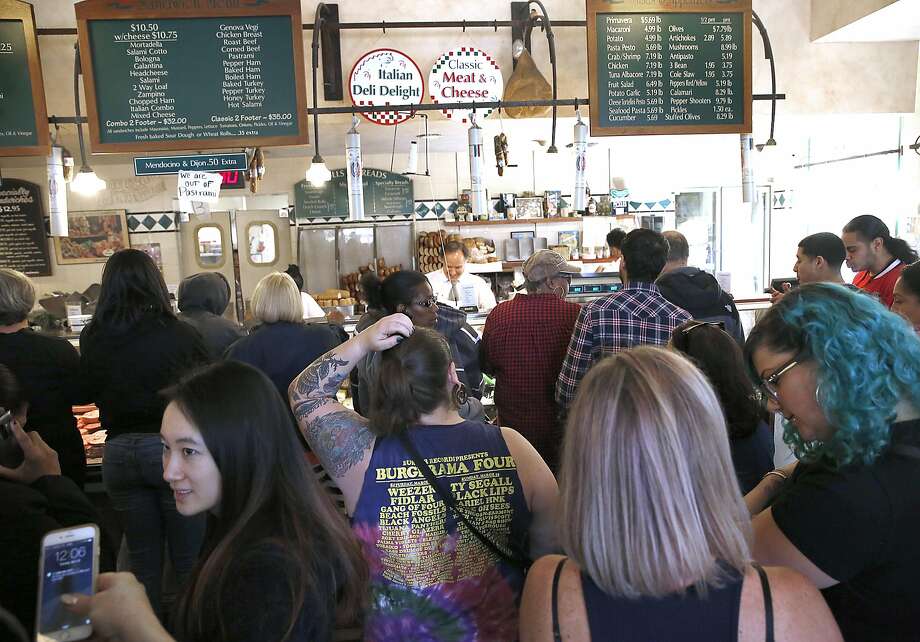 | |
| Customers pack Genova Delicatessen for their last orders and to say goodbye before it closes on Saturday after 90 years in Oakland. |
Generations of patrons
Terry Barnes, 41, grew up around the corner and said he’d been coming to Genova since he was 4 years old, back in the days when it was located in a tiny Victorian on Telegraph Avenue, and lines would stretch out the door and down the block. He was waiting for his number to be called — which even at 3 in the afternoon was taking upward of an hour — to get one final Italian combo sandwich with extra dry salame and marinated cucumbers. “And a cannoli. Gotta have my cannoli,” Barnes added.
“My family, my mother and my grandmother and all my cousins, we all grew up on this,” he said. “My kids grew up on this, my kids’ friends and their cousins all grew up on this. Every girlfriend I ever had, I would take them here, and now I see all of them coming in with their kids. So it’s sad to see this happen because you would think this place would stick around.”
Genova’s factory and Napa store will remain open, and the property’s landlords have said they’re looking to keep the space as a deli. That seemed small consolation for many customers, nearly all of whom it seemed had been coming for decades and knew each other.
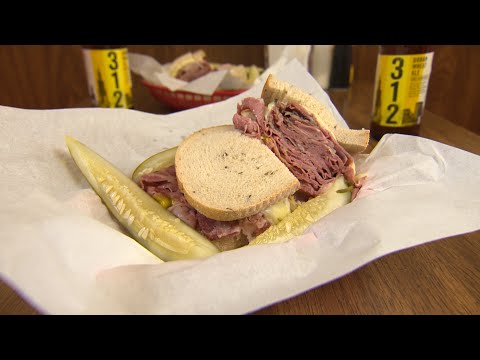
Another customer, Emmy Fearn, ordered three sandwiches — an Italian combo, a coppa and a pastrami. One was for her, one was for her husband getting treatment at a nearby hospital, and the third was for her husband’s doctor, who had promptly put in an order upon hearing the deli was closing. Like many, Fearn expressed shock that Genova was actually closing.
“At first I thought that it was just a play to get some leverage with the landlord,” Fearn said. “But now that it’s really happening, I think it’s horrible. I think it’s a terrible loss to the community.”
 ‘This is a real loss’
Inside, she ran into an old friend, Marge Gibson Haskell, a former Oakland city councilwoman who had worked with Dominic back in the 1980s to ensure that the deli remained in the neighborhood.
“Back then, there was hardly anything else around here, so you had to really hold on to what you had,” said Haskell while waiting for her Italian combo (light on the peppers). “That was really important for this neighborhood and to a large extent made it possible for everything else that came here afterwards. This is what started it all. … I think not keeping this here is a serious mistake.”
“This city has changed a lot over these last few years, some good, some bad,” said Haskell. “But this. This is a real loss.”
Similar sentiments were echoed by many inside Genova, where there was a palpable sense of unease among longtime locals at the speed with which the rapidly gentrifying city was changing and losing its ties to its past. And while it’s unclear to what extent any rent increase played in the store closing — Genova’s owners have cited the general cost of doing business in Oakland and not wanting to pass that on to the consumer as the main factor — there was plenty of blame to go around that something couldn’t be worked out.
“I understand you want to get fair market value and all that, but you can’t expect people to pay so much, especially in the restaurant industry where the margins are so thin,” said Lex Gopnik, loaded up with a big bag stuffed with Italian provisions. Gopnik said he has been coming to Genova since he moved to the East Bay in 1988. Genova has served as a touchstone for him, his wife and three kids, whether it was grabbing takeout to bring to an A’s game or as an easy dinner for a busy family of five.
“It’s indicative of what’s happening here in the East Bay and the Bay Area in general. I think they would have had to charge like $20 for a sandwich. So it’s sad to see them go, but I respect them for taking a stand and saying, ‘No, I don’t want to do that.’”
 ‘Things change’
Gopnik is more familiar with the industry than most. He’s been looking for space to open a Montreal-style deli in Oakland, but says news like this makes him reconsider whether he has a future in the city in which rising rents threaten the feasibility of the types of small, independently run businesses that make the place so attractive in the first place.
“I just don’t understand that mentality,” he says. “To me it seems so shortsighted.”
Brian McCabe, an Oakland native waiting for one last turkey sandwich on sourdough, took a more pragmatic view.
“I’ve been coming here for years, and it’s a special place,” he said. “It’s been around for so long, and there’s something comforting about that. But things change.”
Ethan Fletcher is a Bay Area freelance writer. Email: food@sfchronicle.com
*************************
 | |
| Giovanni Beltramo, who opened a wholesale and retail wine and spirits business in Menlo Park in 1882, in his vineyard. Photo courtesy Beltramo family. |
Melanie Wong - Chowhound - May 9, 2016
Whoa. Beltramo's ends 134 years in business this summer.
https://www.beltramos.com/
*************************
It would be worth it to click on the above link just to see the old photos, and there's a short interesting history. When Beltramo's opened, it was the El Camino trail with horses and carriages. The story of Beltramo's, the family originating from Piemonte, is everything our people have been about in northern California. I didn't realize that they were initially in the wine business. It was a truly great store. Why do I miss things most when they're no longer there...
'Beltramo's Wines and Spirits is closing its doors in Menlo Park' (history and old photos)
'Menlo Park's oldest business, Beltramo's, is a family tradition' (history)
.