World Padanian Nation: Argentina-USA Kindred
To Padanian-Argentinian and Padanian-American kindred and friendship.
Argentina, largely the Buenos Aires province, tended to attract immigrants from the Lombardo-Venetian and Trentino regions; while the United States, largely northern California, tended to attract immigrants from Liguria and Tuscany. Some of our families and clans ended up in both locations, yet we've lost our historical memory of this connection. However, the same ancestry, the same people.
[Music: 'Crimson Tears' by Sindustry]

Showing posts with label immigrants. Show all posts
Showing posts with label immigrants. Show all posts
Sunday, January 24, 2010
World Padanian Nation: Argentina-USA Kindred


Sunday, June 14, 2009
Beyond the Sky: Genova to San Francisco 1850-1950
Beyond the Sky: Genova to San Francisco 1850-1950
Our first video
Being inherently more pioneer than immigrant, these people needed nobodys help. Leading a rugged underdeveloped society by example, former squalors were soon transformed into class family districts and thriving commercial centers.
Literally from each and every step, from land to sea, from slaughterhouse to dairy farm to field work to fishing net to bakery to stove, and through their own cuisine, they took the lead in simply feeding the hard working populations of California, decade after decade.
Former wilderness regions were soon dotted with roads, houses, ranches, farms, churches, vineyards, gardens, glass factories, blacksmith shops, schools, lumber mills, bakeries, building supply stores, food processing buildings, eateries, manufacturing plants, and symbols of artistic expression.
Looking from the vantage point of their departure location in Genoa, they truly created a paradise many thousands of miles away... beyond the sky!
Wednesday, May 14, 2008
The History of Giuseppe Murer

Giuseppe Murer was born in Crespano del Grappa, a small town about 40 miles outside of Venice, Italy, on November 15, 1885. At age 12, he was apprenticed to Signor Giuseppe Melchiore as an apprentice in his carpentry and cabinet-maker’s studio. In this studio, Murer mastered cabinet making and finish work.
[Image to the right: Giuseppe Murer, standing next to his cook's wife behind the Folsom Hotel, which he owned and operated; This image is the property of Cindy Baker, president, of the Murer House Foundation]
At the age of 21, Murer immigrated to the United States, arriving at Ellis Island, New York on October 6, 1906 and traveling on to San Francisco to look for work helping to rebuild the city after the 1906 earthquake. Unable to find work, he moved on to Shasta County and eventually arrived in Folsom around 1910. He became a U.S. citizen on September 10, 1910.
Murer worked at various jobs, applying his carpentry and cabinet-making skills. He built the back-bar in the Folsom Hotel which survives to this day. “Joe,” as he became known, eventually bought the Folsom Hotel and went on to design, build and operate other buildings and businesses on Sutter Street including a gas station and garage, the Folsom firehouse (which survives on the north side of the 700 block), and the old Folsom post office at 627 Sutter Street.
Joe acquired the property along Folsom Boulevard in 1921 and by 1925 had expanded his holdings to include four vacant lots and two small wood frame houses which he rented out. In 1925, Joe began building his own home, a simple but well crafted design in the Italianate style of the northern Italy of his youth. Joe was something of a renaissance man, incorporating many modern concepts into his home. The one foot thick, poured concrete walls and tiled roof kept the house comfortable on all but the hottest summer days when he would retreat to the loft room to sleep more comfortably. The house was plumbed for both hot and cold running water even though he did not install a hot water heater until the 1960s. The built-in bureau in the dining room reflects his cabinetry skills and Joe succeeded in having the sewer lines extended to his house for his new indoor plumbing. After completing the house in 1926, Joe built a garage next door to protect his race car.
Giuseppe Murer died in November 1972 at the age of 87. He is buried in St. John’s Catholic Cemetery, just across Folsom Boulevard from his home.
The Murer House will be presented to the public as a living-history museum, capturing the essence, style and charm of the house as it would have appeared in 1926. Both original and representational furnishings, interpretive text and photographs will enhance the visitors’ experience in the house. On-site programs will include Italian language, music and cooking classes, lectures, garden tours and gardening classes, temporary exhibits and a gift shop.
The formal relationship between Folsom and Crespano came together after a visiting Italian researcher, Alessandro Trojani, dropped in on Folsom – and then learned of the life of Giuseppe Murer – when he visited a Folsom History Museum exhibit on the contributions of Italians during the Gold Rush and the Murer House site. You can learn more about Trojani’s research at http://www.vps.it/california/italians-gold-rush/
In August 1999, encouraged by Trojani, a Crespano delegation including Mayor Lorenzo Capovilla and council member Michela Belo traveled to Folsom and the Murer House. They marveled at architectural touches from their hometown in Italy clearly visible in some of the buildings on Folsom’s historic Sutter Street. After tours of Intel, Kikkoman and other prominent businesses, the Crespano contingent was feted at a dinner held in Lanza’s Family Italian Restaurant on Sutter Street where Mayor Capovilla suggested that the two communities seek a long-term relationship. In June 2000, Crespano issued a formal invitation to enter into a sister relationship. Soon after, the Folsom City Council approved a proposed Declaration of Friendship to be signed in Crespano del Grappa at an official ceremony to be held September 29, 2000.
The History of Giuseppe Murer ('Italians in the Gold Rush' project; Alessandro Trojani)
**************************************************
Visit the Murer House, a non-profit organization in Folsom, Calfornia dedicated to protecting Giuseppe Murer's historic house and promoting Italian heritage in Folsom:
Murer House Foundation
1125 Joe Murer Court
Folsom, CA 95630
916-985-7324
Saturday, May 10, 2008
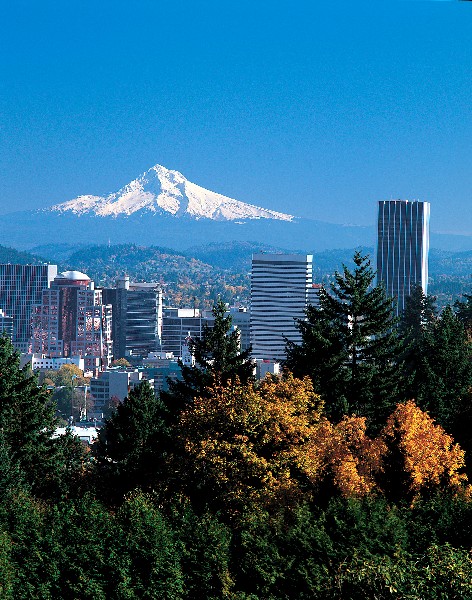
Padanians, Italians in Portland, Oregon
Immigrants from both the northern and southern regions of Italy began migrating to Portland as early as 1890. It was between 1900 and 1910, however, that Portland saw the largest growth in the city’s Italian American population. In 1900, the Italian immigrant population stood at just over 1,000 residents and by 1910, that number had increased to more than 5,000 residents. Italians settled in ethnic neighborhoods, first on the southwest edge of Portland near Marquam’s Gulch and later in the southeast neighborhoods like Ladd’s Addition, Brooklyn, and Parkrose in the northeast of Portland. Italian immigrants worked in a wide array of professions. Many hundreds of Italian immigrants worked in Portland’s extensive railroad yards or served as street graders and built and maintained roads throughout the city. Italian entrepreneurs, like Francesco Arata, shown in this photo from the 1890s, established shops and restaurants in Italian neighborhoods on both the west and east sides of the Willamette River. Almost 1,300 Italians lived and worked on the east side of the Willamette River. They rented land and grew vegetables and berries and some other families operated truck farms that sold produce to individuals and businesses across the city.
[Below right: G. Arata & Company, Wholesale Liquors; 1890]
 Social organizations provided important services for Italian immigrants. Saint Michael’s Church, established in 1901 at the corner of southwest Fourth and Mill Streets, stood as a landmark to the Catholic heritage of immigrants. The Italian-American Republican Club was formed in 1916 as a way to provide Italians with the education necessary in applying for citizenship. Sunday socials were frequently held among farmers and their families and bocce bal, was among the favorite games played. The Italian Ranchers and Gardeners Association organized and established the first retail produce market on the west side but frequent flooding forced organizers to move it to the east side in 1906. The new market covered a complete block and growers from Milwaukie, Parkrose, Ladd’s Addition, and the west side Marquam Gulch Italian-American community brought their produce to the market to sell before loading the remainder on trucks to be sold throughout the city.
 Written by Sarah Griffith, © Oregon Historical Society, 2002.
Subscribe to:
Posts (Atom)