
Showing posts with label archeology. Show all posts
Showing posts with label archeology. Show all posts
Wednesday, August 27, 2014
Famous Cisalpines outside of Padania: Part 5
From the video description: Jeno Paulucci and Neil Cavuto discuss the Great Depression in relation to modern hard times (2011).
From the video description:
While Joan Veon passed away in October of 2010, this may be one of the most important videos that you watch this year.
This explains how the One World Government is here now and how those countries that refuse to be a part of it can be taken out.
Up until September 1994, Joan Veon was just a businesswoman. As a result of attending the United Nations Conference on Population and Development in Cairo, Egypt, she received her “wake up call” as she found there was more going on at the global level than most Americans knew, understood or were being told.
From the video description: On the March 26, 2014 edition of "Nature of Reality Radio" I welcomed Michael Cremo who is the co-author of the book "Forbidden Archeology" and a regular guest on the History Channel show "Ancient Aliens." We discussed how much of mainstream archaeology and history is either fraudulent or not telling the whole truth...
.


Thursday, May 15, 2014
The Santa Maria likely found

Bill Chappell - NPR - May 13, 2014
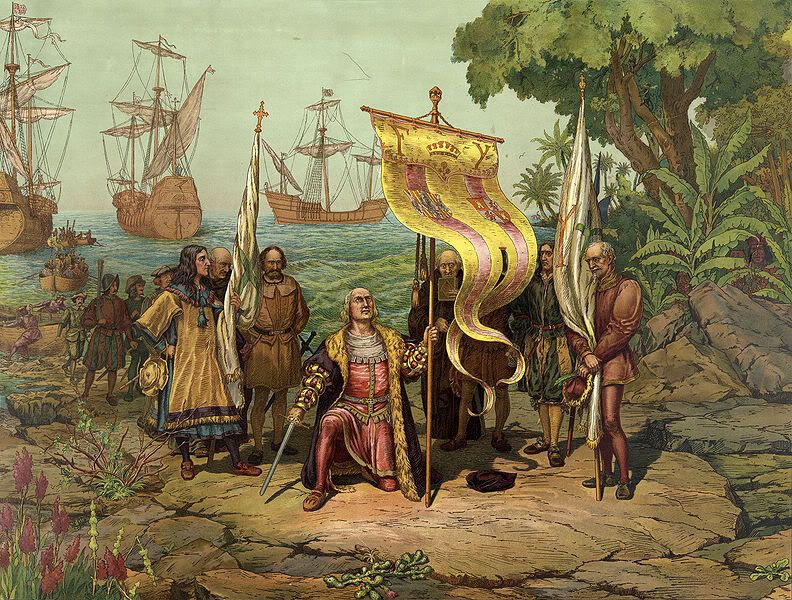
It's been missing for more than 500 years. But now there are reports that the Santa Maria, the largest ship among the trio that made Christopher Columbus' first expedition to North America, may be found. Undersea explorer Barry Clifford says he thinks he has found the ship in waters off of Haiti's coast.
"All the geographical, underwater topography and archaeological evidence strongly suggests that this wreck is Columbus' famous flagship, the Santa Maria," Clifford tells Britain's . "The Haitian government has been extremely helpful — and we now need to continue working with them to carry out a detailed archaeological excavation of the wreck."
Clifford is a well-known wreck hunter, having found the pirate ship and former slave vessel , which sank off the coast of Cape Cod in 1717. That discovery led to a project with .
The Santa Maria sank after hitting reefs off the Haitian coast around Christmas of 1492, months after arriving from Spain. It is believed that Columbus ordered some of the ship's timbers stripped from the wreck in order to build a fort on land near the shore.
According to The Independent, Clifford closed in on the Santa Maria's possible location by combining two separate historical sources. After archaeologists announced new details suggesting the location of Columbus' fort in Haiti in 2003, Clifford used information in the explorer's diary to narrow down a possible location for the Santa Maria's sinking.
 But verifying the wreck's identity will be harder now than it would have been in 2003, when Clifford took photos of the site that included a cannon like what the Santa Maria would have carried. When they returned recently, "all the key visible diagnostic objects including the cannon had been looted by illicit raiders," The Independent's archaeology correspondent, David Keys, reports.
Professor Charles Beeker, who directs the Indiana University's Office of Underwater Science and who has visited the wreck with Clifford, tells Keys that there's "some very compelling evidence" that the wreck is the Santa Maria. But he adds that a full excavation must be carried out to be sure.
The Santa Maria was a carrack, a craft that was "the definitive beast of burden of the Age of Exploration," according to the site . "Magellan, for example, had an all-carrack fleet with which he set to circumnavigate the globe in 1519."
One of the ship's advantages was that it was roomy enough for plenty of provisions — a capacity that could also be used to bring treasure back to an expedition's sponsor.
Clifford tells The Independent he'd like the ship to stay in Haiti:
"Ideally, if excavations go well and depending on the state of preservation of any buried timber, it may ultimately be possible to lift any surviving remains of the vessel, fully conserve them and then put them on permanent public exhibition in a museum in Haiti.
"I believe that, treated in this way, the wreck has the potential to play a major role in helping to further develop Haiti's tourism industry in the future."
.
Wednesday, January 26, 2011
Ancient Celts in the Tarim Basin (in modern day China)
CELTS
The Celts were a diverse group of tribal societies in Iron Age and Roman-era Europe who spoke Celtic languages.
PROTO-CELTIC LANGUAGE
The Proto-Celtic language, also called Common Celtic, is the reconstructed ancestor language of all the known Celtic languages.
HALLSTADTT CULTURE
The Hallstatt culture was the predominant Central European culture from the 8th to 6th centuries BC (European Early Iron Age), developing out of the Urnfield culture of the 12th century BC (Late Bronze Age) and followed in much of Central Europe by the La Tène culture.
TARIM MUMMIES
The Tarim mummies are a series of mummies discovered in the Tarim Basin in present-day Xinjiang, China, which date from 1800 BCE to 200 CE. Some of the mummies are frequently associated with the presence of the Indo-European Tocharian languages in the Tarim Basin, although the evidence is not totally conclusive.
TARIM BASIN
The Tarim Basin is a large endorheic basin occupying an area of about 906,500 km2 (350,000 sq mi). It is located in the Xinjiang Uyghur Autonomous Region in China's far west.
CELTIC MYTHOLOGY
Celtic mythology is the mythology of Celtic polytheism, apparently the religion of the Iron Age Celts. Like other Iron Age Europeans, the early Celts maintained a polytheistic mythology and religious structure. Among Celts in close contact with Ancient Rome, such as the Gauls and Celtiberians, their mythology did not survive the Roman empire, their subsequent conversion to Christianity, and the loss of their Celtic languages.
BRONZE AGE
The Bronze Age of a culture is the period when the most advanced metalworking (at least in systematic and widespread use) in that culture used bronze. This could either have been based on the local smelting of copper and tin from ores, or trading for bronze from production areas elsewhere.
.
Monday, October 25, 2010
The Etruscans and Arthur Kemp
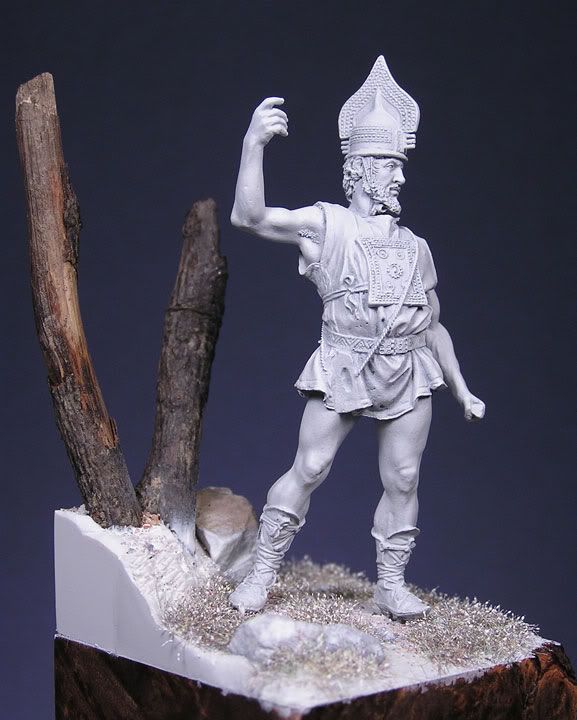
The article is based on a 2006 DNA study on native Tuscans. The conclusion was that modern Tuscans are not related to the ancient Etruscans, as had long been thought.
One of the problems with "geographical categorizations" is that racial stocks in certain regions of the world change over time. Therefore a DNA test might show, for example, that a person of Indo-European descent has genetic links to Iran. In reality, it would much more likely be to ancient Persia, and perhaps even thousands of years ago when the demographics were different. The same could be said for many other regions.
When members of the British National Party voluntarily underwent DNA tests, most showed a somewhat significant genetic link to the Middle East. In reality, that link was to the ancient Mediterraneans of that region, long before massive numbers of people of a different racial stock migrated out of the Saudi Peninsula and spread the Islamic faith there. All it meant was that the English and the Middle Easterners shared some common ancestry, despite the fact that those ancestors went in entirely different genetic directions. The ancient Middle Easterners largely became, for all intents and purposes, Saudis. The ancient Mediterranean Britons became basically Germans. Therefore, for someone to state that Englishmen and Iraqis of today, are genetic cousins, would not be intellectually honest.
The article goes on to the hypothesis that the Langobards displaced the mixed-race Roman population. In reality, at least throughout most of the northern half of the Italian peninsula, the population was made up of culturally "Romanized" Gauls as the historical record is absolutely crystal clear on. In Tuscany, Kemp's hypothesis is closer to the truth, and down onto the southern Langobard duchies of Benovento and Spoleto. Still, the wild sweeping generalization seems to show his lack of historical understanding of at least most of the north.
Now, as far the Tuscan DNA study, the article accurately summed up the results:
"DNA testing on Etruscan bones recovered from graves showed that they were completely unrelated to modern Tuscan people.
"DNA testing on the modern Tuscan people showed that their genetic origin was in Anatolia, which is located in modern Turkey, bounded by the Black Sea to the north and the Caucasus to the northeast — smack bang where it should be."
The only problem is that Arthur Kemp wants his cake and eat it too. Up to, and during the Roman period, there was no "Turkey," and there were no "Turks." Using his logic, one could conclude that the Iroquois built New York City, that Aborigines constructed Sydney, or that England was originally settled by immigrants from Iraq.
The region that is now Turkey was the hub of the Eastern Roman Empire. Before that, much of it was part of Greece. A good portion of it was settled early on by Celtic tribes. According to the 'History of Turkey' Wikipedia page:
"The history of Turkey refers to the history of the country now called Turkey. Although the lands have an ancient history, Turkic migration to the country is relatively new. The Turks, a society whose language belongs to the Turkic language family started moving from their original homelands to the modern Turkey in the 11th century. After the Turkic Seljuq Empire defeated forces of the Byzantine Empire at the Battle of Manzikert, the process was accelerated and the country was referred to as 'Turchia' in the Europe as early as the 12th century.[1] The Seljuq dynasty controlled Turkey until the country was invaded by the Mongols following the Battle of Kosedag. During the years when the country was under Mongol rule, some small Turkish states were born. One of these states was the Ottoman beylik which quickly controlled Western Anatolia..." [Source: 'Turkey'; James Bainbridge].
Arthur Kemp can't have it both ways. If Tuscans are really Turks, then Iraqi immigrants were the original settlers of England. In reality, both of those Mediterranean peoples had no genuine link to modern Turks or Iraqis outside of the very "limited shared ancestry" concept, by which entirely different racial stocks could easily have "some common ancestors." It can't be "heads I win, tails you lose." YOU CANNOT HAVE IT BOTH WAYS.
Modern Tuscans, which we consider OUR folk, are not culturally or genetically similar to modern Turks. Although the study showed some strong evidence to support Kemp's politics, his final conclusion was intellectually dishonest. Some years back, someone was poking around a Roman graveyard and found some surnames consistent with Byzantine origins, and Kemp concluded that this meant that the native inhabitants were actually Turks. That was junk science. First of all, the Byzantines were not "Turkish." Even then, how do we know that the graveyard wasn't specifically a Byzantine cemetery? Were other cemeteries from that period studied? How do we know that the twenty seven ancient Etruscans, from which the DNA was obtained, were not atypical individuals; perhaps from elsewhere?
In the British Isles, remains of Roman legionnaires have been discovered. Some of those soldiers had identification documents showing that they were natives of Syria, Carthage, and elsewhere. Although they probably were basically Phoenician or ancient Mediterranean, which would for all intents and purposes would still place them within the range of "Indo-European," one could easily slant the evidence to the contrary. One BNP official, whose DNA was tested, showed 8% historically recent Sub-Saharan African mtDNA markers; likely originating from the importation of West African slaves. Again, someone could very easily slant that evidence. In reality, one would probably need to take a dozen tests to get an accurate reading of various genetic stocks. A single DNA ancestry test will occasionally blow up the admixture of any particular genetic stock, so 2% could read as perhaps 10% of whatever racial stock was being analyzed.
It's probably safe to say that England is probably more purely "Indo-European" than, say, Spain or Sicily. However, when studying data, an intellectually honest researcher can't decide for themselves, depending on their own ideology, that "heads I win, tails you lose." In other words, you can't use one set of rules to come to a conclusion in one area; and an entirely different set of rules to come to a conclusion in another area.
.
Tuesday, August 17, 2010
New findings from ancient tomb in Italy
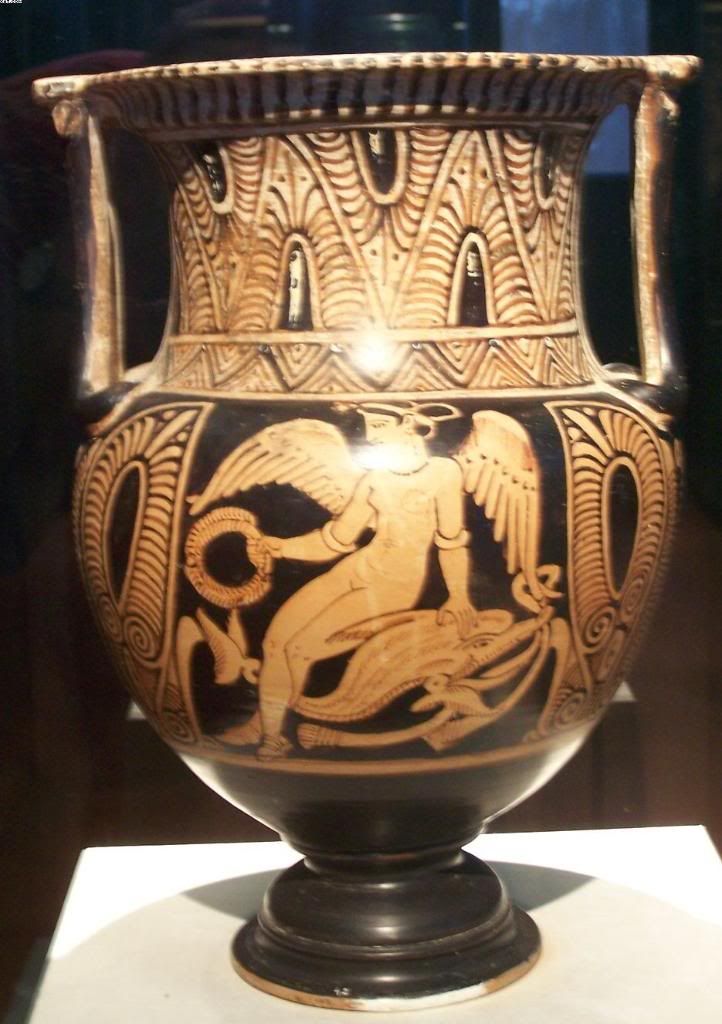 New findings from ancient tomb in Italy
UPI - August 5, 2010
ROME, Aug. 5 (UPI) -- A royal tomb in an Etruscan necropolis in central Italy has yielded fresh archaeological finds during a summer dig, researchers say.
Tarquinia, one of the richest Etruscan sites in the Lazio region of Italy, is home to dozens of tombs, but researchers were only recently given permission to excavate the "Queen's Tomb" in detail, ANSA reported.
Dating to the mid-seventh century B.C., the crypt is thought to have been a royal burial site although no remains have ever been found.
Researchers uncovering the crypt say they are finding images and decorations found in other contemporary cultures, suggesting the ancient city had much wider links with the outside world than previously thought.
Archaeologists believe the royal tomb was created by a team of foreign architects and craftsmen, strong evidence of a solid network of ties and trade with other civilizations, they said.
The necropolis of Tarquinia contains 6,000 graves cut into the rock but has won worldwide fame for its painted tombs.
Nearly 200 crypts at the site are decorated with frescos in the early Etruscan and Greek style.
Considered one of the most important galleries of ancient art, the Tarquinia necropolis has been on UNESCO's world heritage list since 2004.
.
Tarquinia, one of the richest Etruscan sites in the Lazio region of Italy, is home to dozens of tombs, but researchers were only recently given permission to excavate the "Queen's Tomb" in detail, ANSA reported.
Dating to the mid-seventh century B.C., the crypt is thought to have been a royal burial site although no remains have ever been found.
Researchers uncovering the crypt say they are finding images and decorations found in other contemporary cultures, suggesting the ancient city had much wider links with the outside world than previously thought.
Archaeologists believe the royal tomb was created by a team of foreign architects and craftsmen, strong evidence of a solid network of ties and trade with other civilizations, they said.
The necropolis of Tarquinia contains 6,000 graves cut into the rock but has won worldwide fame for its painted tombs.
Nearly 200 crypts at the site are decorated with frescos in the early Etruscan and Greek style.
Considered one of the most important galleries of ancient art, the Tarquinia necropolis has been on UNESCO's world heritage list since 2004.
Sunday, May 23, 2010
Ancient Cisalpine Gaul: More Celtic than we thought
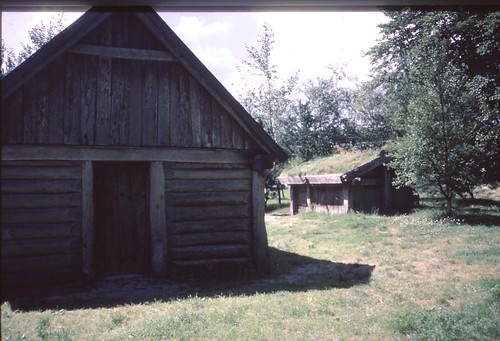
The evidence, as we dig though it, seems to suggest that while they can be traced back to upwards of ten thousand years, they weren't very widespread. It's highly unlikely then that there was every any significant fighting as the Celts migrated and settled in the largely underpopulated region.
The Eugenei who lived outside of what was their later stronghold in the northeast, probably were absorbed into the Celtic tribes. We encounter information all the time which challenges earlier beliefs, so this can and should be considered a historical work in progress. As of now it appears that the Celts were the, numerically-speaking, much more dominant culture. Even the Eugenei tribes who survived as a separate culture, did have at least some clear Celtic influence.
The Eugenei still are a reminder of the very ancient past, and as far as we know, the pure representatives of the human origin of the region. For anyone of "northern nations" descent, unfortunately, getting information in simple English text on these subjects (on both sides of the Atlantic) is like pulling teeth! I refer to the pre-Roman stock as "Celto-Alpine" people, rather than Gaulic or Celtic.
It's still somewhat of a mystery as to exactly where the Celts migrated into the Cisalpine region. They seemed to arrive in successive waves over a long period. The Cenomani tribe has the same name as the Cenomani of Gaul, although there is no definitive proof that they were once the same tribe. However, there is evidence that many or most arrived via Liguria; hence the name "Celto-Ligurian." Gaul's (France) geographic location would seem to validate this.
There is also evidence that some migrated early on from the Halstatt settlements of ancient south Germany. The "iceman," the famous archeological find of a preserved man in high Alpine ice in the 1990s, likely was among the first Celtic pioneers of the Cisalpine region. I recall that he lived between five and six thousand years ago. It should not be forgotten that there was also Celtic settlement in ancient Tuscany. What makes that a little different was that there did seem to be some skirmishing between Celts and Etruscans, although it didn't seem to be very long-lasting.
[1-27-11 ADDITION: It should be noted that Celtic migration into the Cisalpine region began at least by 3,000 years ago, and that in the fifth century there was another wave into the region. The first being pre-Roman, and the latter post-Roman. Also, the latter was also when the Celts first migrated into the British Isles; as well as into Denmark, Spain, and the Balkans. Some of those regions, like Spain, also had pre-Roman Celtic heritage.]
.
Subscribe to:
Posts (Atom)