Tuesday, March 16, 2010

Etruscan video

Etruscans: Part 1


Etruscans: Part 2


"In the eight century BC, time of westward expansion, Phoenicians going west, Greeks going west, founding colonies. When the Greeks sailed into Italy, they found something they didn't expect. An advanced civilization already there." --Professor Richard E. Prior, Ancient Historian, Furman University, South Carolina, from the documentary 'Rome: Power & Glory'

As has been stated here before, the perception is that Rome more-or-less came from the Greeks. The truth is a lot different. As the above quote reflects, the Etruscans were trendsetters on thier own. That doesn't mean that, in many ways, the Greeks weren't the forerunners of what later became Western civilization. However, in most areas of human endeavor, the Etruscans were the equal to the Greeks. They apparently were not looking to expand, as they already were in a virtual Garden of Eden. They were not sea faring people. They conducted a lot of land trading, with the north mostly, it appears.

After the Romans shattered the Etruscans, as the victors always do, they rewrote the history. Until fairly recently, the Etruscans didn't even exist in the history books. Now we know that the Romans took Etruscan technology and began to form their plan for an empire. They leveled the vast majority of what had been Etruscan.

Friday, March 12, 2010

Ristorante Umbria of San Francisco

From the main page of the Ristorante Umbria website:

"Welcome to Ristorante Umbria ...a place for exquisite Italian cuisine in the heart of the SOMA district.

This family-owned restaurant serves authentic Italian dishes from the Umbrian region of Italy. We serve the finest homemade pastas and use the freshest ingredients in all of our recipes. Explore the flavors of Umbria with our selections of antipasti, panini, insalate, pasta, and main entrées, during lunch, dinner, or your next private event. Finish off your meal with one of our special desserts, a delightful menu of Italian sweets that change daily."

A special portfolio of wines has been selected to complement our unique menu, with vintages from both Italy and California. Relax with a glass of Sagrantino and enjoy our exceptional service. While dining at Ristorante Umbria, you are treated like family.

Critics will agree...Ristorante Umbria is a warm, inviting atmosphere, which makes you feel as if you are in the heart of Italy. Come experience Italy for yourself!"

.

Thursday, March 11, 2010

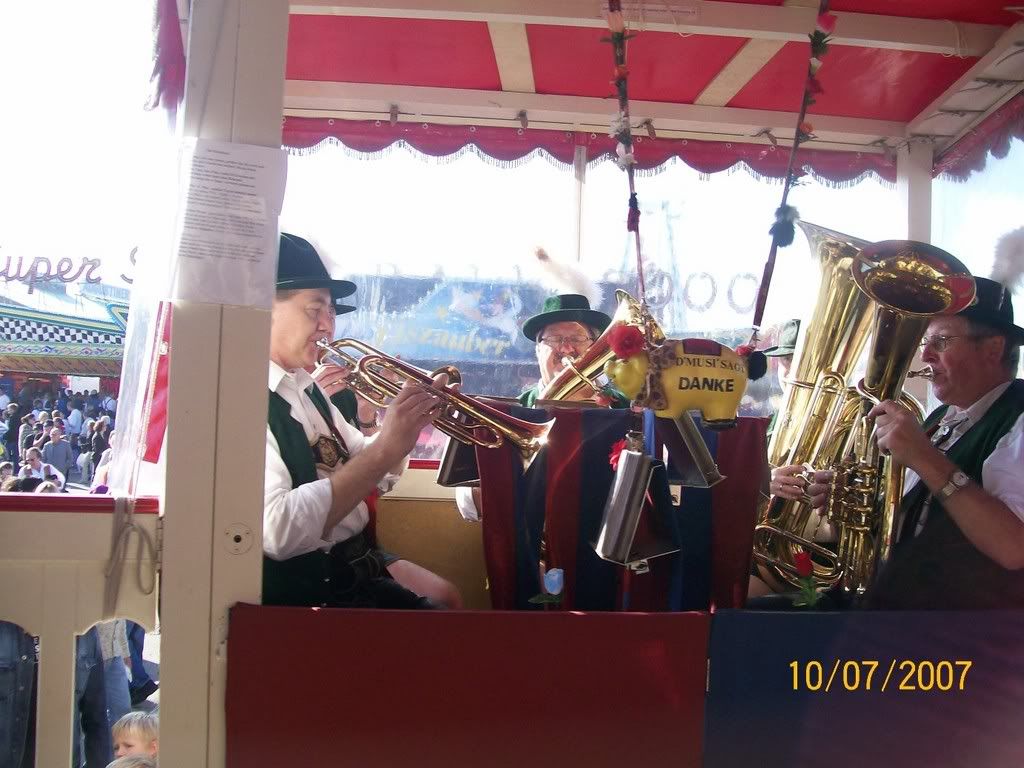
Cultural Tie-Ins: Accordion, Polka, and Yodeling

From Wikipedia's Accordion Page:

"The accordion is a box-shaped musical instrument of the bellows-driven free-reed aerophone family, sometimes referred to as a squeezebox. A person who plays the accordion is called an accordionist.
It is played by compressing or expanding a bellows whilst pressing buttons or keys, causing valves, called pallets, to open, which allow air to flow across strips of brass or steel, called reeds, that vibrate to produce sound inside the body."

I had thought that the accordion was originally from the Italian peninsula. Actually it was probably invented in Berlin in 1822 by Christian Friedrich Ludwig Buschmann; and in any case, it is definitely German in origin. From there, it spread all over Europe. From Spain and Portugal, it was transplanted to Latin America; and ultimately all over the globe through the Western European colonies. The accordion is one of the instruments used in Polka music.


From Wikipedia's Polka Page:

"The polka is a lively Central European dance and also a genre of dance music familiar throughout Europe and the Americas. It originated in the middle of the 19th century in the Czech lands and is still a common genre in Lithuanian, Czech, Croatian, Slovenian, Polish, German, Hungarian, Austrian, Italian, Ukrainian, Belarusian, Russian, and Slovakian folk music. Versions are also found in the Nordic countries, Ireland and Latin America, especially Mexico."

Typical instruments include drum kit, tuba, semi-acoustic guitar, accordion, trumpet, and clarinet. While the accordion was integrated into many types of European folk music; it appears that polka music is mostly centered around the Slavic world. However, it too was transplanted all over Europe to some degree. It appears that the origin is "Bohemian" (Czech). As with the accordion, there is a definite tie-in to our culture. I can recall several times in the past when athletes were sent to professional sports teams in particularly the northern stretches of the Midwest; that they were jokingly informed that "this is a Polka town." That sort've went over my head at the time, but I can see the significance much more now.

There's a connection to the popularity of Polka music, over the many decades, to the destination points of central European immigrants. In Chicago, there was the Polish influence (also Czech); which seems to be the predominant Polka influence in the United States. There are also specifically "Italian" (northern nations actually) folk style Polka bands in the Midwest. There is one cable network called the RDF-TV (Rural Free Delivery) network, which is entirely devoted to "rural American culture." One program is called 'The Big Joe Polka Show', and features polka music and dancing.

Our cultural tie-in to polka music is a perfect example of how people are sometimes made to believe that they have no historical connection to something, when actually they do. I'm assuming that most Italian-Americans, understandably, would believe that they have no roots in polka music; and we're basically sort've roped into that idea. Actually, in many ways, our roots are tied right into central European traditions over many centuries. The accordion comes down from German regions, polka music crosses down from Slavic areas, the polenta dish crosses north over the Alps, etc.

One night late, when viewing 'The Big Joe Polka Show', I saw Joe Siedlik announce a band which performed Slovenian-style polka music. What I found interesting about that is that San Francisco had/has a sizable Slovenian and Croatian American population, of course going back a century or more; along with our people of northern nations origin, and Germans, Scandinavians, Hungarians, etc.. I just wonder if polka music was popular in earlier decades in San Francisco? Perhaps someone can clue us in on that. Again, we're likely to believe that we have no tie-in to the Midwest, when in fact there is one it would seem. To put it bluntly, we didn't ask for this area to be entirely transformed the way it has.


From Wikipedia's Yodeling Page:

"Yodeling (or yodelling, jodeling) is a form of singing that involves singing an extended note which rapidly and repeatedly changes in pitch from the vocal or chest register (or "chest voice") to the falsetto/head register; making a high-low-high-low sound. This vocal technique is used in many cultures throughout the world.

"In Alpine folk music, it was probably developed in the Swiss Alps and Austrian Alps as a method of communication between mountain peaks, later becoming part of the region's traditional music. In Persian classical music, singers frequently use tahrir, a yodeling technique that oscillates on neighbor tones. In Georgian traditional music, yodelling takes the form of krimanchuli technique, and is used as a top part in three/four part polyphony. In Central Africa, Pygmy singers use yodels within their elaborate polyphonic singing, and the Shona people of Zimbabwe sometimes yodel while playing the mbira[1]. Yodeling is often used in American bluegrass and country music. According to the Oxford English Dictionary the word yodel is derived from a German word jodeln (originally Bavarian) meaning "to utter the syllable jo."

Although yodeling started in Switzerland and Austria, it is known to have been utilized, over the centuries, in at least Trentino-Alto Adige. It's not clear to me if that is only in the culturally German "South Tyrol" (Alto Adige), or in Trento and other subalpine areas. It would seem to be more-or-less native to any Alpine region (Alpine France, Slovenia, Piemonte, etc.). Perhaps someone can clue us in there as well. Of course, you may find a lot of samples of these musical styles on YouTube; and I would recommend taking a listen to Taylor Ware singing and yodeling, if you haven't already. She's an American girl who took up singing/yodeling, and is extremely good at it.


Sunday, March 7, 2010

Seeking a taste of the past? Get thee to a meadery

Seeking a taste of the past? Get thee to a meadery

Evan Peter Ehrlich - Special to The Chronicle - February 19, 2004

Honey, created from flowers by bees, is a wonder unto itself. Add a little water and yeast, and you have mead.

Mead is enjoying a renaissance. It is suitable for almost any occasion and is becoming increasingly available. For many, it offers something new to please the palate.

Mead is made from honey, diluted with water and fermented by yeast and has an alcohol content similar to wine. Still or sparkling, dry and light or sweet and full-bodied, mead is usually clear and light-golden in color. "Traditional mead is a treasure capturing the essence of honey and the nectar of blossoms," says Charlie Papazian, president and founder of the Association of Brewers.

Dry mead is lively and crisp up front with a pleasing acidity. Hints of apricot, pear and other soft fruits characterize the mid-palate and are followed by soft honey tones that override a long finish, which can include caramel and nuts, especially in older meads.

With semisweet and sweet meads, the front palate has a noticeable fruitiness (sweetness) with the honey becoming apparent early and carrying through to the finish as it commingles with fruits and sometimes raisins.

Mead can exhibit as much flavor and aromatic complexity as wine, but generally absent are those earthy tones and tannins. Bottle-conditioned meads, such as the one Arcata's Heidrun Meadery offers, will also express some yeast flavors with age.

There are many variations of mead incorporating various fruits and spices. Some mead makers refer to mead made with fruit as honey wine. However, in contemporary usage, "honey wine" and "mead" are generally interchangeable.

Mead's first appearance in history is a mystery, but most agree it's the oldest fermented beverage. Plato described mead before the time of Christ. A 12,000-year-old cave painting in Belgium depicts honey gathering and an amorous liaison between a man and a woman -- a reference to mead's professed aphrodisiacal qualities. Cave paintings in South Africa indicate that the drinking of this beverage was part of an ancient culture there at least 25,000 years ago.

Mead making arose independently in a wide range of ancient cultures. Over time, mead's popularity lost ground to the advent of beer making, and a greater availability of wine, especially through expanded trade to northern climates that were inhospitable to viticulture.

Today, there are at least five commercial mead makers in California and several dozen in the United States, with others in countries around the world. Compared to winemakers, mead makers are few and far between. But the beverage is available if you are willing to look.

The oldest commercial mead producer in California is Bargetto Winery. In addition to its wines from the Santa Cruz Mountains, Bargetto makes Chaucer's Mead, a blend of sage, alfalfa and orange blossom honeys. Bargetto includes a spice packet with every bottle to encourage people to try this mead mulled, meaning warmed with spices. According to Mel Nunez, a former Bargetto tasting room employee who now heads the beverage department at Cost Plus in Santa Cruz, "Heated Chaucer's Mead with spices sold well at the tasting room in Monterey, especially when the cool summer weather hit."

In Sunnyvale, Rabbit's Foot Meadery has produced excellent mead for more than 14 years. The proprietor, Michael Faul, makes each of his meads from a single variety of honey.

Rabbit's Foot currently offers four meads. Its sweet mead is made with jasmine honey and the dry mead is made with raspberry honey, or honey from raspberry blossoms. Rabbit's Foot also makes Private Reserve Pear Mead, which is made from honey, pears and spices. Each of these is 12 percent to 13 percent alcohol by volume.

The Rabbit's Foot Grand Reserve Mead of Poetry is distinctive because of its method of aging and its strength. It weighs in at 17 percent alcohol by volume and is the result of years of work. It is aged in oak barrels using the Solera system, the method used to produce fine sherry. This involves bottling from the oldest of a multitiered collection of barrels and blending in younger mead to top off the barrels.

"It allows one to achieve a sameness in product year after year," says Faul.

This aperitif stands apart from other meads because of its strength, full body and round, nutty flavor. Production is only 100 cases; advance ordering may be the only way to get some.

Another avant-garde mead producer is Gordon Hull of Heidrun Meadery. Named after the mythological goat that provided mead for Odin and other battle- glorious Norsemen in Valhalla, Heidrun is California's only maker of sparkling meads. Chuck Hayward, the wine buyer at The Jug Shop in San Francisco, refers to mead as an eclectic product of which not many people are aware. Still, "When Gordon pours a tasting, it sells well," says Hayward.

Heidrun offers five varieties in each of two styles. It produces bottle- fermented meads, which are described as a lightly effervescent, rustic tradition. Heidrun also makes meads in the methode champenoise style, similar to that of fine sparkling wine and Champagne. The mead undergoes a second fermentation in the bottle, the bottle is turned on a regular basis so that the yeast sediment settles into its neck, and then the yeast is expelled, or disgorged, before the bottle is capped.

Mountain Meadows Meadery, a family-owned micro-winery in Westwood (Lassen County), produces several traditional meads and a wide variety of fruit and spiced meads including persimmon, cranberry, apricot and agave.

Enat Winery in Oakland makes a beverage called Tej -- a traditional Ethiopian drink made from honey and gesho, which Enat describes as a unique form of hops.

A glass of mead reflects on the history and mythology that surrounds this beverage. When you enjoy mead you are engaging in an activity that has spanned many cultures since before written history.


MORE ABOUT MEAD

Local retail prices for meads range between $8 and $16 for a 750 ml bottle. Rabbit's Foot Grand Reserve Mead of Poetry sells for $35 for a 350 ml bottle.

With the exception of Rabbit's Foot Grand Reserve, all the meads described come in 750 ml bottles with cork closures. The sparkling meads from Heidrun Meadery are packaged in 750 ml Champagne-style bottles with cork and wire closures.

Sparkling meads should be served as you would Champagne or sparkling wine, chilled to 40°F and served in a flute. Temperatures for serving other meads is a matter of taste; as a general rule, dry meads are served chilled and sweet meads can be chilled or served at room temperature.


SELECTED BAY AREA RETAILERS

Beverages & More, various locations

Cost Plus, various locations

Whole Foods, various locations

Rainbow Grocery, 1745 Folsom St., San Francisco; (415) 863-0620

The Jug Shop, 1567 Pacific Ave., San Francisco; (415) 885-2922

Berkeley Bowl Marketplace, 2020 Oregon St., Berkeley; (510) 843-6929

Ethiopian-style mead is also poured at Sawa Eritrean Restaurant #2 ($20/bottle and $5/glass), 1655 Divisadero St., San Francisco; (415) 441-4182


CONTACT THE MEADERIES

Bargetto Winery -- (800) 422-7438; www.bargetto.com

Enat Winery -- (800) 554-0346; www.enatwinery.com

Heidrun Meadery -- (877) 434-3786 www.heidrunmeadery.com

Mountain Meadows Mead -- (530) 256-3233; www.ountainmeadowsmead.com

Rabbit's Foot Meadery -- (877) 632-3379; www.rabbitsfootmeadery.com


Further reading about mead making

"The Joy of Home Brewing, Third Edition" (HarperResource; 432 pages; $14. 95) by Charles Papazian, America's home brew guru. This is the quintessential guide for home brewers of beer and features an informative section on mead making that includes recipes.

-- E.P.E.


Evan Peter Ehrlich is a writer and mead maker in Elkhorn. He writes a column on home brewing for Northwest Brewing News and works as a news editor in Monterey.

.

Saturday, March 6, 2010

Pete Ranzany: The Pride of Sacramento

Pete Ranzany: The Pride of Sacramento

Robert Mladinich - FightBeat.com

In the late seventies, before the Sacramento Kings joined the National Basketball Association, and before television networks like HBO and Showtime were in the business of creating superstars, welterweight Pete Ranzany was that city’s sole sports entity. Campaigning from 1973-83, Ranzany was a perennial contender who fought 57 of his 69 bouts in Sacramento, 55 of them at the Memorial Auditorium. In compiling a record of 59-8-2 (38 KO's), he never embarrassed himself or his hometown, even against the likes of such legendary champions as Sugar Ray Leonard, Wilfred Benitez and Pipino Cuevas. Ranzany was all action all the time, and his local popularity was akin to the esteem in which middleweight John Duddy is held today in his adopted hometown of New York.

"I loved fighting in Sacramento," said Ranzany, now 54 and an 18-year correctional peace officer (prison guard) at the maximum security California State Prison at Sacramento, which was formerly known as Folsom Prison. "It was my town. The fans were really good to me. When I won, the whole city won. When I lost, I felt like I let the whole city down."

Before more than 17,000 fans in September 1978, Ranzany challenged Cuevas for the WBA title in Hughes Stadium. His trainers, Joey Lopes and Herman Carter, had devised an intricate battle plan where the usually offensive-minded Ranzany would take Cuevas into the later rounds before going for the knockout. All went well in the first round, when Ranzany boxed the ears off the square-jawed, murderous-punching Mexican champion.

“Cuevas was a great, great puncher, but he couldn’t box a lick,” explained Ranzany. “I couldn’t do anything wrong in the first round. After I buckled his knees I went back to my corner and told Herman Carter, ‘I’m gonna be champ. I’m gonna punish him the next round.’”

“Boy, do what you trained to,” implored Carter. “And as he was telling me this I’m listening to all these thousands of people screaming ‘Pete, Pete, Pete.’ The next thing I remember is asking what happened. I later learned that he knocked me down twice, and the fight was stopped in the second round.”

Ranzany didn’t lick his wounds for long. He rebounded with five consecutive victories, and even won the NABF title from Clyde Gray of Canada. However, in his first defense of that title, he was stopped by Leonard in the fourth round after getting hit with nearly 30 unanswered punches. Even his career high $75,000 purse did little to offset his disappointment. “Leonard was just awesome,” said Ranzany. “I had already lost a close decision to him in the amateurs, so I thought I knew what to expect. But he had gotten so much better.”

Immediately after the fight, Ranzany was still groggy but remembered how touched he was when one of his previous opponents, Rudy Barro, came to his dressing room cradling his infant son to congratulate him on his knockout victory. When Ranzany attempted to congratulate Leonard, the new champion’s dressing room door was slammed in his face. Minutes later, Ranzany was being hustled to the post-fight press conference when his girlfriend Rose, who is now his wife, halted the procession. “Being the puppy dog that I was, I’m on my way,” recalled Ranzany. “But Rose stepped in and said, ‘Oh, no. No interviews.’”

Rose insisted he be taken to the hospital. While no physical injuries were incurred, Ranzany was emotionally devastated. “Nobody ever stressed me out like Leonard,” explained Ranzany. “He knocked the crap out of me, and he scared the crap out of me.” Leonard later told him that he would have let him last longer if he wasn’t trying so hard to win.

Again the resilient Ranzany rebounded with five wins and a draw, before losing a 10-round decision to Wilfred Benitez in Sacramento. “Benitez was the best pure boxer I ever faced,” said Ranzany. “It was like he had radar. Cuevas was the best puncher by far, and Leonard was the best all-around fighter. He could do it all.”

It is unfair to only remember Ranzany for his high-profile losses to three Hall of Fame champions. He did beat former lightweight champion Sean O’Grady, top contender Randy Shields (with whom he also fought a draw), and previously undefeated prospects Adolfo Viruet and Bruce Finch. The Viruet fight was so exciting, fans threw more than $300 in coins into the ring.

Ranzany, who still lives in Sacramento, grew up poor in some of the city’s toughest neighborhoods. His father, who was of Italian descent, deserted the family early on, forcing his mother Theda, who was of German and Irish stock, to clean houses to support her five children. Ranzany was extremely sensitive and had no propensity for fighting, but was in awe of the attention a local amateur sensation named “Sweet” Pete Peterson was garnering. Four months after he began training at Tommy O’Leary’s Gym, Ranzany engaged in his first bout.

“I fought an [American] Indian kid who threw a lot of wild punches before I knocked him cold,” recalled Ranzany. “All the fighters were sharing the same dressing room, and I saw him crying with his father after the fight. I was devastated, and said this is not for me. I was ready to quit, but then I walked outside and all these people started asking for my autograph. From that moment on, I was hooked.”

Ranzany went on to have a stellar amateur career, and even represented the U.S. Army from 1970-73. He beat future professional champion Carlos Palomino at the 1972 Olympic Trials, but lost to eventual gold medalist Sugar Ray Seales in the finals.

He remembers getting a real education into boxing nuances while competing in the national AAU championships in Boston.

“After I won my first fight, people in Boston made such a big deal about me being Italian,” he recalled. “I was even getting pats on the back from the wagon vendors who were selling calzones on the street. In Sacramento you were white, black or Mexican, so I never thought much of being Italian. But it was sure a big deal there. Then some Italian guys beat up a black guy who came into their neighborhood, and I didn’t feel comfortable separating myself from other people anymore.”

When discharged from the Army, Ranzany debated whether to turn pro in Los Angeles or attend college to study social work in Sacramento. The late Victor Swezey, a reporter for the Sacramento Bee, convinced him to stay at home and do both. While attending college, where he eventually earned an associate’s degree in social science, 10 businessmen used the first three letters of Ranzany’s name and his hometown to form Ransac, a corporation that sponsored his career. “It was like owning a piece of a horse,” jokes Ranzany.

Ranzany never won a world title, but is remembered fondly by all who had the pleasure of attending any of his fights. “I was never much of a boxing fan, but even I got caught up in the excitement and went to many of Pete’s fights,” said Richard Schiveley, a lifelong resident of Sacramento. “Back then we had no professional sports teams in town. He was it. And boy, was he popular. Every one of his fights was a major event.”

While beating O’Grady in October 1982, Ranzany suffered a serious eye injury caused by an accidental thumb. He was wise enough to retire two fights later, after losing a decision in Italy to local hero Nino LaRocca, who was 54-0 at the time. Several years later, Sal Lopez, a onetime opponent and brother of former champion Tony “The Tiger” Lopez, also of Sacramento, convinced Ranzany to become a prison guard. Ranzany had thought about becoming a social worker, but was disturbed by tales of abused and molested children. He also considered the California Highway Patrol, but didn’t like the idea of having to tell people a family member had been killed in a car crash.

When first assigned to Folsom Prison, he guarded Angelo Buono who, along with his cousin Kenny Bianchi, were known as the Hillside Stranglers. Buono used his Italian surname to ingratiate himself with Ranzany, and constantly told him how he was railroaded by the criminal justice system. Ranzany took it all in stride, but was shocked when Buono approached him after seeing him talking, in a professional capacity, to a female medical technician.

“He got this crazy look on his face and started calling women all sorts of names, and telling me you couldn’t trust them,” said Ranzany. “It was a real eye-opener. He couldn’t help but show his true colors. That made things very clear to me.”

Ranzany also ran the prison’s then-lauded boxing program, but soon grew disgruntled by the lethargy of the participants. “Most of them didn’t like the discipline,” he explained. “[When] I made them spar once a week, I went from 50 fighters to 16 overnight. In the movies, inmates are usually really tough. But after working with the team for a year, I bet my sister could have beaten many of the fighters if they didn’t have a knife or a gun.”

Ranzany couldn’t help but recall the words of advice he had once received from a close friend, former Sacramento police chief Jack Hearns. “He said if you work with losers all the time, you’ll start to feel like a loser,” said Ranzany. “He said a prison guard’s job was actually much harder than a cop’s job. Both are dealing with negativity all the time, but cops are not fighting crime every minute. Prison guards are dealing with criminals everyday. And cops get a chance to see positive results once in a while. Prison guards don’t.”

Thankfully, Ranzany never gave into the negativism that is so pervasive in such a challenging vocation. He has immense loyalty to his colleagues, and loves the camaraderie they share because of the inherent dangers of the job. Although Ranzany never became a world champion, the way he sees it he still came out on top.

“I think I always did everything for the right reasons,” he explained. “I never fought for money, I fought to be champ. When I realized that wasn’t going to happen, I quit. For years people tried to lure me out of retirement with all sorts of offers, but I knew what was best for me. I walked away, and have never looked back.”

*********************************************************

The 70s was the last era where there were many boxers who were viable contenders for a considerable period of time, and Pete Ranzany certainly fit that bill. Even after disappointing losses against world class opponents, he was able to bounce back and reestablish himself, which is something rare today. I can recall hearing his name a few times as a kid when we were visiting up near the Sacramento area.

Pete Ranzany - Wikipedia page

.


Friday, March 5, 2010

The Celts

The Celts - Part I


The Celts - Part II


This English documentary does a good job at getting at the real continental roots of the Celts.


Thursday, March 4, 2010

Knotwork and Runes: Part III

I would hardly call any of this "revisionism," not that I'm knocking the idea of revisionism, but this is based in clear fact. I saw a program on television last week, in which one of the characters, an Irish-American, was wearing a ring with knotwork on it. It reminded me of how powerful, positive and negative, imagery can be.

****************************************

From the "Celtic knot" webpage on Wikipedia:

"Examples of plaitwork (a woven, unbroken cord design) predate knot work designs in several cultures around the world, but the broken and reconnected plaitwork that is characteristic of true knot work began in Northern Italy and Southern Gaul and spread to Ireland by the 7th century."

--Sir Edward Sullivan - The Book of Kells (1986) Studio Editions Ltd. ISBN 1-85170-035-8

***********************************************************************************************

There are innumerable sources, but I won't be redundant. As stated earlier, there was not a Druidic culture in Cisalpine Gaul; as there were no standard pentagrams or triple moons. To the best I can figure, the Cernic culture may have originated there, and those seeds were sewn so deep that they resisted Druidic influence. It's also possible that Cernism originated in the Hallstatt culture and then was migrated to the subalpine region (as well as othe regions).
.