Showing posts with label Jesus Christ. Show all posts

Monday, April 17, 2017

Franco Zeffirelli's 'Jesus of Nazareth' - 40 year anniversary


Jesus Of Nazareth (Full Movie) 1977

Repenttv


*************************

This was a big deal back in 1977... a time when there were five stations on the dial. It tied together the U.S., UK, and Italy in particular... something not likely to happen again given the massive planned changes in society. I was very young, but I remember everyone in the neighborhood seemed to have it on. As twilight and dimly lit windows arrived, that perfect moment in time, there was a certain unity and warmth to it.

When the first episode was broadcast in the United States, it was a major success. The New York Times reported it "swamped all competing programs on Sunday night", with overnight Nielsen ratings of 46% of the total audience in New York and 53% in Los Angeles. The miniseries as a whole received a Nielsen rating of 30.8 points, with each point representing approximately 712,000 television-owning homes, and an audience share of 50% nationwide, on both nights. The company calculated that Jesus attracted about 90 million viewers.


Jesus of Nazareth turned into a massive commercial success and one of the most widely marketed and best-known productions about Christ's life.

NBC rebroadcast the series in 1981 and four more times through 1990.


The mini-series is broadcast every Easter and Christmas in many countries...


 Jesus of Nazareth (miniseries)

Jesus of Nazareth (Italian: Gesù di Nazareth) is a 1977 British-Italian television miniseries directed by Franco Zeffirelli and co-written by Zeffirelli, Anthony Burgess, and Suso Cecchi d'Amico which dramatises the birth, life, ministry, crucifixion and resurrection of Jesus. It stars Robert Powell as Jesus. The miniseries features an all-star cast of famous American and European actors, including seven Academy Award winners: Anne Bancroft, Ernest Borgnine, Laurence Olivier, Christopher Plummer (subsequent winner), Anthony Quinn, Rod Steiger, and Peter Ustinov.

Extra-biblical traditions were used in the writing of the screenplay and some characters (such as Zerah) and situations were invented for the film for brevity or dramatic purposes. Notably, Jesus of Nazareth depicts Judas Iscariot as a well-intentioned man initially, but later as a dupe of Zerah who betrays Jesus largely as a result of Zerah's false platitudes and pretexts. However, in accordance with the Gospels, the film depicts Nicodemus and Joseph of Arimathea as sympathetic members of the Sanhedrin. Many of the miracles of Jesus, such as the changing of water into wine at the wedding at Cana, the transfiguration, and the calming of the storm are not depicted, although Jesus healing the blind man and the crippled woman on Sabbath, the feeding of the multitude, and the raising of Lazarus from the dead are presented here.

Jesus of Nazareth premiered on the Italian channel Rai 1 on 27 March 1977 and was first aired in the United Kingdom on the ITV Network on 3 April 1977. It is generally well-praised, but was not received without controversy.


.

Sunday, April 9, 2017

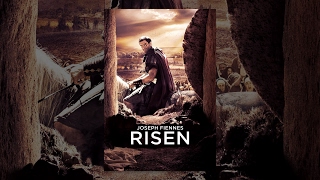
'Risen' (2016) - movie review


Risen Official Trailer 1 (2016) - Tom Felton Biblical Movie HD

Movieclips Film Festivals & Indie Films

RESURRECTION tells the epic New Testament story of the first forty days after the Resurrection of Jesus Christ through the eyes of an agnostic Roman Centurion charged by Pontius Pilot to investigate rumors of a risen Jewish Messiah and locate the missing deceased body of Jesus of Nazareth in order to subdue an imminent uprising in Jerusalem.


Risen (2016 film)

Risen is a 2016 American biblical drama film directed by Kevin Reynolds; it was conceived from a screenplay written by Reynolds and Paul Aiello. The film stars Joseph Fiennes, Tom Felton, Peter Firth, and Cliff Curtis, and details a Roman soldier's search for Jesus' body following his Resurrection. Columbia Pictures released the film to theaters nationwide in the United States on February 19, 2016.

*************************

The film begins with the words "Judean Desert AD 33," and a revolt by Judeans against the Roman army. A rather gutty thing to do, as they were poorly armed. In the bigger picture, the Roman provincial prefect Pontius Pilate wanted things to settle down for a coming visit from the Emperor. In a separate early scene, the Crucifixion of "Yeshua" is shown, and the central character Clavius is introduced. He was a high ranking Roman military tribune; likely a fictional character. Roman and Hebrew leadership were portrayed as conspiring together against Yeshua's potential "Messiah" status after his death, and no doubt were doing so when he was alive as far as this movie's depiction.


When guards fell asleep, and the body of Yeshua comes up missing, this coalition goes in panic mode. There is an ambiguous aura around what actually occurred to these two guards, and it remained inconclusive. At one point, Clavius prays to the Roman god Mars in order to garner favor. I don't want to give away too much, although the trailer gives away much of this anyway, but Clavius comes face to face with the "risen" Yeshua and observes supernatural happenings which dramatically transforms his thinking. Later interactions between Yeshua and Clavius are moving.


There are no overzealous attempts by the filmmakers to make Yeshua "bigger than life" or to show him as overly humble or pious, as has been portrayed in past films. In some ways, this added to the character's sincerity, gentle nature, and strength. Yeshua is played by Cliff Curtis, a New Zealander of Maori or part Maori descent... who made a perfectly believable ancient Hebrew... a more accurate Jesus, sort've more Tony Shaloub than Brad Pitt. Clavius is played well by British actor Joseph Fiennes.

Basically, the Hebrews appeared as what we would perceive as like Russian Jews; while the Romans appeared more-or-less accurately as being something of like "Alpine types." There is at least some evidence to suggest that the early Romans were more of a proto-European outfit... rising up against the more Mediterranean Etruscans. Our own Cisalpine culture led the way, in terms of the artistic portrayals of Jesus, centuries later. Needless to say, this movie is very relevant to our culture.

While this film doesn't have a particularly expensive or elaborate setting, it likely shows a more accurate Judea of 2,000 years ago. It shows the characters the way they were to have been, without overstating the point. It's an easy watch; rough without displaying too much overt violence.

*************************

Mary Magdalene is played by Maria Botto, an Argentine actress of Cisalpine descent; and whose family is well represented in the Argentine film industry as can be seen on her link.

.

.

.

.

.

Spoiler alert beyond this point!

.

.

.

.

.


Close to the end of the film, Clavius--after observing numerous supernatual events--opens up to Yeshua. He finally confesses that he partook in the crucifixion, and Yeshua puts him at ease by reminding Clavius of something he had said perhaps the day prior. He had emphatically said something like "there will be no killing today" while defusing a situation. Of course, under normal circumstances, there would be almost no way or very unlikely that Yeshua would know this since he was not present. Sure it may have been possible that someone told him, although there would be no reason to do so. Regardless, Clavius just knew that he was amid a supernatural person... as he had already observed it first hand. This scene displayed the subtle style of the film.

The movie ends with Yeshua saying a few parting words as he walked towards the rising sun, and finally disappears into it. This at least suggests a connection with Horus, Egyptian mythology, and more ancient sun cult stories... and a symbolic tie-in with "the Sun," "the light of the world," or "our risen savior" (every morning). It's possible that this was a more subtle symbol. My guess is that the filmmakers displayed a clear tie-in with Horus. There was also the fish symbolism, which was not nearly as clear or dramatic as the sun symbology.

.

Sunday, September 27, 2015

'The Last Days of Pompeii' (1935) - movie review

The Last Days of Pompeii (1935 film)

The Last Days of Pompeii (1935) is an RKO Radio Pictures film starring Preston Foster and directed by Ernest B. Schoedsack and Merian C. Cooper, creators of the original King Kong. Although inspired by the novel of the same name by Edward Bulwer-Lytton, the film has virtually nothing to do with the book.

This film made good use of artificially generated backgrounds, not entirely unlike computer generated graphics used in films today. The opening scene in Pompeii, with this imagery and music which sounded a bit like the fight song of the University of Southern California, was adequately believable. Black and white films, even through the 50s and even 60s, leave just enough shadow that it somehow allows for a little bit to the imagination.

Preston Foster plays the role of Marcus, a poor honest blacksmith who--through a series of events--ends up as a first rate voluntary gladiator. His character is ambiguous throughout the film. He starts out as a noble-minded and hard-working craftsman; but though some tragic events and great loss, takes on the cold attitude that "money is what really counts." Still, he never quite sells out completely, and the good man underneath remains somewhat dormant. He shows a good heart in adopting the son, named Flavius, of a man he has slain in the arena.

After a profitable period as a gladiator, Marcus becomes a slave trader for a short time, then a seaman and adventurer... something like a soldier of fortune. There are a lot of small but important and prophetic items during a time that he travels with Flavius to the Roman colony of Judea that sets the stage for the rest of the film, but are too numerous to mention in this short review. Now as a man of some fame, he meets the Roman prefect of Judea, Pontious Pilate, and they become close friends after Marcus leads what seems to be an off-the-record raid on a band of Pilate's enemies in the countryside. Pontius Pilate is portrayed as a wise man of some conscience, who seems to feel some guilt for having condemned a particular man to crucifixion. That man, although never named in the movie, was Jesus. They split the loot and Marcus returns to Pompeii.


Although the movie was obscure about it, Marcus and Flavius visited an encampment where Jesus was speaking and was active. At at later point, mentioned only later in the film in reference, they observed
Jesus and others being crucified. Both seemed strongly affected by their encounter with Jesus. Marcus denied the experience outwardly, while the young Flavius never forgot it. Basically this fictional film, through the story of the characters, subtly ties together the destruction of Pompeii with the beginnings of Christianity. When the now wealthy and popular Marcus returns to Pompeii, he becomes the important "head of the arena"; I suppose something equivalent to maybe a former football star becoming a director of football operations. During this mid-point in the film, Mt. Vesuvius is depicted ominously smoldering in the background, with one character making reference to it briefly.

.

Spoiler alert beyond this point!

.

.

.

.

.

.


Pompeii ruins with Mt. Vesuvius in the background
After a major slave revolt and escape, the new prefect for the region was compelled to hunt them down. The penalty for this crime was death. Flavius, with this "Christian ideas," was secretly helping to hide these slaves and making arrangements to lead them to a safe island. When they were all captured, Marcus was pleased and began organizing some arena "games" for them as part of their consequence. After being told just before the games that his son was captured along with them, he naturally goes bananas and tries but fails to free him before the prefect discovers what has happened. Finally, Flavius and the others are put into the arena to fight while Marcus dramatically and unsuccessfully scrambles to do something.

During the chaos, Mt. Vesuvius erupts and there's a very powerful earthquake. Pompeii starts to crumble as lava pours down towards the city. Actually in the real event, it was a type of super-hot and toxic smoke vapor that did in Pompeii and its inhabitants; but perhaps this wasn't known in 1935. After initially breaking down emotionally, Marcus quickly recovers--like the Grinch who stole Christmas--and saves a jailer (and the jailer's young son) who earlier would not accept a bribe to release his own son. He then starts loading children onto boats in the harbor ahead of himself. Eventually he saves his son and finally explicitly risks his life standing up to the prefect and his soldiers who wanted to take a boat for themselves away from some children. Marcus is badly wounded by a spear, but his effort allows that last boat to sail to safety.

As this was happening, the city was finally crushed. The final scene shows Marcus dying amid the ruins as he sees the spirit of Jesus come before him... presumably to reward him for his selfless redeeming efforts. Quite an emotional ending for this old film. This film, as well as numerous other works, was inspired by the 1834 novel 'The Last Days of Pomeii', written by the English author Edward Bulwer-Lytton.

.

Sunday, April 5, 2015

Gregorian Easter chant - 'Victimae Paschali Laudes'


Victimae Paschali Laudes 

From bispofr YouTube channel

**************************************************

Description from YouTube user choirmusicrocks

Victimae Paschali Laudes is a sequence prescribed for the Roman Catholic Mass of Easter Sunday. It is usually attributed to the 11th century Wipo of Burgundy, chaplain to the German Emperor Conrad II, but has also been attributed to Notker Balbulus, Robert II of France, and Adam of St. Victor.

Victimae Paschali Laudes is one of only five medieval sequences that were preserved in the Missale Romanum published in 1570 after the Council of Trent (1545-63). The four others were the "Veni Sancte Spiritus" (for the feast of Pentecost), "Lauda Sion" (for Corpus Christi), the "Stabat Mater" (for The Feast Of Our Lady Of Sorrow), and the "Dies Irae" (for the Requiem Mass). *

*Source:Wikipedia and Fr. Fred Klotter 

.

Tuesday, August 6, 2013

Ben-Hur (movie review)

Last evening on TCM, I watched 'Ben-Hur' for the first time in a very long time, and I wanted to review it. It is considered one of the epic movies of all time. One aspect of the film which I overlooked when I had watched it as a boy, was the Christian element to it; as it was subtitled 'A Tale of the Christ'. "Ben-Hur" was apparently not based on a real historical figure, but the film was based on an very popular 1880 fictional novel by Govenor/General Lew Wallace of the same title and subtitle.

There had been a 1907 film and a 1925 film based on the novel, and with the same title and subtitle as well. With the upcoming remake, there will be four different film adaptations of the novel, as well as television and many stage adaptations going back over a century. This is one of those movies where a film buff could have a field day researching, including documentaries about it and of how it was made.

The movie opens just as Christ is born. It doesn't actually show it, but it implies it with powerful symbolism, including the Star of Bethlehem moving in the sky and illuminating the spot where he is born. Ben-Hur seems to be the same age as Jesus, and his life runs parallel to his in many ways. Then the film shoots forward twenty-six years as "XXVI" is then shown on the screen with Jerusalem in the background. At this point, the nation of Judea has been conquered by the Roman Empire.

Judah Ben-Hur, played by Charlton Heston, is a wealthy prince and merchant in Jerusalem. At this point his childhood friend Messala, who had joined up with the Romans, has just returned to Judea to rule it as Roman colonial governor. Initially, they are overjoyed to see each other again, and speak of old times... as they are from the same cultural background. However, this soon changes when they begin to speak of Roman colonization. Messala wants to use Ben-Hur to help him crush the rebellions. The heated conversations they have, in my opinion, are the same arguments that people have had from the dawn of mankind to the present day: "Is it okay to betray your people?" Obviously most people have answered "yes" to this question... sometimes even while wrapped up in a flag.

Both have become important young men now. Messala insists that "it's a Roman world now!," while Ben-Hur believes that the Judean nation should go back to being free and sovereign. Messala wants to crush the resistance, while Ben-Hur calls them "patriots." Although it would be much more practical and easy to join up with Messala, Ben-Hur will not give in as he stated that he believes in both the past and future of HIS people.

Eventually Messala finds a reason to lock up Ben-Hur, and he becomes a galley slave, rowing oars on Roman ships. I won't give the movie away, but just as there are parallels with Jesus and Ben-Hur, there is a long battle between Ben-Hur and Messala that takes many dramatic twists and turns. At one point, while being marched across the desert as a slave, the Roman guards will not allow him to drink. While face down on the sand, Jesus gives him water... and he connects with Jesus in a very dramatic way at the end, but I don't want to give it away.

The one scene which the film is best known for is "the chariot race scene," a dramatic sporting competition in Judea, of chariot riders from different Roman colonies; and of which Messala rides for Rome, while Ben-Hur competes for Judea. I wish I could give thoughts about the entire movie, but I won't... but I highly recommend it for anyone who has not seen it yet. Through much suffering, the ending is... to say the least.. special. The movie, espeically the ending, says a lot about love, character, faith, family, culture, and nation.

I thought some of the scenes from Rome, and even some from Jerusalem--especially at night with backgrounds--reminded me of how I perceive what ancient Etruria was like. Even some of the architecture seemed more Etruscan than Greek or Roman. Some of the grand movies of that time, which were based upon the ancient world, were starting to effectively use background imagery.. which I saw some of in 'Ben-Hur.' Also, for the naval battles, believable-looking miniature models were used. A lot of these and other artifacts are available for public viewing.

Ben-Hur is known for its cinematography, which included tremendous Roman pageantry... of which they retained for applicable scenes... without overdoing it. This was a movie with many dramatic ups and downs. There are a lot of dark scenes. The ending scene from Ben-Hur could be metaphorically tied to the scene in the 'Shawshank Redemption' where Andy Dufresne finally emerges from the sanitation pipe... except even better. There was a great cast, as well as many other remarkable aspects to the film, which you can see some of in the below link:


Ben-Hur (1959 film) [Wikipedia]

Ben-Hur is a 1959 American epic historical drama film set in ancient Rome, directed by William Wyler, produced by Sam Zimbalist and starring Charlton Heston, Stephen Boyd, Jack Hawkins, Hugh Griffith and Haya Harareet. It won a record 11 Academy Awards, including Best Picture, an accomplishment that was not equaled until Titanic in 1997 and then again by The Lord of the Rings: The Return of the King in 2003.

A remake of the 1925 silent film with the same name, Ben-Hur was adapted from Lew Wallace's 1880 novel Ben-Hur: A Tale of the Christ. The screenplay is credited to Karl Tunberg but includes contributions from Maxwell Anderson, S. N. Behrman, Gore Vidal, and Christopher Fry. Ben-Hur had the largest budget and the largest sets built for any film produced. The nine-minute chariot race has become one of cinema's most famous sequences. The score composed by Miklós Rózsa was highly influential on cinema for more than 15 years, and is the longest ever composed for a film.


.